
By: Laurenz Busch

The homes of the Flathead Valley are inspired by everything that surrounds us, the light coming off the lake, the grain of local timber, the way a family actually lives once the snow melts and muddy boots trudge through the door. For this special edition feature, we hand these pages to the talented people who know those homes best. The region’s interior designers share the ideas that guide their work. Their studios stretch from Whitefish to Bigfork, and several of them arrived here drawn by the landscape. One begins with light, another with the kitchen, another by listening, but convictions run through all of them, that well-made homes are built to be lived in for decades, that natural materials only grow more beautiful with time, and that the country outside the window belongs inside the house, too.
WE HOPE THIS FEATURE INSPIRES YOU TO SEE
YOUR OWN SPACES IN A NEW LIGHT
DESIGNED TO STAY
For more than two decades, Barb Cooke has shaped the interiors of some of the Flathead Valley’s most ambitious homes—many of them retreats for owners arriving from Texas, Canada, and, more recently, as far away as Portugal.
Cooke established her Montana practice in Whitefish in 2002 after working in Colorado, where she drafted high-end custom cabinetry and worked for a design firm. Once in Montana, her practice expanded from interior architecture into whole-home design, including furnishings. Union Fabrication, her husband’s Whitefish shop, creates many of the custom furnishings and built-in bunks featured in her projects.
At the heart of Cooke’s work are what she calls fixed finish details: the permanent, hard-surface elements that form the bones of a house. Getting them right, she says, requires more than a strong plan. It means being present while the house takes shape and curating a team that has good communication.
“BEAUTIFUL FINISHES RELY ON THE TEAM THAT SURROUNDS THE PROCESS. COLLABORATION IS KEY TO THE SUCCESS OF THE HOMES WE DESIGN AND BUILD.”
Fixed Finishes
Part of Cooke’s work focuses on what she calls “fixed finishes”—elements permanently attached to a home that change less frequently, but help define its design, such as cabinetry, tile, plumbing fixtures, lighting, and wall treatments.
WHJ: When should a fixed finish remain subdued, and where can it show more personality?
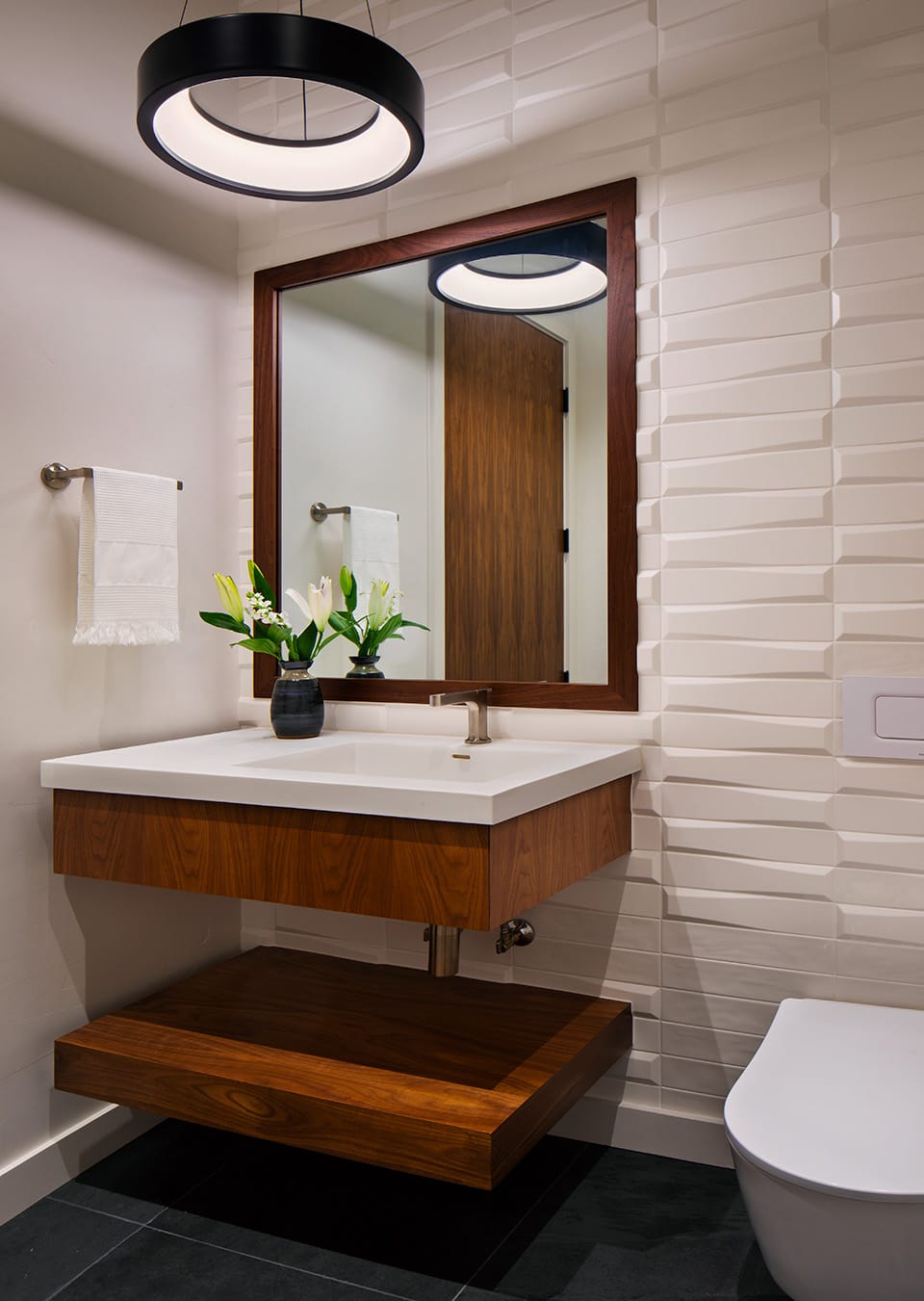
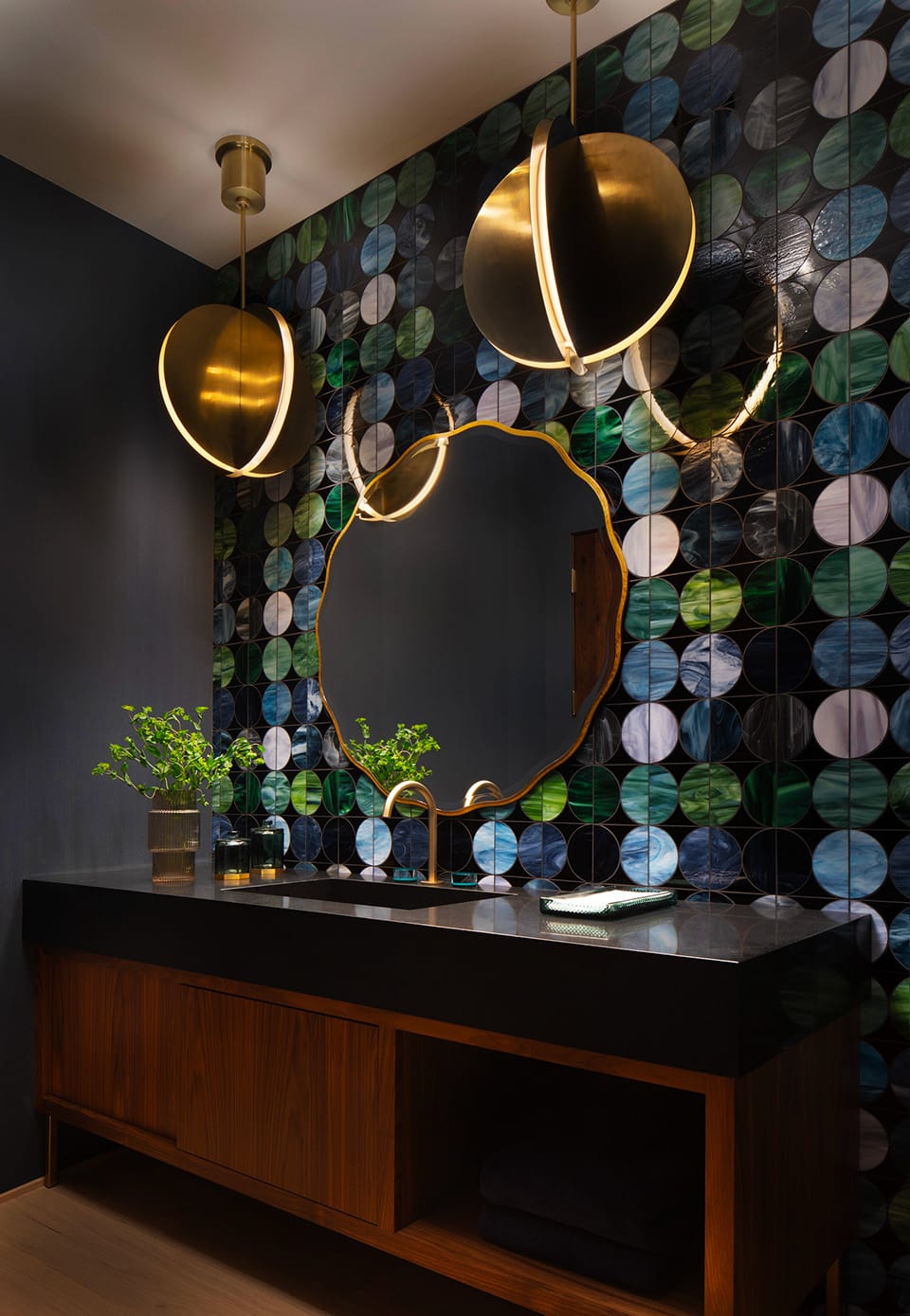
BARB COOKE: We tend to get bolder in powder rooms, bunk rooms, theaters, and bars. Those are natural places to take a risk and create something unique.
Powder rooms are especially fun. Clients will often say, “Do whatever you want in here.” It’s the room where they want guests to walk in and say, “Wow.” It may have taken them outside their comfort zone, but it still flows with the rest of the home. It never feels disjointed.
WHJ: Does the same approach apply to the kitchen?
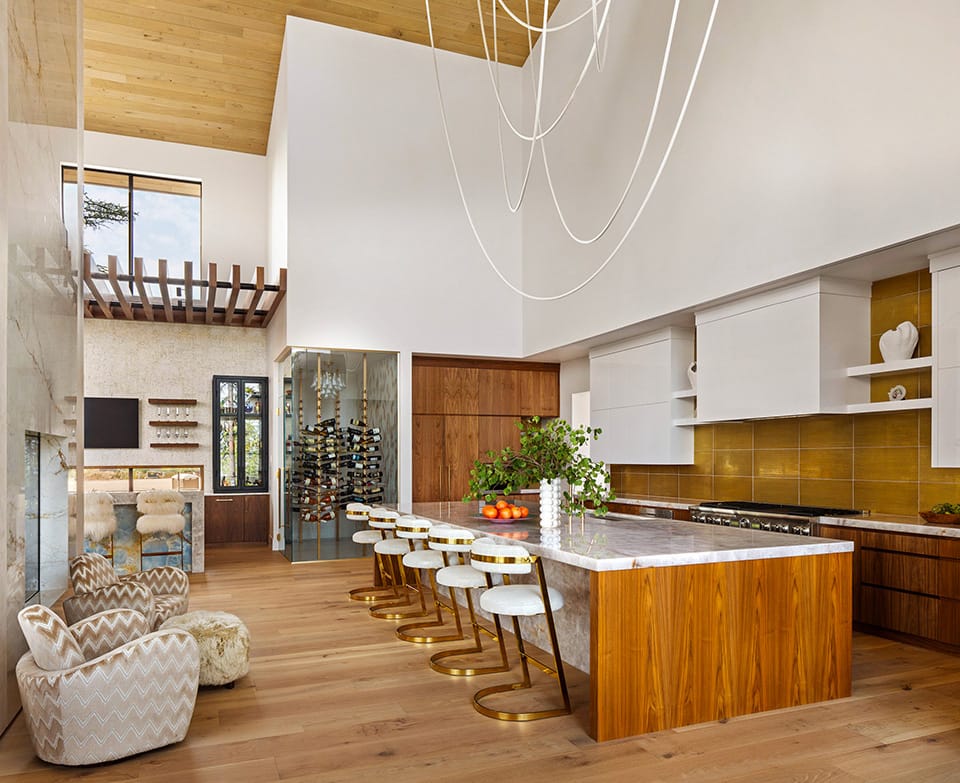
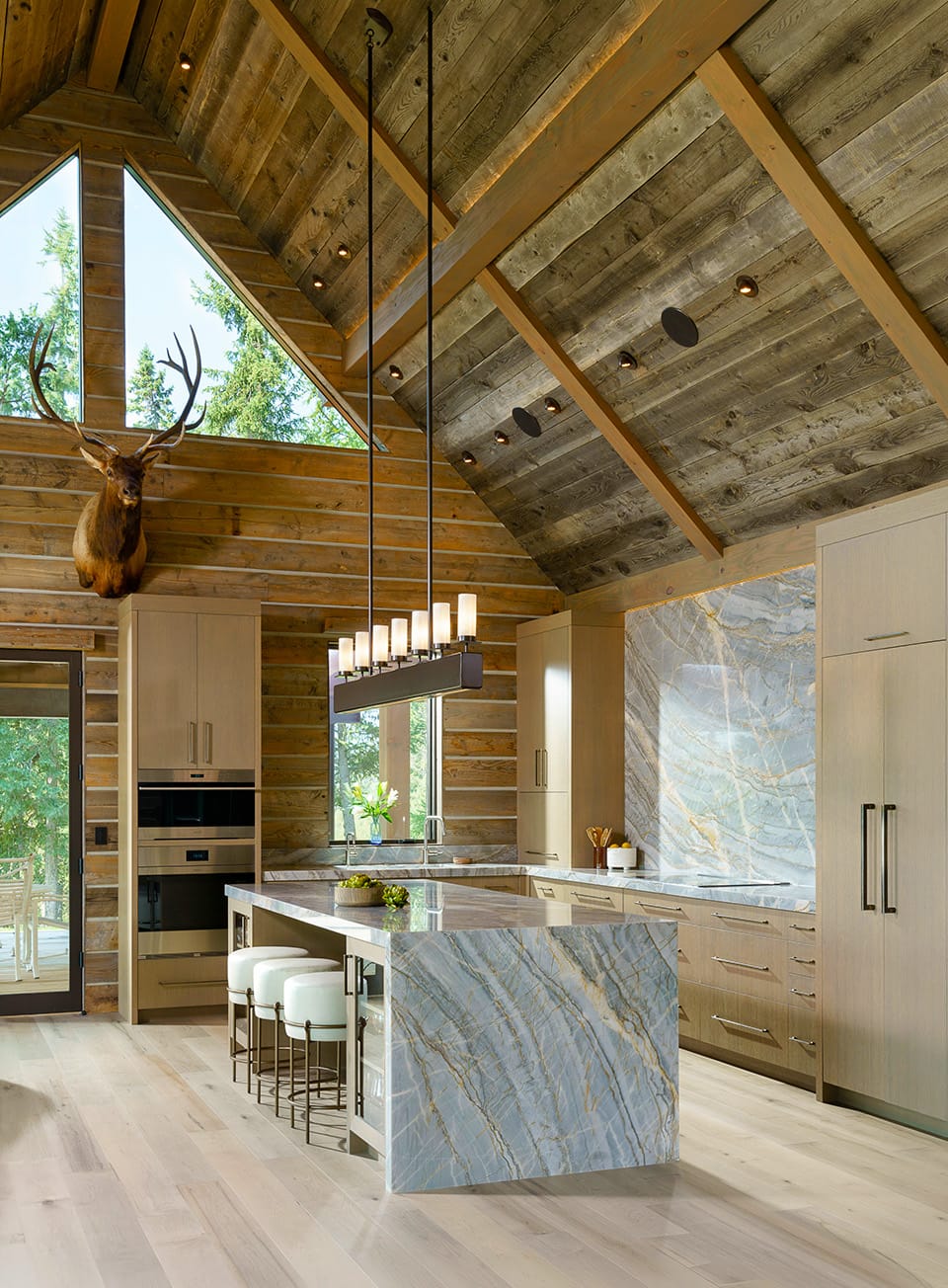
BARB COOKE: I try to keep kitchens timeless rather than punchy, unless a client strongly wants something bolder. There was a period when a brightly colored island was popular, but I usually encourage clients to create a more cohesive flow. I don’t want them looking at it two years later and wondering, “Why did I do that?”
WHJ: With a finite budget, where do you invest—and where do you look for savings?
BARB COOKE: I tend to work on high-end homes, but I enjoy working from a budget. I also like staying within it whenever possible. That’s one reason some builders bring me onto a project: There are no surprises. Even when a client has significant resources, there is still a budget to respect.
With fixed finishes, I tend to focus on higher-end decorative lighting and plumbing fixtures. They are highly visible, and faucets are something you touch and see up close every day. The same is true of a bathroom light fixture. You can tell when something is cheaply made, and I’m very particular about how a finish reads.
“I STRIVE FOR TIMELESS DESIGNS, SO YOU COULD WALK INTO ONE OF THESE HOMES IN 20 YEARS AND NOT KNOW WHEN IT WAS BUILT.”
Creativity & Spending
- Where to take more creative license:
- Powder rooms
- Bunk rooms
- Theaters
- Bars
- Where to spend:
- Finishes people see and touch every day
- Decorative lighting
- Plumbing fixtures
Designed from the Landscape
WHJ: When you begin a room, do you anchor the design around one element?
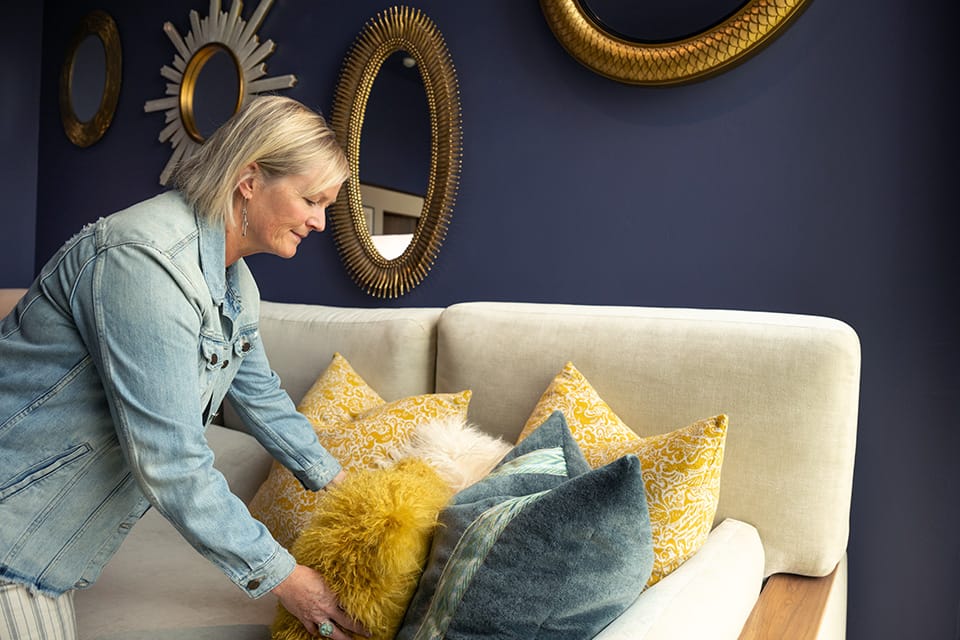
BARB COOKE: Usually, it’s a rug or a piece of art. If we don’t have either of those at the beginning, I might pull from the stone or from a color the client loves. Someone may say, “I really like textures,” and we’ll build the palette from there.
Typically, a grounding piece comes first, which may be an heirloom, a rug, or artwork. These pieces will stay in the home for multiple years and tend to be the heart of the home.
WHJ: What role do local materials and regional makers play in your work?
BARB COOKE: I encourage clients to have pieces made here—dining tables, chairs, coffee tables, nightstands, and consoles. You can get full-thickness wood rather than veneers. We’re using a lot of white oak now, although for years we worked extensively with fir slabs and still use them. My husband also makes our timber console tables with steel.
- Cooke Interiors material library
- New Moon | Handmade rugs
- Libeco | Belgian linen textiles
- Kush Rugs | Hand-knotted and one-of-a-kind rugs
- Blue Snow | Local wood slabs and custom craftsmanship
- Pom Pom at Home | Linen bedding and relaxed home textiles
- EiC Custom Lighting | Custom lighting by Elizabeth Costigan in Missoula
“I LOOK FOR LOCAL ARTISTS BEFORE SEARCHING ELSEWHERE. I WOULD RATHER EXHAUST THE POSSIBILITIES HERE FIRST.”
The Design Isn’t Finished on Paper
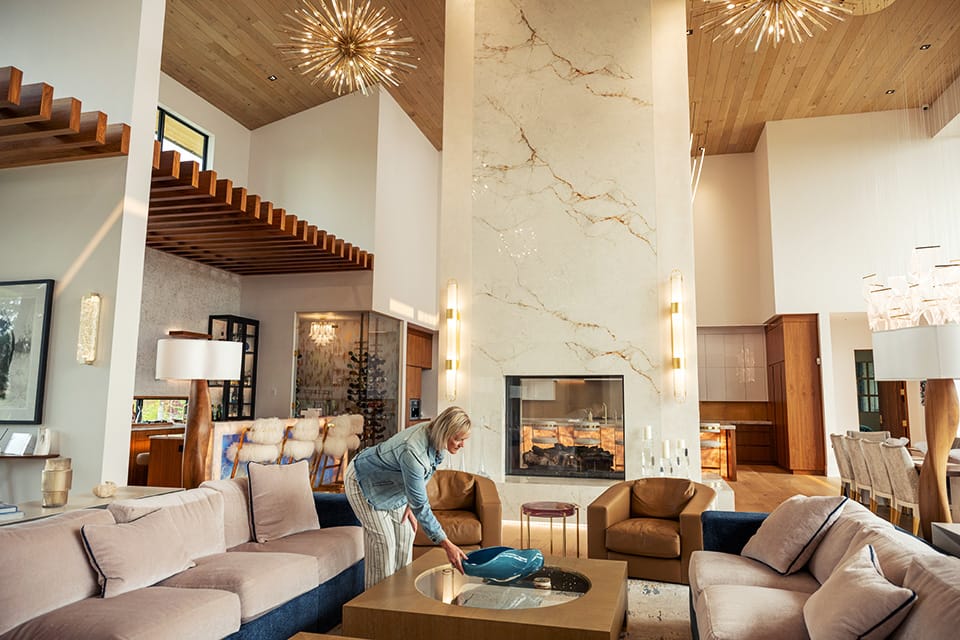
Beyond interior design, construction administration is central to Cooke’s practice. She is often on-site, working alongside builders and trades to protect the design’s intent and ensure the finished home supports her client’s vision. That might mean adjusting the lighting plan or repositioning a floor vent so furniture can sit where it belongs or catching a door swing that would interfere with a rug. It’s about being present for the small details that may get missed but ultimately determine how a house looks, functions, and evolves over time.
whj INTERIOR DESIGN FEATURE
