
By: Aurora Wilkinson
Distinctive mediums & enduring legacies
Sun Valley’s art scene has always drawn strength from contrast, and while defined by natural beauty, it’s never limited to landscape alone. Across galleries, studios, and exhibition spaces, artists continue to interpret our region in various ways, blending history with satire, memory with material, and form with unexpected mediums. Together, they continue to expand how we view and understand this place, and ourselves.
In this section, Western Home Journal focuses on artists and galleries that reflect the vitality of Sun Valley’s creative scene. Jon Nasvik turns concrete into fine art, revealing to us its texture, color, movement, and emotion. Thom Ross revisits the mythology of Buffalo Bill’s Wild West at Hemmings Gallery. Gail Severn Gallery marks 50 years of championing artists, collectors, education, and cultural conversation in the Wood River Valley.
Later, Bex Wilkinson reimagines the alphabet as a sharp, playful, and unsettling framework for contemporary commentary, while Anne Crumpacker’s bamboo works explore nature and the spiritual resonance of handmade art.
What connects these stories isn’t a single medium, or subject, or location, but a shared commitment to explore further. In Sun Valley, art continues to define our community and remains more than something to collect or admire. It’s a way of interpreting the world through the eyes of the artist, questioning narratives and finding meaning in what surrounds us.
The Alphabet Reimagined
What happens when the innocence of the alphabet collides with the absurdities of modern culture? Artist Bex Wilkinson answers that question in The Mad-House Alphabet: A Playbook for Humankind, a visually playful yet pitilessly satirical art book that transforms childhood language into commentary on the complexities of contemporary life.
Humans rely on contextual clues to form immediate opinions about people, places, and abstract ideas. In The Mad-House Alphabet, Wilkinson challenges that instinct, inviting viewers to reconsider how they interpret and assign meaning to the world around them.
At the heart of the project is her Alphabet Series, a 2024 body of paint-on-canvas work that uses the familiar structure of the alphabet to address pressing social issues. Expanding on this series, Wilkinson explores how visual art shapes cultural perception.
“LANGUAGE IS AT THE HEART OF EVERYTHING WE DO. IT IS WHO WE ARE, AND HOW WE IRONIES THAT SURROUND US.”
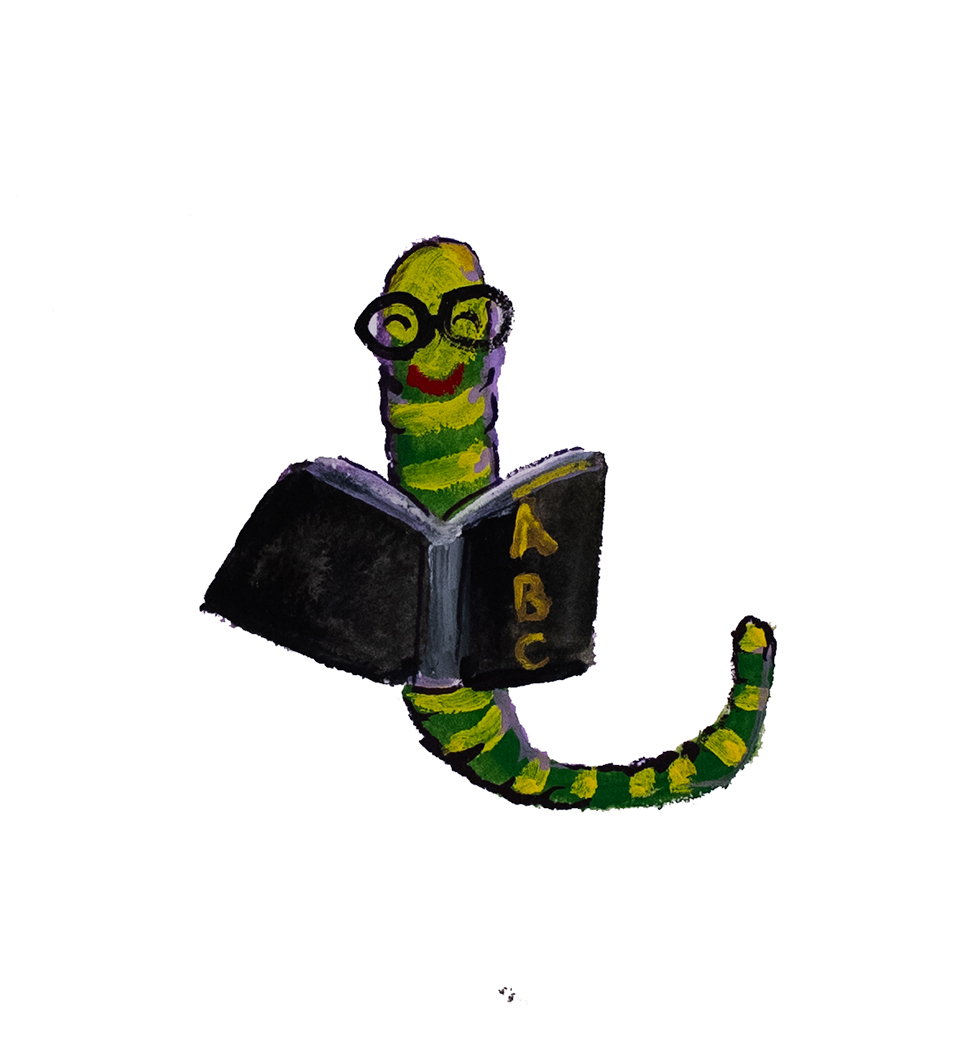
-Wormy Book | Gouache | 8” x 8”
For Wilkinson, centering the work around language was intentional. “Language is at the heart of everything we do. It is who we are, and how we come to understand the ironies that surround us,” she explains. To process an ever-shifting cultural landscape, she turned to language as both structure and subject. By using the alphabet, she highlights the friction between the simplicities and complexities of injustice.
The Alphabet Series, like much of Wilkinson’s work, plays with clarity and ambiguity. In The Mad-House Alphabet, she pushes the concept further, bringing language and image into direct conversation. “G is for Gun,” is one such example. The work moves beyond words alone, using visual storytelling to deepen the viewer’s experience and invite a more intuitive and emotional response. “It is okay to be at a loss for words, acknowledging the changes happening all around us,” she adds.
Following the completion of the series, Wilkinson partnered with her team at HIM Creative to expand the work into book form. Collaborating with longtime friend Peter Burke, the two developed a series of adult, Dr. Seuss-like poems to accompany the imagery. The result is an interactive depiction of life. For Burke, the relationship between text and image is essential. “The two are now intertwined,” he says. “The idea was that the poems were a further exploration of the paintings and the use of language to make imagery.”
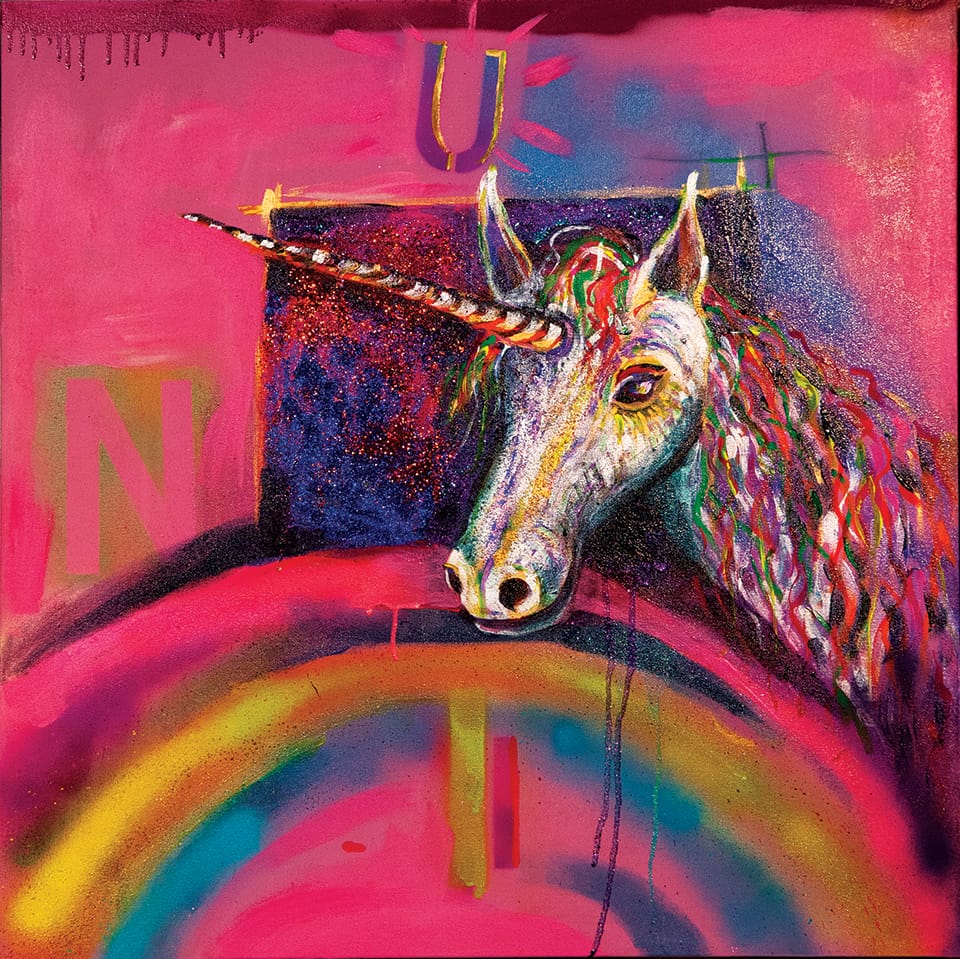
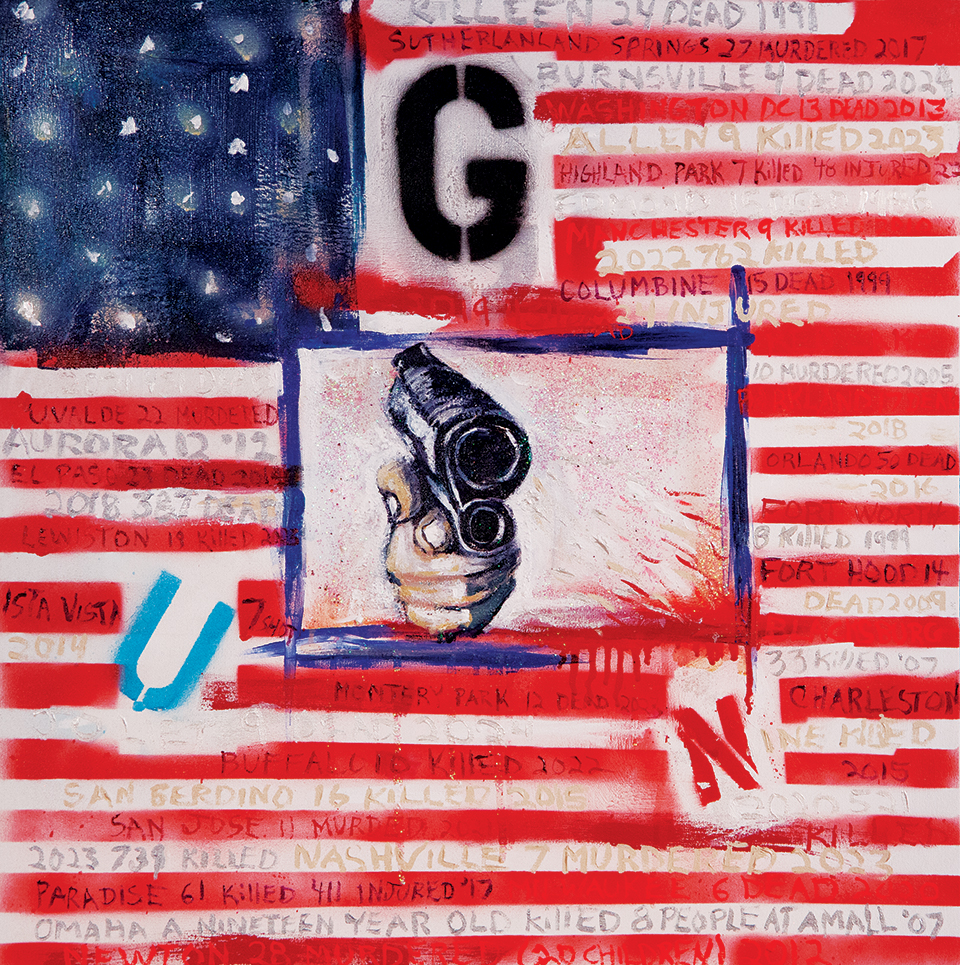
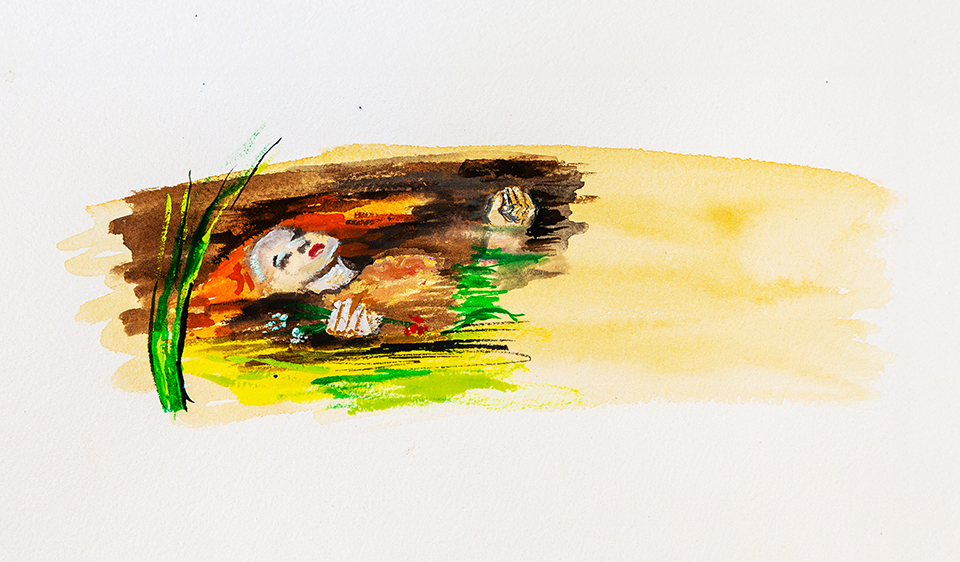
-U is for Unicorn | Mixed media | 30” x 30” -G is for GUN | Mixed media | 30” x 30” -Wet Ophelia | Gouache | 7” x 10”
This conversation moves in both directions. “In some instances, the poems add context to the paintings, and in other circumstances the paintings add context to the poems,” Burke adds.The book balances humor with heavier undertones, encouraging viewers to reflect on their own places within the chaos of everyday life.
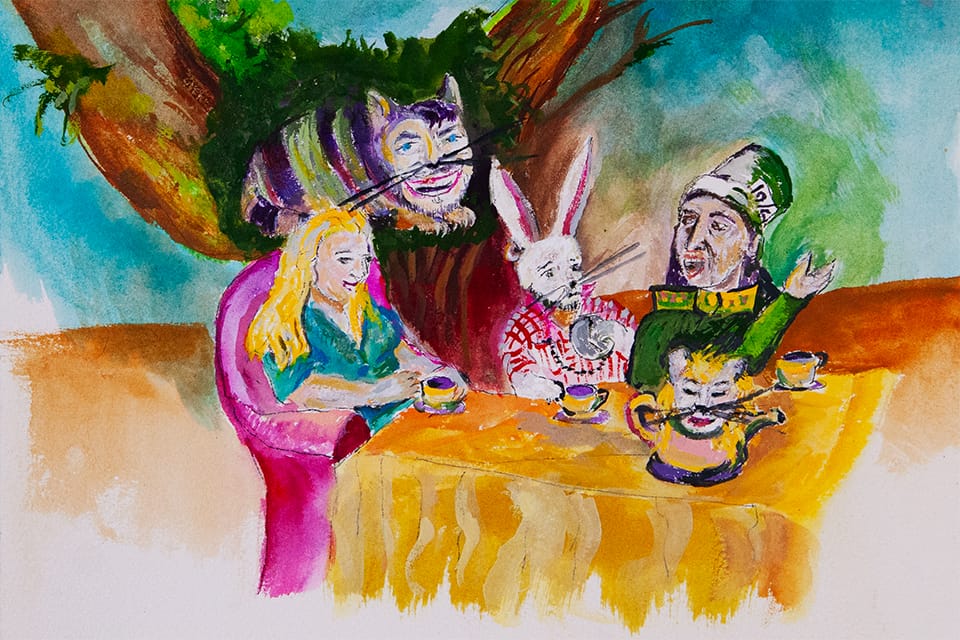
Throughout the book, viewers encounter familiar imagery layered with new meaning. Wilkinson describes the experience as “falling down the rabbit hole,” in reference to Alice’s Adventures in Wonderland. Subtle references, from Andy Warhol’s dance diagrams to her reinterpretation of John Everett Millais’ Ophelia, are woven throughout. Wilkinson acknowledges an ever-present artistic derivation while reinforcing the book’s unique nature.
The physical object itself is central to the experience. Bound by the Brooklyn-based artisans at Hofstra Book Arts, each edition reflects Wilkinson’s belief that the book is as much an artwork as the pieces within it. “This is not your average art book,” she says. “It’s a work of art in its own right.” Designed by HIM Creative founder Daniel Leeds, the book combines a range of mixed artistic methods into a cohesive and immersive piece.
“FOLLOWING THE COMPLETION OF THE SERIES, WILKINSON PARTNERED WITH HER TEAM AT HIM CREATIVE TO THE WORK INTO BOOK FORM. COLLABORATING WITH LONGTIME FRIEND PETER BURKE, THE TWO DEVELOPED A SERIES OF ADULT, DR. SEUSS-LIKE POEMS TO ACCOMPANY THE IMAGERY. THE RESULT IS AN INTERACTIVE DEPICTION OF LIFE.”
“IN SOME INSTANCES, THE POEMS ADD CONTEXT TO THE PAINTINGS, AND IN OTHER CIRCUMSTANCES THE PAINTINGS ADD CONTEXT TO THE POEMS.”-Peter Burke, HIM Creative
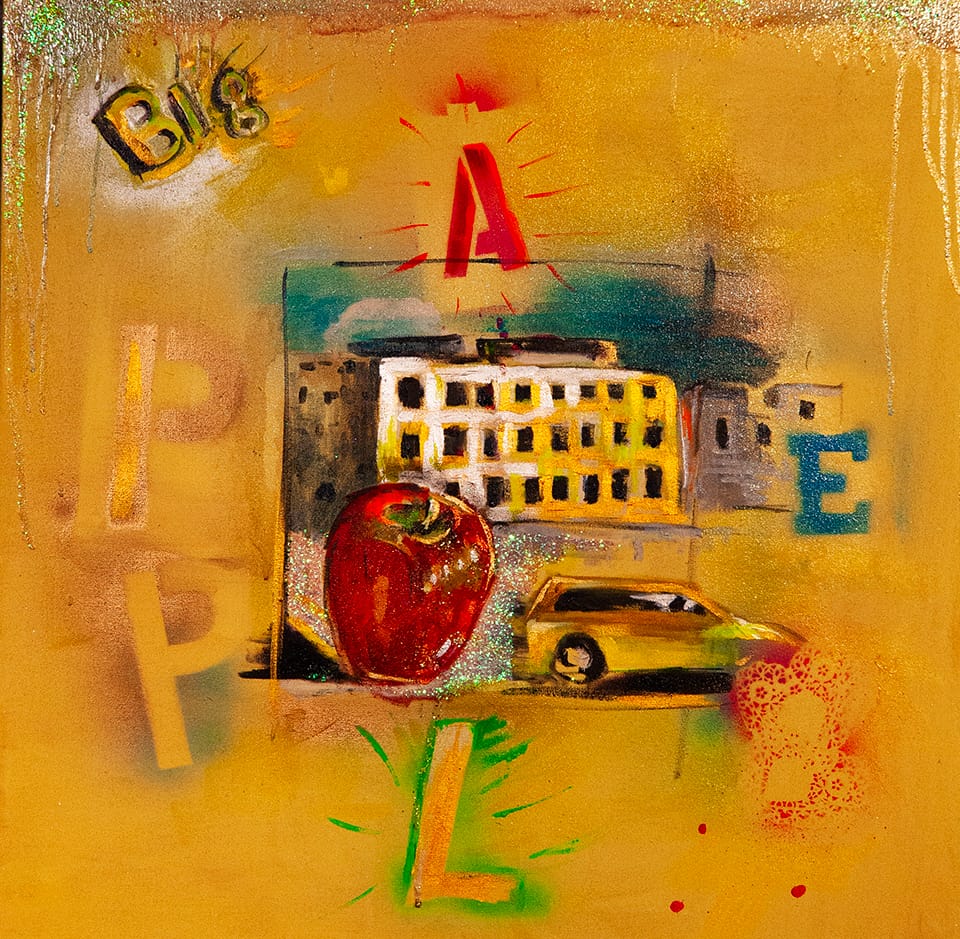
-A is for Apple | Mixed media | 30” x 30”
Carefully curated, the book includes limited-edition prints of Wilkinson’s “lil diddies,” along with a foreword by American poet Dana Levin. Together, these elements extend the work beyond a traditional publication, positioning it as both collectible and conceptual.
In The Mad-House Alphabet: A Playbook for Humankind, Wilkinson doesn’t simply document a series, she offers an opportunity for seeing, questioning, and feeling the world differently. In a place often defined by natural beauty and visual serenity, her work offers something else entirely: an invitation to sit with discomfort, to question the familiar, and to remain curious.
Wilkinson has shown her work to international audiences, including shows in Chicago, New York, Miami, Madrid, Berlin, Lisbon, Vienna, Boise, and Sun Valley.
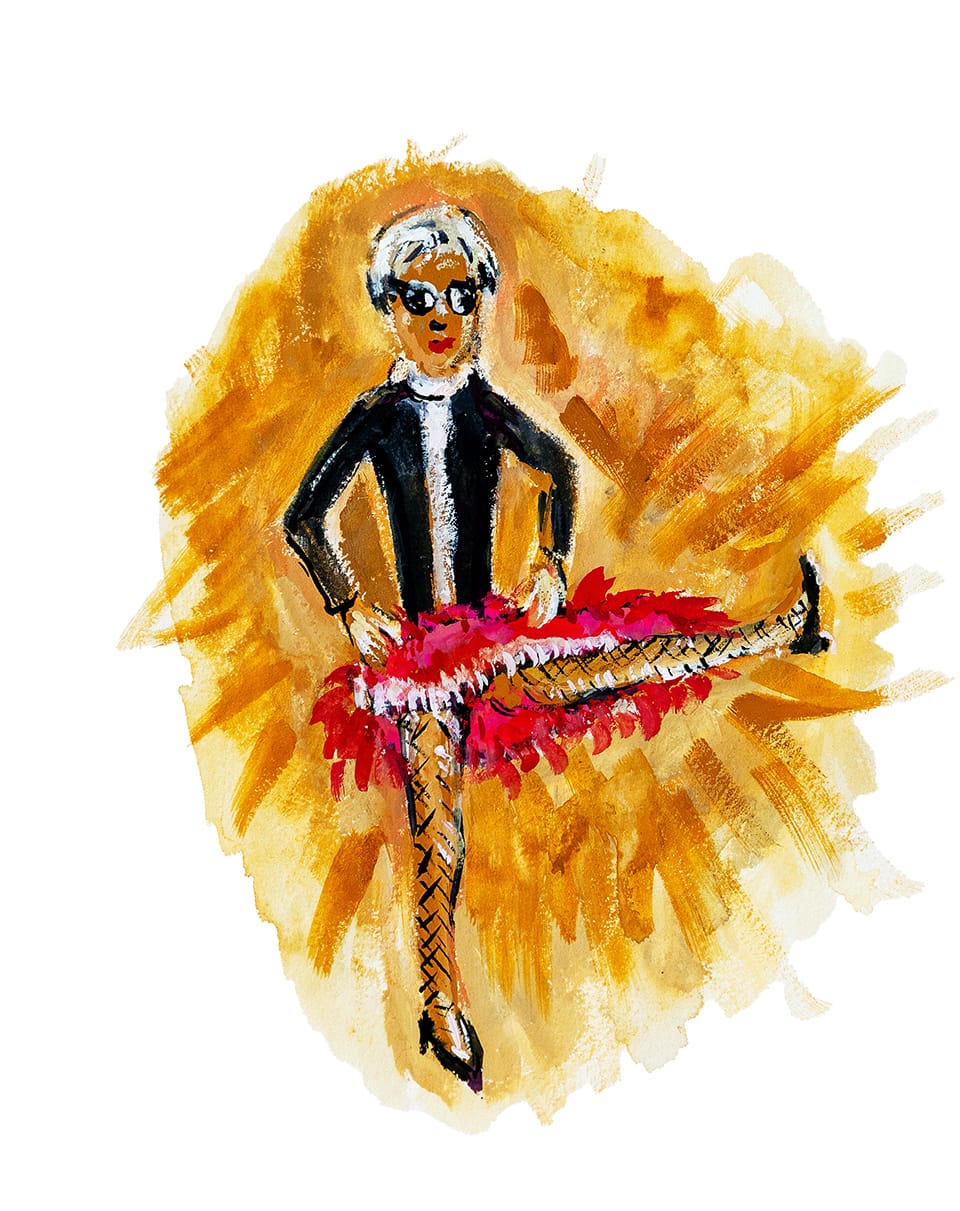
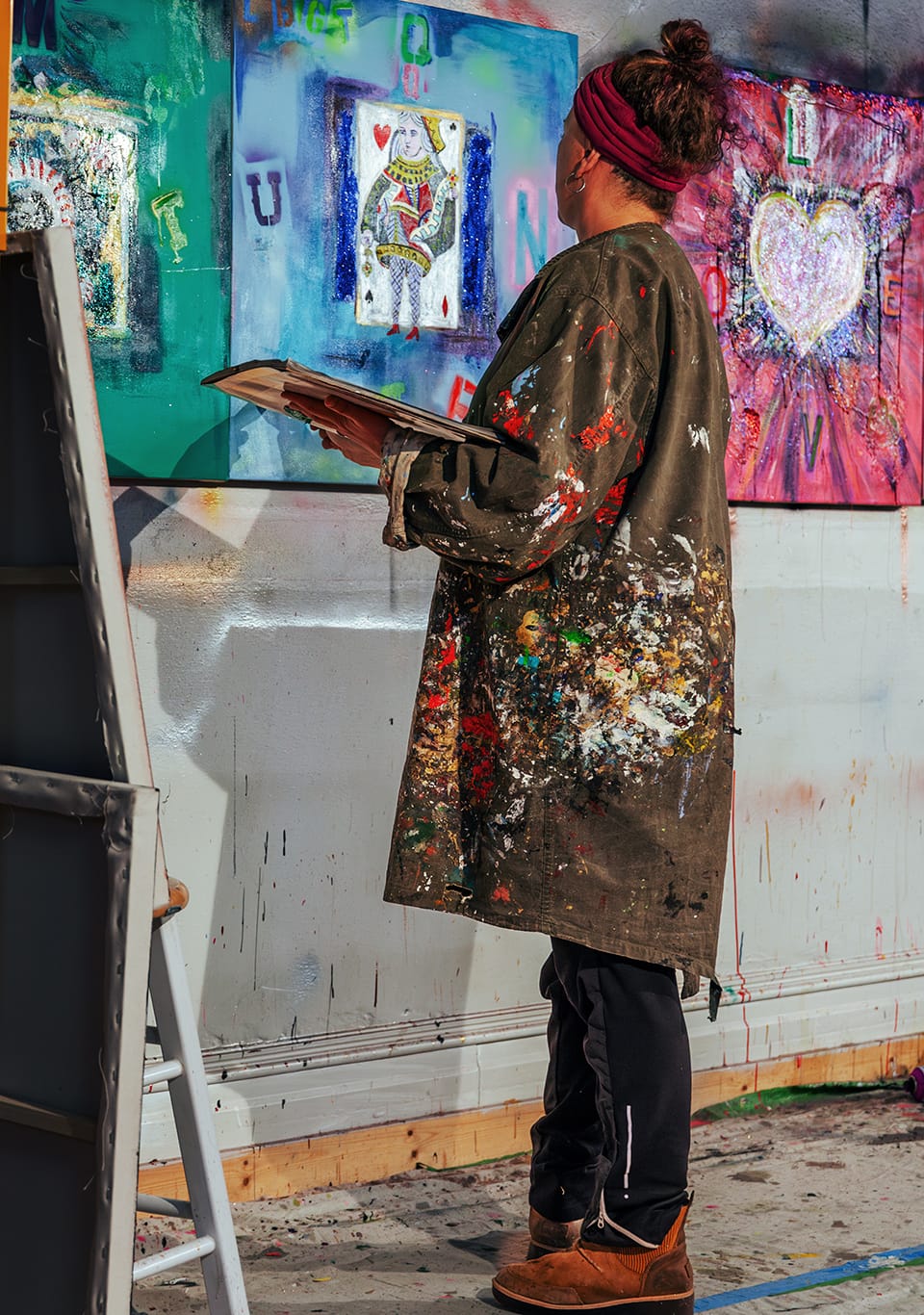
-Andy Warhol Can-Can | Gouache | 10” x 7” -Bex Wilkinson in her studio | The Alphabet Series
whj ART FEATURE
