
By: Sabina Dana Plasse
Distinctive mediums & enduring legacies
Sun Valley’s art scene has always drawn strength from contrast, and while defined by natural beauty, it’s never limited to landscape alone. Across galleries, studios, and exhibition spaces, artists continue to interpret our region in various ways, blending history with satire, memory with material, and form with unexpected mediums. Together, they continue to expand how we view and understand this place, and ourselves.
In this section, Western Home Journal focuses on artists and galleries that reflect the vitality of Sun Valley’s creative scene. Jon Nasvik turns concrete into fine art, revealing to us its texture, color, movement, and emotion. Thom Ross revisits the mythology of Buffalo Bill’s Wild West at Hemmings Gallery. Gail Severn Gallery marks 50 years of championing artists, collectors, education, and cultural conversation in the Wood River Valley.
Later, Bex Wilkinson reimagines the alphabet as a sharp, playful, and unsettling framework for contemporary commentary, while Anne Crumpacker’s bamboo works explore nature and the spiritual resonance of handmade art.
What connects these stories isn’t a single medium, or subject, or location, but a shared commitment to explore further. In Sun Valley, art continues to define our community and remains more than something to collect or admire. It’s a way of interpreting the world through the eyes of the artist, questioning narratives and finding meaning in what surrounds us.
Embracing the Natural World
Influenced by the West, whether it is the California desert, the mountains of Sun Valley, or the Oregon coast, Anne Crumpacker absorbs contrasting environments into her extensive body of bamboo art. As an avid and devoted observer of nature, Crumpacker finds inspiration by immersing herself in environments of wonder, such as the desert habitat of phoebe birds she has watched for 25 years. Their life cycle connects her to nature, brings her joy, and informs her art and practice. For an artist who works with bamboo and cyclical ideas, that attention to natural cycles feels essential.
In a recent work purchased by an art collector who lives in the desert, Crumpacker used Yuzen Washi paper from Japan, a recurring element in her work. The paper featured soaring cranes in the background, inspired by the common desert sighting of snowy egrets near water sources throughout the California desert.
“I AM EXTREMELY EXCITED AND HONORED TO BE PART OF THIS EXHIBITION BECAUSE OF THE COLLECTION AND DIVERSITY OF WORK ABOUT NATURE.”
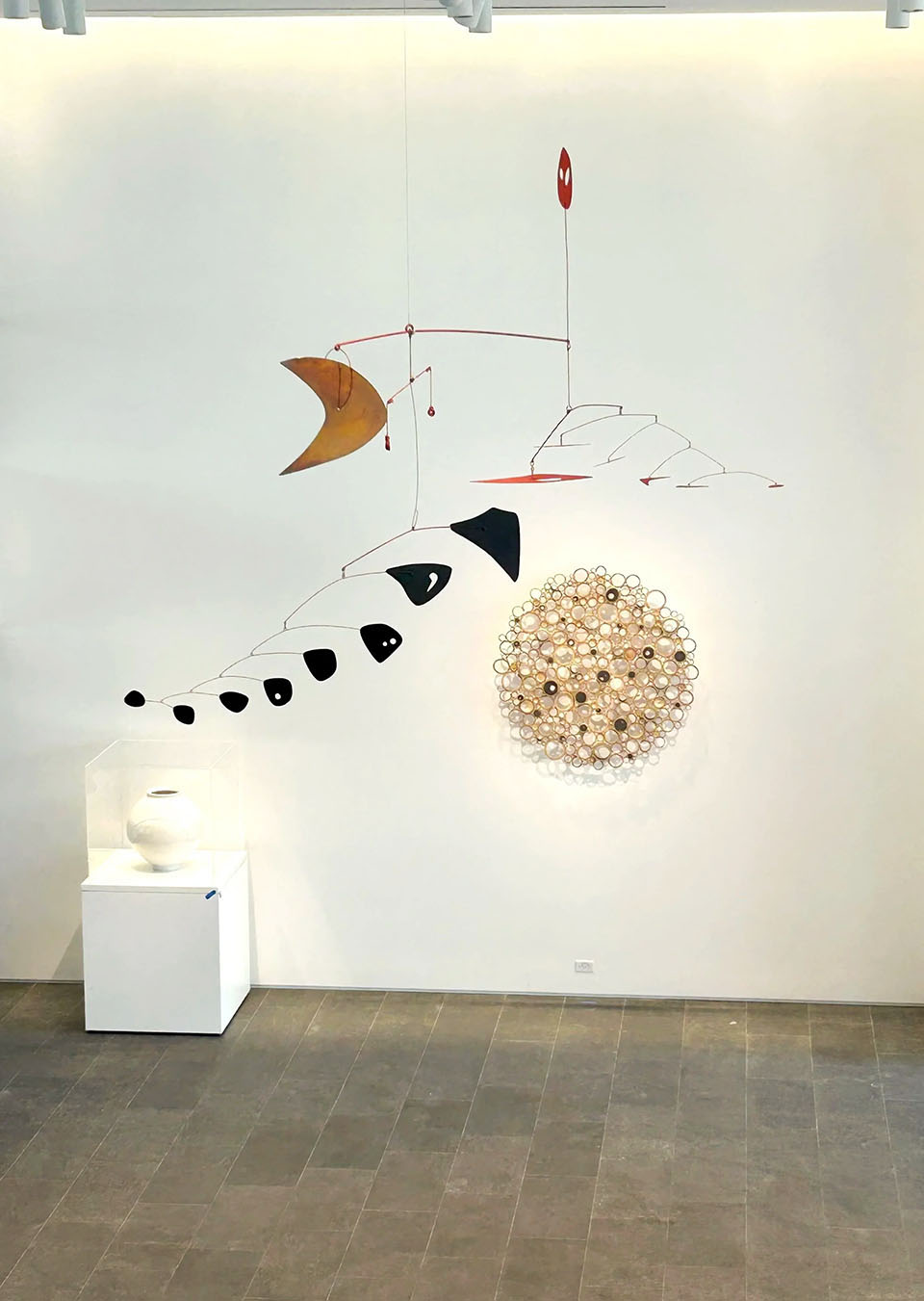
-Portland Art Museum: Forming Nature, Nature Formed, November 2025 – November 2026
“One day I had an unexpected sighting!” she says. “There were three egrets on a rooftop in a desert setting.”
Recently, Crumpacker’s work was also acquired by the Portland Art Museum, which has undergone a new addition and the restoration of gallery spaces. The museum’s new glass pavilion entrance is named in honor of renowned abstract artist Mark Rothko, who grew up in Portland, recognizing his important contribution to the evolution of abstract art in the mid-20th century. The museum is also featuring the exhibition The Art of Mark Rothko through February 2027. After that, a Rothko painting will be loaned to the museum every year for the next several years from the collections of Mark Rothko’s children, Christopher Rothko and Kate Rothko.
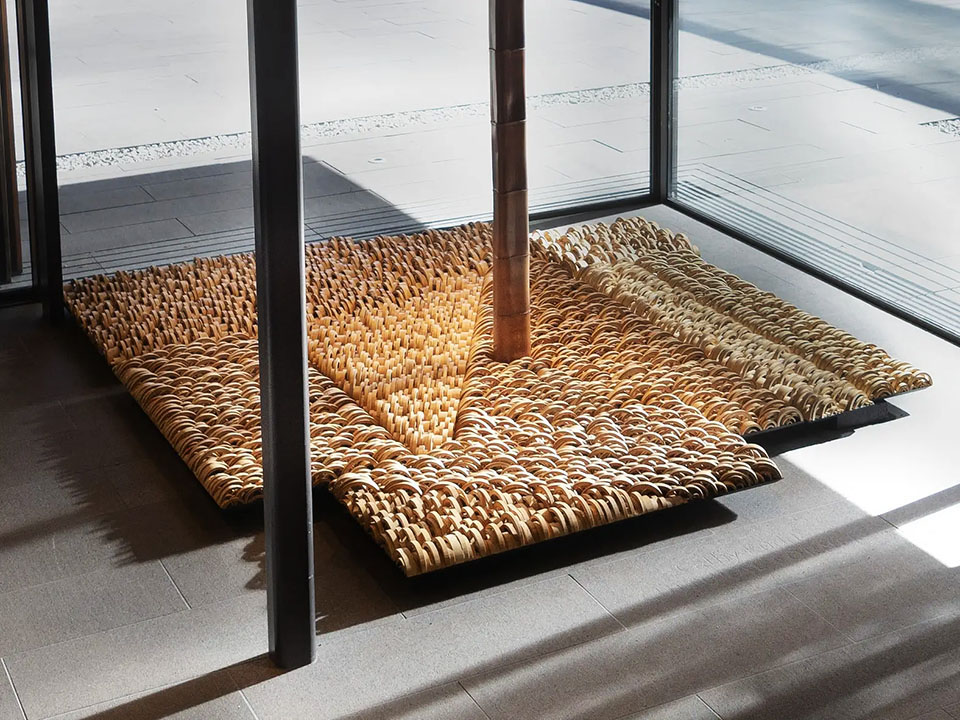
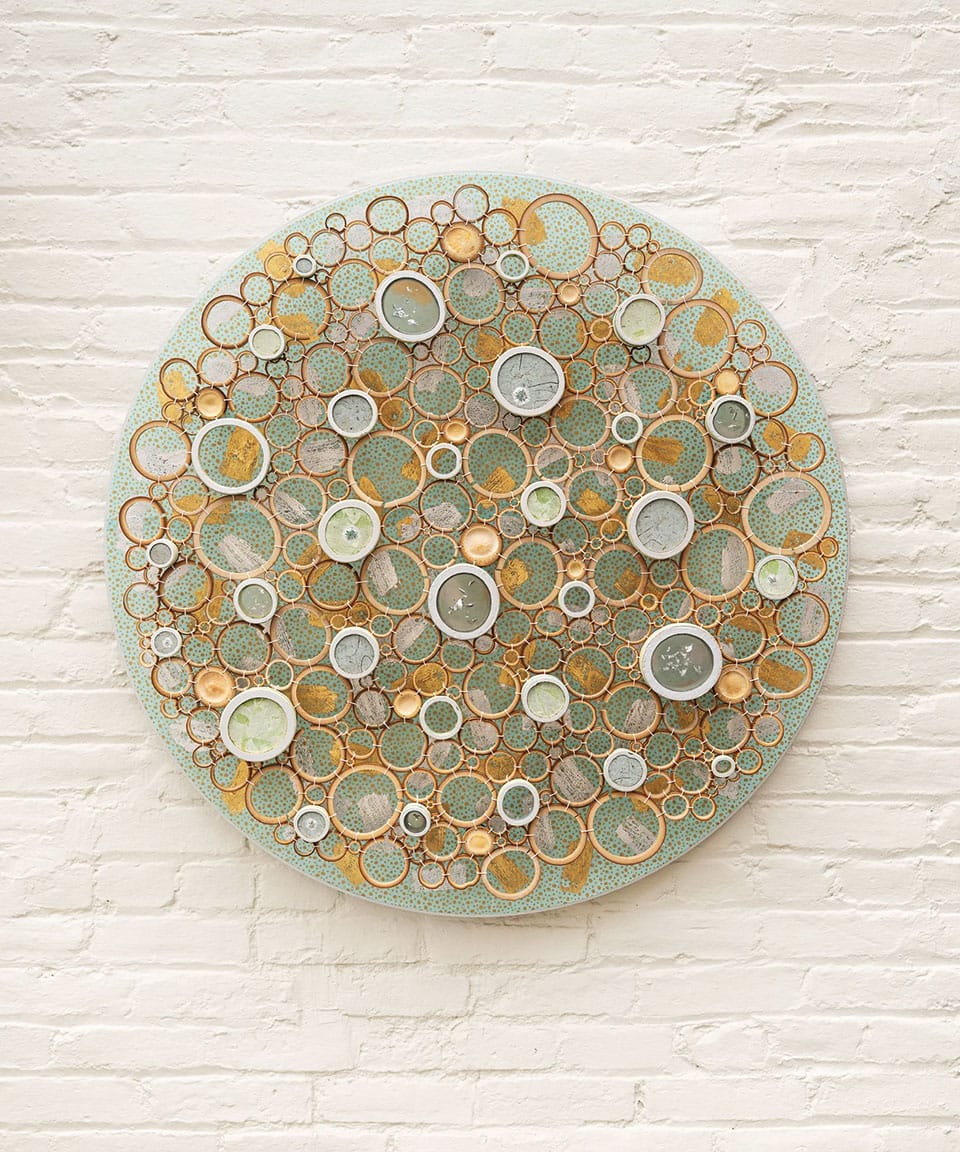
-Portland Japanese Garden, Cross Currents, October 18 | November 17, 2025
-Ensō: Divine Radiance | Crosscut bamboo, Irish waxed linen thread, Silver leaf, Epoxy resin, Washi paper, Wood | 37″ diameter x 6” depth | 2026
“One of my pieces is part of an inaugural exhibition, Forming Nature, Nature Formed, in the Rothko Pavilion,” says Crumpacker. “I am extremely excited and honored to be part of this exhibition because of the collection and diversity of work about nature, ‘that speak to the ways artists from many cultural backgrounds interpret encounters with the natural world in sculptural form.’”
Crumpacker’s primary medium, bamboo, is a connection to nature that reflects her values and the aesthetics of abstract art, perhaps also inviting history and form as additional elements. The art and craft of working with bamboo offer many affirmations for Crumpacker and those who view her work.
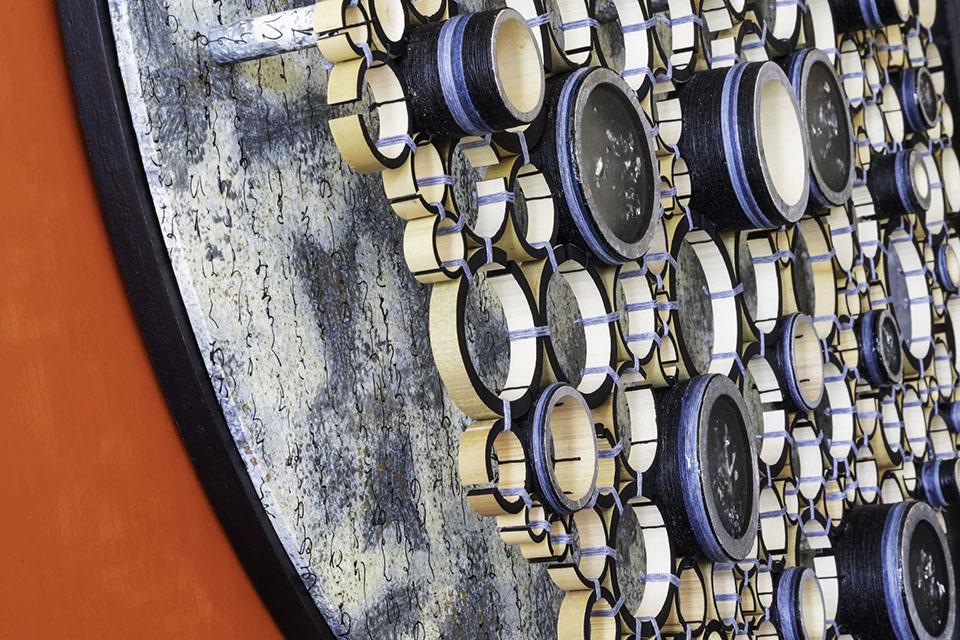
“CIRCLES, CENTRAL TO EASTERN AND NATIVE AMERICAN CULTURES, ARE ALSO AN ENDURING AND UNIVERSAL SYMBOL OF INTERCONNECTEDNESS. THE CIRCLE IS IMPORTANT NOT ONLY AESTHETICALLY BUT ALSO SYMBOLICALLY. MOST OF MY WORKS OF ART ARE CIRCULAR IN FORM, WHICH IS A LARGE PART OF MY CREATIVE PRACTICE, MEDITATION, AND ARTISTIC RENDERING.”
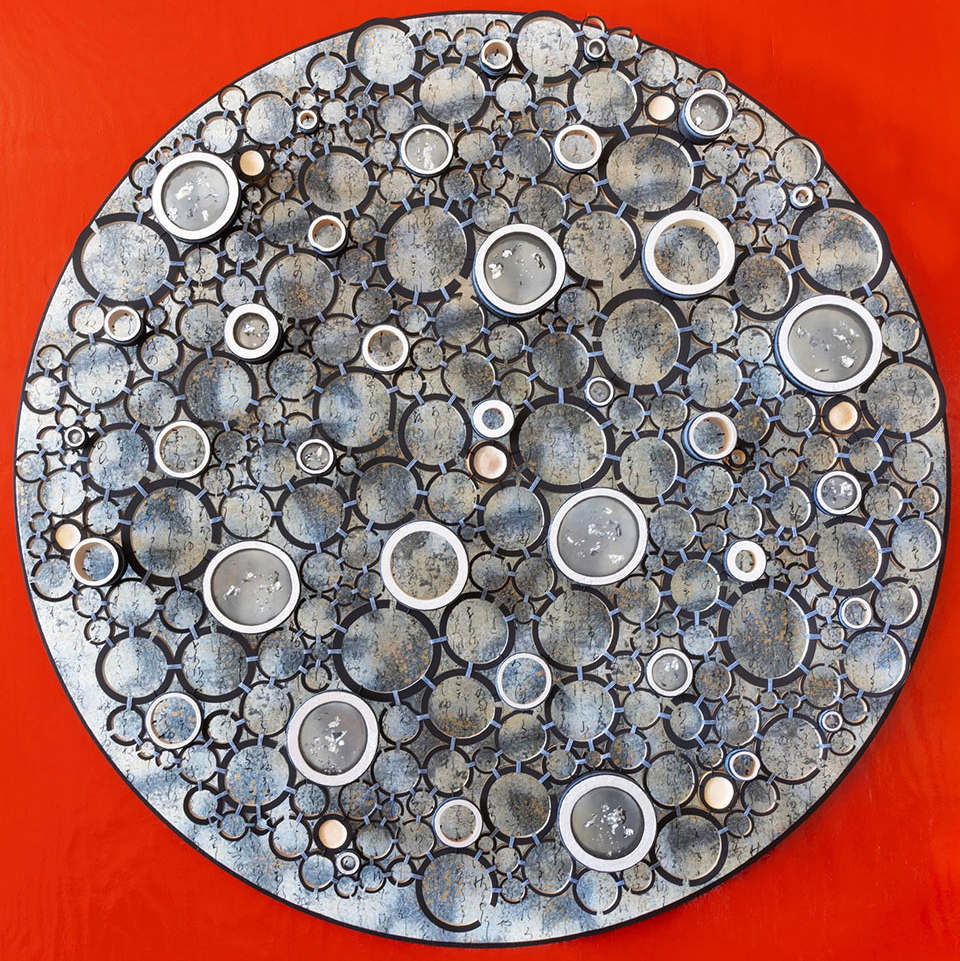
-Ensō: Dark Sky | Crosscut bamboo, Acrylic paint, Irish waxed linen thread, Silver leaf, Epoxy resin, Washi paper, Wood | 38” diameter x 6” depth | 2024
“Bamboo is not often included in collections, yet it’s a natural material that has existed for millions of years and is woven into global cultures for tools, food, construction, and art,” she says. “It’s important to human beings, and it’s being connected to nature, which means being alive—it’s living, changing, and growing. Art often reflects nature.”
The cycles and circular movement of life are central to Crumpacker’s bamboo works, as she is drawn to round forms, which echo the rings of crosscut bamboo.
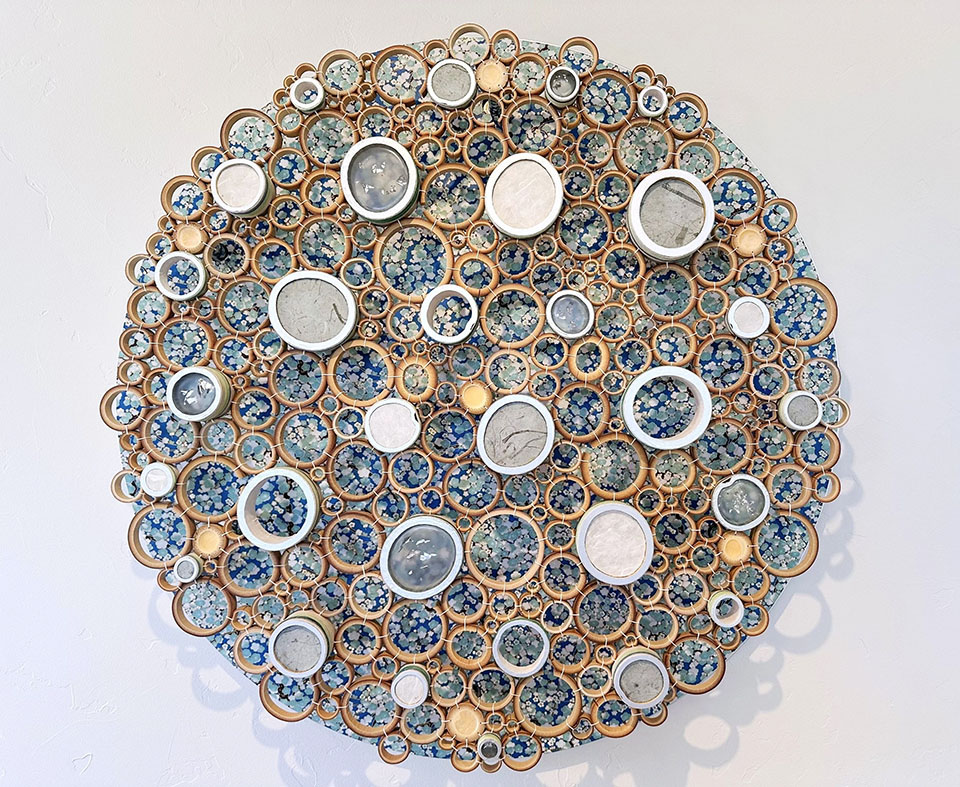
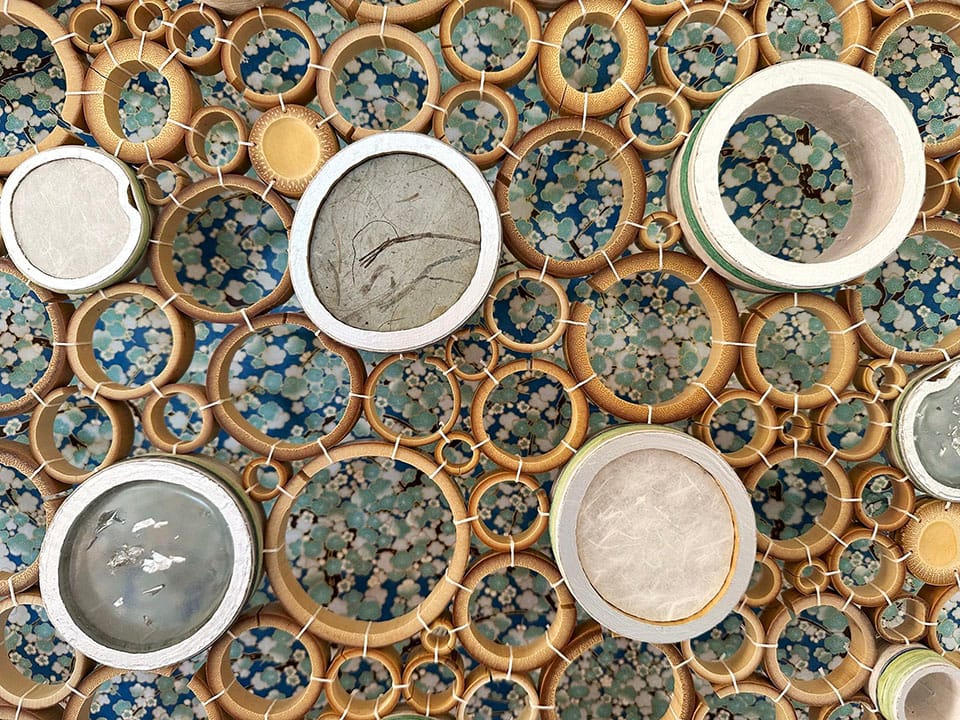
-Ensō: Serenity | Crosscut bamboo, Irish waxed linen thread, Silver leaf, Epoxy resin, Washi paper, Wood | 34″ diameter x 6″ depth | 2024
In her most recent work, Ensō: Divine Radiance, Crumpacker was inspired by the manhole covers she saw on a trip to Japan. The details of the bamboo circles, tied together with Irish waxed linen thread, come from a selection of Washi paper that sets the tone for the piece. This work also features gold in the paper, silver leaf on the bamboo, and rice paper as an alternative to the bamboo’s membrane.Crumpacker also uses silver and gold leaf on the layered Washi paper to add dimension, making elements appear to float off the surface.
In Ensō: Serenity andEnsō: Dark Sky, Crumpacker also used Washi paper to accentuate her crosscut bamboo technique, which illuminates the bamboo’s natural cellular beauty and strength. An assemblage of bamboo pieces allows patterns and rhythms to emerge with painted surfaces and other variations.
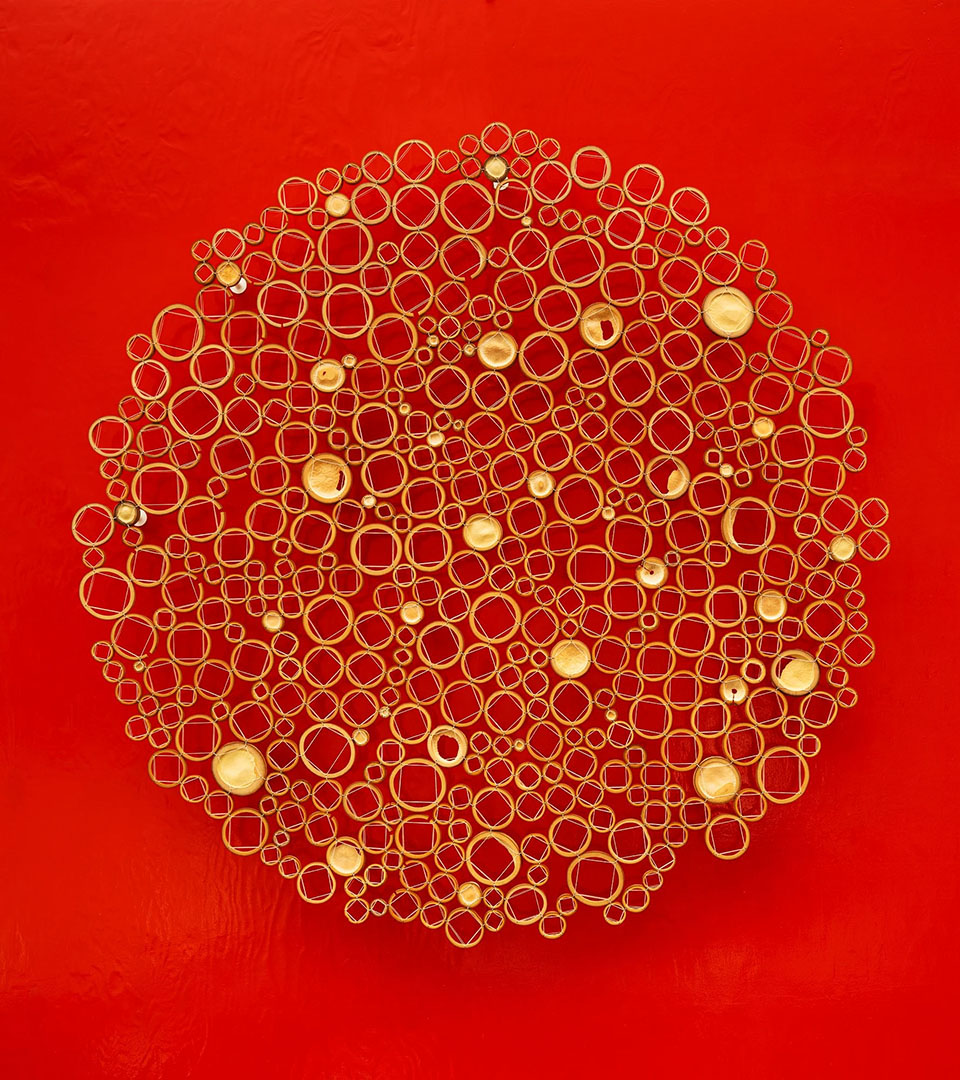
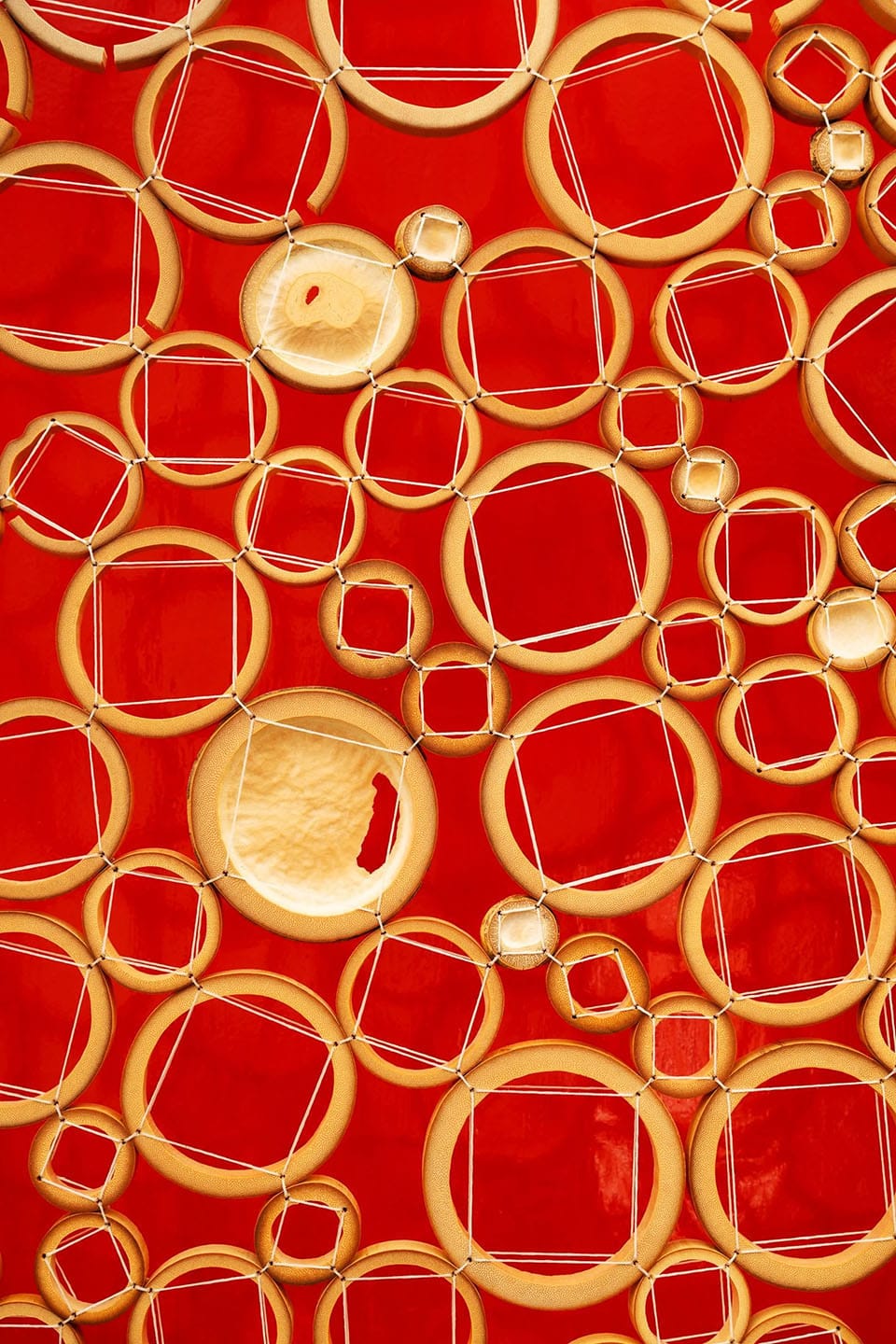
-Ensō: Sacred Geometry | Crosscut bamboo, Irish waxed linen thread | 70″ diameter x 5.5″ depth
“Ensō: Dark Sky, a black-painted bamboo surface, made me think of the dark sky when I created it,” says Crumpacker. “Also, in Ensō: Sacred Geometry, you can see the threading of a circle within a square, which is another aspect of my work, as I use several threading techniques.” She adds, “A square, the earthly/material, and inside a circle, the divine/infinite, represents spiritual awakening and the merging of humanity and divinity.”
She adds, “Circles, central to Eastern and Native American cultures, are also an enduring and universal symbol of interconnectedness. The circle is important not only aesthetically but also symbolically. Most of my works of art are circular in form, which is a large part of my creative practice, meditation, and artistic rendering.”
Connecting her philosophy and existence through her art is a transcendental element of Crumpacker’s approach. She intentionally gives her works spiritual titles as an offering to foster a place of contentment and wonder in and about nature. For Crumpacker, creating with her hands is essential to her well-being. Bamboo has existed for more than 30 million years, long before human beings, yet it remains a strong and botanical material that Crumpacker transforms into works of great beauty, filled with serenity and wonder.
whj ART FEATURE
