
By: Sabina Dana Plasse
Distinctive mediums & enduring legacies
Sun Valley’s art scene has always drawn strength from contrast, and while defined by natural beauty, it’s never limited to landscape alone. Across galleries, studios, and exhibition spaces, artists continue to interpret our region in various ways, blending history with satire, memory with material, and form with unexpected mediums. Together, they continue to expand how we view and understand this place, and ourselves.
In this section, Western Home Journal focuses on artists and galleries that reflect the vitality of Sun Valley’s creative scene. Jon Nasvik turns concrete into fine art, revealing to us its texture, color, movement, and emotion. Thom Ross revisits the mythology of Buffalo Bill’s Wild West at Hemmings Gallery. Gail Severn Gallery marks 50 years of championing artists, collectors, education, and cultural conversation in the Wood River Valley.
Later, Bex Wilkinson reimagines the alphabet as a sharp, playful, and unsettling framework for contemporary commentary, while Anne Crumpacker’s bamboo works explore nature and the spiritual resonance of handmade art.
What connects these stories isn’t a single medium, or subject, or location, but a shared commitment to explore further. In Sun Valley, art continues to define our community and remains more than something to collect or admire. It’s a way of interpreting the world through the eyes of the artist, questioning narratives and finding meaning in what surrounds us.
Painting in Concrete
Concrete as an artistic medium remains under the radar, mainly because few artists know how to use it or understand how to embrace the properties that make it a conduit for creativity. Jon Nasvik knows this creative allure well. He has spent years experimenting with decorative concrete, creating work that pushes its limits. Most people don’t think of concrete as a sexy product, but Nasvik has worked for years to break through its utilitarian, industrial image and reveal its beauty. As he often says, “I am just beginning to recognize its potential.”
“CONCRETE VARIES IN COST AND CAN BE TRICKY TO FORM, DEPENDING ON THE STRUCTURE OR ARCHITECTURAL DESIGN. ADDING COLOR ADDS ADDS CONSIDERABLE EXPENSE AS IT TAKES SEVERAL POUNDS OF PIGMENT IN A BATCH OF CONCRETE TO ACHIEVE THE COLOR YOU ONLY SEE ON THE SURFACE.”
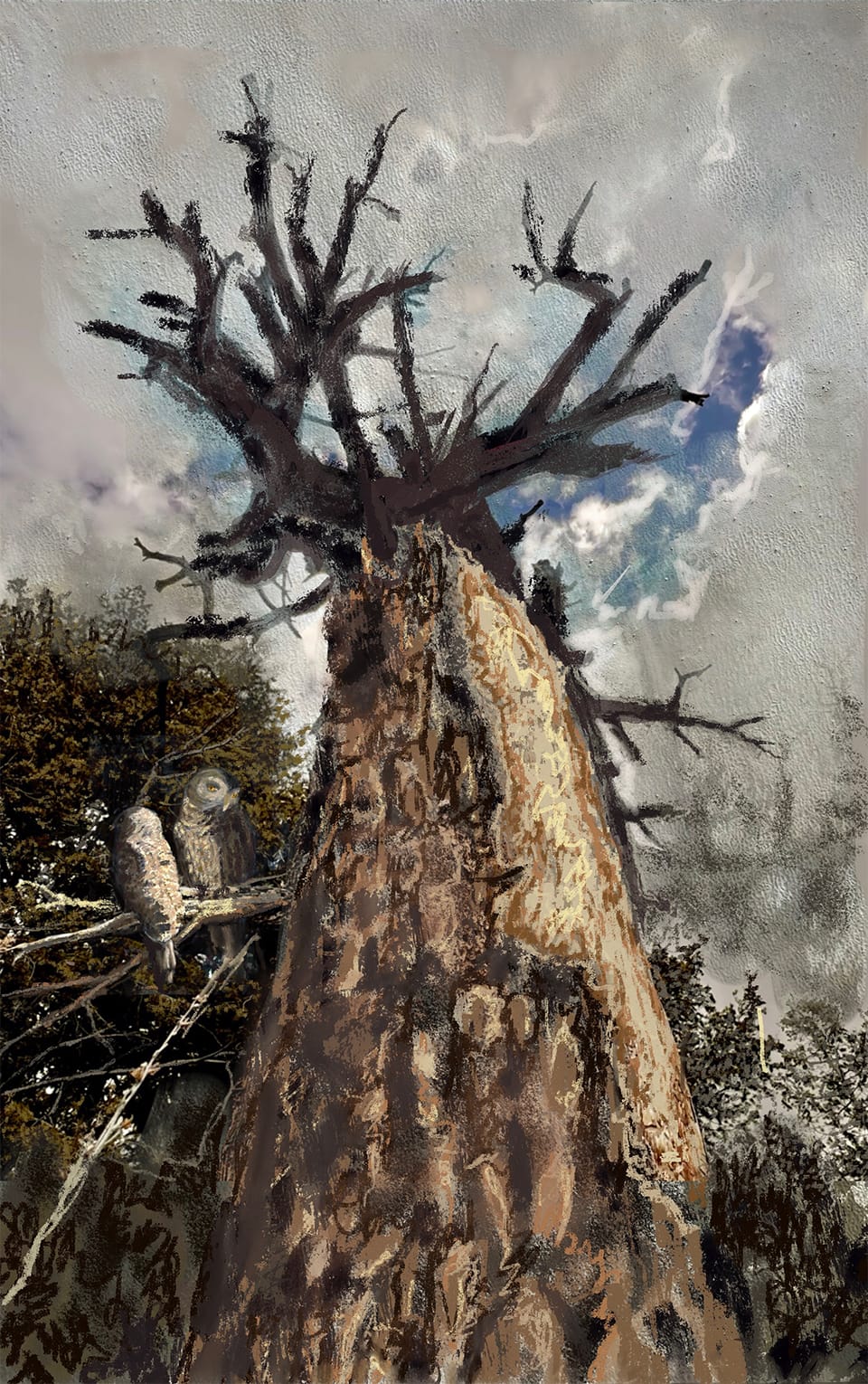
-Owls Rest | Concrete | 24” x 39”
“Scientists are busily working on a myriad of possibilities that I believe will help concrete evolve for the future,” says Nasvik. “My brother and I often discuss ways to improve the industry so it could offer less environmentally impactful products.” Meanwhile, he adds, “I am using what I’ve learned so far to create artworks in ways no one else is. There are pieces you can find online, such as acid-stained, thick, heavy works, but what I’m doing with thin, lightweight, integrally colored concrete offers up a worthwhile medium for serious art.”
Nasvik has spent a greater part of his life working in concrete construction. Fifty years ago, the material still carried the stigma of being gray, plain, and utilitarian. That perception began to change with the advent of stamped concrete.
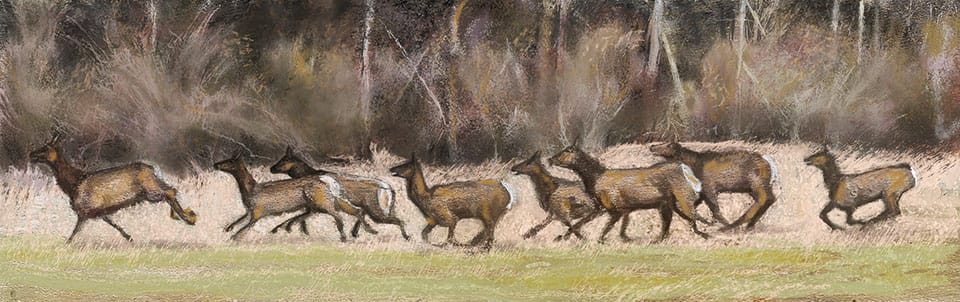
-Run Away | Concrete | 18” x 57”
“Many people didn’t realize what stamped concrete was, but they were impressed enough for it to grow into a worldwide business,” he says. “It’s what pointed me in a direction specializing in concrete’s decorative possibilities and inspired me to open my business in the Sun Valley area.”
For Nasvik, art from concrete is still a frontier. He credits renowned architect Frank Lloyd Wright as one of the greats who popularized concrete as a design element, redefining it as a decorative material.
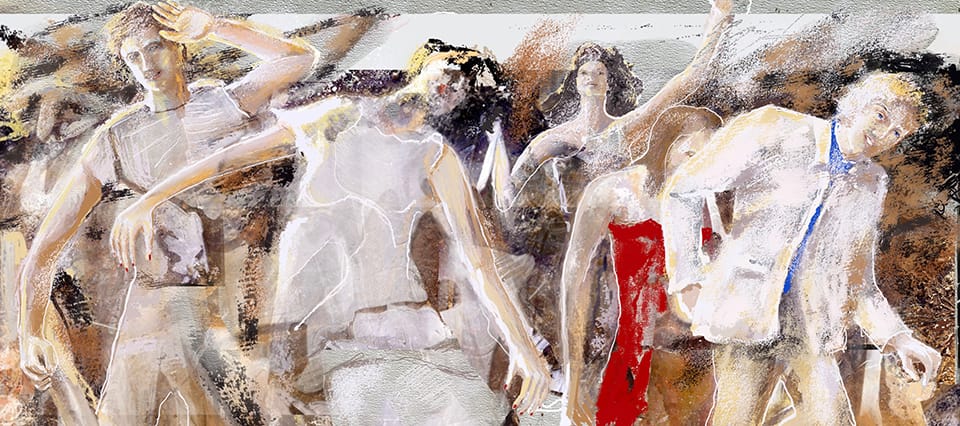
“AS AN ARTIST, I TRY TO REACH FOR WHAT IS HELD IN THE MOMENT THAT I WANT TO KEEP. I HAVE TWO PRIMARY APPROACHES TO MY CREATIVE PROCESS: TO COMMUNICATE AND OFFER SOME AUTOBIOGRAPHY. I THINK IT IS IMPORTANT TO BE AUTHENTIC, OTHERWISE I WOULD BE SELLING OUT.”
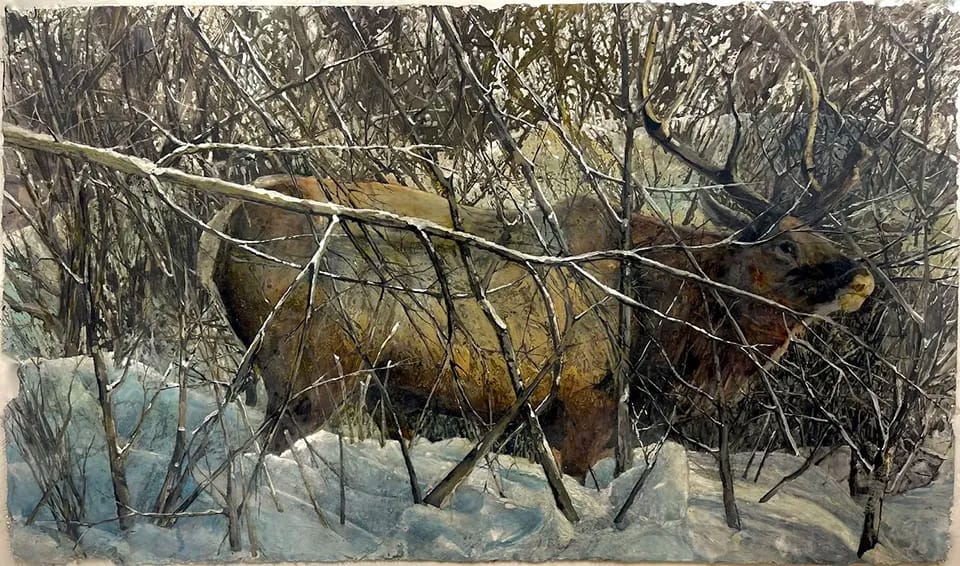
-Red Dress | Concrete | 23” x 51”
“Concrete varies in cost and can be tricky to form, depending on the structure or architectural design,” he says. “Adding color adds considerable expensive as it takes a several pounds of pigment in a batch of concrete to achieve the color you only see on the surface.”
Nasvik’s process involves much more of a creative output, including tinting small mixtures of cement to use instead of paint. Techniques range from traditional dribbling and brushing, to casting, shaping, imbedding, sanding, grinding, cutting, and attaching. Some methods feel closer to pottery or woodworking than traditional painting. Because concrete is malleable and can exist in various states of thinness, thickness, smoothness, shine, or texture, Nasvik is able to use tools, touch, and experimentation to achieve desired results. His paintings range from abstract works to landscapes, each shaped by concrete’s physical possibilities. Being an artist is an investment for Nasvik, and he creates work for people who appreciate both the medium and the subject matter. For him, fine art is all about the creative spirit and encompasses many of life’s intrinsic values.
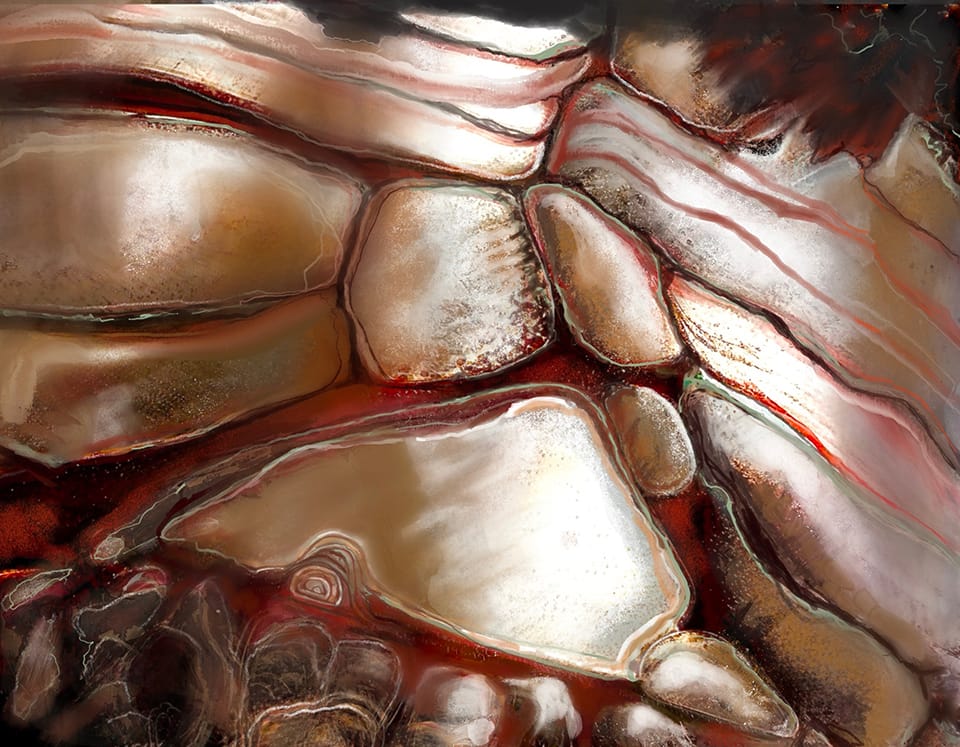
-First Light | Concrete | 29” x 36”
“As an artist, I try to reach for what is held in the moment that I want to keep. I have two primary approaches to my creative process: to communicate and offer some autobiography. I think is important to be authentic, otherwise I would be selling out,” says Nasvik.
His new works include abstracts, landscapes, and wildlife, expanding on his early days of mostly portrait work. Lately, he has been working toward spontaneity, avoiding unnecessary detail, experimenting with different styles and lighting, “moving beyond!” He adds, “Also, I think about size and fit, considering the spaces in an average home where a piece I am working on might rest comfortably.”
“I PAINT TO EXPLORE WHAT DRIVES ME, WHAT INTERESTS ME, AND WHY I MAKE CERTAIN CHOICES.”
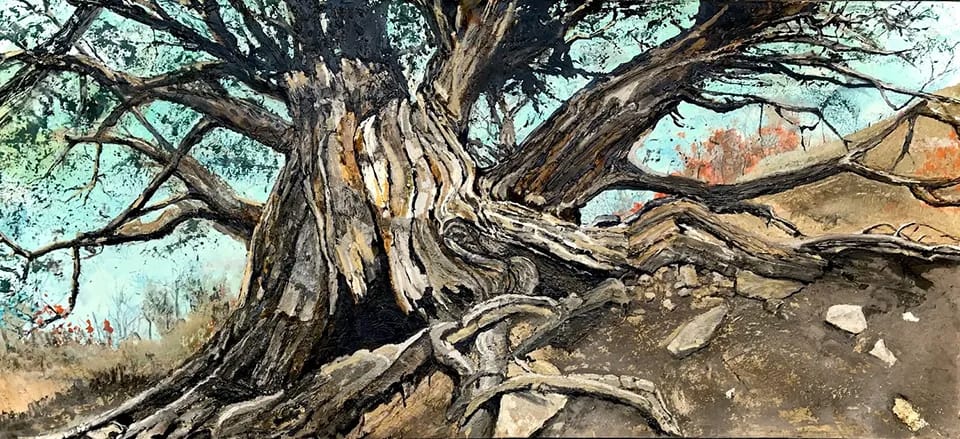
A local Wood River Valley artist, Nasvik also supports other artists who explore what it means to make art about where we live. As a concrete artist, he is mindful of other artists’ work and of what they are exhibiting, offering an informative perspective on local art and what collectors are drawn to.
“And now, with the infusion of digital products like AI, I hope handmade art will survive, because we are complex beings attempting communication with others like us,” says Nasvik. “I paint to explore what drives me, what interests me, and why I make certain choices. No matter how I express myself, I think it’s important to keep it real, something I doubt digital clones can offer.”
whj ART FEATURE
