
Listen to our Spotify podcast about this article:
by Michele Corriel
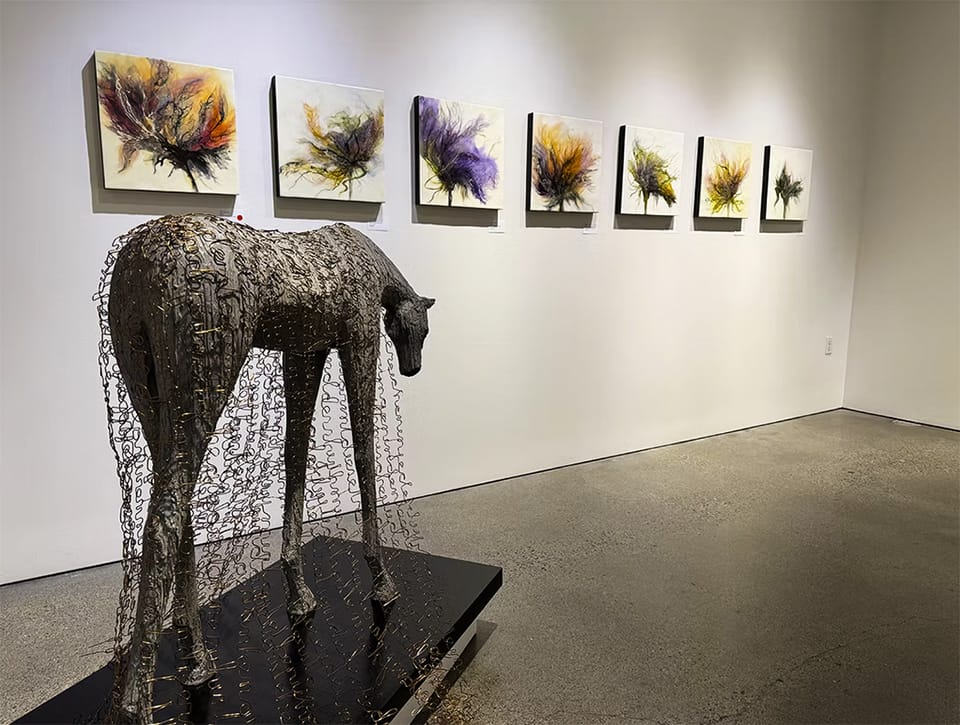
Free-spirited and alive with creative energy, the art of Alicia Tormey is instantly recognizable. For over 30 years, award-winning artist Alicia Tormey has been refining her art and developing techniques with encaustic: a wax-based paint medium made from pigments, beeswax, and a natural resin, while transforming these materials into lyrical botanicals and vivid, imagined landscapes.
“Encaustic paint isn’t just wax. It’s beeswax that’s been blended with a natural resin that makes the material incredibly durable. There are encaustic paintings in museums today that are nearly 2,500 years old, testifying to its stability and longevity as an art medium.”
The ethereal work of Alicia Tormey’s encaustic paintings
Since encaustic is wax-based, it’s solid at room temperature and requires a heat source to soften and liquefy the paint before it can be used with a brush. Once the paint has been applied, Tormey then follows up with a blowtorch to manipulate the wax and fuse it into the surface of the artwork.
The ephemeral characteristic of the wax adds a dreamlike quality to Tormey’s work. Through seemingly infinite layers of wax, forms and colors appear to undulate as if parts of them have drifted down to a deeper layer while others appear to gently float near the painting’s surface.
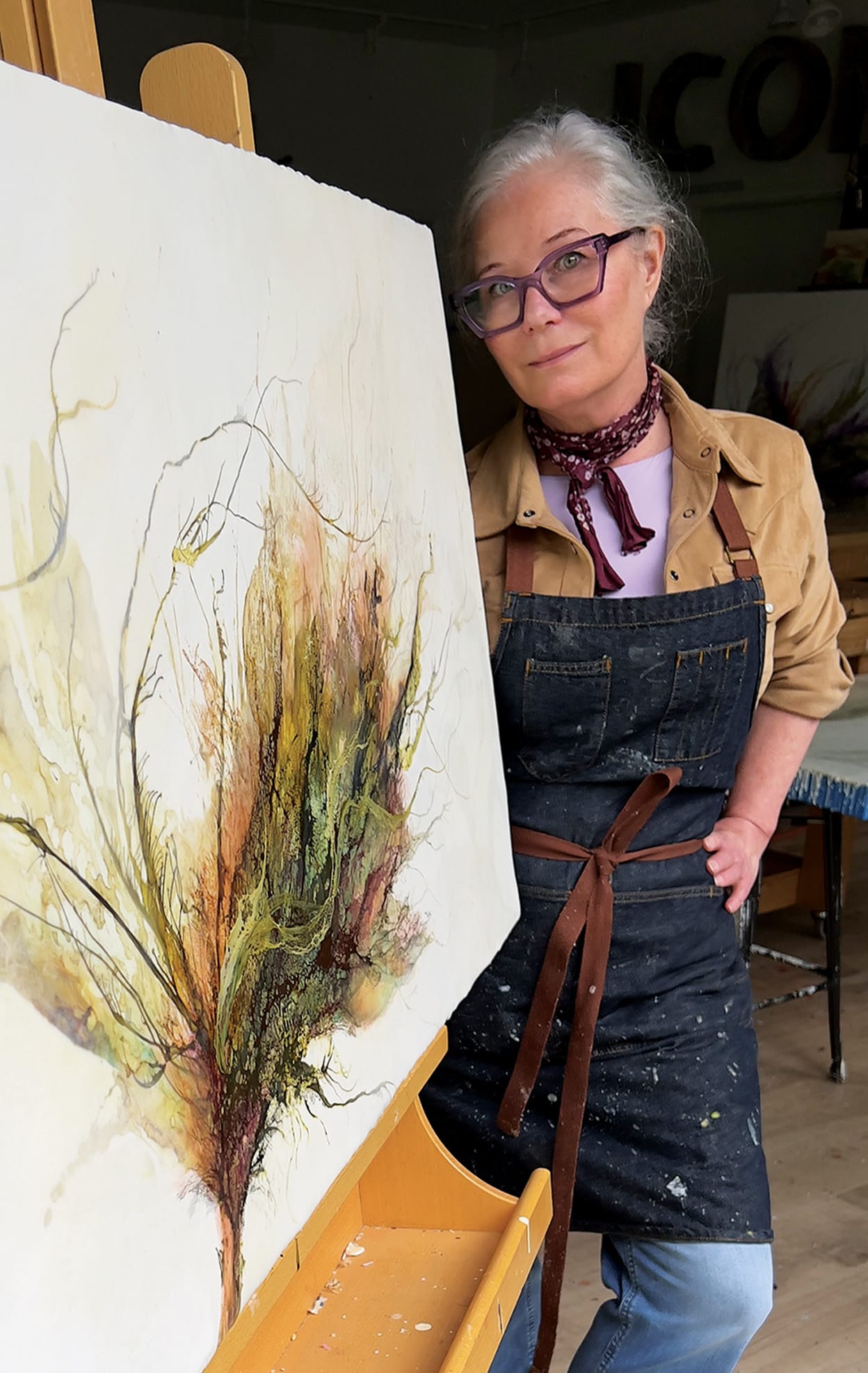
“Every painting starts off with these thick, juicy layers of wax. I call it the fondant surface phase. As I am fusing down these initial layers, I often start to see the painting reflected back at me before I even begin my creative process.”
“That’s what I love about encaustic,” says the artist. “Even the finished work has the illusion that the images are just about to move on their own. But the real magic comes from the translucency of the paint. Light passes through the wax layers and is reflected back out, creating a luminosity only seen in encaustic works.”
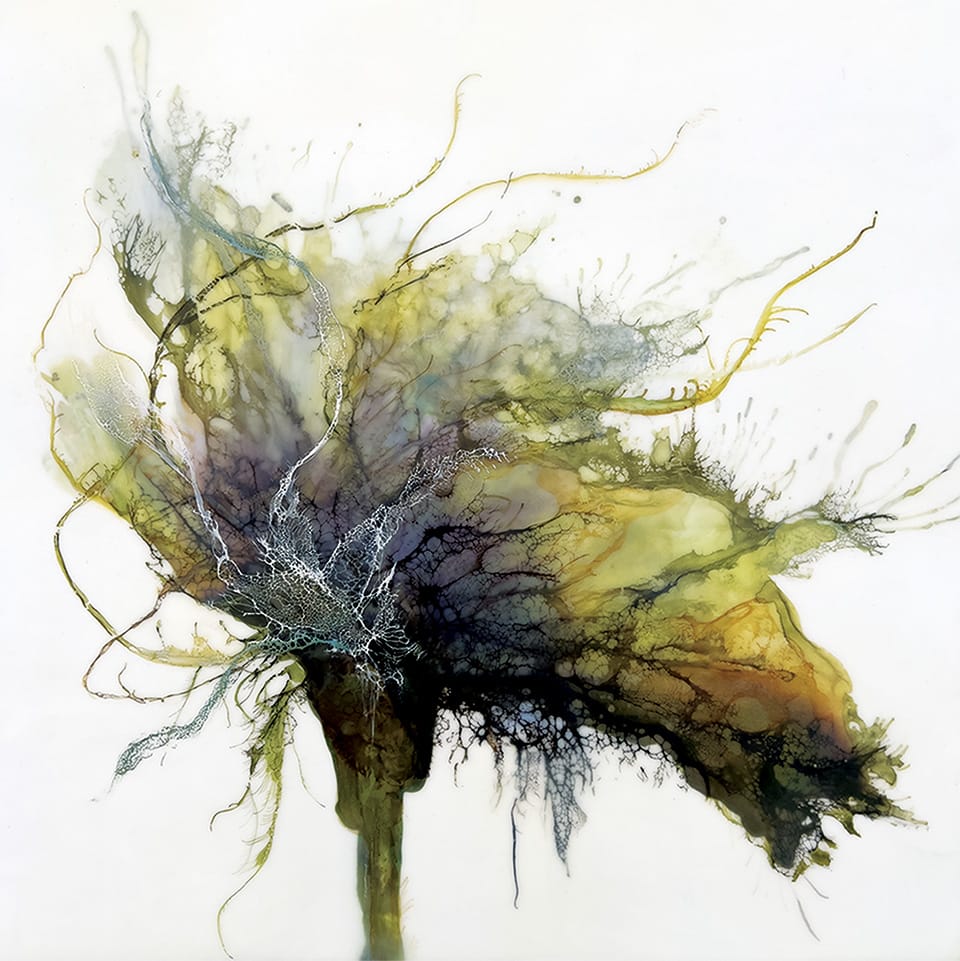
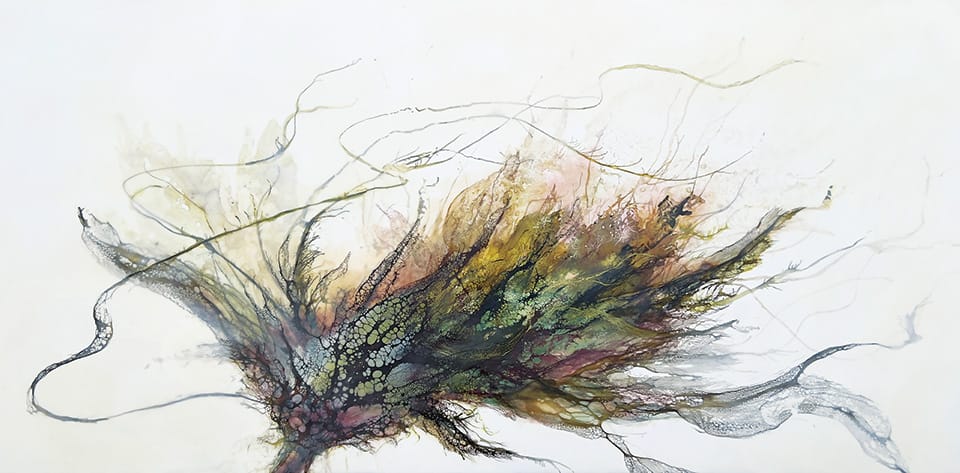
Tormey’s unique style comes from the many painting methods she has developed over the years including her signature Shellac Burn technique that allows her to create the distinctive web patterning that is prominent in all of her works.
“The most fascinating thing about shellac is that, like beeswax, shellac is an insect-based material. Think of it this way: Shellac is to the lac bug what the honeycomb is to the bee. In other words, it’s an insect-based waxy resin substance that’s produced and excreted by the lac bug. I think this makes it a beautiful companion to the beeswax in encaustic,” says the artist.
In her piece Faded Velvet, Tormey incorporated ink, shellac, and encaustic paint to create what feels like the moment just before the wind-blown tendrils of the lavender bloom release seeds into the universe. A marbled white background stands in for the unknown, taking on the mantle of Mother Nature while also giving the work a contemporary look and feel.
Her paintings are created on wood panels that can withstand the heat of her torch.
“I build up each piece with several layers of wax medium and white wax to create a blank canvas,” Tormey says. “Every painting starts off with these thick, juicy layers of wax. I call it the fondant surface phase. As I am fusing down these initial layers, I often start to see the painting reflected back at me before I even begin my creative process.”
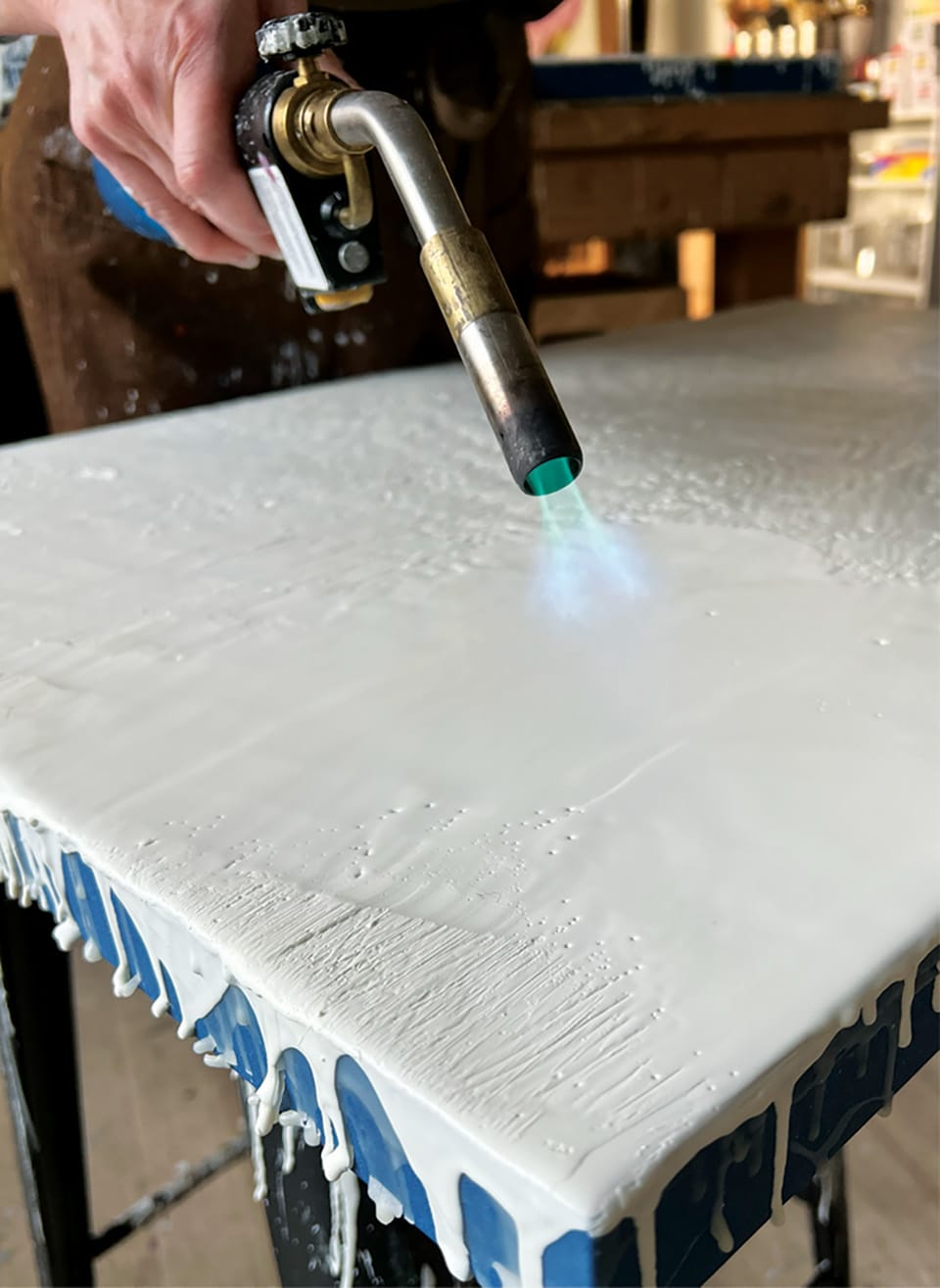
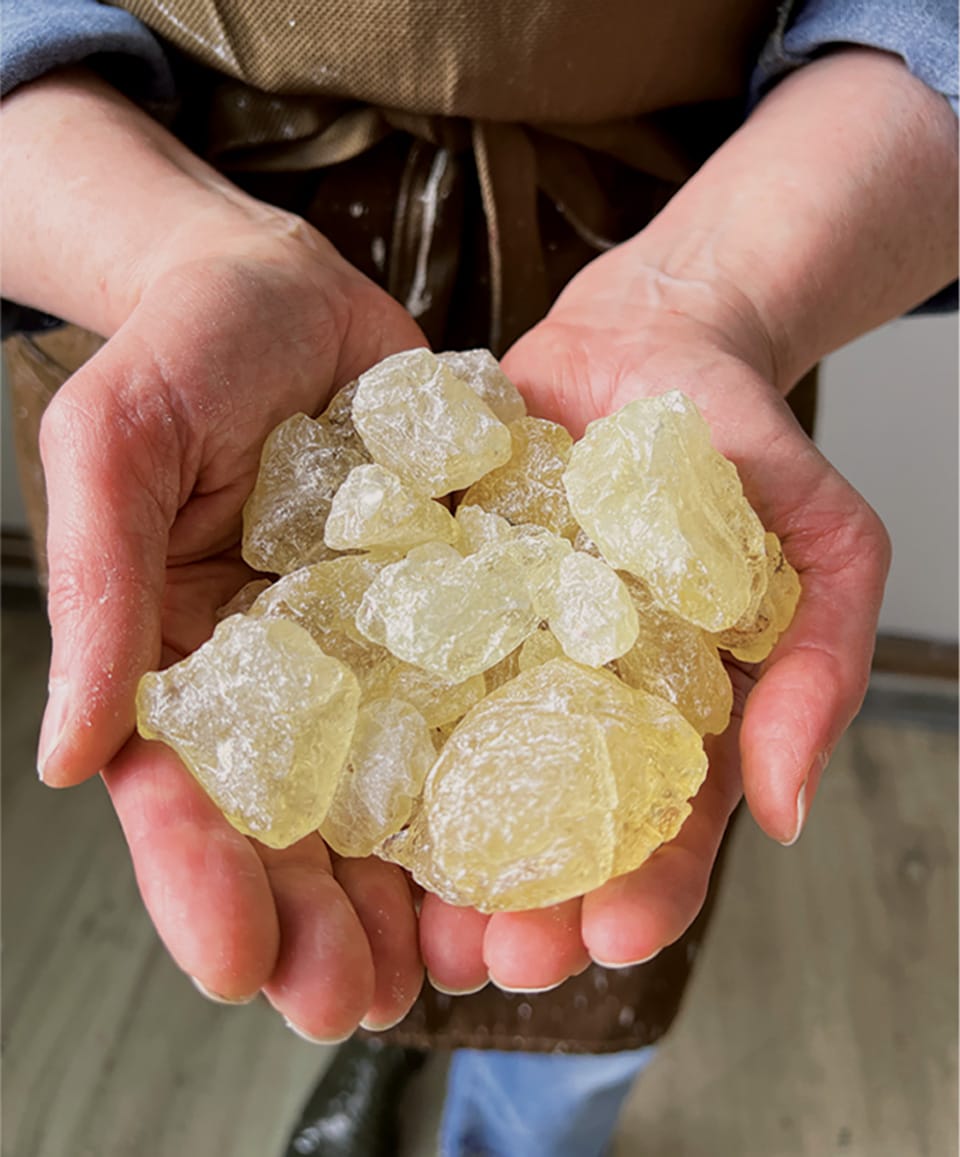
Encaustic is methodically applied layer by layer with a fusing of heat from Tormey’s blowtorch in between each application.
“The final work feels as though the imagery is suspended within the painting because technically it is,” says Tormey.
As her palette takes shape, the melting beeswax releases its honey aroma, and Tormey effortlessly wields her blowtorch as if it were a paintbrush until it slowly becomes an extension of her hands.
“I’ve always been a creative omnivore,” Tormey says. “early on, I made art from whatever was available to me, and I wanted to try every material, medium, and method I could get my hands on. But encaustic stopped me in my tracks and has held me in its spell for decades now.”
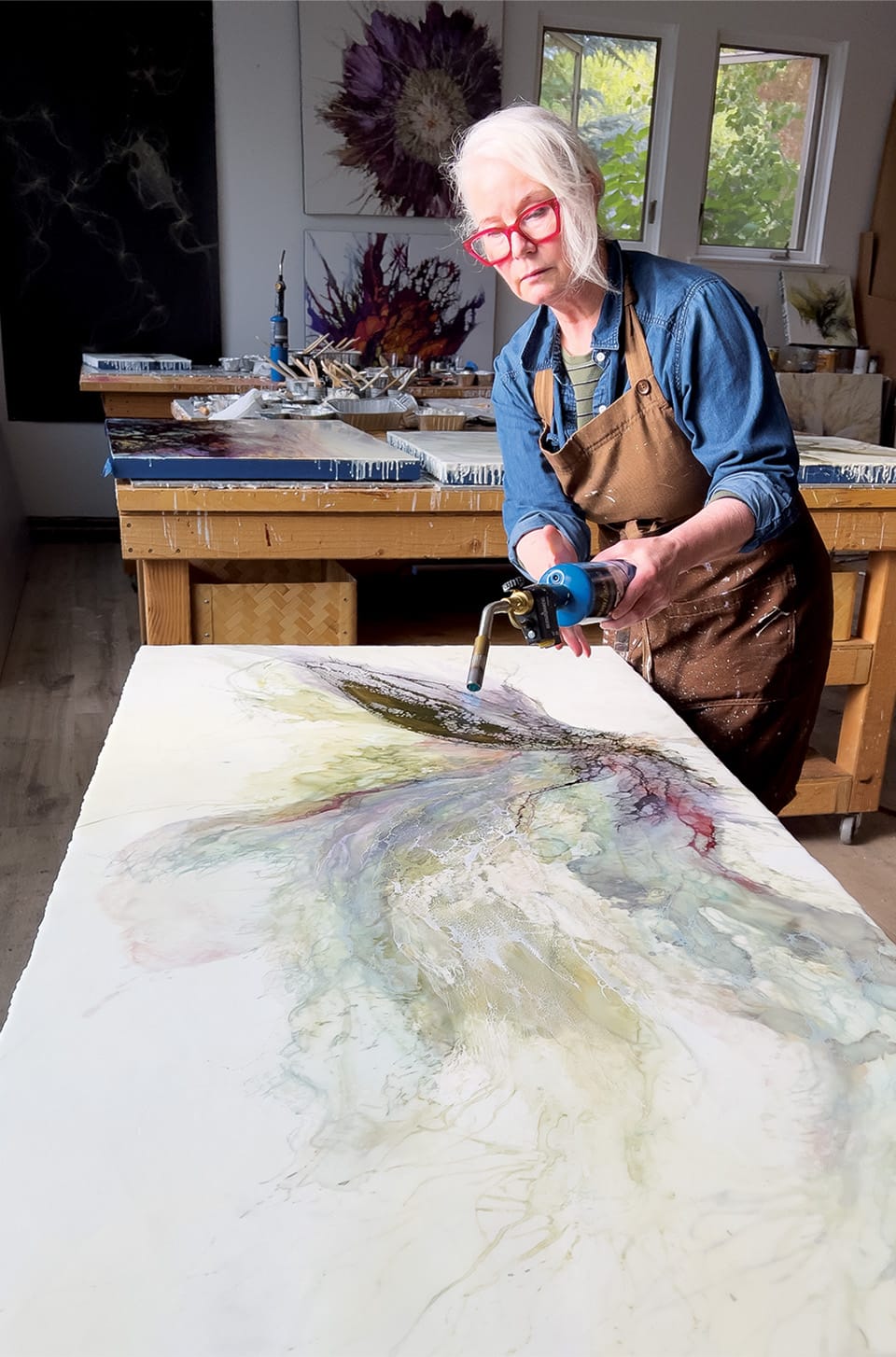
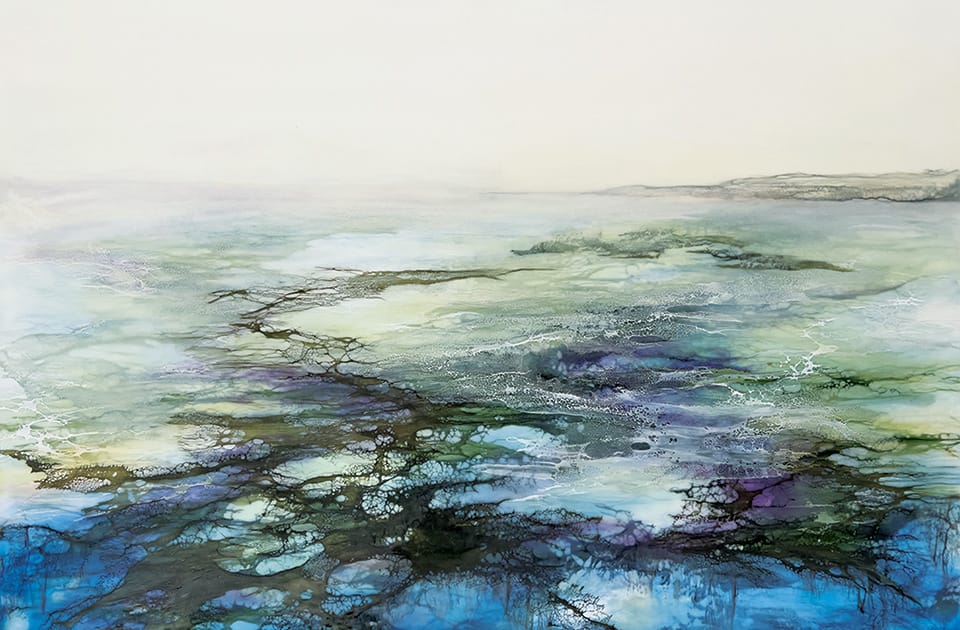
“The beautiful thing about encaustic is how it changes its state as you work. The wax moves from a solid to a liquid and back again as it cools. When I navigate the surface with my blowtorch the paint liquefies, and I can manipulate the material with my flame. Then, in my mind’s eye, a horizon line might emerge, or a floral form begins to unfold in the wax and a creative dialogue with my materials begins,” says Tormey.
One can’t help but notice the mystery that lingers in Tormey’s artwork, as each painting offers an invitation to explore and look deeper into the new worlds she creates.
Peering into the strata of one of her paintings carries with it the thrill of discovery, with each piece poised to reveal deeply hidden secrets and the echoes of a lost history.
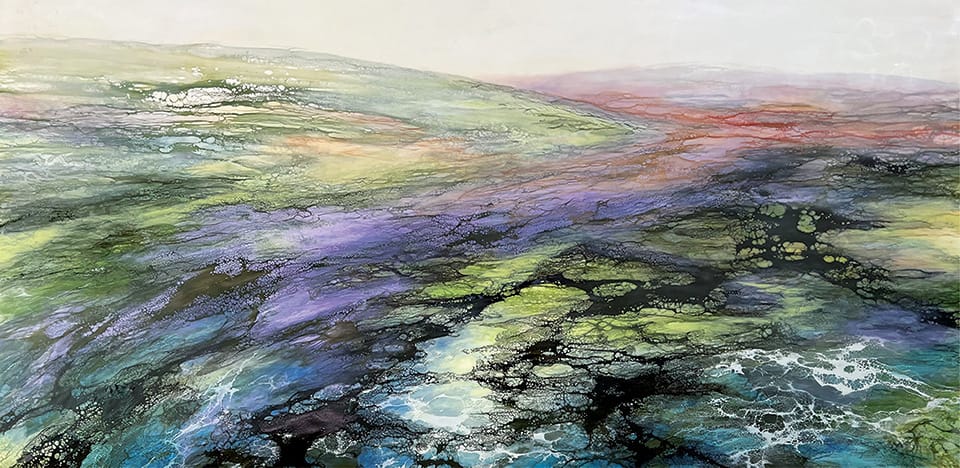
“Even after all these years of working with this medium, encaustic continues to draw me in with its unpredictability. There’s always a sense of collaboration because you can never fully control these materials. That push and pull dynamic is what keeps me in the studio, always curious about what the next discovery will reveal,” says Tormey.
“I’ve always been a creative omnivore,” Tormey says. “Early on, I made art from whatever was available to me, and I wanted to try every material, medium, and method I could get my hands on. But encaustic stopped me in my tracks and has held me in its spell for decades now.”
Alicia Tormey lives and paints full-time in the Sun Valley area, where she also conducts workshops and welcomes students from around the world who come to study her unique methods of encaustic painting.
Visit her website to explore available artworks, view her current gallery representation, and find details on upcoming exhibitions and art retreats.
whj FEATURE
