
Listen to our Spotify podcast about this article:
By Laurenz Busch
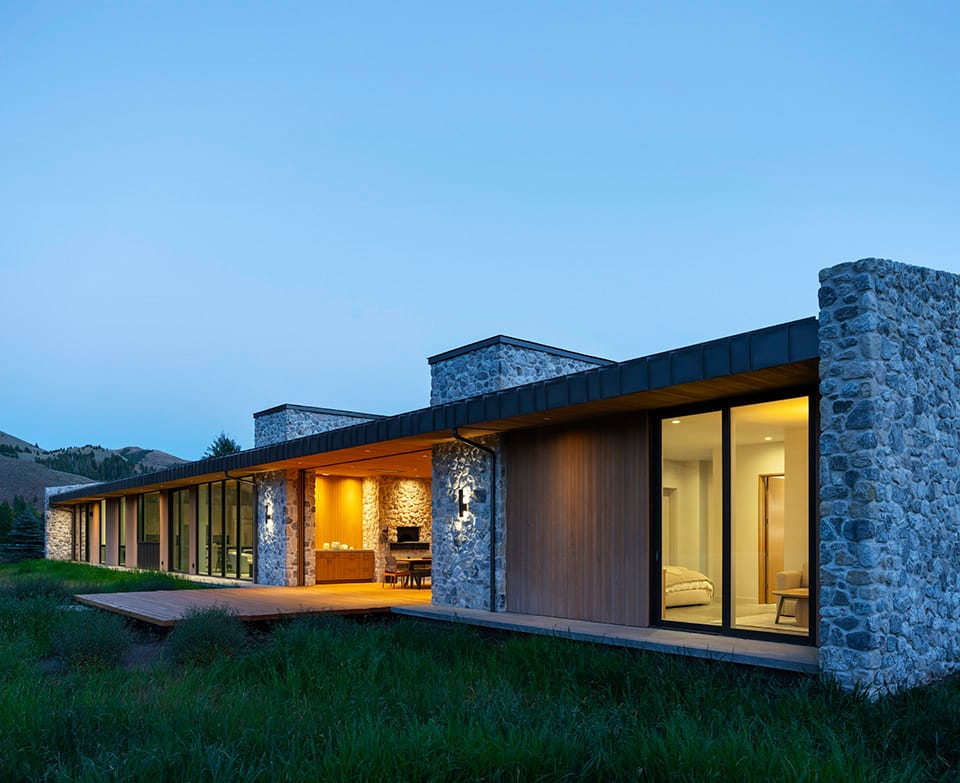
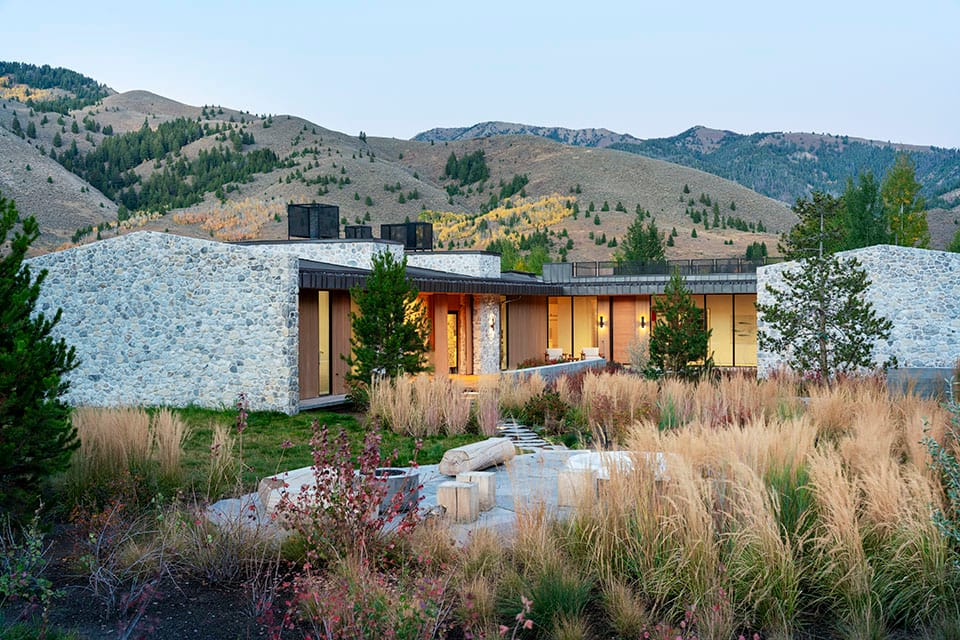
In a broad subalpine meadow north of Sun Valley, a low-slung modern home settles quietly into the land, surrounded by treed hillsides and framed by the Boulder Mountains with a long view of Durrance Peak. The home doesn’t feel built but rather revealed, as though it’s always been there, waiting among the golden grass. The project began with a simple directive: to let the site lead.
Design rooted in Mountain Calm
“The meadow is the muse,” Gretchen Wagner, the scape design studio architect, says. “On our first visit, the tall grasses had turned amber and swayed gently in the breeze. There was a stillness to it—a calm that made you aware of how small you were against those mountains. We wanted to feel that even once the house was built.”
“We’re frequently asked to interpret Mountain Modern,” Wagner says. “But in this case, the meadow dictated everything—proportion, height, even the color of the materials. It needed to feel low and human, not overly heroic.”
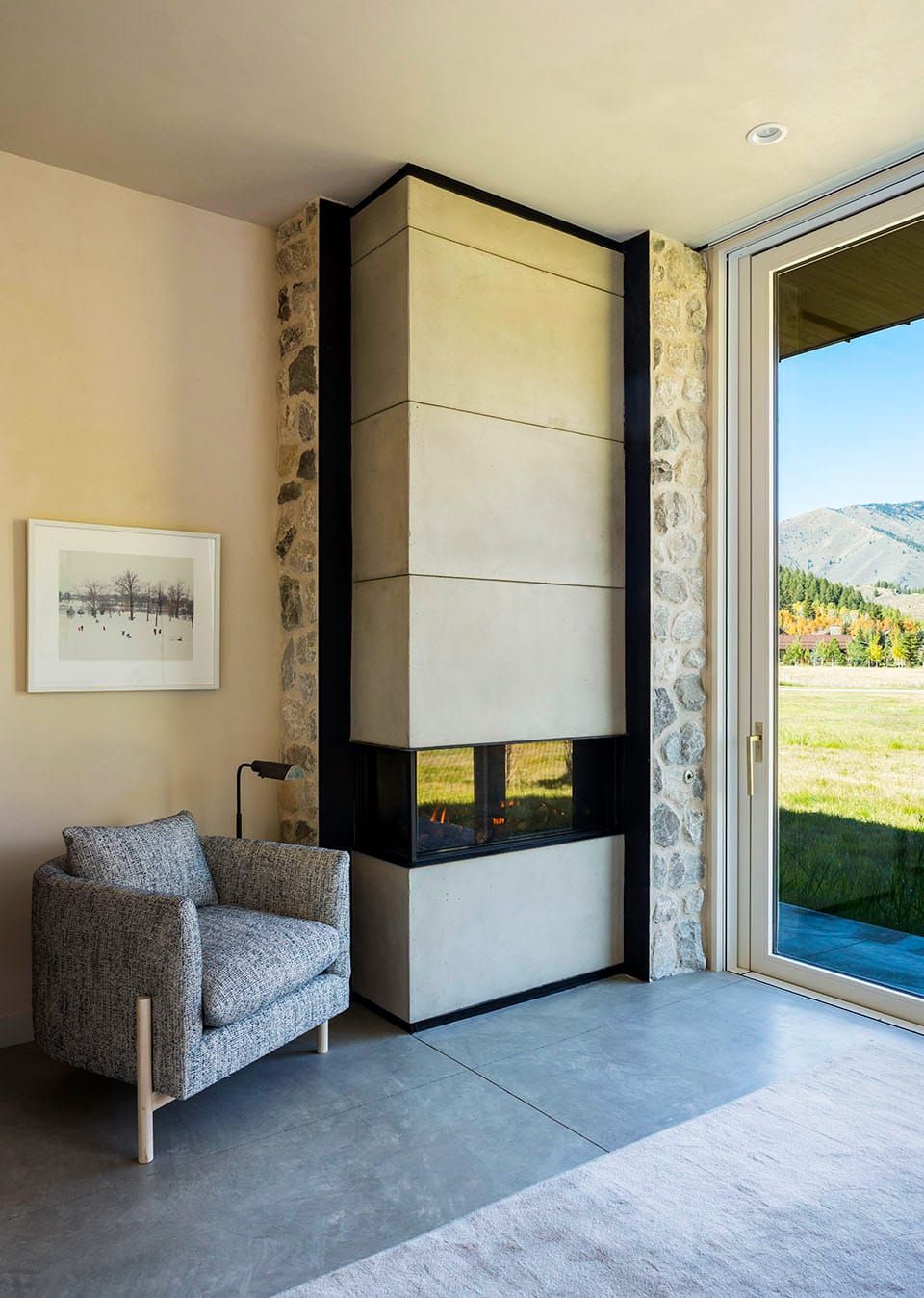
For Wagner, the design interprets Mountain Modern through restraint. The single-story structure rests on a cantilevered concrete base that anchors the home but rests lightly on the land. A rhythm of floor-to-ceiling windows, heated concrete floors, and warm cypress ceilings create a seamless connection between inside and out.
“We’re frequently asked to interpret Mountain Modern. But in this case, the meadow dictated everything—proportion, height, even the color of the materials. It needed to feel low and human, not overly heroic.”
–Gretchen Wagner, Architect, Scape Design
The home’s quiet confidence emerged through collaboration between Wagner, the owners, and their contractor, Paul Conrad of Conrad Brothers Construction, who was brought in early to help shape the build.
“It’s by far the best way to build a relationship and a home,” Conrad says. “We worked closely from the beginning to fine-tune constructability and design details—everything from framing to finish details.”
Conrad recalls the meticulous attentionto detail, such as the number of iterations it took to get the stonework just right. “The nuance of detail is critical to the outcome,” he says. “From the stone material itself to the layup and then the grout detail and color. These all greatly affect the look and feel and need to be just right.”
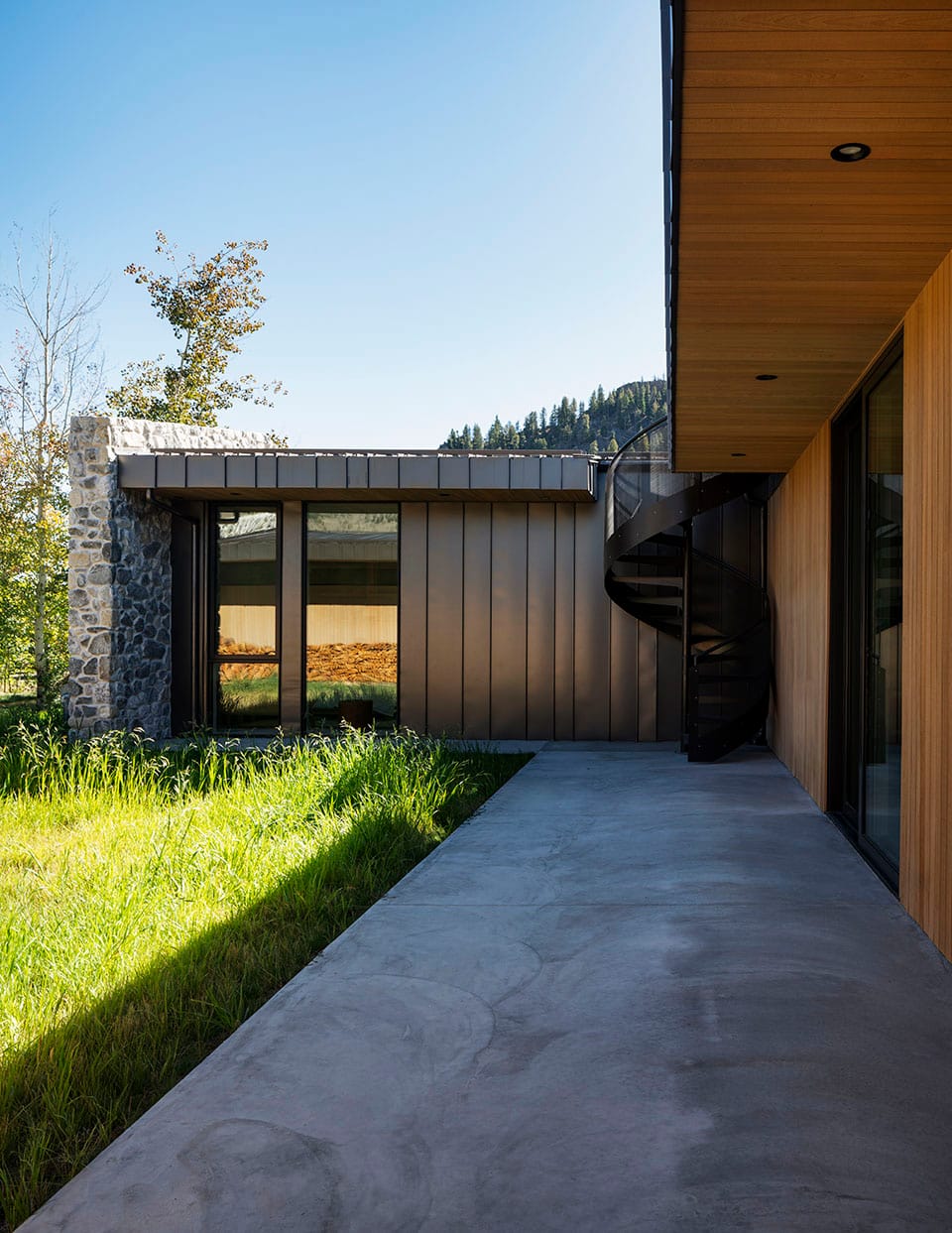
That attention to material is visible throughout. The home’s gabled stone ends, a custom mix of lighter and darker cobbled limestone, act as solid bookends to the triple-pane windows between them, “serving as a mostly windowless foil to the more articulated spaces,” Wagner says.
The interior palette—neutral and quiet—reinforces the atmosphere of calm, aided by soft, ambient lighting. Designed by Jennifer Hoey and Abbey Mayhew of Suede Studio, the interior embodies a “light, bright, and low-contrast” aesthetic—a departure from the traditional heavy timber and dark hues of typical mountain homes.
The kitchen, dining, and living areas flow together beneath one continuous roofline, and in the center hangs a sculptural chandelier by Ochre—an anchor, and the first view upon arrival.
“One of the earliest design goals was to keep the house low-impact. We wanted natural light, sustainability, and a sense of openness that didn’t overpower the surrounding landscape.”
–Jennifer Hoey, Interior Designer, Suede Studio

“We needed a light fixture that would ground the experience since the three areas share a room,” Mayhew says. “It becomes a visual anchor from the moment you step inside.”
In the kitchen, matching cabinetry conceals the hood while the range and dual dishwashers blend functionality with simplicity. A small desk by the window serves as a quiet workspace—a thoughtful nod to daily life.
Even the rug in the living room, Mayhew explains, shows the thoughtfulness of this serene Idahoan oasis. “The rug was custom-colored to match the concrete floors,” she says. “We went through several rounds of strike-offs to get the gray just right—not too warm, not too cool.”
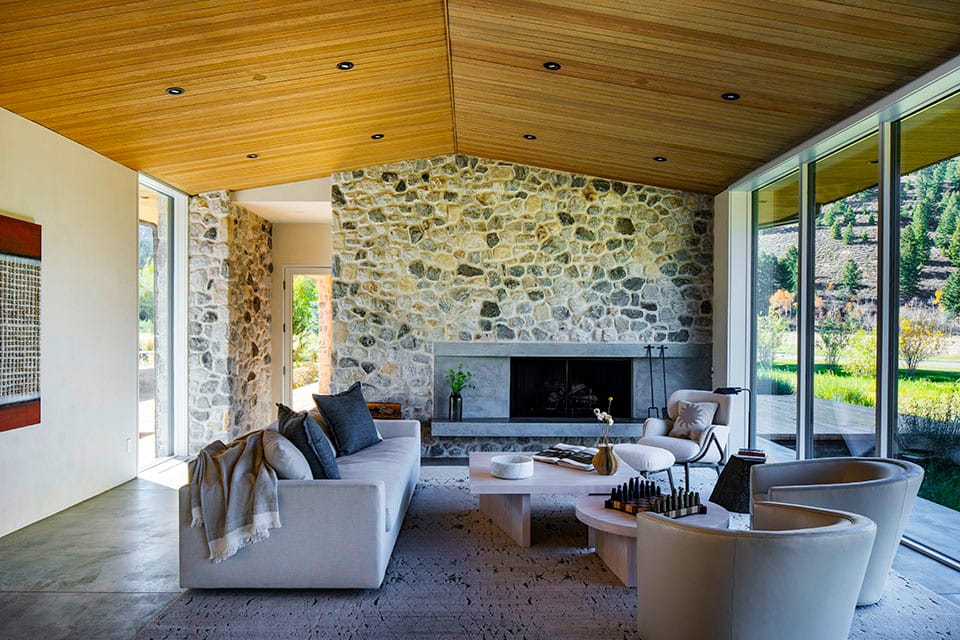
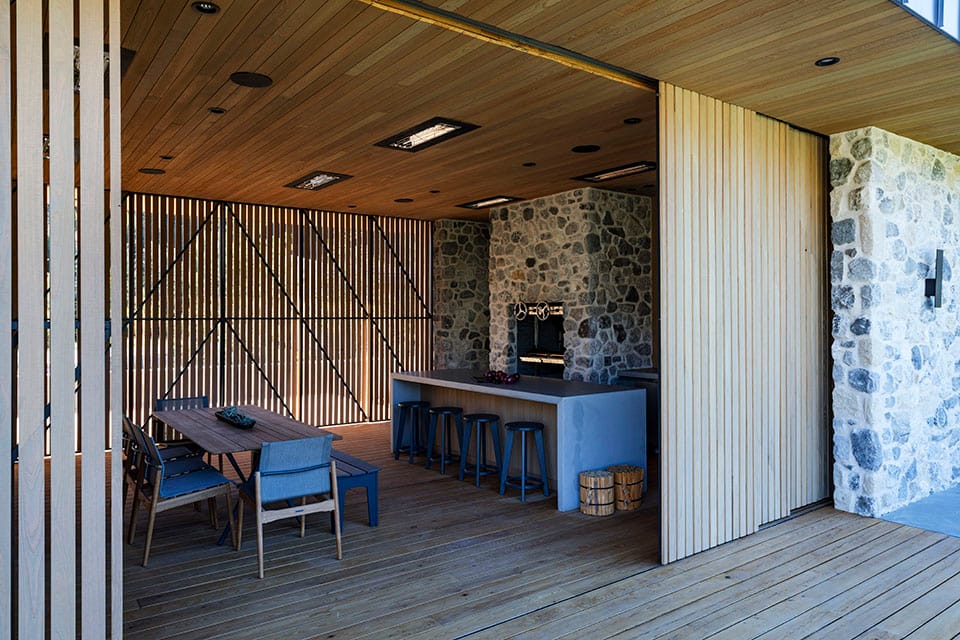
“One of the earliest design goals was to keep the house low-impact,” Hoey says. “We wanted natural light, sustainability, and a sense of openness that didn’t overpower the surrounding landscape.”
The home’s systems match that philosophy as it’s powered by a 16-kilowatt solar array from Bluebird Solar, efficient heat pumps with gas backups, and triple-pane Loewen windows. Every room is oriented for light as the main living areas open north toward the mountains and more intimate spaces—such as the library and sons’ bedrooms—look inward.
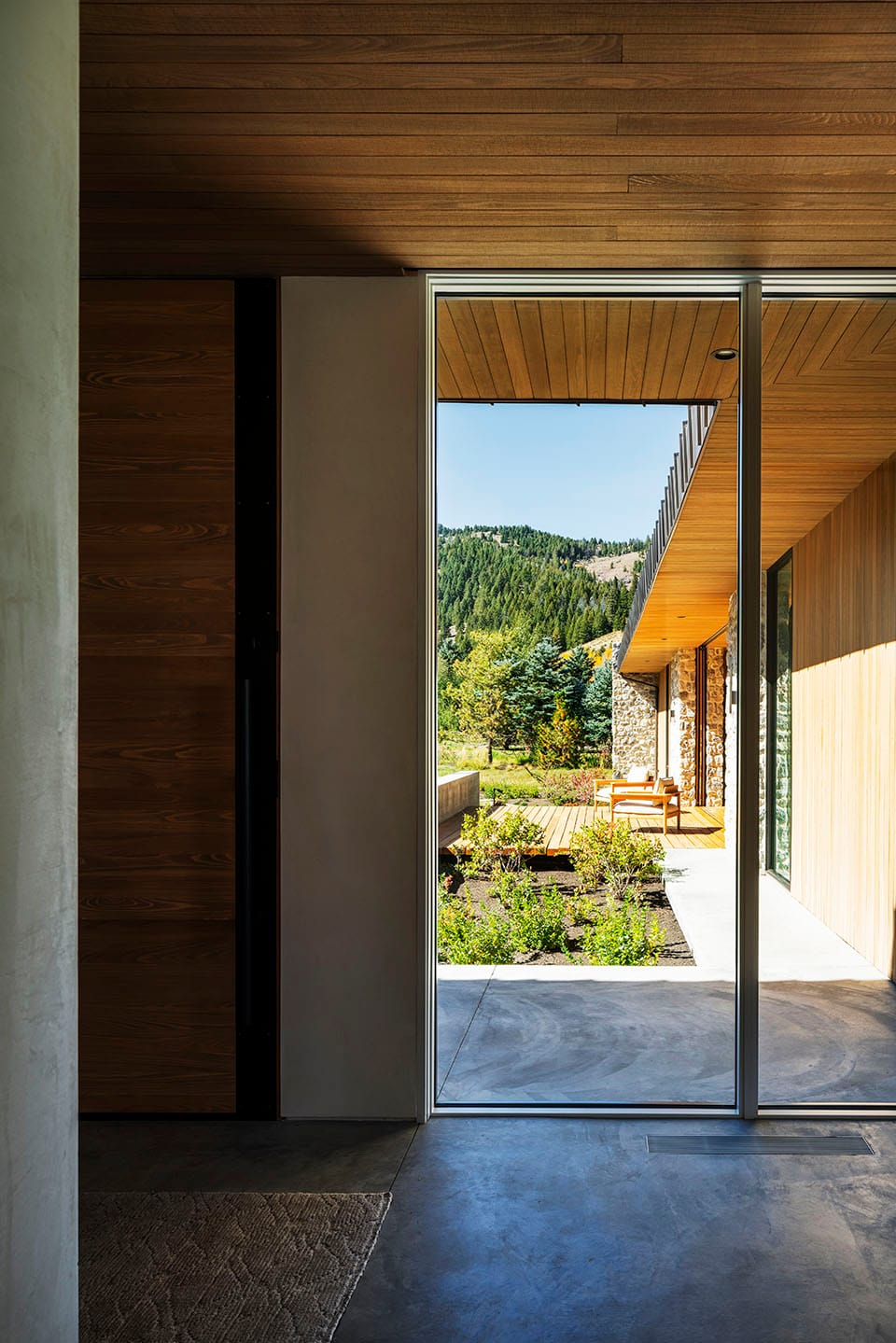
For Ben Young, the landscape architect and owner of BYLA Landscape Architects, the goal was to create something “of the place.” Rather than imposing a manicured garden, his team worked with what would be at home in the meadow to form a courtyard that creates its own intimate and native ecosystem.
“It didn’t need a ring of spruce trees to announce itself. It just sits there lightly— part of the land, not apart from it.”
–Ben Young, Landscape Architect BYLA Landscape Architects
“We’re hardwired as humans to have a surrounding—a sense of enclosure,” he says. “The architecture creates that, and the landscape makes it relatable—something you can touch, walk through, and see reflected in the mountains.”
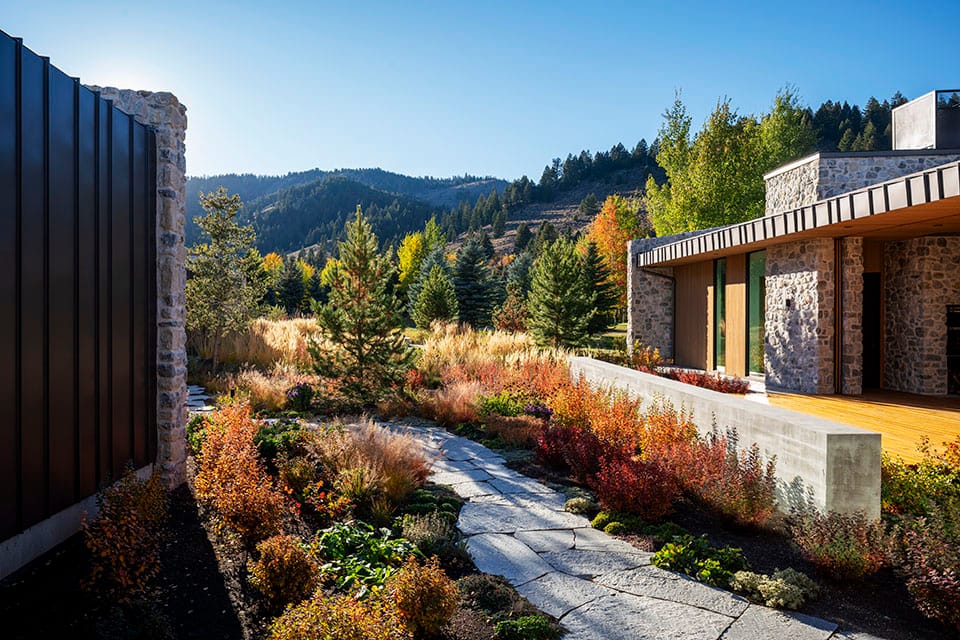
Young’s team used plants that would thrive in the meadow’s high-water table and thin mountain soil, like native lodgepole pines, basin wild rye, and prairie dropseed. Western sand cherry and Rocky Mountain juniper mingle among them. Outside the courtyard, the areas around the home are all stitched together in unison by native mountain brome grasses, which in turn seamlessly connect to the adjacent meadows.
“It didn’t need a ring of spruce trees to announce itself,” Young says. “It just sits there lightly—part of the land, not apart from it.”
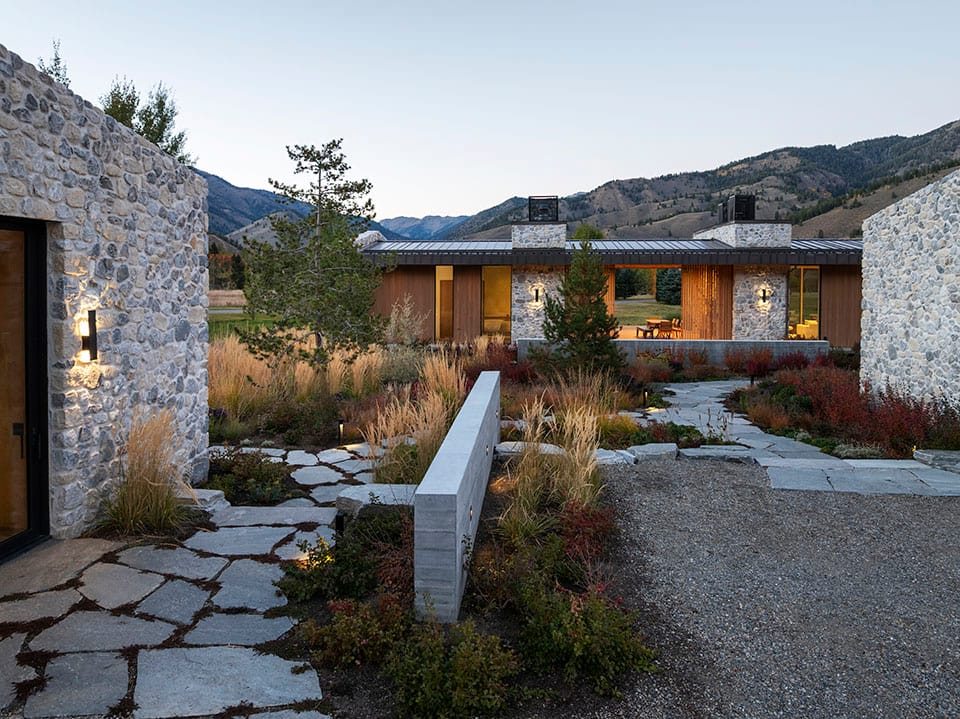
A stone-lined path winds through the courtyard leading toward the glass-framed entry hall. Opposite the entry in the back courtyard, a circular staircase rises discreetly to a rooftop stargazing terrace.
As if choreographed, the home moves through shadow and stone, toward a burst of light and sky.
At the heart of the central courtyard is the outdoor living area—a flexible space with open views that can be closed against the mountain winds with two sets of slatted sliding pocket doors. It provides a bit of visual relief for the home, giving the guest suite some autonomy while extending views toward the mountains from the entry path.
“The goal was never to dominate the land, but to be of the land—to create something that reflects the calm, the space, and the light of this valley. We wanted the home to feel as though it belonged here— quiet, strong, and serene.”
–Gretchen Wagner, Architect, Scape Design
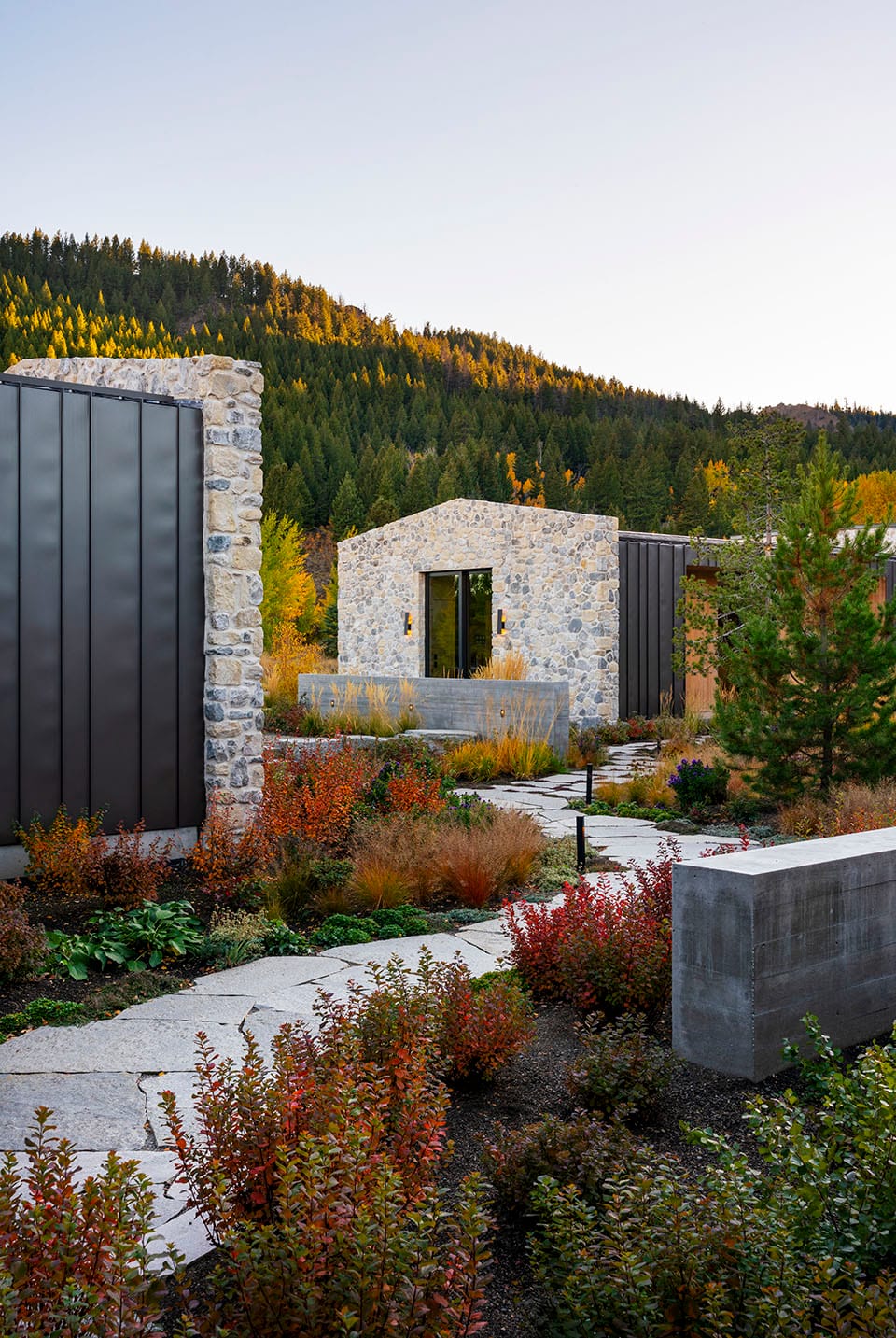
Nearby, a detached barn-style structure complements the main house. The materials of the house are repeated with the metal roof draping down the sides and enveloping areas of cypress siding. On the inside, it provides space for work and recreation, an office and sauna, pool table and kitchenette, spa access and plenty of room for an adventurer’s gear pantry.
The result is a house that feels timeless yet contemporary, modest and luxurious—with modern precision softened by the textures and rhythms of the meadow around it.
“The goal was never to dominate the land, but to be of the land—to create something that reflects the calm, the space, and the light of this valley,” Wagner says. “We wanted the home to feel as though it belonged here—quiet, strong, and serene.”

whj PROFILE
