
Moderated by Lindsey Van Otten
Edited by Cassidy Mantor
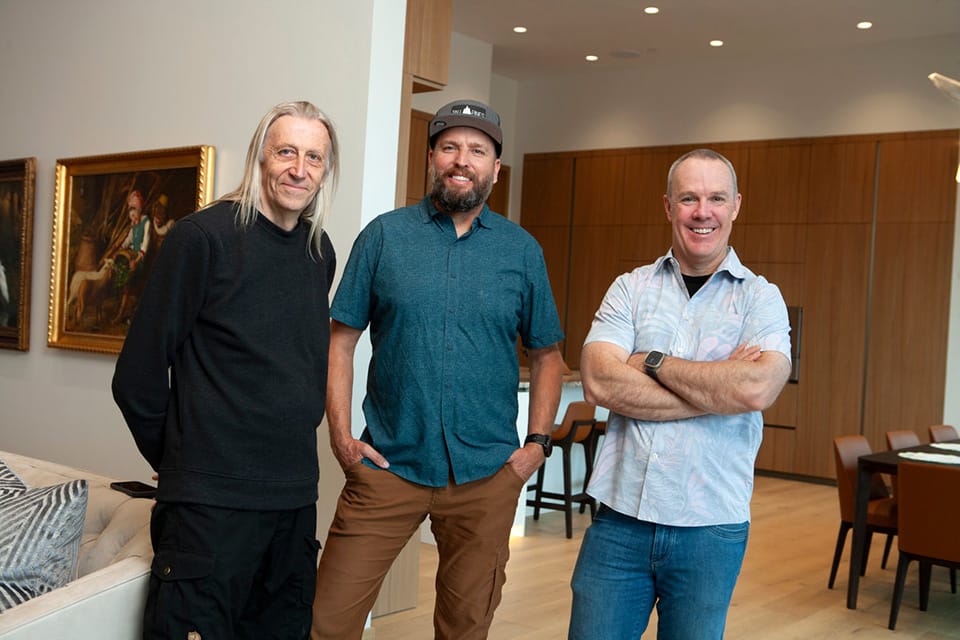
In April of this year, WHJ gathered experts for a roundtable discussion. From energy-efficient building and landscaping strategies to adaptive reuse, Willie Eschenfelder of Eschenfelder Landscaping, Garrett Strong of Tall Pines Construction, and Jean Yves Lacroix of Lacroix Design offer their thoughts on how to increase a home’s resilience. Once a label that invoked a higher price tag for green building, “sustainability” is now inherent in many of the methods and materials used today. In this roundtable conversation, our experts shed light on how innovation is contributing to smarter custom homes and through this discussion they encourage us to redefine what a timeless home means in Park City today.

OUR PARTICIPANTS:
Willie Eschenfelder of Eschenfelder Landscaping. From hardscaping to annual planting, Eschenfelder Landscaping has extensive experience in selecting the right plants and materials for every project. They are a local family-run business that has built its reputation in the community based on precision and quality. They have decades of experience customizing irrigation systems and consider sprinklers the pulse of the landscape. They source the highest quality soil and native plants with intention, focusing on the color, texture, and growth potential of each plant. Their landscaping services include large trees, shrub and perennial design, pavers and masonry, designer patios, and snow removal.
“We like to look at energy efficiency in the landscaping from a resource standpoint. How much watering, sunlight and fertilization will the lawn and plants need? Our process starts with learning how our clients will use their yard.”
– Willie Eschenfelder, Eschenfelder Landscaping

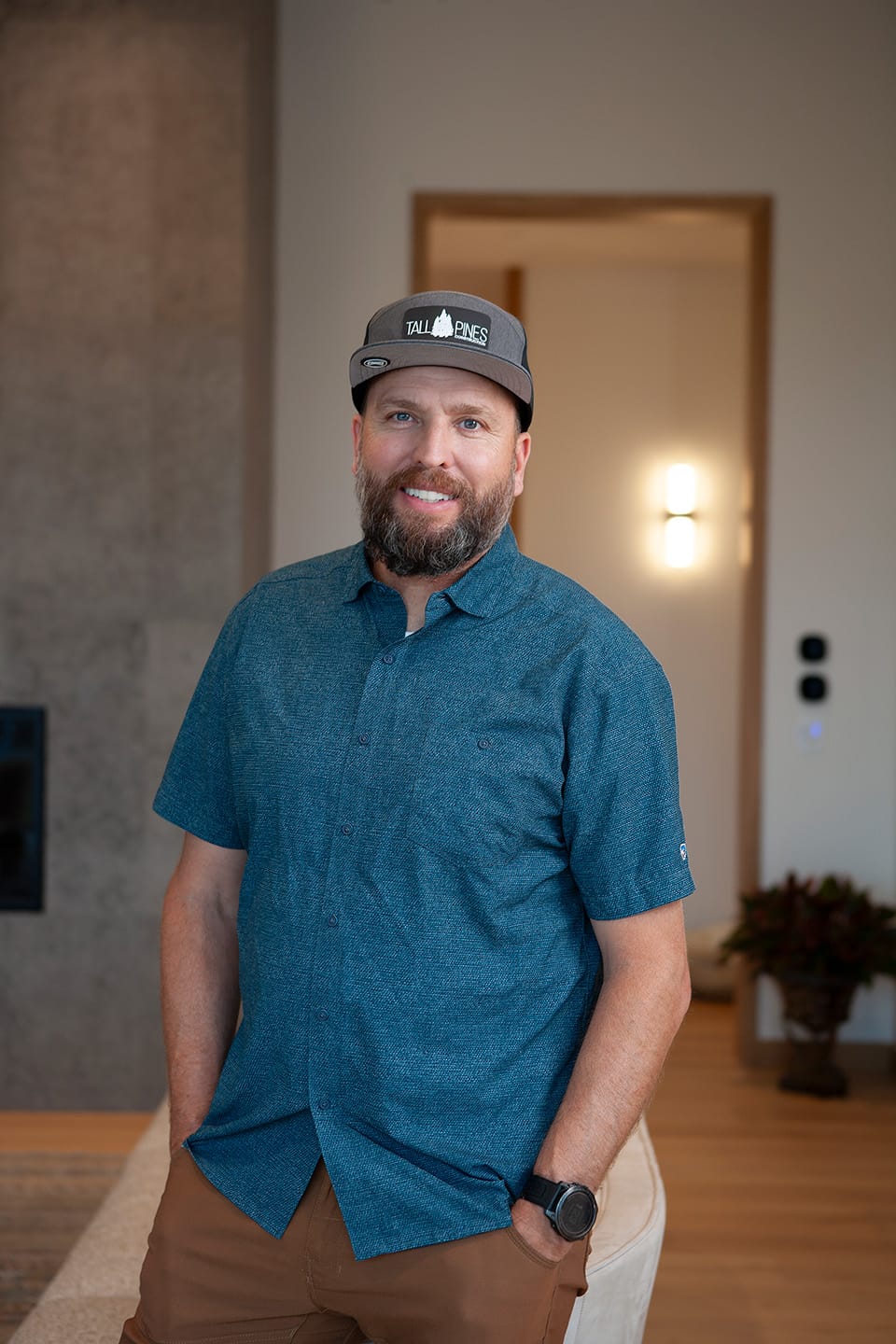
Garrett Strong of Tall Pines Construction. With over two decades of experience in Park City, Tall Pines is a local company specializing in crafting luxury homes that seamlessly integrate sustainability with exceptional design. Their portfolio demonstrates their dedication to energy efficiency, environmental responsibility, and close collaboration with architects and clients. They work hand-in-hand with their partners to deliver homes that embody innovation and ecological integrity, setting a benchmark for sustainable luxury living.
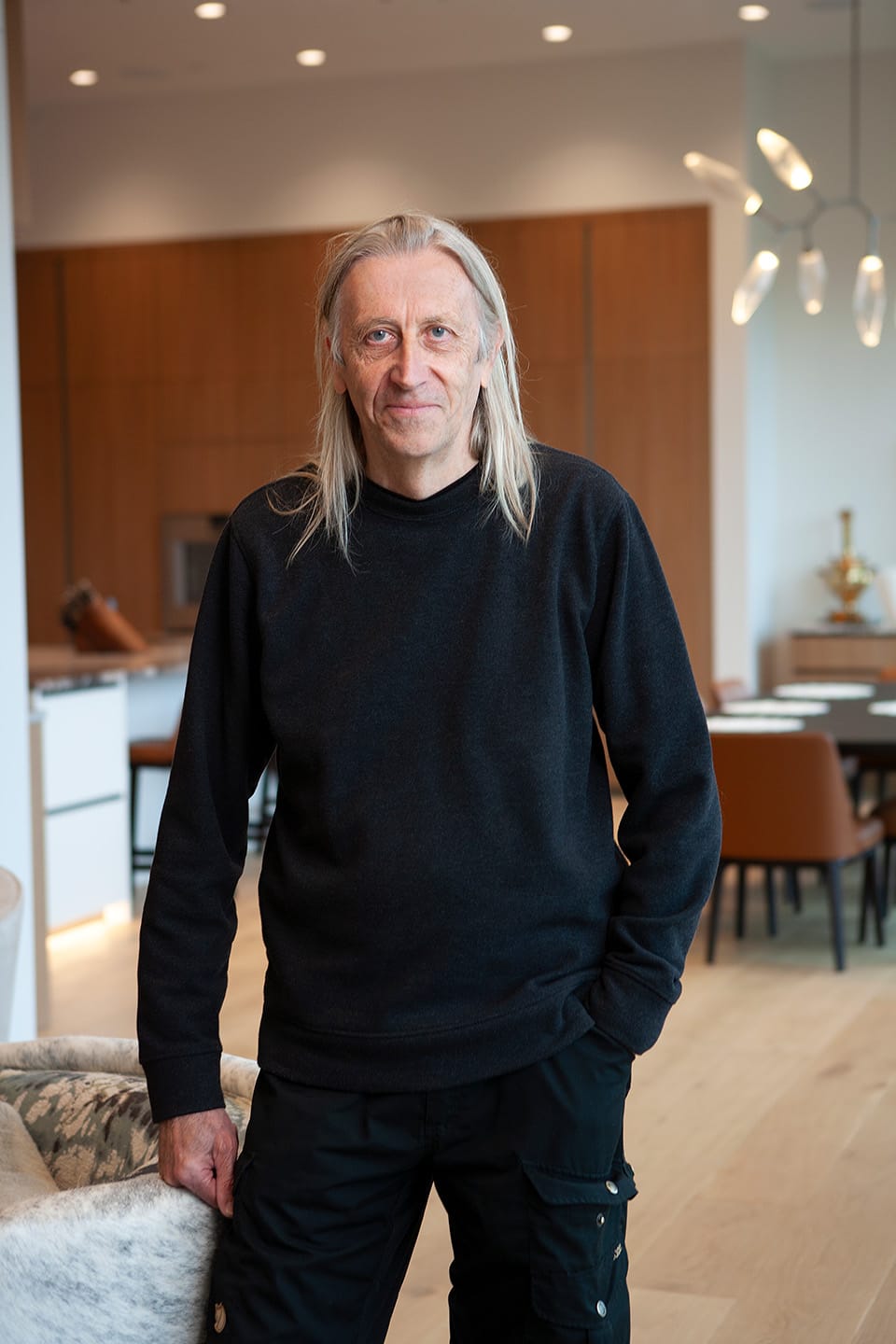
Jean Yves Lacroix of La Croix Design. Jean-Yves Lacroix is the founder and senior designer of Lacroix Design, L.C. He offers clients a creative and hands-on approach, bringing a unique blend of experience that is informed by the new and the old worlds. Growing up in the French Alps, Jean-Yves obtained a professional degree of Carpenter and Cabinetmaker from the Ecole des Arts et Metiers in Geneva, Switzerland. He subsequently obtained a diploma in Architecture from l’Ecole d’Ingenieurs, also in Geneva. Jean-Yves began his career in France doing both Residential and Industrial Design and then joined the family business where he mastered the art of designing and building handcrafted chalets. It was during this period that he developed Lacroix Design’s approach that values quality, aesthetics, and eco-sensitivity.
How does energy efficiency factor into your work?
J-YL: When designing any home, the main passive design strategies for energy efficiency are the orientation, thermal mass, and insulation. South-facing is the best. When the sun is low in the winter, southern orientation lets the home capture what energy the sun releases inside the home and it can be harvested into the concrete flooring and other thermal masses.
GS: Energy efficiency is one of the cornerstones of our construction philosophy. While each of our clients’ needs are different, they all love living in comfortable spaces, saving energy, and knowing that they are doing their part in creating sustainable homes. We, in turn, love collaborating with architects and designers and homeowners to make this a reality. Optimizing passive solar design, incorporating features like strategically placed windows that maximize solar gain in winter and provide shade in summer, alongside precisely angled exterior shades to regulate seasonal heat, are just a few of the ways we achieve this.
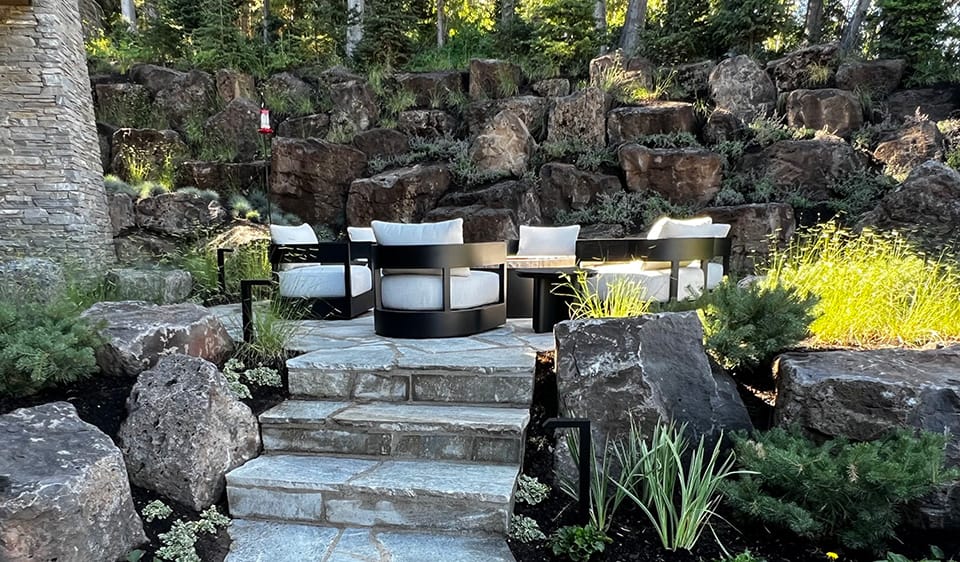
WE: We like to look at energy efficiency in the landscape from a resource standpoint. How much watering, sunlight, and fertilization will the lawn and plants need? Our process starts with learning how our clients will use their yard. If they don’t need a lawn for kids or dogs, we try to eliminate lawn areas whenever possible. We also try to eliminate non-functional grass. These areas are usually along the sides of homes, in parking strips or on steep hills that we can convert to require less maintenance. We also like setting up drip grids that ensure efficiency by watering the plant at its roots instead of a more generous water application that includes areas that don’t directly need watering.
What if the house can’t face south?
J-YL: Due to subdivision configurations, sometimes I design homes that have northern views. Clerestory windows are good design solutions that increase the efficiency of north-facing homes because they bring the southern light in. Using thick concrete walls on the south side of a north-facing home will also help. Those walls in combination with a radiant heating system in the floor will warm the decks and bring year-round comfort to the northern side.
GS: This is just one of the fun challenges to navigate and air tightness and better insulation are two tools we use. We have also refined our HVAC expertise by utilizing geothermal and combining radiant heating and forced air cooling within a single system, enabling efficient temperature control during shoulder seasons—a geothermal capability that was previously unachievable. These days we have many heating and cooling options to fit the right needs for the house. The Sun Gazing Home (a net-zero LEED Platinum-certified first-of-its-kind in Utah home designed by Lacroix with heliocentric energy) exemplifies this progress. It has 12.5-inch-thick walls, quadruple-glazed windows, and innovative thermal masses.
What sustainable materials do you regularly use?
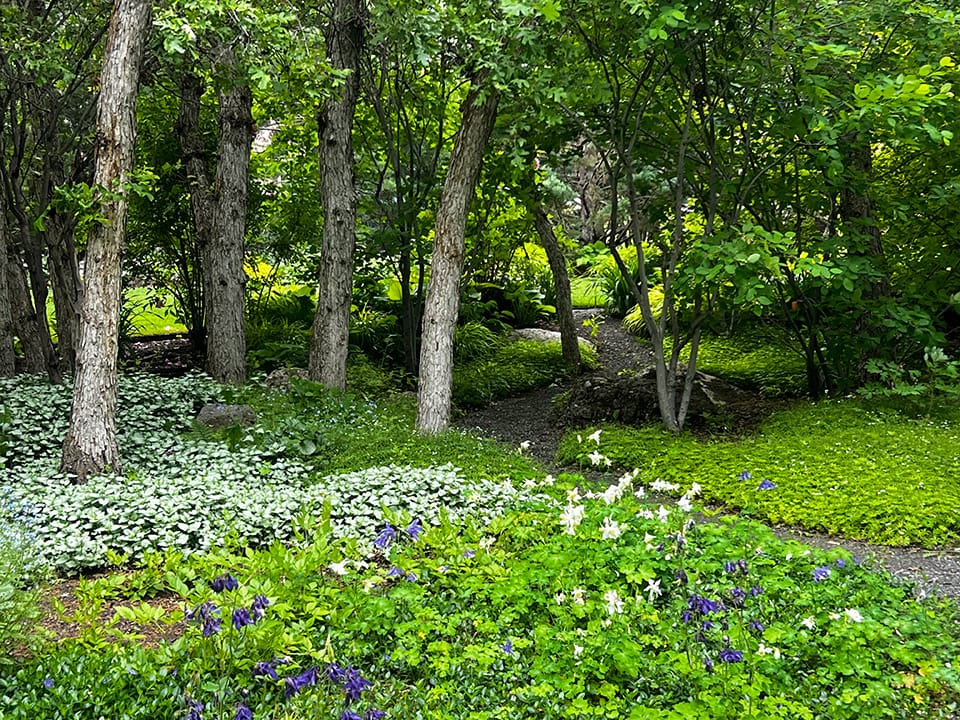
WE: As we upgrade the home’s landscaping, we replace lawns with beautiful native meadows that are filled with much more drought-tolerant plants and flowers. Xeriscaping is a more responsible way to landscape as it uses our existing soils and plants that work in this ecosystem, and it also helps enhance the home’s sense of place with an authentic aesthetic that delivers both visual and environmental value.
GS: Stone, steel, and metal roofing form the foundation of our builds, paired with reclaimed wood from local sources and low-carbon concrete mixes that cut embodied emissions by up to 30%. Our latest project features a fire-resistant concrete veneer that complies with Summit County’s stringent fire codes, delivering longevity, safety, and zero upkeep. In the Gulley House (a LEED Platinum remodel), we incorporated reclaimed timber for beams, repurposed antique doors, and sourced reclaimed hardwood floors, enhancing aesthetic warmth while minimizing waste and preserving resources.
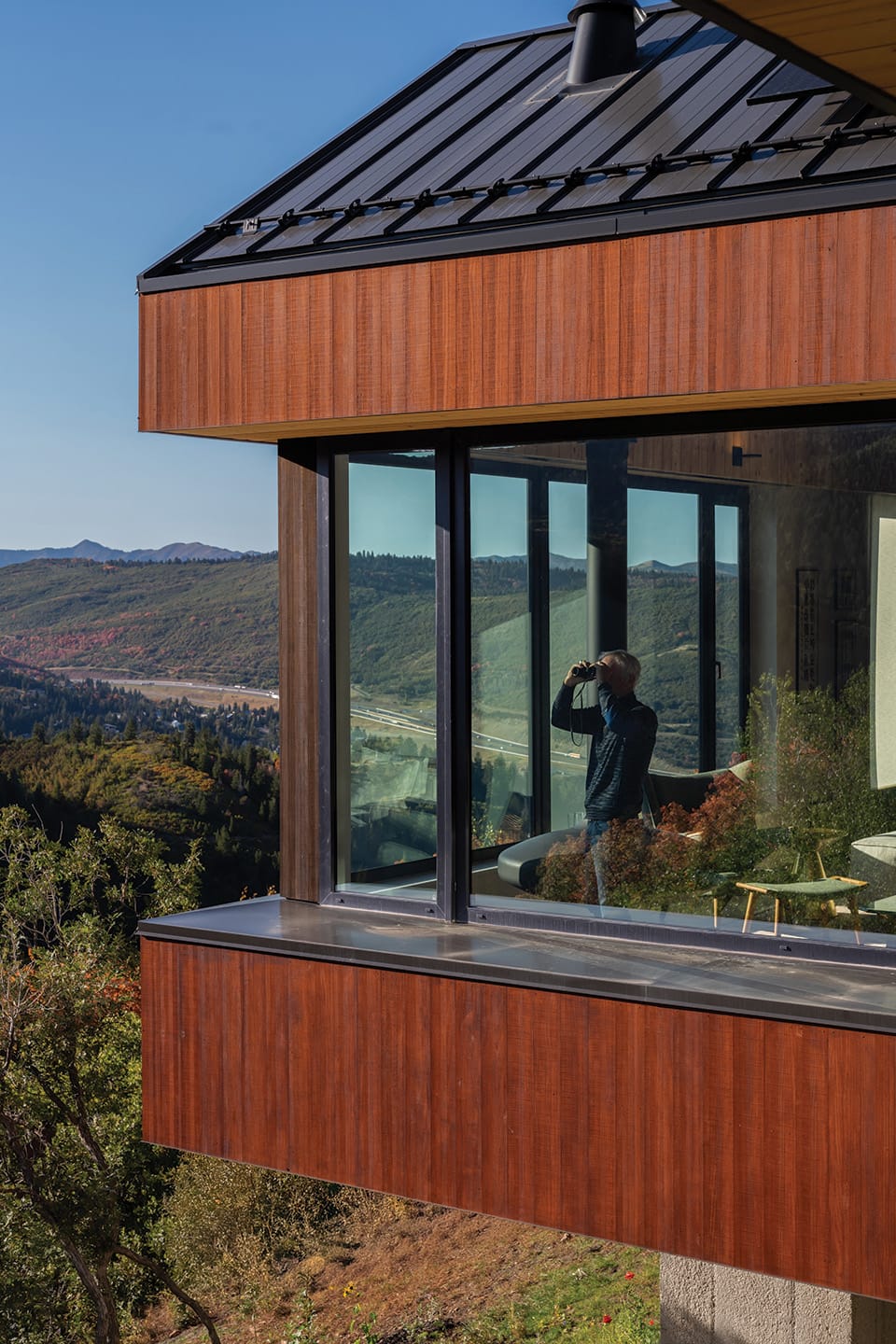

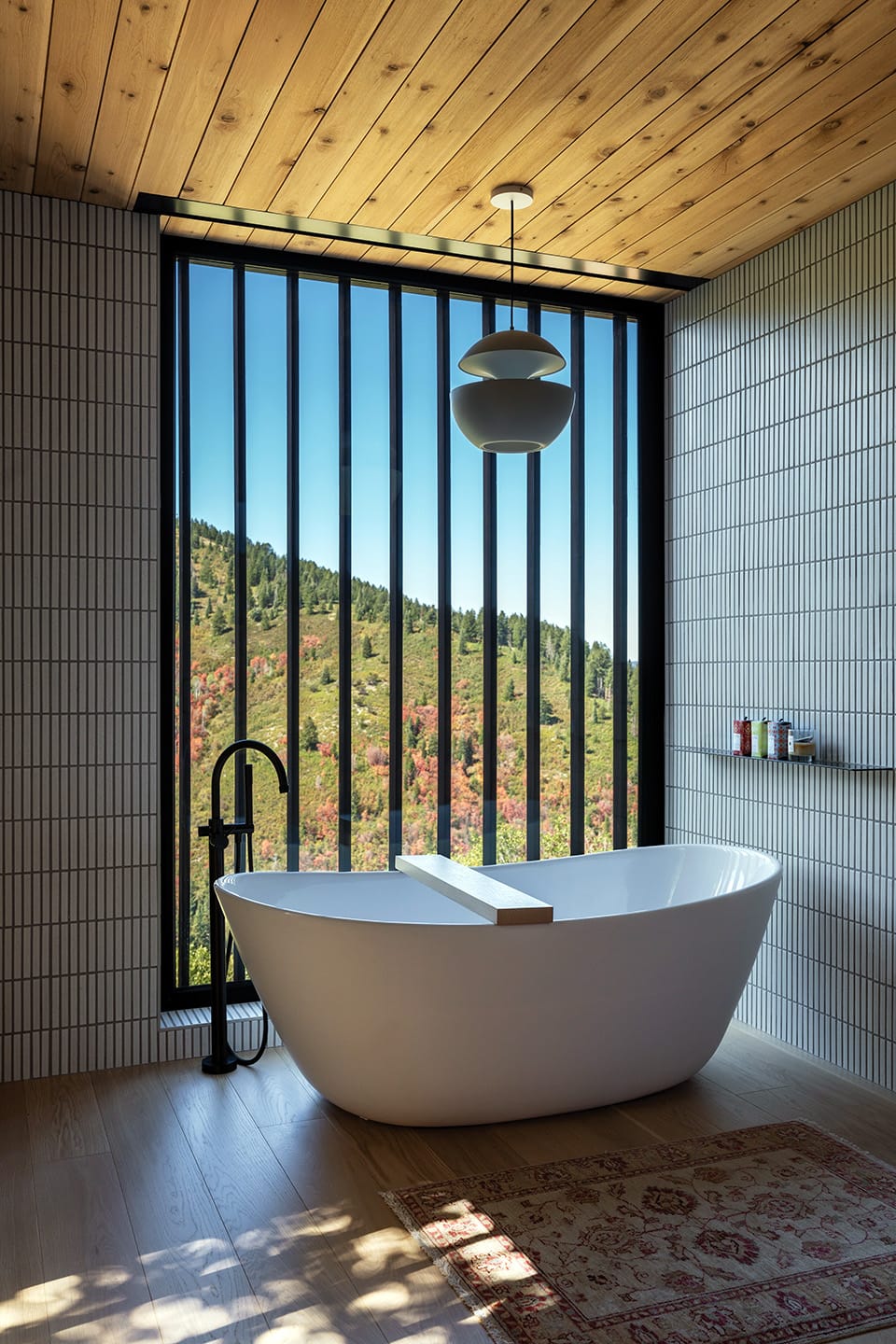
J-YL: While we still use quite a bit of regular lumber in high-end residential construction, a good portion of the materials we are using are engineered lumber and steel. If we don’t take into account the chemicals used in the glue and the transportation, it is a great option. However, depending on the project, there may be constraints that get in the way of our best intentions. For example, a project here in Park City required a massive curved steel beam and the only plant able to bend it was in California.
How can residential buildings incorporate rainwater harvesting and greywater recycling?
WE: Since we get minimal precipitation in our region, installing rainwater harvesting or grey water systems are not usually financially viable options. Local regulations require homeowners to keep drainage and rainwater on their property, and we see that as an opportunity to use that water to irrigate lawns, woods, and native areas.
GS: In Utah’s arid climate, water conservation is a priority. Where appropriate, we install rainwater harvesting systems that capture snowmelt in underground cisterns for reuse. The Sun Gazing House is an example of this. Greywater recycling systems irrigate landscapes, reducing potable water demand by 40%. Low-flow fixtures, such as 1.28 gallons per flush (GPF) toilets, also significantly decrease indoor water use. Through our LEED-certified projects, these systems integrate effortlessly into luxury designs, balancing efficiency with comfort and supporting Park City’s water sustainability goals.
“The O’Meara Residence is a great example of net-zero homes. The owners work patient as they searched for the right property with southern views. Large expanses of glass allowing it to capture the sunlight, and concrete floors and an interior wall act as thermal masses. Rooftop solar thermal panels capture energy year-round that heats water that is stored in a buried and insulated cistern and is released during the winter months.”
– Jean-Yves Lacroix, Lacroix Design
J-YL: Rainwater harvesting is quite easy to do. It minimizes runoff, but if I recall, a max of 2,500 gallons is allowed per parcel in Utah. We used this strategy in Echo Spur, which is a small eco-friendly development located on Echo Spur Court in Old Town of Park City. It features seven custom mountain-contemporary residences utilizing the latest sustainable strategies such as super insulation, solar panels, rainwater harvesting, green rooftop deck/patios suitable for flower or vegetable gardens and smart controlled lighting. So far, I have not been asked to work on greywater recycling.
What do you do to offset the energy and resources use inherent in creating high-end custom homes?
J-YL: Many luxury homes around Park City are empty most of the time and “house” only two or three people. My answer to that is to design legacy homes with very efficient floor plans. I am a Design Professional in Utah, but I was trained as an architect in Switzerland. We did not have the luxury of space in Europe, and the construction techniques used are very expensive to build. Prefabrication is hard to achieve in high-end homes and often, architectural guidelines in subdivisions prevent us from doing it. The best green project I have done is the O’Meara Residence with Tall Pines Construction. All the walls – even the curved ones – were built out of structural insulated panels and prefabricated in factory. There was no waste at all on the job site.
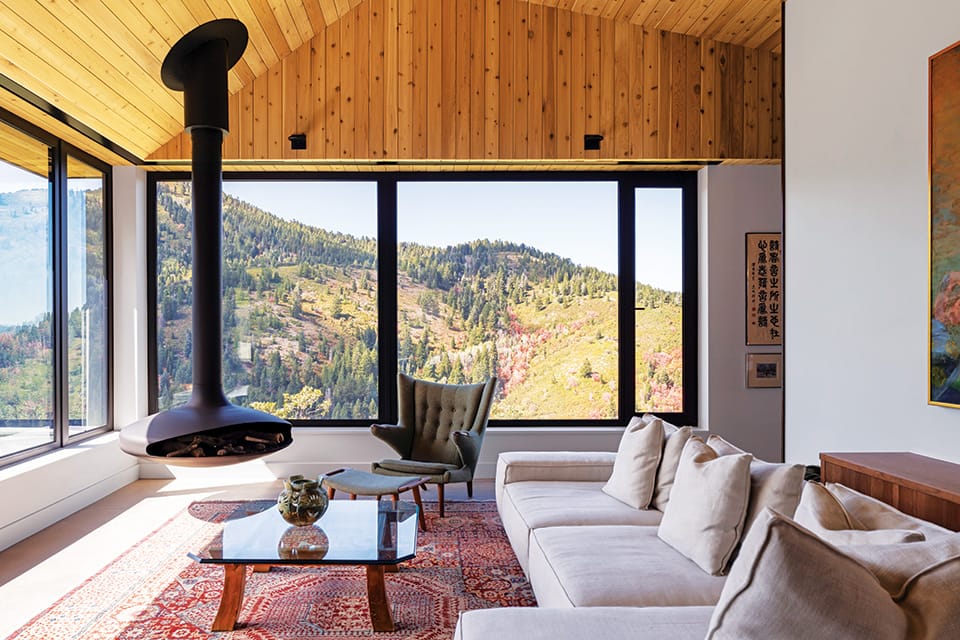
GS: Park City’s residents expect sustainability paired with sophisticated advanced technologies. Features like solar arrays, geothermal heat pumps, triple-pane windows, double-stud walls, underground insulation, and airtight construction achieve the highest R-values and energy efficiency. For clients seeking subtlety, we use airtight envelopes and smart controls to discreetly minimize energy consumption.
WE: Some of our favorite sustainable solutions are incorporating earth-toned boulders, revegetating with native plants and ground cover, and planting water-wise perennials and some dwarf evergreens.
What design strategies help achieve a net-zero energy home?
GS: Net-zero homes are the pinnacle of sustainable construction. We achieve energy neutrality through passive solar orientation, super-insulated walls (R-50+), and renewable energy systems like solar photovoltaics (PV) and geothermal heating. The Sun Gazing Home’s energy model predicted a 95% reduction in utility costs, a result confirmed post-occupancy. We also utilize SPAN Panels (smart electrical panels) for load management and real-time energy monitoring, making net-zero practical for luxury clients.
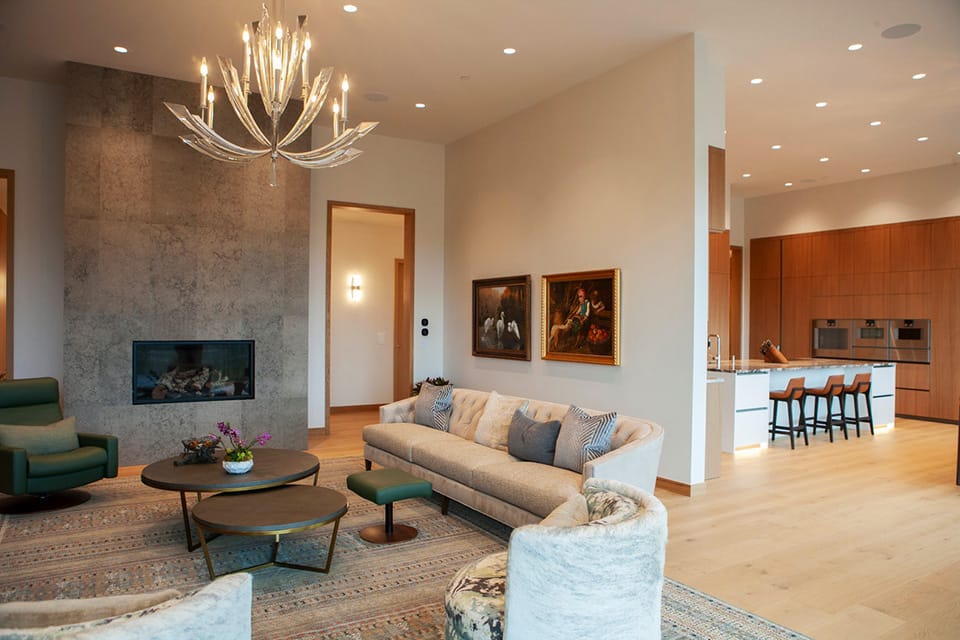
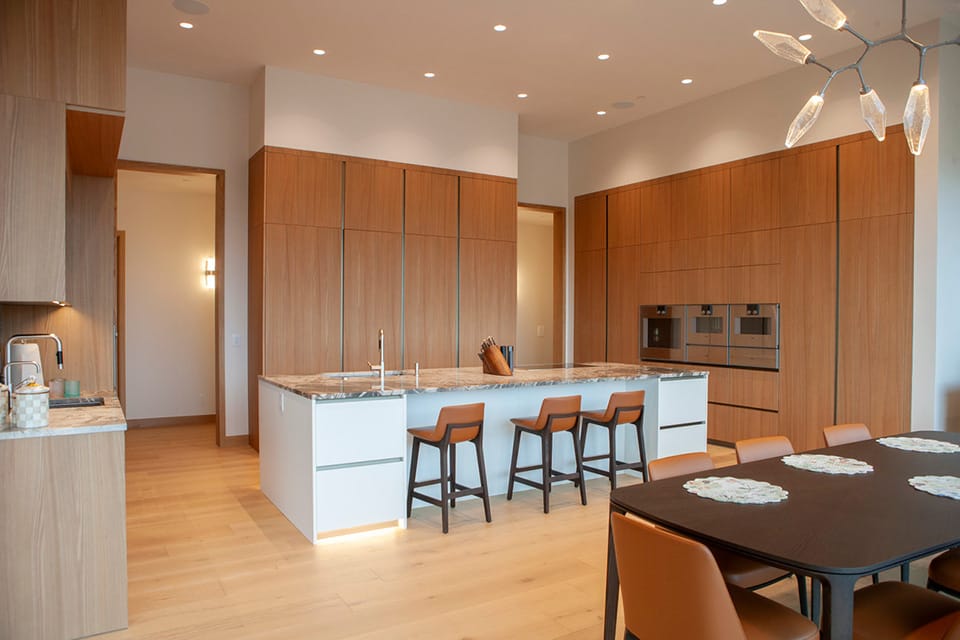
J-YL: The O’Meara Residence is a great example of a net-zero home. The owners were patient as they searched for the right property with southern views. Large expanses of glass allow it to capture the sunlight, and concrete floors and an interior wall act as thermal masses. Rooftop solar thermal panels capture energy year-round that heats water that is stored in a buried and insulated cistern and is released during the winter months. Exterior PV panels on the property provide the electrical power and the excess generated is sent back to the grid. Footings, foundations, and concrete slabs are insulated. All the walls and roofs are made from structural insulated panels, and windows are triple pane with different coatings depending on the orientation. LED lighting throughout the house, an induction cooktop in the kitchen, and (HRV) Heat Recovery Ventilation are among the many energy-efficient design elements in the house.
What are the challenges & benefits of incorporating solar panels into residential design? Are they still the most popular “green” request?
J-YL: There are few requests for solar panels in high-end homes due to the extensive energy needs of most of them and insufficient roof space to accommodate the required number of panels.
“Sustainability is woven into our projects, not just flagship builds. We use EPDM gaskets for airtightness, double stud walls for thermal performance, and passive design to maximize daylight. Geothermal systems elevate efficiency, but even our standard homes deliver exceptional energy savings.”
–Garrett Strong, Tall Pines Construction
GS: We work with architects to embed photovoltaic arrays within rooflines, as seen in the Sun Gazing Home, where a 10kW system offsets all energy needs while blending into the architecture. Battery storage, such as Tesla PowerWalls, ensures reliability during outages with minimal maintenance compared to traditional generators, enhancing both sustainability and resilience in our homes.
How can construction waste be minimized through sustainable practices?
GS: Reducing construction waste is a fundamental commitment for us and our partners. For the Gulley House remodel, we achieved a 90% recycling rate by partnering with certified material processors to divert steel, wood, and drywall from landfills. Prefabrication, employed in the Sun Gazing Home, reduced on-site waste by 20% through precision off-site cutting. We also repurpose excavated soil for grading, cutting transport emissions.
WE: When we are working with nice topsoil, we’ll screen it to remove all the rocks and reuse it. We also have a robust recycling program that involves us turning our organic matter into green waste that is converted into mulch. We also recycle boxes, plastic, and any scrap metal.
J-YLC: For me, waste reduction is achieved by building homes with smaller footprints, designing efficient floor plans, and the use of prefabrication.
How does smart home automation contribute to sustainability?
J-YL: Great progress has been made in smart home technology. Smart lighting and thermostats, automated shades, smart sprinklers, and leak detectors all contribute to sustainability.
WE: Technology is a very important part of helping save water and making our landscapes more efficient. We are big believers in smart irrigation controllers. If installed and programmed properly they can reduce water waste and increase plant health. We see far more plants killed by over watering than from drought.
GS: We install Lutron and Control4 systems for automated lighting and motorized shades, reducing electricity use by 25%. These systems integrate HVAC and appliances, while SPAN Panels provide real-time energy monitoring, enabling clients to optimize usage and reduce peak demand by up to half.
How can existing homes be upgraded for better energy efficiency?
GS: Retrofitting extends sustainability to existing structures. We’ve deconstructed portions of homes and collaborated with ReStore to repurpose appliances, cabinetry, and fixtures. Upgrades like double- or triple-pane windows, spray-foam insulation, and mini-split systems have cut energy use by 50%. Low-VOC finishes improve indoor air quality, while preserving original architectural elements that maintain historical value. This approach minimizes demolition waste and brings modern efficiency to older properties, amplifying our impact.
J-YL: In my experience, it has been more efficient to dismantle a structure and start from scratch than to attempt an adaptive reuse. Quite often, the older homes were not designed with the lifestyle people are used to now. Views and solar orientations were not priorities, and none of them are up to today’s building codes. By the time the house is stripped down to its bones, people realize that it is more economical to start over and design a new and efficient home. It doesn’t make sense to put that much money in new windows, insulation, electrical wiring, plumbing, or siding on an old frame. I am not talking about homes in historical districts, but for some homes built 30 or 40 years ago it makes more sense to tear down than try to retrofit. The real value of a property may be in its location.
WE: From a landscaping perspective, smart clocks, flow sensors, and master valves are ways to improve a home’s irrigation system. The smart clocks monitor water use and alert the homeowner if there is a leak. They can shut off the system if the weather changes and watering becomes unnecessary. They are nice upgrades because they conserve water and add more efficiency while maintaining a beautiful yard.
How does residential design fit into larger urban sustainability goals?
GS: In Old Town, we leverage proximity to transit hubs to reduce vehicle dependency and use permeable paving to manage stormwater. We specify low-embodied-carbon materials, supporting municipal green initiatives. Our passion for sustainability shines in Old Town Park City, where we preserve historic homes—often built by original miners—while upgrading them to meet modern codes. This balance of preservation and innovation contributes to cohesive, sustainable urban planning.
WE: We don’t believe everyone has to get rid of their grass, just that there is a time and a place for it, and many spaces from side yards to park strips and commercial buildings can be made better without it.
How can homes be built to withstand climate change-related events and fire?
J-YL: Homes should be flexible and use passive design strategies. Non-combustible materials like metal roofs, concrete walls, hardscaping, and defensible space around homes reduce fire risks.
GS: Resilience is vital in Park City’s wildfire-prone region, where insurance concerns are rising. We incorporate non-combustible concrete veneers, metal cladding, and defensible spaces that meet or exceed Summit County’s Wildland Fire codes. Many homes feature gravel buffers to reduce fire risk, while elevated foundations mitigate flooding, and durable materials endure harsh winters.
WE: Xeriscaping with native species can cut water use up to 60%. Replacing traditional grass lawns with hardscaping including permeable pavers reduces runoff. Creative landscaping including pollinator-friendly plants that boost biodiversity and fire-resistant gravel buffers, boulders, and proper pruning for fire control contribute to a home’s resilience.
GS: We’ve partnered with Willie Eschenfelder’s team to design landscapes that conserve resources and enhance ecosystems. Park City’s harsh winters, high elevation, and local wildlife require sustainable, resilient planting.
What are some best practices when building for longevity in our region?
WE: One other best practice is to make sure your trees have proper care. Trees are a huge investment and whether you have an existing yard or are building a new home, they need proper care. Root compaction, insect pressures, and temperature fluctuations can cause stress to even established trees. Deep root feeding, properly timed nutrient application, and insect management can pay huge dividends for tree health and growth. We have certified arborists whose only job is to make sure all our clients’ trees have the best chance to survive and thrive.
GS: Sustainability is woven into all our projects, not just flagship builds. We use EPDM gaskets for airtightness, double-stud walls for thermal performance, and passive design to maximize daylight. Geothermal systems elevate efficiency, but even our standard homes deliver exceptional energy savings. This scalable approach, refined over 20 years, ensures that every Tall Pines home advances environmental stewardship without sacrificing luxury.

J-YL: There is the consideration of form versus function, meaning there are design elements that require more consideration depending on a client’s goals for how their house will perform. For example, thick, exposed polished concrete slabs are great thermal mass components and work well in more contemporary designs, but they don’t appeal to everybody’s tastes. Also, exposed beams may look sleek in contemporary designs, but they are non-insulated and run through the thermal envelope, wasting energy and creating condensation. Sustainable homes in Park City require patience for the right lot and an openness to explore efficient options that may evolve the home’s design.
GS: Working with designers like Jean-Yves Lacroix sharpens our designs, enhancing efficiency and reducing waste through thoughtful material choices and solar optimization. In wildfire-prone Park City, our resilient builds offer peace of mind, a duty we embrace. Partnering with Willie Eschenfelder’s landscaping team ties our homes to their environments, crafting a holistic sustainability narrative. Each project drives us to innovate further, building a lasting legacy of environmental care.
whj FEATURE
