
Written by: Laurenz Busch
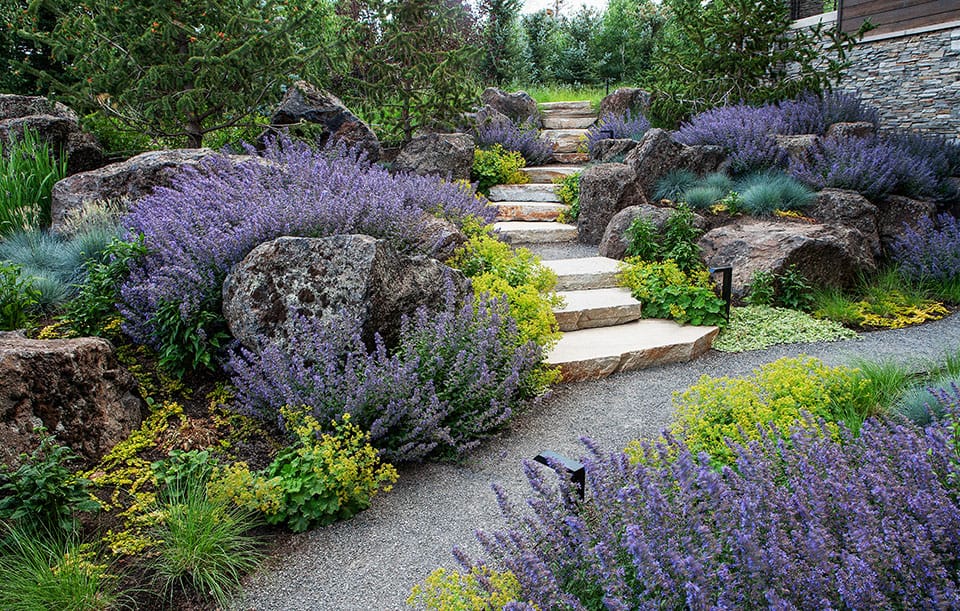
How a Wasatch-based firm treats landscaping as essential architecture by shaping properties from the outset and sustaining them through long-term care. Willie Eschenfelder has spent much of his life perfecting the part of a home people always notice first, but don’t always talk about. While interiors often get the attention, the landscaping sets the tone for a property. It creates a feeling, an image, an emotional response, before anyone ever steps inside a home.
The Ground Comes First
For nearly three decades, Willie and his company, Eschenfelder Landscaping, have built their reputation on meticulous exteriors. The company sees outdoor spaces not just as a finishing touch that needs to be maintained and pruned, but also as part of the home and design. For Eschenfelder, the landscape needs to be thoughtfully crafted and maintained with the same care as any part of the home—maybe more.
“We’re really focused on the entire outside of the house,” Eschenfelder says. “From the design phase all the way through implementation and long-term maintenance, we want to be the team that takes care of everything.”
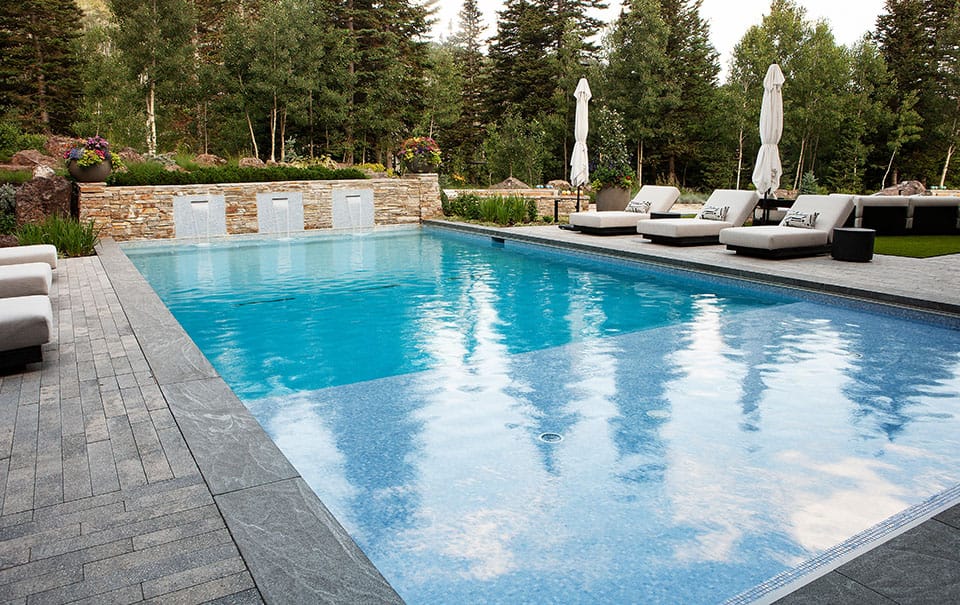
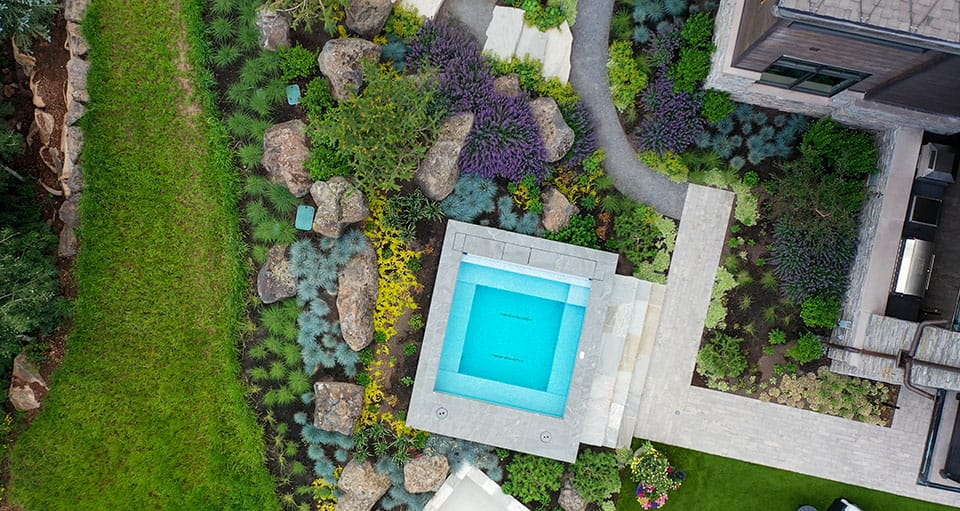
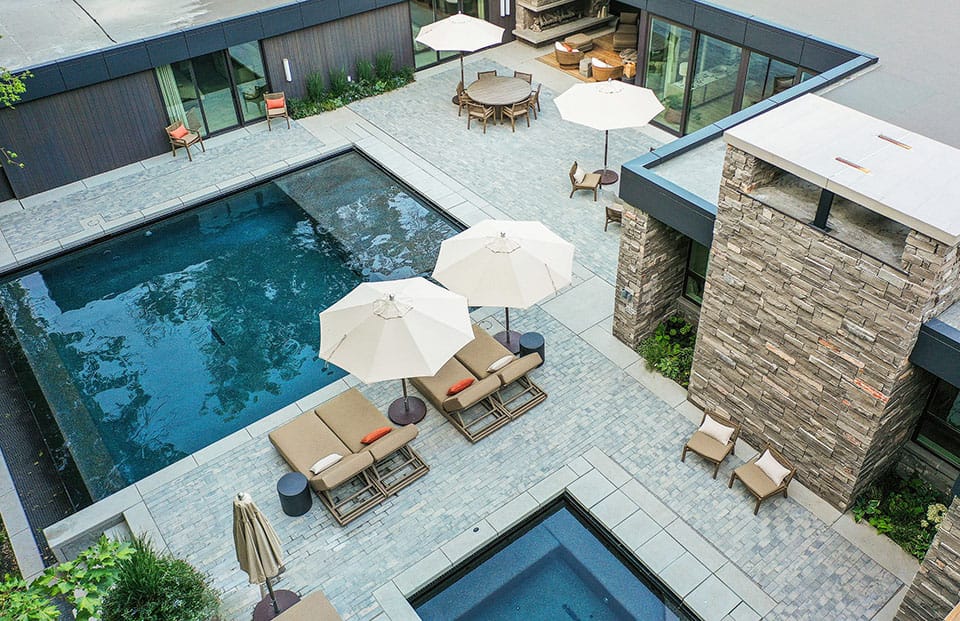
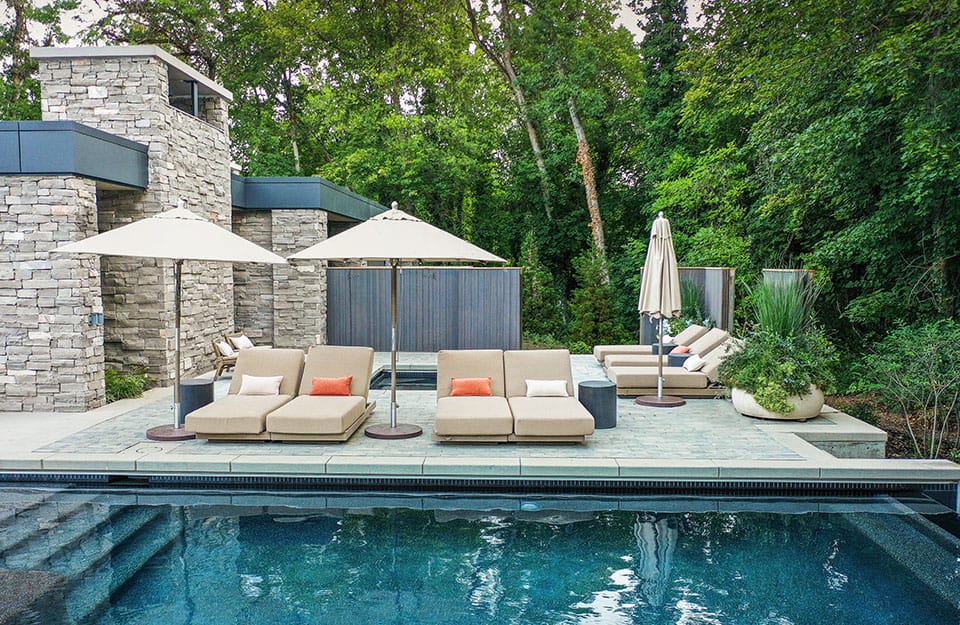
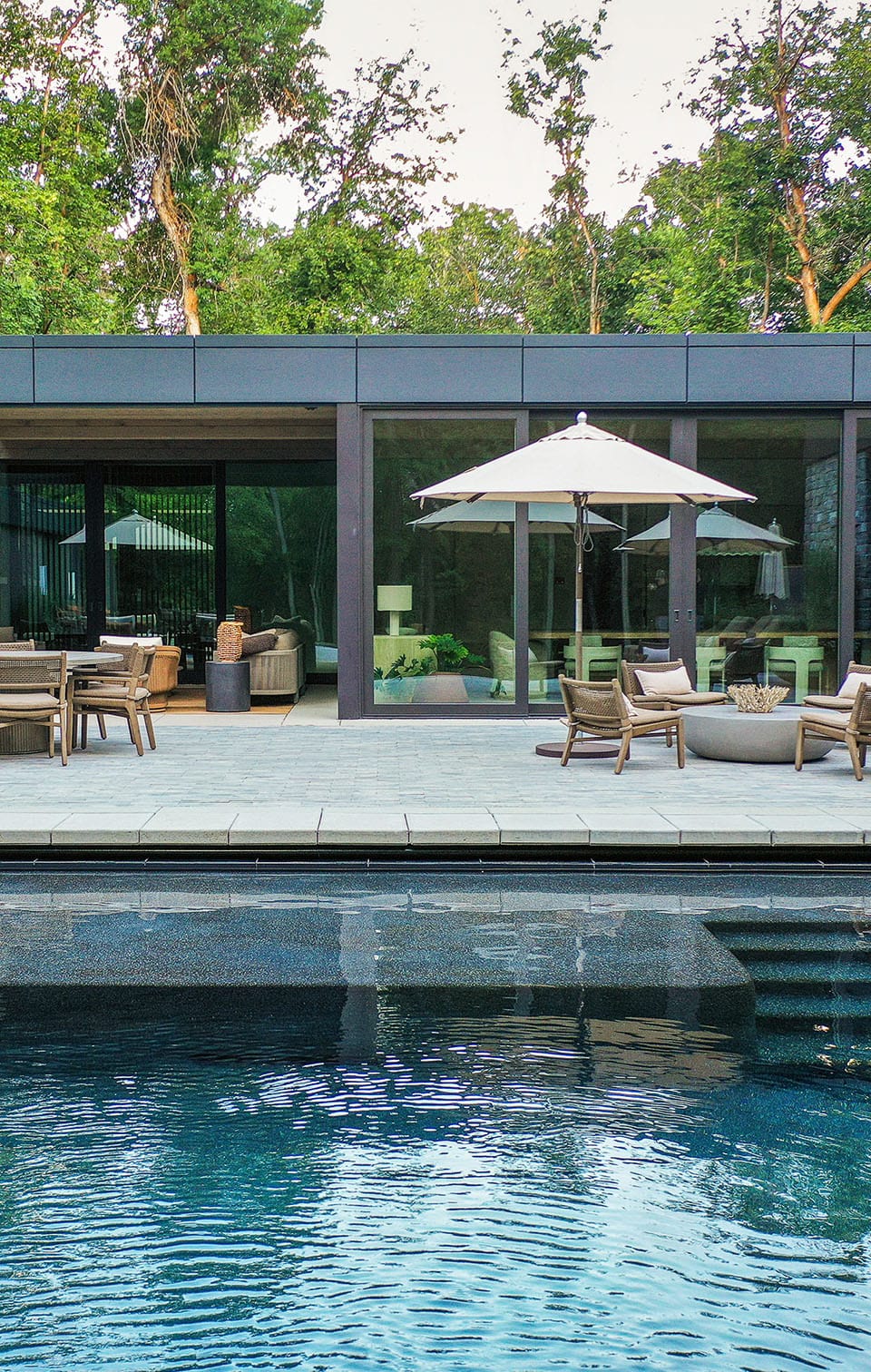
That “everything” is expansive. It includes site planning, soil work, hardscape, planting, irrigation, arbor care, and ongoing maintenance. Pools, handled by their sister company Omega Pools, are also included. Importantly, Omega designs its pools alongside the grading and drainage, allowing pools to function as part of the landscape rather than a standalone feature.
Eschenfelder Landscaping didn’t start as a premier landscaping service. Rather, Eschenfelder began mowing lawns at the age of 12 to save money for a bike, picking up jobs around his neighborhood. Over time, that work turned into something more substantial. What started as a small operation became a business that kept growing through high school and college.
“WE’RE REALLY FOCUSED ON THE ENTIRE OUTSIDE OF THE HOUSE. FROM THE DESIGN PHASE ALL THE WAY THROUGH IMPLEMENTATION AND LONG-TERM MAINTENANCE, WE WANT TO BE THE TEAM THAT TAKES CARE OF EVERYTHING.”
“I just never really said no to anything,” he says. “If someone asked if I could do something, I’d figure it out. I wasn’t going to let the work slip by me.”
His willingness to learn on the fly continues to define the company, even if the work has changed. What began in 1998 as “Wild Willie’s Yard Services” became Eschenfelder Landscaping a decade later, reflecting a shift toward larger, more complex projects and a changing and more demanding client base. Today, most of the work is residential, he says, for clients who expect their properties to be thoughtfully maintained—enhancing daily living while protecting long-term value.
“A lot of our clients show up without much notice,” Eschenfelder says. “They expect everything to be just right, and that’s what we’re here to do for them.”
While much of the work is long-term maintenance, the expectation that everything is always in great condition starts early, before anything is planted. Eschenfelder likes to join projects early, sometimes before a home is fully designed, working alongside architects and builders to shape how the exterior will function in the long term.
“If we’re involved early, we can save people from having to redo things later,” he says. “Soil, grading, tree protection—those aren’t things you want to fix after the fact.”
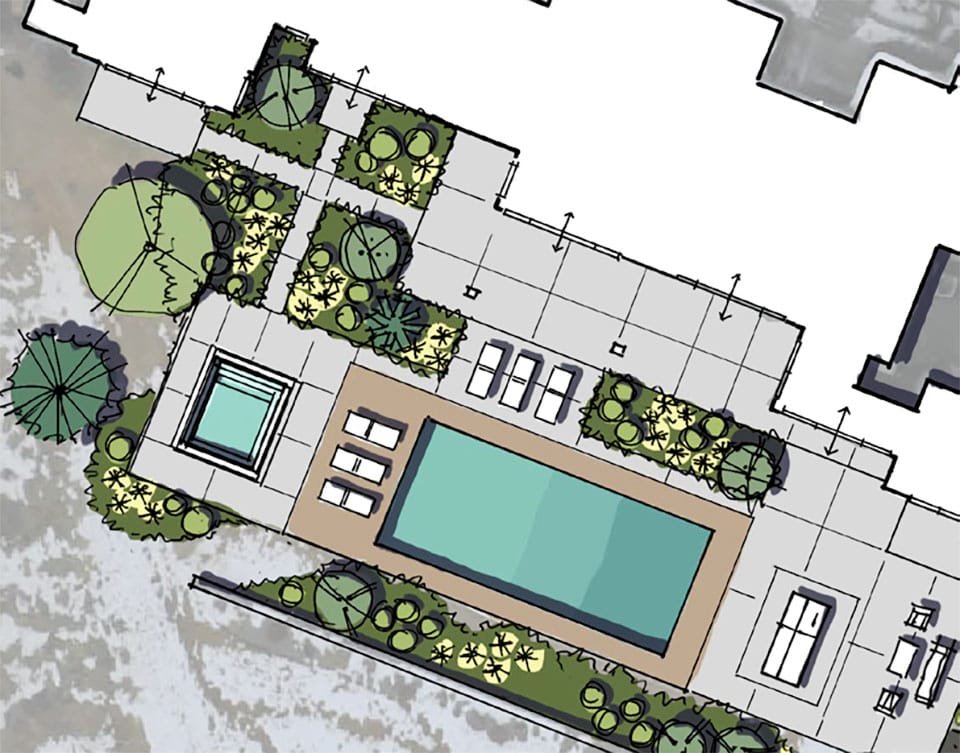
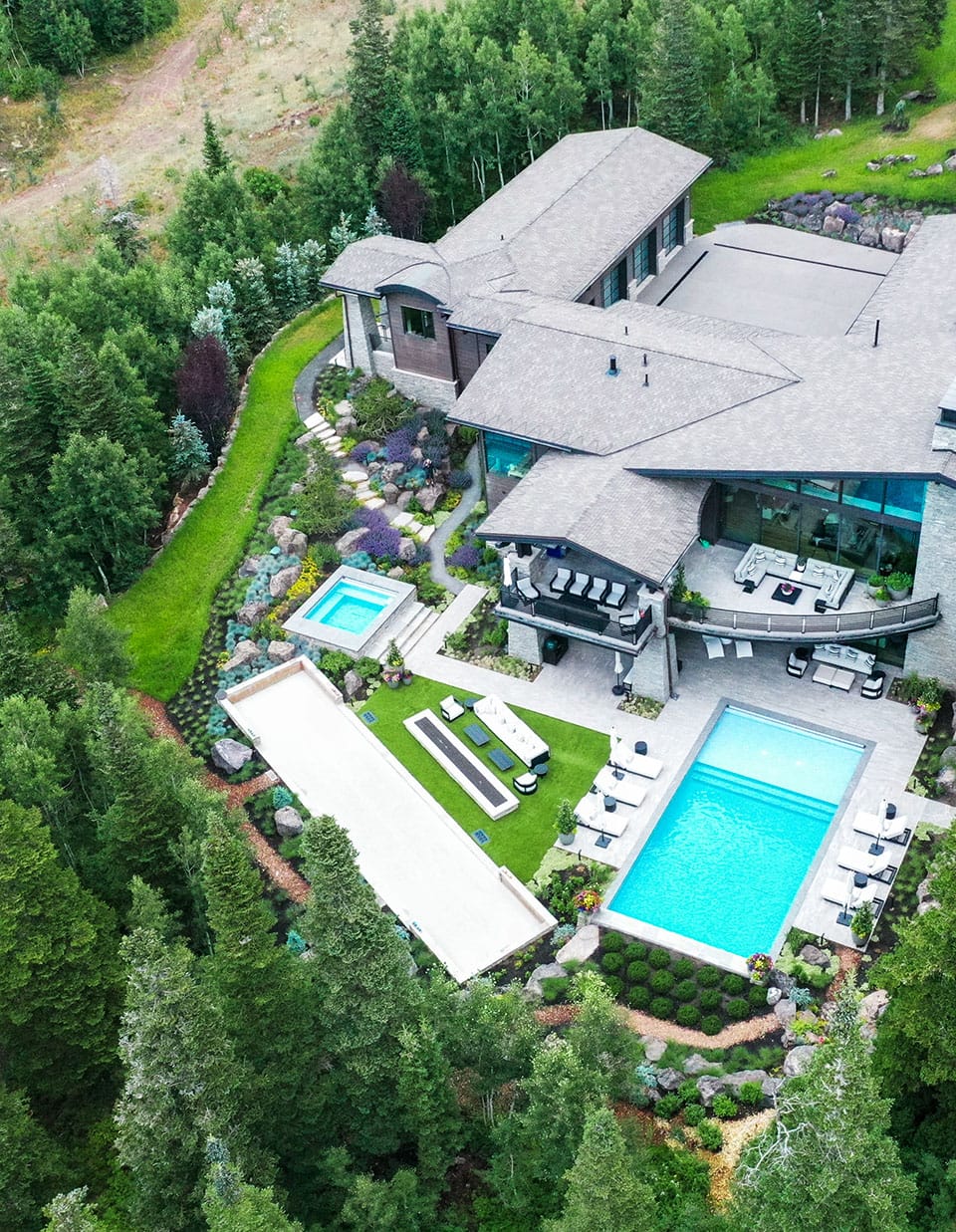
Using drone mapping and 3D modeling, the team develops a comprehensive plan that gives clients a clear sense of how the property will come together.
Owen Huff, a landscape designer at Eschenfelder, says he also prefers getting to know clients as soon as possible. That way, he can help grow a client’s initial ideas into the bigger picture.
“I’ll come in right at the beginning, gathering ideas, and start to shape concepts,” he says. “From there, it’s a series of iterations of working closely with the client to refine the vision and make it stronger.”
“IF WE’RE INVOLVED EARLY, WE CAN SAVE PEOPLE FROM HAVING TO REDO THINGS LATE. SOIL, GRADING, TREE PROTECTION—THOSE AREN’T THINGS YOU WANT TO FIX AFTER THE FACT.”
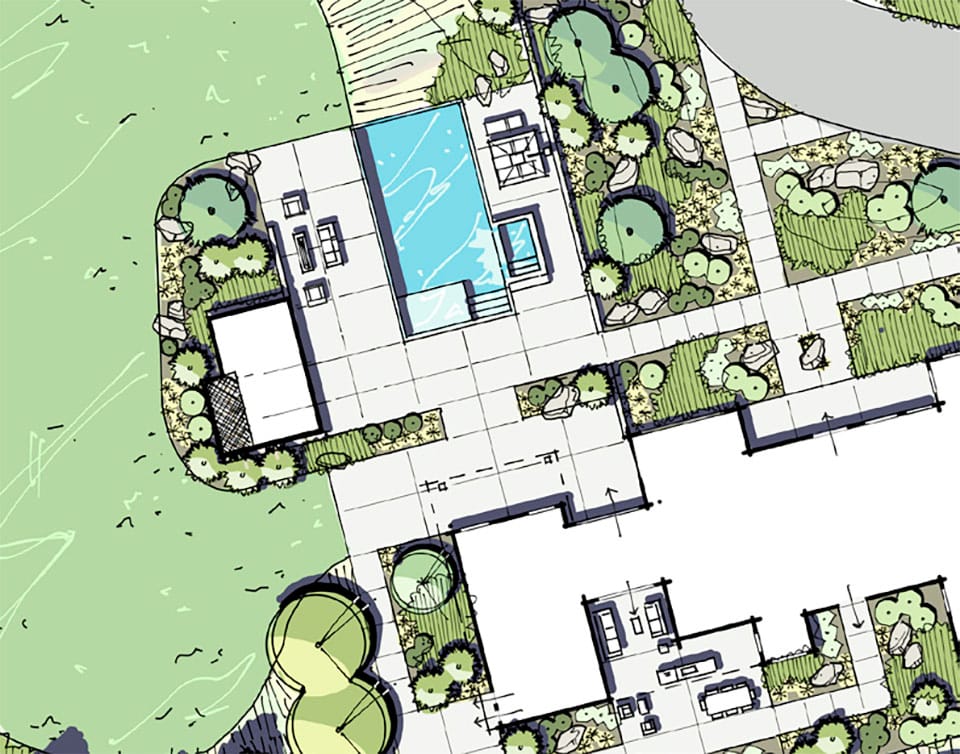
While Huff spends much of his time designing, he stays involved throughout construction, working with crews to ensure the finished landscape reflects the original design.
“When I show up on site, the first thing I’m looking at is the land itself,” he says. “Views, how the property sits, what feels natural, and what doesn’t.”
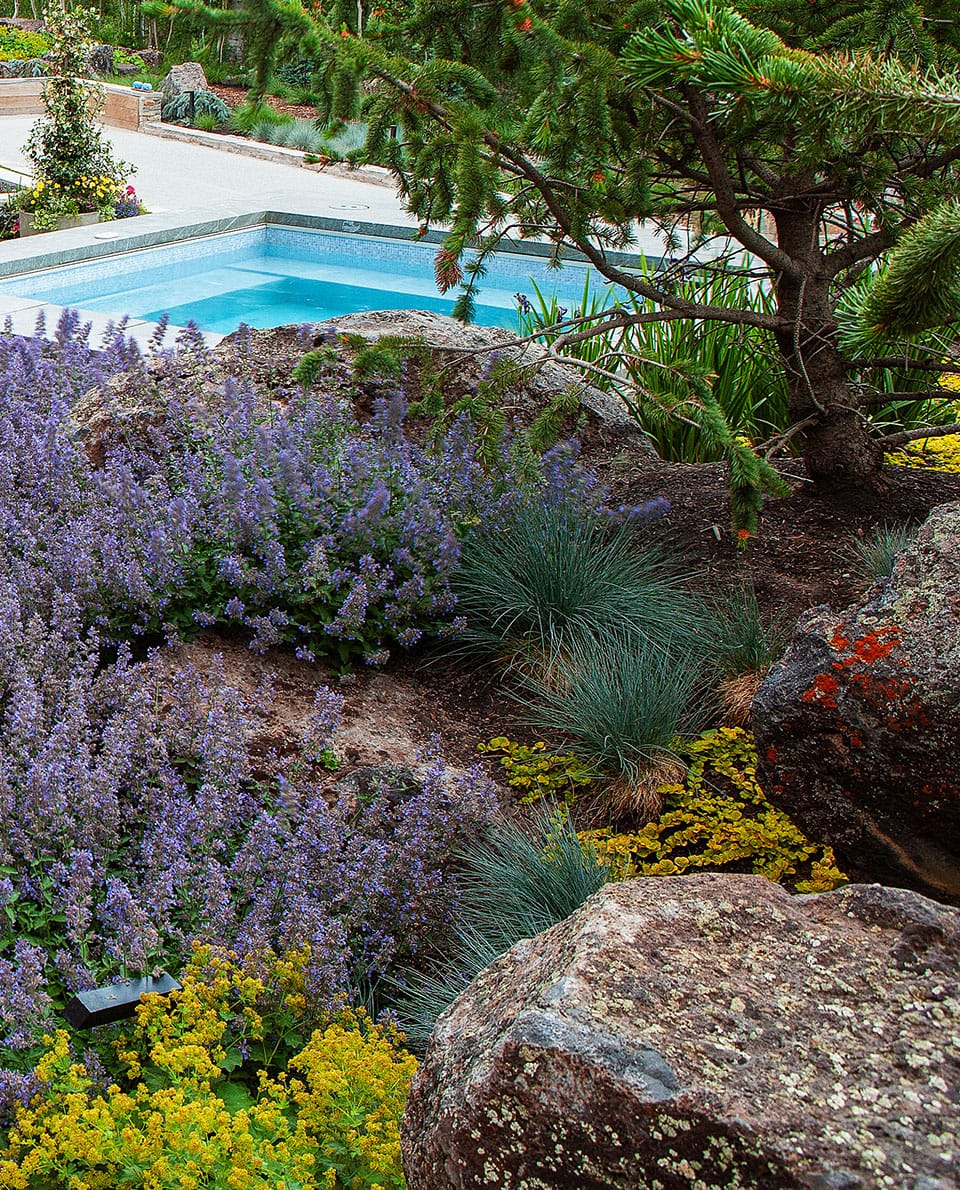
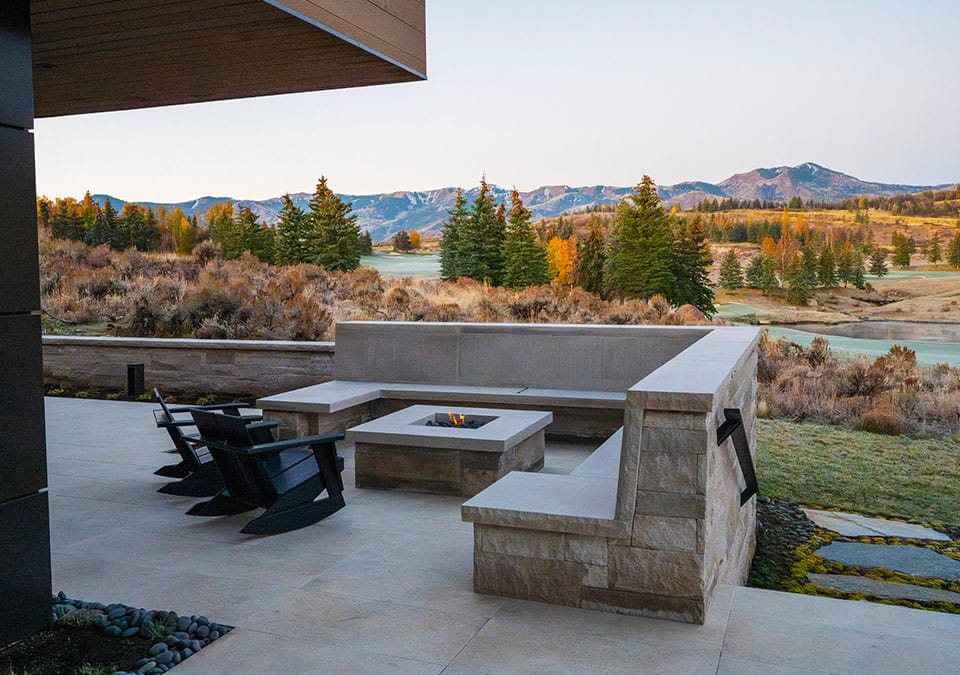
Part of his approach—and something that the Eschenfelder team applies to every property—is the “improved native” philosophy. That is, using plants and trees that feel grounded in the region and thrive in the environment, but arranging them in a way that is more intentional, composed, and structured than would happen naturally.
“We’re here to emulate what already works,” he says. “We’re not replicating it exactly, but building on it in a way that suits each property.”
“I’LL COME IN RIGHT AT THE BEGINNING, GATHERING IDEAS, AND START TO SHAPE CONCEPTS. FROM THERE , IT’S A SERIES OF ITERATIONS OF WORKING CLOSELY WITH THE CLIENT TO REFINE THE VISION AND MAKE IT STRONGER.”
Much of that thoughtful design begins with grading and soils work, often one of the least visible but ultimately most important parts of the landscape. This step requires significant forethought and planning, setting the foundation for everything that follows.
Then, construction can begin.
Great landscaping is as much design as it is physical work. Earth gets moved, retaining walls are built, and patios are installed—all big projects that help pull together the finer details of an even larger project.
“You can do all the hardscape perfectly,” he says, “but if the planting and finishing work isn’t done right, it doesn’t matter.”
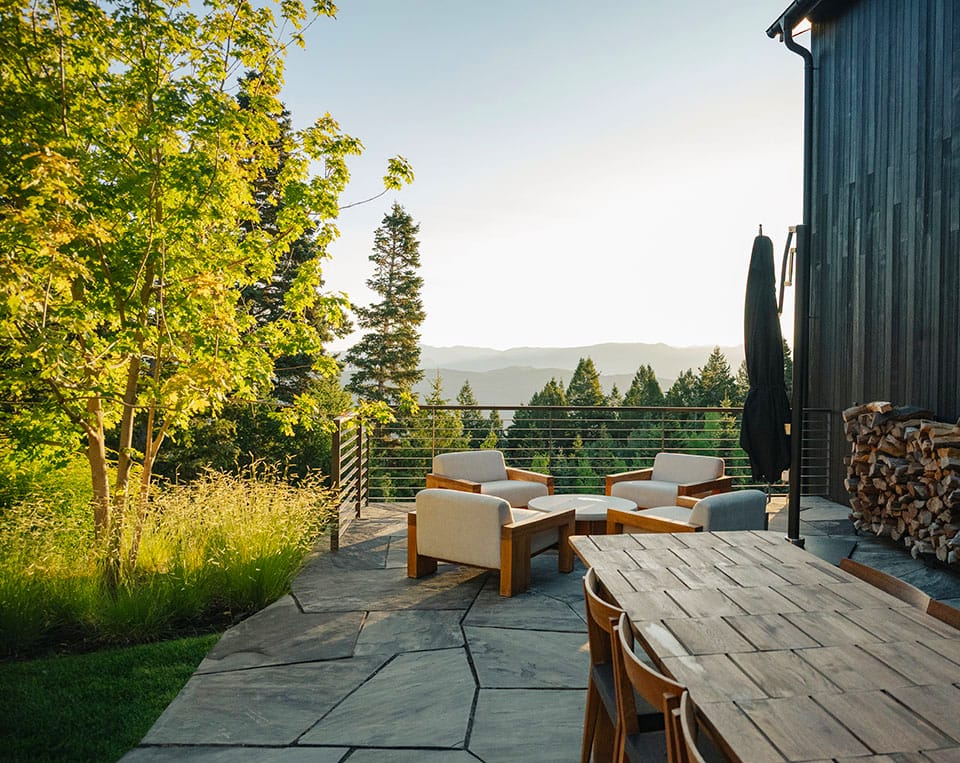
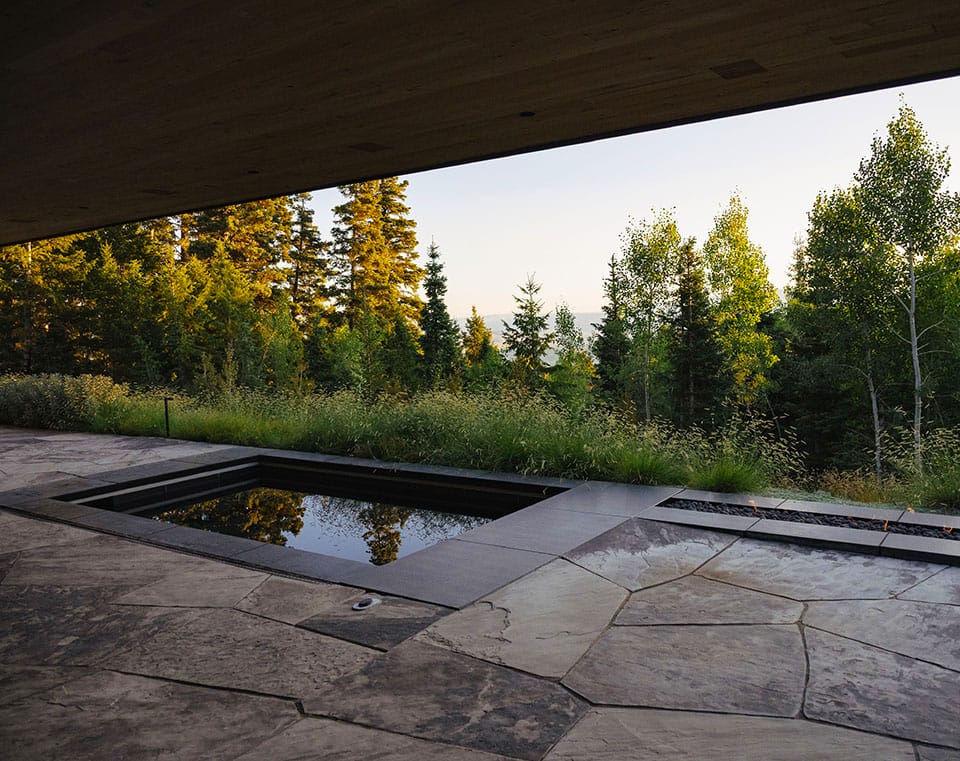
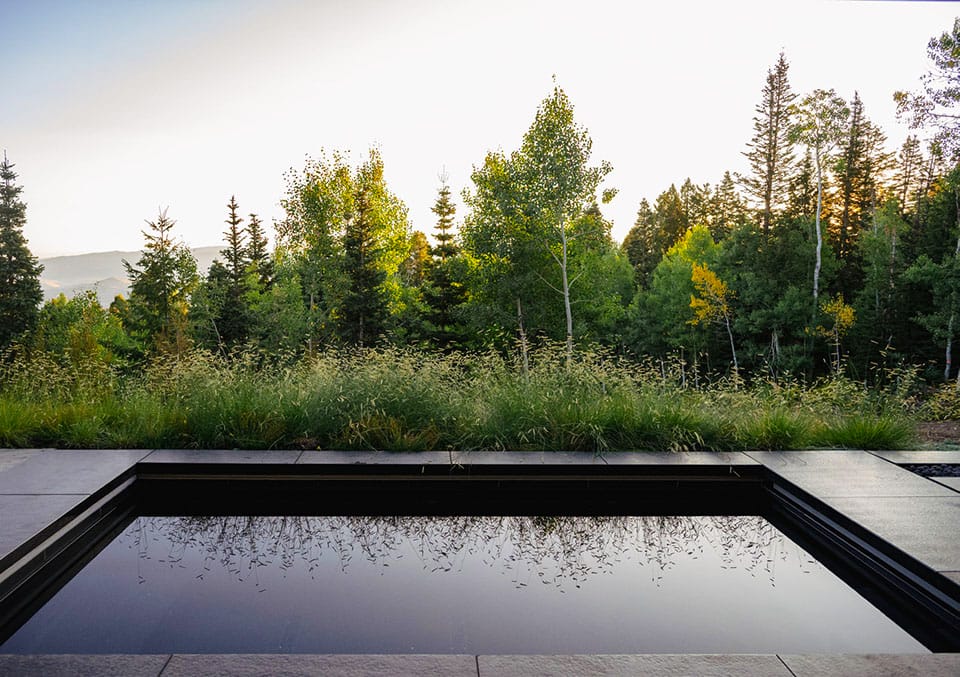
Eschenfelder says he and his design team care obsessively about choosing the right plant material to layer shapes and colors as they cycle through seasons of dormancy and renewal and as they grow year to year. The team regularly travels out of state to personally select trees and plants for their clients, all in an effort to make sure their projects look as good as possible.
For high-end landscapes—on which the Eschenfelder team often works—the details matter. The soil used, the irrigation layout, and the selected plants all work together to create a well-executed project. Those decisions determine whether a landscape will hold up through the erratic weather and extreme temperature swings of the Wasatch Range.
For Jonathan Snavely, an Eschenfelder client, that level of coordination was clear from the beginning. When he and his family set outto build their home, they didn’t forget about the outside.
“When we set out to design and build our home, we felt that the landscape and outdoor spaces would be just as important as the interior,” Snavely says. “Eschenfelder worked closely with us to turn those goals into something we couldn’t have fully imagined on our own.”
“WHEN WE SET OUT TO DESIGN AND BUILD OUR HOME , WE FELT THAT THE LANDSCAPE AND OUTDOOR SPACES WOULD BE JUST AS IMPORTANT AS THE INTERIOR. ESCHENFELDER WORKED CLOSELY WITH US TO TURN THOSE GOALS INTO SOMETHING WE COULDN’T HAVE FULLY IMAGINED ON OUR OWN.”
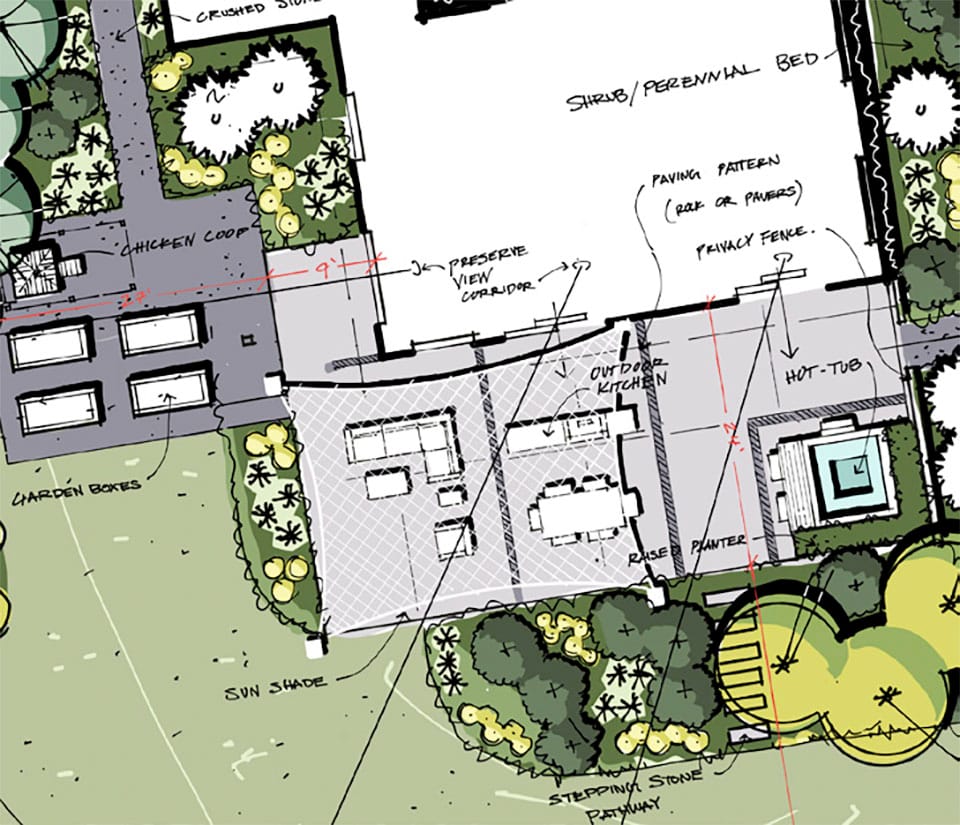
The project extended across Snavely’s property to include planting and grading, as well as the pool and water features—constructed by Omega Pools. What stood out wasn’t just the final result, Snavely says, but how impressive it was to watch how Willie and his team handled the process along the way.
One of the most complicated aspects was navigating Park City’s approval process, coordinating landscaping, a pool, and water features within municipal guidelines, which could have easily become frustrating.
“They handled it with expertise and patience,” Snavely says. “That combination of local knowledge and the willingness to advocate on our behalf was invaluable.”
Like many of Eschenfelder’s clients, what left the strongest impression on Snavely wasn’t just the finished project. “What kept us loyal is what came after that,” he says. “Their ongoing care for the property has been consistent, thoughtful, and genuinely personal.”
“WE SEE MORE PLANTS DIE FROM TOO MUCH WATER THAN NOT ENOUGH. PEOPLE THINK SOMETHING LOOKS DRY, SO THEY KEEP WATERING IT.”
For Eschenfelder, those long-term relationships are a core part of the business. While his company can accomplish complex landscaping projects and features, the team truly thrives in managing properties year-round, handling everything from irrigation and seasonal planting to snow removal and general upkeep.
“We take care of everything outside the house,” he says. “Our clients don’t ever have to think about it.”
This has become more difficult in recent years as weather conditions across the Mountain West continue to shift. Water, in particular, has become a defining restraint, especially after a dry winter. With low snowpack and unusual warmth, trees are emerging from dormancy stressed, and towns and cities are preparing for tighter water restrictions.
“We’re seeing trees that didn’t go fully dormant,” Clinton Uytenbogaardt, the company’s arborist, says. “They’re ahead of schedule, and that creates problems.”
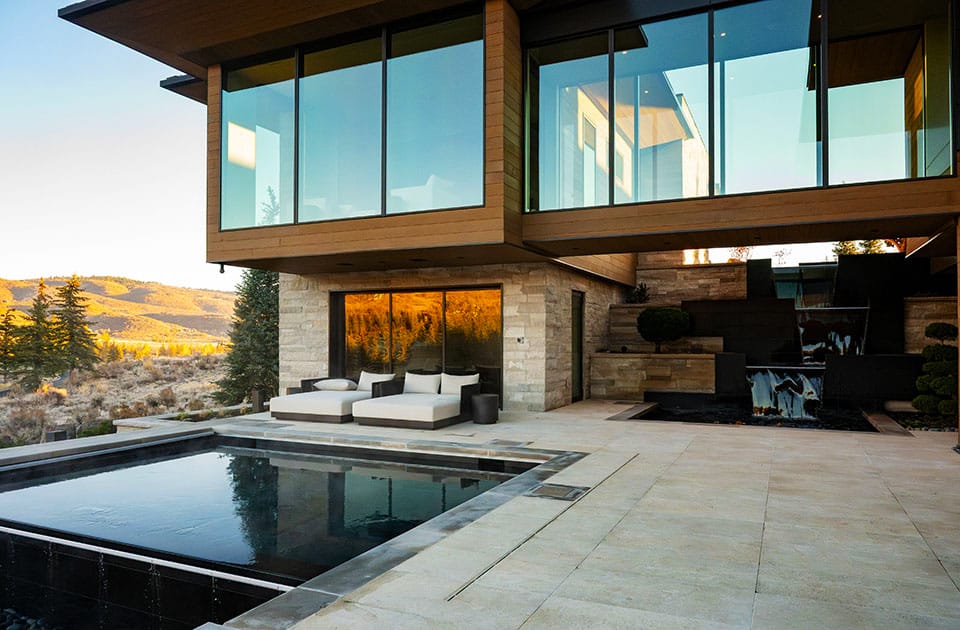
This summer, responding to the dry winter will involve advocating for more efficient irrigation systems that use smart controllers, flow sensors, and lower-output heads to distribute water more evenly.
On the design side, there’s a push toward reducing non-essential lawn areas by incorporating drought-tolerant plants.
“The easiest thing to do is remove grass that isn’t being used,” Uytenbogaardt says. “But, we can also manage with other technology.”
That doesn’t mean stripping landscapes to gravel. Rather, it means layered plantings—what Eschenfelder calls “drifts”—that create texture and movement without using as much water. He does say that with drought-tolerant plants, one needs to be careful not to overwater.
“WE’RE NOT JUST BUILDING SOMETHING THAT LOOKS GOOD RIGHT NOW. OUR CLIENTS ARE MAKING AN INVESTMENT IN THE FUTURE OF THEIR PROPERTY. WE ENSURE THAT INVESTMENT WILL GROW BEAUTIFULLY.”
“We see more plants die from too much water than not enough,” he says. “People think something looks dry, so they keep watering it.”
Wildfires, which are becoming increasingly prevalent across the West, are also adding a layer of complexity for the Eschenfelder team to prepare for, and many municipalities are updating guidelines with stricter limits on what can be planted near a home to ensure defensible space.
For homeowners and the Eschenfelder team, that means balancing aesthetics with safety. For builders, it raises the stakes of getting it right the first time around.
That also applies to Omega Pools, which provides clients with pools, spas, and hot tubs in challenging locations.
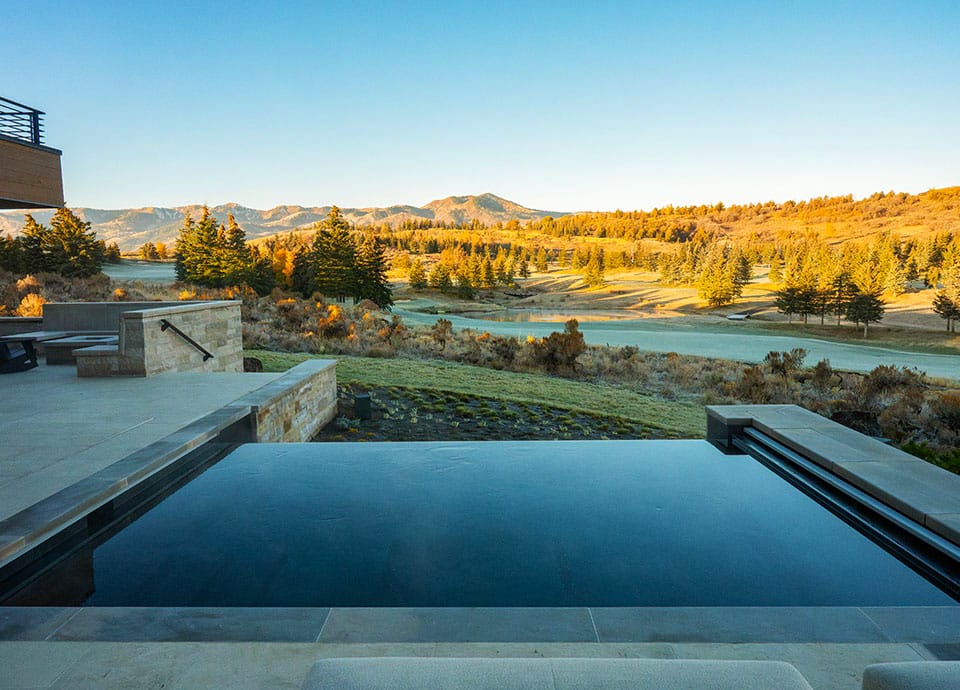
“Pools are one of those things you have to get right the first time,” Willie says. “They’re not easy to fix later.” That’s especially true on complex sites, where excavation and structural work meet. “If it’s not thought through early, you’re chasing problems the entire time,” he adds.
Once complete, Omega focuses on making pools easier to live with by outfitting them with systems that monitor water chemistry, thereby reducing maintenance.
Working in the Wasatch range from Park City to Salt Lake City, the team operates year-round. Clients count on them to start and finish projects, then keep them pristine. The team ensures that the surroundings always feel like a natural extension of the home.
That’s ultimately what makes Eschenfelder Landscaping unique. Their projects look good from day one, and they continue to do so with the care it takes to consider the landscape not as an afterthought but a vital part of the complete picture.
“We’re not just building something that looks good right now,” Eschenfelder says. “Our clients are making an investment in the future of their property. We expect that investment to grow beautifully.”
whj COVER FEATURE
