
Listen to our Spotify podcast about this article:
By Lori Currie
Photos Halsey Pierce
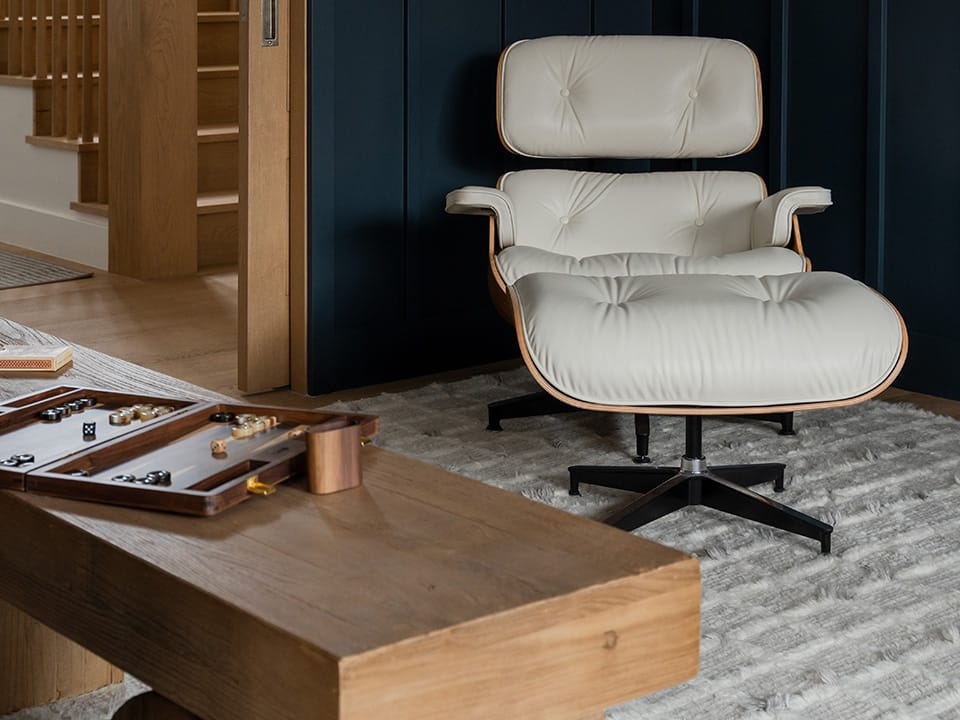
In the shadow of Sun Valley’s Bald Mountain, where afternoon light fades early across the homes in West Ketchum, Idaho, a young family from San Francisco faced a familiar mountain home dilemma: how to bring brightness and functionality to a space originally designed for a different era. Their 3,000-square-foot duplex, with its four bedrooms and four baths spread across three levels, possessed all the bones of a perfect family retreat but suffered from the dark wood and compartmentalized layout typical of earlier mountain architecture.
With one young daughter and another baby on the way, the owners knew their home needed more than cosmetic updates. It required a fundamental reimagining. They turned to Sarah Latham of L Interiors (formerly Latham Interiors), a local design firm known for creating sanctuaries that are both livable and luxurious.
“They really came to us for a full refresh. The existing layout didn’t provide enough space. Also, the dark finishes throughout made the home feel smaller than it actually was.”
–Sarah Latham, L Interiors
“They really came to us for a full refresh,” explains Latham. “The existing layout didn’t provide enough space, and as a growing family, they were in need of more area for the children’s room and bathroom. Also, the dark finishes throughout made the home feel smaller than it actually was.”
AN ELEVATED ENTRY WAY EXPERIENCE
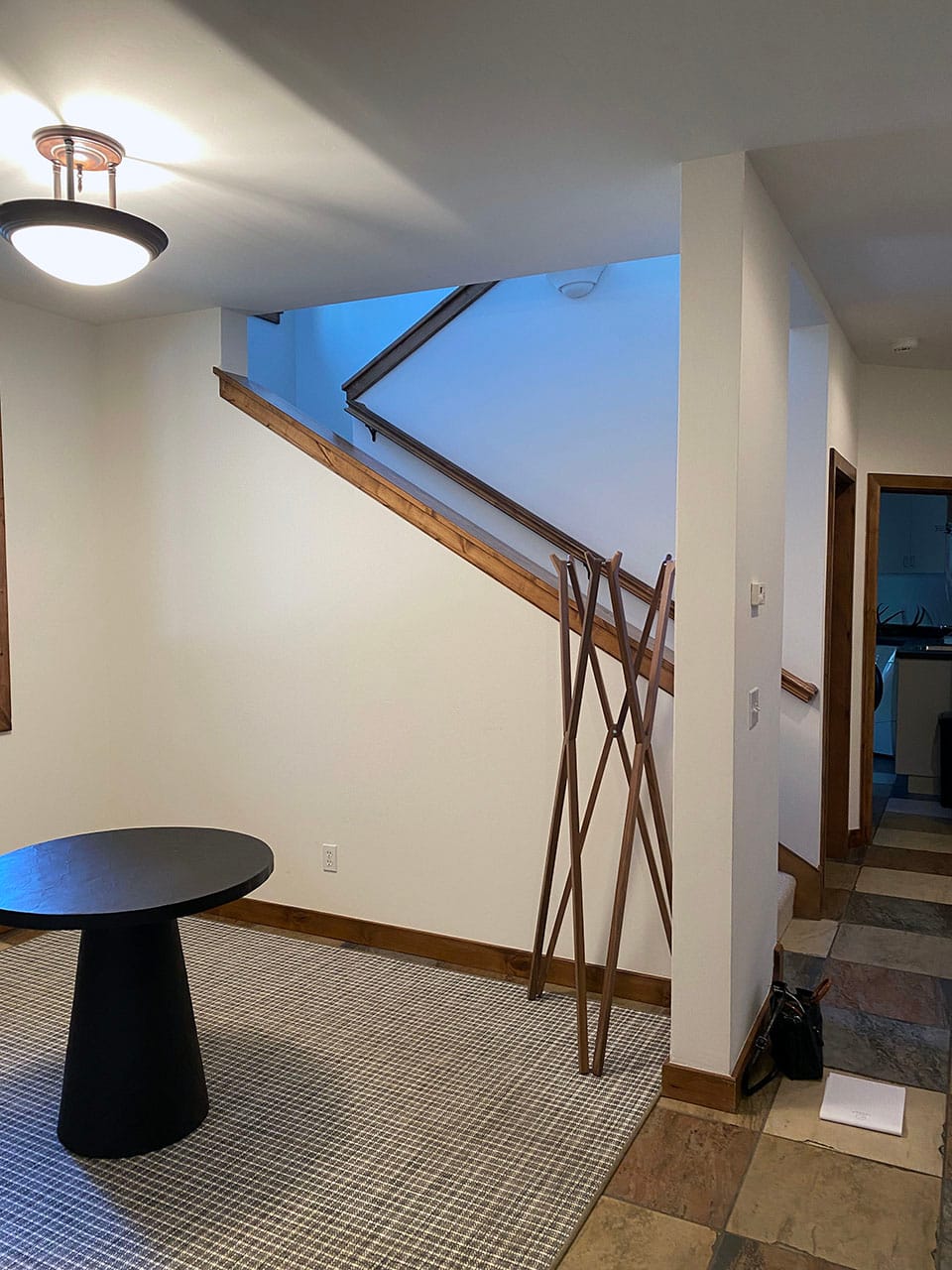
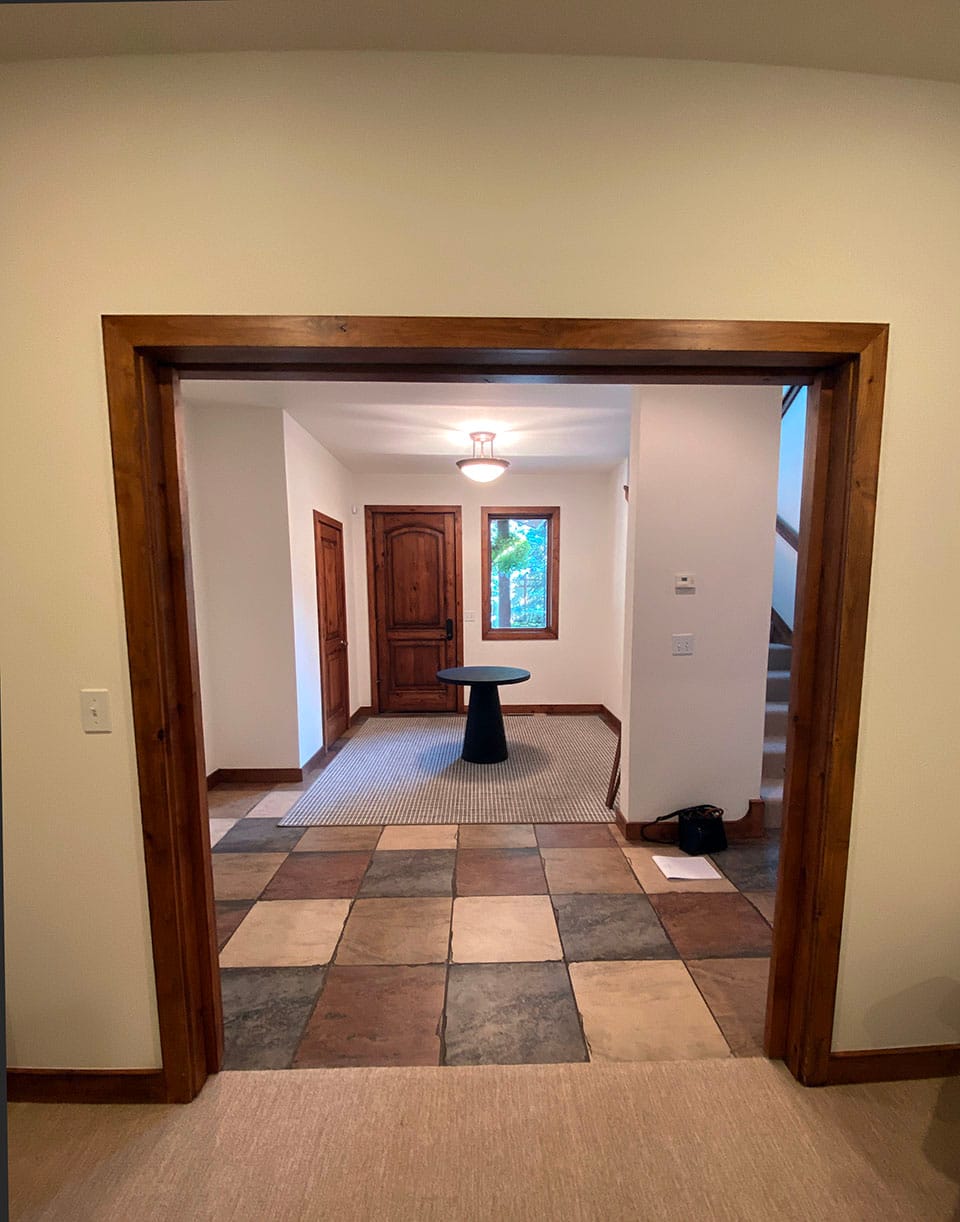
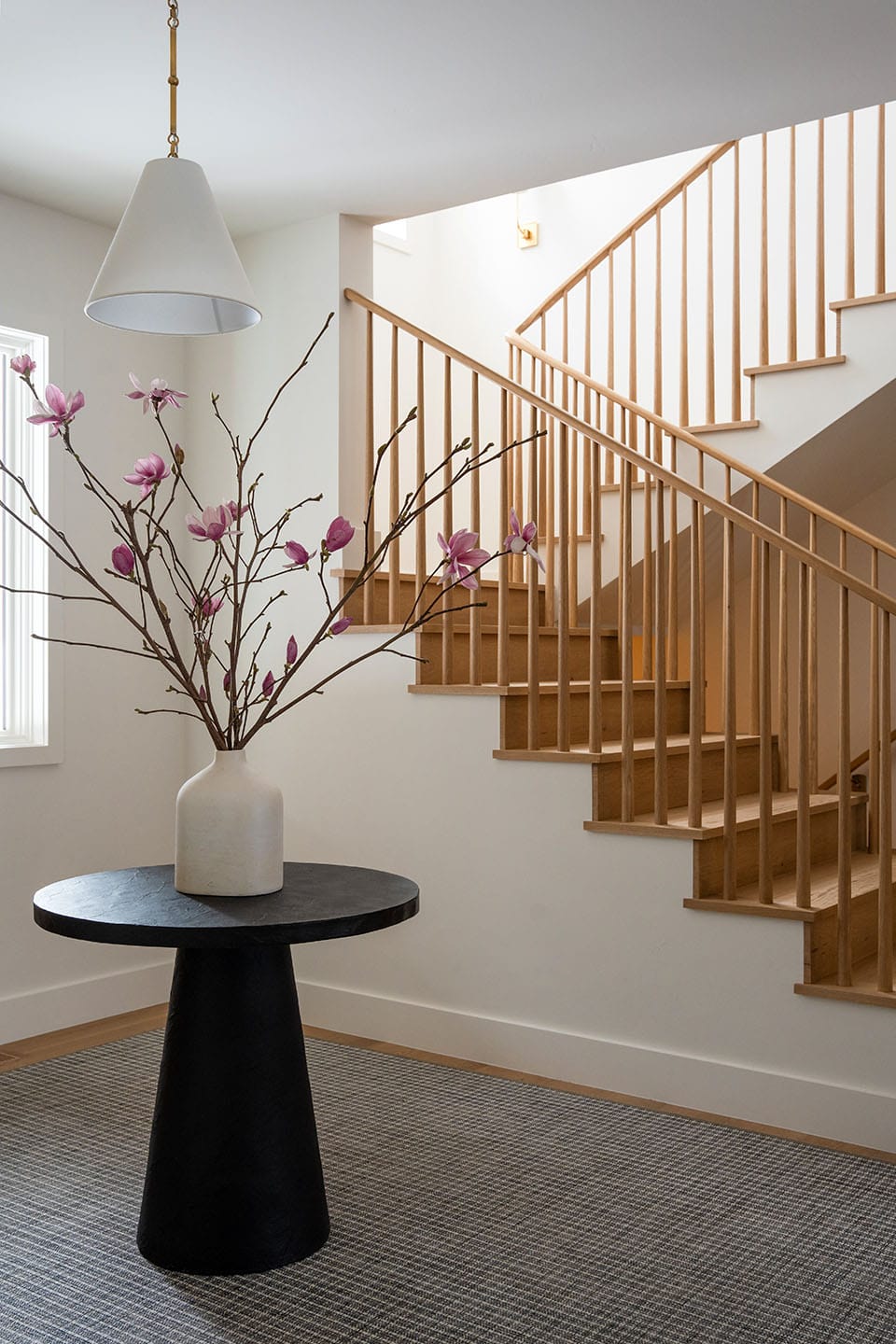
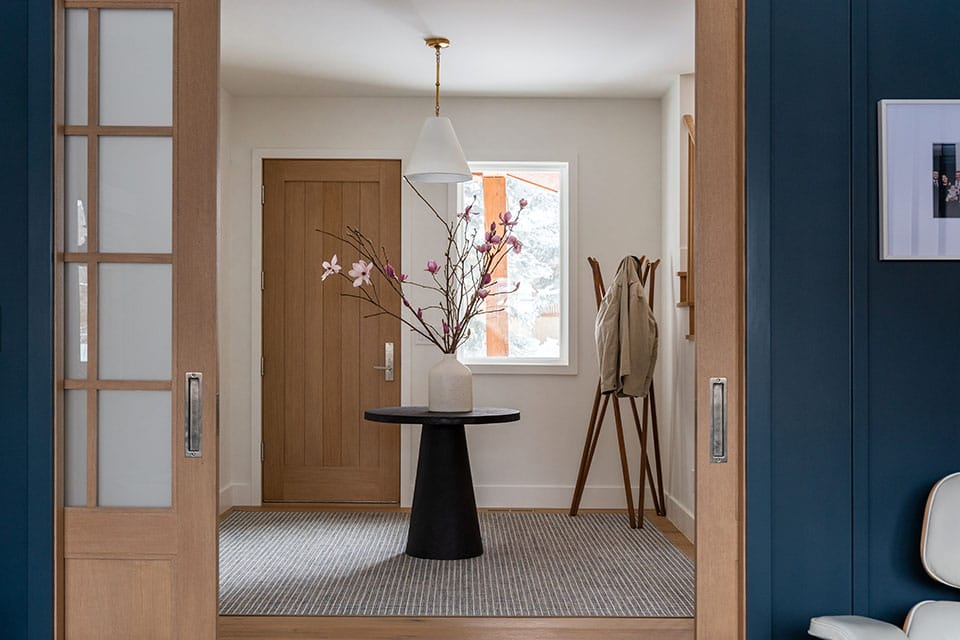
The impact of the upgrades is immediately evident upon entry. The original space featured multi-colored slate tiles, knotty wood trim, and builder-grade light fixtures, which created a sense of visual clutter and confinement. In the remodel, the floor was replaced with wide-plank white oak, which now flows seamlessly into the adjacent rooms, enhancing continuity and lightness. The dark, rustic trim was removed in favor of clean baseboards and door casings painted in a soft white, letting the architecture breathe. The old ceiling fixtures were swapped for a sculptural pendant from Visual Comfort, drawing the eye upward and introducing an elegant focal point. The front door was replaced with a simple white oak paneled design to coordinate with the new flooring and Rocky Mountain Hardware. The result is an entry that feels expansive, intentional, and inviting.
STRATEGIC STRUCTURAL CHANGES CREATE FLOW
The most dramatic transformation came through a seemingly simple but architecturally significant move: removing the wall that separated the entry from the staircase leading up to the kitchen and down to the basement playroom. This single change dramatically increased light flow throughout the home’s vertical core, creating visual connections between levels that had previously felt isolated. “This change delivered the biggest impact, by far,” says Latham. The newly opened sight lines allowed natural light from the kitchen to cascade down through the entry, effectively doubling the perceived brightness of both spaces.
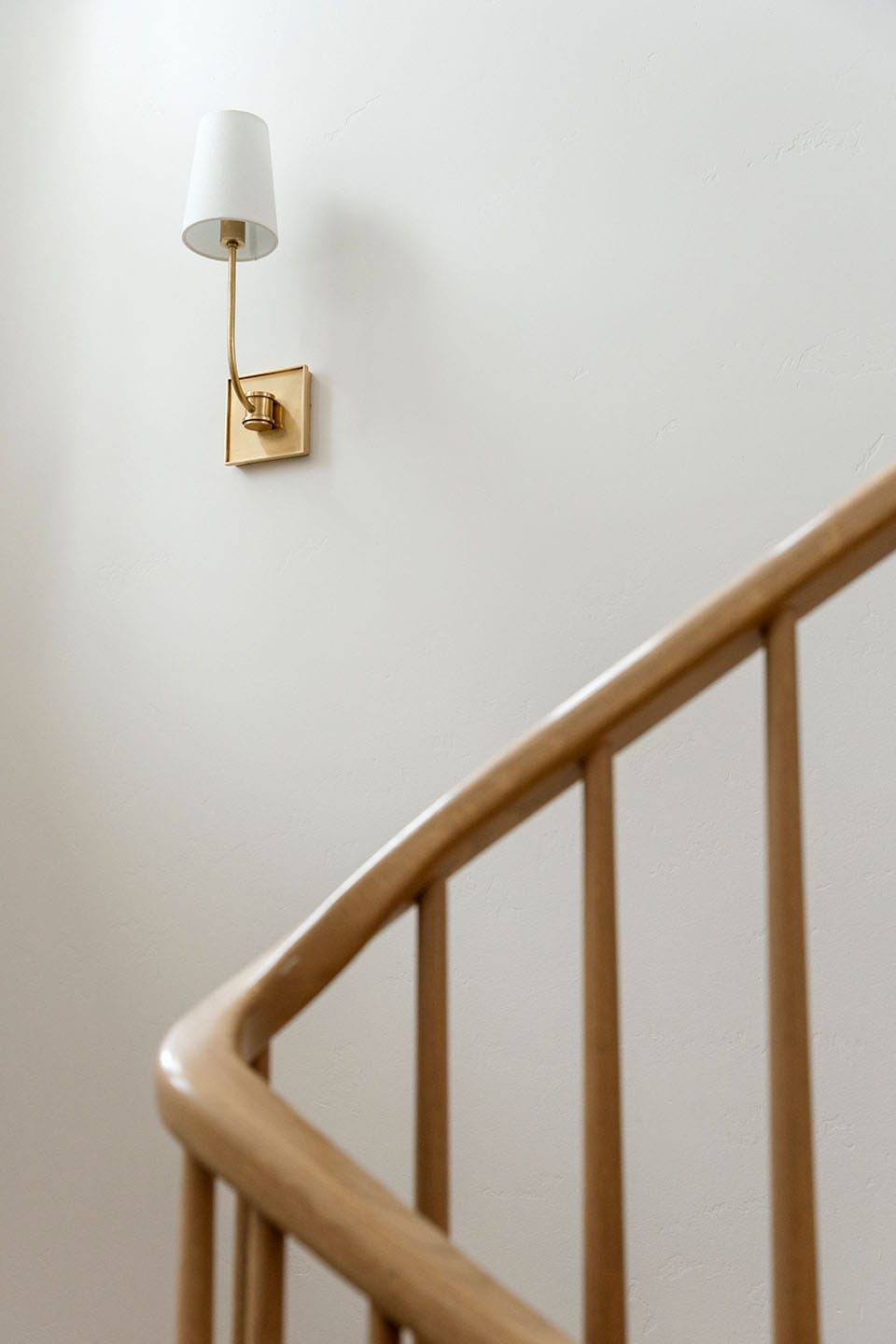
The stairway itself received careful attention, with the original crossed wooden bracing beneath the stairs replaced by clean vertical spindles that create visual lightness. A curved railing detail—a signature touch that Latham’s team carefully executed—adds organic movement to the linear architecture. “We wanted the stairs to feel continuous and open. That was really important to us,” says Latham.
THE KITCHEN: FROM RUSTIC TO REFINED
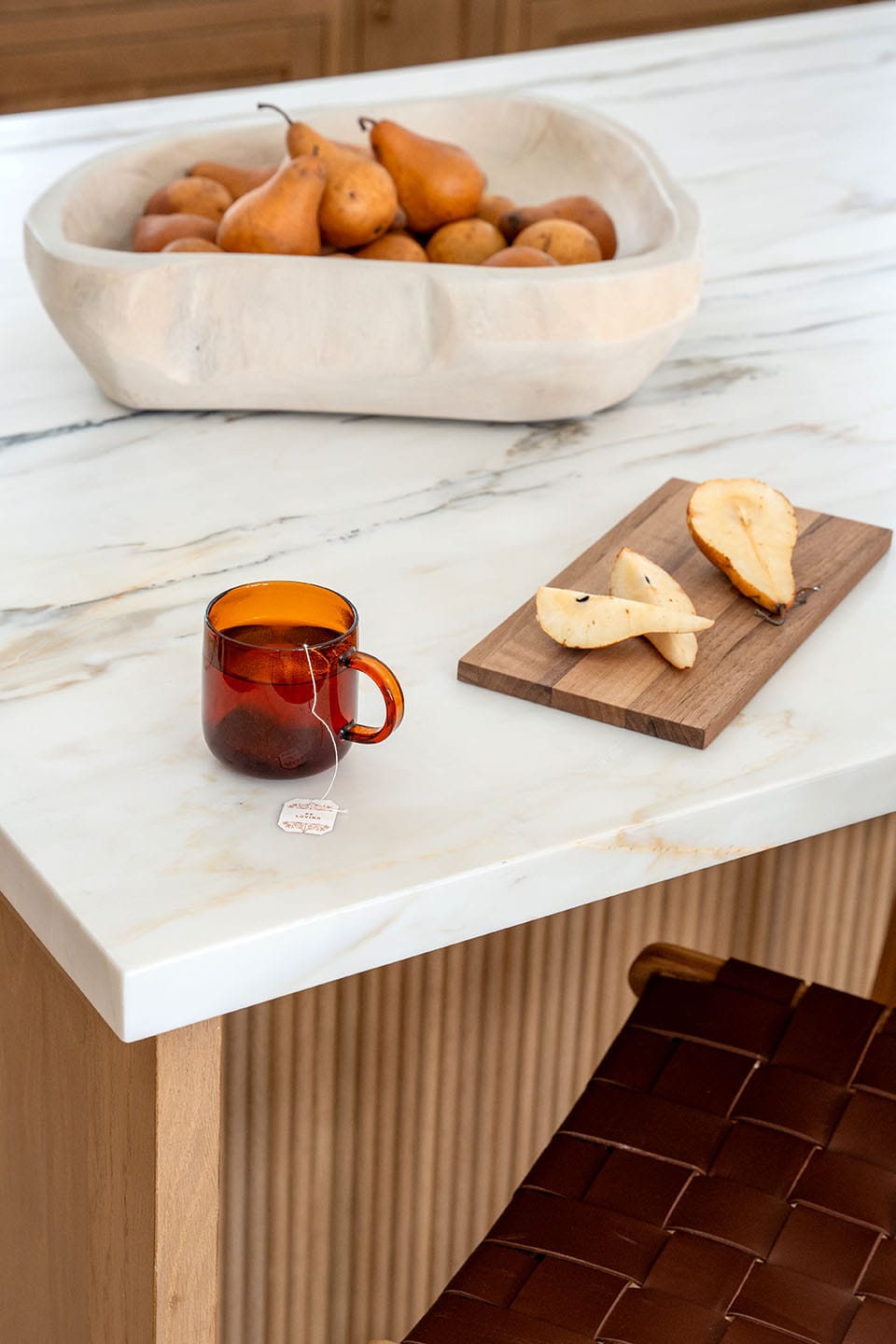
Originally dominated by golden honey-oak cabinetry and utilitarian finishes, the kitchen now showcases a sophisticated palette anchored by rich white oak cabinetry that extends from floor to ceiling, maximizing both storage and visual impact. The dated tile counter tops gave way to pristine marble surfaces that create luminous contrast against the warm wood tones, while a vertically stacked tile back splash from Cle adds textural interest without overwhelming the clean-lined composition. Custom Roman shades in a Rogers and Goffigon checkerboard fabric bring pattern and softness to the windows, while brass pulls and knobs provide the perfect jewelry-like accents.
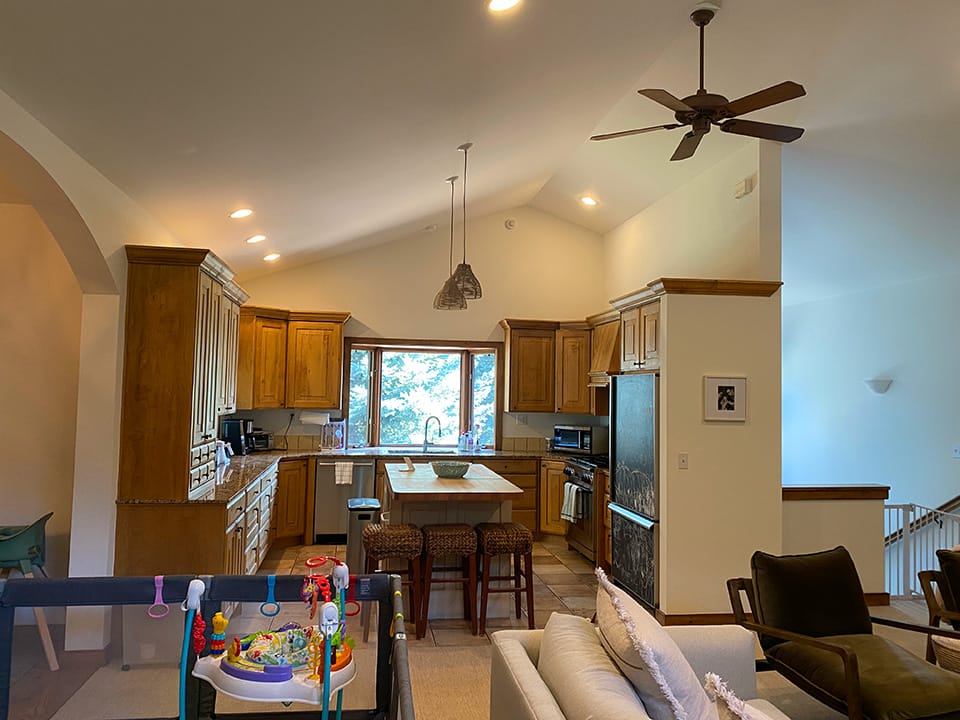
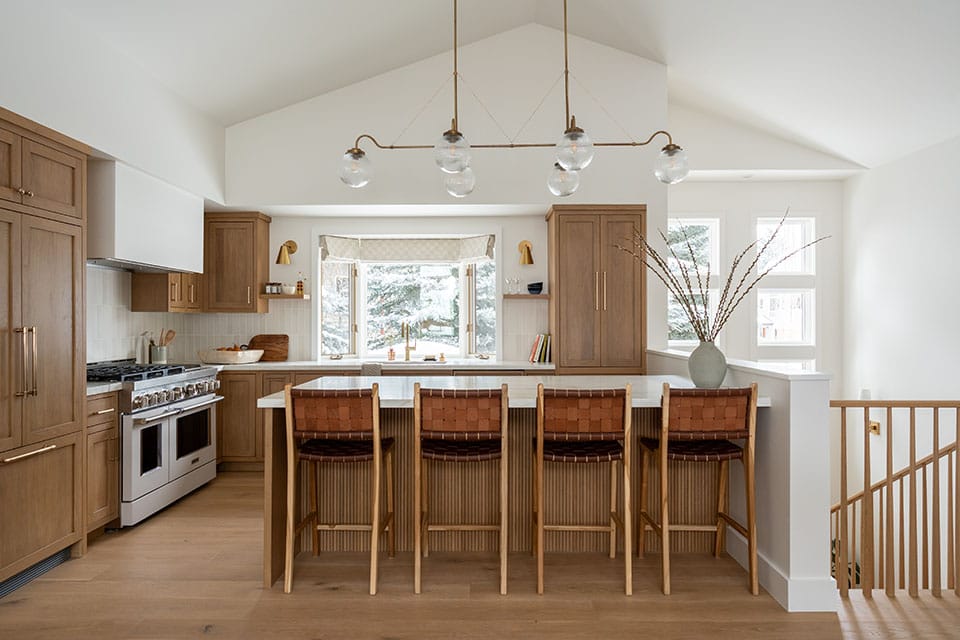
A custom plaster hood serves as the kitchen’s sculptural focal point, its organic curves softening the angular cabinetry. Fluted paneling on the island adds depth and texture, its subtle rhythm catching the light beautifully. New white oak flooring unifies the kitchen with the adjacent dining area, which had previously been isolated by different tile flooring, a common issue in older homes where rooms were designed as separate entities rather than flowing spaces.
The dated countertops gave way to pristine marble surfaces that create luminous contrast against the warm wood tones.
COLOR & PATTERN AS DESIGN TOOLS
Throughout the home, Latham’s team used color strategically to define spaces and create emotional responses. The new office/flex room off the entry was painted in a moody Lead Gray by Benjamin Moore, providing privacy and focus for work calls while creating dramatic contrast with the lighter adjacent spaces.
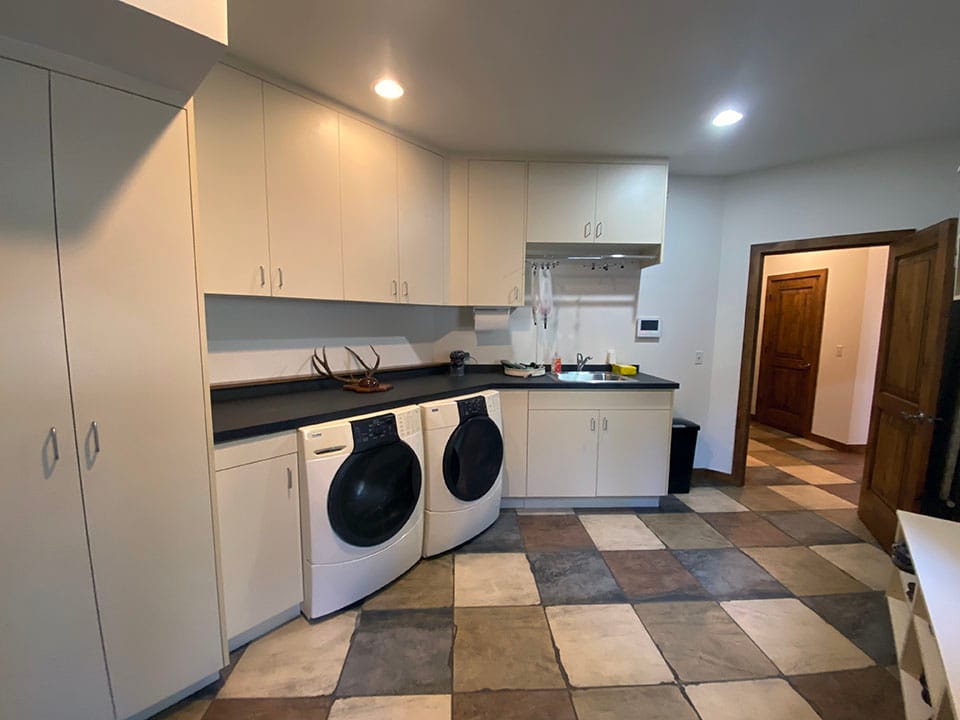
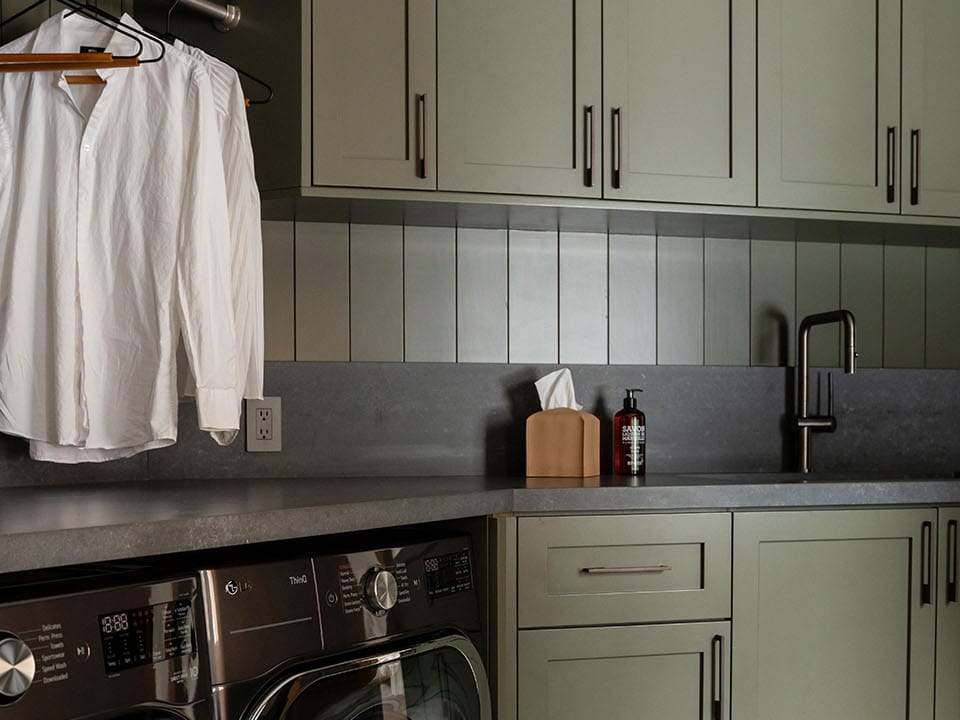
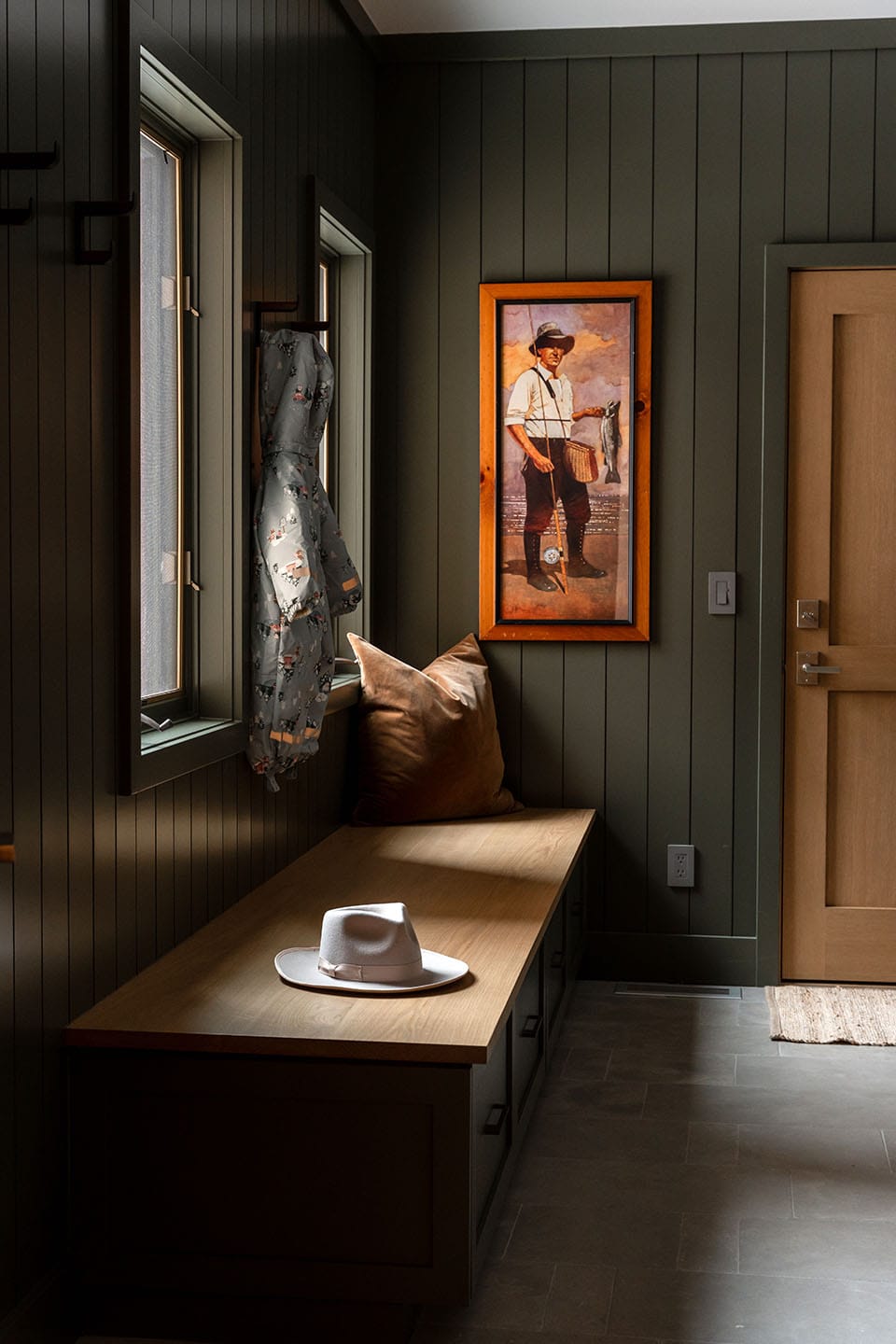
In the laundry/mudroom, the team added vertical shiplap paneling painted in a sophisticated Benjamin Moore olive green. Combined with charcoal quartz countertops and Shaker-style cabinetry extending to the ceiling, the utilitarian space is proof that beauty and practicality need not be mutually exclusive.
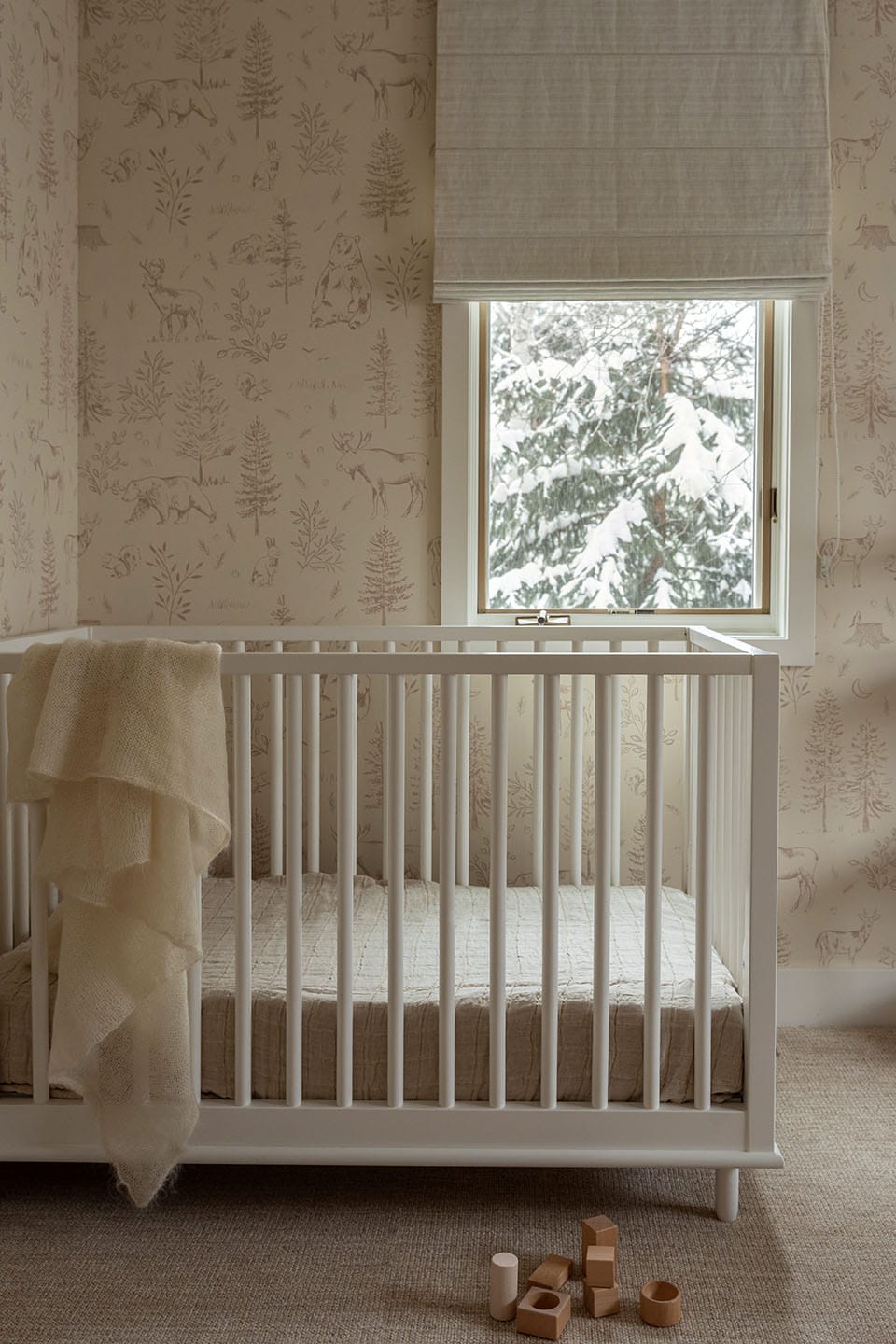
Playful custom wallpaper in the primary bath water closet adds levity and charm; in the children’s shared bedroom, custom wallpaper features frolicking alpine animals in a soothing, gender-neutral shade. On the ceiling of the downstairs playroom, a flock of birds takes flight across the expanse, adding movement and delight to an often-overlooked surface.
BATHROOM TRANSFORMATIONS
FROM BUILDER GRADE TO SPA LIKE
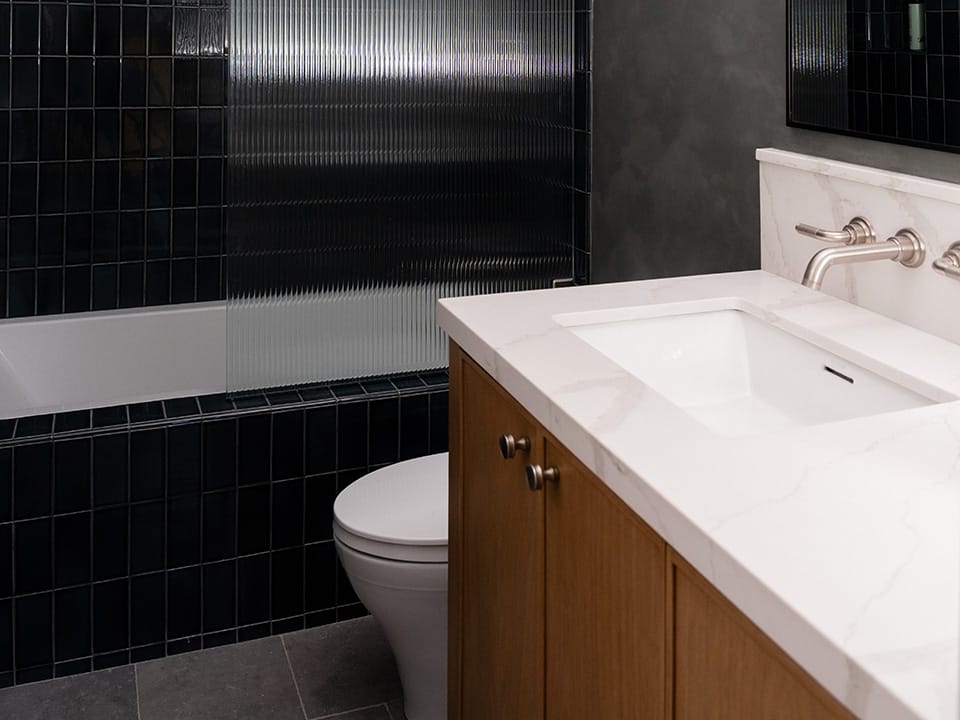
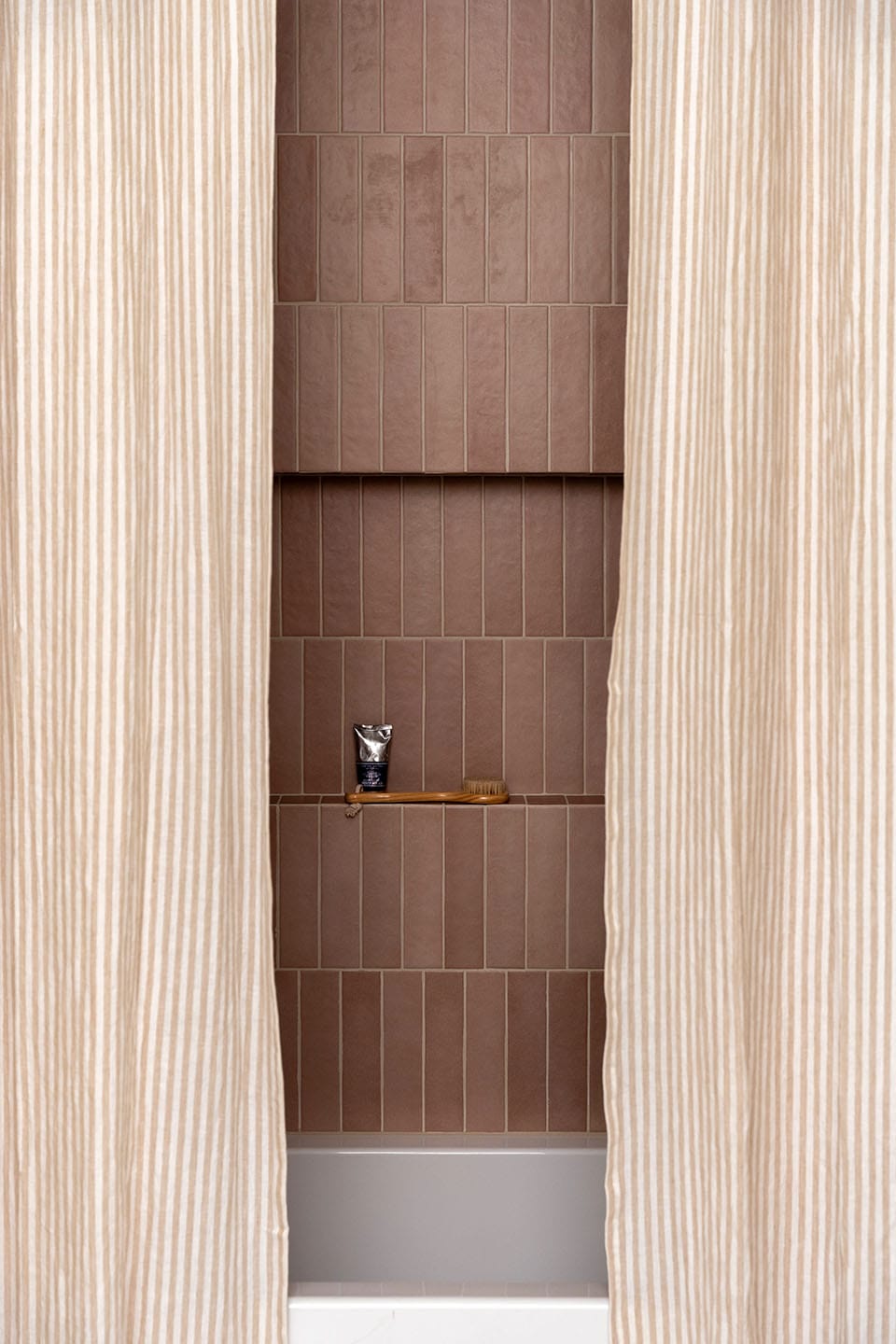
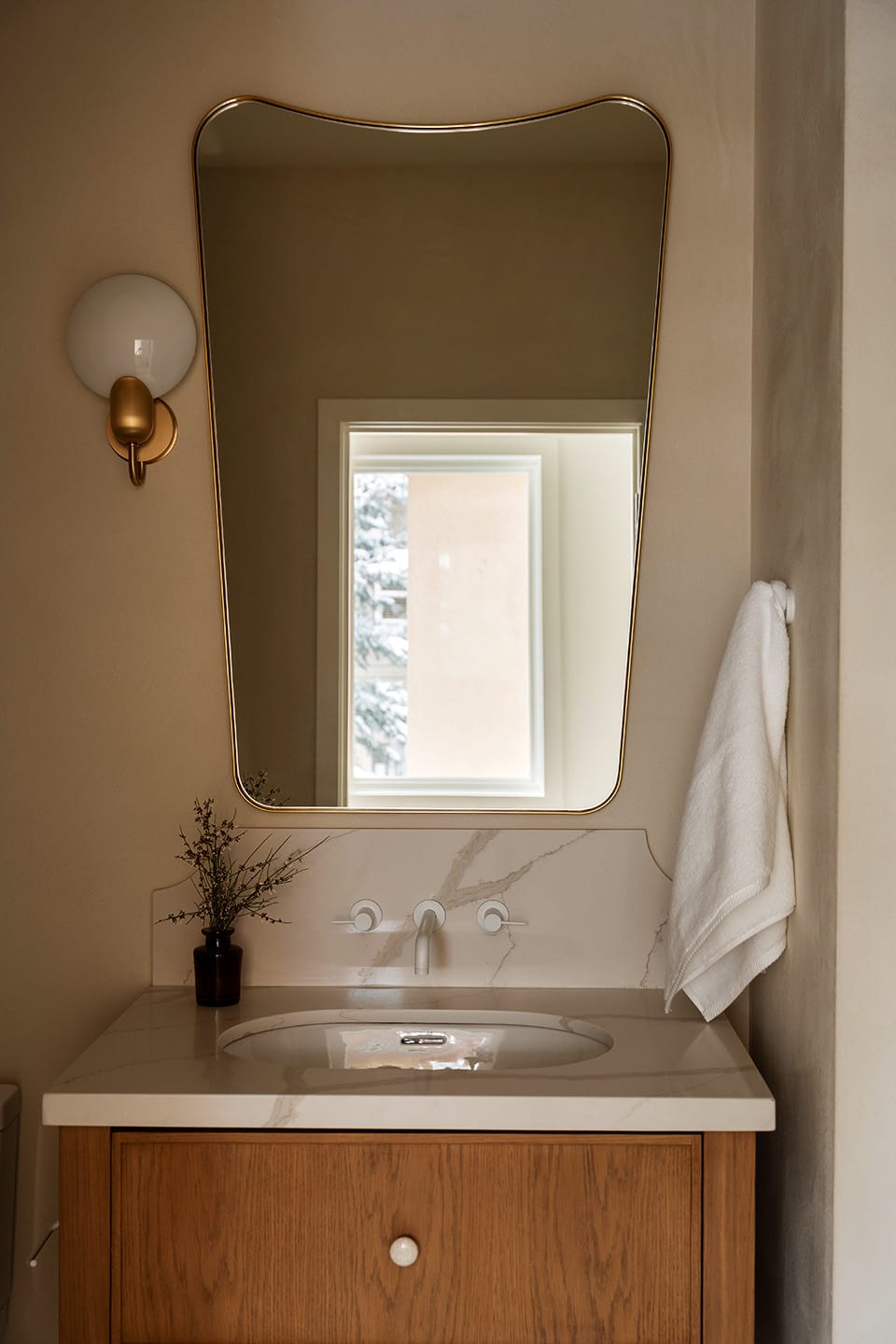
The home’s multiple bathrooms each received distinct treatments that demonstrate the power of material selection in transforming functional spaces. The combined powder and children’s bathroom features blush-colored tiles and terracotta concrete floor tiles that strike a perfect balance between playful and polished. A newly added tub creates a cohesive, spa-like environment that’s both practical and inviting for daily family use. In the downstairs ensuite bath, vertically stacked natural clay tiles offer a soft, earthy texture that brings warmth to the space. A sculptural sconce from Articolo complements the brass fixtures from Signature Hardware.
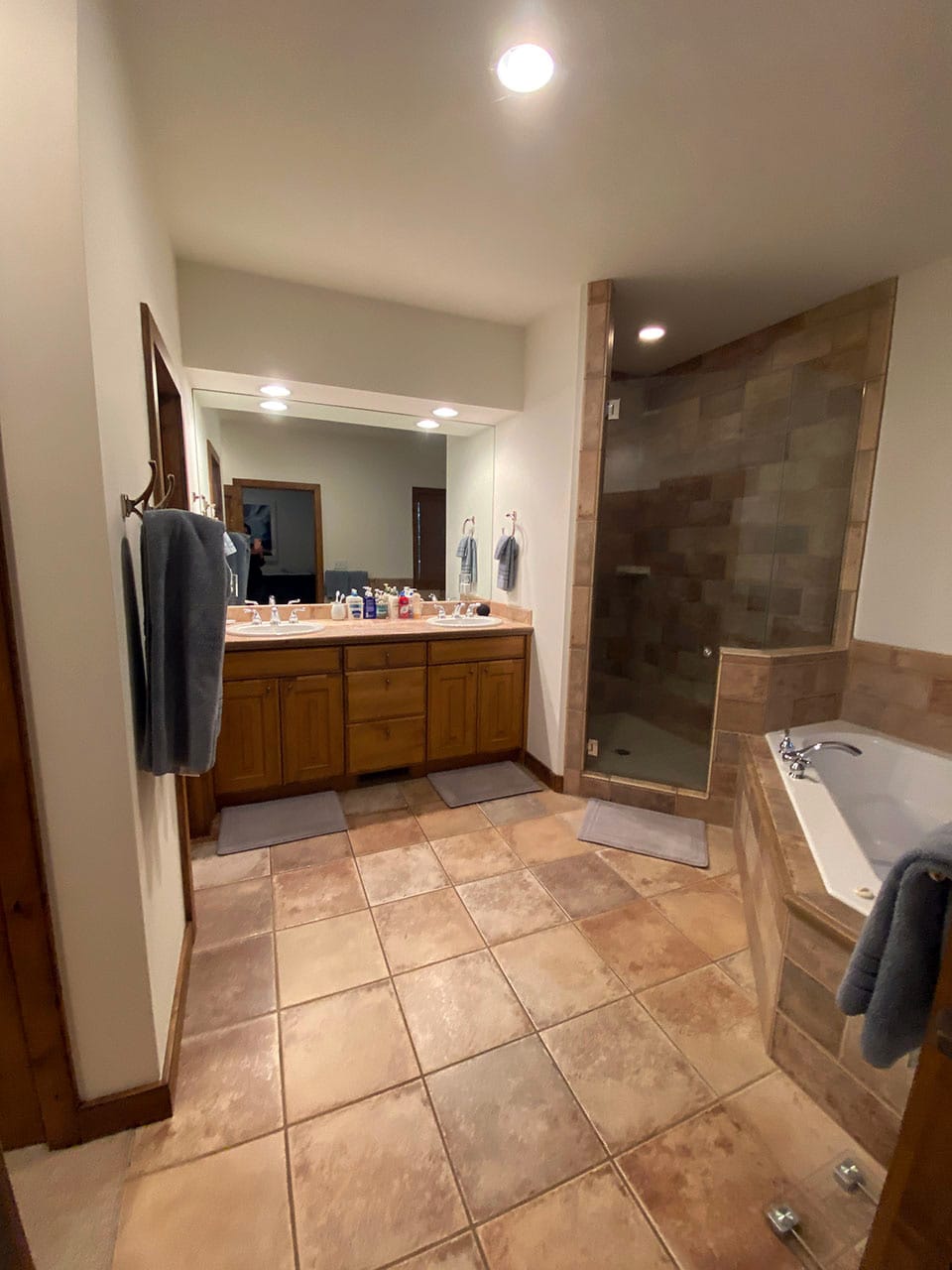
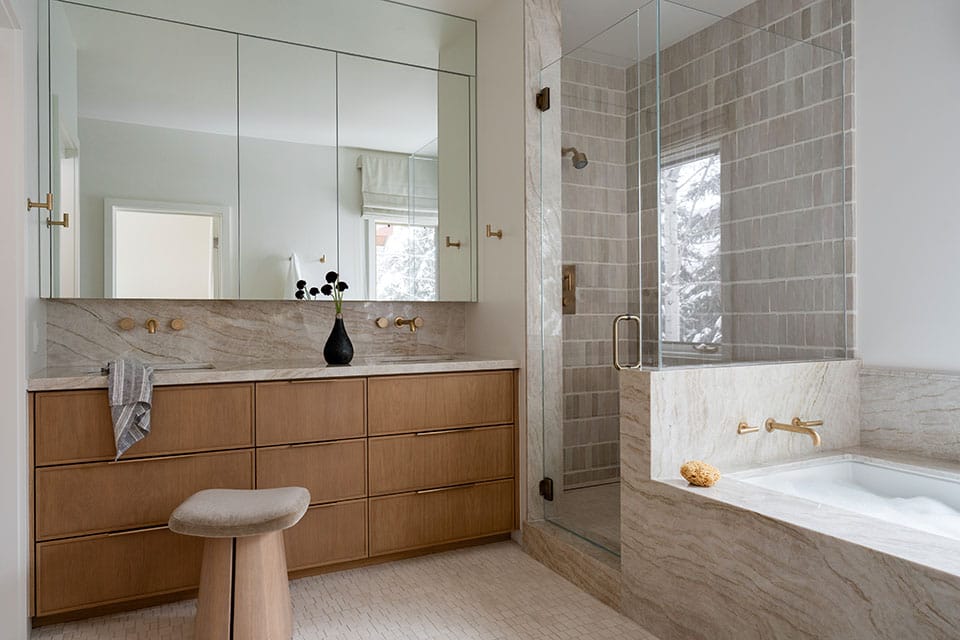
The primary bathroom ups the ante on luxurious material selections: Taj Mahal quartzite, Zia tile shower walls, Waterworks fixtures, a Cle tile floor, and custom medicine cabinets create a five-star feel. The original built-in tub was retained but reimagined within a new layout that removes the cramped 45-degree angle from the shower, squaring it off with recessed alcoves and accentuated grout lines that play with texture and light.
SOLVING PRACTICAL CHALLENGES WITH DESIGN INTELLIGENCE
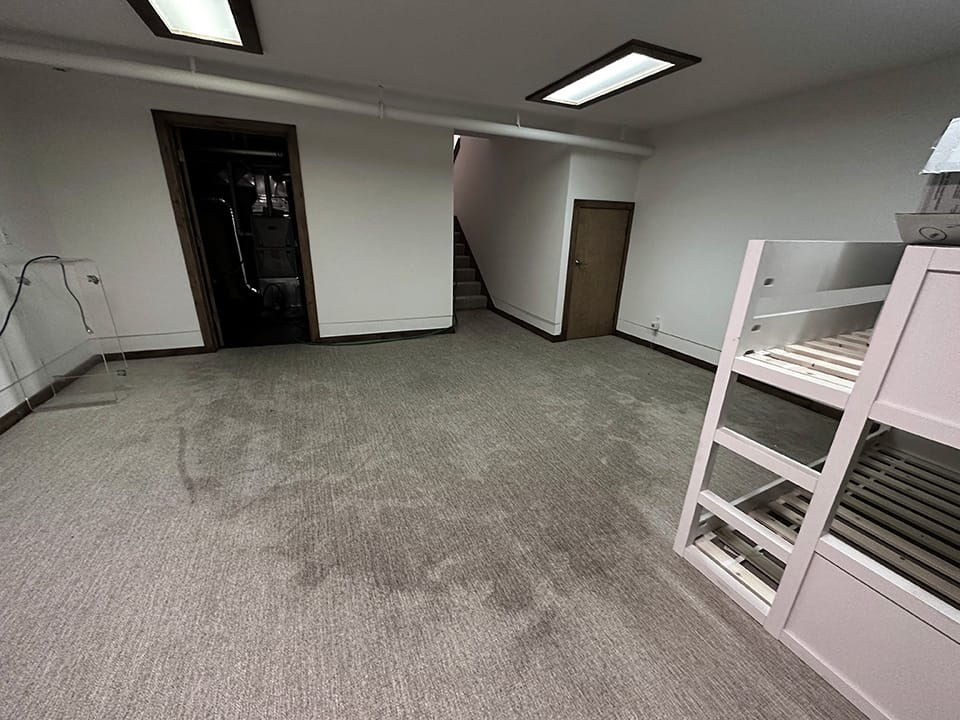
The basement level posed a series of functional challenges that demanded thoughtful, adaptive design. Persistent flooding issues meant that durability and flexibility had to take precedence. Midway through construction, plans for a lower-level half bath were reluctantly scrapped when it became evident that, despite previous mitigation efforts—including the removal of an outdated pump—the space simply couldn’t support additional plumbing. Materials had already been ordered, making the pivot more disheartening. Yet the clients met the change with grace and an easygoing attitude, saying simply, “If it can’t happen, no worries.” Their collaborative spirit helped turn a setback into an opportunity for inventive problem-solving.
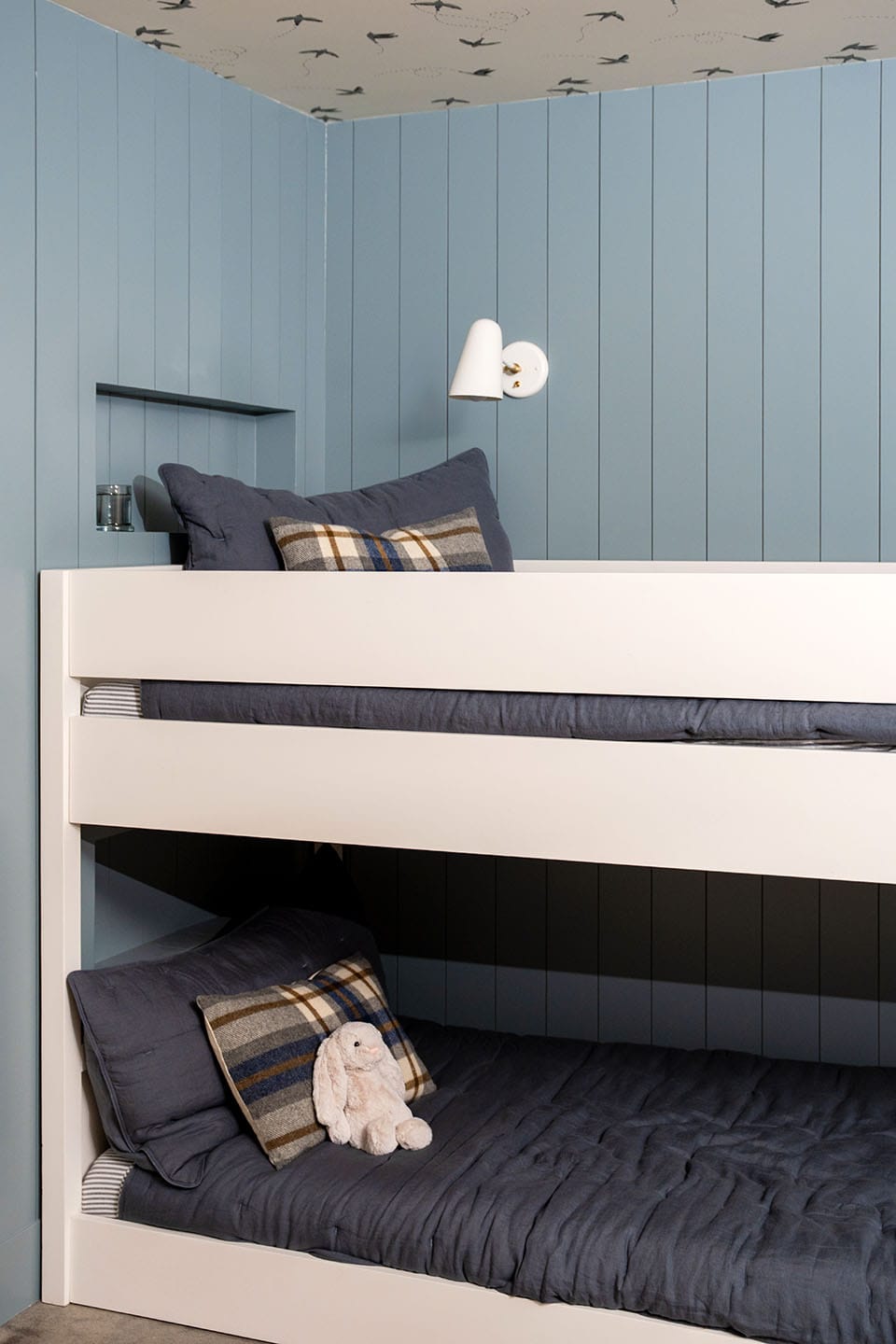
Instead of installing traditional flooring, the design team resealed the original concrete and opted for furnishings that could be easily relocated or lifted in the event of future water intrusion. Vibrant blue paneling and a whimsical ceiling treatment infuse the room with warmth and playfulness. Bunk beds along one wall offer added sleeping capacity while preserving the open layout essential for active play.
A FAMILY CENTERED SUCCESS
“The best part of the remodel was hands-down the clients. They were so lovely to work with,” reflects Latham. “Once we built trust with them, and we had similar aesthetic goals, it was a very simple and enjoyable process.”
The renovation’s success lies not just in its aesthetic transformation but in how effectively it serves the family’s evolving needs. The removal of visual and physical barriers between spaces creates the kind of connected living that modern families require, while the sophisticated material palette ensures the home will age gracefully as the children grow.
In a region where mountain homes often struggle between honoring traditional alpine architecture and meeting contemporary lifestyle needs, this West Ketchum transformation demonstrates that thoughtful design can honor both imperatives, creating spaces that feel distinctly of their place while serving the complex needs of modern family life.
whj PROFILE
