The 2022 Burns Halperin Report found that only 11% of museum acquisitions between 2008 and 2020 were by women artists, and fewer than 15% of exhibitions featured women. According to the National Museum of Women in the Arts, women account for 70% of bachelor of fine arts degrees and up to a third of those earn a master of fine arts degree, and yet they are vastly underrepresented in museums and by galleries. With those statistics in mind, Western Home Journalis proud to showcase the work of two women artists bringing their perspectives to the art scene in Flathead Valley.
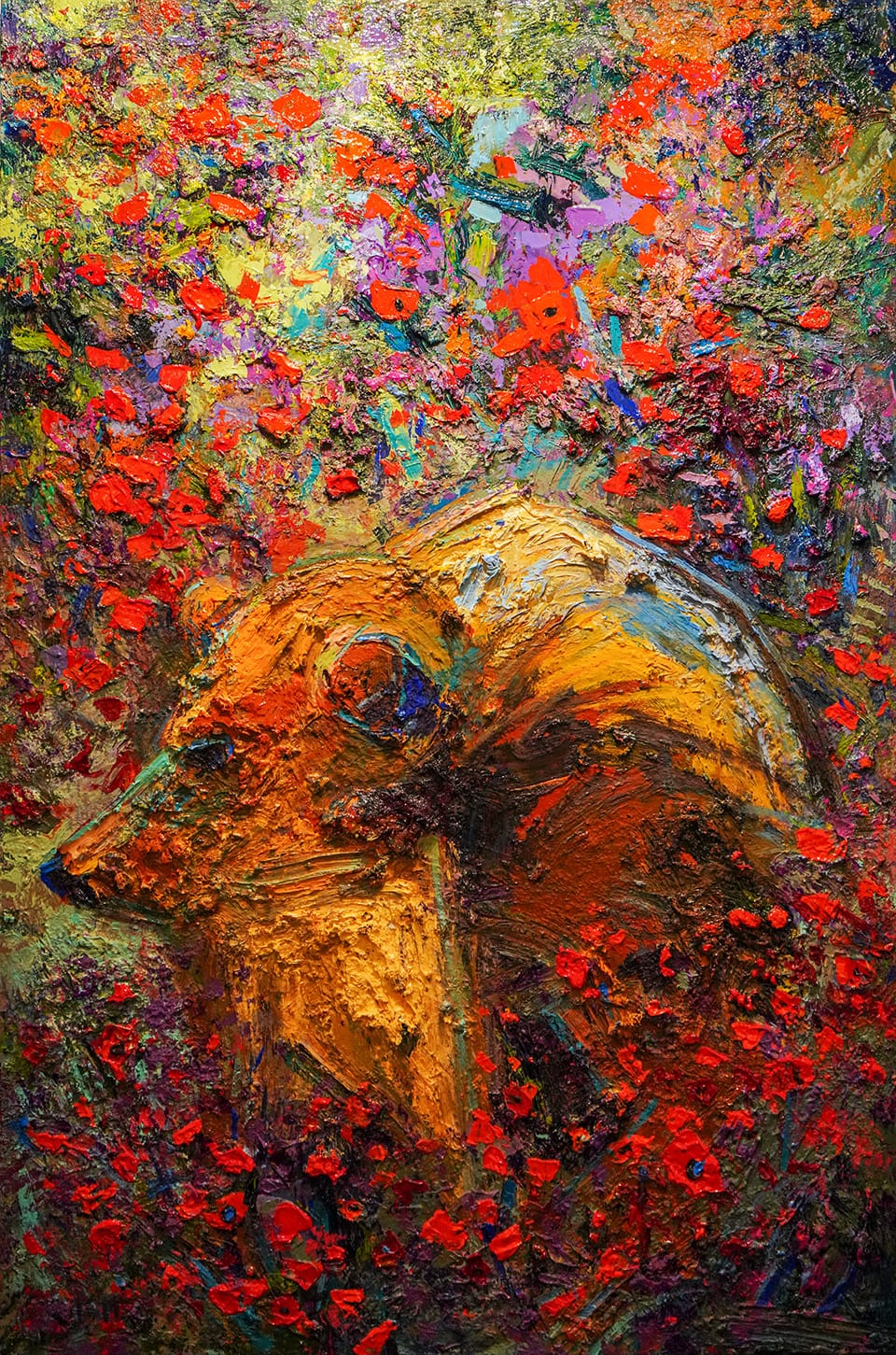
Lady of Yellowstone | 48” x 60” | oil on canvas | Kira Fercho
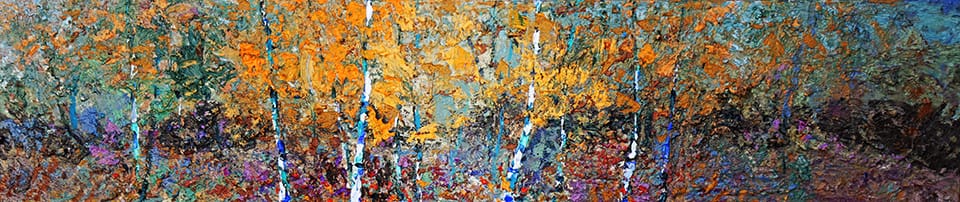
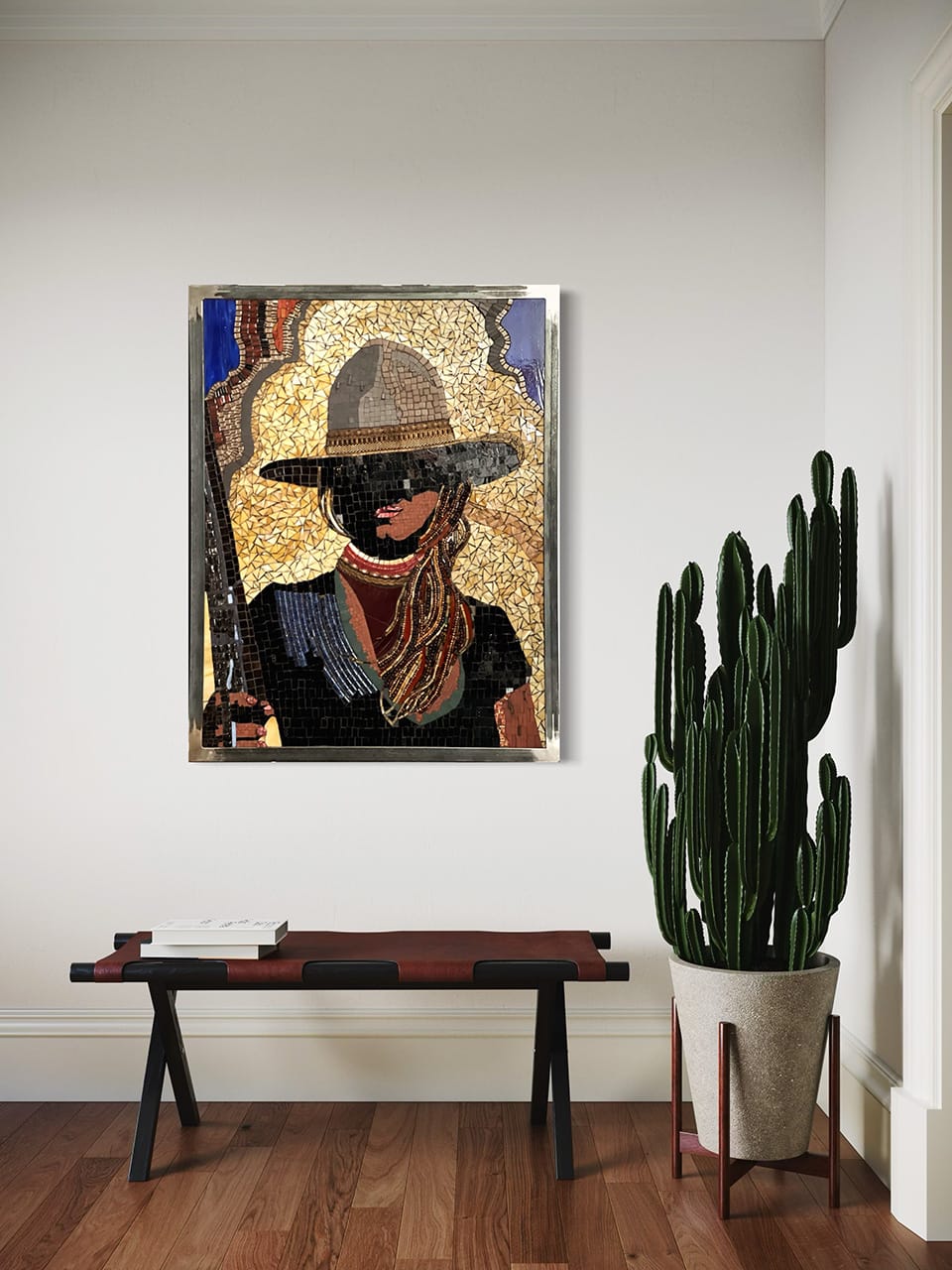
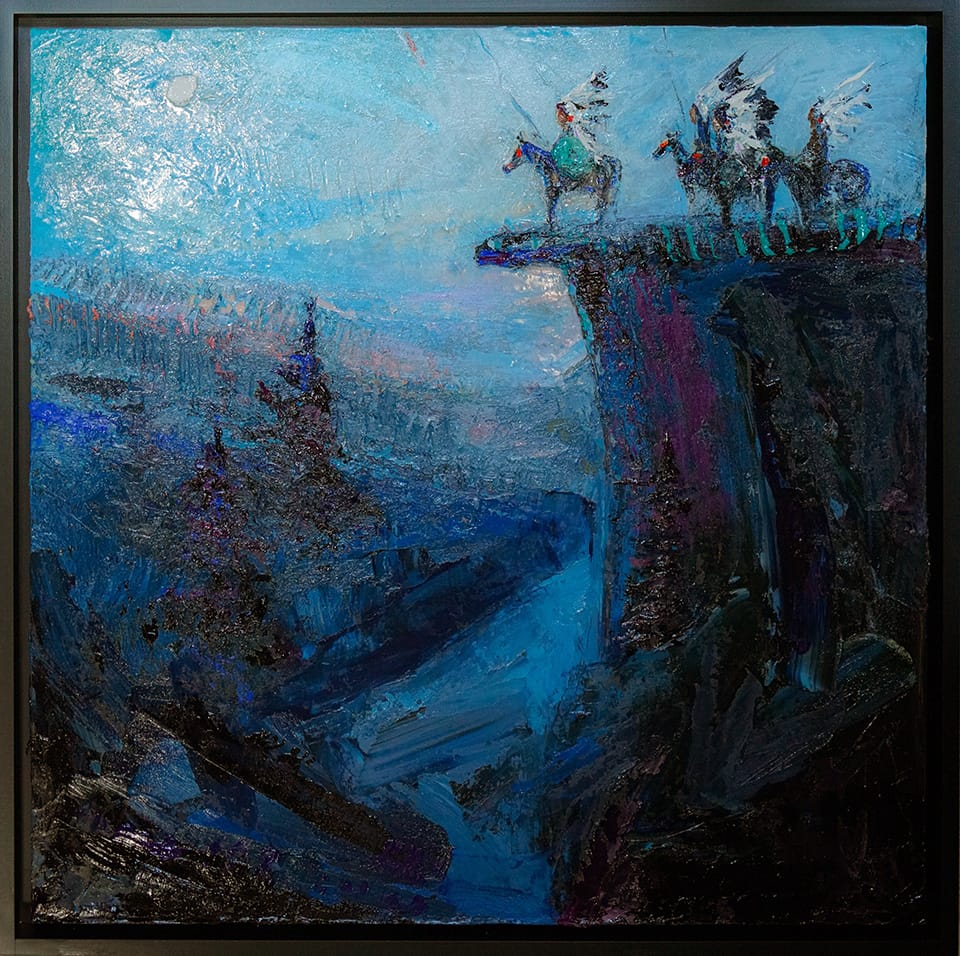
Mosaic artist Susan Wechsler produces charismatic cowgirls who balance rugged femininity with artisanal craftsmanship. With names like Oakley and Cassidy, her works make iconic statements that demand closer inquiry into what these women are made from. Our other artist, Kira Fercho, also pushes the boundaries of 2D art with her boldly colored impasto style oil paintings. While other artists make prints of their paintings, the soul of Fercho’s work is in the layered texture and her signature paint application. Inspired by the landscape of the National Parks, Fercho’s paintings are spirited additions that add dimension to any room.
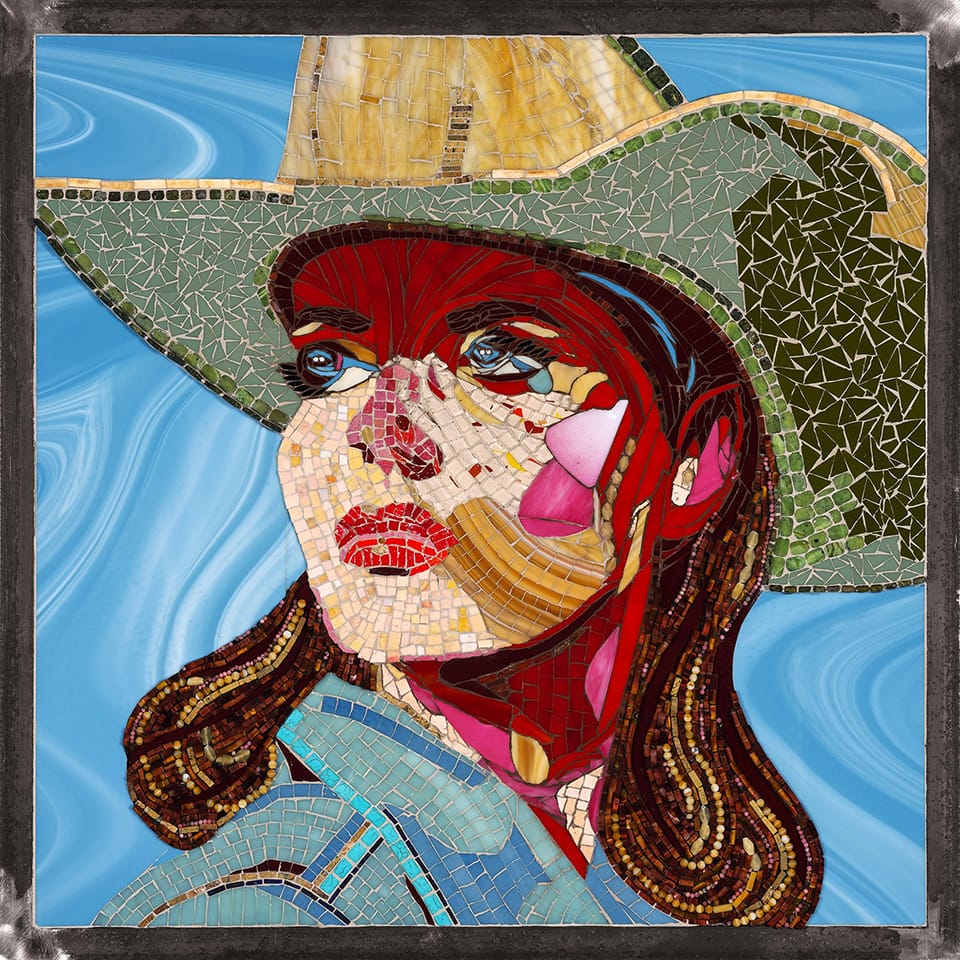
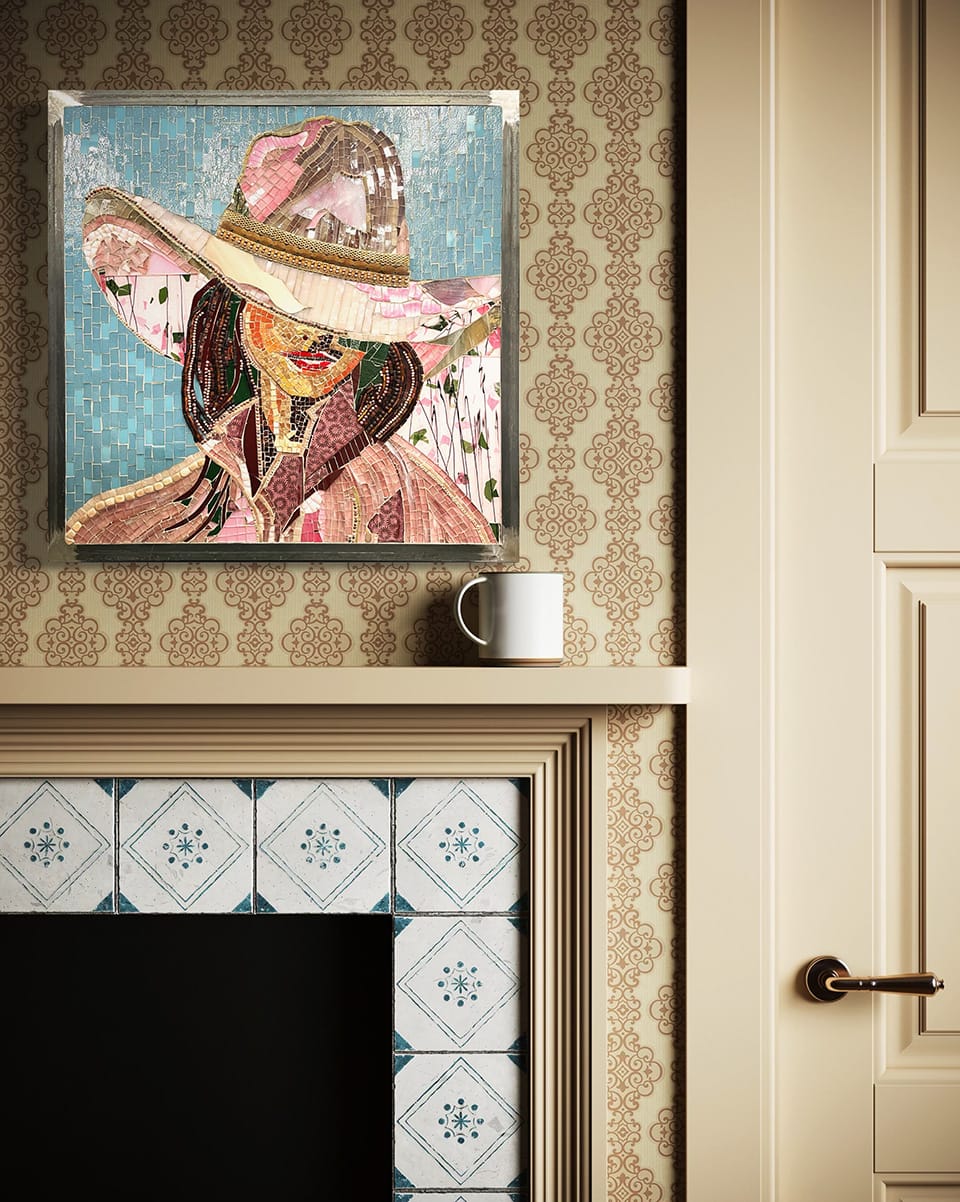
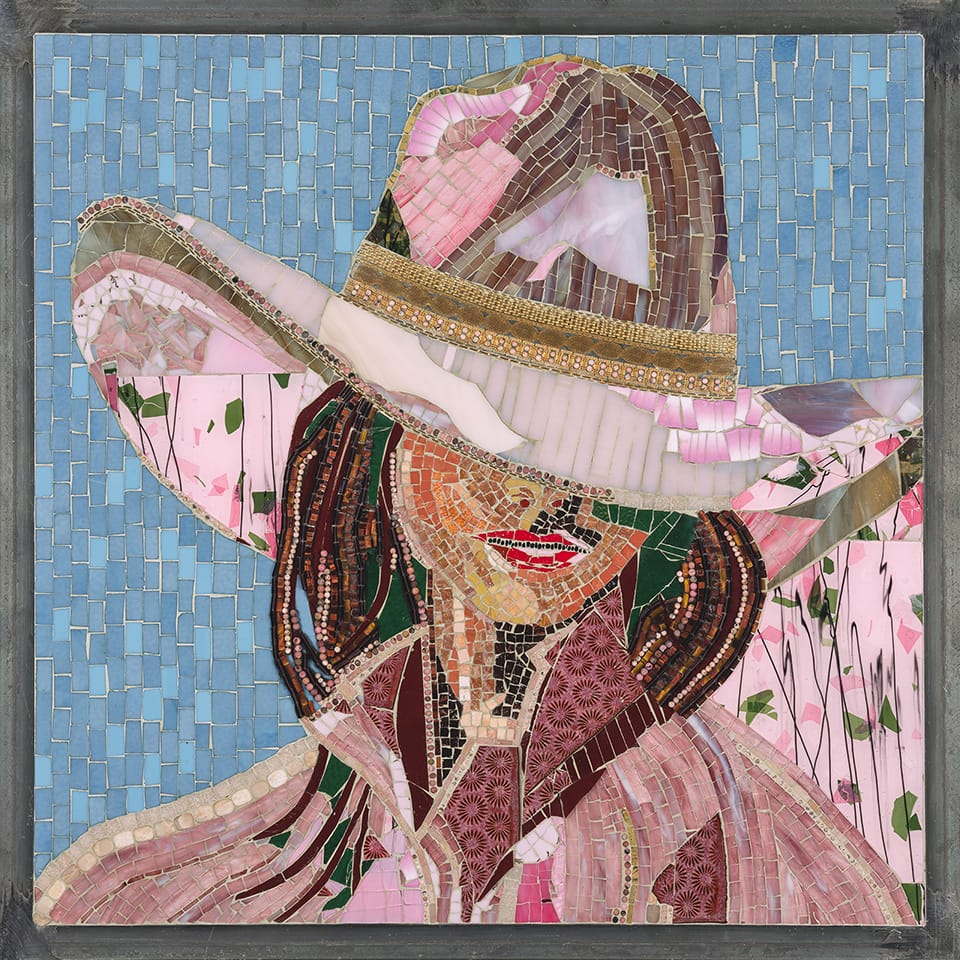
Sally | 27” x 27” | mixed media mosaic | Susan Wechsler
Susan Wechsler
Beauty, Power & Women | Cowgirls mosaic series serves a purpose
By Sabina Dana Plasse
A Susan Wechsler mosaic is more than just an alluring and exquisite piece of fine art. It is a unique work that embodies Wechsler’s creative and personal journey, which she expresses through her unique perspectives, experiences, and insights, especially in her Cowgirls series.
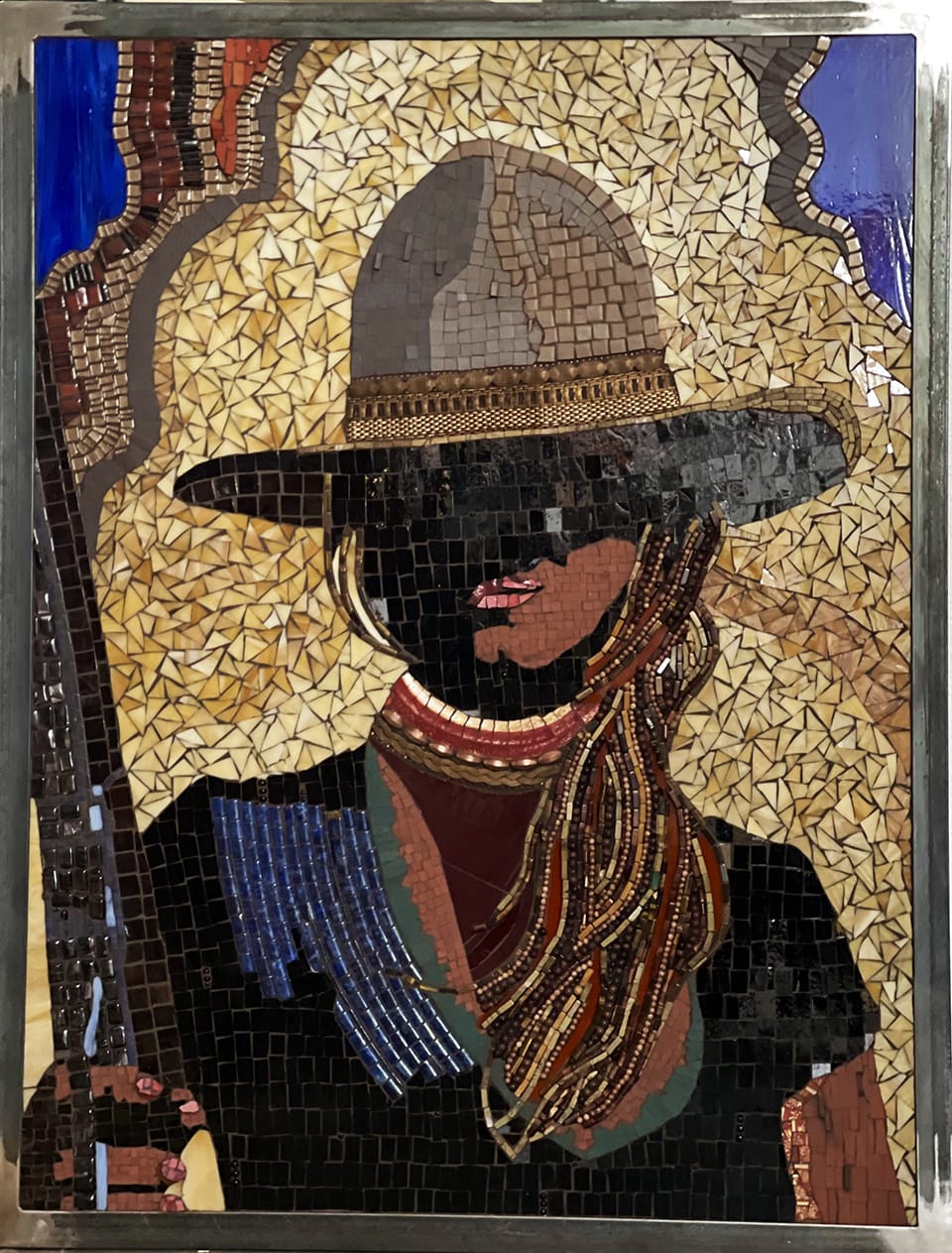
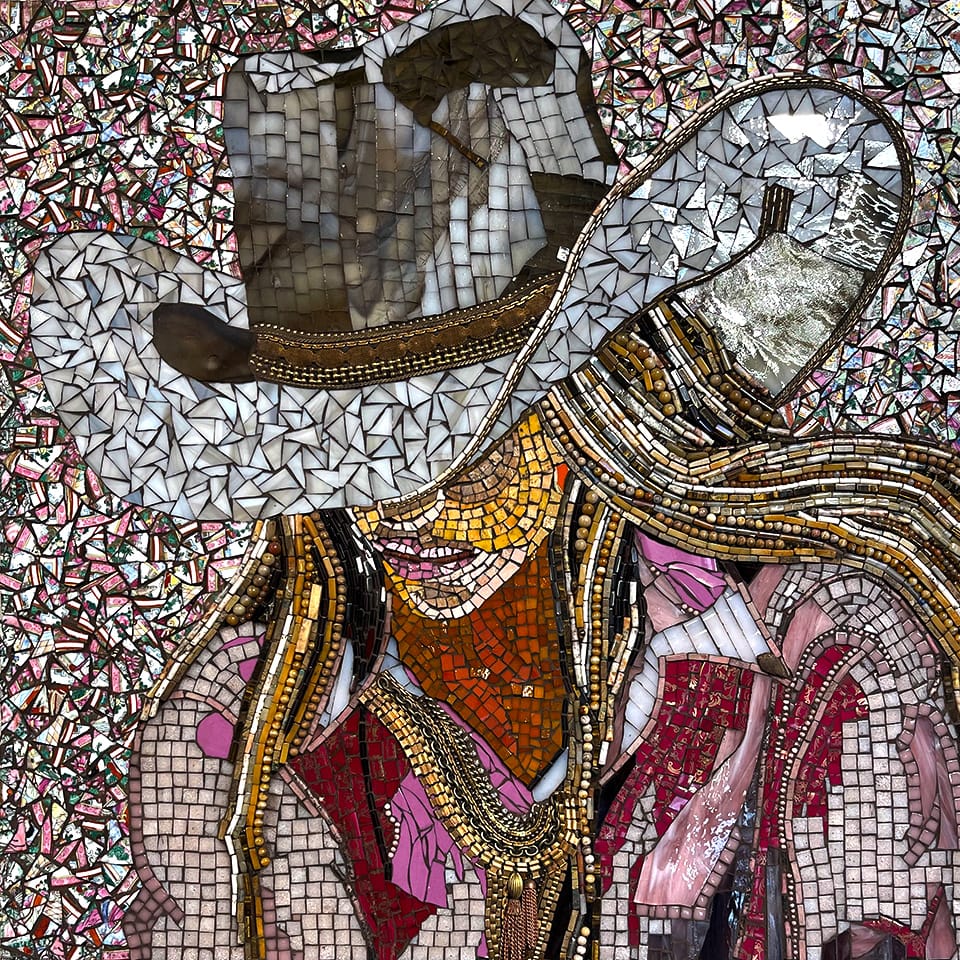
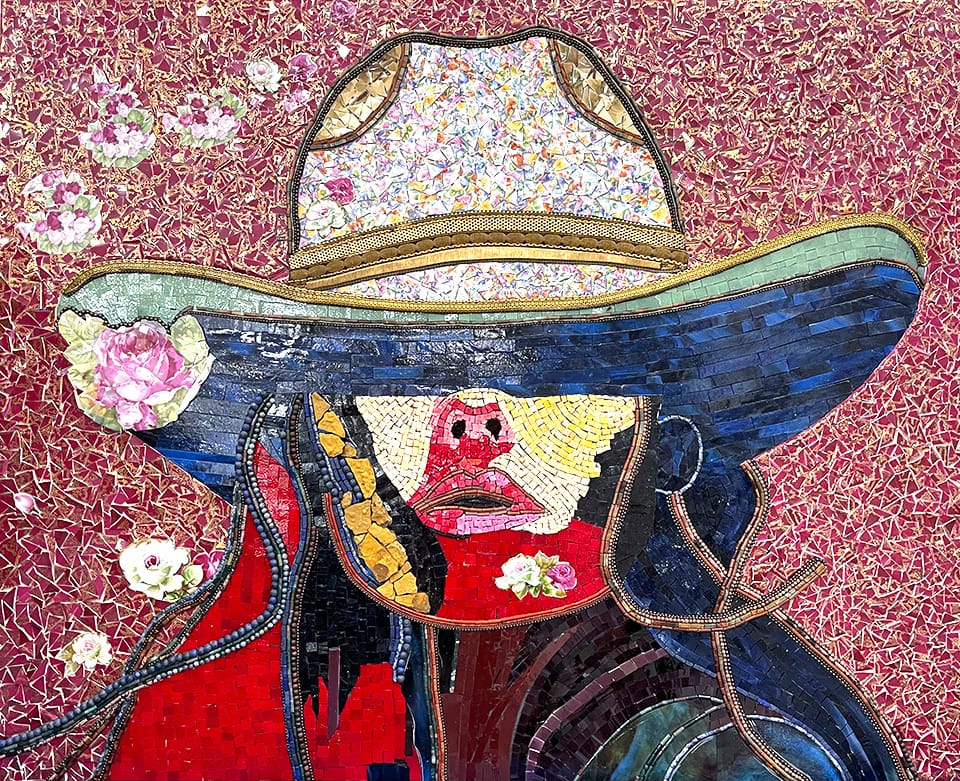
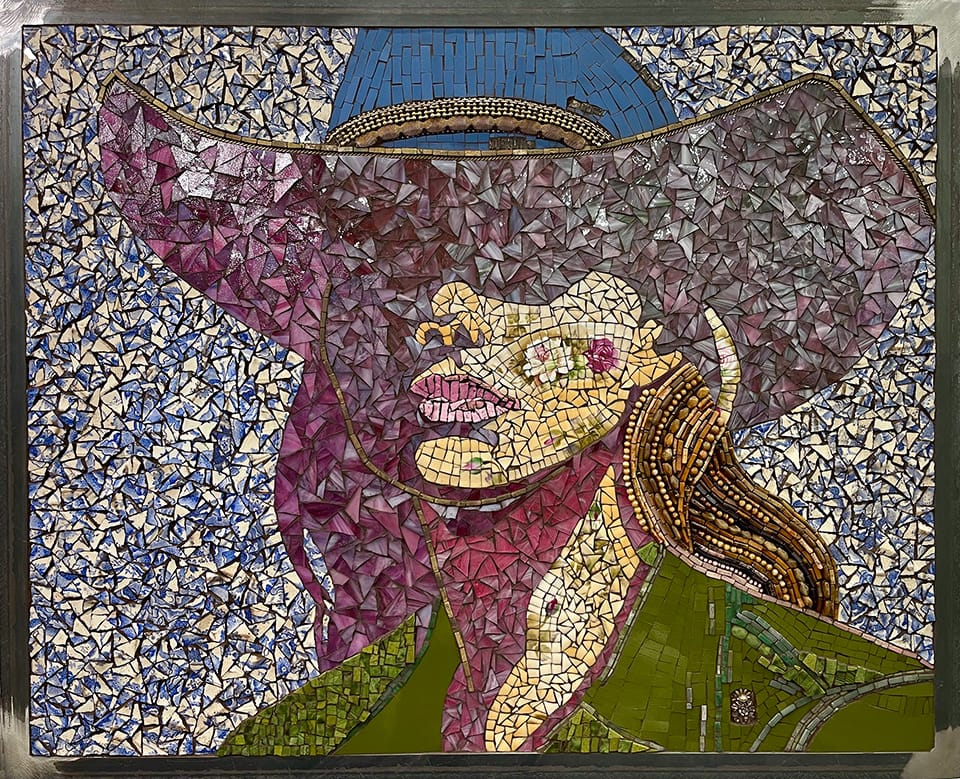
Wechsler’s Cowgirls series stands out as one of the finest examples of her mixed media mosaic process. This technique showcases her strong sense of color and texture, along with patterns and various sourced items combined to reveal beautiful, powerful, and captivating women cowgirls. These authentic women of the West in mosaic form embody a spirit and presence unlike that of men, as they are not only beautiful but also grounded, sensual, and strong.
Sally | 27” x 27” | mixed media mosaics in a hand-welded frame | Susan WechslerSally | 27” x 27” | mixed media mosaics in a hand-welded frame | Susan Wechsler
“I’m the quintessential ‘cowgirl,’” Wechsler states. “This new series captures my feelings about fierce, independent women—confident, larger than life, colorful, and vibrant. I’m completely obsessed with this new series. It represents my best work, and I’m developing several more cowgirls be-cause I still have so much more to express about their strength, attitude, and history.”
“I’M OFTEN ASKED WHY I DON’T CREATE MOSAICS OF COWBOYS. IT’S BECAUSE THEY DON’T INTEREST ME AS MUCH. I THINK IT IS THE ‘CENTURY FOR WOMEN,’ AND THIS IS MY WAY OF REPRESENTING THEM THROUGH MY ART AND SHOWING THEIR VALIANCE.”
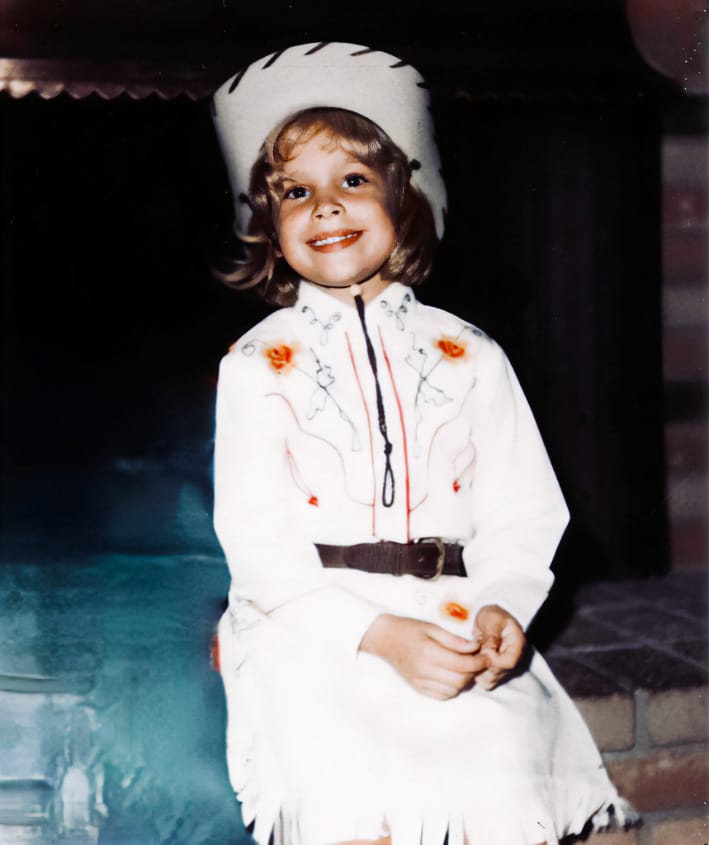
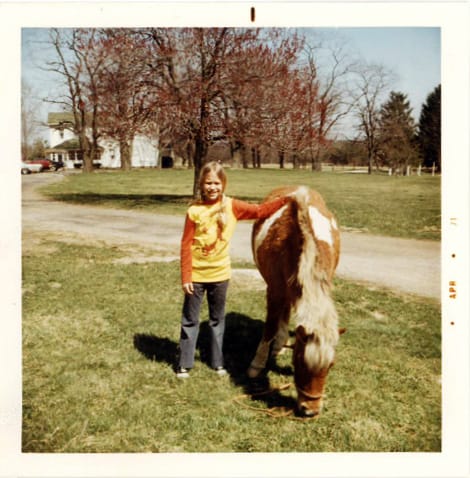
◄Susan Wechsler, Artist (October 1967, Age 6)
Growing up on a farm and riding horses in the 1970s, Wechsler spent many summers in the Colorado mountains, riding, hiking, and enjoying nature. She connects with her cowgirl subjects from an intrinsic perspective. “My first horse was named Rusty,” she recalls. “He was a ‘cowpony’ and more like a pet dog. I would let him run around the property without a bridle and fed him cake at all my birthday parties.”
Inspired by 20th century pop artist Andy Warhol, Wechsler’s passion for creating mosaic cowgirls stems from her admiration for Warhol’s vibrant silkscreen portraits of his favorite and important people. The inspiration from Warhol is clearly reflected in her Cowgirls series, which
Rosey | 26” x 26” | mixed media mosaicRosey | 26” x 26” | mixed media mosaic
features bright, bold colors and exotic, reflective materials that make each piece captivating. You become immersed and curious to learn more whenever you view a Cowgirls mosaic.
“As a mixed media mosaic artist working in a large format, I’m primarily interested in the character of my cowgirl faces, focusing on their fabulous cowboy hats,” says Wechsler. “These are large, shadowy cowboy hats, and the attitude of the pose, often shading the face, creates dramatic shadows and mysterious angles and gazes.”
Lacy Jo | 25” x 25” | mixed media mosaic
Wechsler’s mosaic method is a common practice for her, beginning with a background of antique china that represents the old wallpaper peeling off farmhouse walls. Next, plates from China embody the Chinese influence in the Wild West’s development, along with the colorful Colorado blue skies she sees daily from her studio.
“I recently bought an entire pallet of antique metal trim or chain from my favorite fashion vendor in New York City who is retiring. I treasure these items because they represent the past, what was crafted then, and what cannot be duplicated today. I enhance the cowgirl’s grand hats with these cherished treasures,” she says. “The lips are all made from Italian smalti. They are the focal point of the face, and, most importantly, they identify the subject as female. There’s something about large, colorful, full lips that speaks to me—feminine energy.”
Layla | 34” x 34” | mixed media mosaic
Wechsler’s attention to detail also encompasses the cowgirl’s hidden expression, a significant artistic feature in each mosaic that is unique in color and style. The artistry in depicting each cowgirl separately can be as simple as a defining line or a thoughtfully arranged grouping of mixed materials. Wechsler continually seeks unique, organic items to incorporate into her art, and her use of vintage beads, enchanting gems, crystals, and various other discarded treasures that she recovers and discovers contribute to her impressive outcomes.
“Every woman can relate to the color of her hair,” says Wechsler. “There are blondes, brunettes, and salt-and-peppers. All their hair is long and flowing, crafted from vintage tube beads.” She adds, “I’m often asked why I don’t create mosaics of cowboys. It’s because they don’t interest me as much. I believe it is the ‘Century for Women,’ and this is my way of representing them through my art and showcasing their valiance.”
Susan & Rusty, 1971
About Susan Wechsler: Susan Wechsler grew up spending time in Sun Valley, Idaho, and Aspen, Colorado, and found her home in the West. With a BFA and an MFA from New York University’s Tisch School of Arts, she is also a self-taught mosaic artist.
As the story of the Cowgirls unfolds before you, Wechsler’s intention becomes clear through vibrant colors and a variety of collected materials that engage one’s interest. The mosaics of Cowgirls are beautiful icons revealing a place, time, and purpose, providing a unique perspective and emotional resonance. There’s something more to the tilt of their heads, the shadow of a rim, or a direct gaze that is impossible to ignore.
“I created Cowgirls to fulfill my desire to portray strong women and highlight their stories,” says Wechsler. “These portraits are commanding and visually striking, much like the women themselves, and with my pop art style, their strength and purpose are compelling, yet more intentional.”
Cassidy | 33” x 27” | mixed media mosaic
“I CREATED COWGIRLS TO FULFILL MY DESIRE TO PORTRAY STRONG WOMEN AND HIGHLIGHT THEIR STORIES. THESE PORTRAITS ARE COMMANDING AND VISUALLY STRIKING, MUCH LIKE THE WOMEN THEMSELVES, AND WITH MY POP ART STYLE, THEIR STRENGTH AND PURPOSE ARE COMPELLING, YET MORE INTENTIONAL.”
–Susan Wechsler, Artist
Kira Fercho
ROOTED IN THE BIG SKY
By Michele Corriel
This summer, Kira Fercho, renowned for her vivid portrayal of Montana, turns her palette to the stark and imposing lands of Glacier National Park. Fercho’s deep connection to these lands and their rich histories is evident in the respectful way she portrays her subjects.
Her journey as an artist began in her childhood, where the expansive forests and valleys of Yellowstone National Park and the majestic landscapes of Glacier served as her muse and playground. At the age of 13, Kira’s mother would take her to Yellowstone Park, where she learned to listen to her heart, how to reach for a visual vocabulary, and to translate the sounds of the natural world through her brushstrokes.
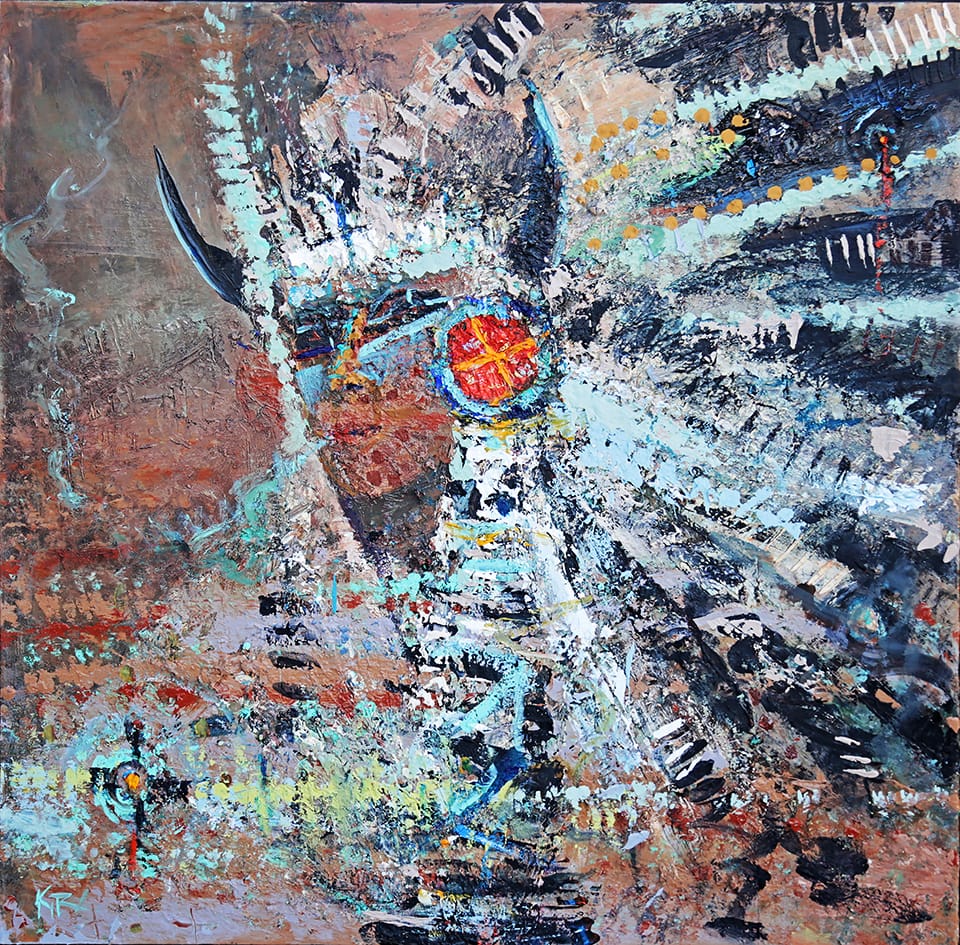
Crazy Horse | 53” x 53” | oil on canvas | Kira Fercho
Through her art, she aims to capture the spirit and stories of the places she cherishes and the people she has encountered along the way. “These paintings are my everything,” Fercho says. “My higher power gifted me the ability to paint and it’s my job to make them and protect them and find the rightful owners for them.”
Unlike a lot of painters, Fercho doesn’t make prints from her oil paintings. She paints using thick layers, in an impasto style, and the translation to prints would not convey the authenticity of her work.
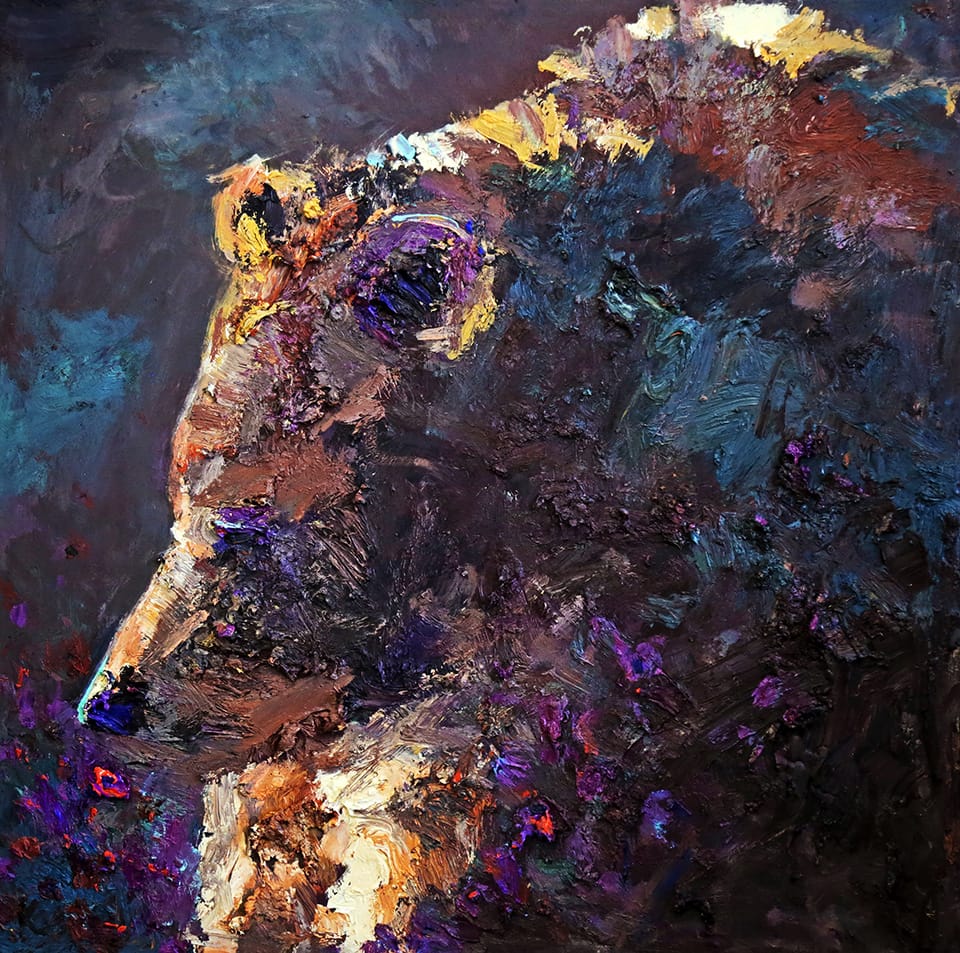
My Heros have always been Cow Dogs | 30” x 60”
“A LARGE PART OF MY SHOW THIS SUMMER IS CONNECTING PEOPLE WITH THE HISTORY OF PLACE. IT’S IMPORTANT THAT THESE LOCATIONS ARE REVERED AS SACRED LANDS, NOT JUST A BEAUTIFUL PLACE TO VISIT. I HOPE PEOPLE ENJOY THE ADDED EDUCATIONAL EXPERIENCE.”
–Kira Fercho, Artist
“The pieces are largely about where I’m from, my life, and the people I’ve met and had relationships with,” she says. “I love sharing these little bits of stories.”
Aside from painting plein air in the park, Kira will also have a show in Whitefish at the Dick Idol Gallery. The show will be open for the entire month of July.
“It’s such a huge honor to get a one person show in the middle of summer,” Fercho says. “The Dick Idol Gallery has always been so good to me. They get what I do. They’re very good at the client/artist relationship.”
Contemplation | 40” x 40”
To watch as the stories unfold, check out Kira’s website as she plans to update it in real time with the paintings that will be shown this summer. Fercho is hoping that her show will help tourists and nontourists alike to appreciate their surroundings.
“A large part of my show this summer is connecting people with the history of place,” Fercho says. “It’s important that these locations are revered as sacred lands, not just a beautiful place to visit. I hope people enjoy the added educational experience.”
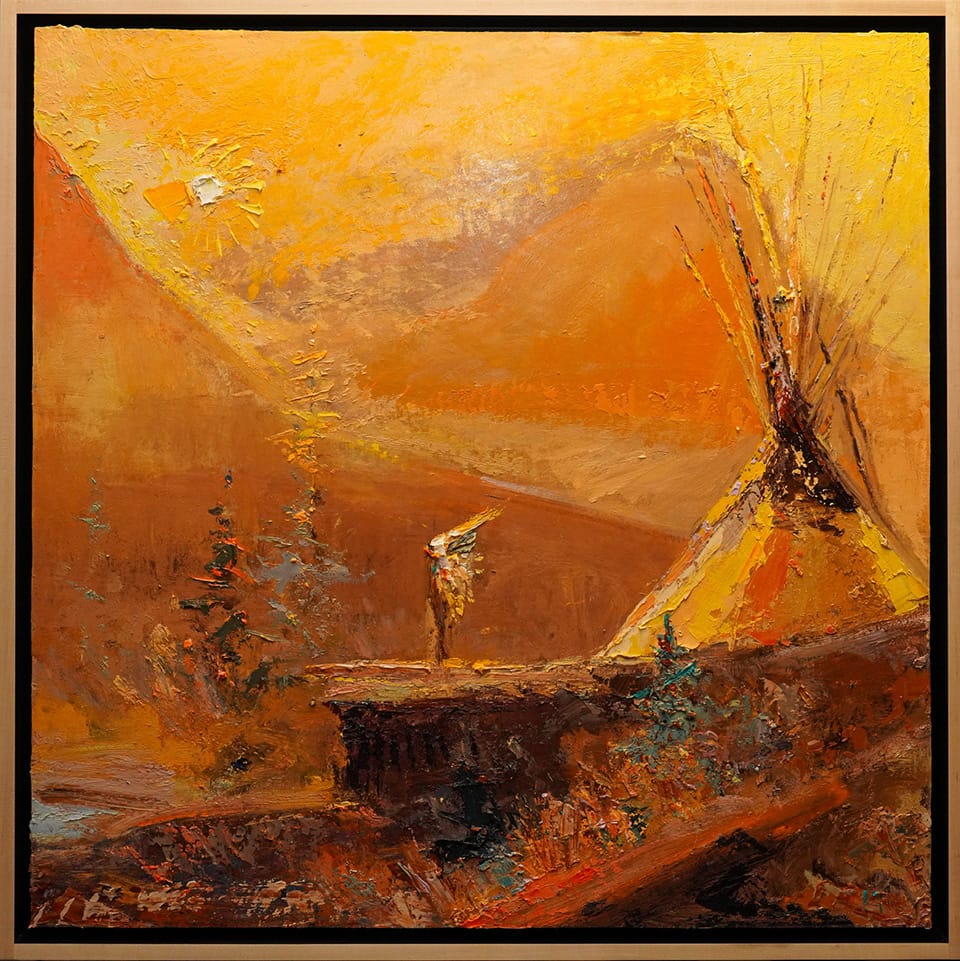
Going to the Sun | 60” X 60”
◄ Going to the Sun | 60” X 60” The Going to the Sun Road is the only road that transverses Glacier National Park. At an elevation of 6,646 feet (which is the highest point of the road), it crosses the Continental Divide through Logan Pass. Construction began in 1921 and was completed in 1932.
“The road borrows its name from nearby Going-to-the-Sun Mountain,” Fercho says. “Local legend, along with a 1933 press release issued by the Department of the Interior, relayed the story of the deity, Sour Spirit, who came down from the sun to teach Blackfoot braves the rudiments of the hunt. Going to the Sun is my homage to the Blackfoot side of Glacier. The warrior stands by himself, between his Heaven and Earth.”
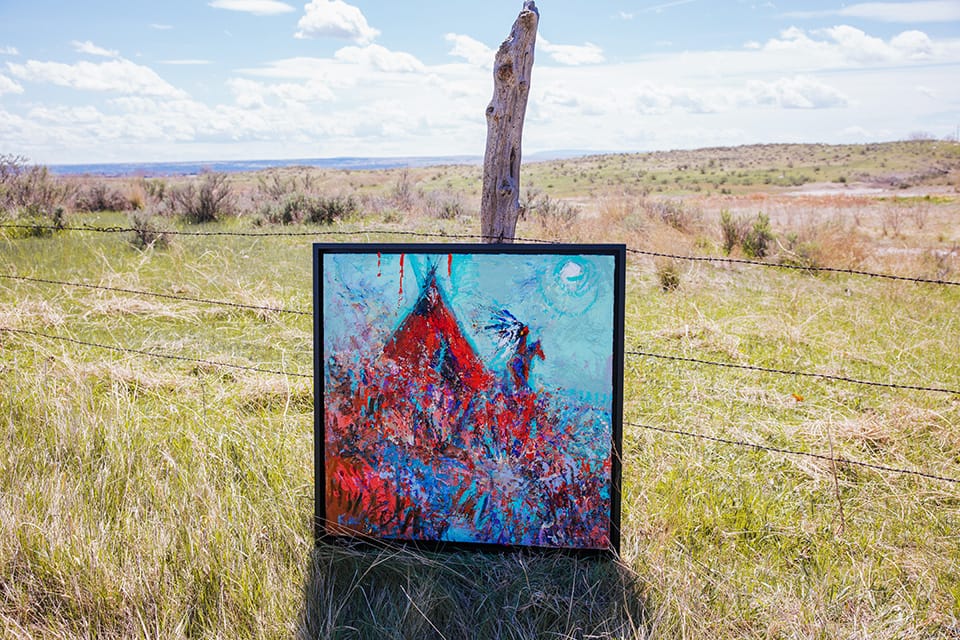
Crow Country | 48” X 48” ► Fercho grew up in the Billings area and still lives there. “The Crow Nation is a sovereign nation in south central Montana. The Crow Tribe, whose original name is Apsaalooke, is the indigenous people of the Crow Nation,” she says.
“Crow Fair is held the third week of August each year,” Fercho says. “My dad’s birthday was August 18th. We would celebrate by going to the Crow Fair. Sometimes we would go for the parade, other times for the dancers and his favorite—the horse races. It’s a spectacular sight to see, with thousands of tipis. No wonder it is called, ‘The Tipi Capital of the World.’”
Crow Country | 48” X 48”
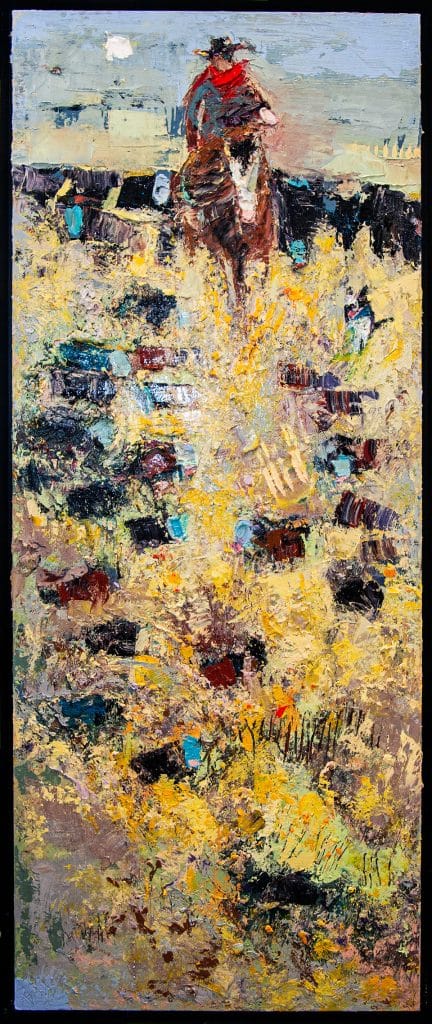
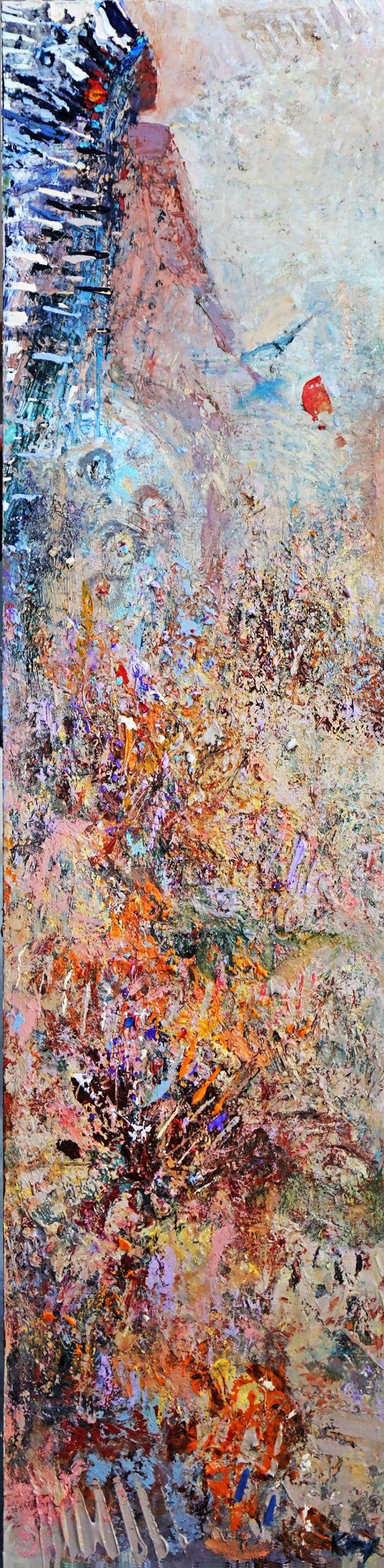
Into the Sun: Two Medicine | 18” X 72”
◄ Into the Sun: Two Medicine | 18” X 72” (Right) This piece has a design that brings the viewer’s eye up from the natural grasses to the horse/rider, and eventually to his final destination. Two Medicine is sacred to the Blackfoot tribe native to Glacier National Park. According to the common lore that gets passed around national parks, Two Medicine was a spot where the Blackfoot underwent their individual vision quests, a time of contemplation, solitude, and spiritual searching to discover one’s purpose and destiny in life.
“I am not Blackfoot. But I feel a spiritual pull whenever I am in Glacier National Park,” Fercho says. “As an artist, I celebrate the beauty and healing power of this area. I also feel the importance of sharing that this is still a Holy Land for the Blackfoot, and we must tread with respect.”
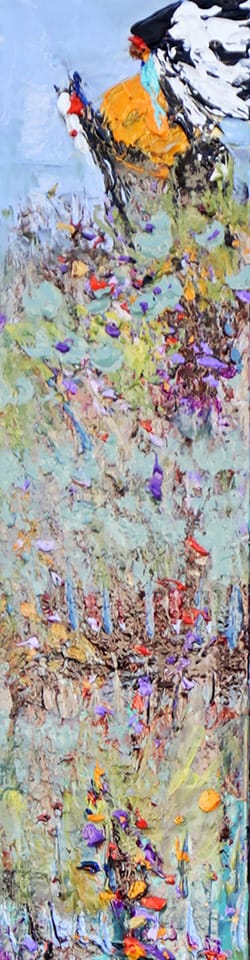
Turquoise World | 6” x 60”
◄Turquoise World | 6” x 60” “I like taking a more traditional subject matter and making it more modern with the shape of the canvas and the design of the painting,” Fercho says. “In this painting, the viewer’s eye starts off with the horse and rider with a bluejay sky backdrop. The viewer ends up at the bottom with the earthly grasses. It’s important to me to have movement in a piece whether it is created with texture or composition. I like my pieces to be interactive.”
“I LIKE TAKING A MORE TRADITIONAL SUBJECT MATTER AND MAKING IT MORE MODERN WITH THE SHAPE OF THE CANVAS AND THE DESIGN OF THE PAINTING.”
–Kira Fercho, Artist
Horses on a Hill | 50” X 50” ► An homage to the “Bleu Horses” by artist Jim Dolan, Fercho’s painting offers a two-dimensional interpretation of Dolan’s three-dimensional, outdoor sculptures. “Every time I pass through this area, just north of Three Forks, Montana, I stop to enjoy a moment of peace,” she says. “My youngest daughter enjoys walking up to the 39-horse sculpture installation, located off of Highway 287. In this piece, I tried to capture the gestures and movement of the blue roans. For me, painting is one third process, one third product, and one third story.”.
Crow Country | 48” X 48”
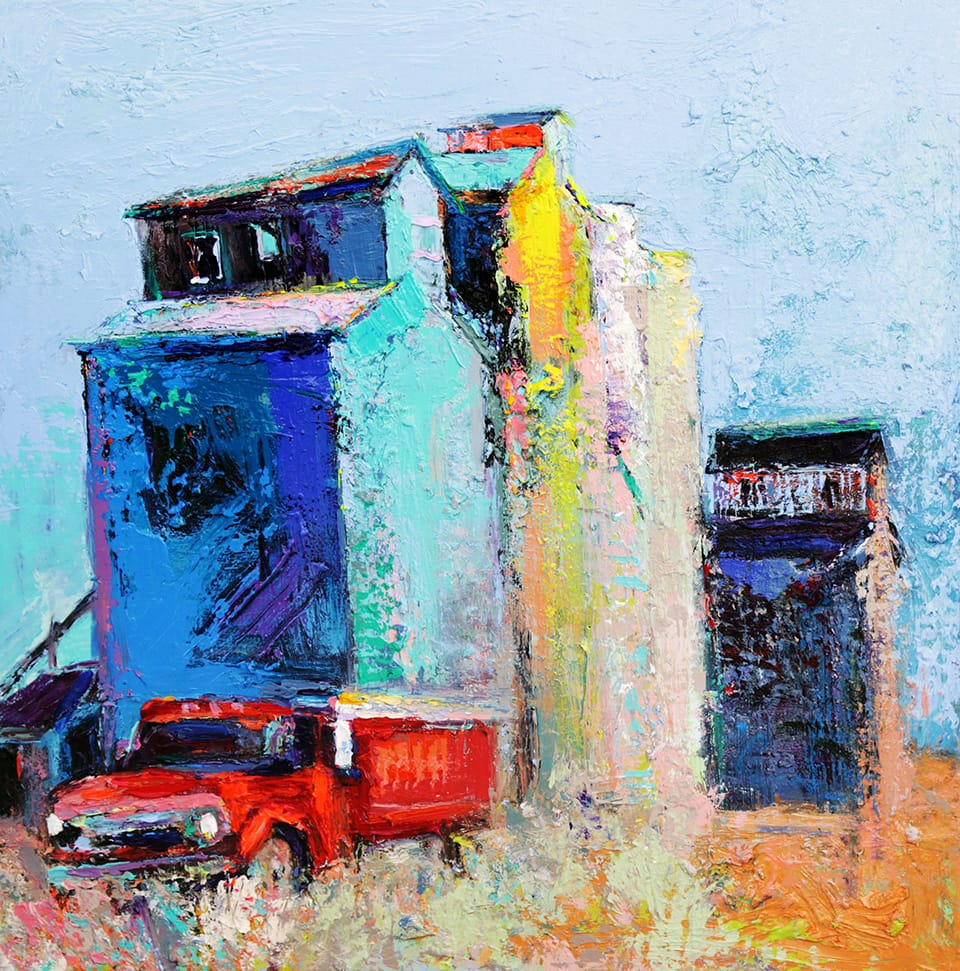
Grain Castles | 48” X 48”
◄ Grain Castles | 48” X 48” “The French-Canadian side of my family rode their horses into the United States and settled into remote areas of North Dakota,” Fercho says. “They eventually crossed into Montana.” She was raised amongst irrigated wheat and corn fields. They had horses and cattle and lived largely off of their own garden. “In this culture, roles were not clearly defined. Whatever needed to be done, got done. Growing up, my sister and I usually tagged along with my dad and grandpa. As a little girl, I would call grain elevators ‘grain castles.’ They were the only tall buildings that I ever saw!”
Glacier at Dusk | 50” X 50” ► Fercho says that whenever she paints on location in Glacier National Park, she goes at the end of the day. “I get there around 2pm; most visitors are leaving as my truck passes to catch the very last of the light,” she says. “It’s when we have the most beautiful/dramatic sunsets. The mountains are so steep that you get to actually see the sun fall across the tops and through the valleys. As the spectator, you stand somewhere in the middle. It’s a literal Heaven and Earth experience. It’s so magnificent that my mere mortal nature is quieted.”
Glacier at Dusk | 50” X 50”
“I BELIEVE THAT IT’S IMPORTANT TO RECOGNIZE AND RESPECT THAT THIS IS A ‘HOLY LAND’ FOR THE BLACKFOOT TRIBE. IN SUMMER MONTHS, VISITORS CAN BOOK TOURS DIRECTLY WITH THE TRIBE AND GAIN THEIR OWN INSIGHT TO THIS POWERFUL PLACE.”
–Kira Fercho, Artist
Fercho has been painting in Glacier for over 20 years. She goes to what she refers to as the “Native side” of the mountain where she can feel the ancients’ presence surrounding her as she paints.
“Today, you can see present/local Blackfoot culture with prayer flags and personal items of recently passed loved ones wrapped around tree trunks,” she says. “I believe that it’s important to recognize and respect that this is a ‘holy land’ for the Blackfoot tribe. In summer months, visitors can book tours directly with the tribe and gain their own insight to this powerful place.” “My work really does have a lifelong impression on people,” she continues. “Montana is iconic, with monumental places. Growing up under the big sky, I understood that.”