
Written by: Lori Currie
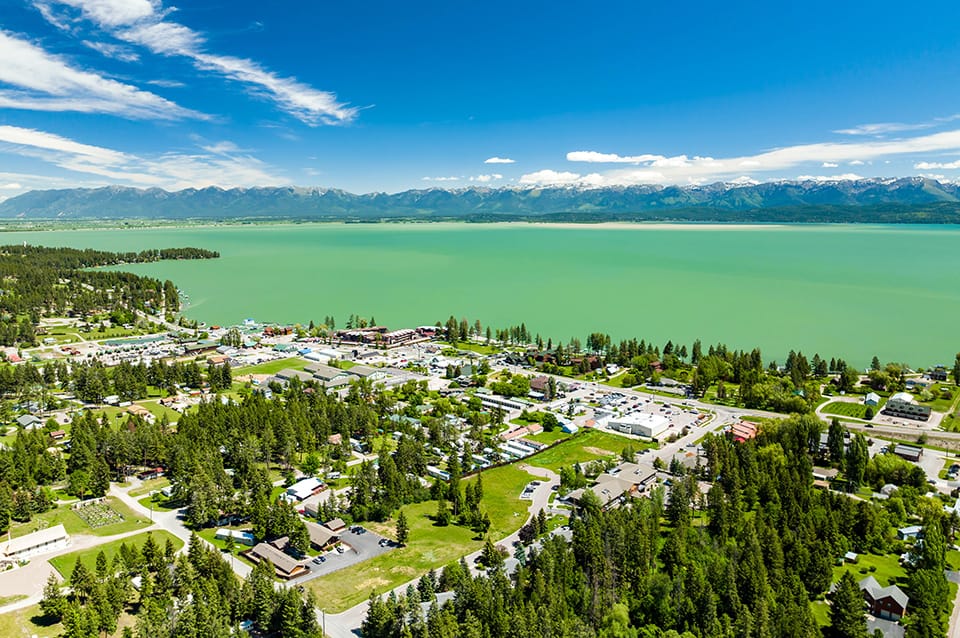
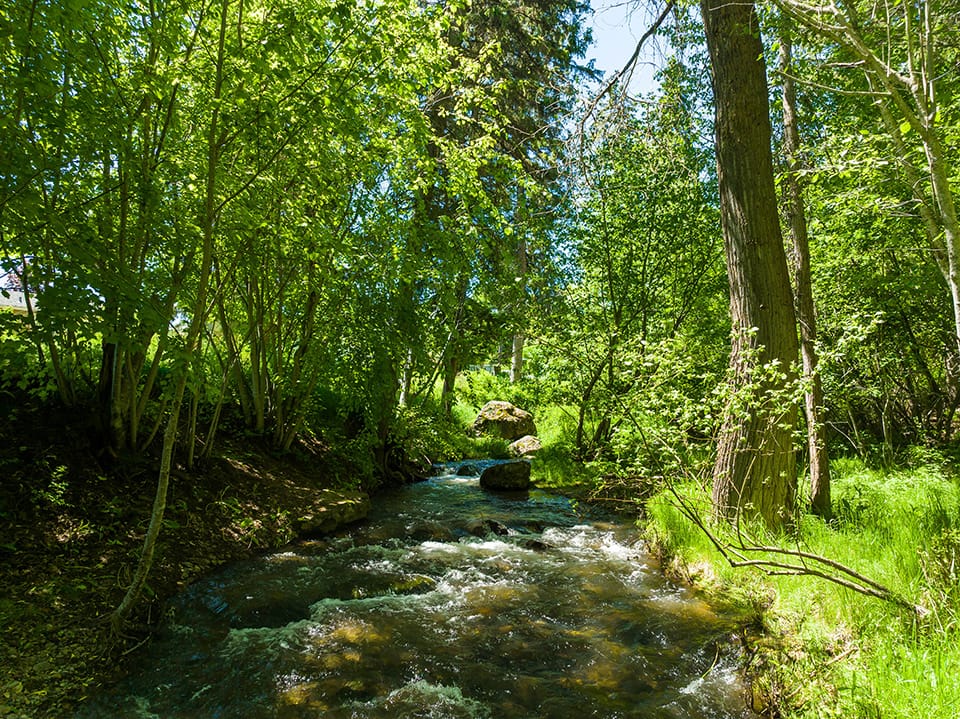
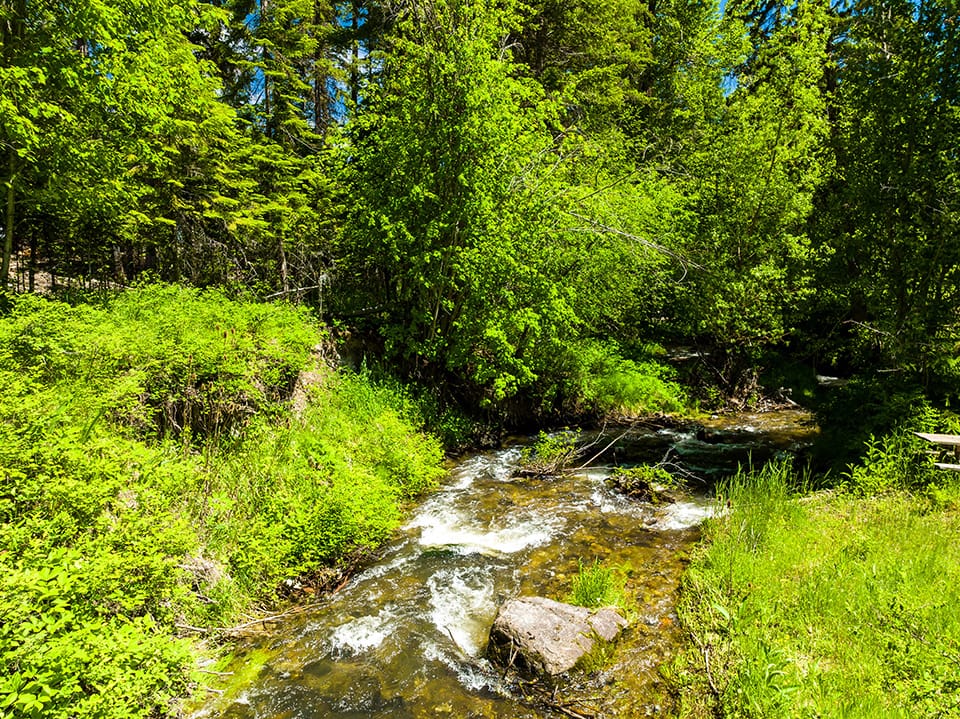
Morning light filters through ponderosa pines, Douglas fir, and western larch, casting shifting shadows across your bed. Through the floor-to-ceiling glass that frames three sides of your cabin, you watch a group of wild turkeys pick their way through the undergrowth, their deliberate movements punctuated by low calls. The gurgle of Stoner Creek provides a constant soundtrack, occasionally interrupted by the crack of a branch as a whitetail deer moves between the trees. You’re still in bed, but you’re also completely immersed in the Montana forest. This is the morning experience at Stoner Creek Cabins. Tucked into 10 wooded acres along the western shore of Flathead Lake in Lakeside, this collection of nine custom-designed abodes represents a thoughtful reimagining of what mountain accommodations can be.
A Vision Born from Necessity
“THERE IS A PLETHORA OF TRADITIONAL LOG OR LOG-SIDED CABINS IN MONTANA, AND THEY ARE ALL MORE OR LESS THE SAME DESIGN. WE WANTED SOME-THING INTERESTING THAT BLENDED WITH THE NATURAL SETTING, USING NATURAL MATERIALS, BUT A COMPLETE DEPARTURE FROM THE TRADITIONAL LOG CABIN.”
When Lakeside’s only two hotels closed in 2018, David Fetveit, a Montana native, and his wife saw an opportunity. “The original Stoner Creek Cabins were started by a local musician and pastor,” Fetveit explains. “We purchased the first two cabins shortly after construction and began expanding the concept.”
The site itself was remarkably well-suited to their vision. “This site is unique in Lakeside in that it is a private, wooded setting with over 700 feet of Stoner Creek frontage,” says Fetveit. “We were able to assemble 10 acres with no zoning, no covenants, but it had been annexed into the local sewer and water district as well as the fire district. Checking all of these boxes is extremely rare in Lakeside.”
What they created filled a specific void in the market. While the area offered countless condos and waterfront homes on rental platforms, many required multiple-night minimums and catered to large groups. “We wanted to operate more like a self-check-in motel,” Fetveit notes. “One-night stays are okay, and pets are welcome.” The concept proved itself immediately. After purchasing the property and constructing two additional cabins for a total of four, the cabins were completely sold out for the next two years.
Design Philosophy: Departing from Tradition
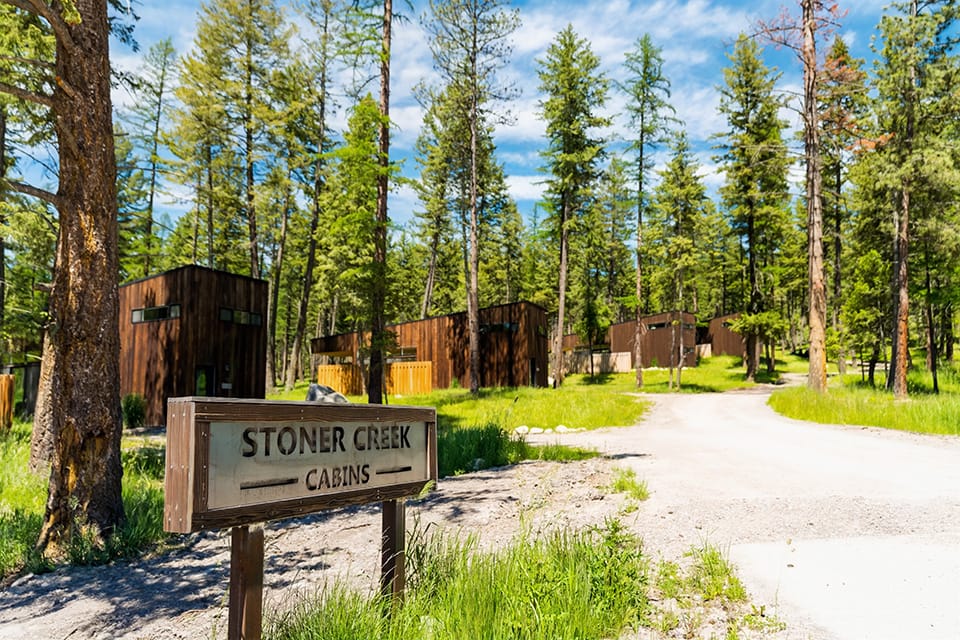
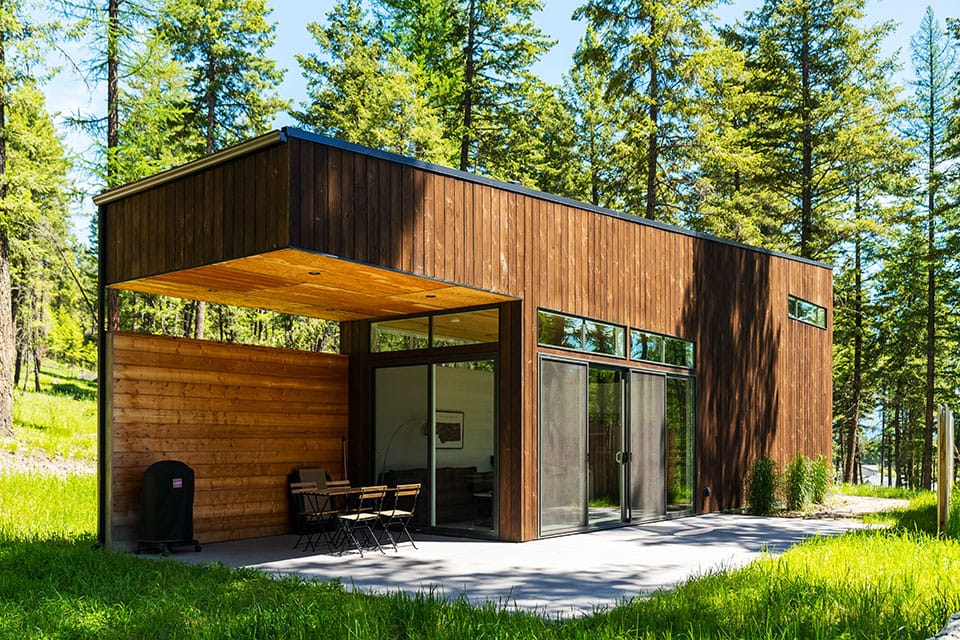
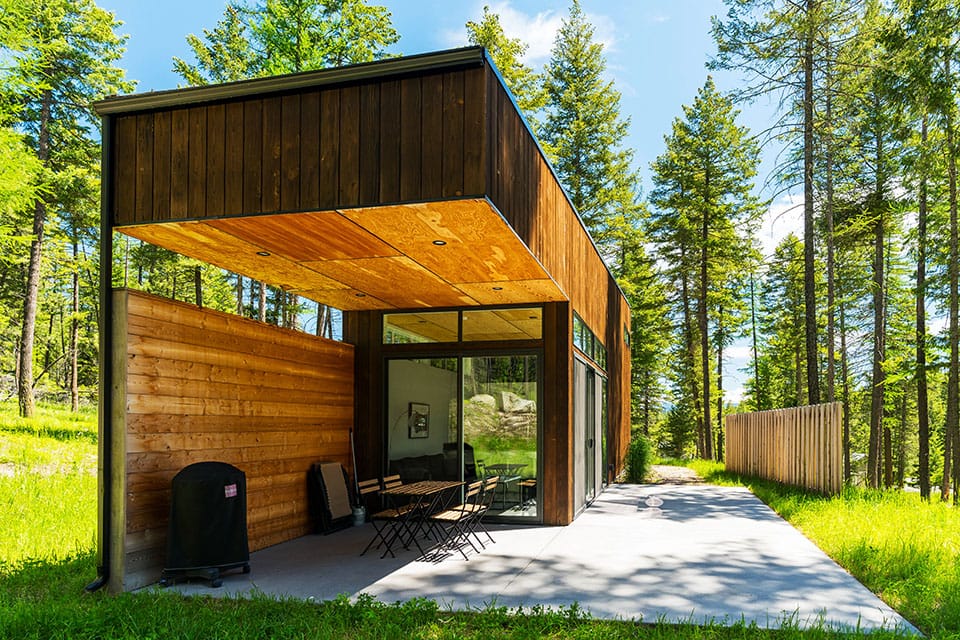
Each cabin bears the name of a Montana river: The Gallatin, The Stillwater, The Bitterroot, The Clark Fork, The Kootenai, The Two Medicine, The Blackfoot, and The Yellowstone, a naming convention that pays homage to the waterways that have shaped both the state’s geography and its culture. But the architectural approach breaks from Montana convention. “There is a plethora of traditional log or log-sided cabins in Montana, and they are all more or less the same design,” Fetveit explains. “We wanted something interesting that blended with the natural setting, using natural materials, but a complete departure from the traditional log cabin.” The exteriors feature Shou Sugi Ban siding, which matches the natural tall pine, fir, and larch that surround the cabins.
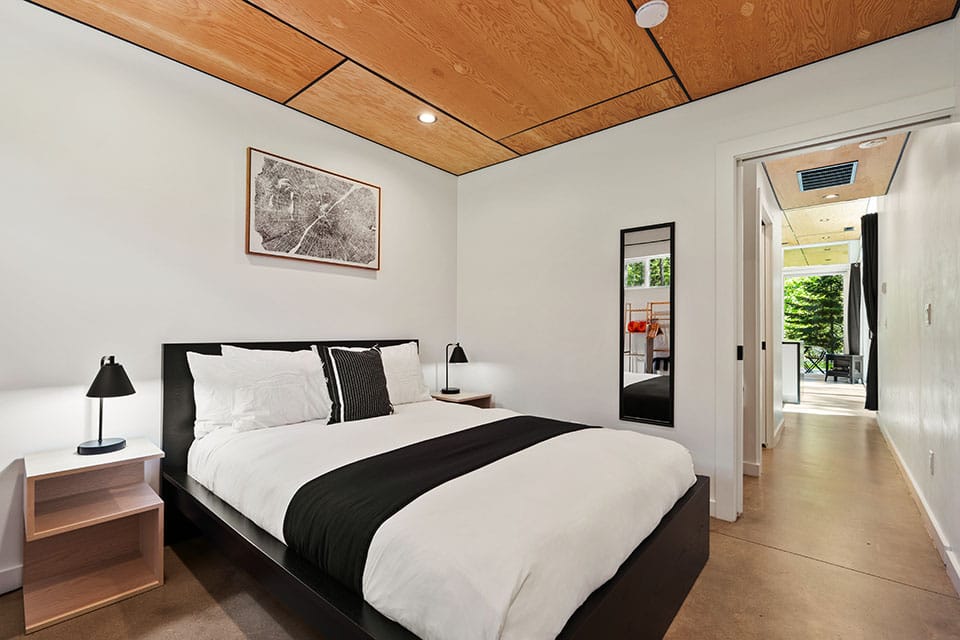
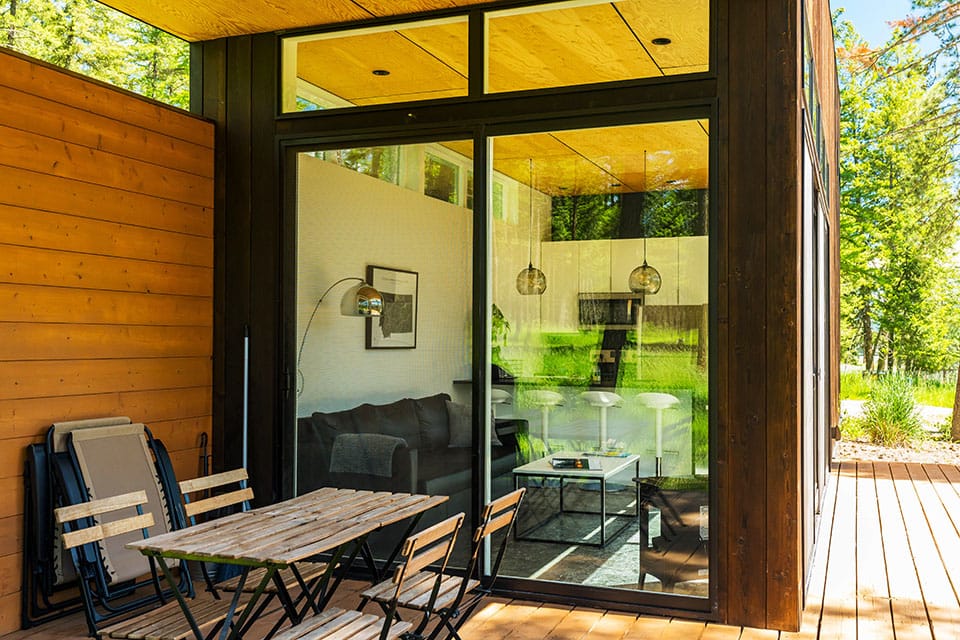
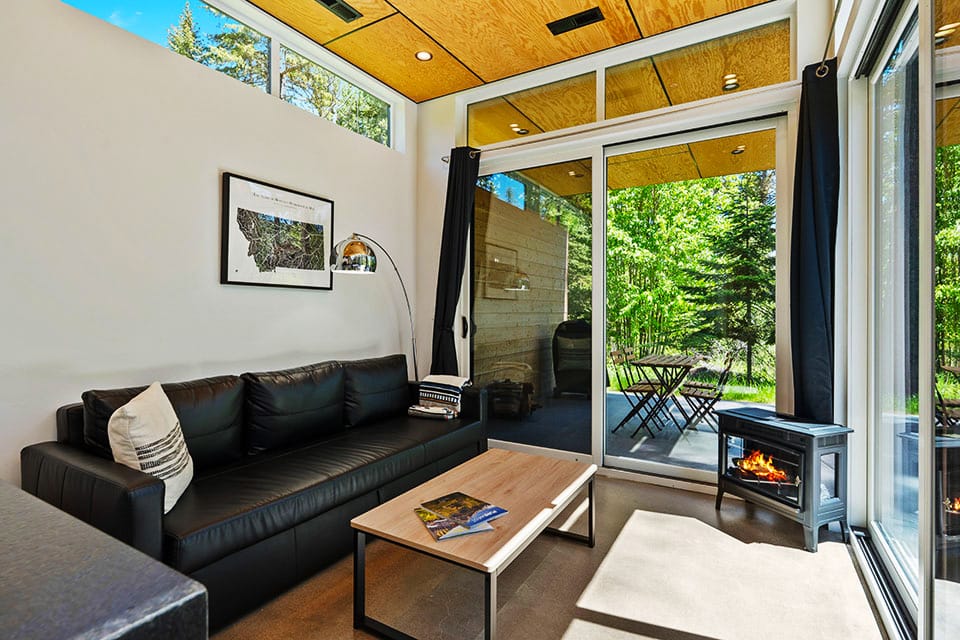
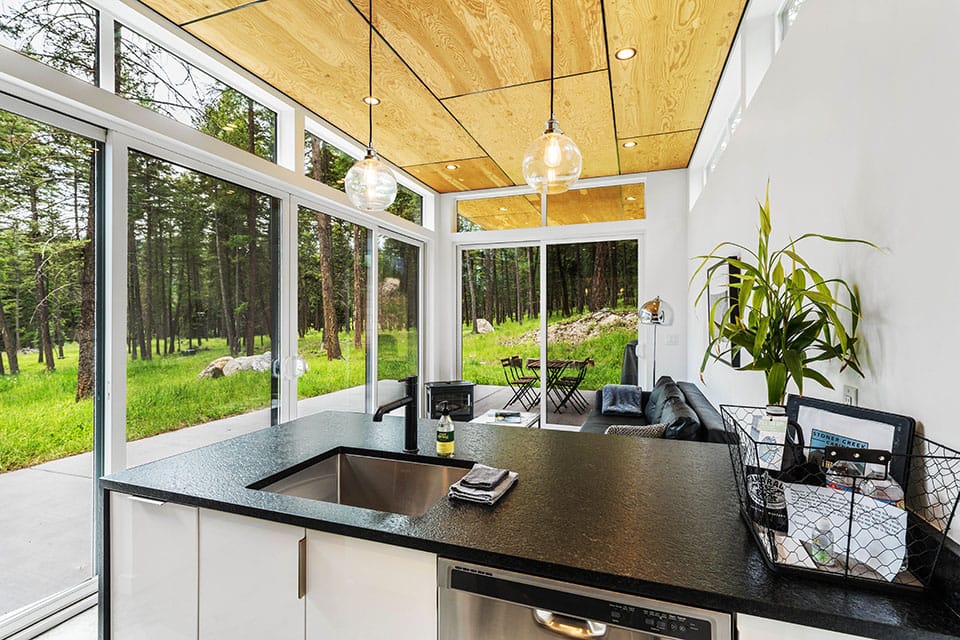
Inside the 620-square-foot cabins, the design makes the intimate spaces feel expansive. “The natural wood ceilings and the concrete floors extend from the interior to the exterior, blurring the lines from inside to out. The primary focus is the lack of delineation from the indoors to outdoors,” says Fetveit. “We want guests to feel private in the sleeping room but feel like they are sitting in the middle of the woods when in the primary living space.”
“WE ROUTINELY HEAR FROM GUESTS WHO ARE BLOWN AWAY BY THE MERGING OF A PRIVATE SETTING WITH THE IMMERSION INTO THE SURROUNDING FOREST.”
Privacy and Connection
In an age when many vacation rentals prioritize communal experiences, Stoner Creek Cabins takes a different approach. Each cabin is fully self-contained and designed to maximize privacy, with private patios and individual fire pits that extend the living space outdoors. “We focus on our efficient ease of use and service from online booking to self-check-in and check-out,” Fetveit explains. “For guests who do not want to deal with a front desk or a parking lot, they can pull right up to their cabin and enjoy their private stay in peace.”
This privacy enhances a deep connection with nature. “We routinely hear from guests who are blown away by the merging of a private setting with the immersion into the surrounding forest,” says Fetveit. “We have abundant wildlife that wanders through the property daily. Having all of the modern and luxury amenities while being in the woods is what we are going for.”
Location as Amenity
Lakeside might not have the name recognition of nearby destinations, but that’s precisely part of its appeal. The town offers authentic Montana life, with local restaurants, craft breweries, coffee shops, and watercraft rentals within walking distance. The waterfront park provides access to Flathead Lake, the largest natural freshwater lake west of the Mississippi. Thousands of acres of public land offer hiking, mountain biking, and huckleberry picking, while Blacktail Mountain Ski Area lies a short drive away. Most significantly, Stoner Creek Cabins sits one hour from Glacier National Park, an ideal basecamp for experiencing the park’s legendary Going-to-the-Sun Road and returning each evening to gather around your private fire pit as the stars emerge in Montana’s famously dark skies.
Sustainability by Design
The tiny house format itself represents a commitment to resource efficiency, but Stoner Creek Cabins goes further. Beyond compact footprints, the operation employs a less visible sustainability strategy. “We constructed a maintenance facility where we consolidate all of our cleaning and laundry operations,” Fetveit explains. “We believe that these activities have the potential to have the most significant environmental impacts, and by consolidating and controlling these operations, we can minimize that impact.” And the Shou Sugi Ban siding offers more than aesthetic appeal; it’s a chemical-free preservation method that enhances the wood’s durability and resistance to fire, insects, and rot. Tesla charging stations and a focus on local, hand-built construction round out the environmental commitment.
“WE HAVE THE CIVIL INFRASTRUCTURE COMPLETED FOR ANOTHER SEVEN CABINS,. WE PLAN TO BUILD MORE IN THE FUTURE.”
Looking Forward
The success of Stoner Creek Cabins has opened possibilities for growth. “We have the civil infrastructure completed for another seven cabins,” Fetveit reveals. “We plan to build more in the future.” There’s also evolution planned for the amenities. The property is planning to construct a hot tub, sauna, and possibly a cold plunge, additions that will enhance the wellness dimension of the guest experience without compromising the privacy that defines the property.
The Future of Luxury Retreats
For travelers seeking what Fetveit describes as a space where you can enjoy “all of the modern and luxury amenities while being in the woods,” Stoner Creek Cabins delivers with uncommon grace. This is luxury redefined: not as excess, but as the careful editing away of everything unnecessary, leaving only what matters most. In Lakeside, where Stoner Creek flows and wildlife wanders freely, David Fetveit and his wife have created something that speaks to the evolving desires of discerning travelers, a modern sanctuary that proves contemporary design and wilderness immersion need not be mutually exclusive.
whj PROFILE
