
Listen to our Spotify podcast about this article:
by Michele Corriel
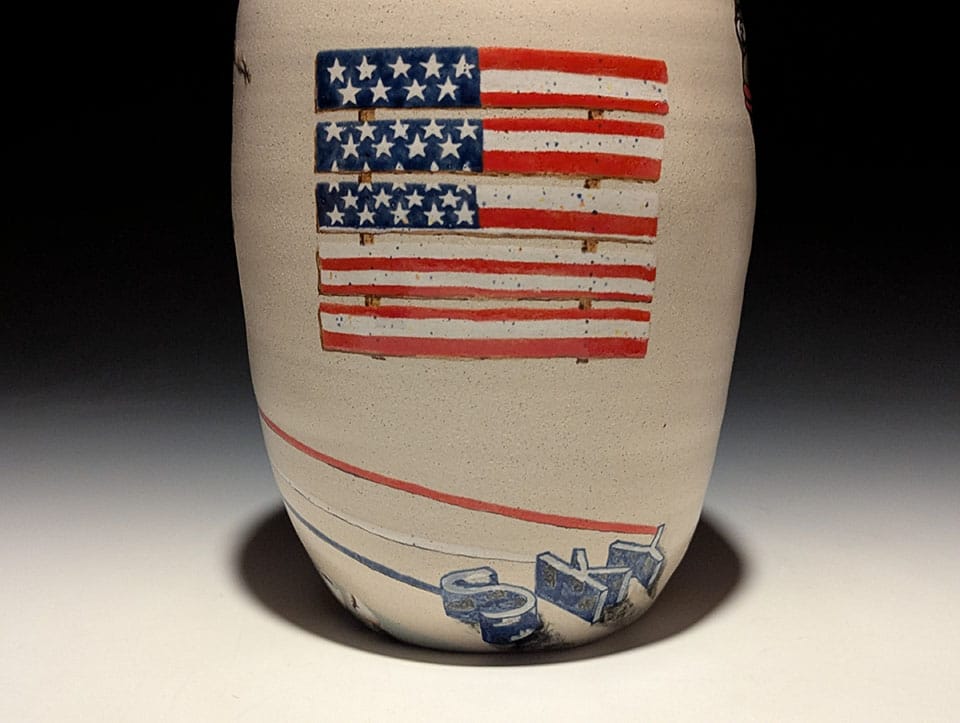
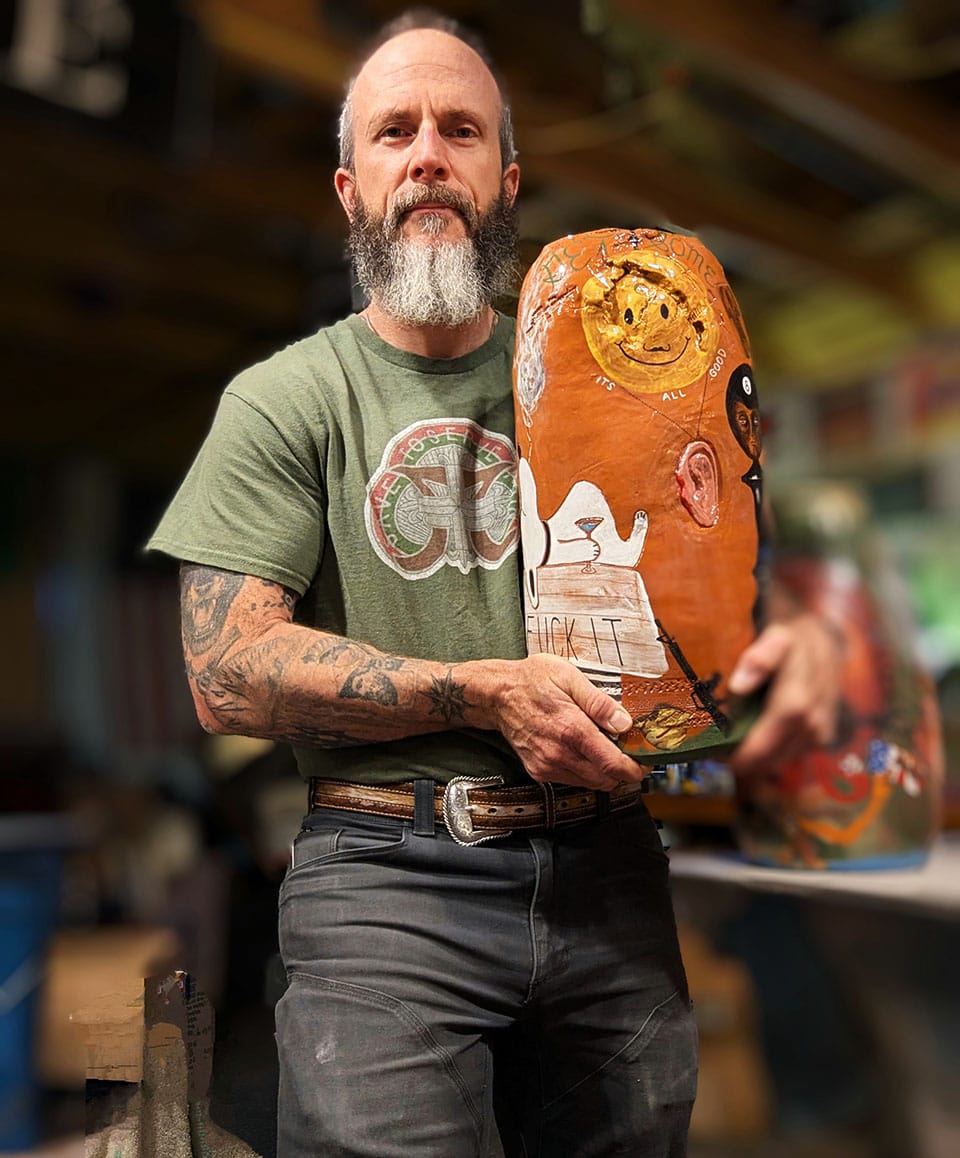
Derived from his Iraq experiences, created from a need to find meaning, Jesse Albrecht’s art takes the shape of vessels to portray his images. A ceramicist at heart, his narrative covers the intersection of war, myth, and reality. “I saw the live footage of 9/11 as I walked through the University of Iowa student union halfway through my MFA ceramics program,” Albrecht says. “Three semesters later I was in Iraq, deployed with the Iowa National Guard as a combat medic and security detail sergeant. They didn’t issue me my aid bag.”
SIFTING THROUGH THE ASHES
Serving in the war carried with it conflicting ideals, trying to do the right thing when what that was supposed to be wasn’t always clear. It also had the take-home effect that echoes in his work today, more than 20 years later.
“My work strives to be honest and transparent about the enigmatic experience of serving in Iraq, my path of ‘coming home,’ and working my way to recovery,” Albrecht says. “Some of these pieces intend to show the side of war that becomes invisible.”
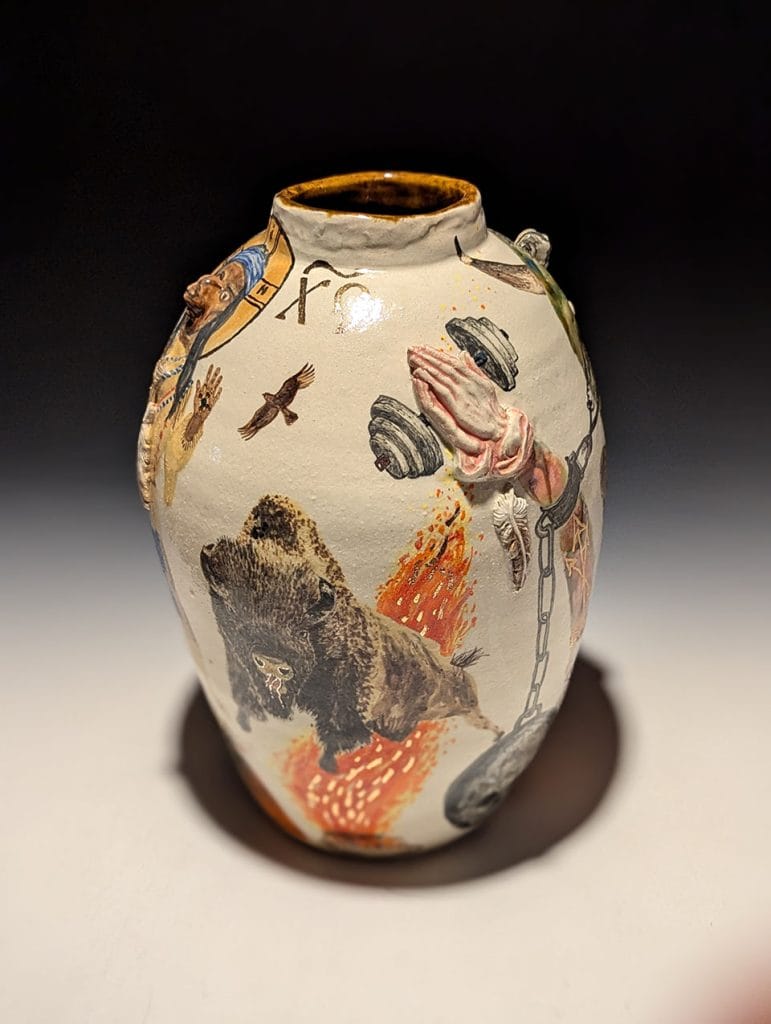
Although some of the imagery is “cartoonish,” that is only to lighten the heart-heavy messaging or to attach meaning. Already at war, once the reason for being in Iraq (Weapons of Mass Destruction) fell away, Albrecht stayed to finish his work.
“The Iraq lies that were exposed only allowed me to focus on the negative aspects of my experience, and my downward spiral increased over time,” he says.
There is also a historical aspect to these pieces. War, ironically, a constant part of humanity, has been chipped and cracked in meaning. When the horn blew, young men (and women) knew they were being called to serve their families, regions, homes. It was a way to prove yourself. Albrecht questions how those in power today use those soldiers.
“I saw the live footage of 9/11 as I walked through the University of Iowa student union halfway through my MFA ceramics program. Three semesters later I was in Iraq, deployed with the Iowa national guard as a combat medic and security detail sergeant.”
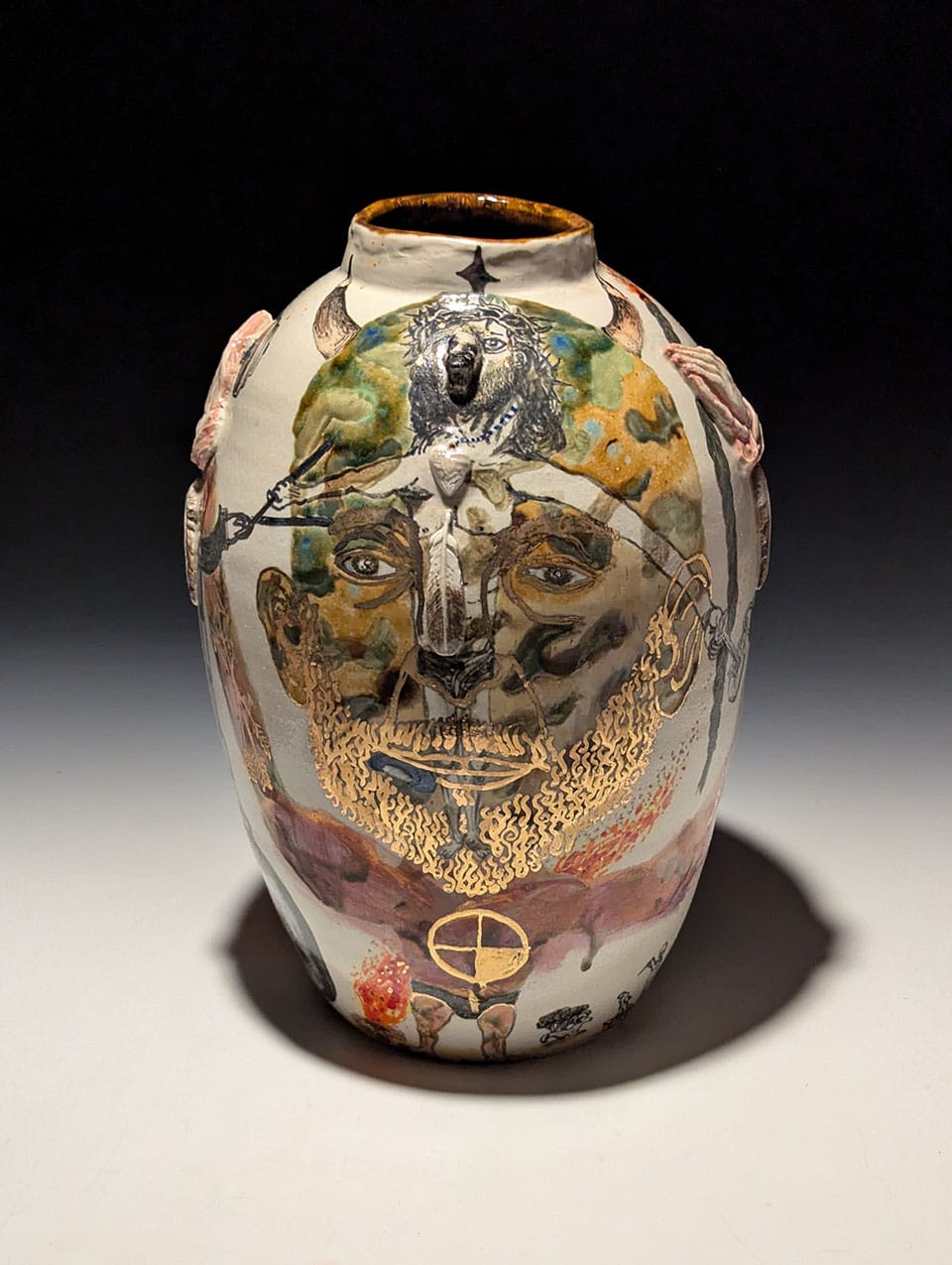
In his work titled Apache Jesus, iconography explodes across the piece. From the gold-painted curly beard that reads like the demi-god Hercules, to the arms locked in cuffs, to a pair of dice. An indigenous medicine wheel sits unobtrusively along the bottom, with one quadrant filled in with gold paint. With so many symbols to comb through, one could sit with a single piece for a lifetime and perhaps never walk away bored.
“Making these pieces is significant as they represent crossing the threshold of not needing to make everything be about how horrible war is,” Albrecht says. “The fundamental shift is a focus on beauty, recovery, and agency. Art didn’t heal me—facing myself with the help of dedicated professionals, over years and varying means, and with love and support of many different people—that’s what healed me.”
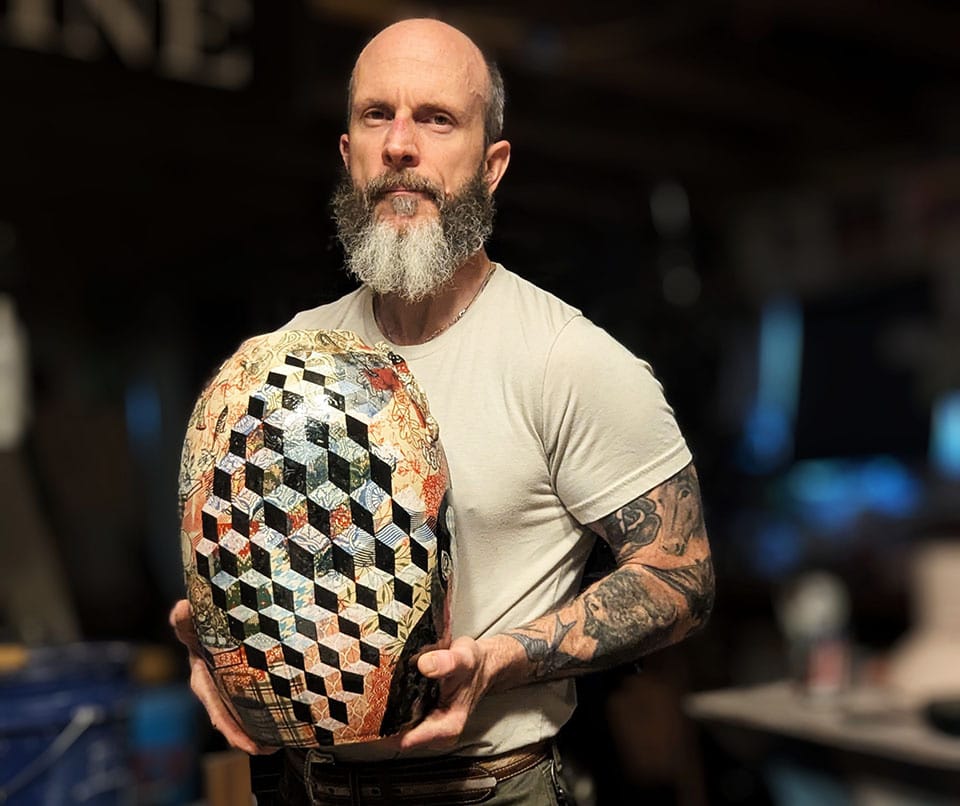
Albrecht considers himself a ceramicist, draftsman, and multidisciplinary artist whose work bridges personal history, political commentary, and cultural narratives. With a Master’s of Fine Arts in Ceramics & Drawing from the University of Iowa, he has exhibited his work nationally and internationally. His galleries include: Visions West Contemporary Gallery, Bozeman, Montana; Parsonage Gallery, Searsport, Maine; Faust Gallery, Santa Fe, New Mexico and Scottsdale, Arizona; and Kirk’s Grocery, Billings, Montana.
“What I like about ceramics is that I get the physical challenge and experience of creating a physical form and then creating the ‘make-believe’ imagery,” Albrecht says. “There’s more reality to it than painting or drawing. There’s something about the mass of a pot.”
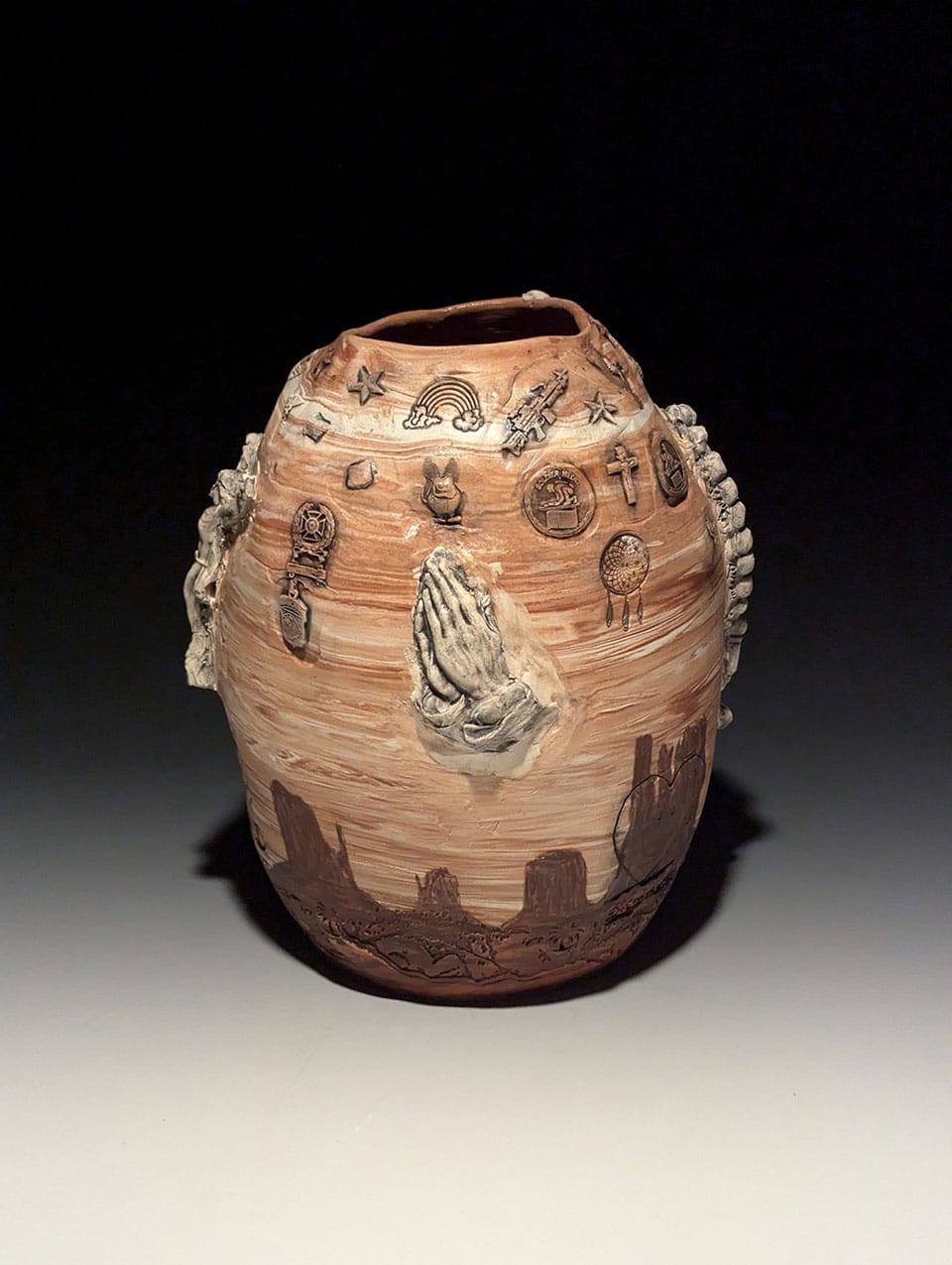
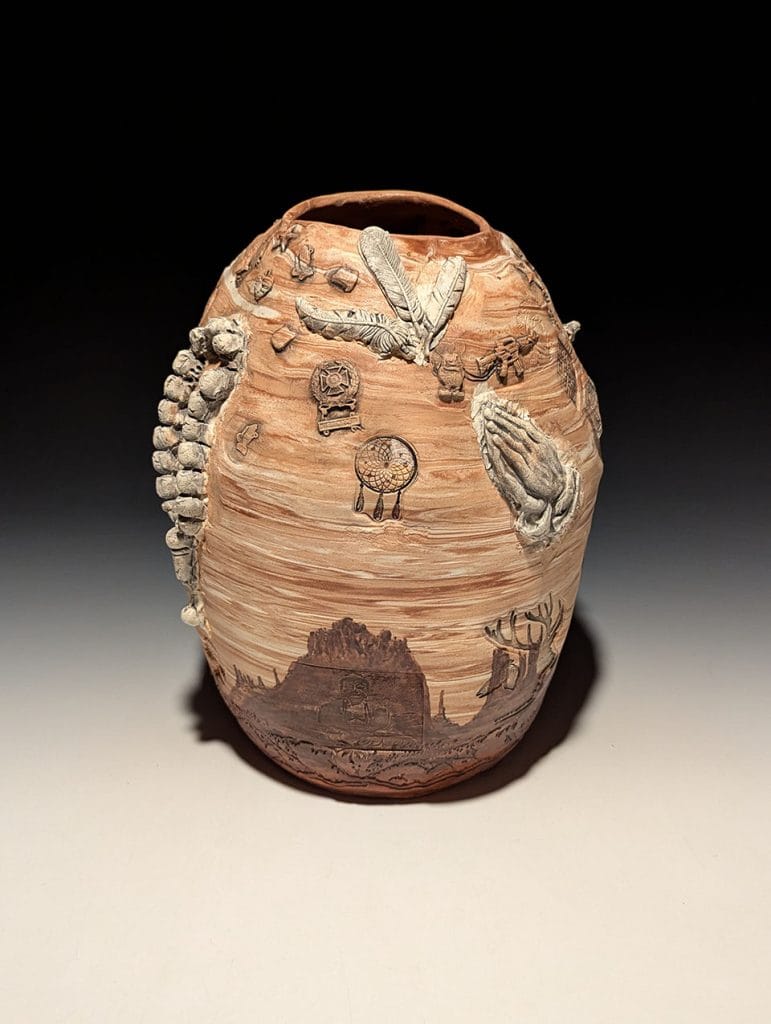
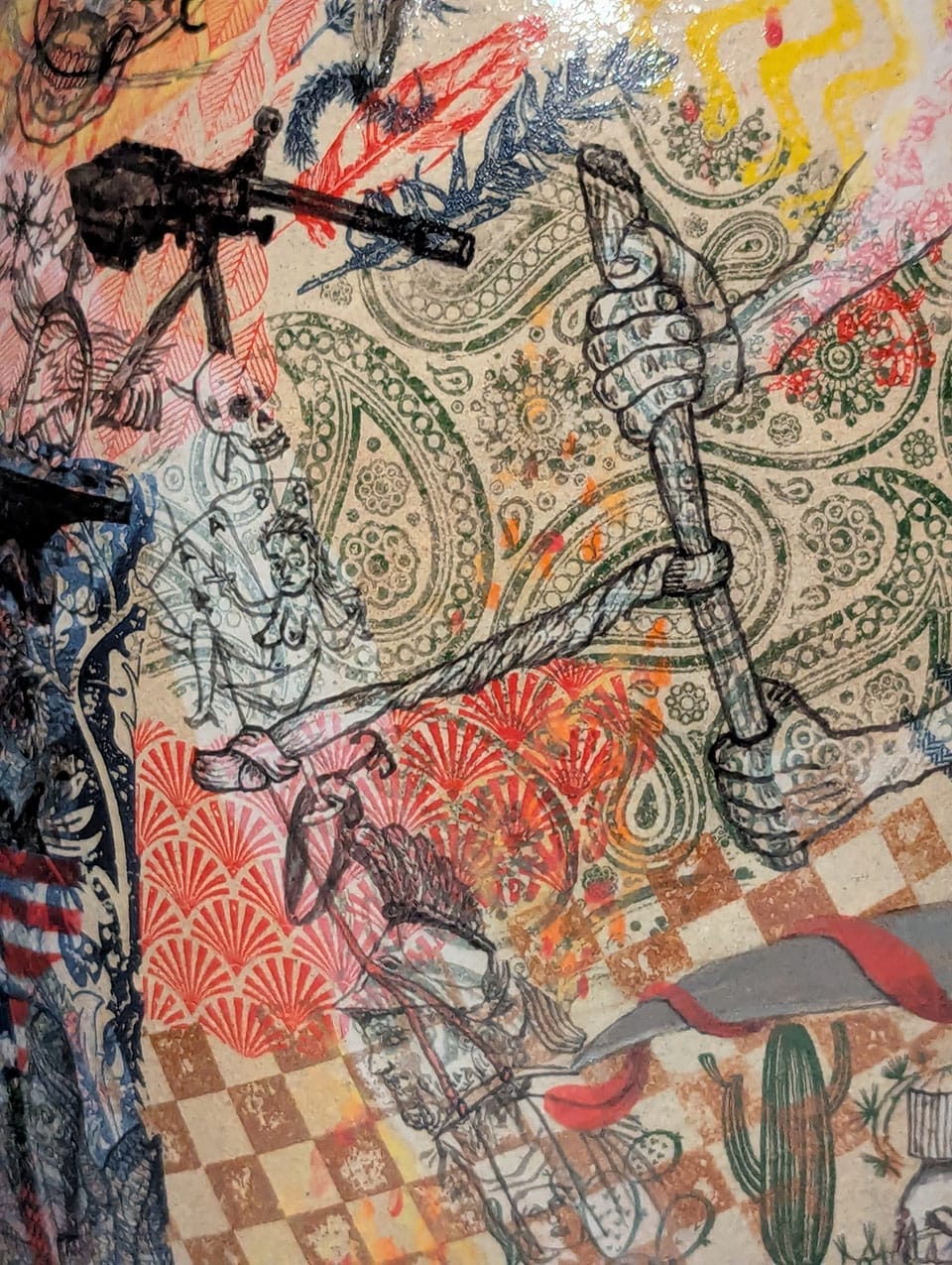
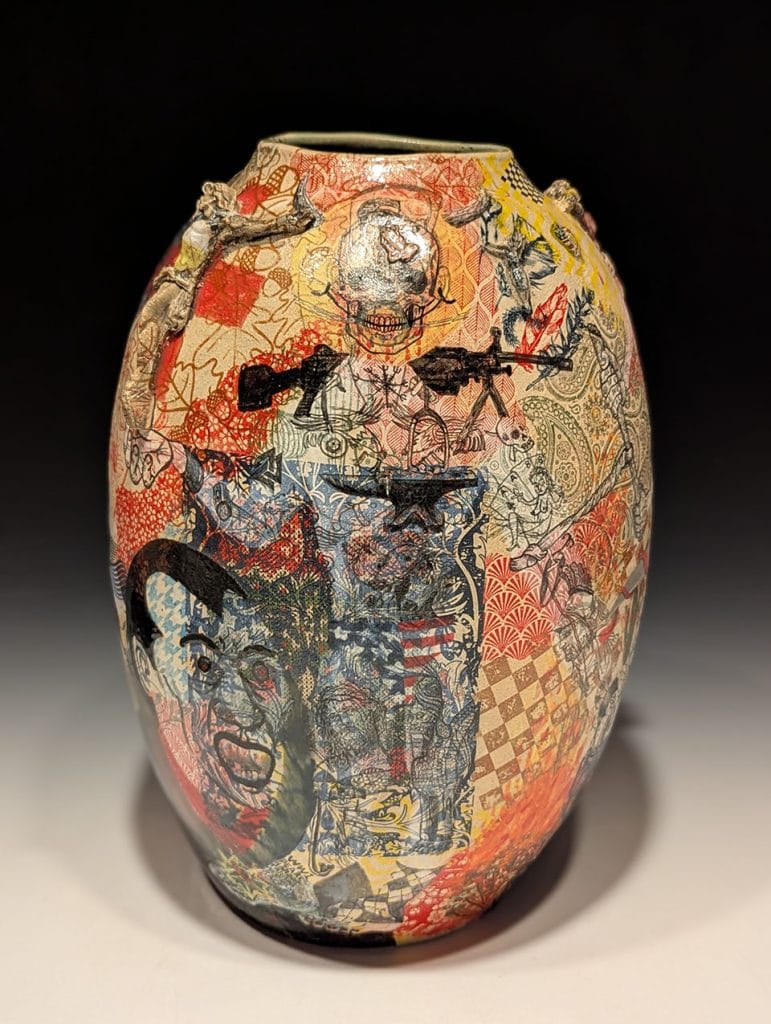
His continuous narratives play out across the pots, from beginning to end and around again. For example, in another piece, The Maze to Recovery, Escher-like stairs lead the eye around the vessel. Covered with patterns, skulls, guns, letters, and numbers inserted like secret codes, the ceramic artwork feels more like a key to another life than the shards of a past one. Colors intersect with outlines, flowers, cacti, and lipstick kisses trail across the piece. The shape of a “jar” is also important. Pick one up and it’s like cradling a baby. It asks for love, it asks for patience, it demands attention.
“My pots are made to carry and embody my experiences,” Albrecht says. “I paint with underglaze to convey an emotional range from humor to horror, making each pot a unique composition of the physical and emotional imagery experienced in Iraq and coming home. Historical military objects, specifically nose art of WWII (think scantily-clad women on the nose of a fighter plane), and Zippos from Vietnam along with Empire pots of Europe and Asia inspire my work.”
Military manuals, self-portraits, molds of Albrecht Durer’s hands (itself a symbol with many meanings), and shrapnel pieces Albrecht kept in his pocket during his service appear in his work. His pieces also utilize commercial underglaze decals, used in a collage manner to create one-of-a-kind compositions, often influenced by his Grandma Sissy’s dinnerware.
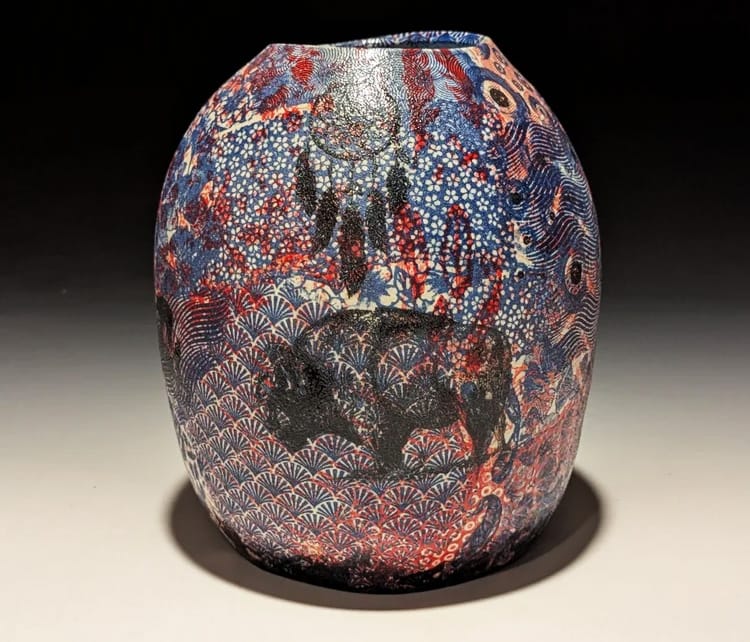
“I paint with underglaze to convey an emotional range from humor to horror, making each pot a unique composition of the physical and emotional imagery experienced in Iraq and coming home.”
“There’s an aspect of duality, a memento mori being played out in a combat zone,” Albrecht says. “To include the source material is something I continue to do. Paying homage to the actual necklace I wore and the piece of shrapnel I kept in my pocket during my tour.”
Meanings change over time, often losing the original irony, and from there finding new significance.
“One of the things in my work is, as everything kind of fell apart, I recognized how the world disintegrated as I understood it,” he says of his time in Iraq. “And that was through my observations, paying attention to what kind of stories are told historically, and what you [actually] know.”
What happened to Albrecht during the war is not uncommon. It is also what gives profound meaning to his art.
“For me, it’s like sifting through the ashes of all the stories told,” he says. Albrecht drove through Mosul, helping people to safety, getting doctors to children’s hospitals, through a decimated city, doing what had to be done. “Then I realized the stories and the reality were so much different.”
The biggest lesson he learned while serving in the military was understanding the importance of art, and the value and importance of having freedom of expression.
“I have a fierce love and respect for those who have answered the call to service,” he says. “I served honorably and took the right action under fire and in sloth but left bitter and scorned by the hypocrisy that increased with the elevation of power. Many things factored into my recovery, but being healthy for my daughter was the driving force, and God reached me first-hand in a universal timeless truth, love, and beauty kind of way.”
“What I like about ceramics is that I get the physical challenge and experience of creating a physical form and then creating the ‘make-believe’ imagery. There’s More reality to it than painting or drawing. There’s something about the mass of a pot.”
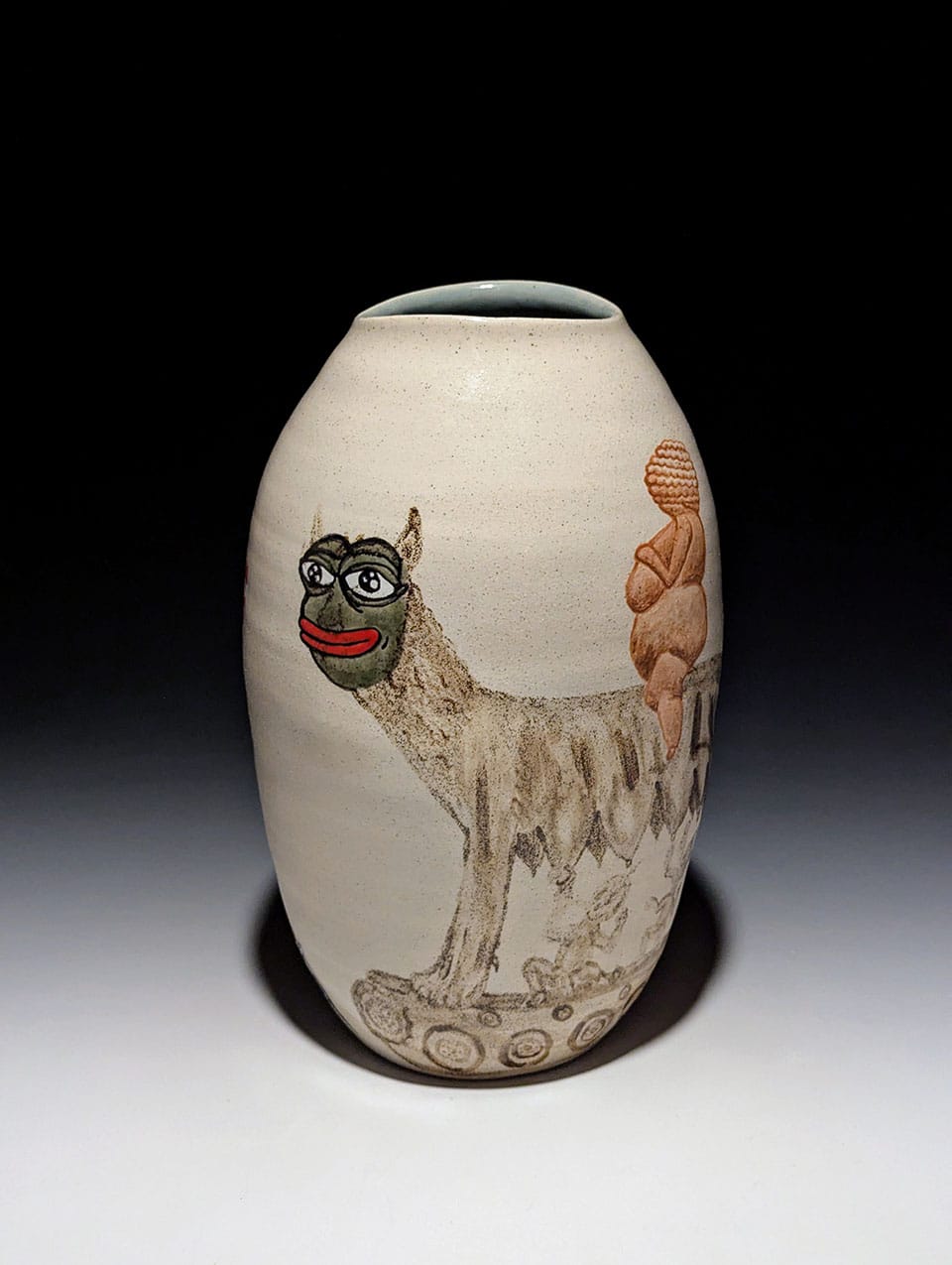
Albrecht’s artwork is displayed in prestigious public collections such as The Library of Congress, The Metropolitan Museum of Art, The Smithsonian American Art Museum, and The National Archives. He currently lives and works in Montana. He has taught in colleges, art schools, nonprofits, and workshops across the United States.
whj FEATURE
