
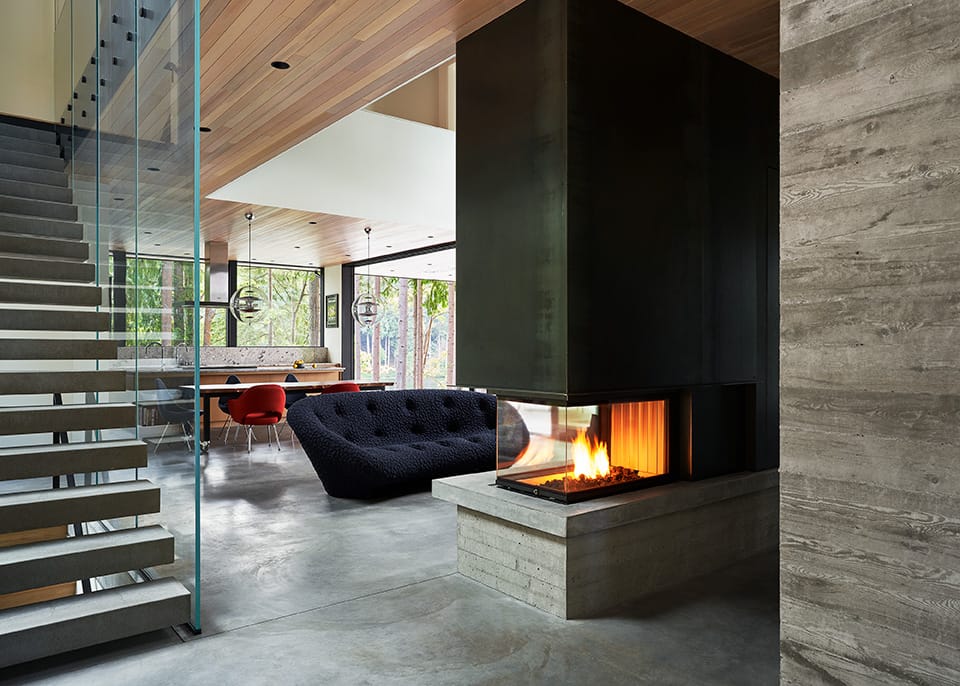
A Conversation with Liz Tapler of Fieldworks Custom Concrete & WHJ Editor-in-Chief, Laurenz Busch
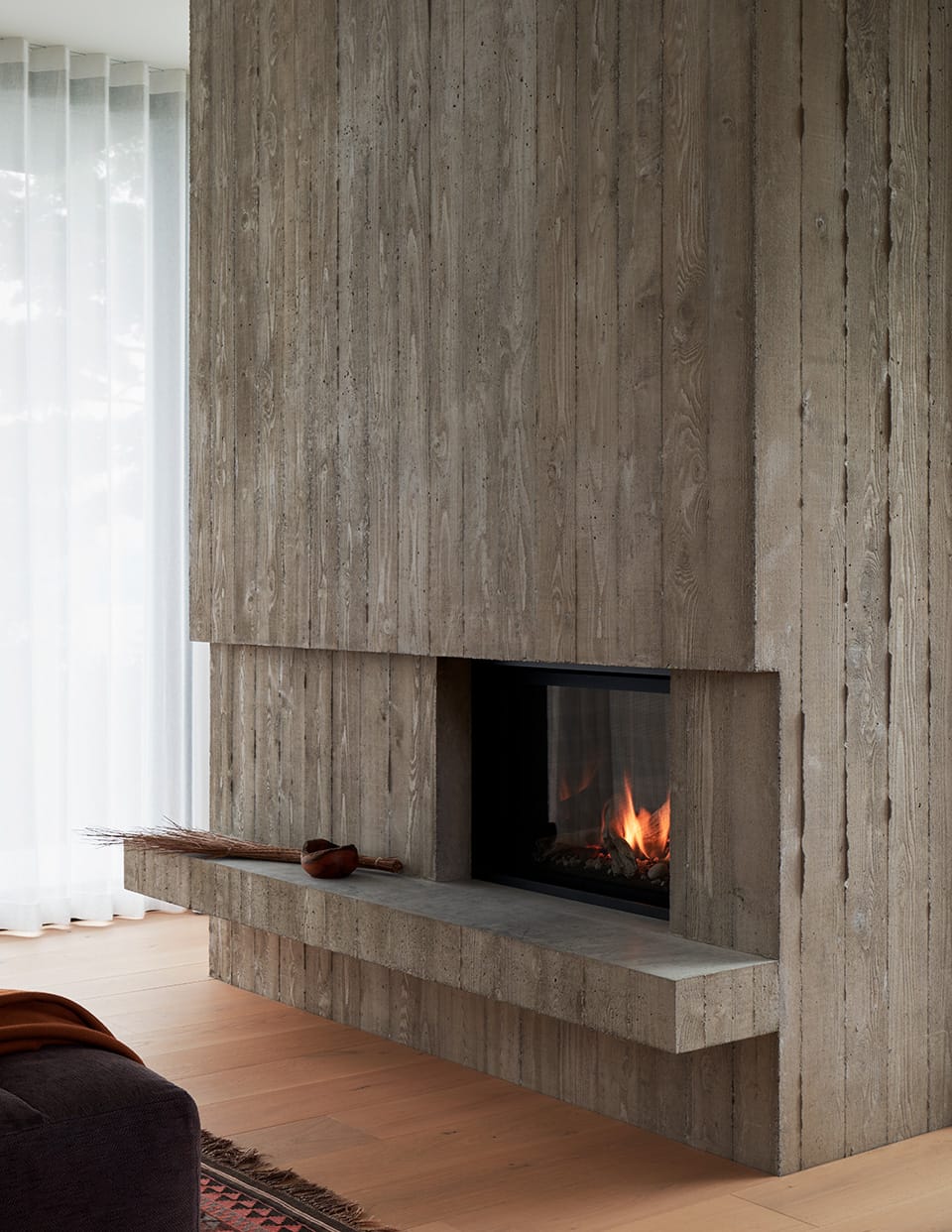

In Conversation spotlights the people shaping how the Mountain West lives, builds, and designs. Through candid conversations with creatives, craftspeople, and business owners, Western Home Journal explores how thoughtful design takes shape in real homes and real communities—providing insight into process, perspective, and the personal stories behind the work.
Fieldworks Custom Concrete delivers structural and detail-driven concrete work that often extends beyond its conventional role. Established in 2022, the firm builds on years of hands-on experience, with a team that understands the material from formwork through final execution. While based in the Pacific Northwest, Fieldworks operates on projects nationwide.
That perspective comes through in conversation with Director Liz Tapler, whose path from carpenter to project engineer to leadership reflects how the company operates. She now leads project management and business development, working closely with architects and builders to translate design into built work. Through Liz, Fieldworks offers a clear view into a process that is both highly technical and deeply collaborative.
Fieldworks takes on a wide range of projects—from foundations and structural systems to architectural walls, flatwork, and custom elements such as board-formed concrete, cantilevered details, and integrated outdoor features.
You work in a material that most people think of as purely functional. What makes concrete interesting to you, and what does it allow you to do that other materials don’t?
Liz Tapler: We focus on architectural and structural concrete—everything from foundations to hardscape—but also the moments when concrete becomes part of the design. It’s an incredibly versatile material and can be the supporting foundation of a project or take on a more prominent role to really define a space. We’re able to align our work very precisely with other finishes—siding, window sills, reveals—so it integrates cleanly into the overall architecture. At the same time, it scales. You can use it for something minimal or something much more complex, and it still performs.
So, you’re able to do everything from foundational work to more design-forward applications?
LT: That’s right. We can turn-key a foundation rather quickly, but we also do architectural concrete that’s meant to be seen. That includes board-formed walls that take on the impression of wood grain, smooth architectural walls with very clean finishes, and more sculptural elements. Whether it’s exposed or buried, the goal is to make it intentional.
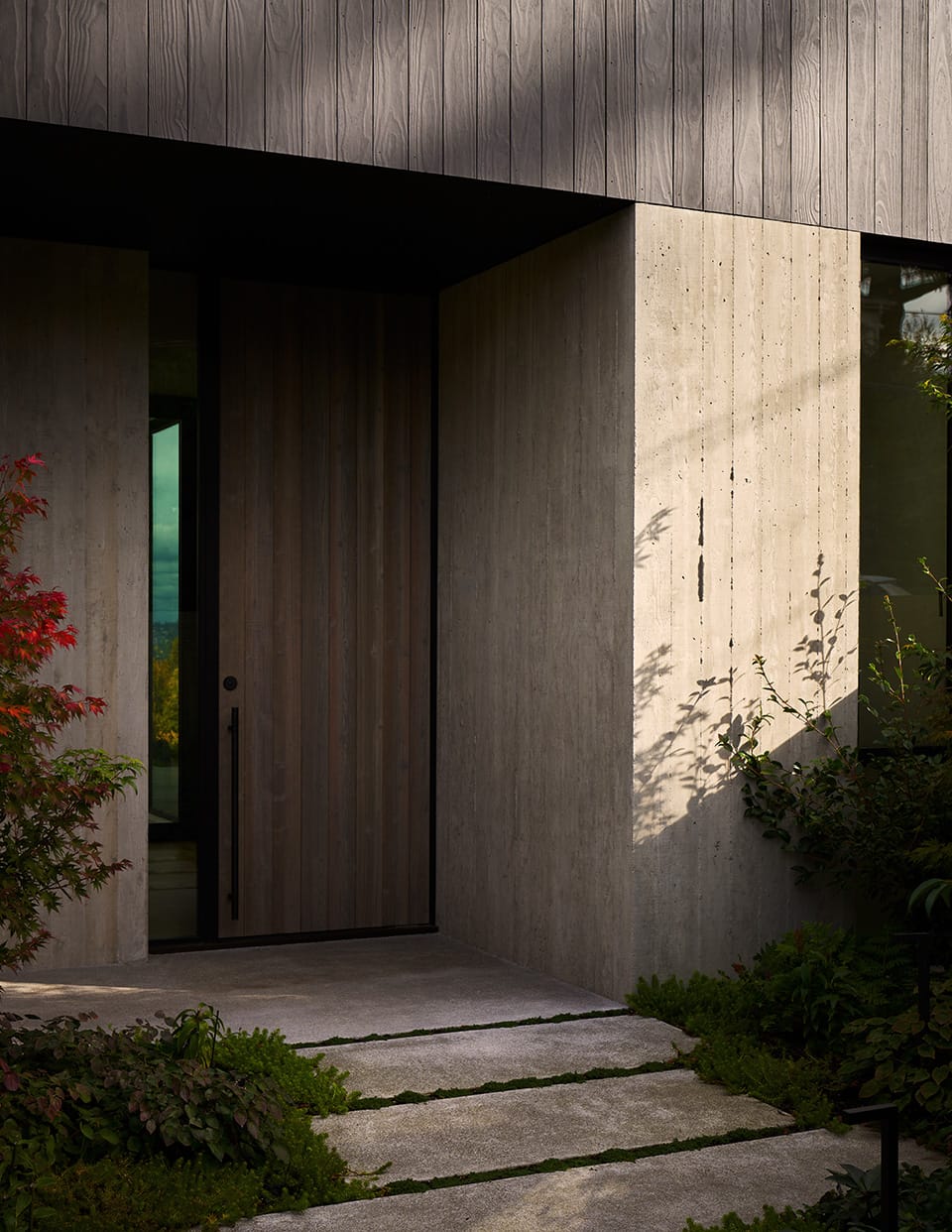
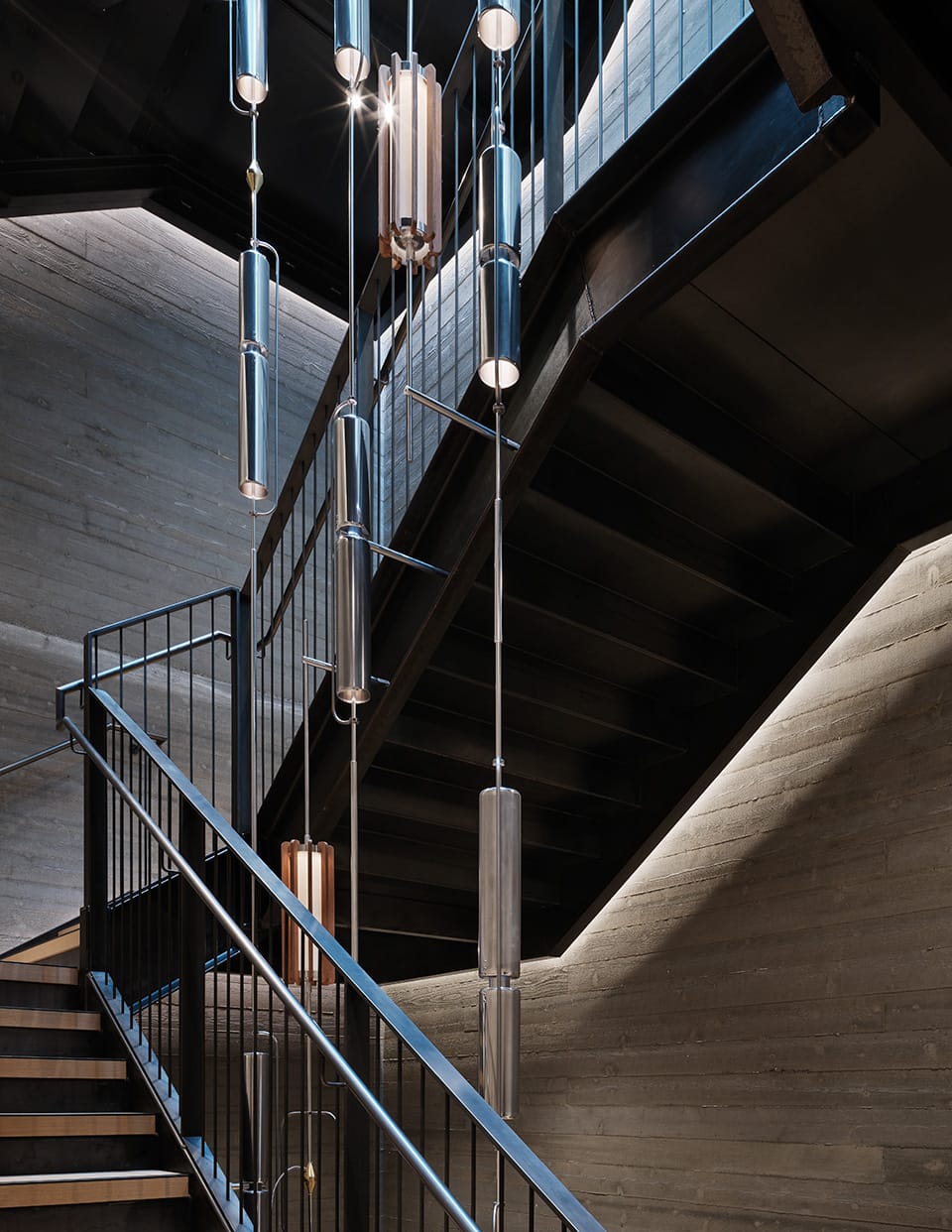
The common conception is that concrete tends to be the first step in building a home, but your work often becomes part of the design itself. How does that collaboration with architects typically work?
LT: The design direction usually comes from the architect. They’ll come to us with an idea—something like a monolithic outdoor kitchen or board-formed planter walls—and we work with them in preconstruction to figure out how to execute the work. We recommend to clients that we build mockups to be reviewed so they can see and feel the material before committing to the design. From there, it’s about understanding where the concrete is visible and making sure the transitions are handled correctly. We’re not designing the work, but we’re very involved in the execution.
What kinds of finishes or techniques are you seeing the most right now?
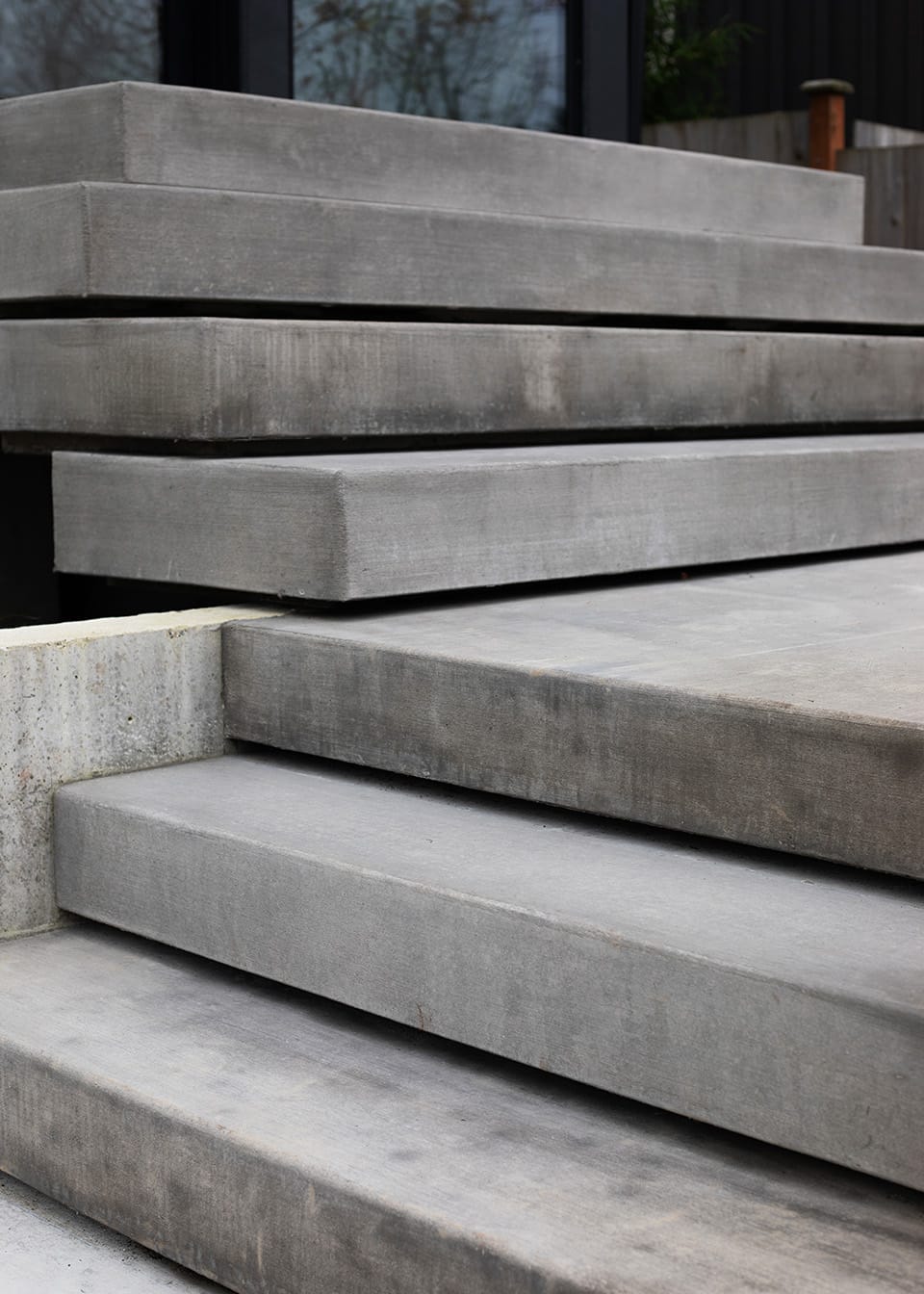
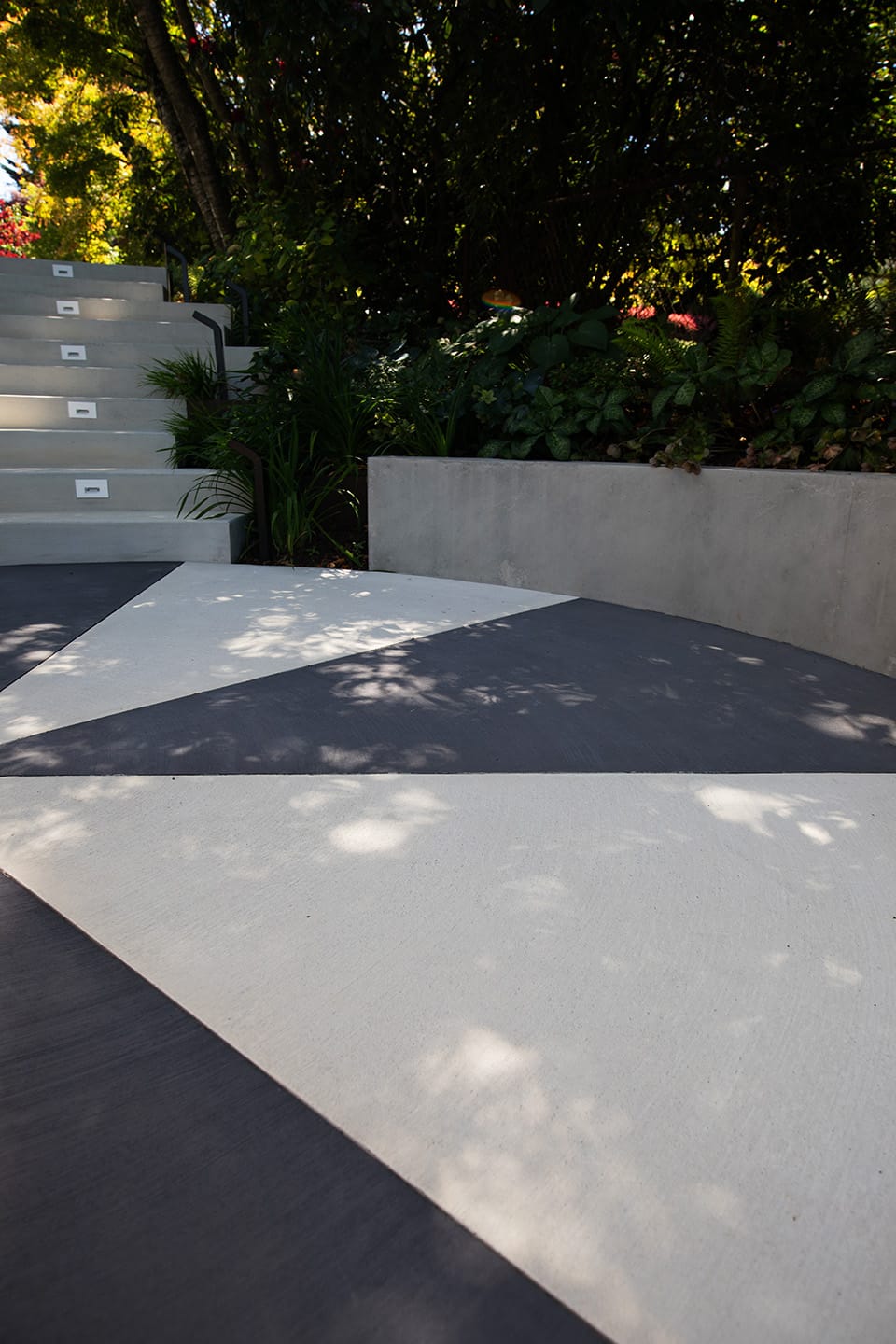
LT: Board form is a popular finish; we’re seeing an uptick in work with specifications for either vertical or horizontal direction. We’ve recently priced work with various finishes such as fluted walls, and battered, smooth face architectural walls with a very clean, almost glass-like finish. We’ve recently completed a hardscape project with exposed aggregate walls to match existing site walls. For flatwork, we can provide hard-troweled, burnished interior floors, and for exterior surfaces, most of our flatwork/stairs have a sand finish designed for traction. Beyond that, we’re doing more integrated elements, cantilevered stairs, curved retaining walls, water features, outdoor kitchens, and fire pits. Concrete can be shaped into almost anything.
“WE FOCUS ON…THE MOMENTS WHEN CONCRETE BECOMES PART OF THE DESIGN. IT’S AN INCREDIBLY VERSATILE MATERIAL AND CAN BE THE SUPPORTING FOUNDATION OF A PROJECT OR TAKE ON A MORE PROMINENT ROLE TO REALLY DEFINE A SPACE.”
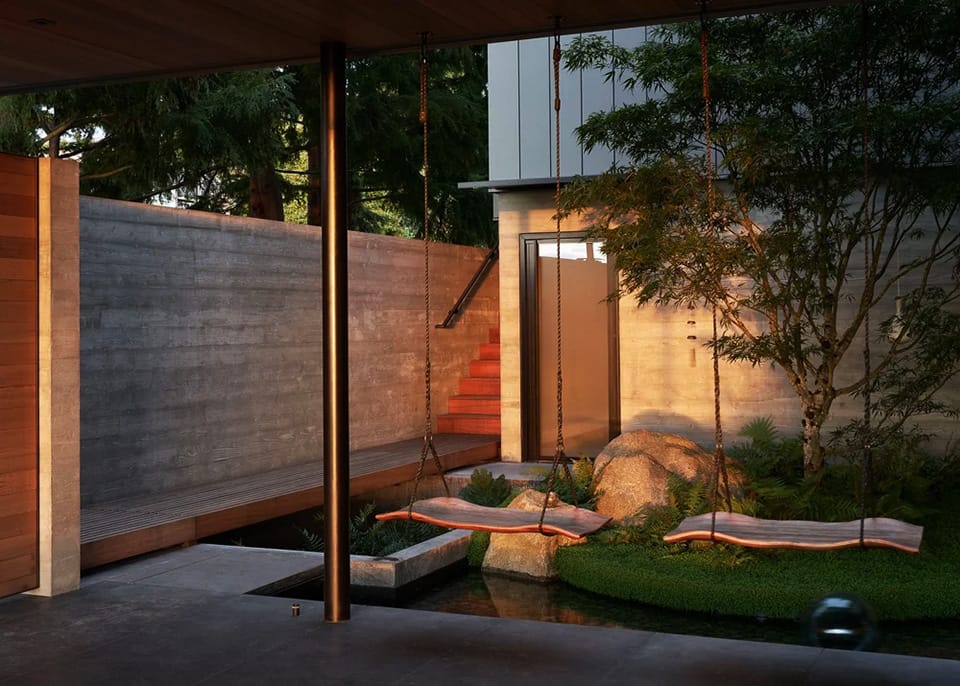
Your stair work really stands out—those details look simple, but I imagine they’re not.
LT: Stairs are a complex scope to form and finish, especially when you’re dealing with cantilevered nosing details and integrated strip lights. We assemble stair formwork to be able to disassemble quickly and cleanly on day of pour. Stair scopes are monolithic, poured all at once, which requires strategic forming and precision finishing.
I can only imagine, because concrete feels so permanent, but the process itself seems pretty unpredictable. How much control do you actually have?
LT: It’s a challenging material. We do a lot of work up front—preconstruction, mockups, coordination with architects, concrete submittals—to control as much as we can before we pour. Our crews are extremely precise with formwork, which is critical. But once the concrete is placed, there’s always some variability in how the concrete cures. You can follow the exact same process and still get a slightly different result. That’s just the nature of the work.
And when that happens?
LT: You adapt. You set better expectations with clients. The goal is always to manage. That’s part of working with concrete.
whj IN CONVERSATION
