
By Halina Loft
Whether you realize it or not, design shapes how you feel in a space. You don’t have to be passionate about interiors or fluent in style to be affected by it. A well-designed room has the power to shift your outlook.
Elizabeth Robb, interior designer and owner of Elizabeth Robb Interiors in Bozeman, Montana, learned this early in life. “When we’d visit my grandmother, I noticed how different I felt in her home,” she recalls. Her grandmother’s house, just outside Boston, was small but impeccably styled with fine furniture and rich fabrics — the last vestiges of a family fortune lost during the Great Depression. “She knew everything about Scalamandré, Pierre Frey, all the old-school European fabrics and colors. And as a little girl, she taught me everything about furniture and style,” says Robb. “It’s through her that I came to understand the power of design. A beautiful, intentional space can change everything.”
“When we’d visit my grandmother, I noticed how different I felt in her home. It’s through her that I came to understand the power of design. A beautiful, intentional space can change everything.”
–Elizabeth Robb, Elizabeth Robb Interiors
For more than two decades, Robb has brought her deep understanding of design to clients in the Mountain West and beyond. She and her longtime collaborator, Dana Talbot, run Elizabeth Robb Interiors from a beautifully restored yellow building in Gallatin Gateway — in a space that reflects the very principles they bring to their work. “This building was actually once a part of the Montana State University campus,” Robb explains. It was built around the turn of the 20th century and still boasts the trappings of the bygone era (complete with gorgeous hardwood floors and trim). A few years ago, the building was bought and moved to its current location. Robb and Talbot keep offices on the second floor, but downstairs in the showroom is where the magic happens. The room is lined with fabric swatches and paint samples, beautiful tiles and slabs of stone, cuts of wood and stacks of design magazines.
The effect is both comforting and exciting — your hands itch to explore. Robb is happy to meet potential clients over the phone, but she prefers to host them in-person. “At least for our first meeting, I find it’s so important to actually meet a client,” says Robb. “It helps me to truly understand their vibe, their taste, and what they’re looking for in their home.”
Robb is good at reading people. It’s a skill she honed during her very first job, before she entered the design world. “I was an English teacher out of college, at a public school in Detroit,” says Robb. “My parents encouraged me to go that route, to pursue a more ‘real’ profession than designing.” Robb loved teaching, loved the kids, but she couldn’t forget her childhood dream of being an interior designer. When school let out each summer, Robb would spend her break interning at a design firm in the area. And after three years, she made the leap to leave teaching for good. She moved to Vail, Colorado, and landed a role at a design firm.
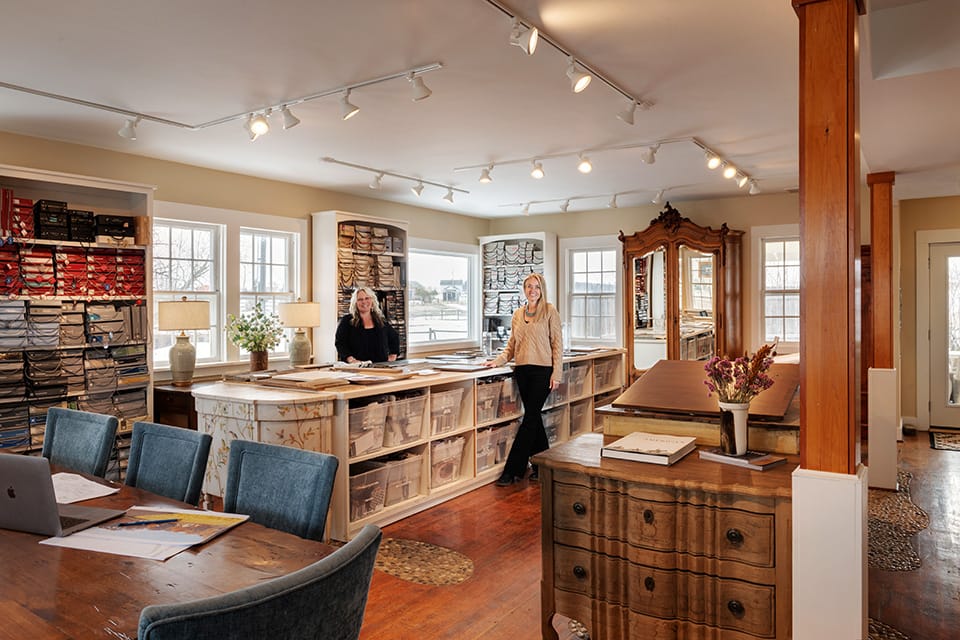
“At least for our first meeting, I find it’s so important to actually meet a client. It helps me to truly understand their vibe, their taste, and what they’re looking for in their home.”
–Elizabeth Robb, Elizabeth Robb Interiors
Robb’s first step into professional interior design wasn’t exactly welcoming, especially as someone coming from another industry. She’d joined a large firm; projects and promotions were competitive. “I remember they told me I’d never move up, that I’d always be on the more administrative side,” says Robb. “But I just refused to believe that.”
Robb proved herself right. She began volunteering to work the jobs no one else wanted, projects that were small or in towns hours away from the Vail offices. “No one else would want to drive that far, so I’d just jump in saying, ‘I’ll do it,’” says Robb. “I worked my ass off.” Her strategy was sound. “The result was that I got a lot of experience on cool projects in Aspen and other ski towns around Colorado.” To further her education, she took courses at Parsons School of Design in Brooklyn. “And then, all of a sudden, that was it. The owner of the firm came to me to say, ‘I was wrong. You’re doing it.’”
Confidence became a cornerstone of Robb’s success, both in her own career and in her approach to clients. Robb still teaches, volunteering with the design program at Montana State University. “I tell my students, ‘Our job as interior designers is to give people confidence,’” says Robb. “‘That’s our whole job.’ To create their dream homes, [clients] need to know they’re making great decisions.”
Robb lays out her argument: “If we give people confidence, then they’re comfortable, they’re having fun, they’re enjoying the process. And if you don’t do those things, if you make someone insecure and feel unsure, they’re going to second-guess everything. Our job is to make this the best, most relaxed and fun experience for the client.”
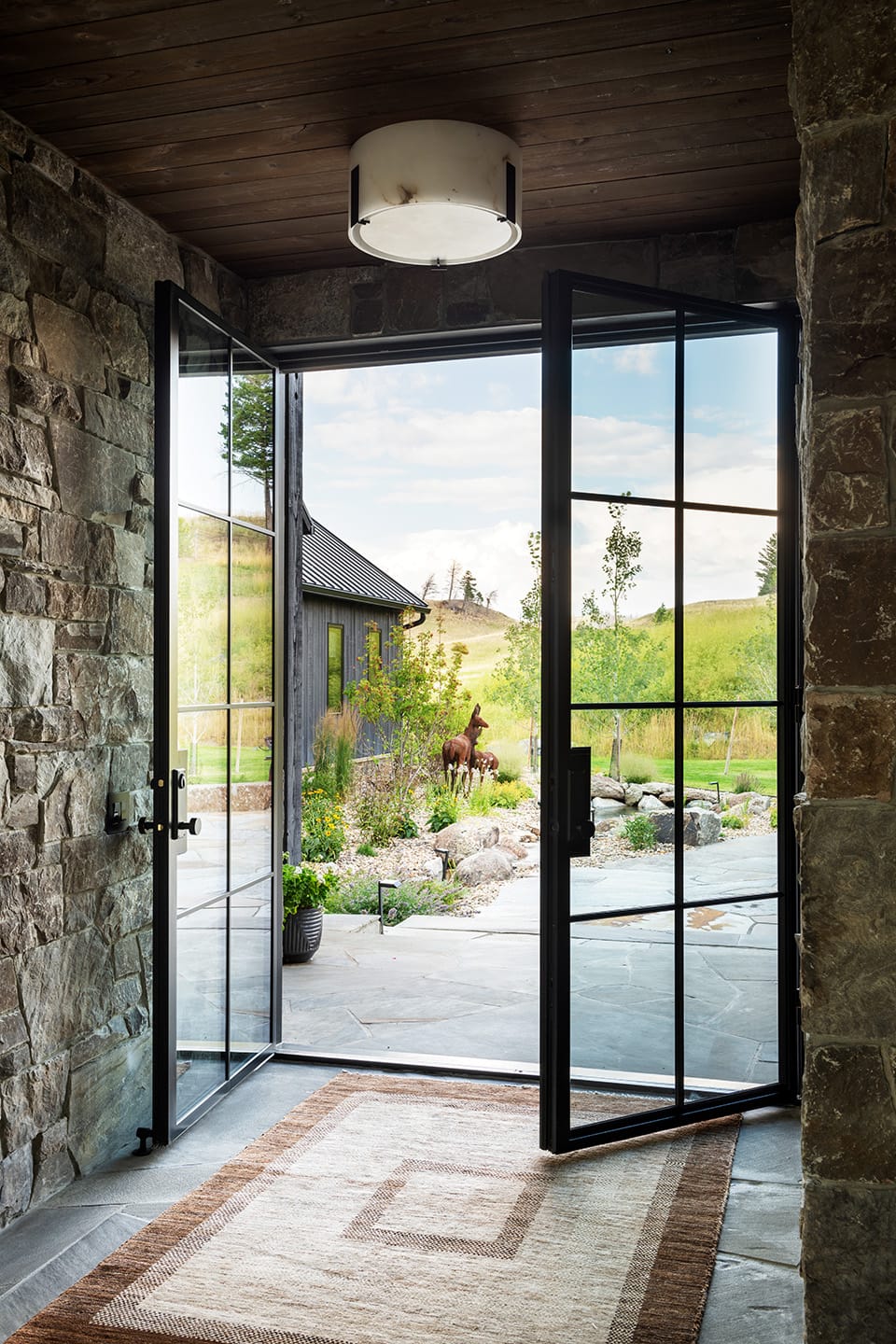
“I love this house, this design approach, because the initial inspiration comes from the idea of bringing the outside in.”
–Elizabeth Robb, Elizabeth Robb Interiors
To instill confidence in others, you need deep expertise in your own craft and industry. Robb’s years of experience, long list of successful projects, and hands-on knowledge of materials are what make her a trusted partner in the design process. She only suggests furniture lines she knows intimately. “I need to have an innate understanding of who’s building the piece, where it’s built, how it’s built, how it sits — if we’re talking about a couch — the materials used, how the finished piece looks and feels.” She prefers working with local manufacturers, people she’s had relationships with for years. “There’s a sense of community among us, which is part of why the projects are so successful,” she says. “I only work with craftsmen who want to be part of creating that dream for the client.”
Making a client’s dream a reality isn’t easy, but Robb has a knack for it. First, she gets involved as early as possible. “It gives me the chance to help with the space planning of the home,” she explains. Second, she encourages mood boards. “I ask clients to share pictures of what they like, share Pinterest boards and magazine articles,” she adds. Third, she digs deeper to understand the subtext. “I’ll talk through what I’m seeing, play out the ideas and get an understanding of how they’ll actually be using the spaces. I don’t just rely on the pictures — I listen to every detail they’re sharing with me. Because sometimes what the client is really looking for isn’t what they show me.”
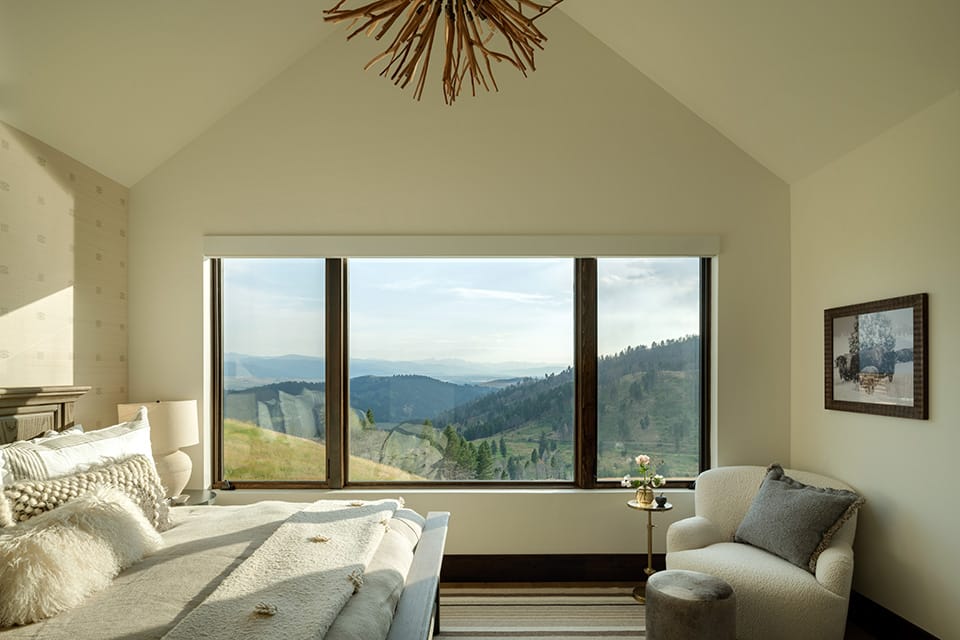
“I need to have an innate understanding of who’s building the piece, where it’s built, how it’s built, how it sits — if we’re talking about a couch — the materials used, how the finished piece looks and feels.”
–Elizabeth Robb, Elizabeth Robb Interiors
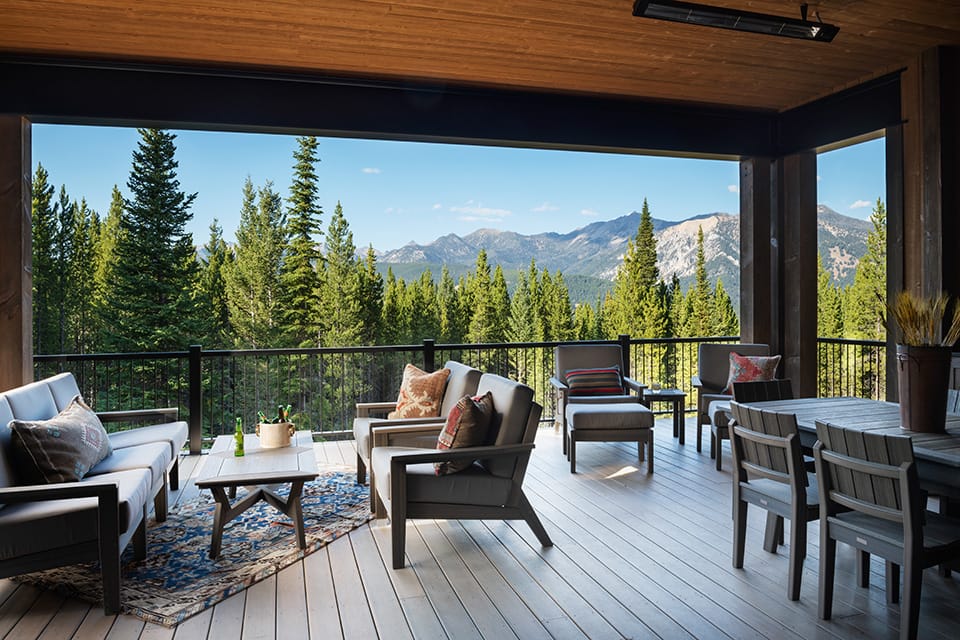
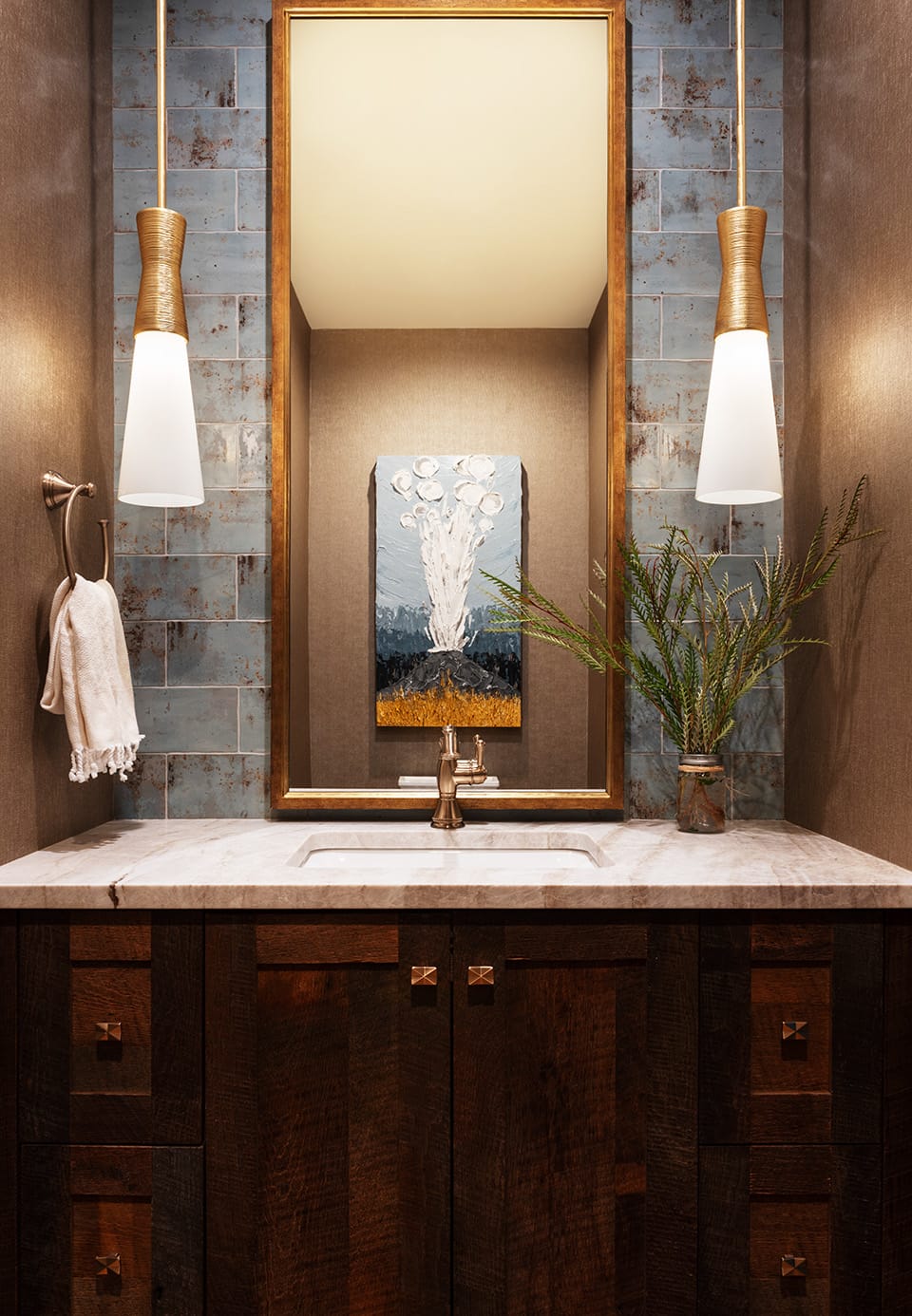
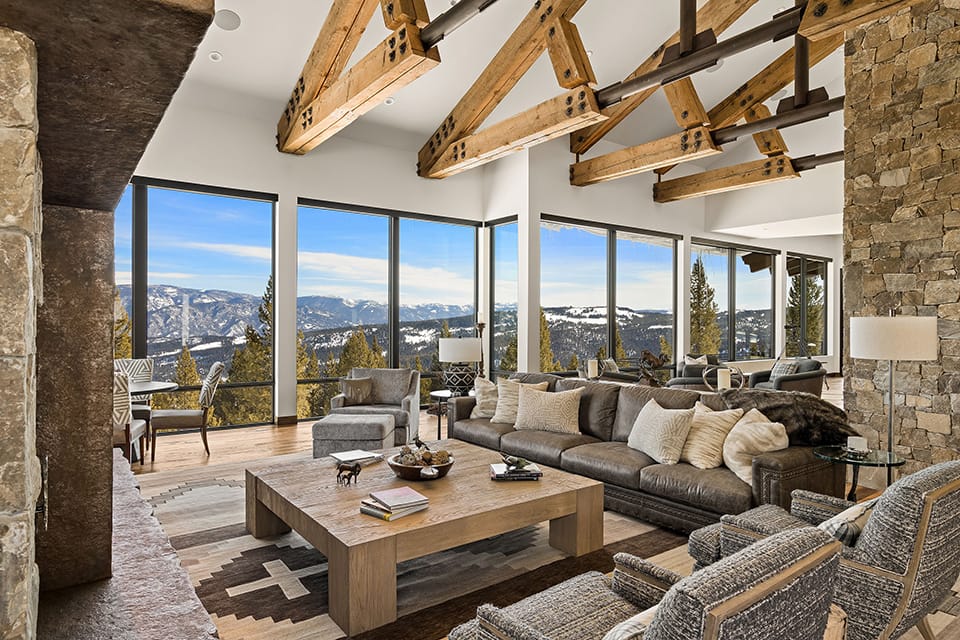
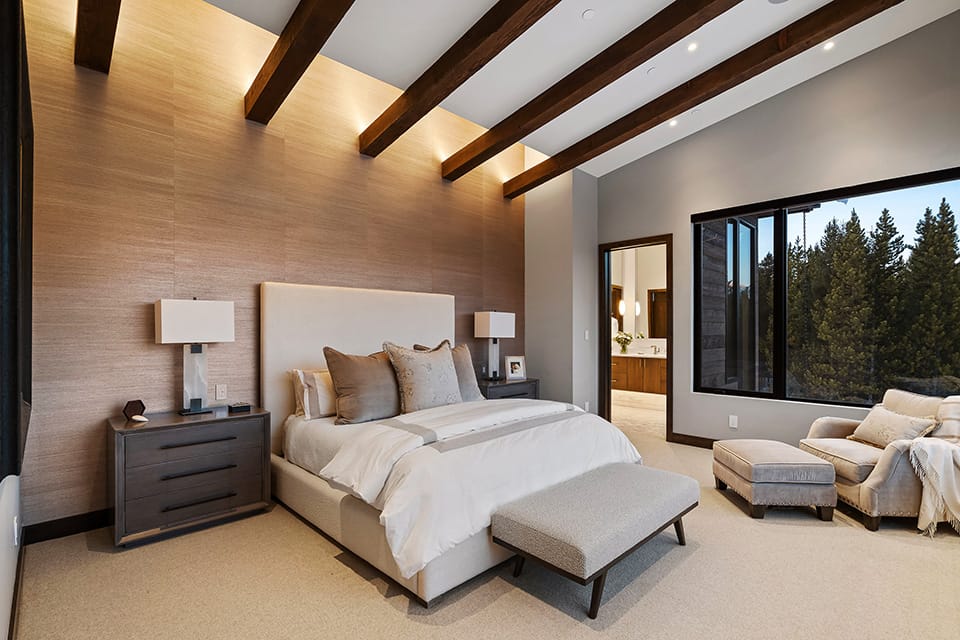
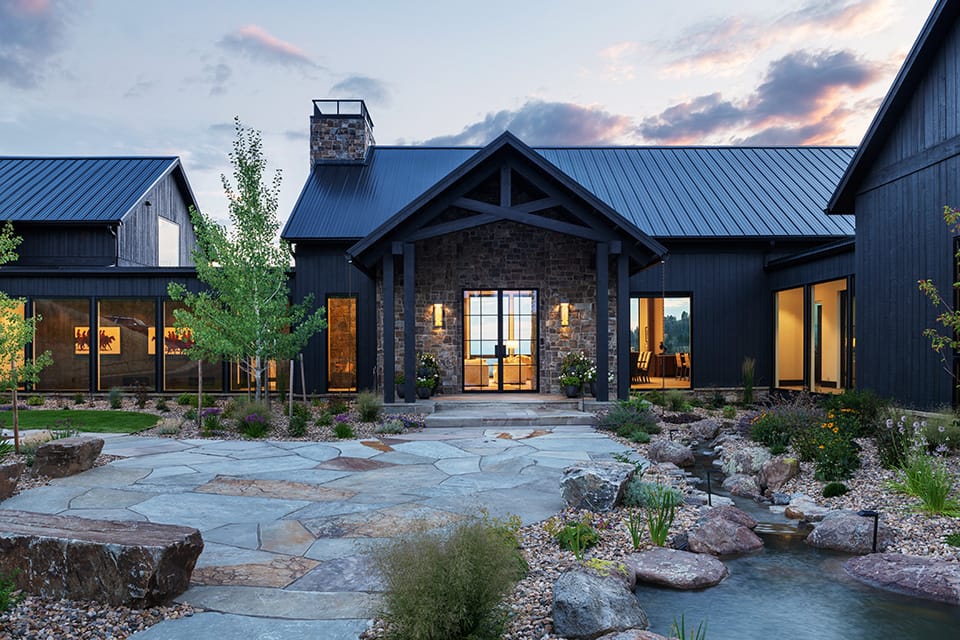
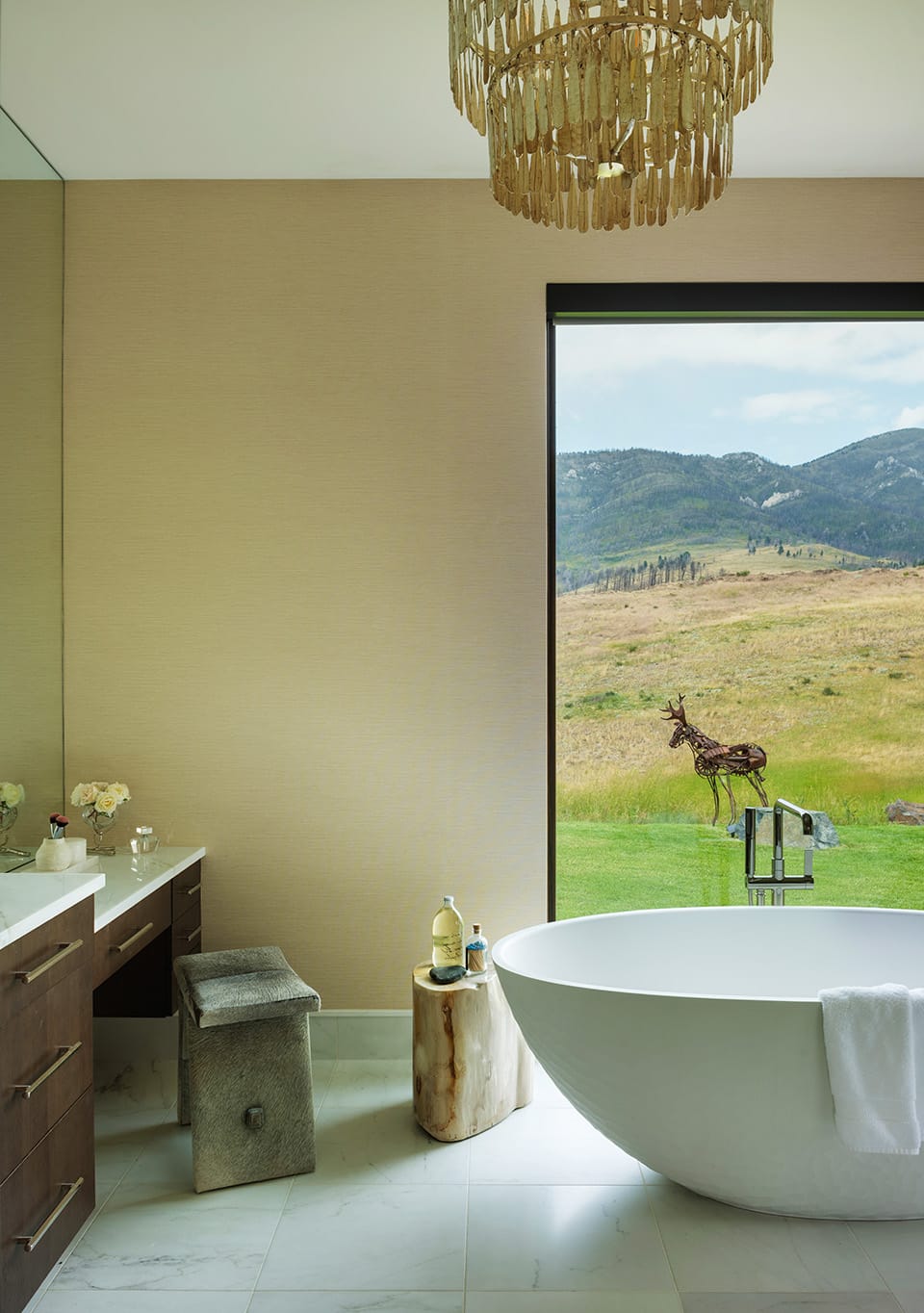
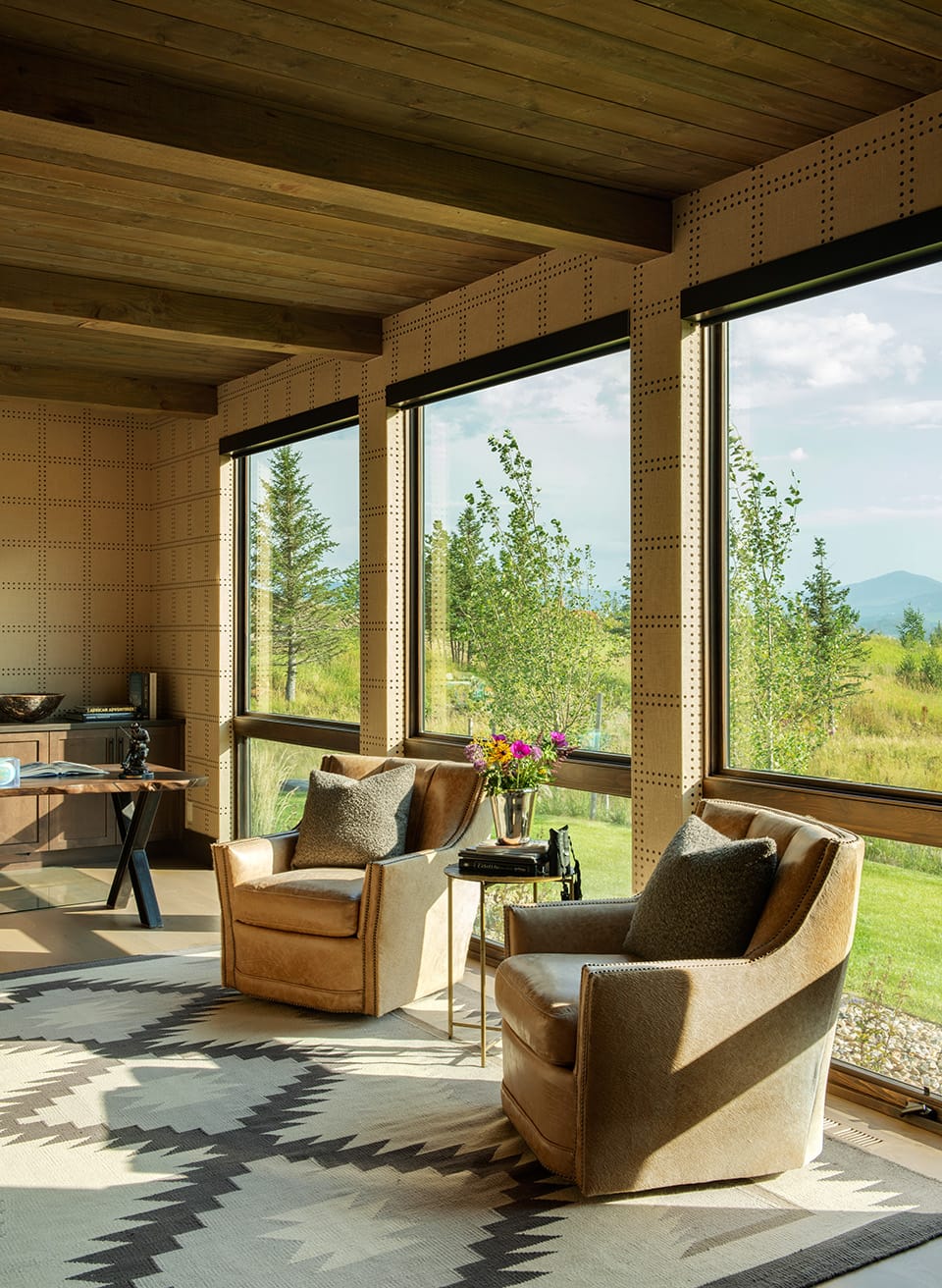
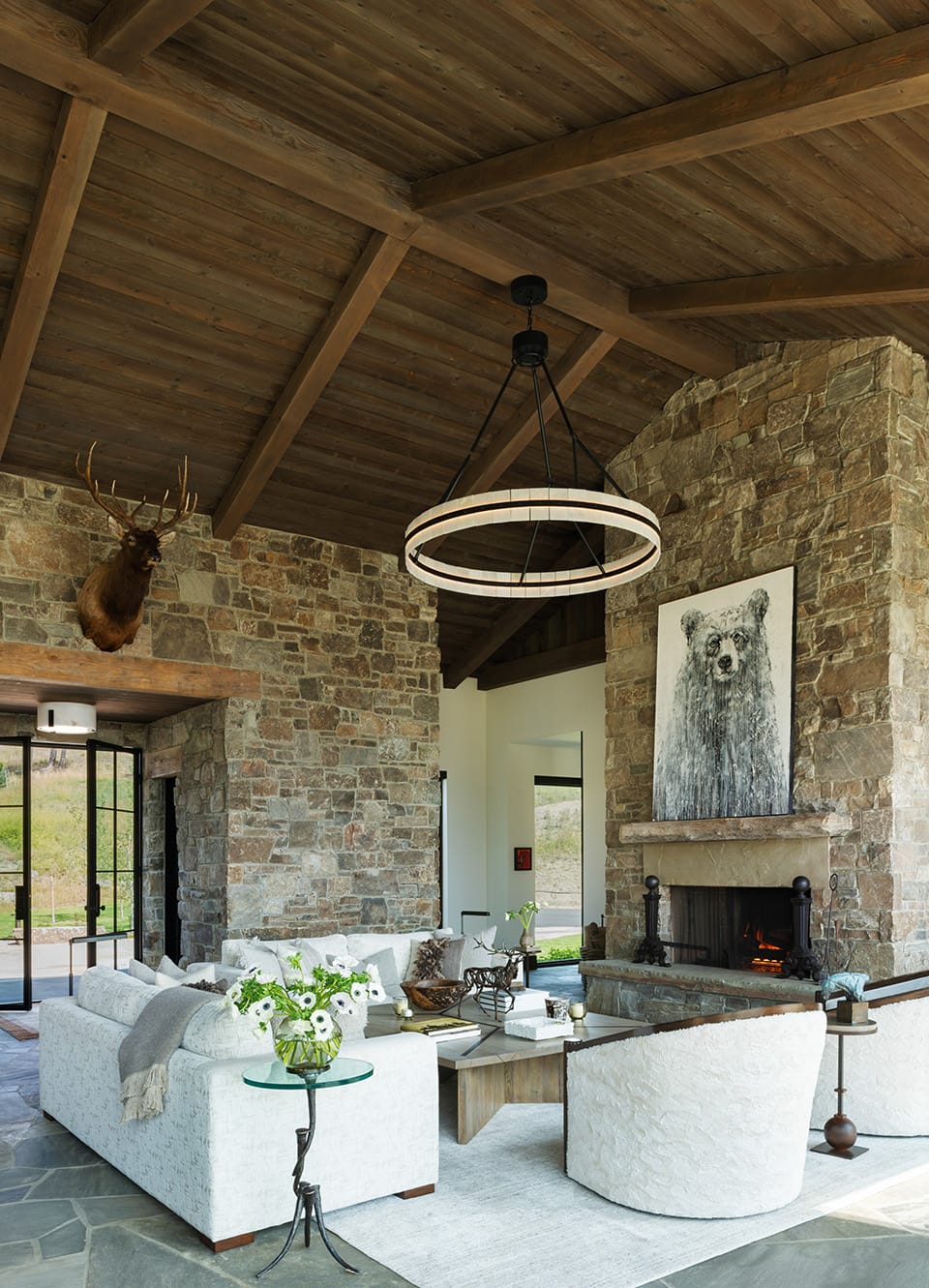
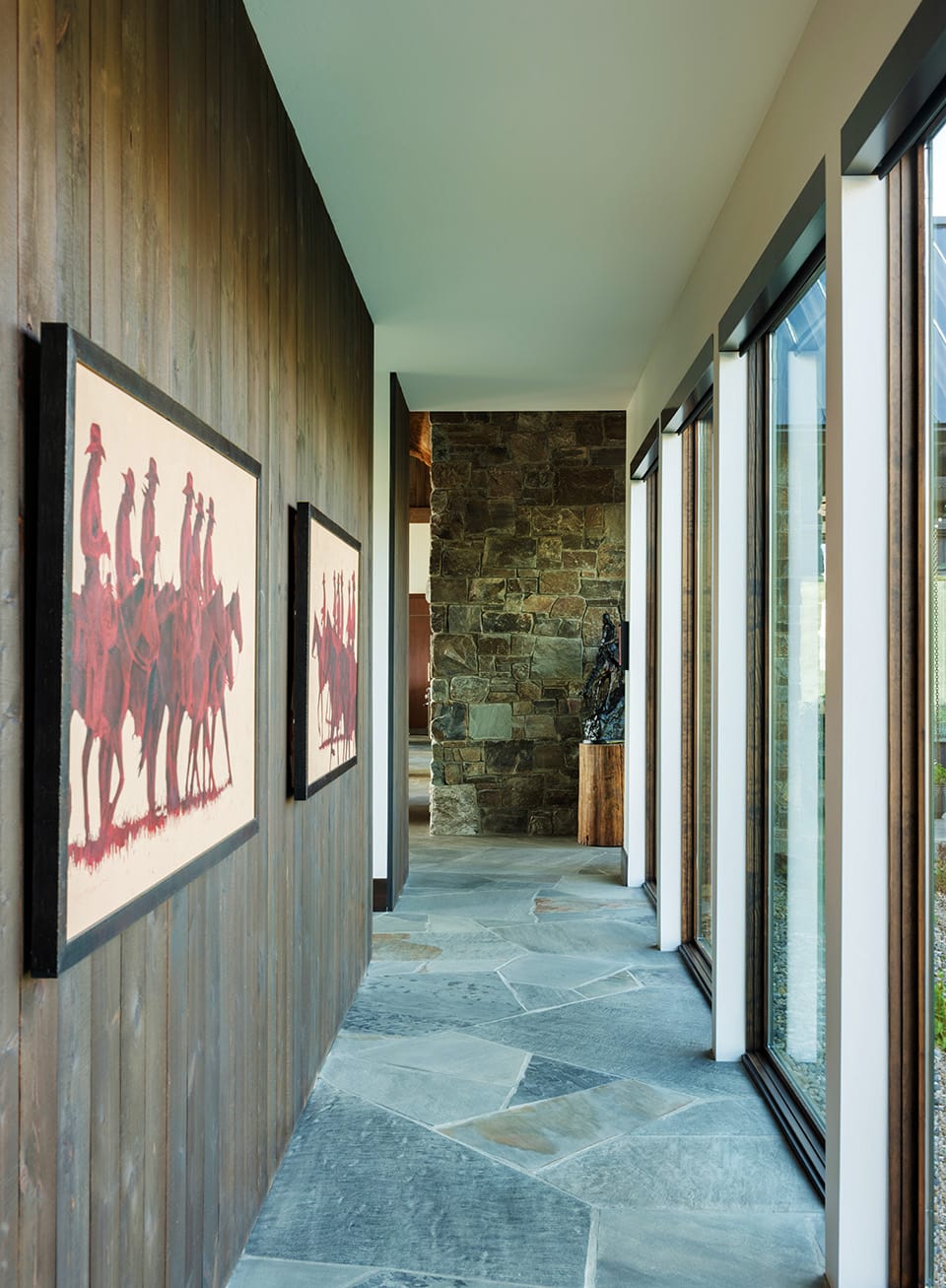
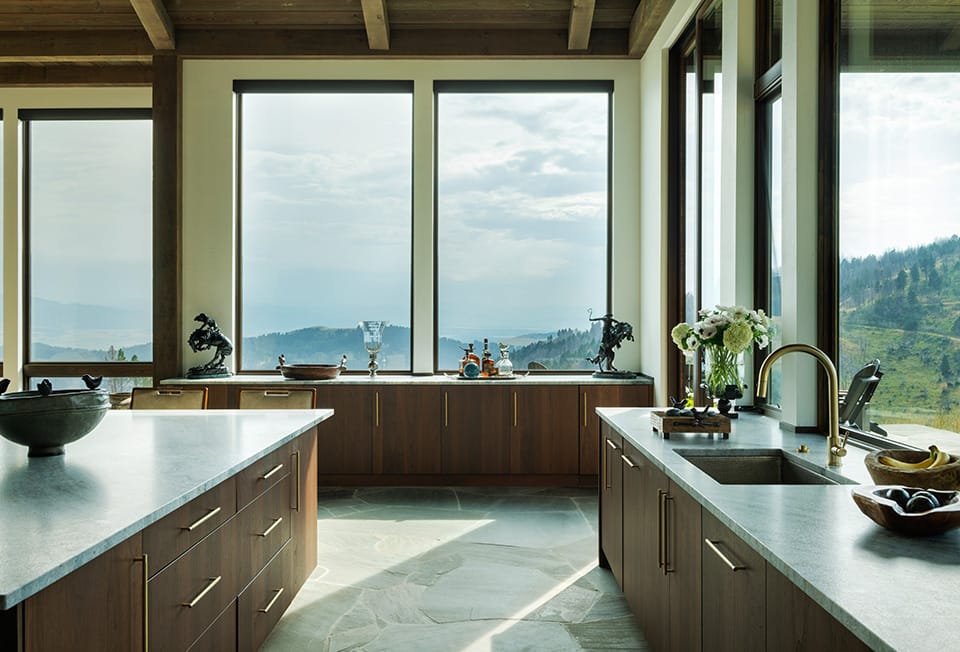
A recent project, dubbed the Bridger Estate, exemplifies Robb’s approach. The clients lost their home in the 2020 wildfires that tore through the Bridger range; the project was a rebuild on the same site. “I love this house, this design approach, because the initial inspiration comes from the idea of bringing the outside in,” says Robb, gesturing to the home’s huge windows and natural stone floors. For this project, the client wanted to create a space that would cater to entertainment — “She likes to host parties, have a lot of friends stay over for the weekend, so we needed to create an atmosphere where that felt natural.” They went in a direction that emulates a ski lodge — the kitchen, dining area, and living room run the length of a single large hall. Wood planks line the pitched ceiling, adding a material softness to the space that balances out the flagstone floor. Other elements of the interior design continue this balance of soft and hard through the home: dusty blue velvet chairs surround a grand dining table, gold hardware elevates the kitchen’s walnut cabinetry, textured fabrics bring a warmth to the fireplace area. “All the furniture is light and neutral, but really heavy on textures,” says Robb. “The look is clean and fresh, timeless, but it’s also cozy.” Which is exactly what you need, in a part of the country where snow can sometimes fall from September to June.
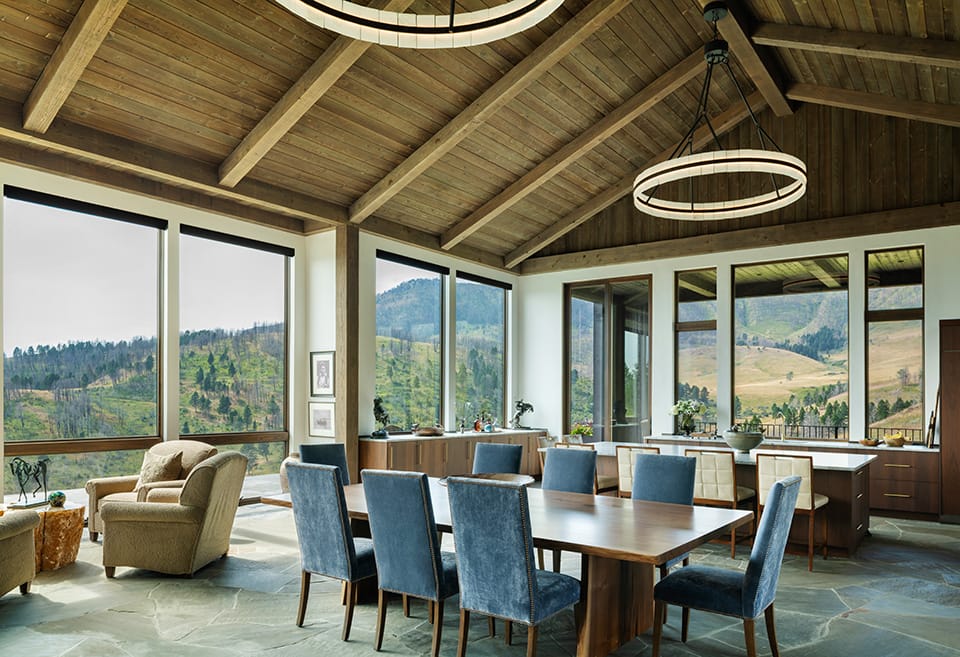
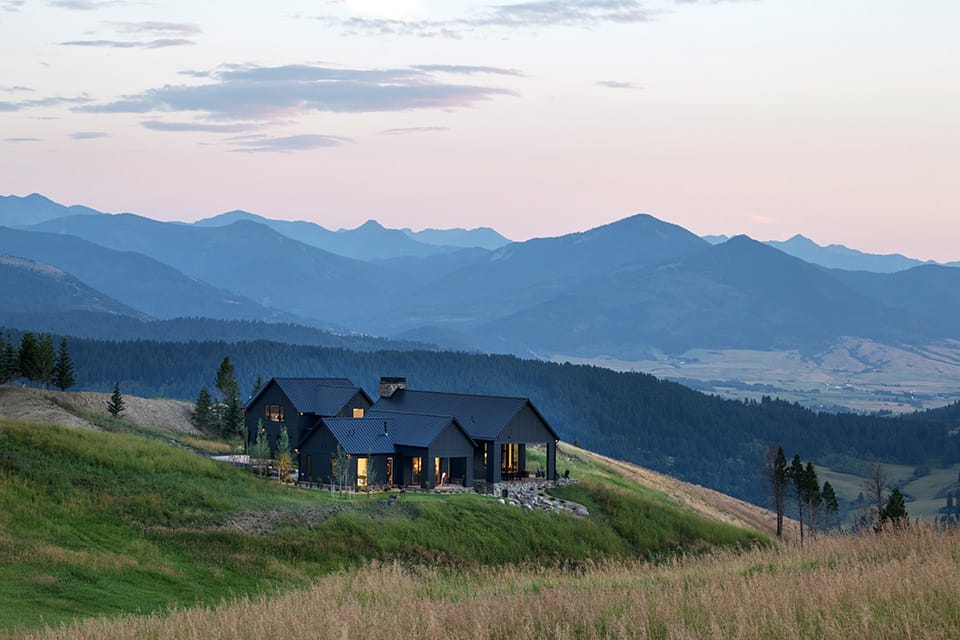
“The client wanted a space that felt beautiful, but also relaxed and welcoming,” says Robb. “And that’s really how you feel, when you’re in the home: welcomed.”
whj PROFILE
