
Written by: Laurenz Busch
The snow coach was halfway to the lodge when the wolf pack began crossing the road. It was February, and Kevin Noble had brought his 90-year-old father into Yellowstone National Park to take photographs. As the wolves came into view near Madison Junction, a small crowd poured out from the coach into the cold. Most of the pack crossed the snow-covered road, but four hung back—their attention fixed on the flashing cameras and shuffling feet. It took a moment for everyone to realize they weren’t holding back by choice; the crowd had spooked them.
Show Me Something I Haven’t Seen
Kevin Noble made his name with reverent black-and-white photographs of Yellowstone. Now, he’s betting on color.
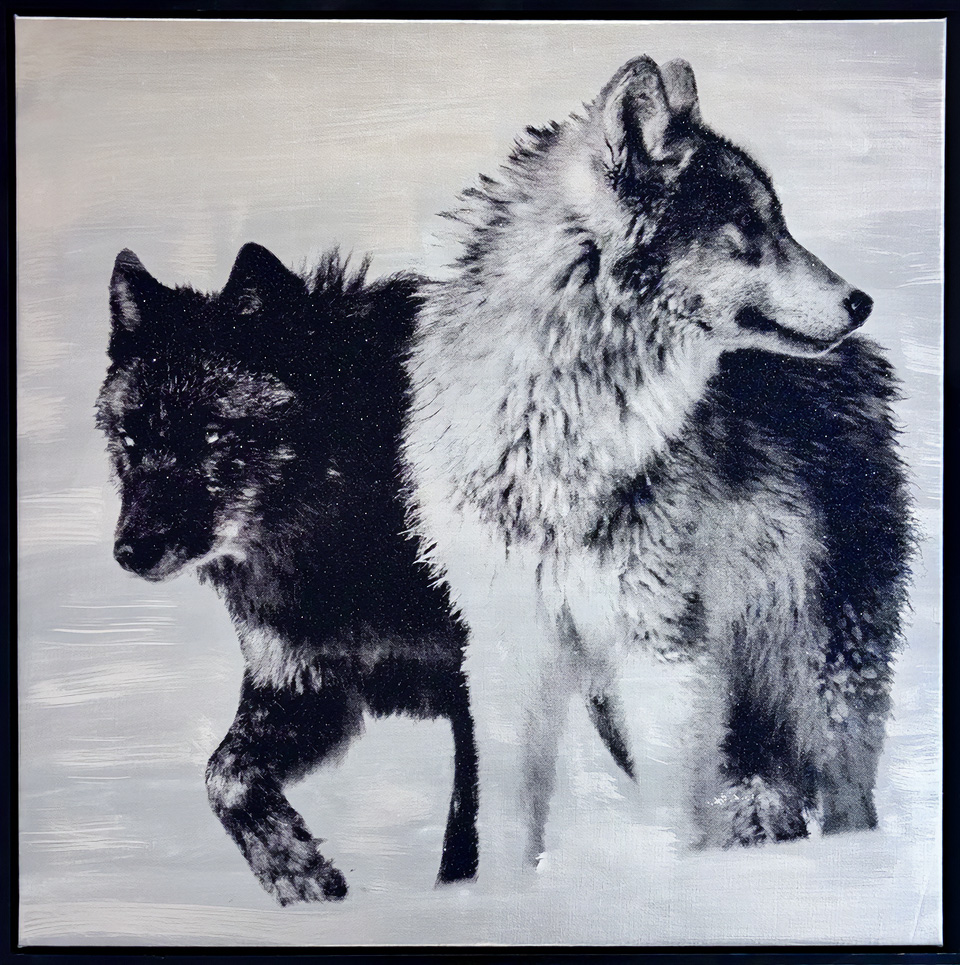
Over the next hour, they found the nerve to cross one by one, darting toward the rest of the pack until only a small female remained. She started across, lost her nerve, and turned back. That was when a large black wolf, unhurried and seemingly certain of what needed to be done, returned to stand beside her.
Snap.
Noble took his shot just before the older wolf guided her across the road to rejoin the pack.
Back inside the coach a few minutes later, Noble’s father considered what they had just witnessed. “Well,” he said nonchalantly. “That was kind of cool.”
“I WANTED LESS DETAIL IN THE SCREEN PRINTS.THERE SHOULD BE A NOTICEABLE GAP BETWEEN THOSE AND THE PHOTOGRAPHS.”
Noble still laughs at the understatement, retelling the story, “Are you kidding me?” As he tells me one day in his downtown studio in Bozeman, Montana, “Kind of cool? You’ll never see that again. It doesn’t get better than that.”
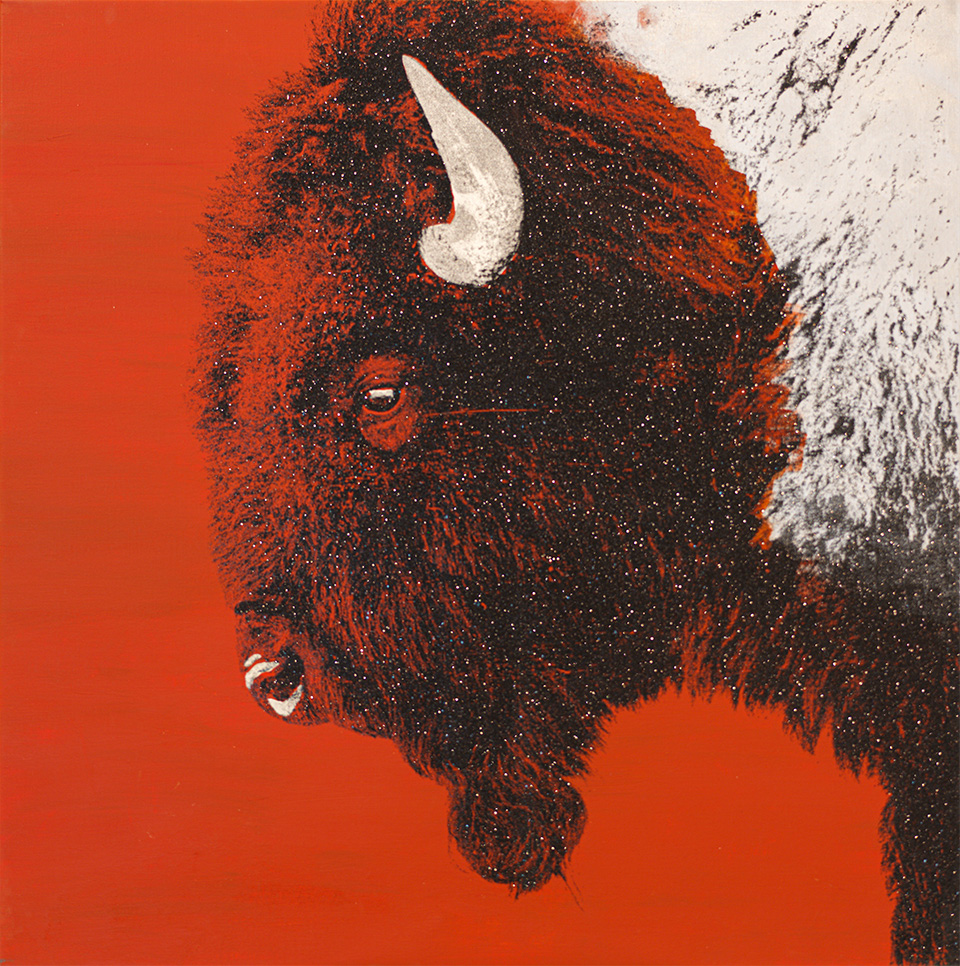
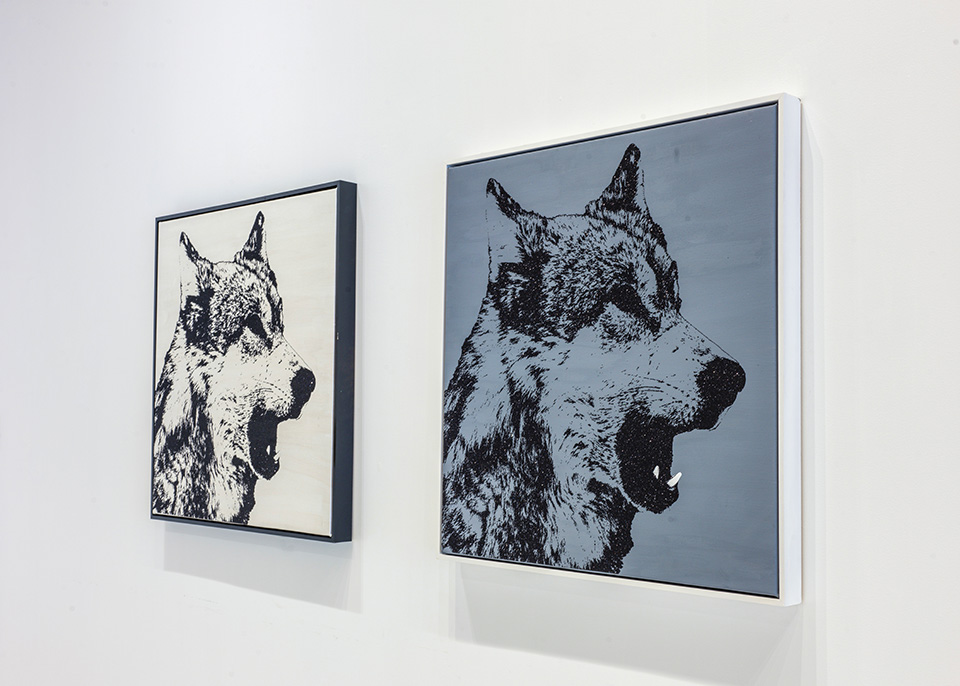
The photograph of the two wolves—the protector and the protected—now hangs in Studio Noble. Titled The Guardian, it belongs to a new collection in which Noble’s photographs continue to evolve beyond the print. This one is scattered with crushed glass, its surface catching the changing light as someone passes. From one angle, it’s silent; from another, it shimmers like frost in the morning sun.
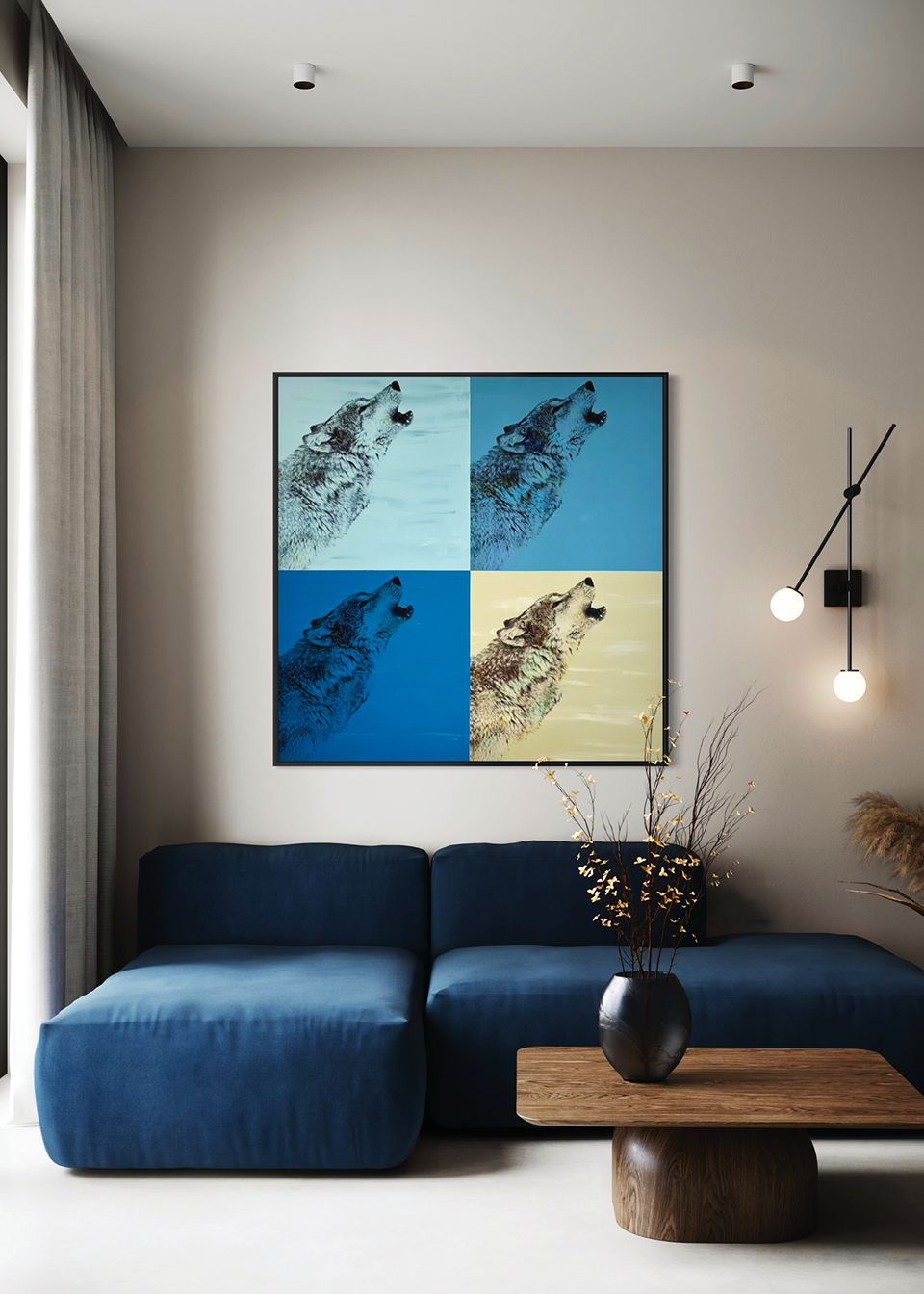
For anyone familiar with Noble’s earlier work, saturated color is the obvious surprise. The wildlife remains, but its presentation has changed. The solemn black-and-white photographs that made his name now hang beside one-of-a-kind silkscreens alive with color. The result pulls his Yellowstone into the realm of pop art. In his older photographs, the light holds still; in the new pieces, it moves around the room.
Applying a pop art palette to his Yellowstone photographs marks an exuberant turn for an artist long associated with restraint, though Noble has never really seen himself that way, or even as merely a black-and-white photographer.
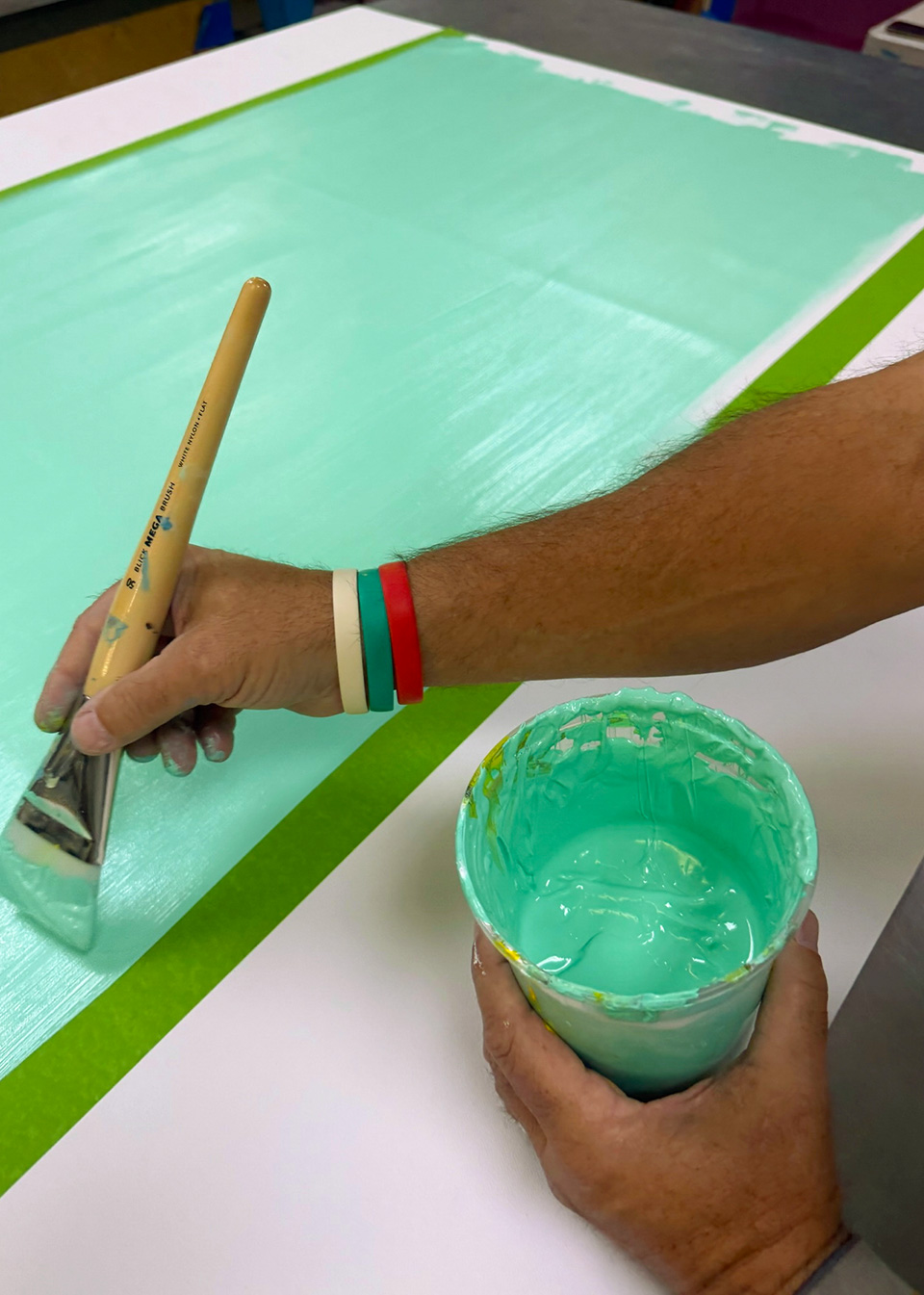
“I’ve always thought of myself as an artist, and I’ve always loved pop art,” he says, referring to the underlying style for his new collection. “A new direction always comes with risk, so last year, I finally asked myself: Why not?”
He carries the question with him like a smooth stone in his pocket, turning it over whenever certainty begins to feel too comfortable. Since experiencing life-changing events, he’s found himself reaching for it more often.
Noble says his age aloud with a mixture of amusement and disbelief, and we both quickly realize he feels closer to 25 or 30, even with an entire career already behind him. He spent much of his professional life in technology and sold his company at 50. Now he has time, along with a clearer sense that it’s not unlimited.
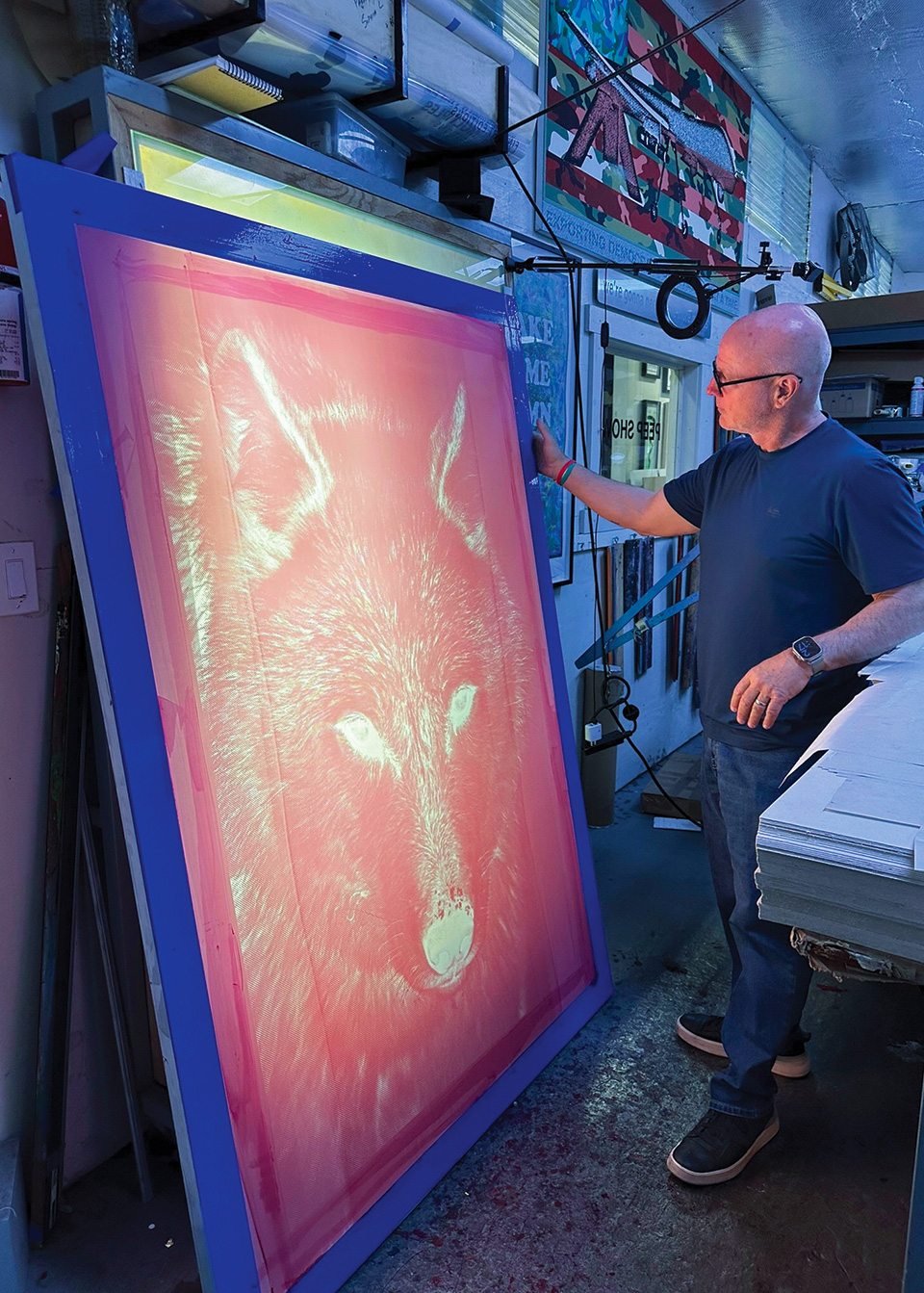
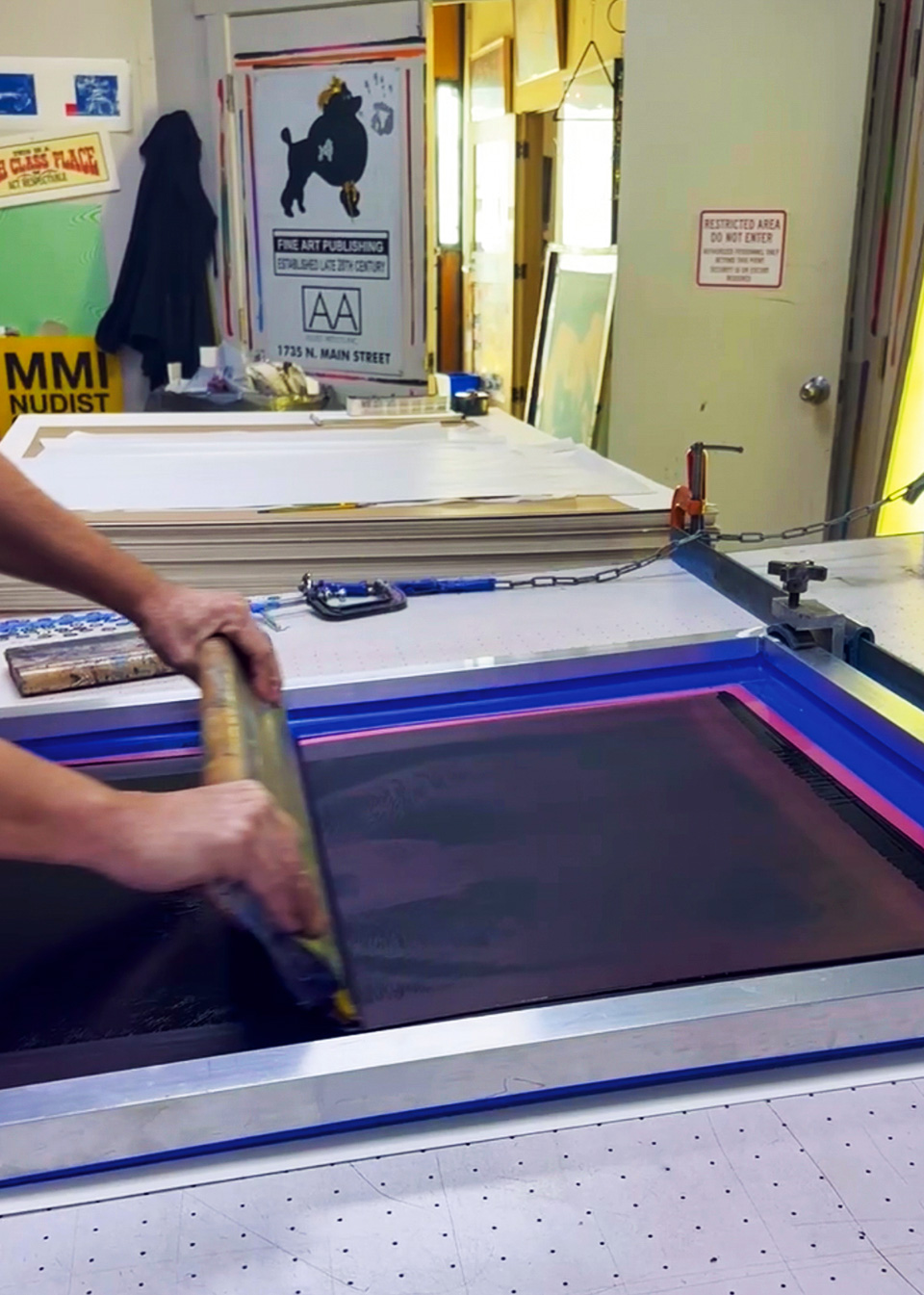
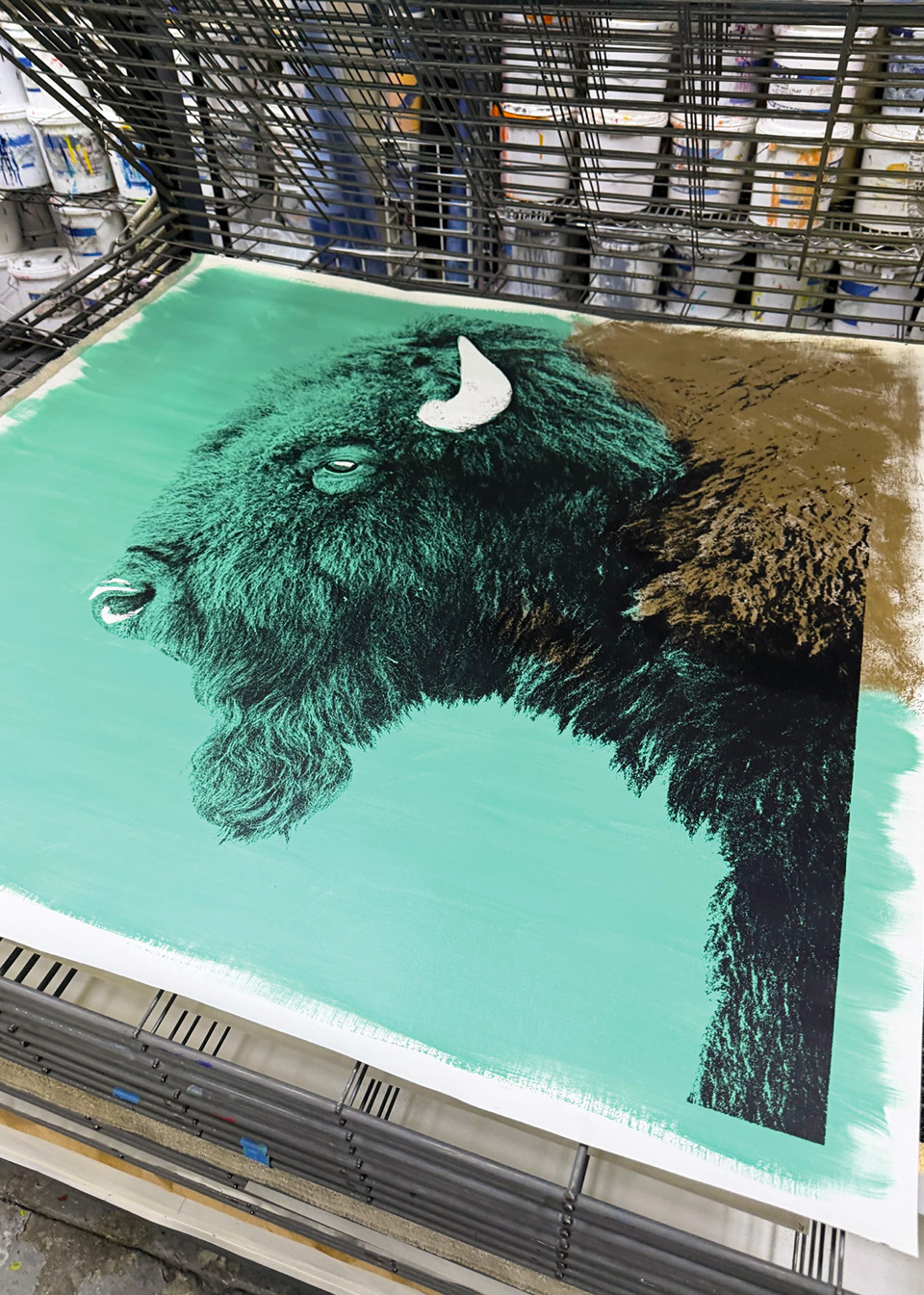
Until recently, Noble’s process largely ended where it does for most photographers: with a finished print. But his new collection begins there. He selects one of his digital photographs with a particular background already in mind, then converts the image into a bitmap—a pattern of dots that can be used to create a silkscreen.
“IT’S AN UNUSUAL CHOICE OF COLORS THAT DON’T COME TO MIND NATURALLY. BUT THE MORE I LOOK AT IT, THE MORE I LOVE IT, THERE’S A SURPRISING RHYTHM TO THEM.”
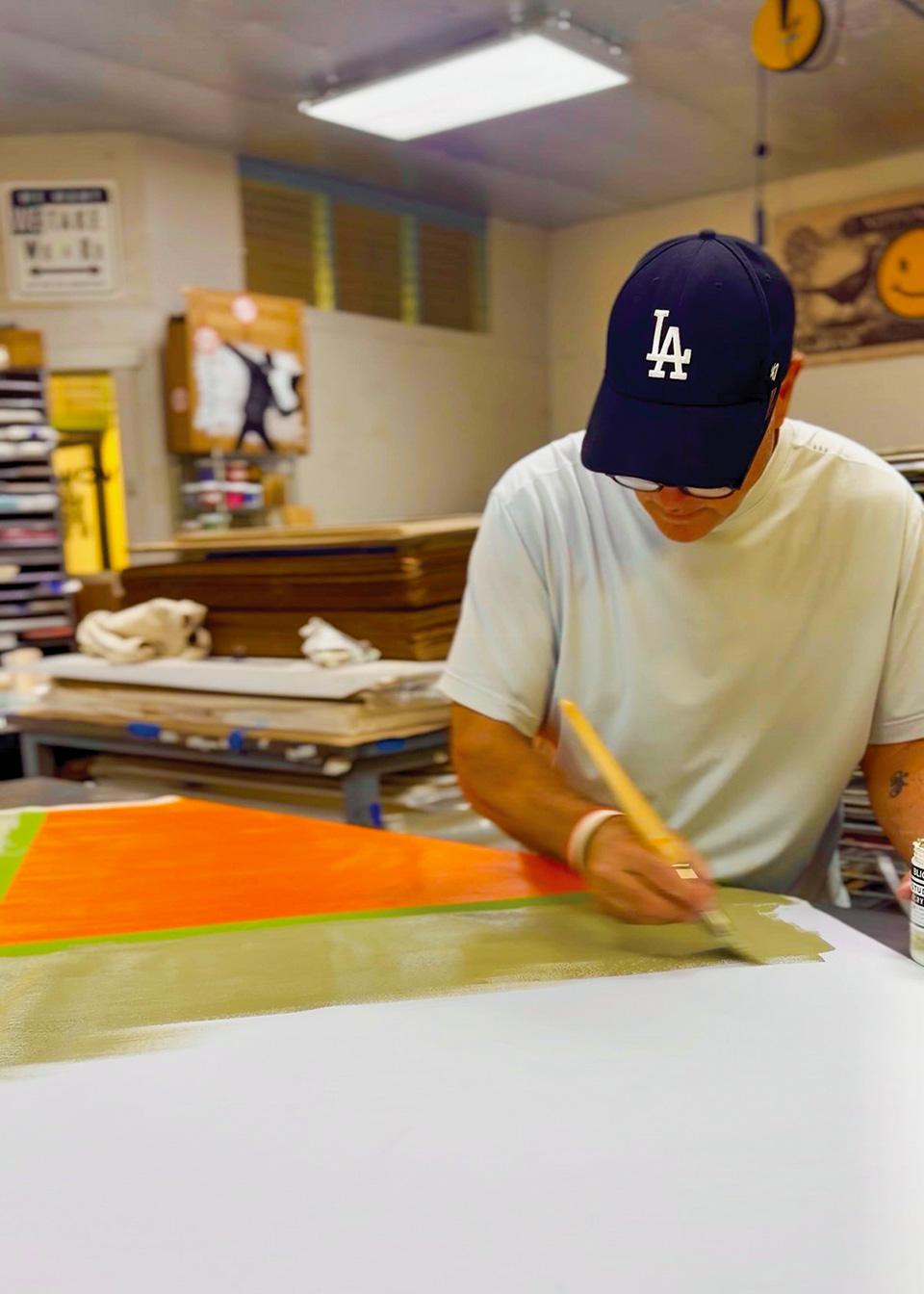
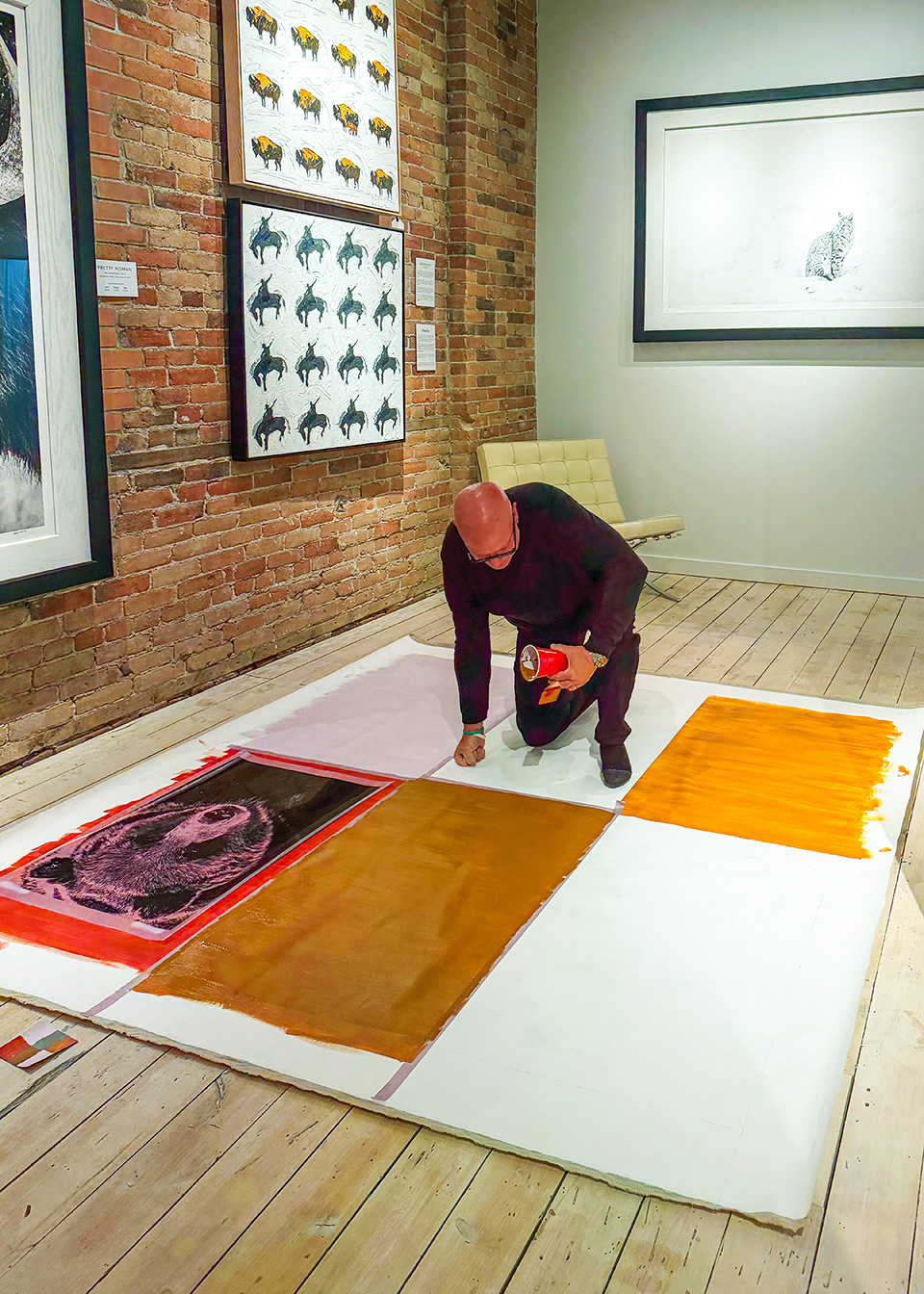
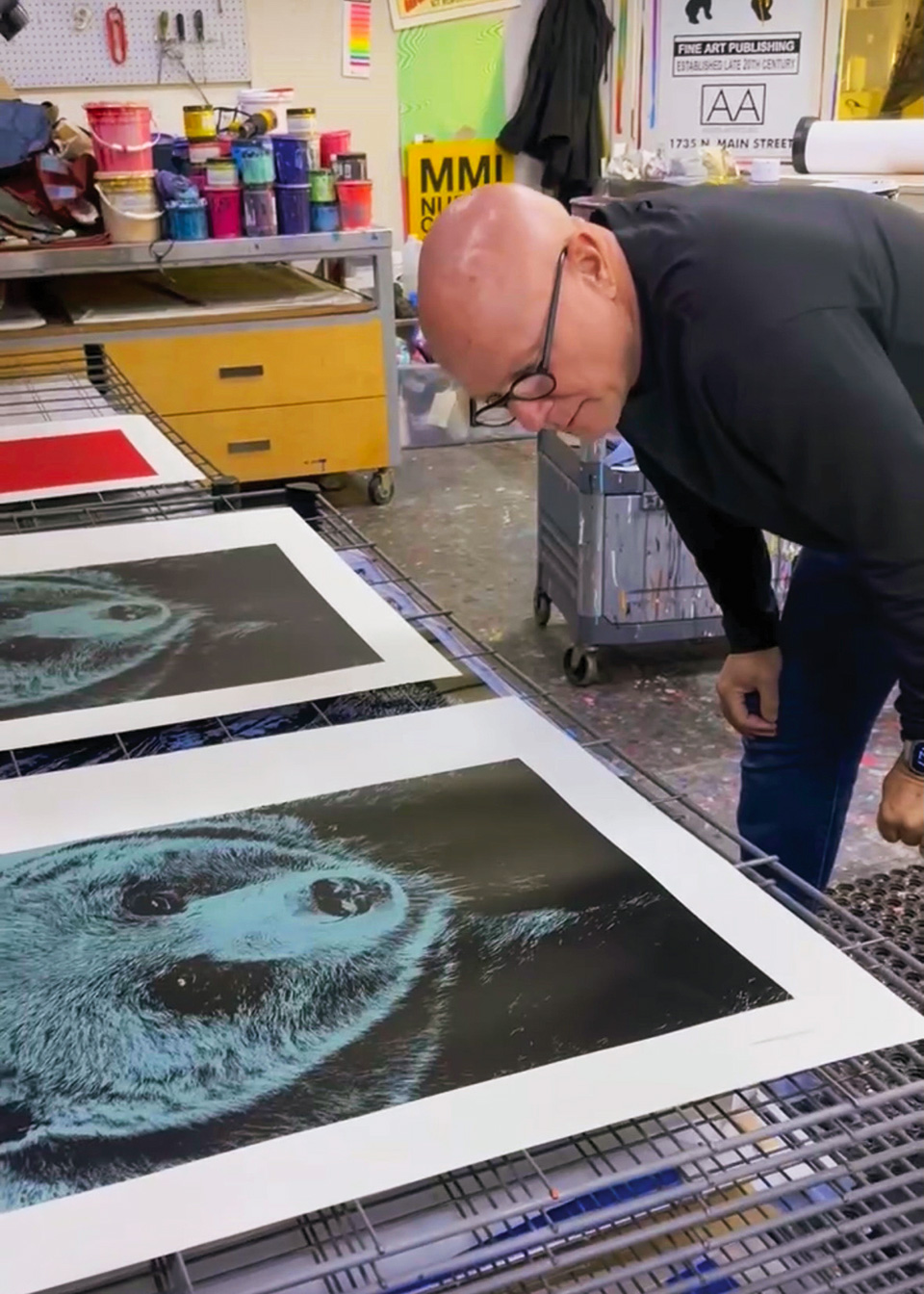
The screen undergoes a chemical process that leaves selected areas porous, allowing ink to pass through while the blocked areas hold it back. Noble paints each canvas by hand, positions the prepared screen over it, and pushes black ink across the surface, pressing the photographic image into the color beneath.
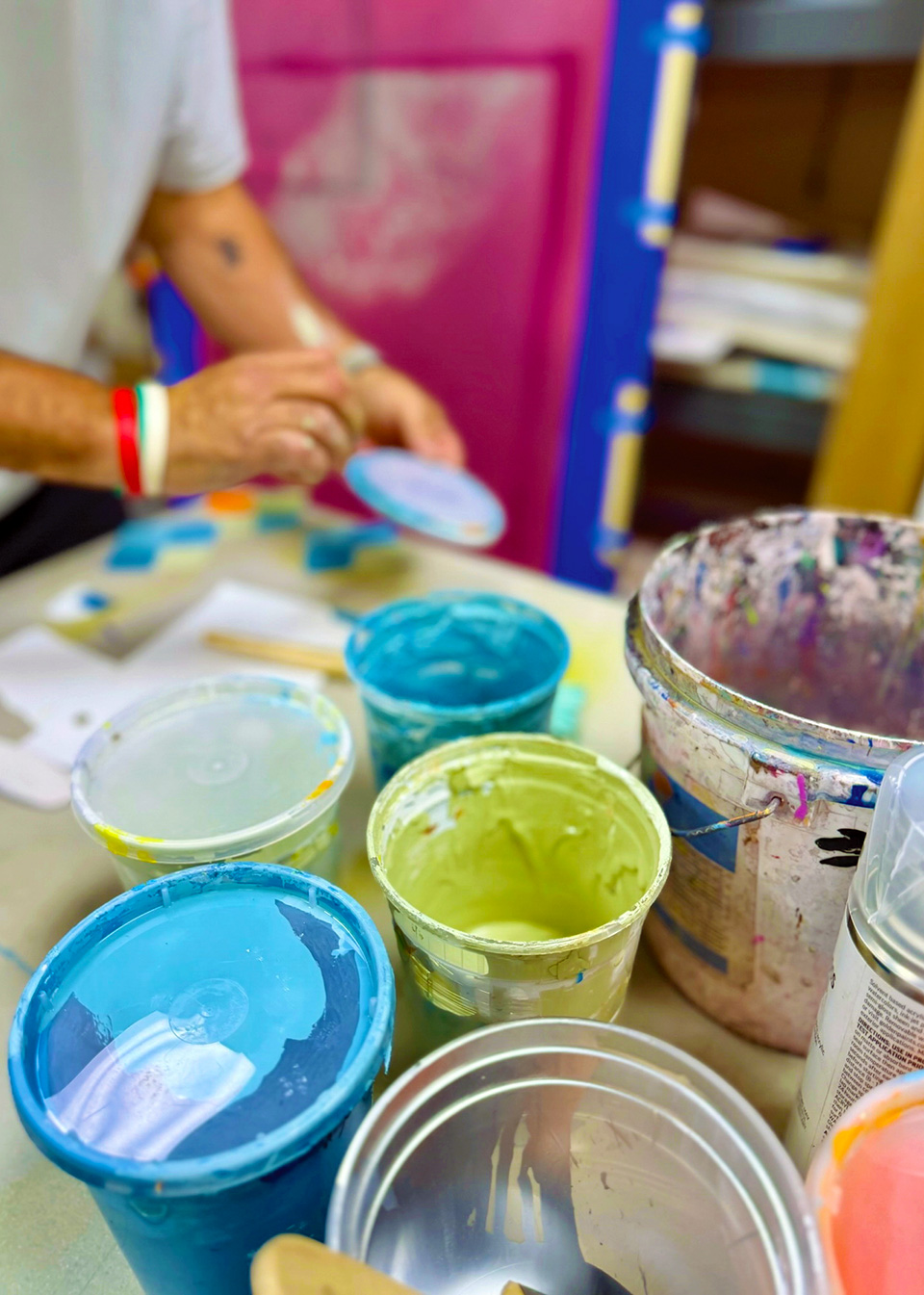
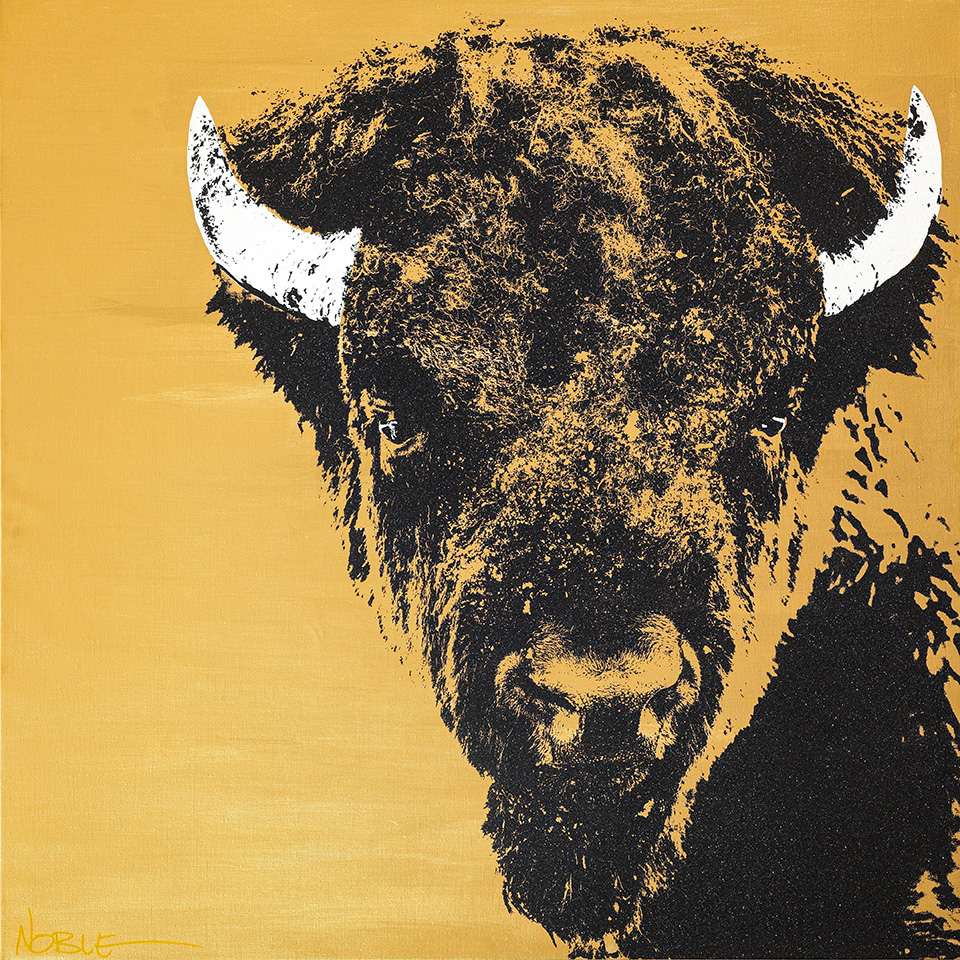
The process is physical and messy, and it hands Noble another set of decisions. His earliest screens used small dots that preserved much of the photograph’s detail. Technically, they worked. Artistically, he thought they missed the point. If the screen print looked almost identical to the photograph, why make it at all?
He began enlarging the dots and stripping away information until the image behaved differently. From across the gallery, the animal remains recognizable; up close, it breaks apart into ink, pattern, and the texture of the painted canvas.
“I wanted less detail in the screen prints,” he says. “There should be a noticeable gap between those and the photographs.”
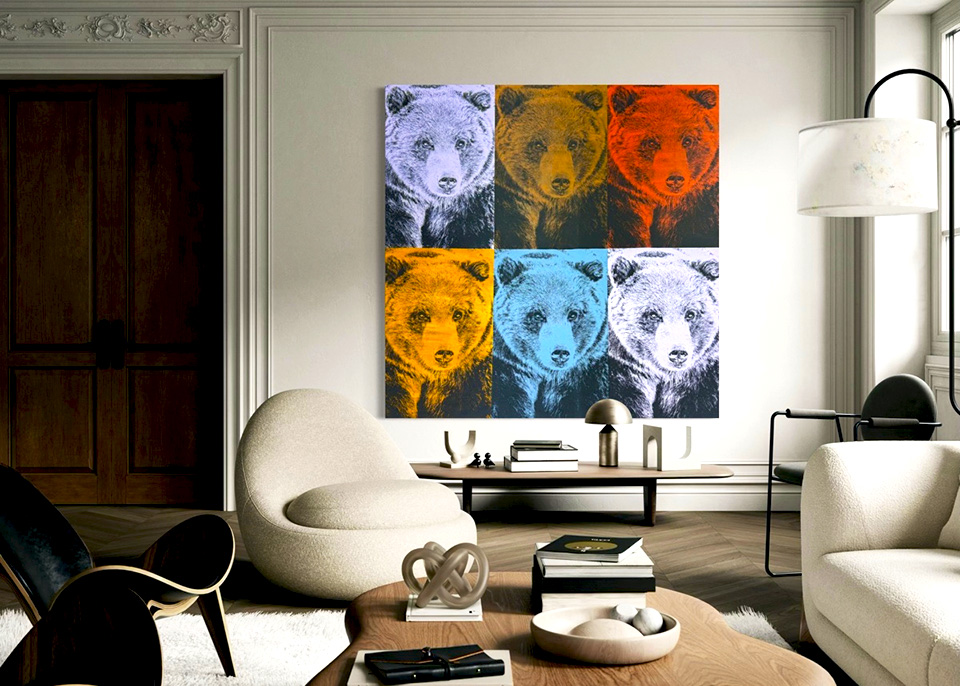
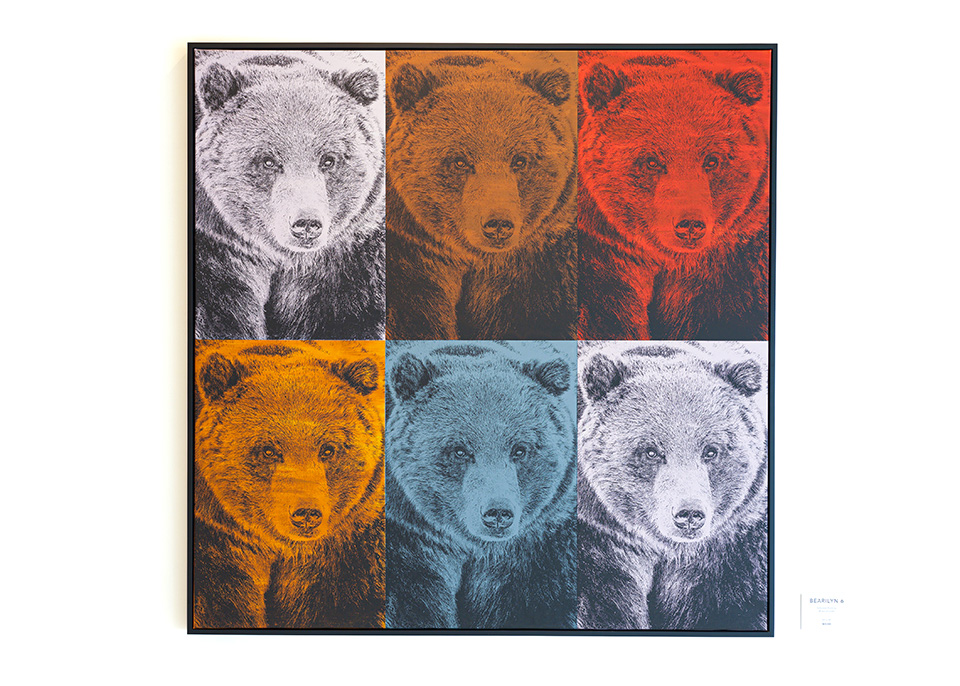
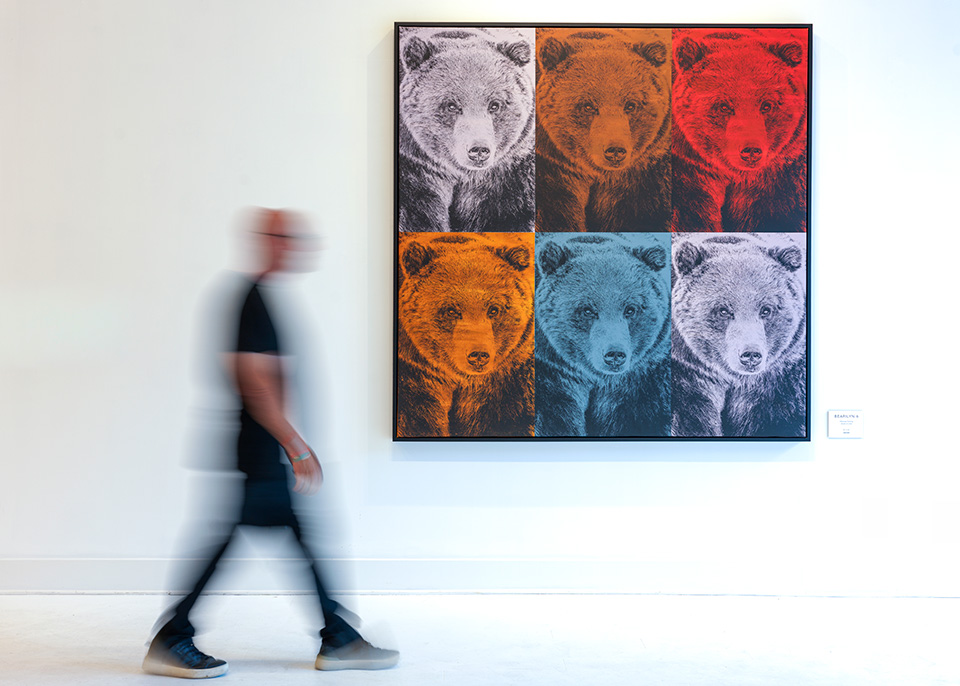
One of the collection’s boldest pieces repeats the same bear across six panels. In Bearilyn 6, the animal stares directly into the lens, its expression unchanged, while the world around it moves through near-black silver, burnt orange, red, teal, mauve, and sepia. The repetition makes the viewer notice subtle differences—not only between the colors, but in how each color changes the bear’s presence.
Those six colors might seem to have no business beside one another, which Noble will tell you is precisely the point. He credits his wife, a painter, and—of all things—her Hermès scarves.
“Those colors are crazy,” he says of the scarves. “It’s an unusual choice of colors that don’t come to mind naturally. But the more I look at it, the more I love it, there’s a surprising rhythm to them. Some of the best art or color selection can take time to appreciate.”
That’s the effect he chased across the six bears: a combination that jars first and wins the viewer over on a second look. “There’s a science there,” he says. “That’s the art and the science.”
“PEOPLE THOUGHT I WAS NUTS. I LOVED IT.”
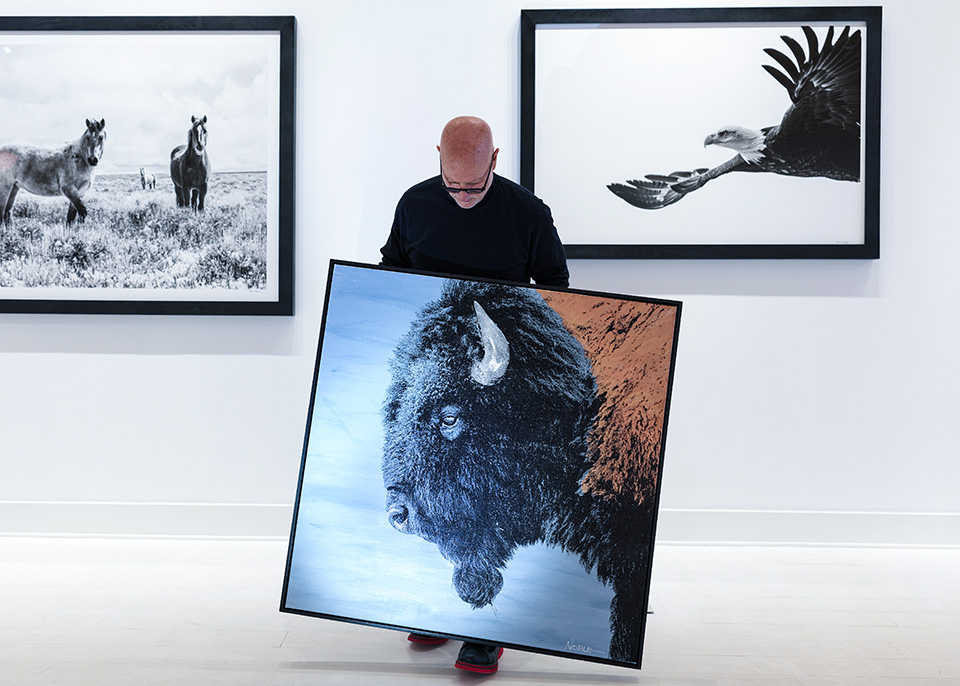
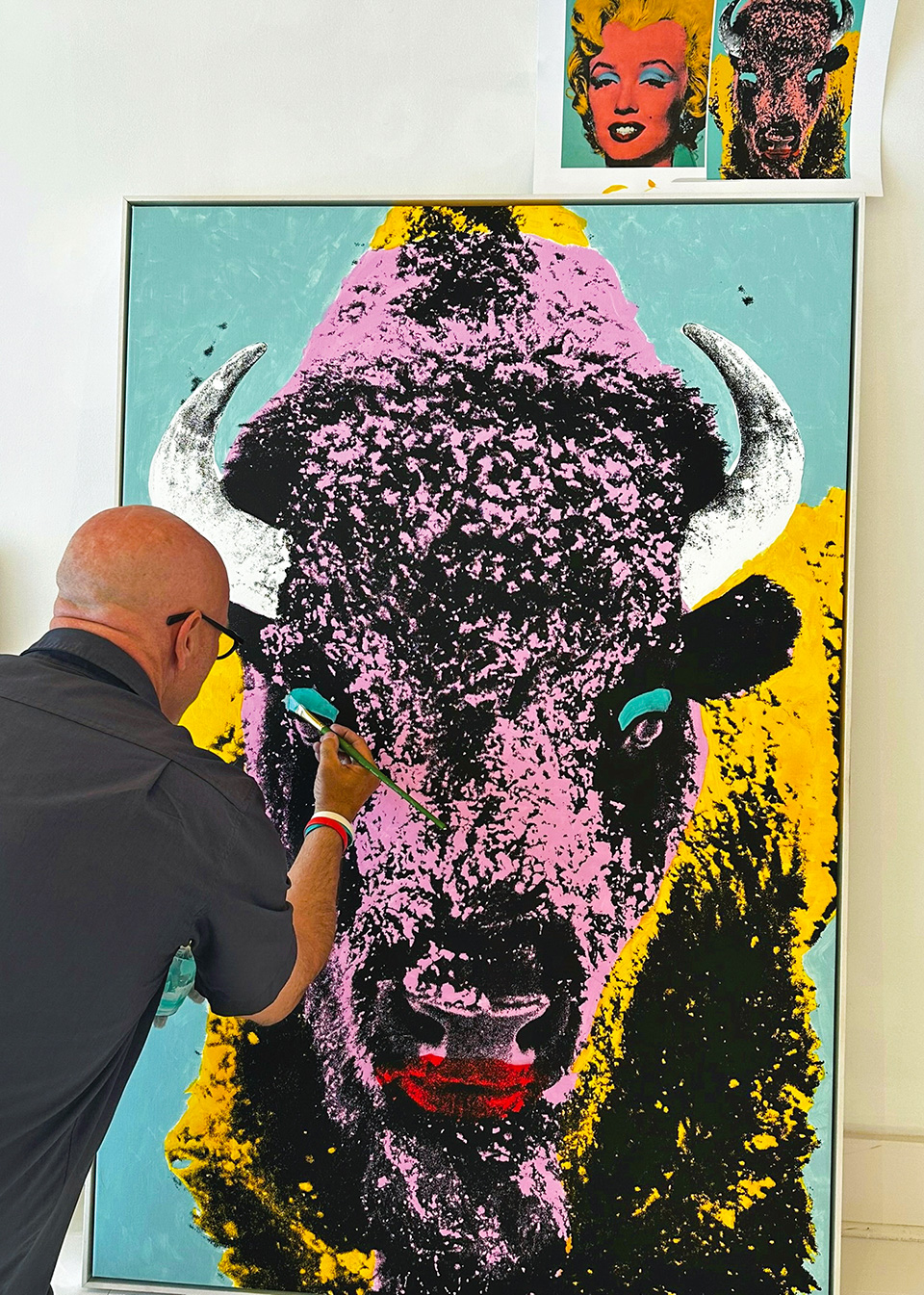
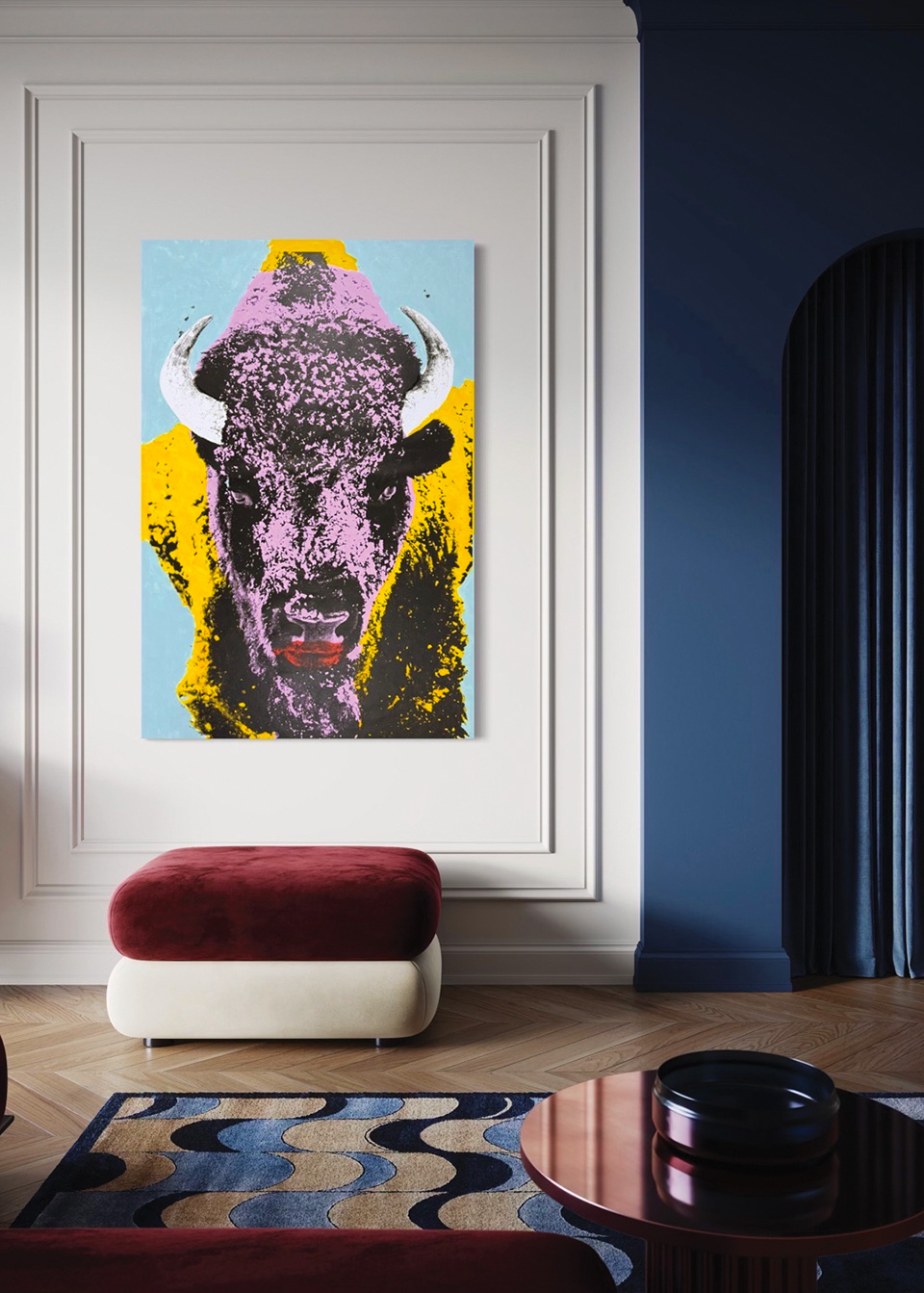
Nearby hangs the collection’s most unabashed nod to pop art and Andy Warhol: a single bison, head-on and monumental, cast in the palette of Warhol’s Marilyn Monroe portraits. Its face glows lavender against a ground of aqua and cadmium yellow, its white horns curving toward the edges of the canvas. Turquoise rings the eyes, and the muzzle is finished with a splash of lipstick red.
“It’s very bold, very in your face,” Noble says. He wasn’t certain how viewers would respond. “Creating that Monroe was risky.”
The Warhol reference is deliberate, but Noble draws an important distinction. Warhol frequently built his work from photographs made by other people, whereas Noble uses only his own, keeping control of the image from the moment he releases the shutter through the final layer applied to the canvas, so that, in his words, he “owns the whole thing.”
He still bristles at some of the freedoms Warhol took with other people’s images, but figures every artist borrows from someone. The more interesting question is where the artist takes what he has borrowed. In the broadest terms, Noble’s work moves between Warhol and Ansel Adams, pop art and photographic minimalism, before arriving somewhere less easily categorized.
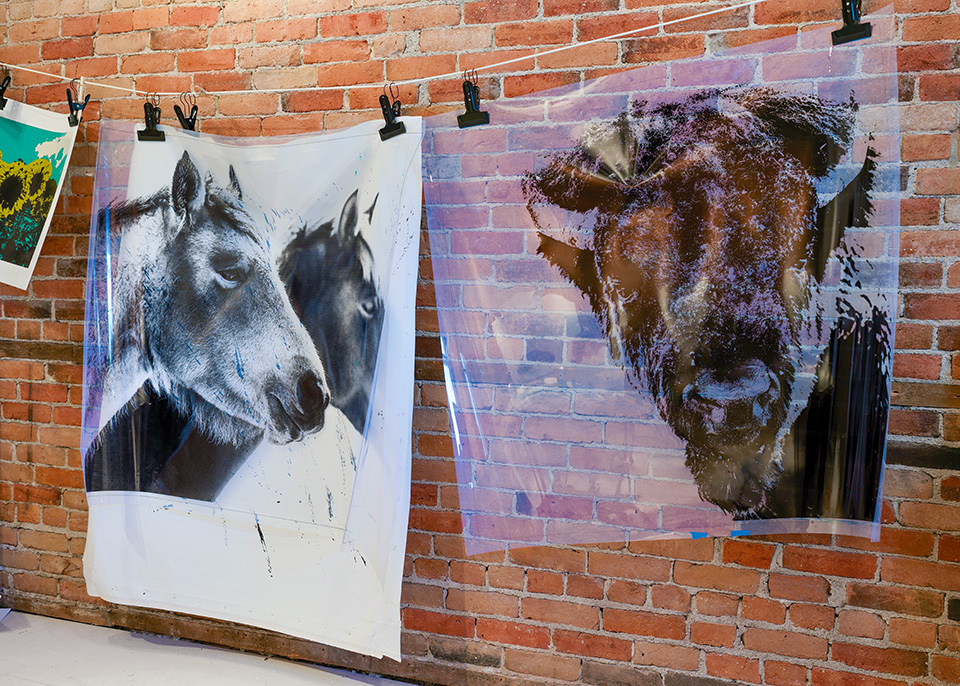
The crushed glass came a few years before the color. Noble had been looking for a way to introduce light without covering or overpowering the photograph and eventually developed a method of masking most of the adhesive, so the glass settled only in selected areas. On certain photographic prints, he went further, placing diamond chips into the work. He has since begun incorporating gold leaf into other pieces.
“People thought I was nuts,” he says. “I loved it.”
That glimmer has become a recognizable attribute running through his evolving work. “I like a little sparkle, a little glamour—something that makes it unique but doesn’t take too much away from the original piece,” he says. “There’s a theme happening there that is distinctly mine.”
Noble kept experimenting, and today he estimates that roughly half his work contains crushed glass. The new materials introduced a kind of uncertainty to the process that rarely accompanies his traditional photography. With black and white, Noble says, he knows when he has the shot. A hand-painted, silk-screened canvas can keep changing long after the shutter clicks, and each layer—glass, diamonds, gold leaf, paint, or ink—is another chance to succeed or fail.
“I PROBABLY HAVEN’T GONE FAR ENOUGH IF EVERYONE LOVES IT.”
There are more misses now, but also more ways for Noble to surprise himself.
His willingness to take those chances is also pushing his work beyond the familiar language of Western wildlife art. Noble is careful not to dismiss the artists working in that tradition, and he has no intention of giving up photography. Still, he has grown tired of seeing Yellowstone represented through the same dramatic landscapes, extraordinary animals, and immaculate natural detail.
At least for now, Noble is after something else, something stronger, brighter, and more provocative—something that doesn’t simply reproduce the experience of the wild.
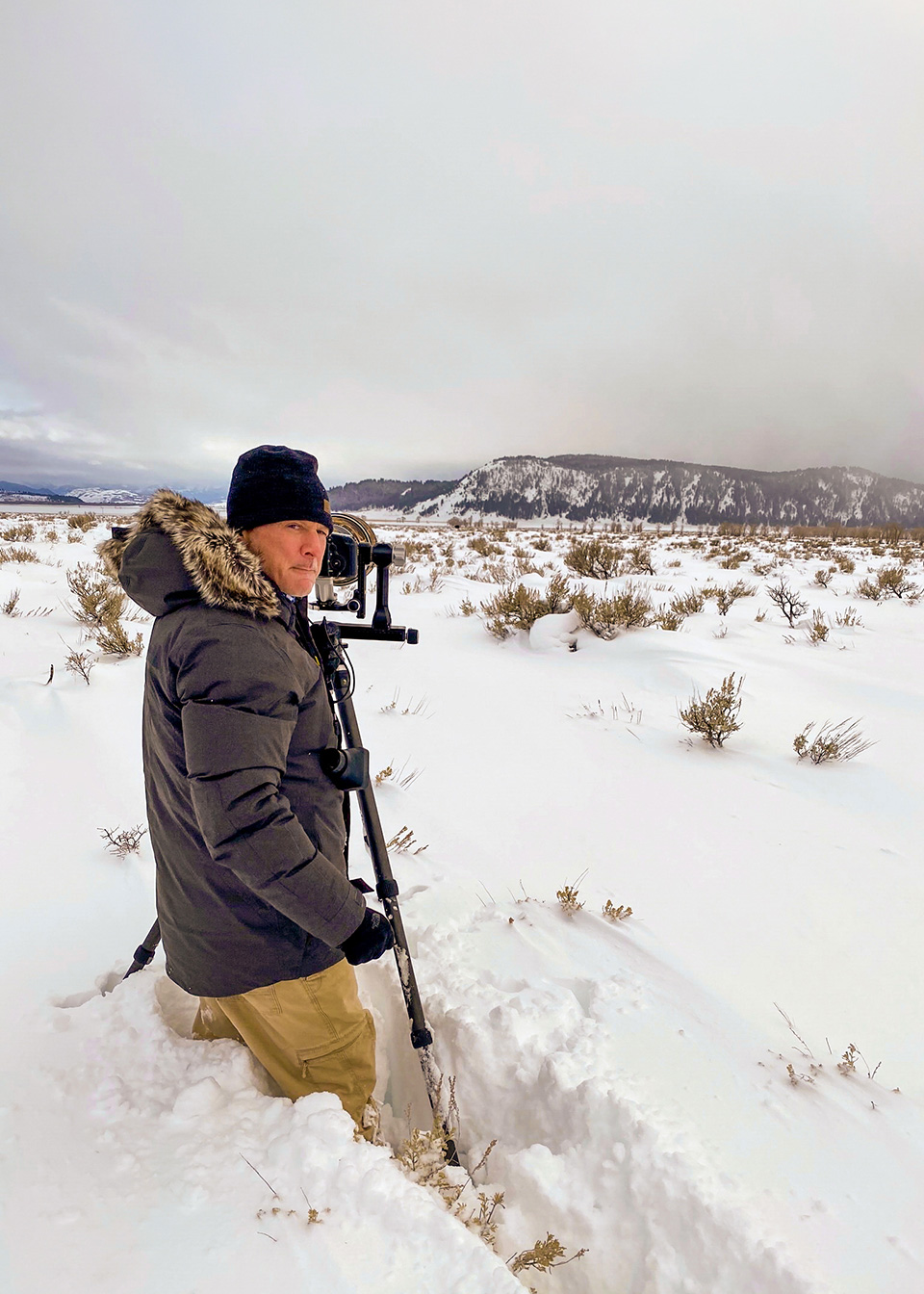
Finding that angle is difficult in a place where nearly every overlook and animal has already been photographed, even if Noble spends more than 75 days a year in Yellowstone. Most years, he walks away with just five wildlife pieces that he’s willing to sell. The scarcity is partly technical—light, weather, and wildlife rarely cooperate—but mostly it’s the standard he has set for himself.
One morning, as Noble drove through Yellowstone in his Sprinter van, he called his wife, asking for help, unsure what to photograph.
“Show me something I haven’t seen before,” she told him.
The instruction stopped him. What could that mean in one of the most photographed places on Earth? Eventually, he understood. He wasn’t looking to discover a new subject, but rather, he wanted to find a new way to show a familiar one.
There was the bison armored in subzero icicles, nearly disappearing into winter. There was the silhouette of a wolf near a grove of aspens. Even the barn on Mormon Row, among the most photographed buildings in the West, offered something unexpected when he abandoned the perspective everyone else had chosen.
“IT WAS NINE YEARS AGO. IT FEELS LIKE YESTERDAY.”
But it still wasn’t far enough for him. Instead, he went looking for the compliment that most echoes his wife’s instruction.
“I want someone to say, ‘Kevin, I’ve never seen anything like that before,’” he says. “That’s the highest compliment I can receive.”
Not everyone responds that way, or at least not positively. Some visitors embrace the bright color and visible experimentation; others dismiss the new work as too indebted to Warhol or too contemporary. Noble doesn’t mind. After years of making photographs with a beauty that was easier to recognize, he seems energized by work that requires a fight.
“I probably haven’t gone far enough if everyone loves it,” he says.
Noble has also watched his work win people over despite themselves. One woman entered the gallery intending to buy something else and walked out with a piece from his new collection instead. Her daughter tried to talk her out of it, and the more she pushed, the more her mother dug in. The woman couldn’t quite say why, but she knew she just loved the colors and the way the piece made her feel.
Before the color came, there were six or seven years of black and white, along with a great deal of solitude. The photographs Noble made during those years established him: images distilled into light, shadow, and tonal contrast with animals emerging from the snow and shadow as though they had been there long before the photographer arrived.
Those years were also bound to loss, something Noble speaks more carefully about. After his son, Tanner, died nine years ago due to a heart issue while mountain biking in Big Sky, Noble found himself returning to Yellowstone again and again. It gave him somewhere to go and a discipline that demanded his attention. He had roads to follow, weather to watch, light that changed by the minute, and animals that appeared when and where they felt like it.
“Photography was something that could consume my time,” he says, “which I desperately wanted.”
“YOU’RE SEEING IN COLOR NOW.”
For several years, Yellowstone gave him a place to go and a reason to keep looking outward. He spent as many as 12 hours alone in his Sprinter van, watching the weather and waiting for light that might never arrive. The concentration was intentional, because left unattended, his thoughts could wander.
“I try hard to stay focused on what’s outside the car,” he says. “You’re constantly looking for something and framing it in your mind. It’s exhausting.”
Along the way, the wolves have stayed with him. When Noble remembers that February morning, he doesn’t see the animals as predators but as a family hemmed in by people who happened to be in their way. Each member of the pack had a role, and the black wolf’s role was to ensure that no one was left behind.
It would be easy to arrange Noble’s art into a clean emotional progression. First darkness, then color; first grief, then something else. But Noble will never make that claim, nor is it true.
“It was nine years ago,” he says. “It feels like yesterday.”
Still, when a friend saw his new work, she almost began to cry.
“You’re seeing in color now,” she told him.
Noble understood that she saw the possibility that he had passed through some measure of grief and entered a stage in which color had returned to his life.
“A NEW DIRECTION ALWAYS COMES WITH RISK, SO LAST YEAR, I FINALLY ASKED MYSELF: WHY NOT?”
“Maybe there’s something to that,” he says. Then he retreats from the thought almost as quickly as he allows it. “I try not to think too hard about that.”
His new work also hasn’t replaced the black and white, and Noble says it never will. “Defining an artist by one thing is too restrictive,” he says. “I’ll always print black-and-white photographs, but right now, pop art has been exciting.”
In Studio Noble, both remain. Bison still walk down roads in winter, a few feet from the hand-painted canvases and coarse silkscreen patterns, and the crushed glass of Noble’s recent collections. The gallery doesn’t show grief giving way neatly to joy. It shows an artist making room for more of himself to share.
Noble is, by his own cheerful admission, not a five-year-plan man, but where he’s headed is coming into view. He bought his Main Street building three years ago and works across all three floors. Renovations scheduled to begin this winter will add an open staircase on the ground floor and create room for events and visiting artists. Below the gallery, his dedicated silkscreen studio is coming together.
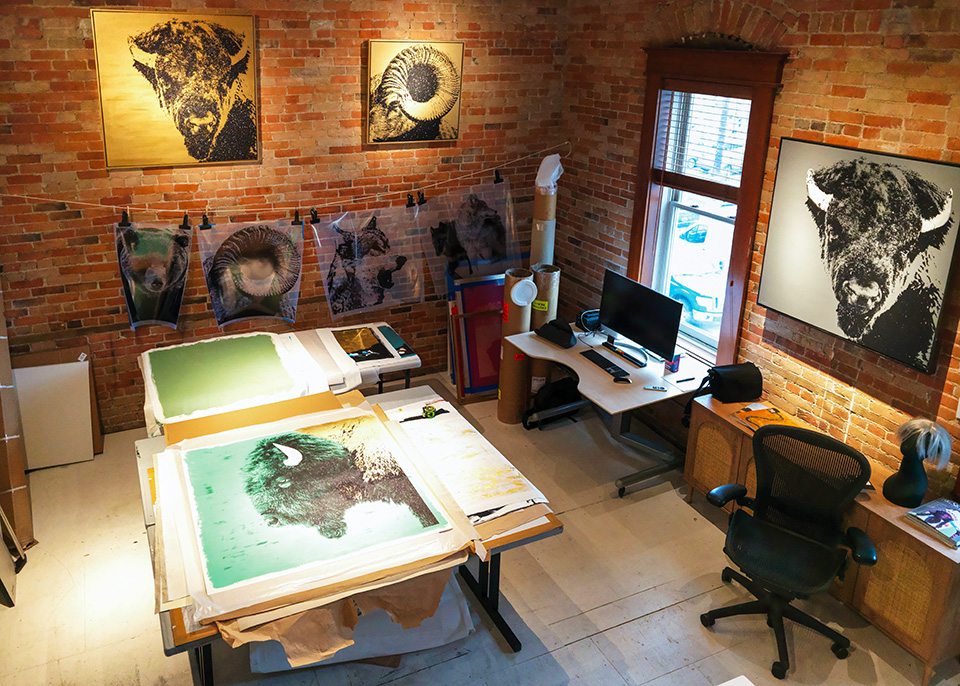
A book, titled Wonderous: The Beauty and Magic of Yellowstone, is also in the works, collecting the Yellowstone photography that shaped his career and making the images available to people without the wall space or budget for an original.
“A book can fit in any house,” he says, “and pretty much any budget.”
For all the new equipment, color, and experimentation, the feeling Noble is chasing goes back to his high school darkroom. He remembers watching his first photograph—a brick wall—emerge in a tray of developer. The subject could hardly have been more ordinary, but seeing the image slowly appear made the familiar wall feel as though it had been waiting for him to discover something, as if “I had created something new,” he says.
Six years into selling photographs, 40 years into making them, and 60 years into a life that has refused to move in a straight line, Noble is not abandoning the photographer he was; he’s simply discovering how much more than a photographer he might still become.
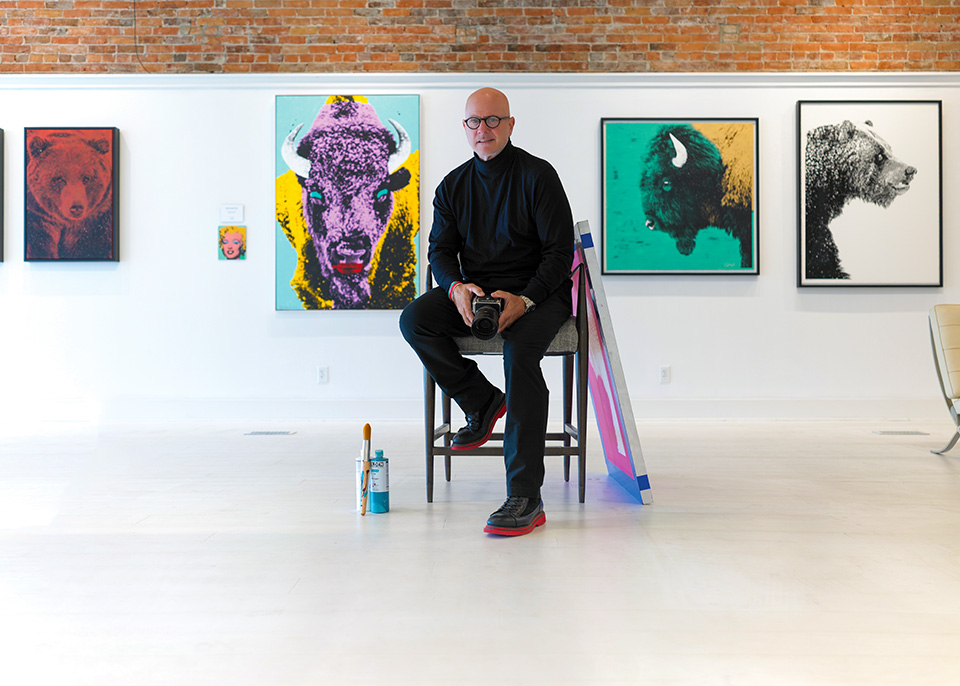
As we sit in the back of the gallery, people pass the open door. One couple stops in front of the massive bison, staring at its lavender face, turquoise-ringed eyes, and mouth slashed red.
Yellowstone still lines the walls of Studio Noble, but its familiar animals now rise through painted color, dissolve into ink patterns, and flash beneath fragments of glass and diamonds.
Before I leave, he turns the question over once more.
“Why not?”
whj COVER FEATURE
