
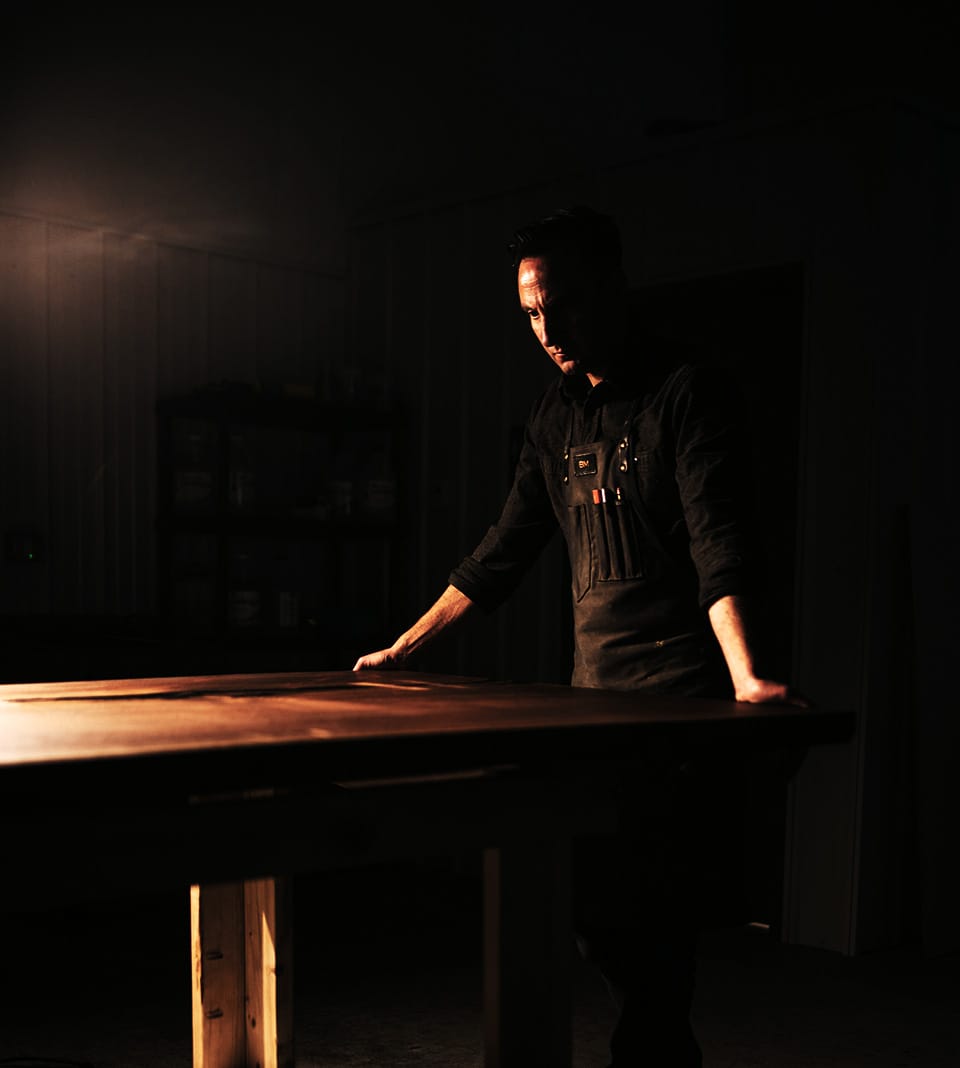
by Halina Loft
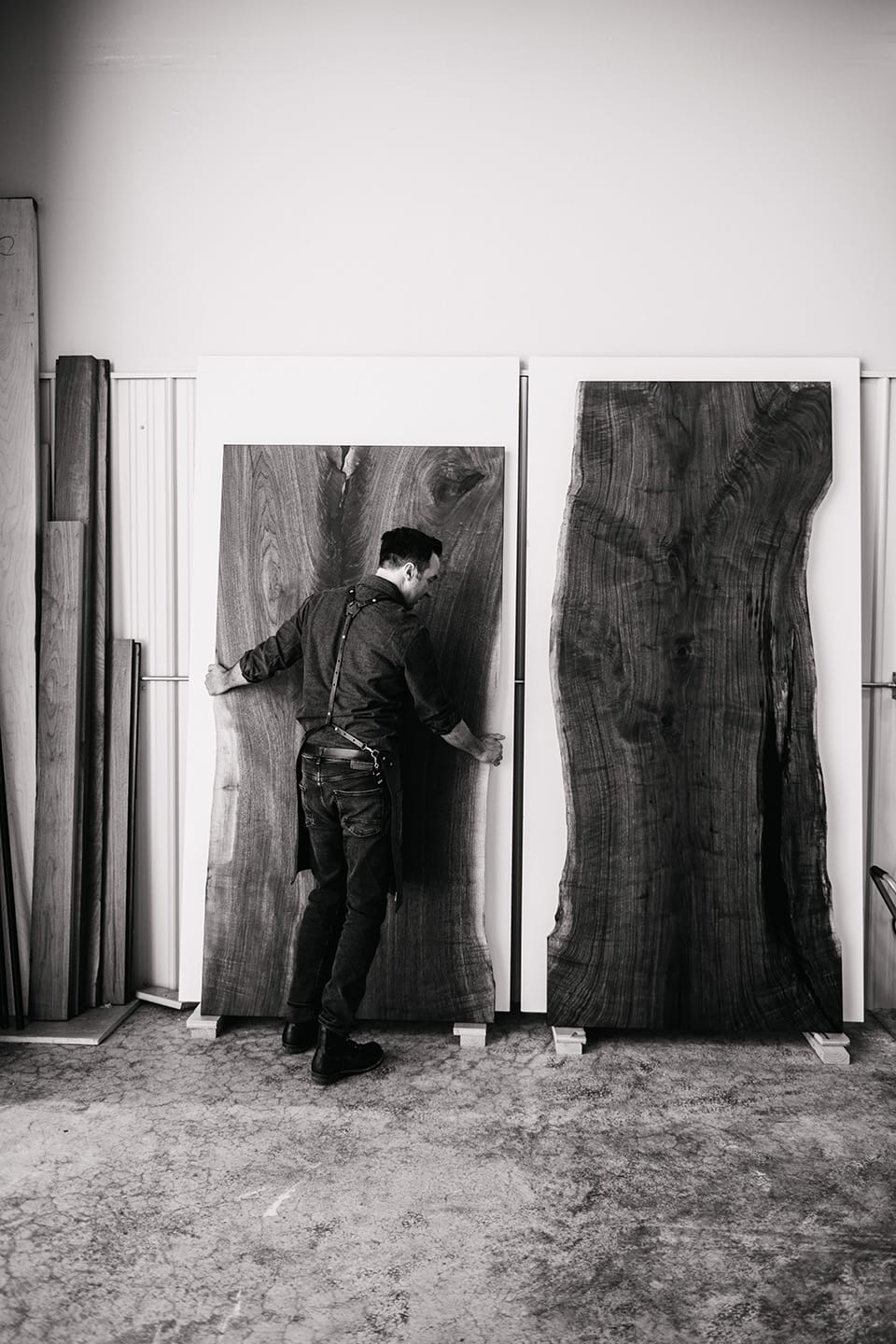
Midway through our interview, Tyler Bradford runs out to his car to grab a sample of wood. “It will be worth it,” he promises. He returns with a beautiful cut of repurposed white oak, sourced from Michigan. Turning the piece on its side, he shows off the rich thread of rings marking its edge. “Look at that,” he says, with a touch of reverence. “Decades this tree stood, growing. It saw things.” The sample’s wide surface is rough-hewn, grooved with divots and marks left by a saw. “You think it would be almost splintery, just by looking at it,” Bradford says. But it’s not. Running a hand along the surface tells you the wood is level and smooth, even soft. “You can feel that this piece of wood has a spirit,” says Bradford, “it has lived a life.”
Wood holds onto memories. Rings track years of growth, each new layer a witness to time passing in a forest. Its grain tells the story of the conditions it endured — the seasons of drought, the years of abundance, the char of a chance lightning strike. As a tree, it becomes an artifact of its lifetime. As a material in the hands of a craftsman, the wood can find new purpose, add new memories alongside the old. Nowhere is this more evident than in a table.
“Look at that. Decades this tree stood, growing. It saw things. You can feel that this piece of wood has a spirit. It has lived a life.”
–Tyler Bradford
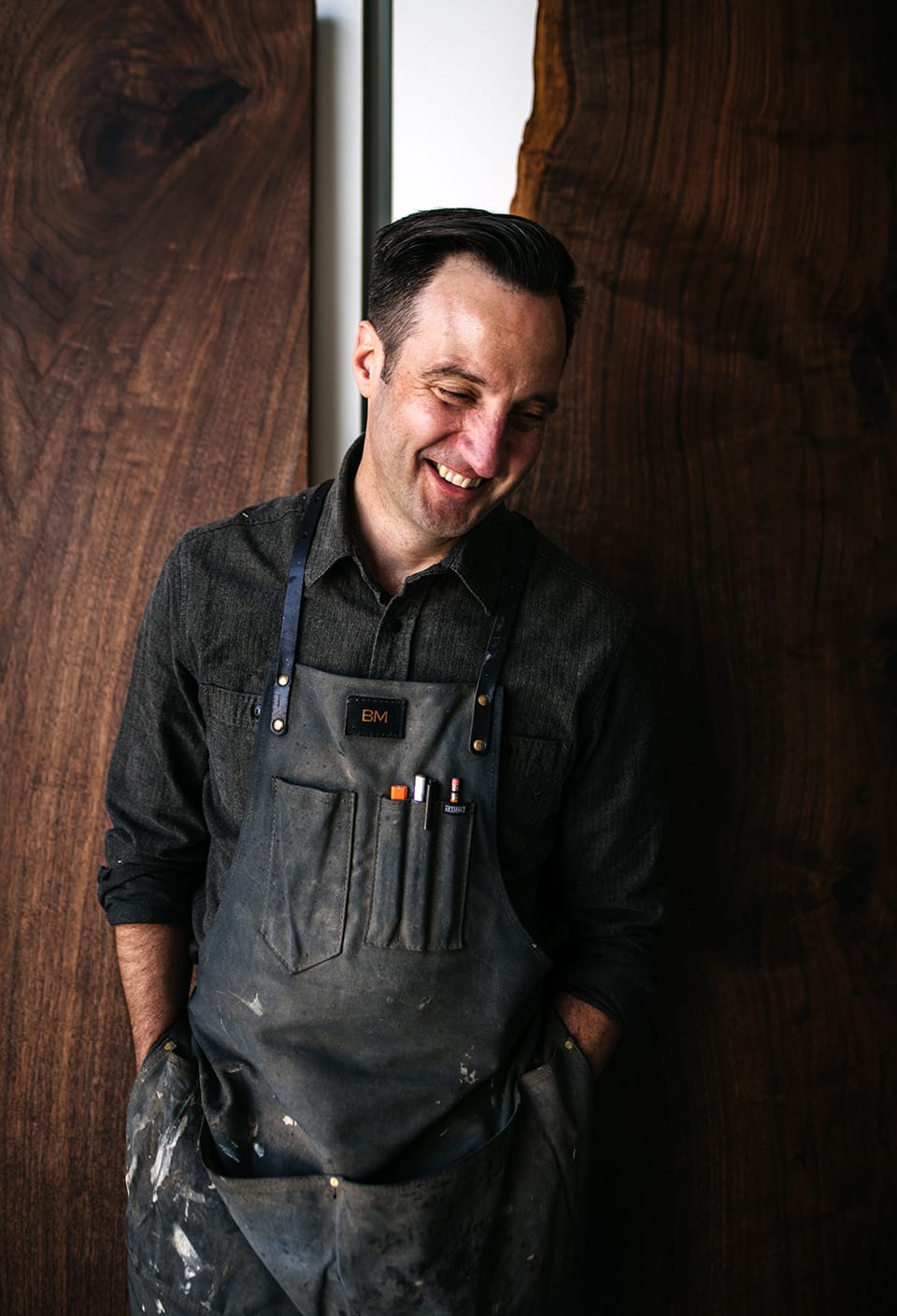

Bradford understands this intimately. Based in Billings, Montana, Bradford designs and builds custom furniture through his business, Bradford Mackay. And while his scope includes a wide range of furniture, tables are his specialty. “I like the idea of building something that brings people together,” Bradford explains. “You’re creating a focal point for something that people don’t do that much anymore: sit together without phones, take part in each other’s company.”
Bradford found woodworking by chance. Originally from Minnesota, he moved to San Francisco in the late ‘90s to study industrial design. A few years into his studies, a shop mate asked for help on a large furniture commission. Bradford agreed, trading labor for experience. Pretty quickly, the material drew him in. “I liked that wood was forgiving,” he says. “It’s organic. It kind of tells you what it wants to do.” He switched majors to furniture design.
For his capstone project, Bradford designed furniture for a hypothetical sushi restaurant. His instructor suggested pitching it to a real one nearby. “I remember asking, ‘Why would I do that?’ And he just shrugged and said, ‘They might buy it.’” They did. Suddenly, Bradford had his first commission: 22 tables. With no shop of his own, he worked out of his dad’s garage and figured out the rest as he went. The experience sparked a lasting passion for designing hospitality spaces.
In the years that followed, Bradford honed his craft, refining his understanding of scale, material, and structure. He learned how to source the best wood, though the whole experience was one of trial and error. “I definitely got ripped off a few times, in the beginning,” says Bradford, “but it taught me how to spot the best wood, so I’m grateful.” Bradford also gained expertise as an interior designer, working for about a decade in the profession. “Having a deeper knowledge of the interior design process has definitely given me an advantage — I know the industry; I understand the client relationship and the process.”
Bradford and his wife, also a working artist, made the move to Montana during the pandemic. They decamped to Red Lodge, staying in a house Bradford’s mother left to him and his siblings. “And all of a sudden it was beautiful and snowy, and everyone was nice to you,” says Bradford. It took them two weeks of Montana living to seal the deal. “We drove back over the Sierras, packed our car up, broke our lease, and didn’t look back.”
“I like the idea of building something that brings people together. You’re creating a focal point for something that people don’t do that much anymore: sit together without phones, take part in each other’s company.”
–Tyler Bradford
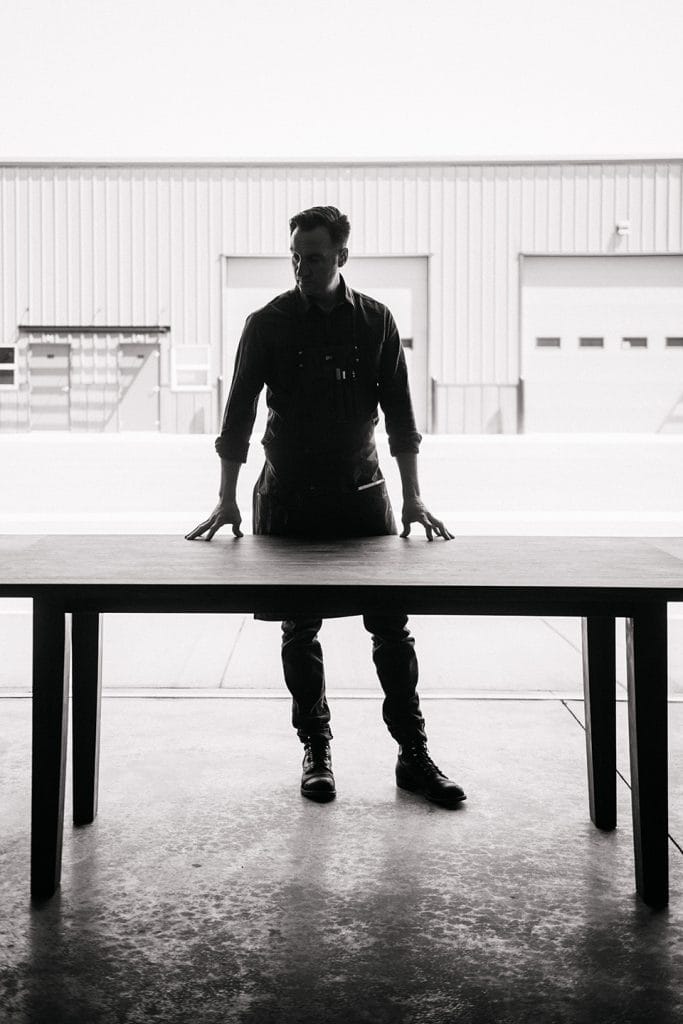
Today they call Billings home, though Bradford sources his materials from across the continent. Vancouver, Oregon, Washington, Montana, Minnesota, Michigan, Mexico — “I’m always on the lookout for unique pieces with history,” Bradford explains. “I like when the wood has a story to tell.”
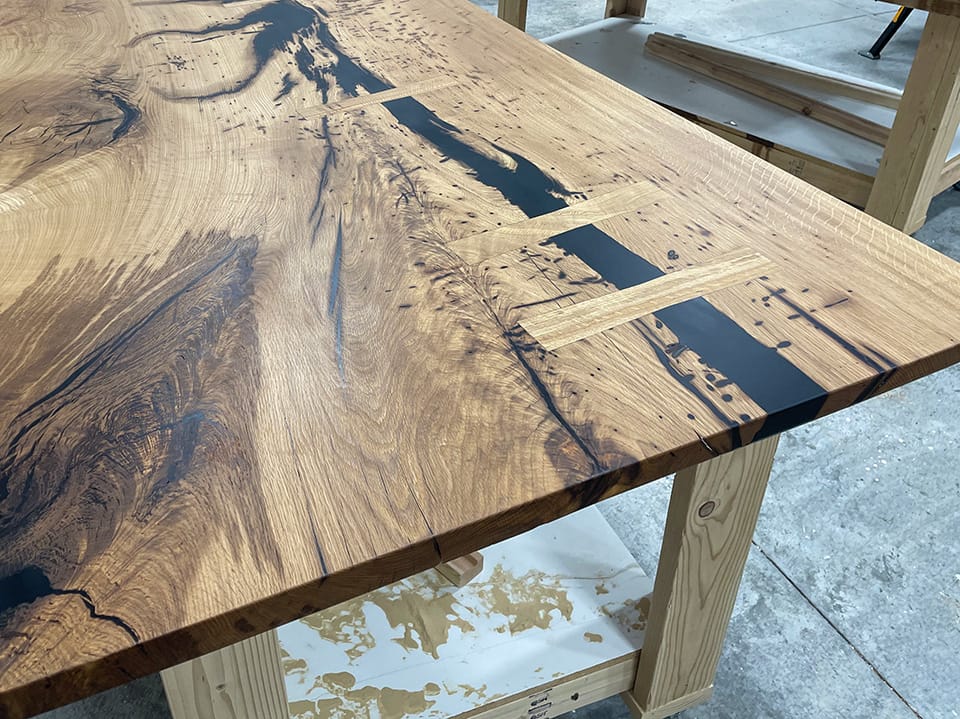
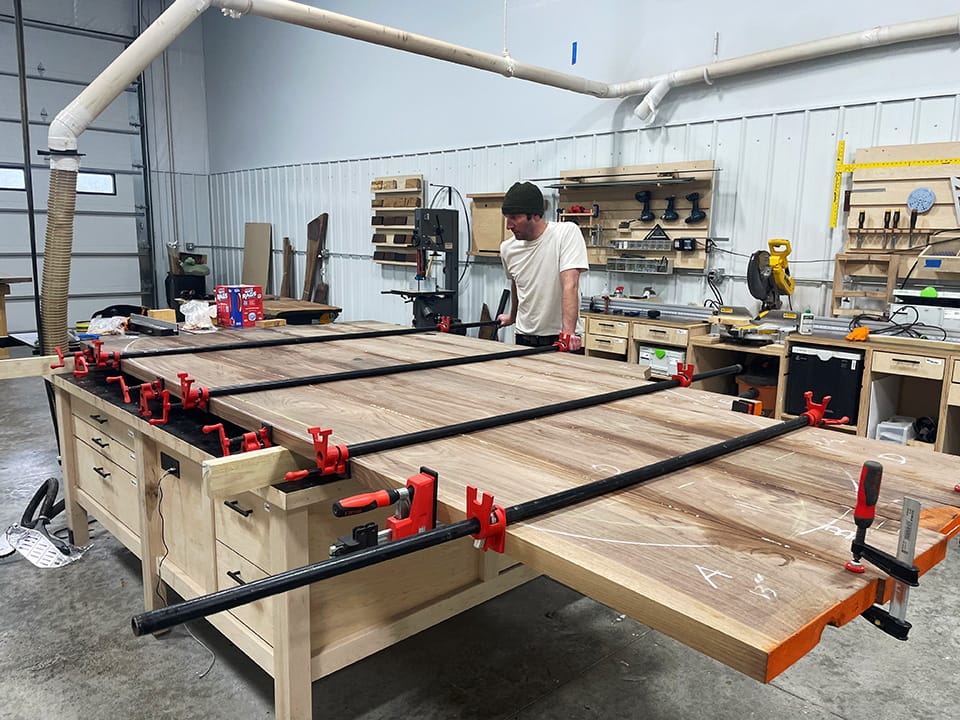
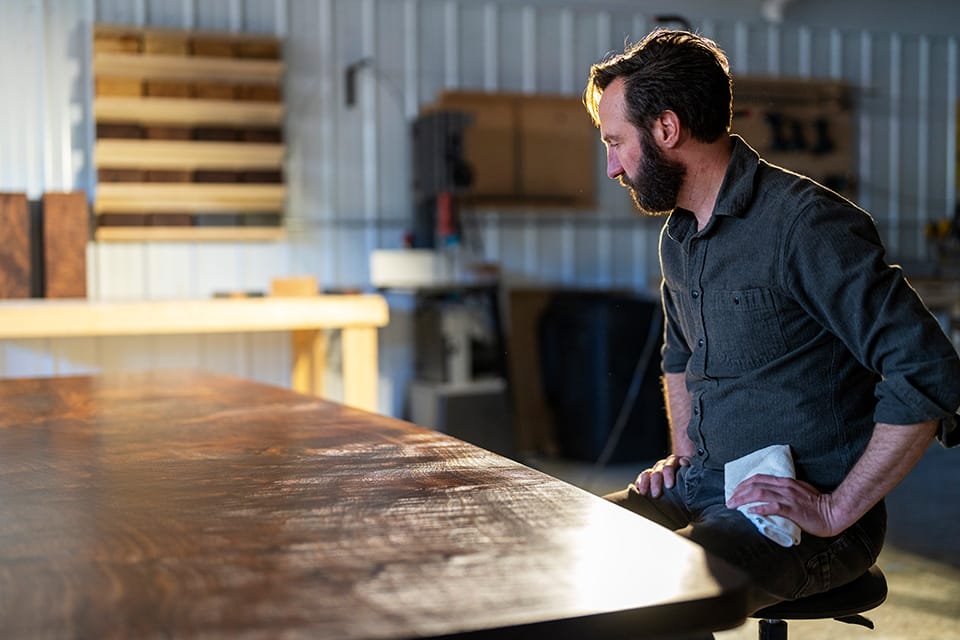
There is no set style that carries through Bradford’s works. Rather, he operates by ethos. “I find a lot of beauty in natural decay. There’s gold in trying to figure out how to repurpose old wood from a Montana barn, working to elevate it and really celebrate its strength and beauty,” says Bradford. “That look, that feel, it just can’t be faked.”
In this age of mass production, the value of custom furniture has never been more apparent. And in the world of custom furniture designs, Bradford’s tables are singular. Made from carefully selected samples of repurposed wood, designed to meet a client’s exact needs, each piece is a work of art — an immediate heirloom. It’s furniture that will act as a quiet force in a room without dominating the space, inviting visitors to take a seat.
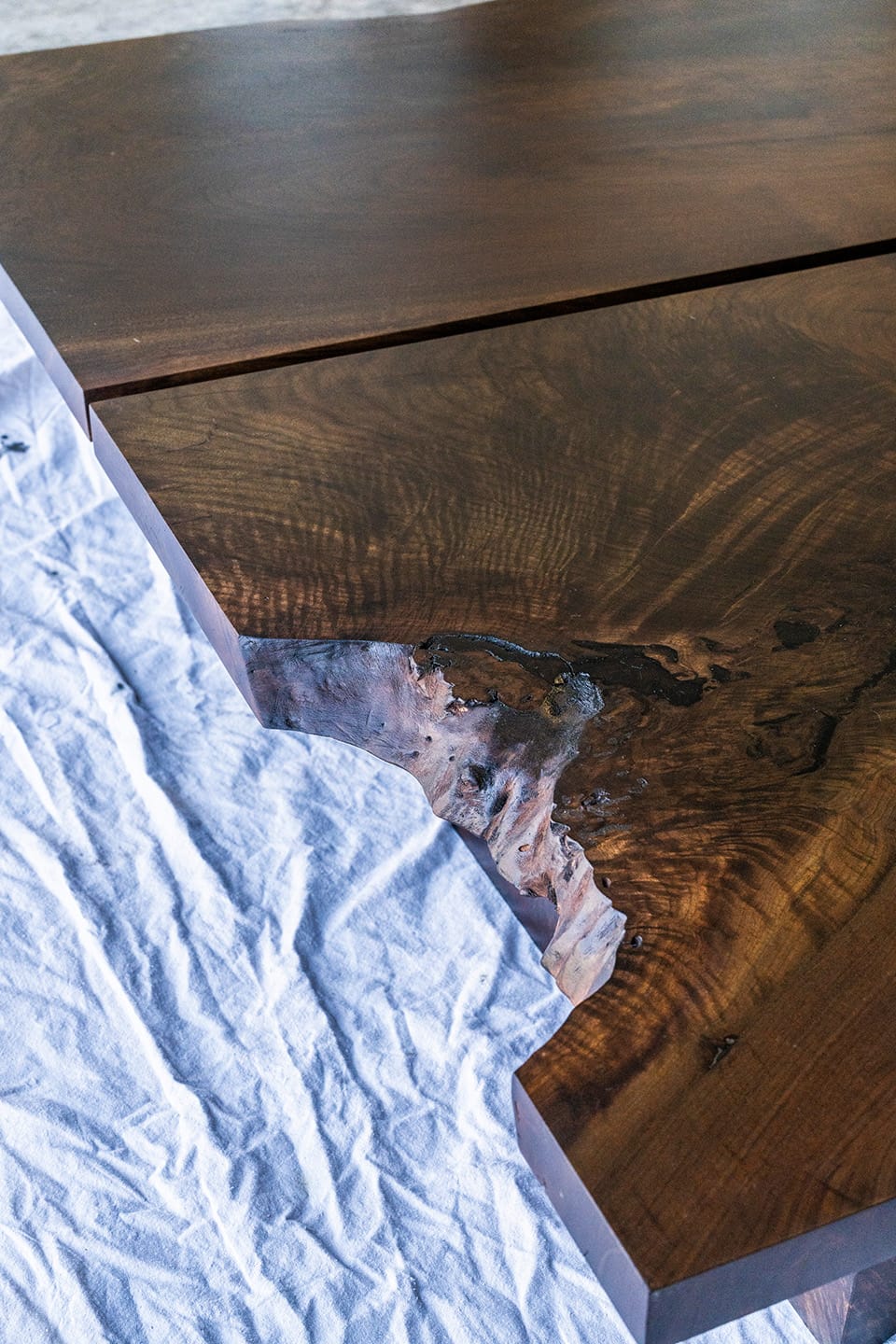
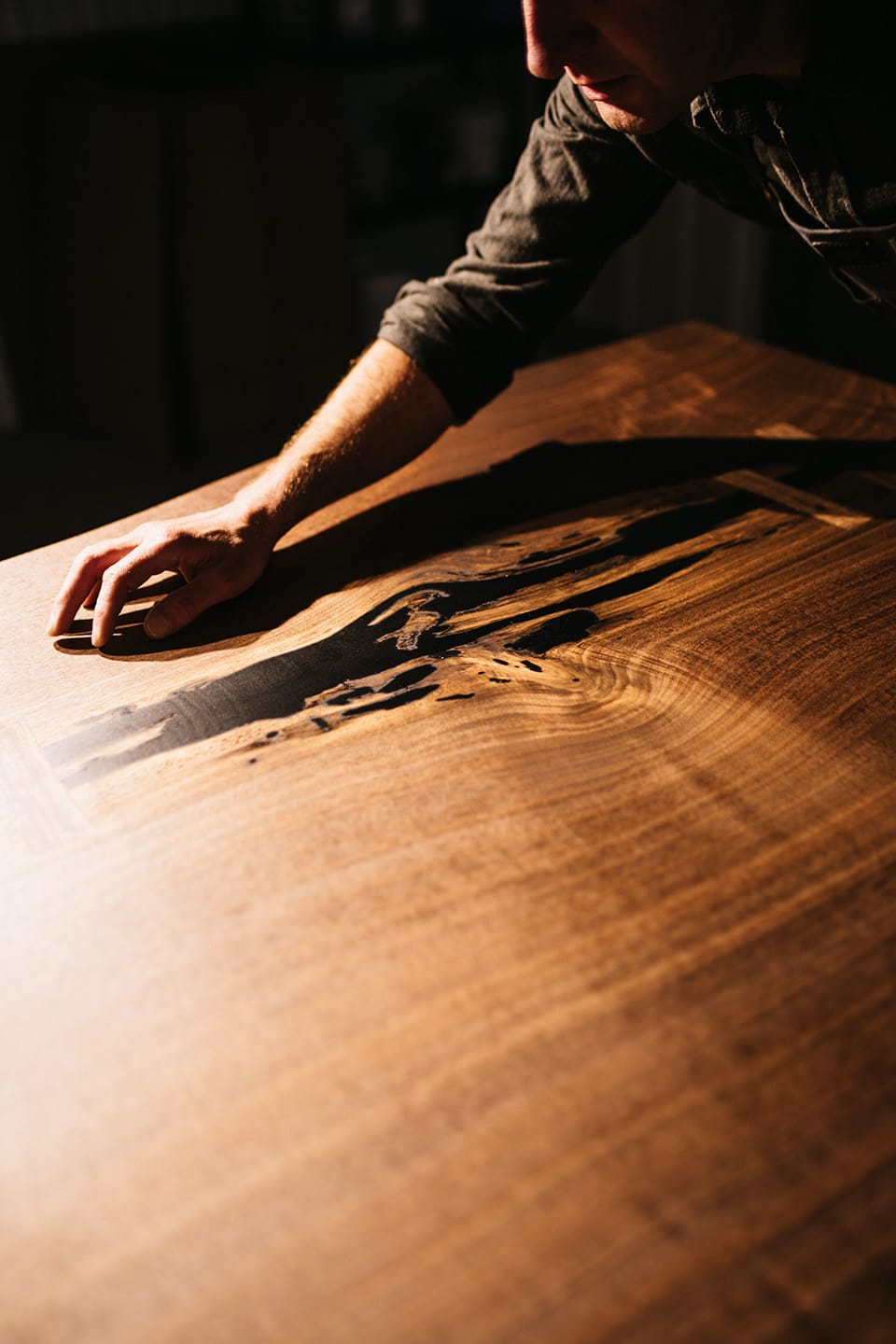
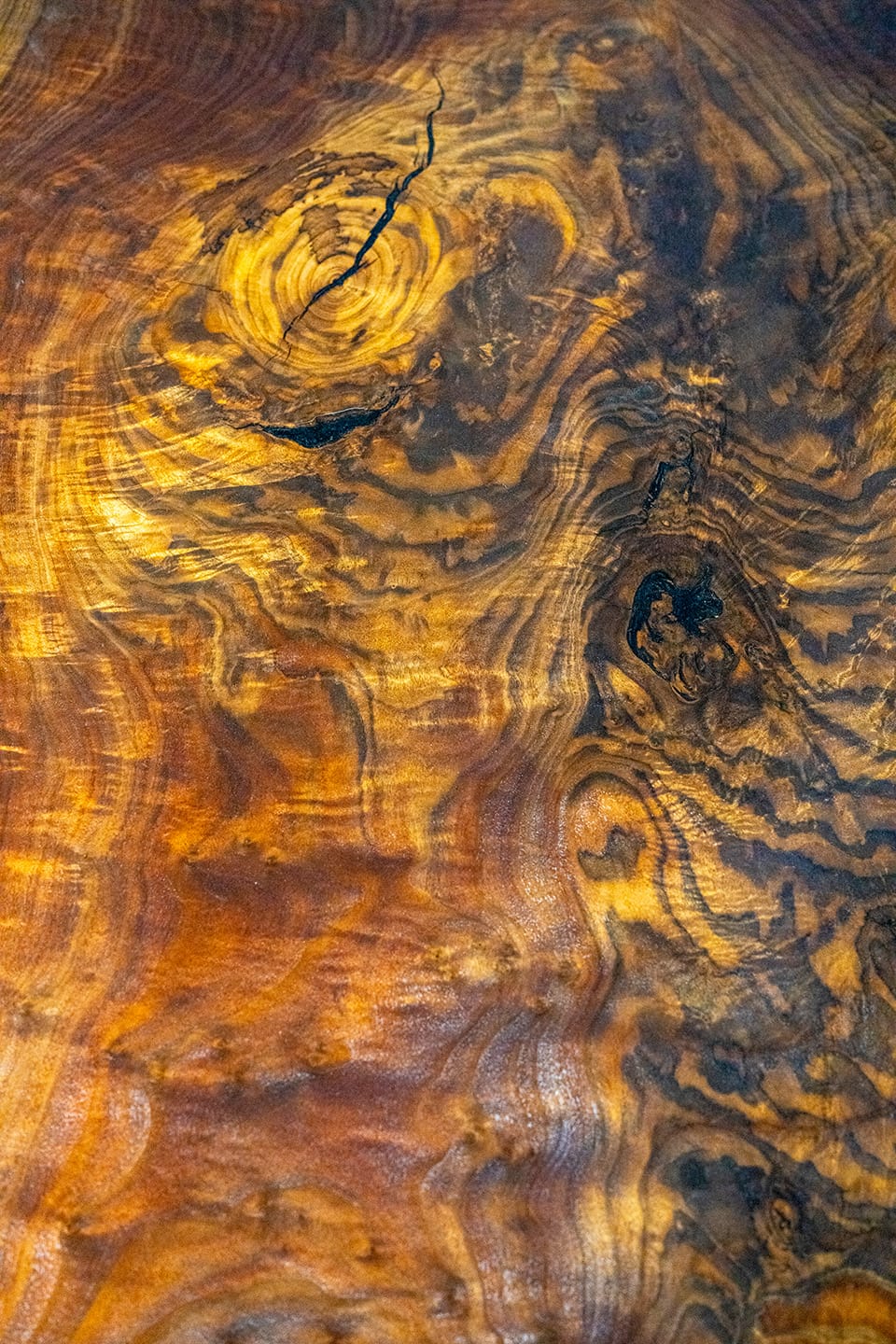
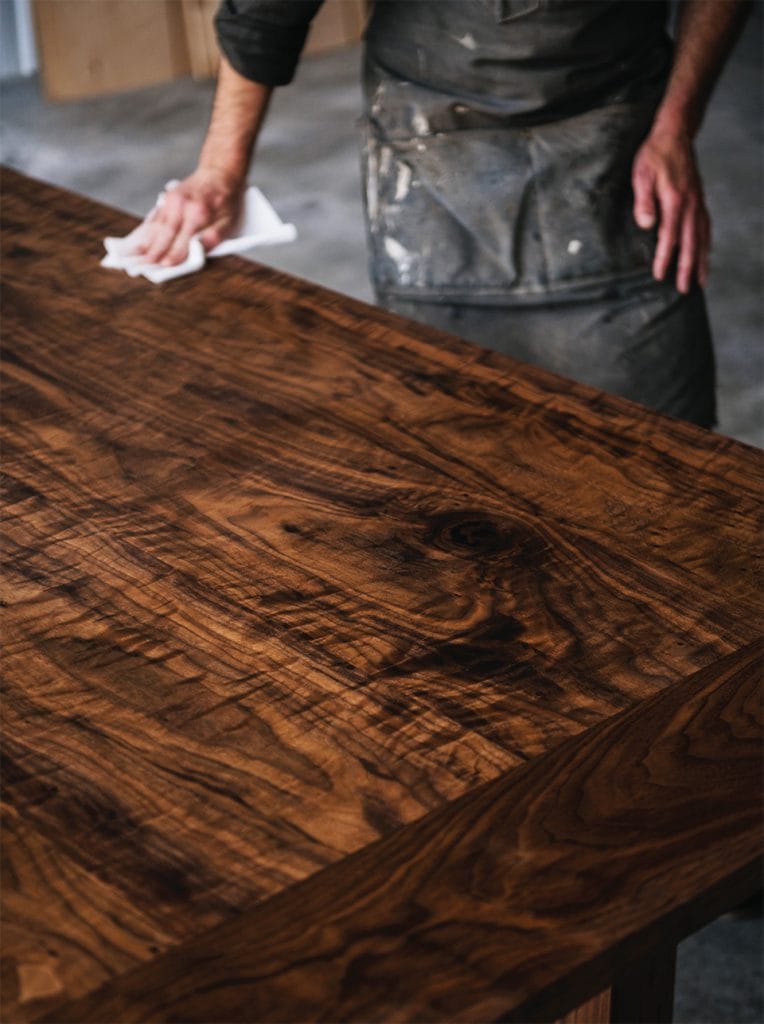
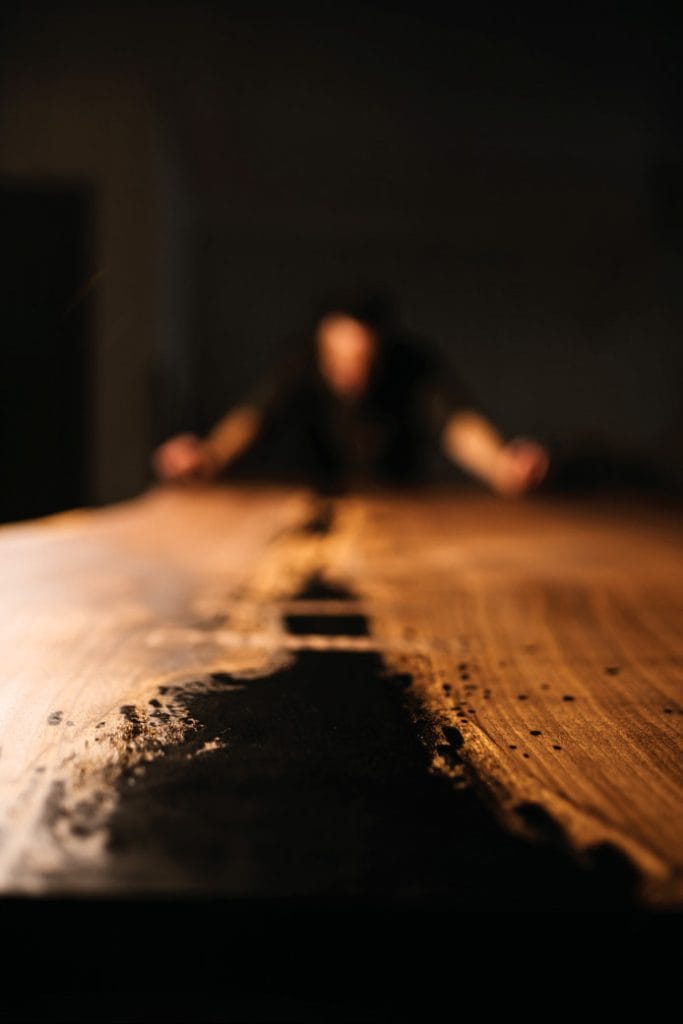
Bradford’s approach is exemplified in a recently finished piece, an outsized dining table. Built from a single, massive slab of reclaimed wood, its surface is a mess of intricate knots and rings. Bradford finished the piece with a deep, mahogany stain that enhances the wood’s natural character, drawing out its texture and richness. “I mean, this wood has to be haunted,” Bradford jokes. “You can tell it’s full of spirits.” He’s not wrong. The piece has a presence, a history you can feel just by running a hand across it. Though rectangular in shape, the edges and corners are gently rounded, softening the form just enough to keep it from feeling too rigid.
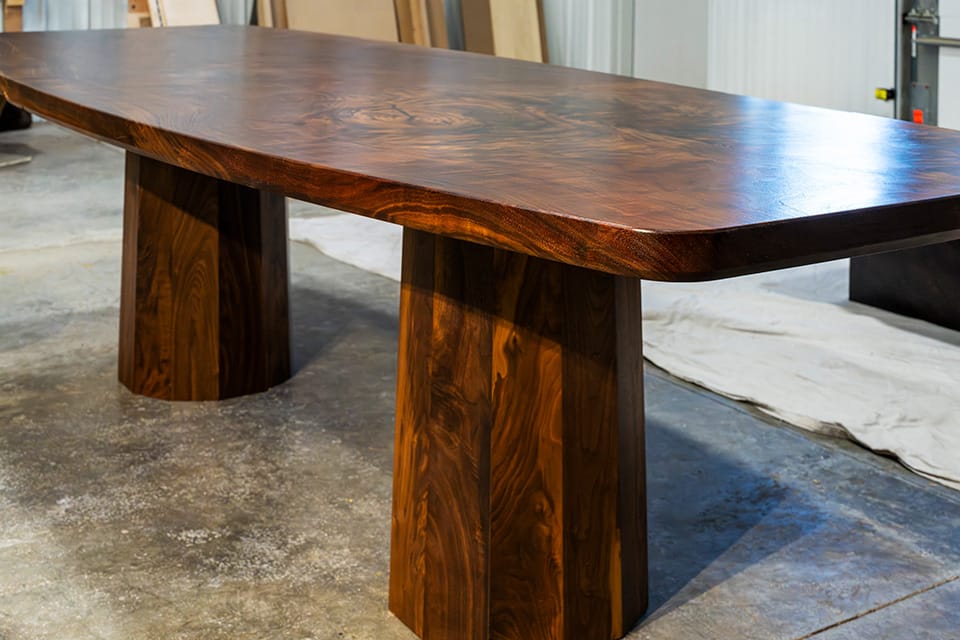
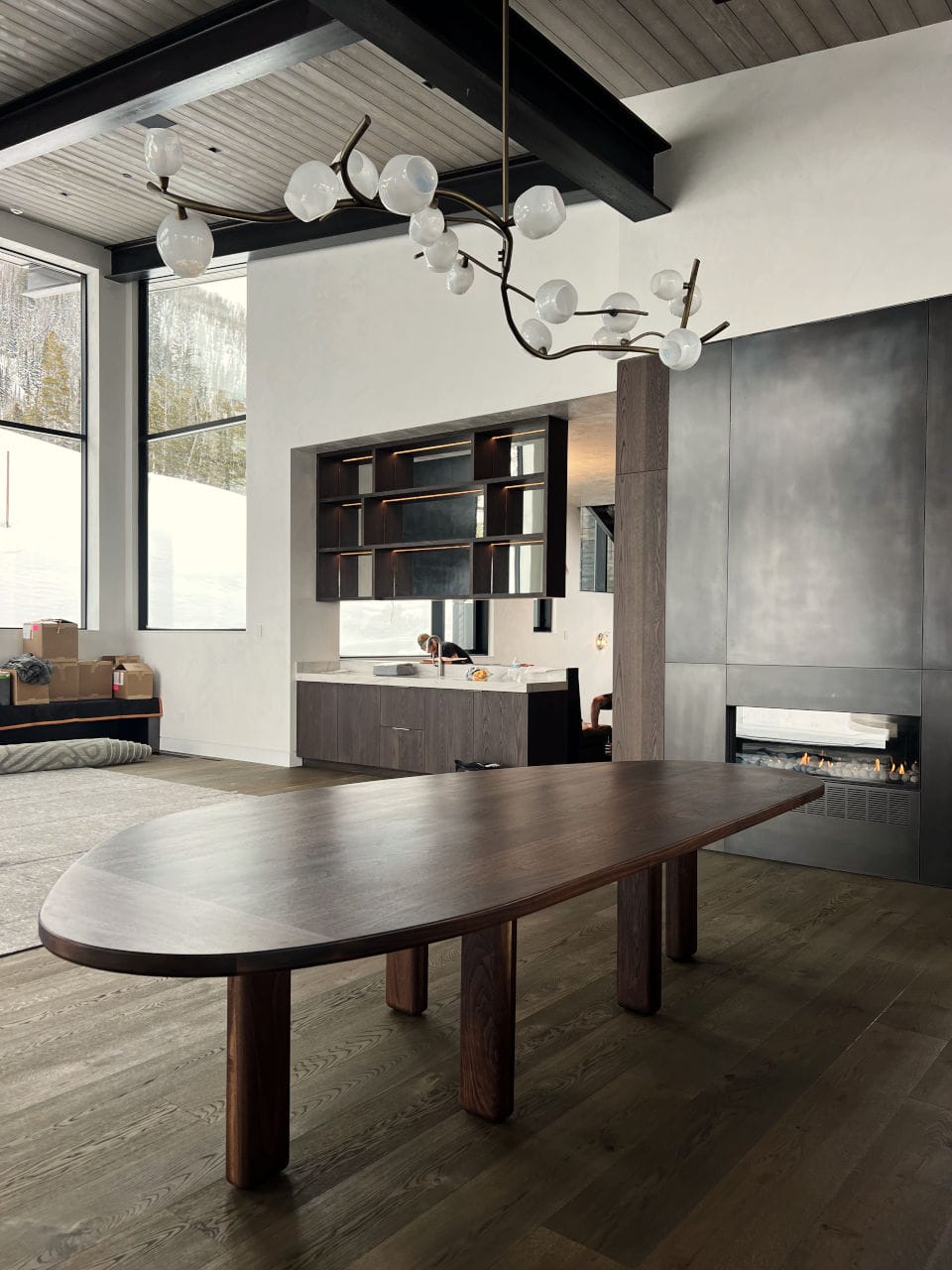
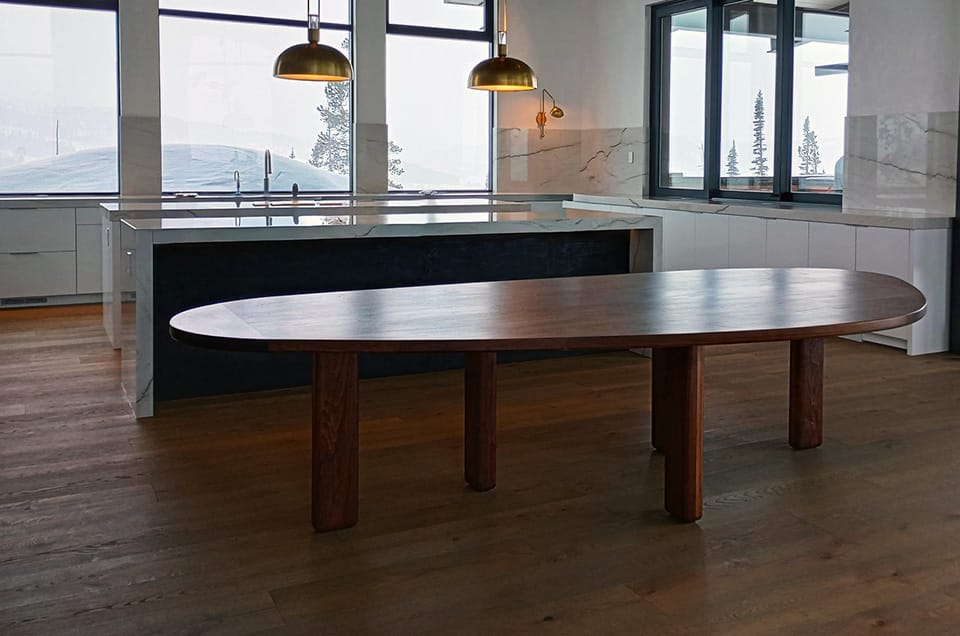
The base is just as striking. Two thick, cylindrical wood forms — each about the width of a tree trunk — anchor the table with weight and substance. Faceted edges, an unexpected detail, give each form a modern, sculptural quality. The volume of the base reinforces the touch of brutalism that characterizes the table’s design. It’s a piece of furniture that will stand the test of time.
“Having a deeper knowledge of the interior design process has definitely given me an advantage — I know the industry; I understand the client relationship and the process.”
–Tyler Bradford
“The wood that I used in this table, it’s probably hundreds of years old,” says Bradford. “But it’s just as strong as ever.”
whj PROFILE
