
by Michele Corriel
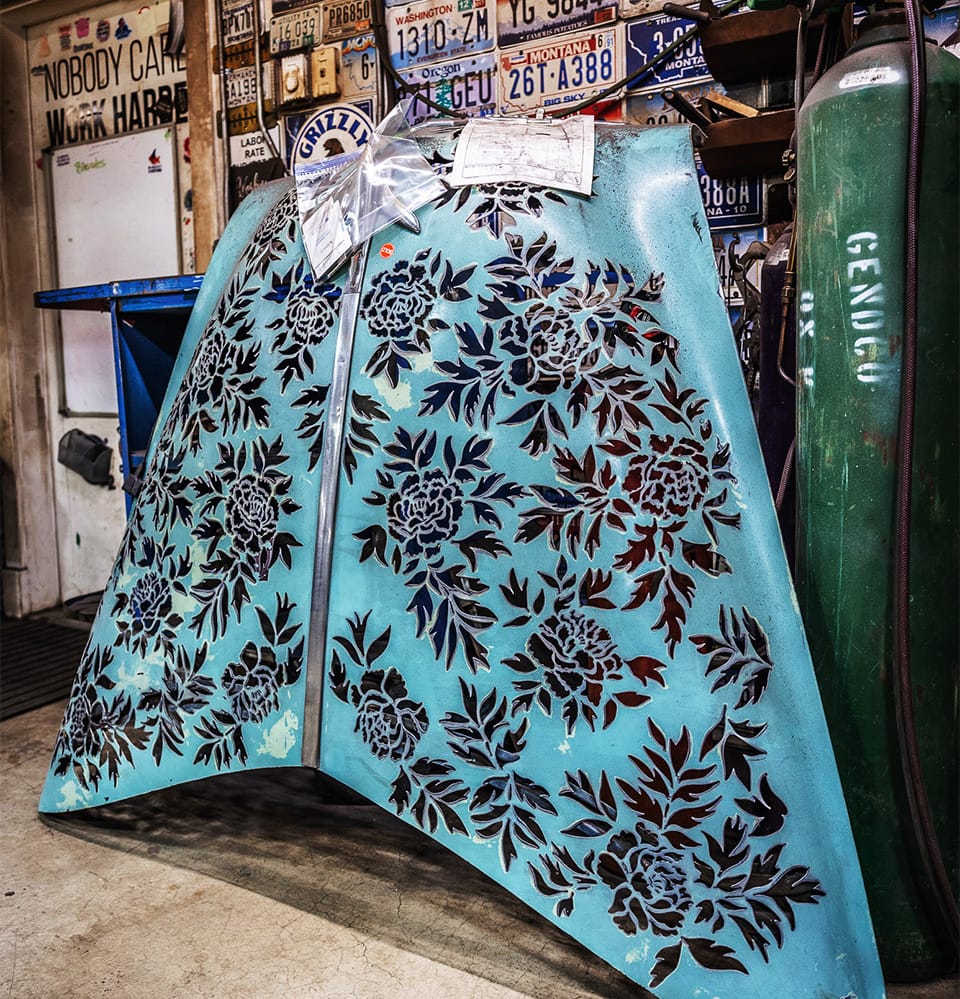
Rust and steel, old trucks, and cab overs: this is how Brenda Stredwick channels her artistic sense of design. Not everyone can make something exquisite from yesteryear’s discards. It takes a practiced eye and the talent (and courage) to create an intricate piece of art from an old wood saw.
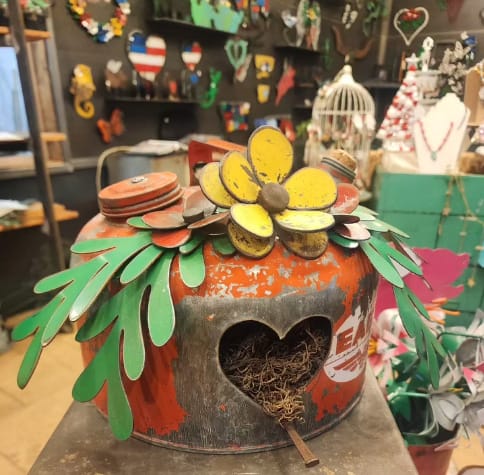
The front of Iron Maiden Welding is a retail space with all kinds of metal welded objects, from butterflies to the front end of an International Harvester reimaged as a fireplace grate. But in the back is where the sparks fly – literally.
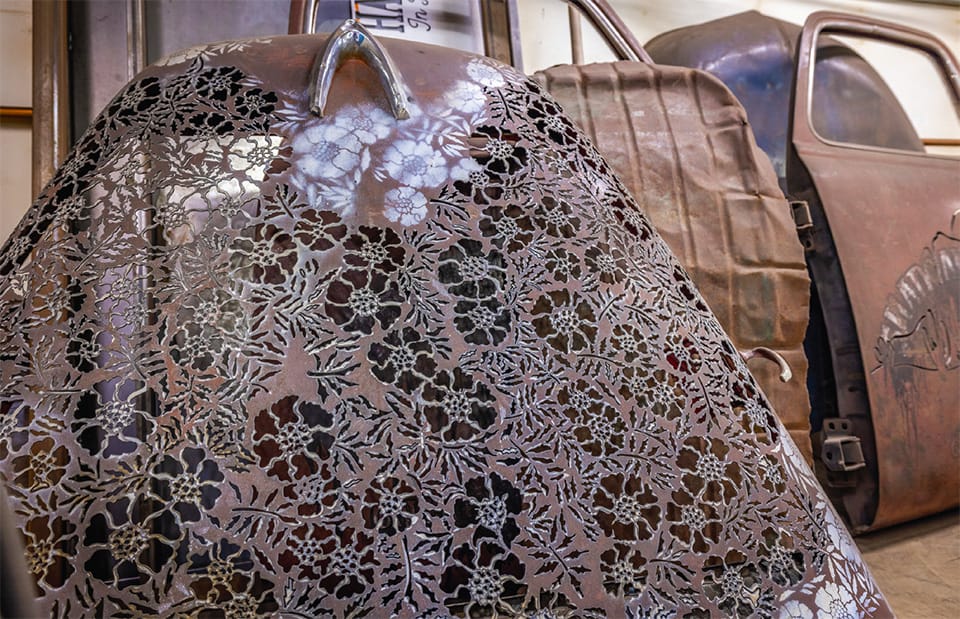
That’s where Brenda Stredwick hammers, plasma cuts, and spot welds. Where she lets her imagination loose.
All along the walls are license plates, but in one corner is her treasure: piles of corroded and rusted steel.
“Every day there are piles of metal waiting for me in front of my shop,” Stredwick says. “People know I’ll take their scraps. I do auctions, yard sales, thrift stores, and even some antique stores looking for these gems.” She motions to the odd shapes in the corner stacked high with used and aged metal waiting on the side of the shop. “Now everybody is a picker,” she says. “I used to get those old steel milk cans for $25 now they’re $90.”
She points out a Ford diesel cab-over, soon to be a DJ booth for a client in Big Sky.
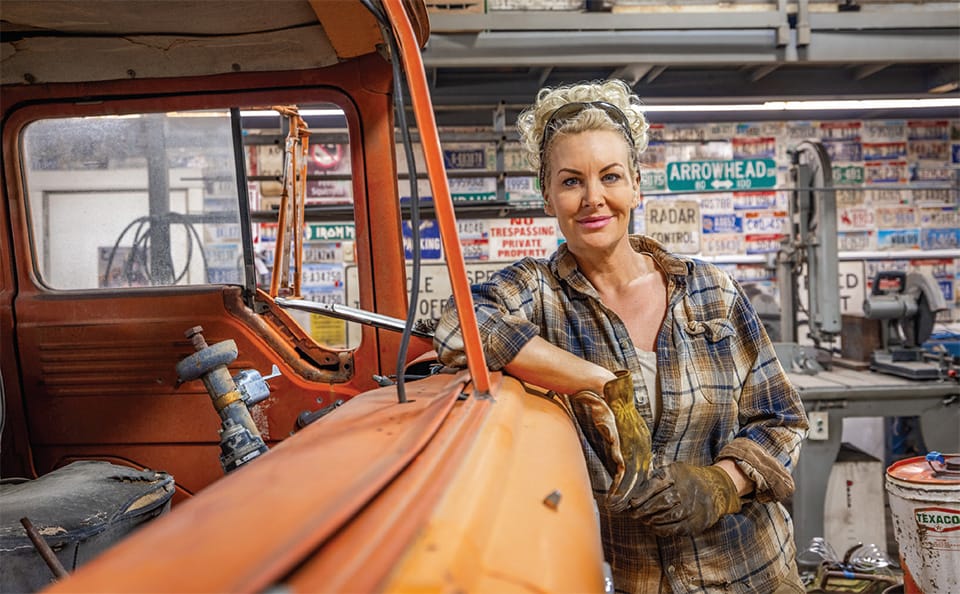
“The seats have to come out,” she says, pointing to the frayed leather seats inside. “And I’ll have to figure out how to make room for someone to play music in there.” When it isn’t being used as a DJ booth, she says it will stand in for a moveable bar.
No objects have outlived their usefulness; they are just waiting for Stredwick to discover them.
“There’s something about found objects that inspires me,” she says. “But I see inspiration in everything, especially in things that have been cast away … whoever threw it out never saw the beauty in it, but I bring a whole new light to it.”
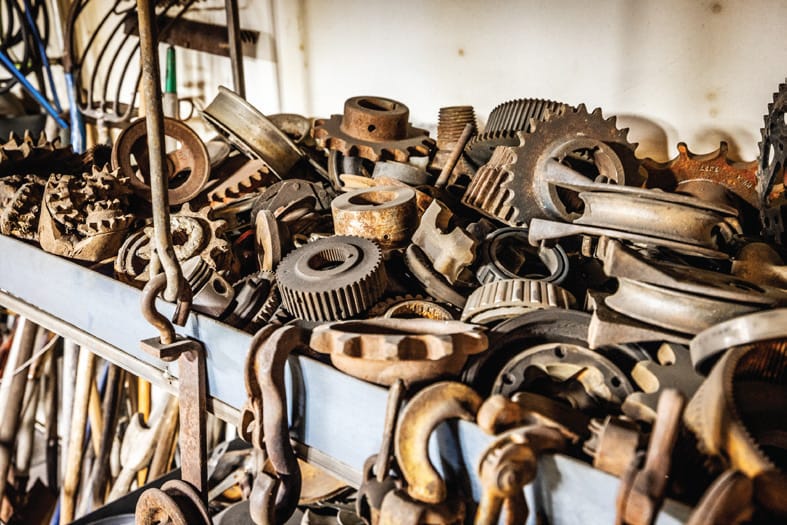
“Everyday There Are Piles Of Metal Waiting For Me In Front Of My Shop. People Know I’ll Take Their Scraps.”
–Brenda Stredwick, Artist
Stredwick believes every piece of metal has a history, a story to tell. Her work transforms bits and pieces to grind out the hidden potential in the forsaken and forgotten.
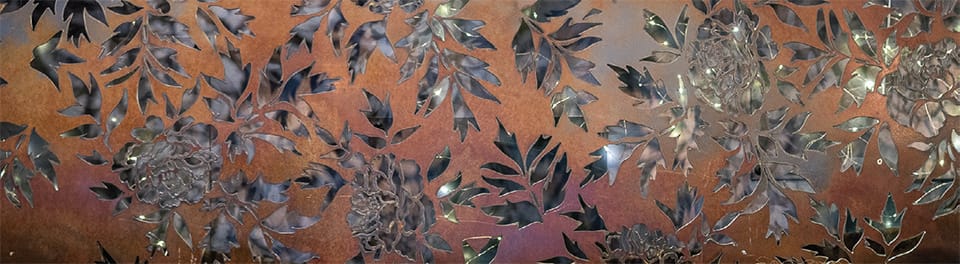
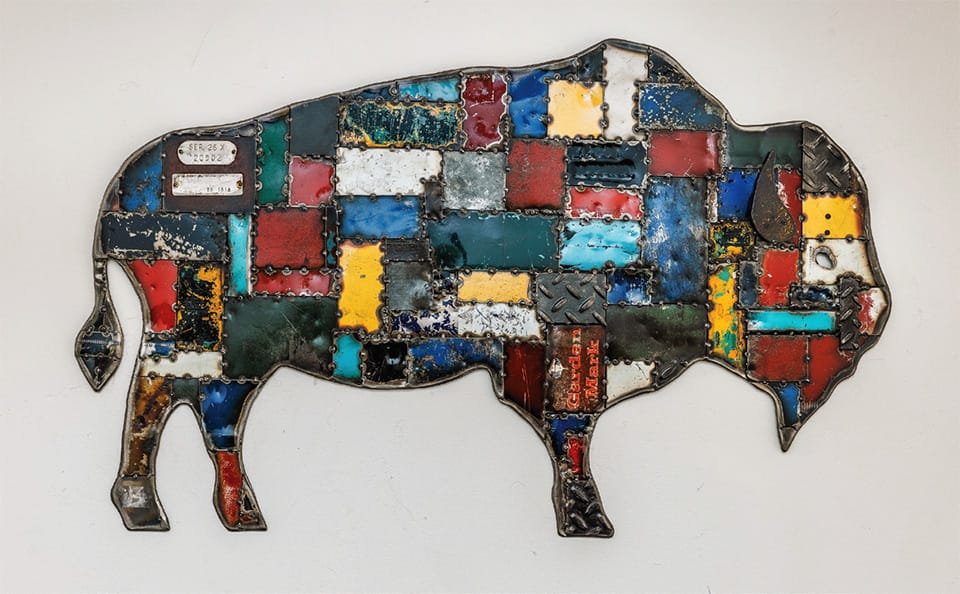
On her workbench is a piece she’s shining up. Stars and stripes in the shape of Montana. The stripes made from oil drums: cut from red, white, and blue oil barrels, the stamped dates still visible. All of her work requires a second look. At first, the red, white, and blue of the familiar symbol of the flag can fly past without a thought. But upon further examination, the ingenuity of using oil barrels, plasma cut into stripes, is just fantastic.
Born in Oregon, Stredwick was raised moving frequently due to her father’s work as an electrician for logging machinery. Her father was known as “MacGyver” because he could fix anything, with various jerry-rigging. It feels as though nothing is impossible to Stredwick, taking on her father’s attitude about getting things done.
The oldest of her five siblings and drawn to the outdoors, she started “helping” her dad at an early age, when he finally gave in and gave her some real work to do.
“I was always under his feet,” she says. “So, he started me on welding when I was eight and I fell in love with it.”
After living in various places, they settled in Idaho, near a gold mine.
“At 15 I had my own full-blown welding business,” Stredwick says. “The mine welder was always busy with the gold mine work, so if anyone need a repair, they would come to me.”
Once her business got going, her father helped her build her first welding shop, nailing up boards for walls, to get her out of the wind.
She also bartended to add to her paycheck. One thing about bars and the West is the ubiquitous number of horseshoes that tend to show up, either on the walls, over the doors, or underfoot.
“One day I started making horseshoe coat racks and it just took off,” she says. Aside from selling the coat racks, it also encouraged her to step a bit further from just welding repairs. She knew there was more to her talent.
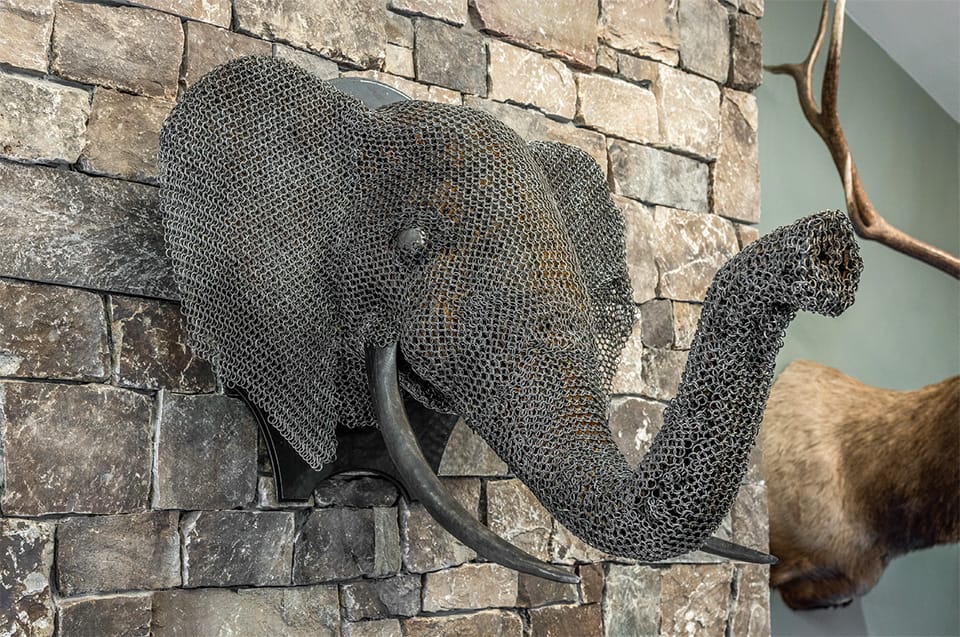
Clamped onto the worktable in her shop is the beginning of a moose head. The base is cut from mild steel and laid over the skeleton is a piece of chainmail.
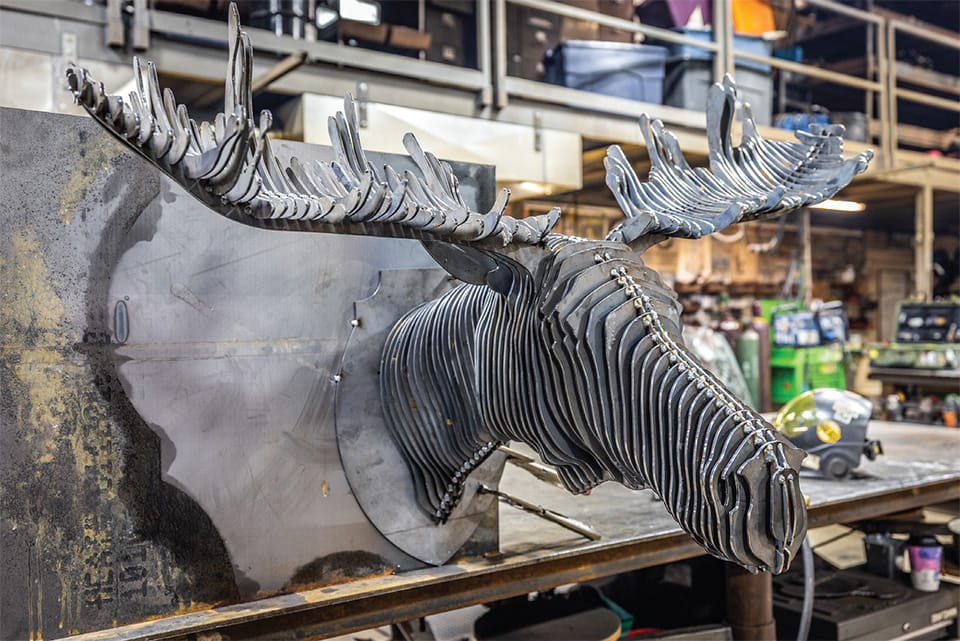
She walks over to the scrap pile and selects a small piece that is just about the right color for a moose. “I usually use squares because they’re easy to fit together,” she says, walking over to the plasma cutting station. “This should work.”
Fitting her tinted safety glasses over her eyes, and pulling the heavy-duty gloves on her hands, she takes the two ends of the ground clamp terminal and attaches it to a large piece of equipment. She grasps the plasma torch and cuts a rectangle into small strips.
Orange sparks zing up and fall into the water trench beneath. The air is acrid, slightly sweet from the ozone.
Taking the cut piece to the moose’s “antlers,” she tack welds it with her Mig welder and then hammers it into place.
“there’s something about found objects that inspires me. But I see inspiration in everything, especially in things that have been cast away …whoever threw it out never saw the beauty in it, but I bring a whole new light to it.”
–Brenda Stredwick, Artist
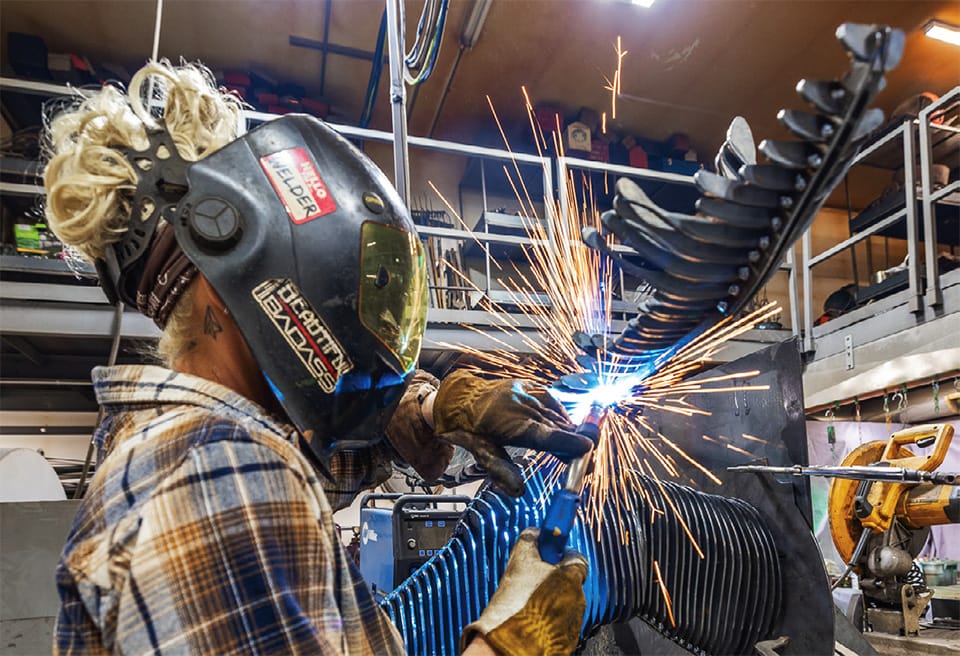
This moose is bound for Big Sky, once she hammers all of the rusty pieces into place and burnishes the chainmail so the metallic sheen is gone.
Stredwick’s work evolved from simple coat racks to intricate sculptures and functional art pieces. Each project involves her meticulous process of design, cutting, welding, and finishing. Her dedication to her work is evident in every detail, from the precision of her welds to the thoughtful placement of each element.
Her art is not just about creating something new; it’s about breathing life into the old and forgotten. Stredwick’s pieces tell stories of past endeavors and histories reimagined and transformed.
whj FEATURE
