
Introduction By: Laurenz Busch
By: Michele Corriel
Art often begins with simply paying attention. It might be a Grizzly’s gaze or the history held in a rusted object. Whatever the subject, the west gives artists plenty to work with, from wild animals and wide-open spaces to weathered objects and stories tucked into everyday things. In this section, we visit three galleries and meet the people behind them, each offering a fresh perspective on familiar subjects. AT COURTNEY COLLINS FINE ART IN BIG SKY, GEORGE HILL PAINTS GRIZZLIES, WOLVES, AND BISON AT A SCALE ONCE RESERVED FOR KINGS AND QUEENS, GRANTING THE WEST’S APEX PREDATORS THE GRAVITY OF ROYAL PORTRAITURE.
WILD ROYALTY | GEORGE HILL’S MONUMENTAL PREDATORS HOLD COURT
AT COURTNEY COLLINS FINE ART IN BIG SKY, GEORGE HILL PAINTS GRIZZLIES, WOLVES, AND BISON AT A SCALE ONCE RESERVED FOR KINGS AND QUEENS, GRANTING THE WEST’S APEX PREDATORS THE GRAVITY OF ROYAL PORTRAITURE.
-Courtney Collins, Gallery Owner
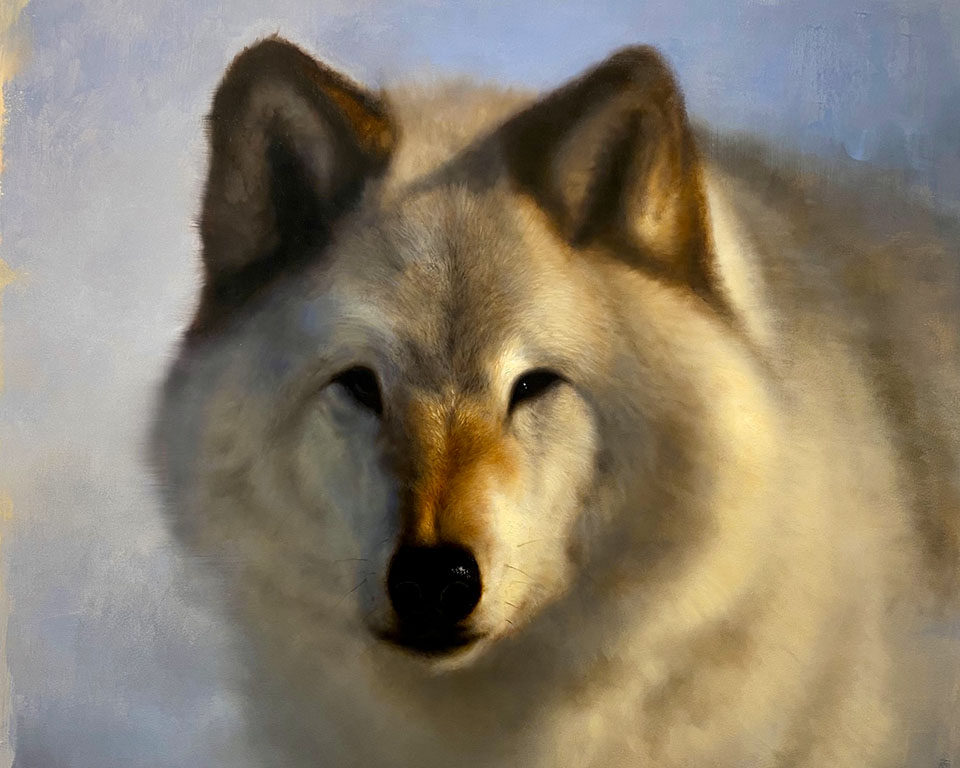
Upon an initial encounter with George Hill’s epic-sized oil paintings of grizzlies, bison, and wolves, portraiture may not immediately come to mind. But consider the famous portraits of Queen Elizabeth, King Henry VIII, Marie Antoinette, or Napoleon—gilded, grand, hanging on museum walls. Now imagine those portraits translated to the American West, with wild animals in the place of royalty.
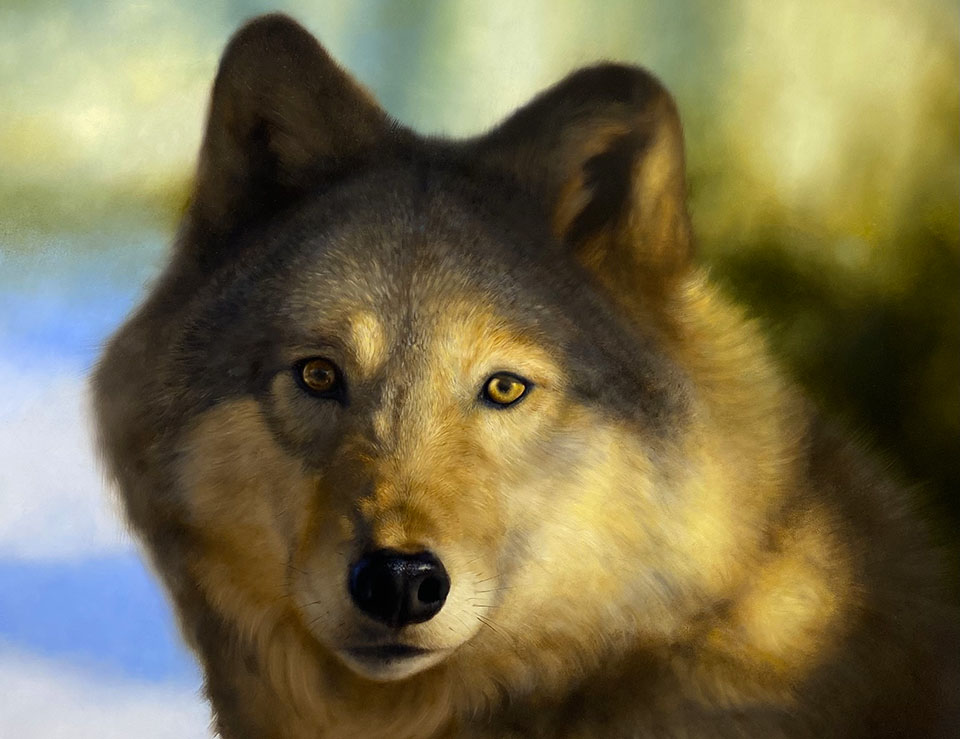
This concept is at the heart of Hill’s work. His animals are not merely depicted; he presents them with the gravity, dignity, and commanding presence traditionally reserved for the powerful.
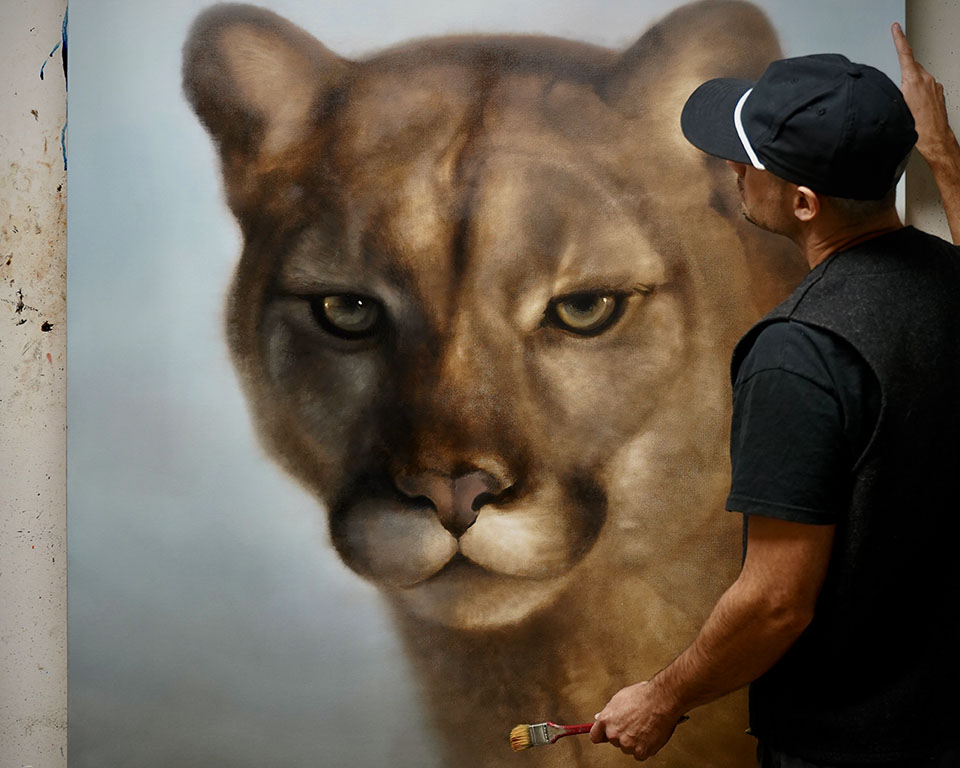
This February, Courtney Collins Fine Art Gallery in Big Sky will present APEX, a show of Hill’s monumental oil paintings of grizzlies, bison, mountain lions, and wolves.
Collins met Hill years ago when he was carrying a fish painting across the street to Creighton Block Gallery. “It was not until later, when I had my own gallery, that I was drawn to him because of his work of portraits of forest animals. They touch me in a way I can’t fully explain,” she says. “Representing his work is meaningful because my passion—and his—is for these wild creatures, especially the apex predators, like wolves and mountain lions, as well as the bears that shape our ecosystem.”
“HE PAINTS THEM IN SUCH A WAY THAT YOU STOP AND LOOK AT THEM AND WONDER, ‘HOW CAN IT BE THAT AN ANIMAL IS SO BEAUTIFUL?’ YOU WONDER, ‘DO THEY TRULY EXIST?’”
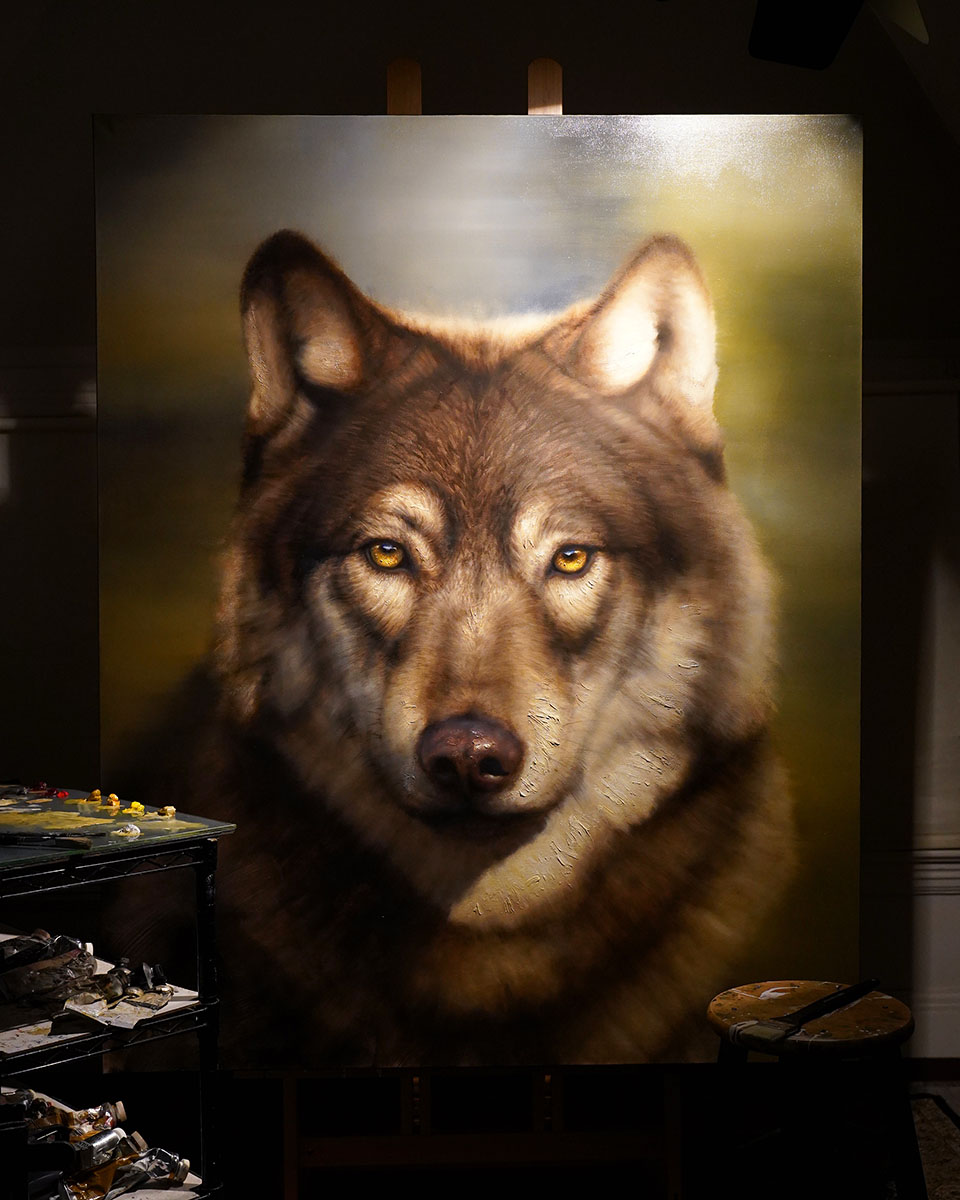
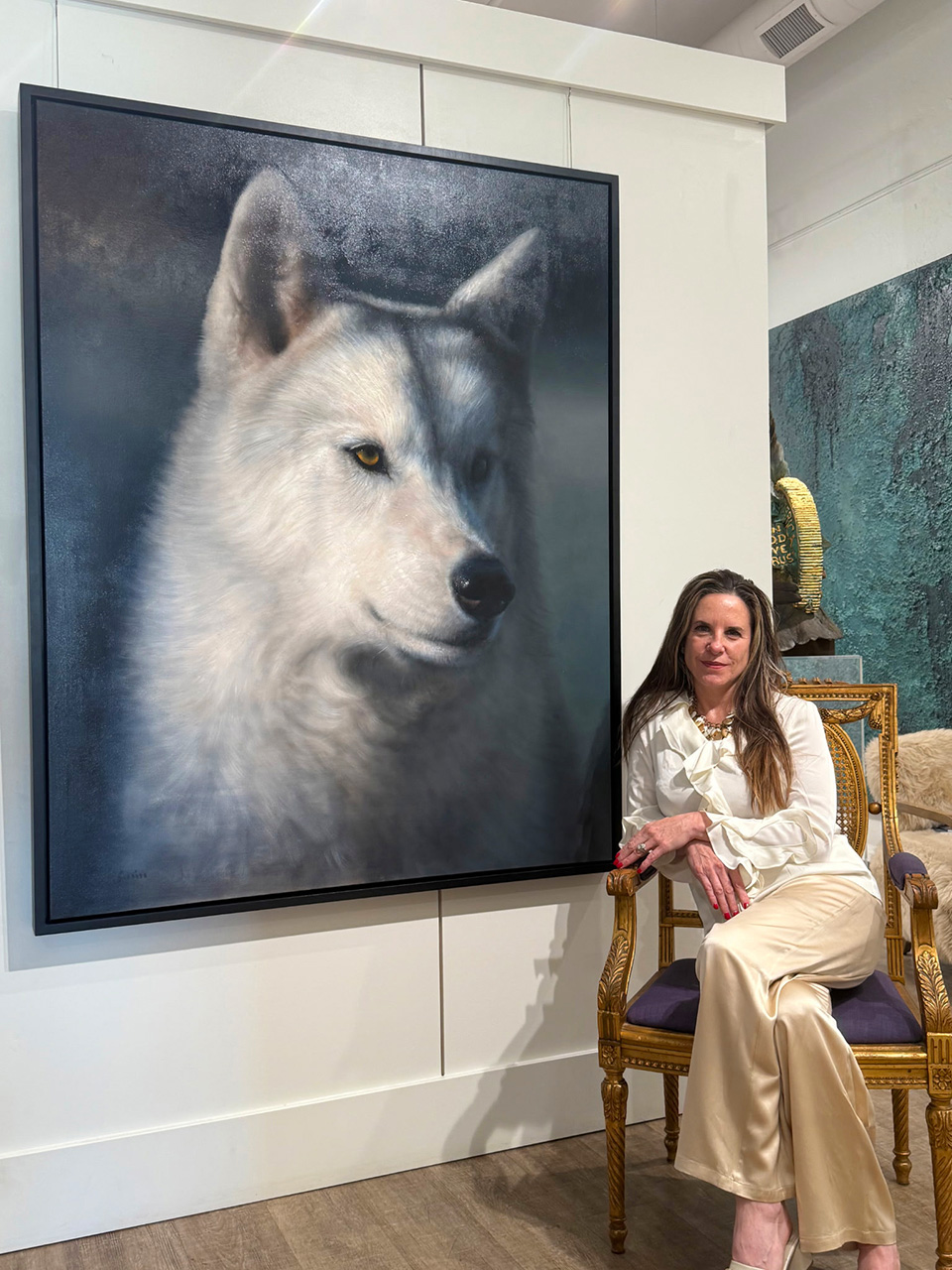
-Storm Eyed | Oil on Canvas | 60″ x 48″
Four years ago, Collins recalls that Hill was selling his work at local auctions to get exposure. Convinced that his work deserved a wider audience, Collins offered him ideas for promoting it more broadly, she says. Taking him under her wing, she helped build him toward an almost sold-out fourth solo show at her gallery last year. “Quite an accomplishment,” she adds. “I am so proud of where we are and where we have come together.”
Her gallery represents a small, select number of artists, intentionally. This lets her build strong relationships and give artists the resources and attention they deserve. It doesn’t hurt that Collins is an ardent fan of the artists she represents.
Hill’s style and scale grab viewers immediately. As Collins explains, “He paints them in such a way that you stop and look at them and wonder, ‘How can it be that an animal is so beautiful?’ You wonder, ‘Do they truly exist?’”
That force has changed the gallery itself. “Having his work here has made the gallery experience stronger and more memorable,” she says. “One year, we did an all-wolf show, and we were surrounded by 8’ x 10’ wolf paintings as if you were in a pack. I dimmed the lights, snuck away, and played howls on the sound system. We all got chills and began to sing along.”
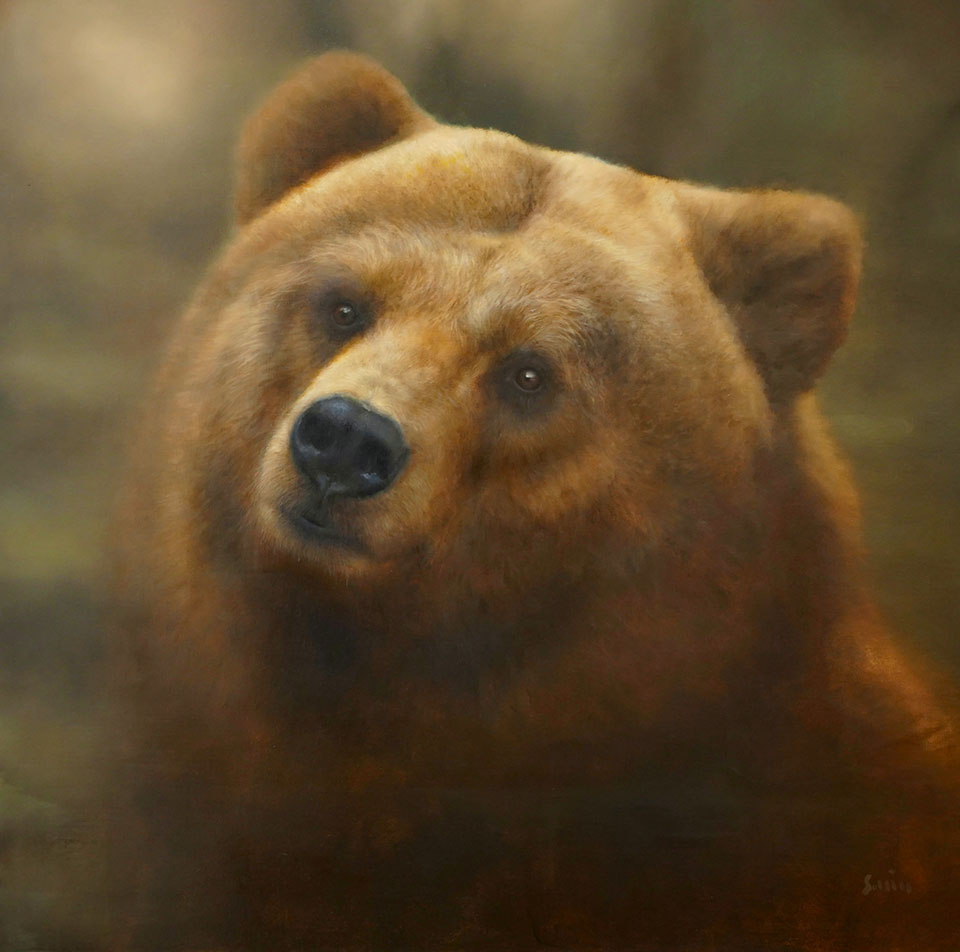
–Karhu (In memoriam of 399) | Oil on Wood Panel | 36″ x 36″
As an artist, Hill appreciates Collins’ personal interest in his work. “I’ve had so many hours-long conversations in person and over the phone with Collins about art, life, etc.,” he says. “It’s a special thing to foster that kind of bond, understanding, and appreciation for each of her artists. It’s rather unique, actually.”
That relationship helped Hill develop a body of work in which scale and presentation are essential to meaning. His animals cannot simply occupy the background in a landscape. They command the space, much as the subjects of traditional royal portraiture command the walls on which they hang.
“I’m trying to give these animals a sense of being revered,” Hill says. “I want the viewer to stop in their tracks and get them to engage eye-to-eye.” Rather than resisting the romanticized mythology, Hill embraces it, using grandeur and scale to draw the viewer into an intimate encounter.
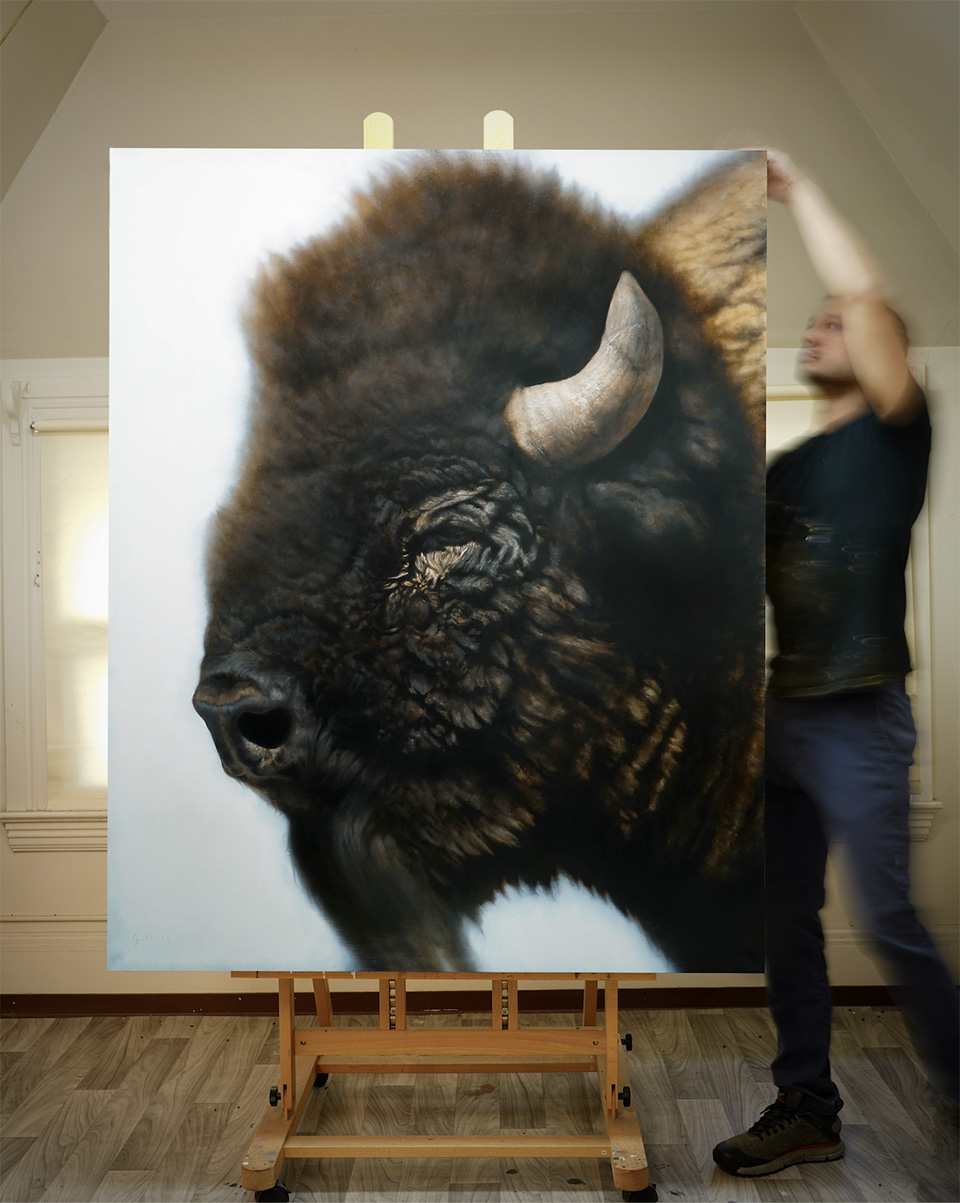
There is also remarkable physicality to the paintings. Hill describes his approach as an atelier technique, building layers of oil until the process begins to feel almost sculptural. “I want it to feel like it’s popping off the canvas,” he says. “The tufts on a bison, or the hair on a grizzly, it’s arresting.”
“REPRESENTING HIS WORK IS MEANINGFUL BECAUSE MY PASSION—AND HIS—IS FOR THESE WILD CREATURES.”
-The Monolith | Oil on Canvas | 60″ x 48″
The texture of fur, the play of light across a face, and the shadows that define the edges of a body become part of the experience. He is not simply trying to reproduce what an animal looks like; he is recreating the sensation of encountering one.
“It’s ethereal,” Hill says. “I feel a cascade of emotions that taps into something in all of us. A primitive part of ourselves that we’ve moved away from.”
That idea of a lost connection to the natural world runs beneath Hill’s work. He sees a growing disparity between our biological selves and the technological, isolated lives many people now lead. His paintings become both a result of that separation and a response to it—a way of returning, at least imaginatively, to something more elemental.
“Coming back to the primitive self in the natural world has saved me,” he says.
“IT’S ETHEREAL. I FEEL A CASCADE OF EMOTIONS THAT TAPS INTO SOMETHING IN ALL OF US. A PRIMITIVE PART OF OURSELVES THAT WE’VEMOVED AWAY FROM.”
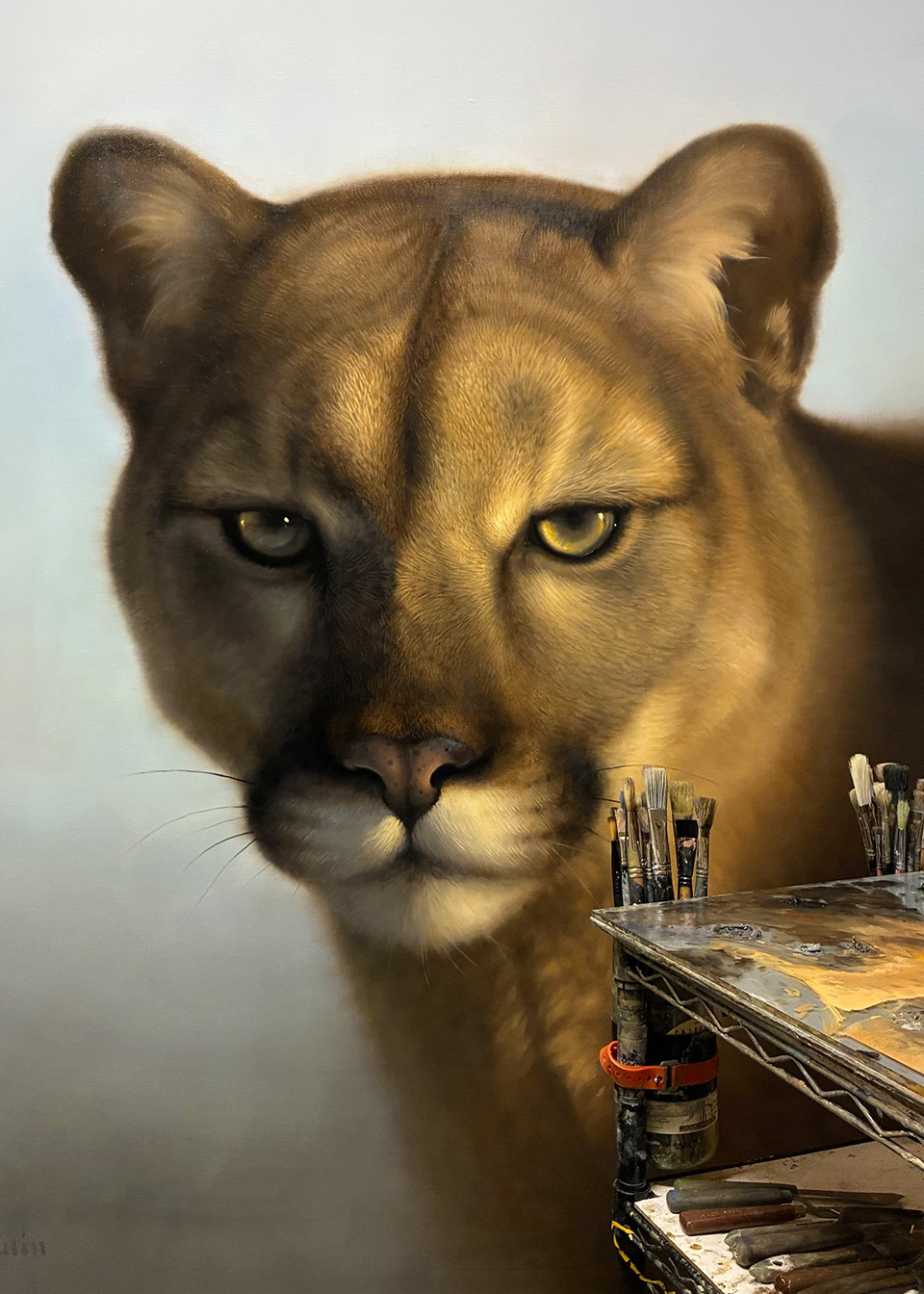
-Ghost Whisper | Oil on Canvas | 60″ x 48″
Perhaps that is why the animals must be so large. They cannot be decorative wildlife. They must confront the viewer. In Hill’s paintings, reverence becomes a form of advocacy. By giving these animals the visual language of royalty, he asks viewers to consider what it means to share the landscape with creatures that possess their own power, beauty, and place within the ecosystem.
And perhaps that is the real portrait: not simply a portrait of a grizzly, wolf, or bison, but a portrait of our relationship to the wild—and of what we stand to lose when that relationship disappears.
whj ART FEATURE
