
By Jennifer Acorn
Rooted in the Greek words for “life” and “love of,” biophilia reflects humanity’s innate affinity for nature and living systems. Biophilic Design harnesses this deep seated connection, moving beyond aesthetics to create environments that actively promote well being. At its core, Biophilic Design is not just about incorporating greenery it’s about leveraging nature’s restorative power to enhance human health, cognition, and emotional balance.
THE FOUR HIGH IMPACT ARCHITECTURAL ELEMENTS
Among the many applications of Biophilic Design, four architectural elements stand out for their exceptional return on investment in fostering well being and cognitive restoration:
By incorporating these elements, architects and designers craft environments that do more than house occupants they also support cognitive function, optimize productivity, and nurture creativity. They address our fundamental need for nature, grounding us in spaces that reflect the rhythms and vitality of the natural world.
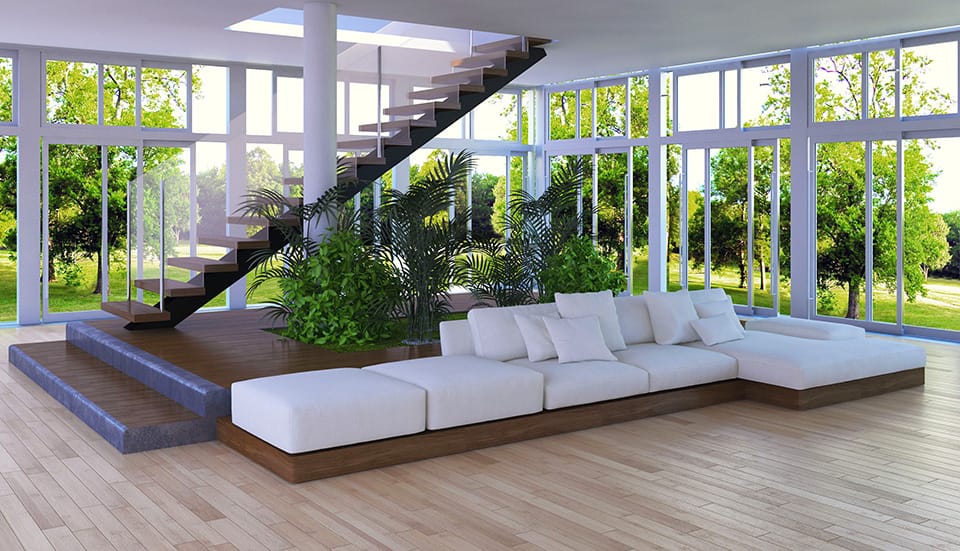
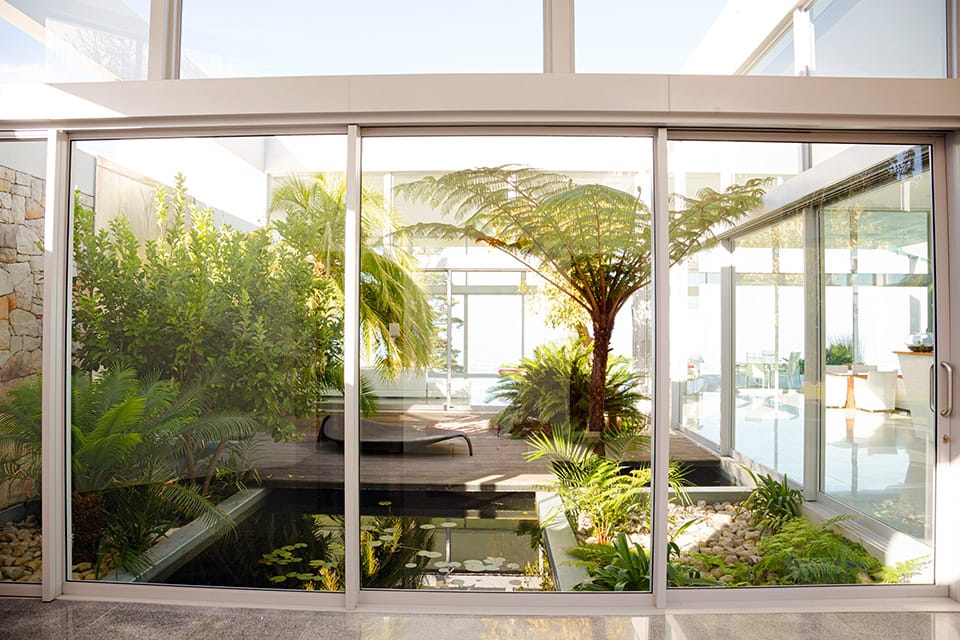
ATRIUMS. These expansive, light filled spaces create an immersive connection to nature, often incorporating greenery and water features that inspire tranquility, enhance focus, and improve indoor air quality.
ENCLOSED COURTYARDS. Serving as serene sanctuaries, these spaces blend natural materials with lush vegetation, providing restorative environments that buffer external stressors and encourage relaxation.
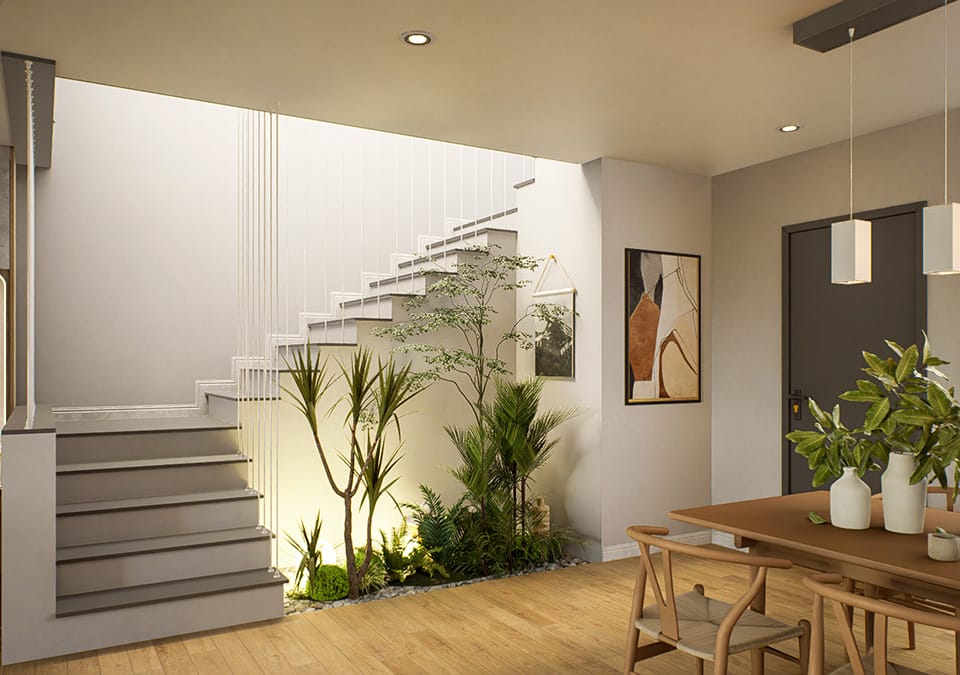
BUILT-IN PLANTERS. Seamlessly integrating greenery into the architectural framework, builtin planters not only enhance aesthetics but also improve air quality, provide opportunities for tactile engagement, and reinforce a sense of place.
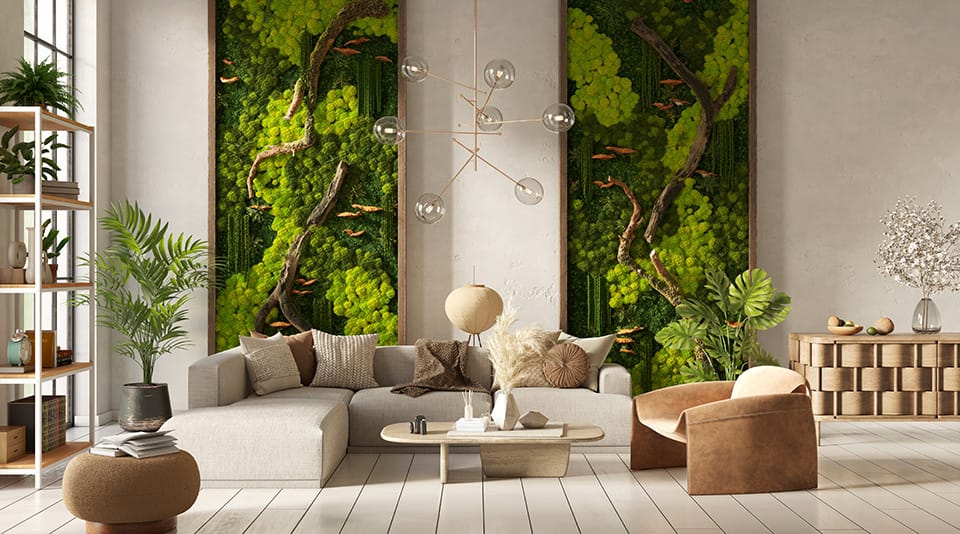
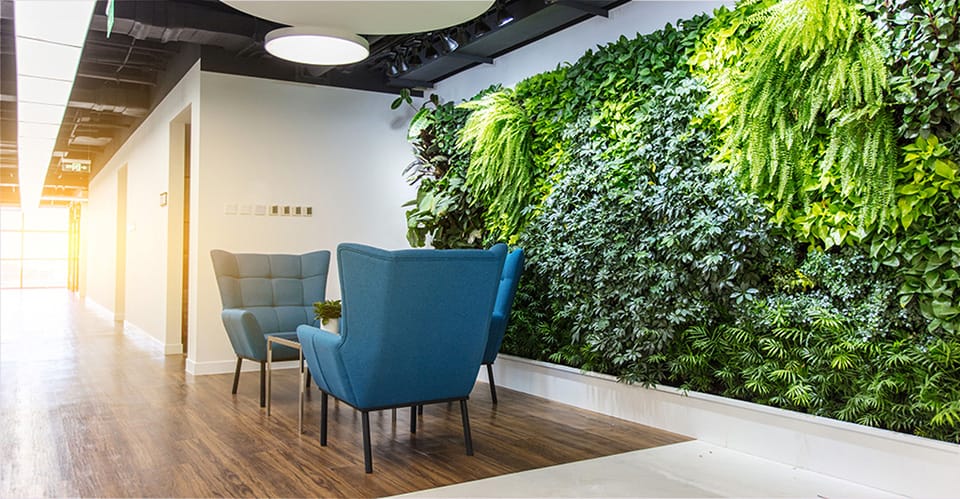
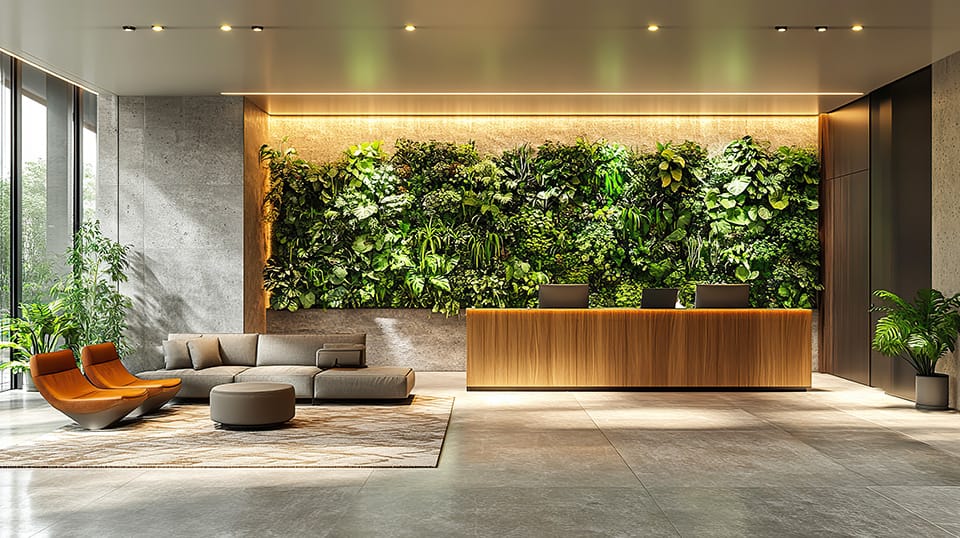
LIVING GREEN WALLS. Also known as vertical gardens, these dynamic installations bring vibrant, ever changing ecosystems indoors, fostering soft fascination through movement, seasonal variation, and natural textures.
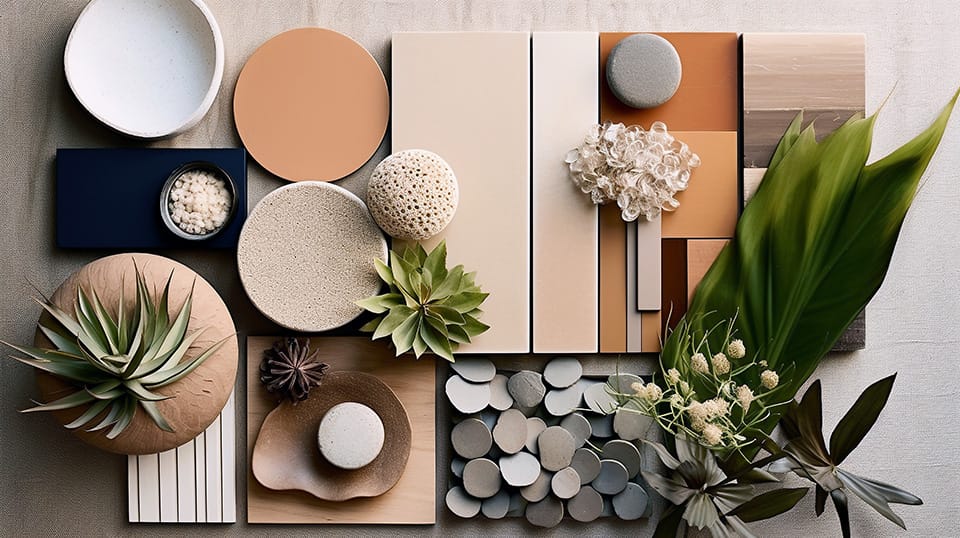
Through intentional design whether by maximizing natural light, incorporating water features, or utilizing organic textures and materials Biophilic Design transforms how we live, work, and connect with our surroundings. It is more than a visual enhancement; when aligned with Attention Restoration Theory, Biophilic Design becomes a powerful tool for creating spaces that actively support cognitive restoration, emotional resilience, and overall well being.
This evidence based approach is rooted in Attention Restoration Theory (ART), developed by psychologists Rachel and Stephen Kaplan (1989, 1995). ART reveals that exposure to natural environments helps replenish cognitive resources, alleviating the mental fatigue caused by prolonged focus on demanding tasks. In today’s fast paced, urbanized world, where constant stimulation leads to attentional depletion, the presence of nature whether direct or indirect offers a critical form of relief. The Kaplans introduced the concept of “soft fascination,” the effortless mental engagement inspired by natural elements like rustling leaves, flowing water, or shifting patterns of light and shadow. Unlike the over stimulating demands of modern life, these gentle stimuli allow the mind to reset, fostering creativity, focus, and stress reduction.

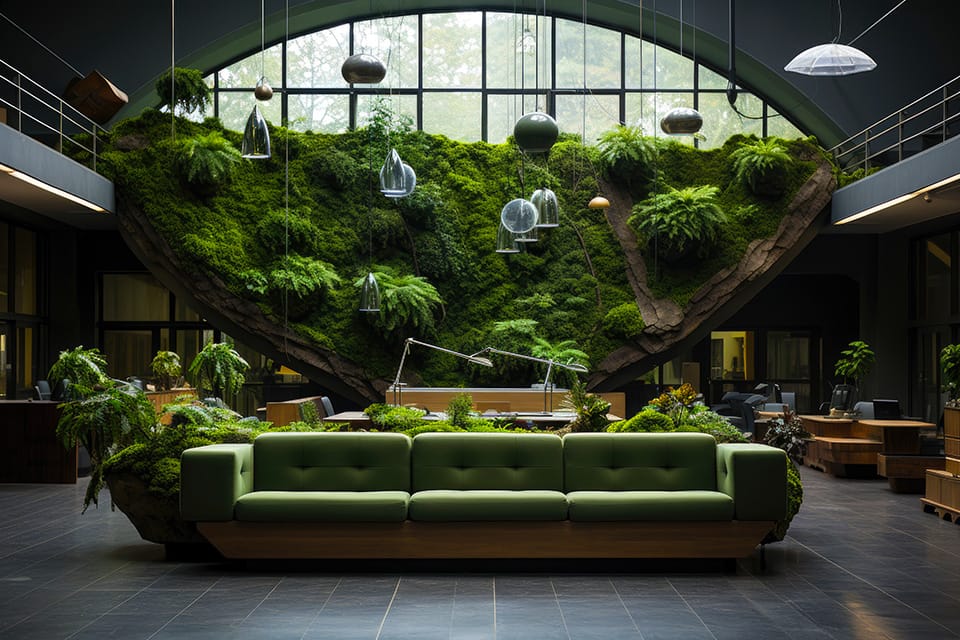
Decades of research in environmental psychology, neuroscience, and public health have reinforced ART’s findings. Studies consistently show that environments with strong connections to nature enhance productivity, promote emotional balance, and improve mental clarity. Biophilic Design translates these insights into actionable architectural strategies, crafting spaces that restore cognitive function, reduce stress, and enhance overall quality of life.

ABOUT THE AUTHOR:
Jennifer Acorn is a Restorative Design Professional, a Master of Public Policy in Architecture and Design, a licensed Oregon General Contractor (CCB# 254385), and the founder of Organic Designs, a pioneering firm specializing in restorative interior environmental design. With expertise in Biophilia Theory, Attention Restoration Theory (ART), and Stress Reduction Theory (SRT), Jennifer creates evidence based spaces that enhance well being and foster the innate restorative processes that nature provides us.
whj FEATURE
