
By: Laurenz Busch
Leah Wynn tells me about the streets first. Not the castles, not the wine, nor the thousand-year-old Gothic cathedral rising above Cologne, Germany. She recalls how narrow the streets were, how her husband could stretch his arms and touch the buildings on either side, how cobblestones ran wall to wall, so tight and old that it suddenly made sense why nobody was rushing to be anywhere.
A slow drift down the Rhine renews one designer’s fascination with craft, tile, and the beauty of things made to last
“I grew up in America,” she says, half laughing, “where everything is so big and open.”
Leah, the founder of Salt Lake City-based Inside Out Architecturals, was traveling with her husband, Steve, on a river cruise that began in Amsterdam and followed the Rhine south toward Switzerland. The river was low that year as drought gripped much of Europe. At one point, Leah and the other passengers had to leave the boat and travel via bus for hours to meet another vessel farther downstream.
What may have been an inconvenience became an invitation to look closer.
On shore, as she moved through centuries-old towns and cities, Leah saw carved doors and sculpted stone wrapped around windows. She saw mosaics running across floors, up walls, and over ceilings. At a windmill, of all places, she found a small arrangement of decorative tiles above an otherwise ordinary wash basin.
“THE NEW WAY ISN’T ALWAYS THE BEST WAY.”
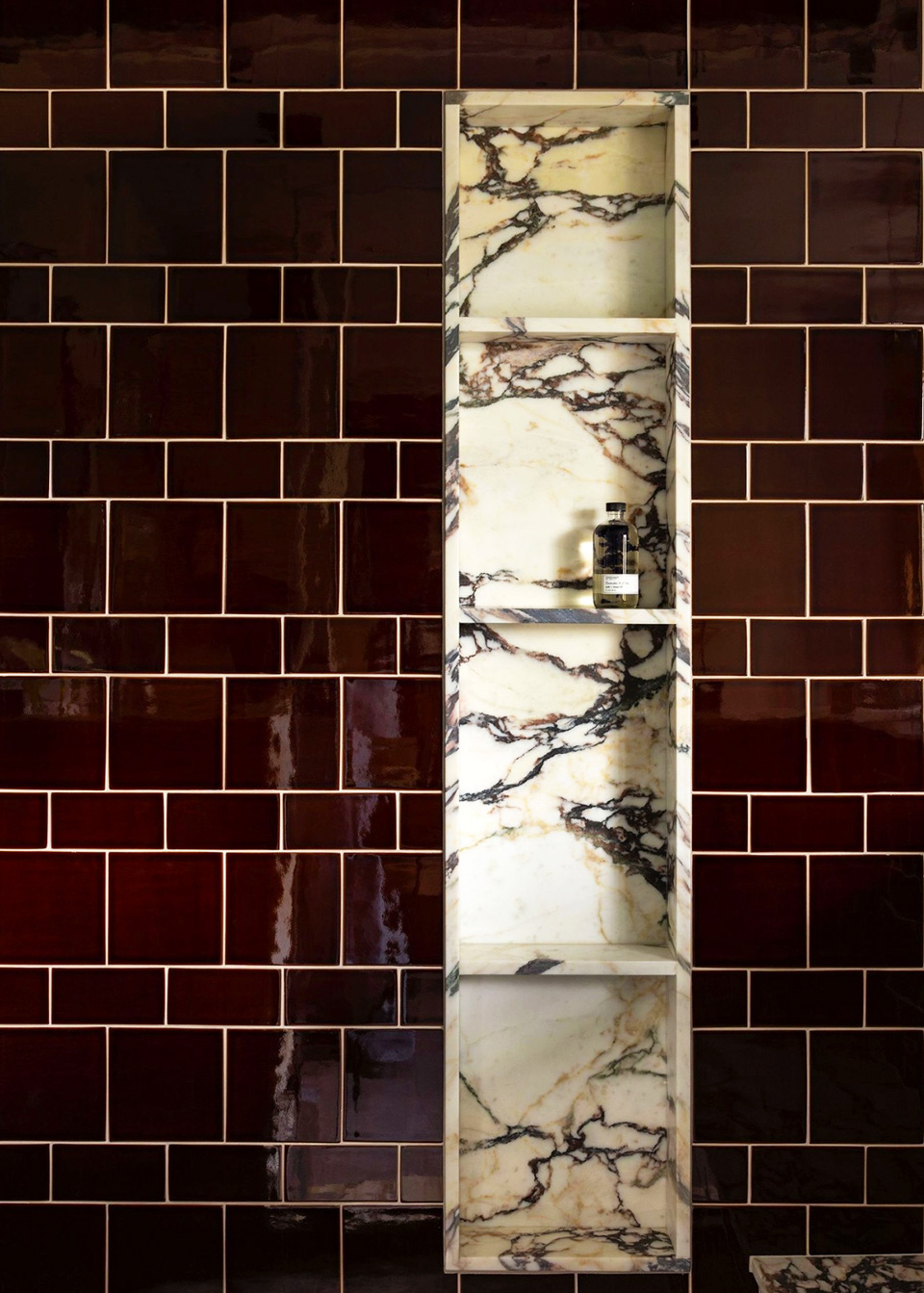
-Sonoma Tilemakers Stellar Ceramic Tile in Garnet
Someone, she thought, some generations ago, had decided that even the smallest corner deserved something beautiful.
Europe’s grandeur stayed with her, but so did its attention to everyday details—the evidence, everywhere Leah looked, that people spent time and effort making ordinary surfaces worth looking at and appreciating.
In Cologne, she stood beneath the dark mass of the Kölner Dom, or Cologne’s Cathedral, begun in the 13th century and still under almost constant care. While most visitors look toward the spires, Leah found herself looking at the scaffolding, as craftspeople placed newly molded finials and cleaned the centuries-old stone. When she returned to Utah, she showed her mom the close details of the workshop where people made the molds for replacement pieces, something she has also done. She appreciates it because she understands the patience involved in shaping, casting, adjusting, and repeating the process over and over again.
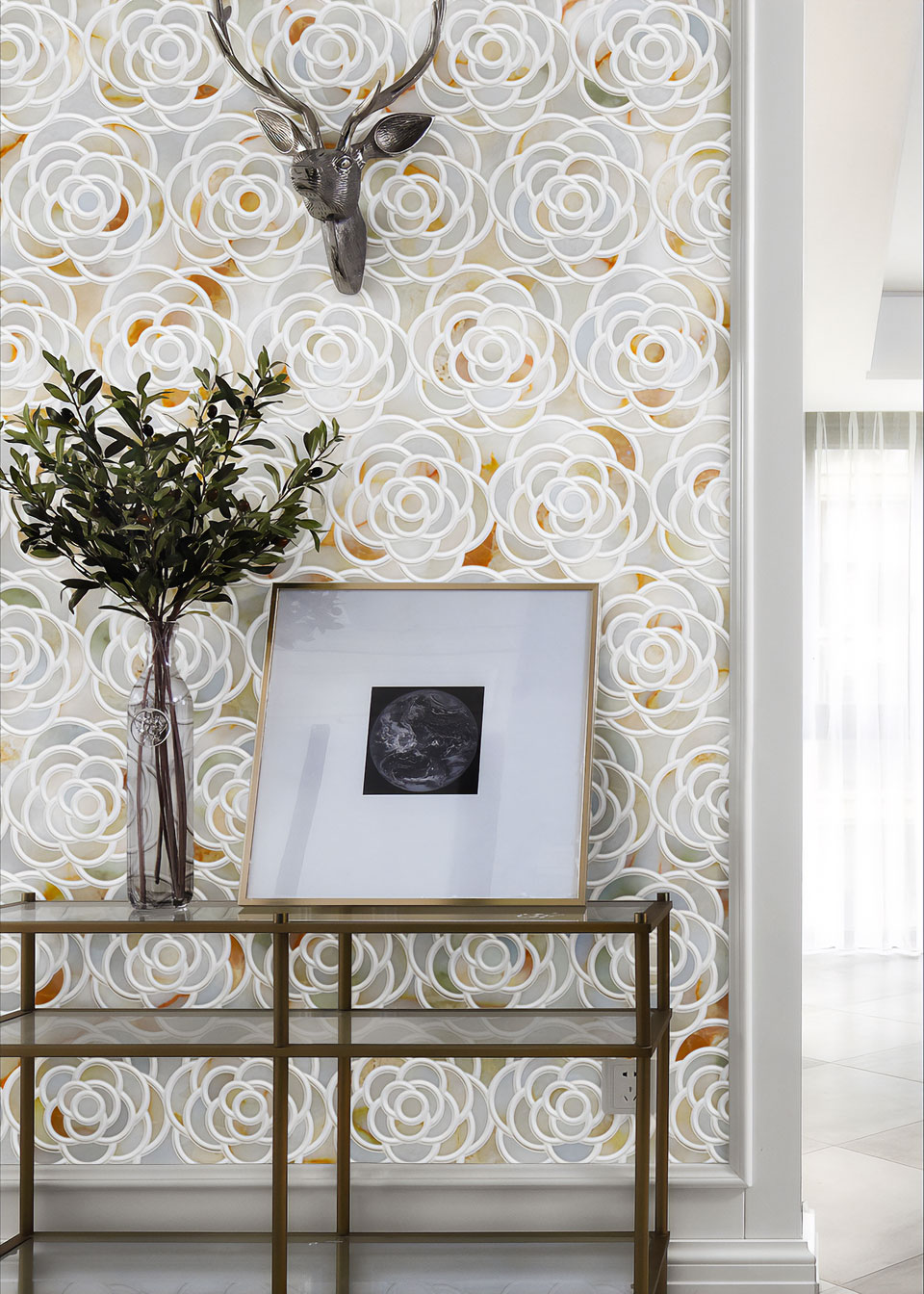
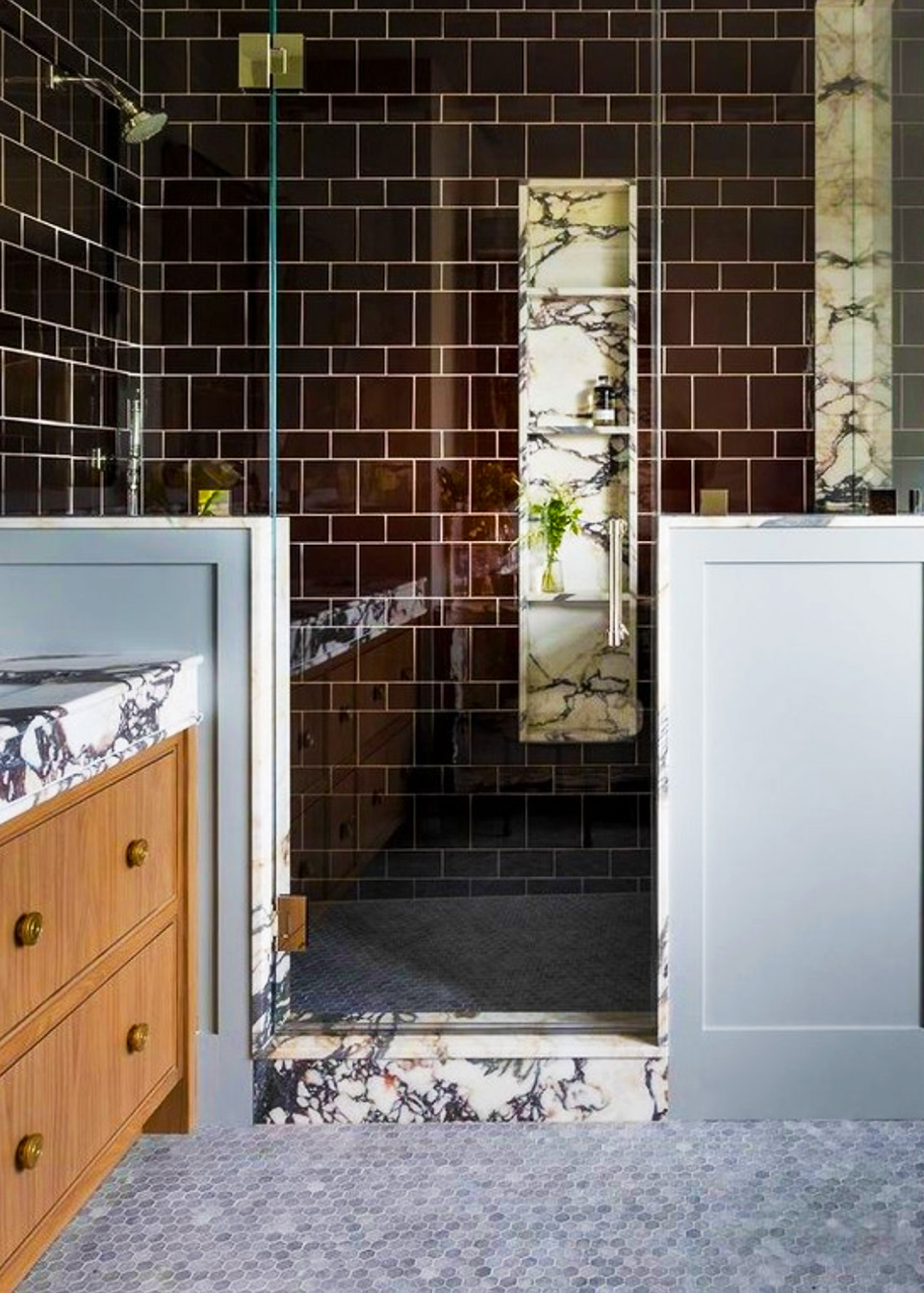
left -Allstone Onyx Rose 3D Waterjet Mosaic | right -Sonoma Tilemakers Stellar Ceramic Tile in Garnet
Something was moving, she tells me, about a building that never stops perfecting itself, that no generation can lay claim to. A building that was started by one group of people and continued by another.
Tile, she realized, belongs to a similar lineage. For thousands of years, people have shaped clay, carved stone, pressed materials into molds, fired them, glazed them, and set the finished product by hand into places where they lived. Styles and technology may have changed, but the impulse for handcrafted stonework remains.
Back home in Utah, Leah’s own sense of history suddenly felt different. Living in a roughly 140-year-old Victorian in downtown Salt Lake, it didn’t seem so ancient anymore. Instead, her trip to Europe had renewed her fascination with materials that carry evidence of the people who made them.
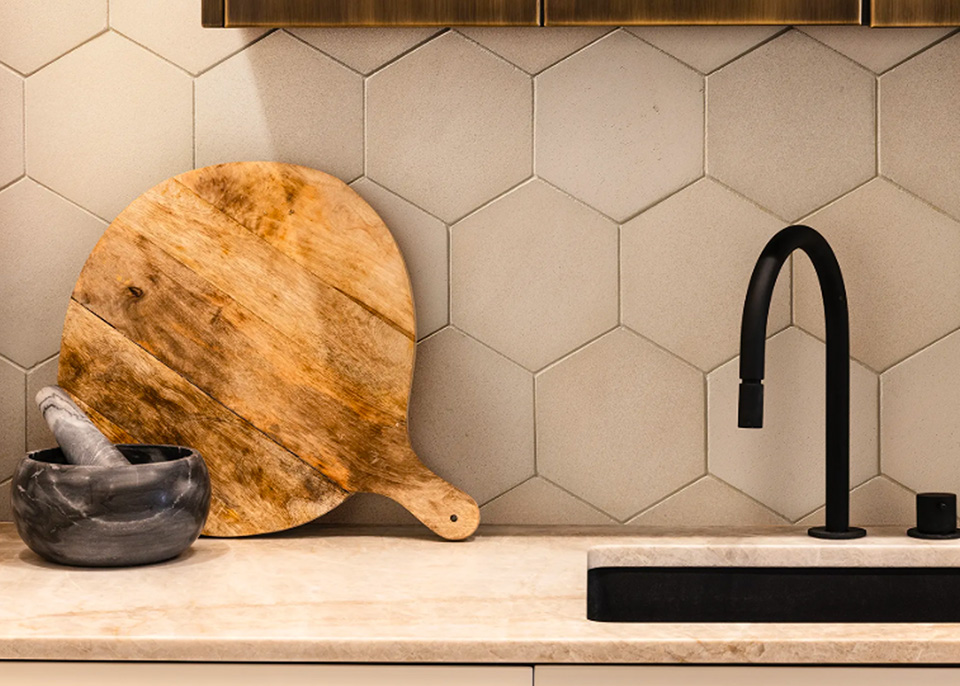
-Sonoma Tilemakers, Ravello Hexagon in Bergamo
Loud and Quiet
Leah divides tile—loosely—into two categories. Some of it is what she calls “the static,” or pieces that provide a steady background to a room. Those tiles don’t scream to be looked at, but they change the way a room feels. One example is Sonoma Tilemaker’s Steller ceramic used in a shower in a deep, glossy red. The color gives warmth without overwhelming or distracting. The maker’s Ravello Hexago in Bergamo is quieter still. Unglazed stoneware, its color runs through the clay rather than sitting on top, and the surface has a slight grit under the fingers.
Leah describes it tenderly: “It’s saying, ‘I come from the earth. Someone just put me in a shape.’”
Other tiles refuse to stay in the background, instead taking center stage.

“IT’S SAYING, ‘I COME FROM THE EARTH. SOMEONE JUST PUT ME IN A SHAPE.”
-New Ravenna, Custom Butterfly Floral Panel
A custom butterfly mosaic by New Ravenna turns a wall into artwork. Larger pieces of glass are cut by water jet, while smaller ones are cut and positioned by hand. A single panel can represent hundreds of hours of work and is always custom-made for one home, on one wall.
Allstone’s Fantasy Fan tile takes another approach, layering polished marble, river shell, and glass into a dimensional, repeating pattern.
Lastly, the fireplace clad in Arto’s Buckle pattern in Elder Green is one of Leah’s favorites. A heavy, sculptural tile gives the fireplace form, and each shape is made from clay: a mold is taken, each piece is pressed, cleaned by hand, dried, and fired.
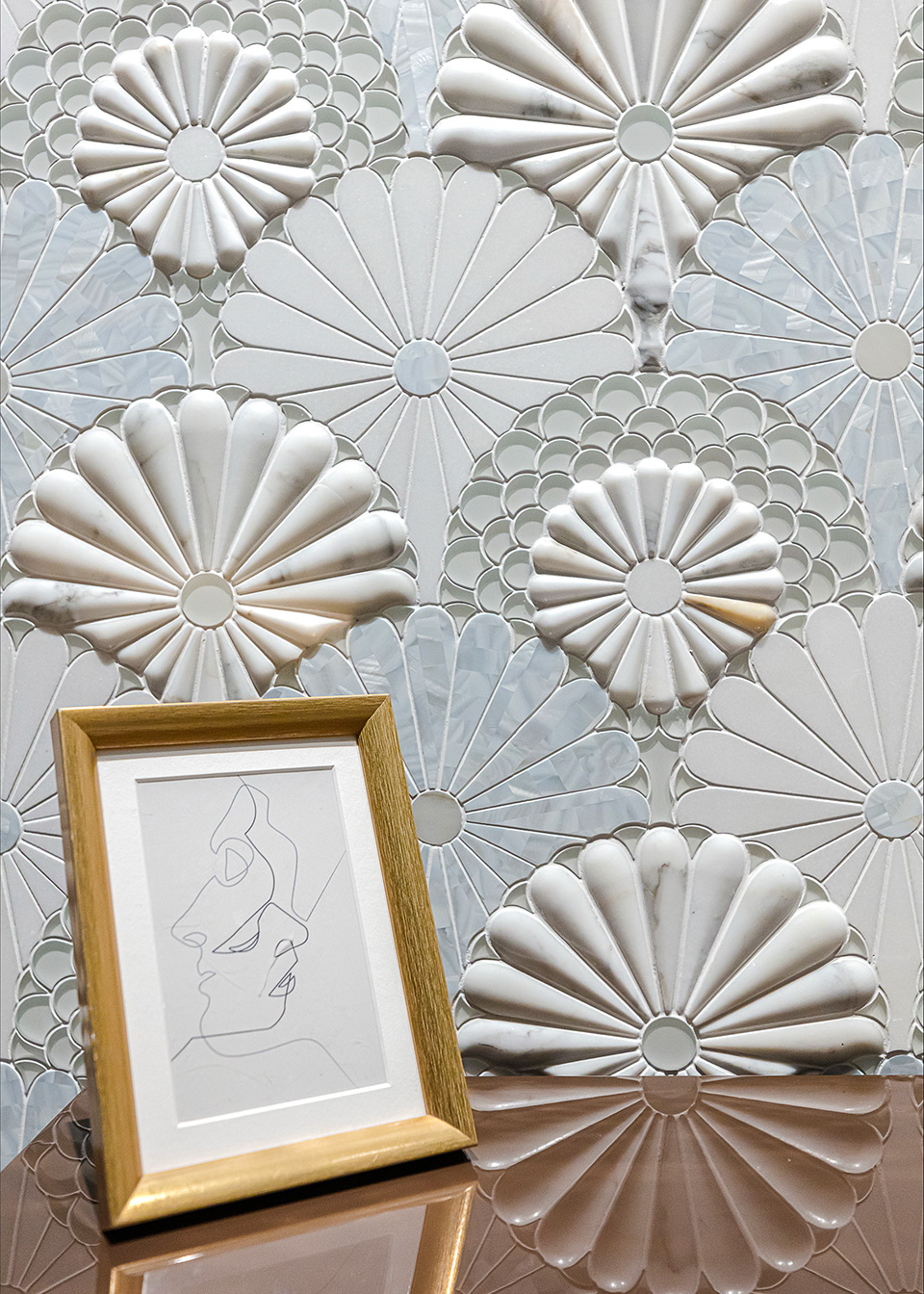
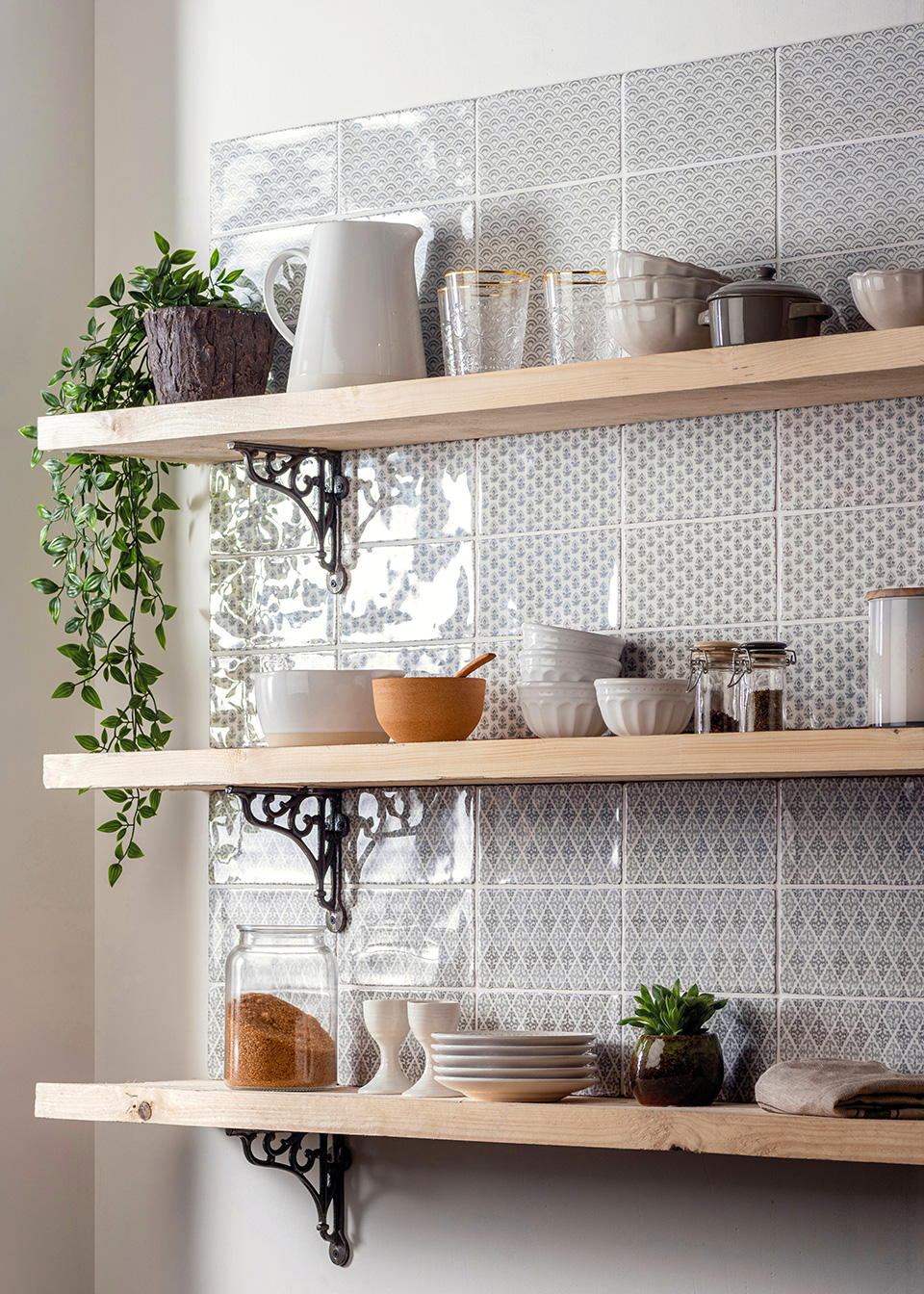
left -Allstone 3D Waterjet Mosaic Fantasy Fan | right -Original Style, Décor/Fabrique Collection-Rosaline, Picot and Clara in Dover Grey
“It’s a labor of love,” she says. “You can see it in the finish, the way green pools and moves.”
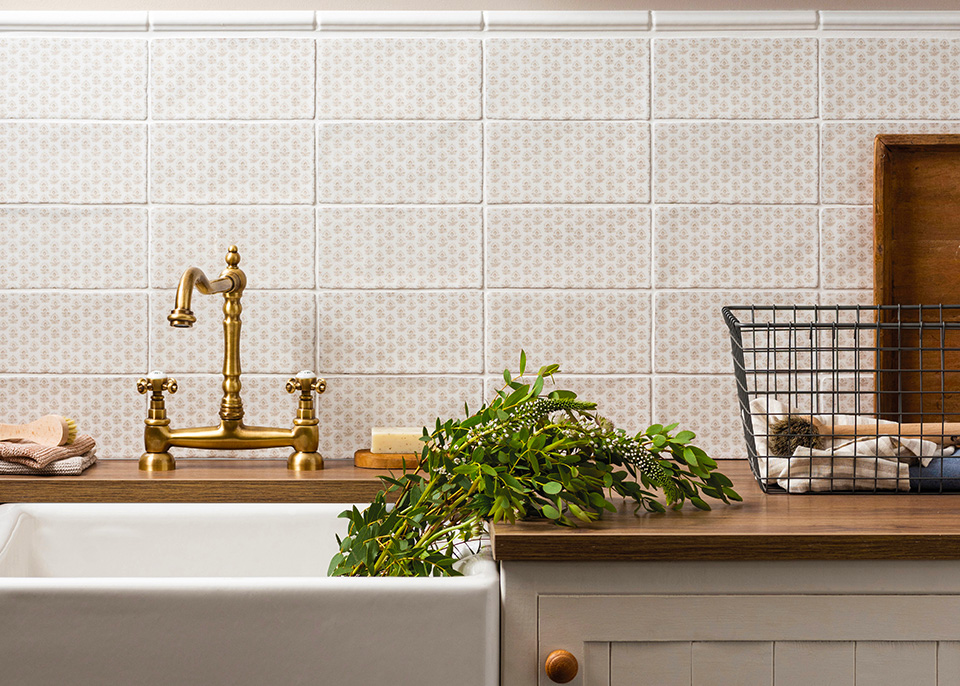
Behind the showpiece tiles and mosaics and the background ones is a broad middle ground Leah often finds herself in with her clients. Some are hand-painted and hand-pressed surfaces such as Original Style’s Decor/Fabrique tiles in Dover Grey or Syzygy’s Storm Ridge Fan Deco. They don’t necessarily dominate, but they do reward those who come in for a closer look.
Bringing it Home
What’s difficult about tile work is that it doesn’t always fit neatly in with the way homes are built today, and often, there aren’t enough artisans practicing the older trade. “Unless you pay for it and go find specific people,” Leah says, “it’s impossible to get to a certain level of finish.”
“IT’S A LABOR OF LOVE.”
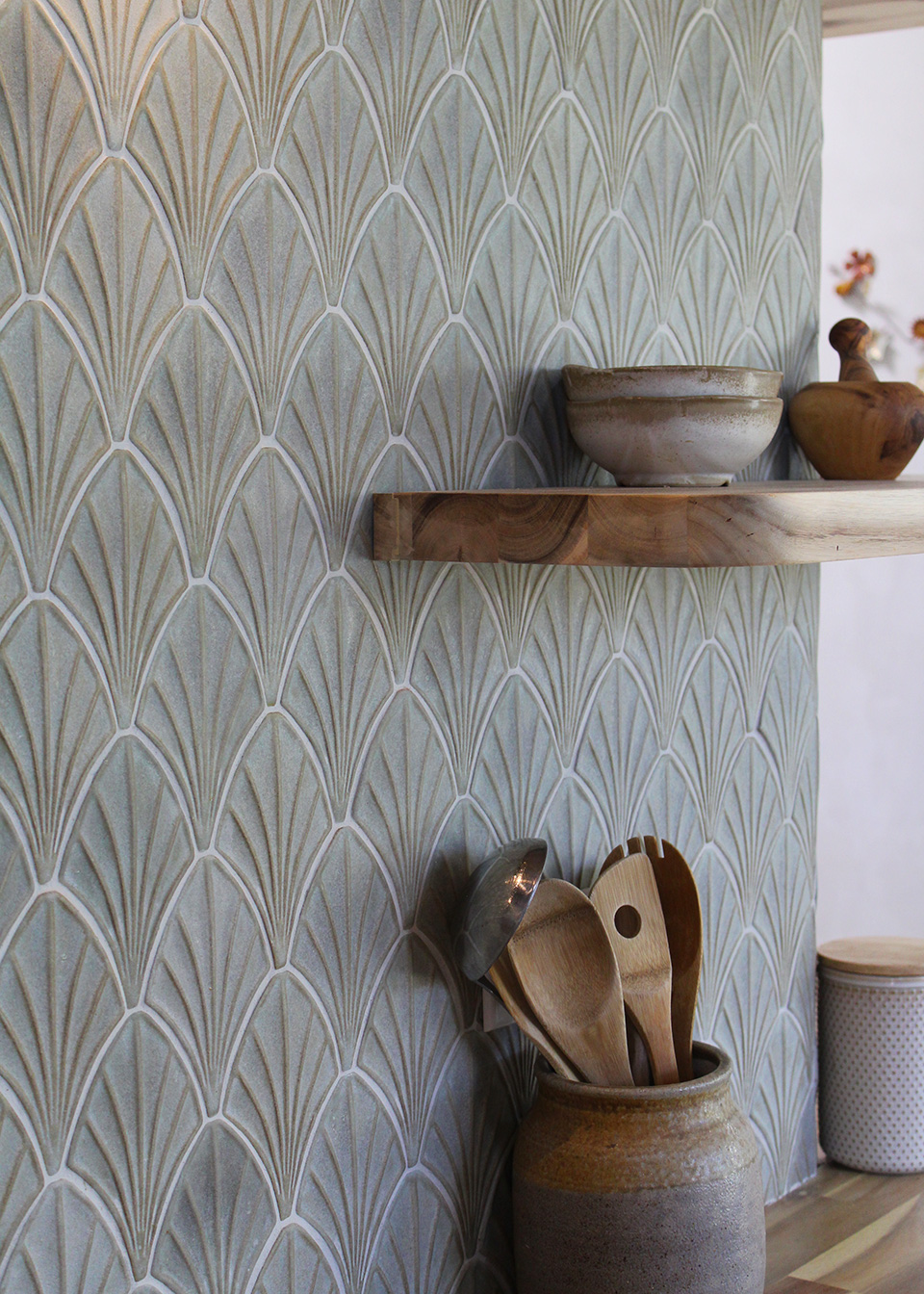
-Syzygy Tile, Storm Ridge Fan Deco Tile
That search—and translating a client’s desires—is part of her job, but so is explaining to customers what makes tile work so unique. She often talks about the number of hands involved along the way, and how a single handmade tile may move through dozens of steps before it reaches a wall. “The new way isn’t always the best way,” she says. “When you choose something like that, you’re carrying a tradition forward, not just covering a surface.”
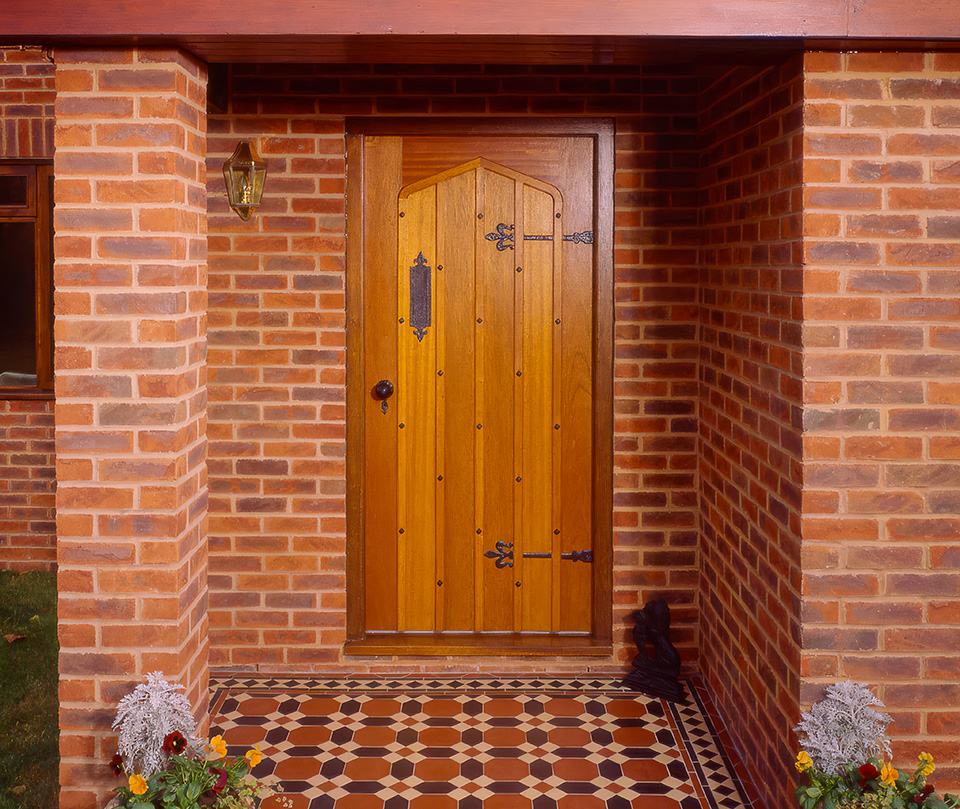
Lately, she has been thinking about front porches. In Europe, she noticed patterned tile used in vestibules, halls, and entrances—the transitional spaces people cross without necessarily thinking about them.
Leah likes the idea of giving those overlooked places more presence. Original Style’s Victorian Floor collection is one she highlighted in our conversation, particularly the Warwick pattern with a Keats border in black, red, and buff. She is already thinking about how to convince her husband to let her redo the walkway to her Victorian in Salt Lake City, hopefully in turquoise.
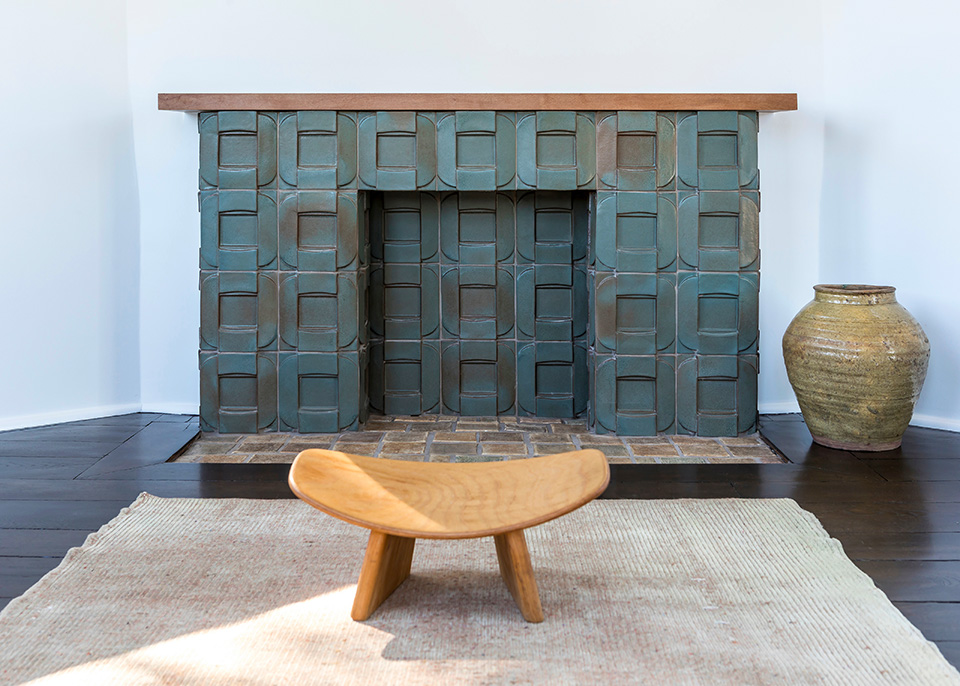
-Arto Buckle Pattern in Elder Green
It’s a small example, but it summarizes Leah’s passion well. She’s not just interested in tiles, but how they elevate a home. Or a fireplace. Or the wall behind a sink.
Europe may have reminded her how long materials can remain in the world when people care enough, but it also showed she can provide a similar experience to her clients in Utah.
“We don’t want to let these beautiful things that have held buildings together for hundreds of years go away,” she says. “We should appreciate them, and put love and intention into our homes.”
whj PROFILE
