
By: Laurenz Busch
The homes of the Flathead Valley are inspired by everything that surrounds us, the light coming off the lake, the grain of local timber, the way a family actually lives once the snow melts and muddy boots trudge through the door. For this special edition feature, we hand these pages to the talented people who know those homes best. The region’s interior designers share the ideas that guide their work. Their studios stretch from Whitefish to Bigfork, and several of them arrived here drawn by the landscape. One begins with light, another with the kitchen, another by listening, but convictions run through all of them, that well-made homes are built to be lived in for decades, that natural materials only grow more beautiful with time, and that the country outside the window belongs inside the house, too.
WE HOPE THIS FEATURE INSPIRES YOU TO SEE
YOUR OWN SPACES IN A NEW LIGHT
Meant To Be
Emily Mejia founded Emily Anne Interior Design in Spokane in 2016, relocating the business to her hometown of Whitefish in 2024. She earned a BFA in Interior Design from the Design Institute of San Diego and has worked in San Diego, Portland, Spokane, and throughout Montana, as well as in national retail project management. Outside the studio, she draws inspiration from the mountains, forests, and rivers that surround her.
WHJ: When you say a space should feel timeless, what does that mean to you?
Emily Mejia: It starts with the client. We’re designing a home for them and their family, not for ourselves. First, we have to understand who they are and how they want to live.
Then we consider materials that will last—not only aesthetically, but as products. Trends are important, but they should be one piece of the design, never the whole thing.
WHJ: Natural materials do some of that work on their own.
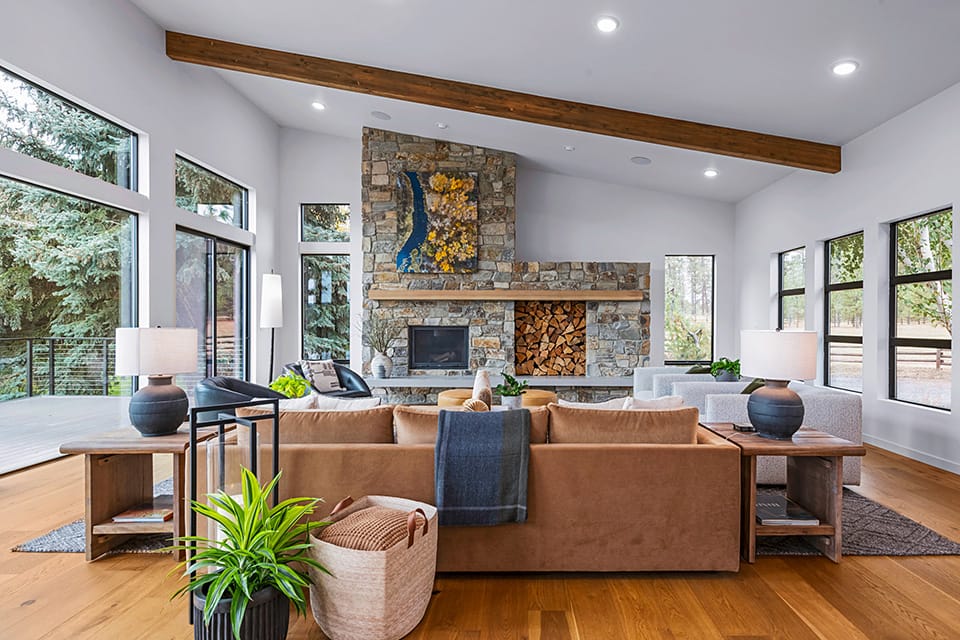
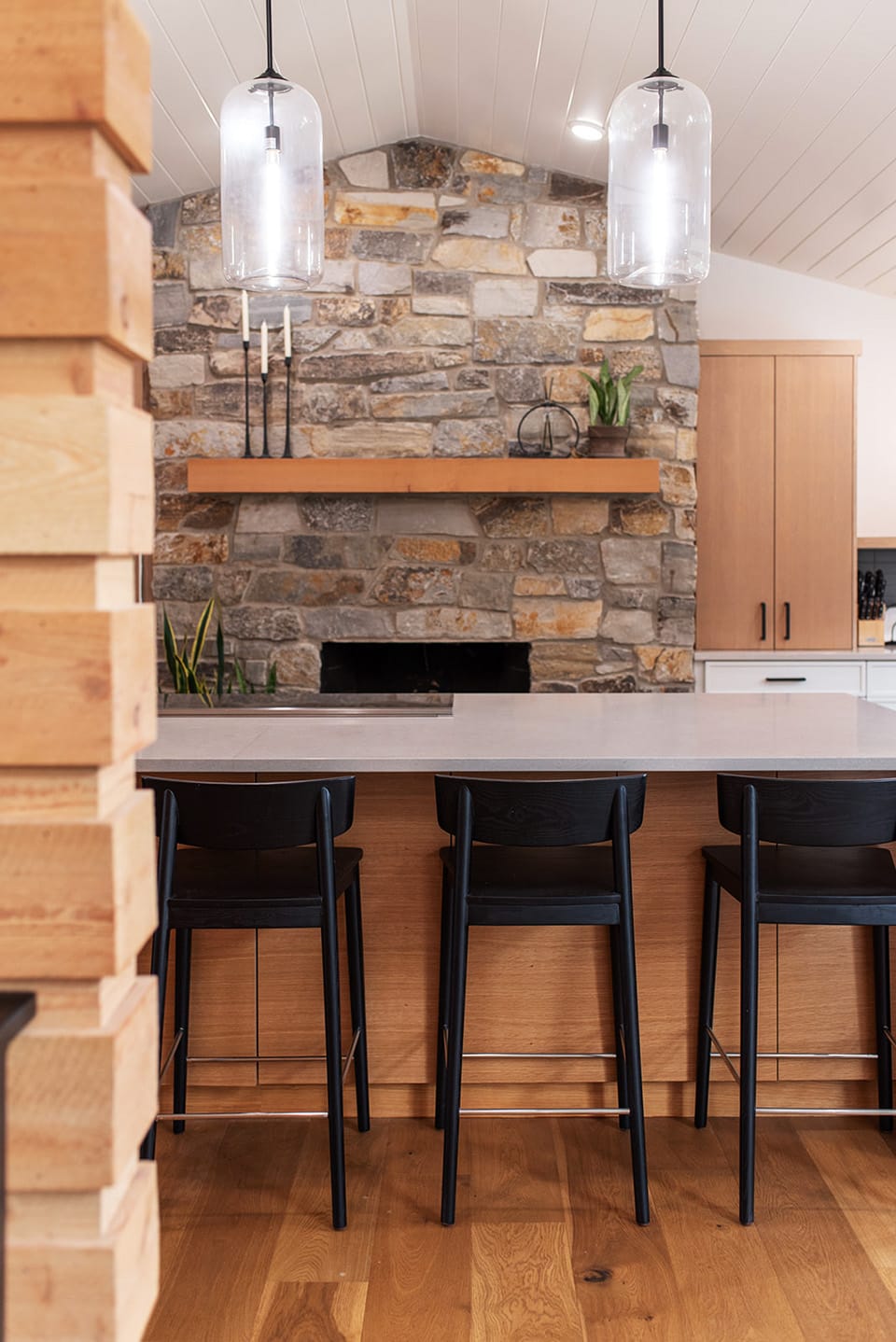
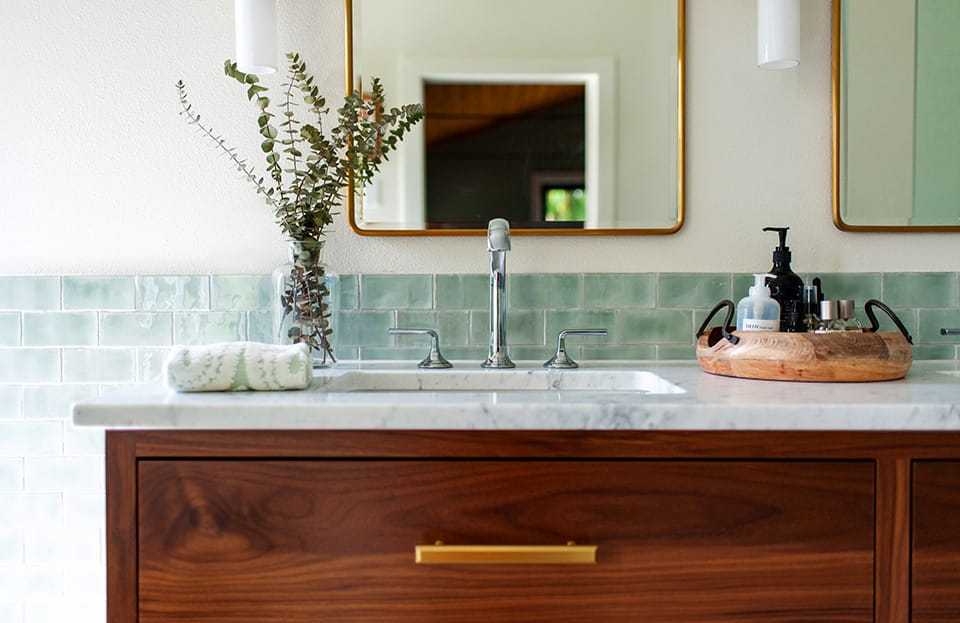
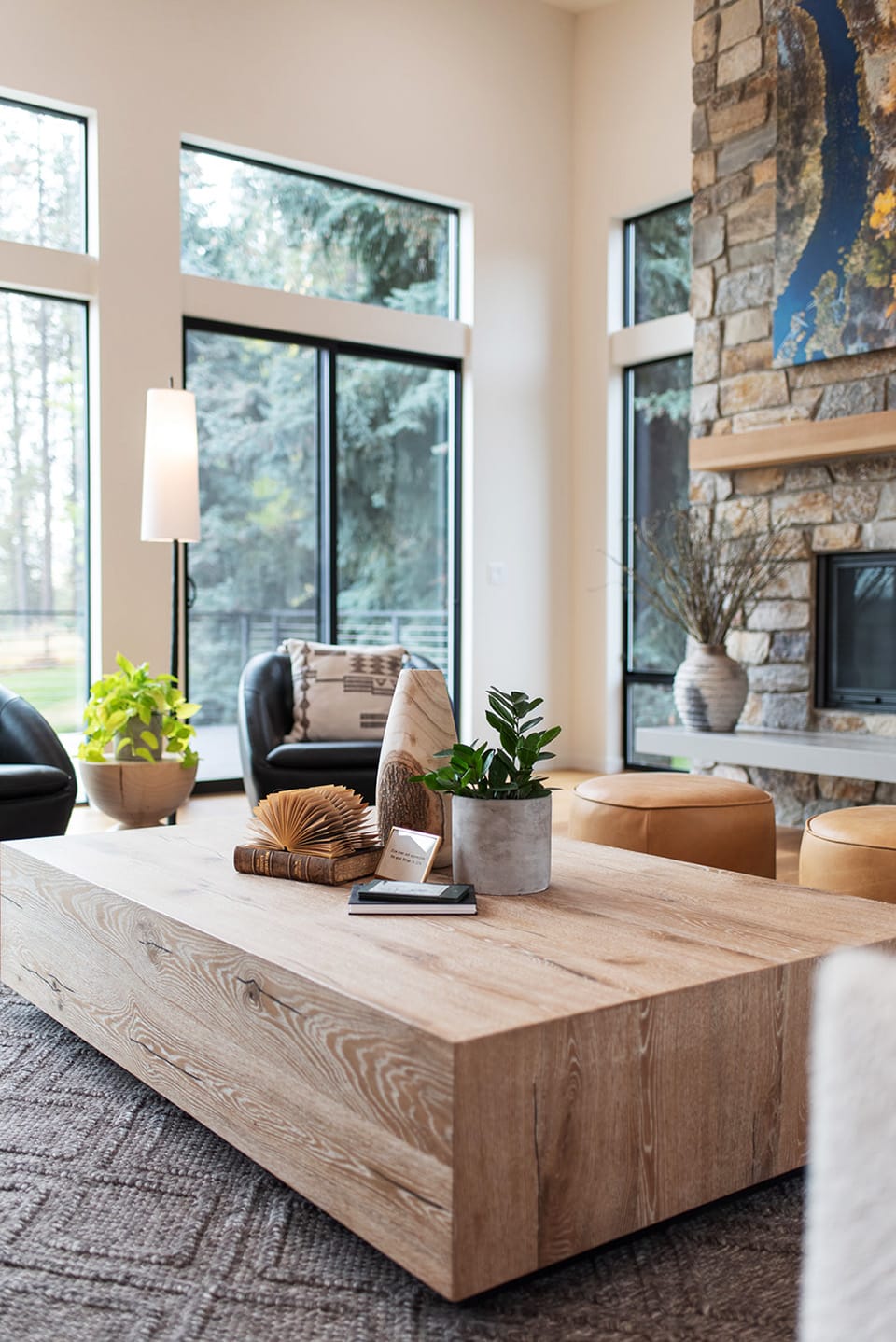
EM: They do, especially where we live. Natural materials age gracefully. Wood develops character, stone gains patina, and leather softens. They become more beautiful instead of simply looking worn.
When we fit a home into its natural setting, that alone can create a timeless effect.
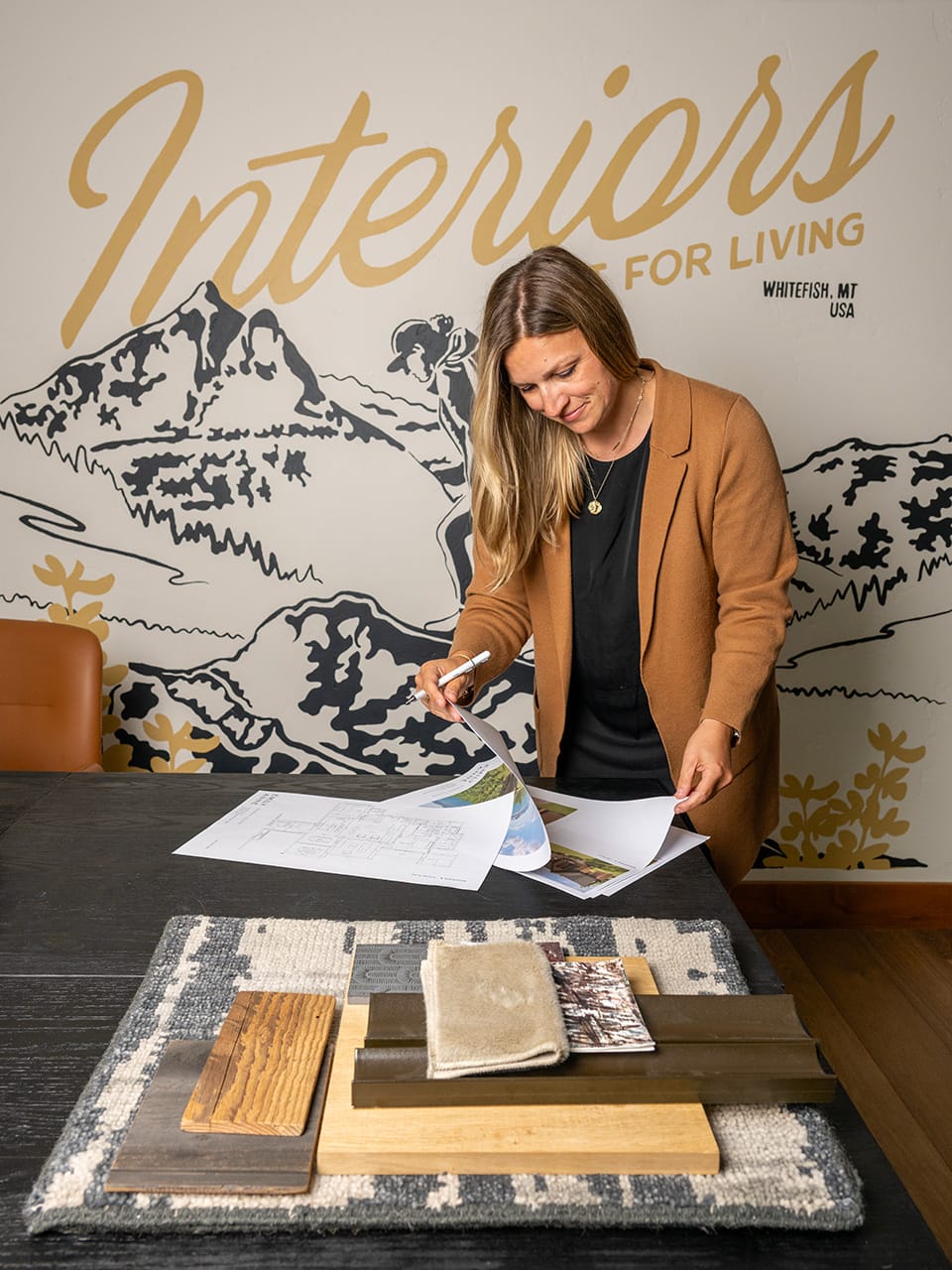
“WOOD DEVELOPS CHARACTER, STONE GAINS PATINA, AND LEATHER SOFTENS. THEY BECOME MORE BEAUTIFUL INSTEAD OF SIMPLY LOOKING WORN.”
THE MOST SUSTAINABLE HOME IS THE ONE YOU KEEP
For Emily Meija, timelessness and sustainability are closely connected. She sees the recurring cycle of remodeling, removing, and replacing as a significant source of waste, and when someone is able to love their home for decades because of the right redesign, it becomes inherently more sustainable.
That belief also informs her preference for natural materials over manufactured alternatives selected primarily for convenience or durability. While alternatives may also last, she says they don’t necessarily age with a family like wood, stone, and leather can.
Her approach is to invest in quality where change is difficult and disruptive, like flooring, walls, structural finishes, and other hard goods. Those choices are meant to endure, growing more beautiful and personal over time.
“NATURAL MATERIALS AGE AND GROW WITH YOU AS A FAMILY.”
WHERE TRENDS GET TO PLAY
WHJ: Where do trends belong in a home?
EM: In the layers that are easy to change; the structure of the house and the hard goods should remain timeless. Lighting, furniture silhouettes, and art are always evolving. They’re also easier to replace, so that’s where we’re more likely to follow a trend.
WHJ: Where are you willing to be especially bold?
EM: In a smaller room, such as a powder room or office. We can lean into something current because it’s a contained space and easier to redo if the client eventually wants a change.
WHJ: How does life in Montana shape your decisions about durability?
EM: Everything has to be strong. Our clients are hiking and skiing, then coming home with children and pets running through the house. I have young children myself, so I know what that’s like. Durable fabrics and genuine materials aren’t optional here. The interior has to support the lifestyle.
- KEEP IT TIMELESS
- Stone
- Floors
- Other hard goods
- Structural finishes
- LET IT EVOLVE
- Art
- Lighting
- Furniture silhouettes
- Powder rooms and other small spaces
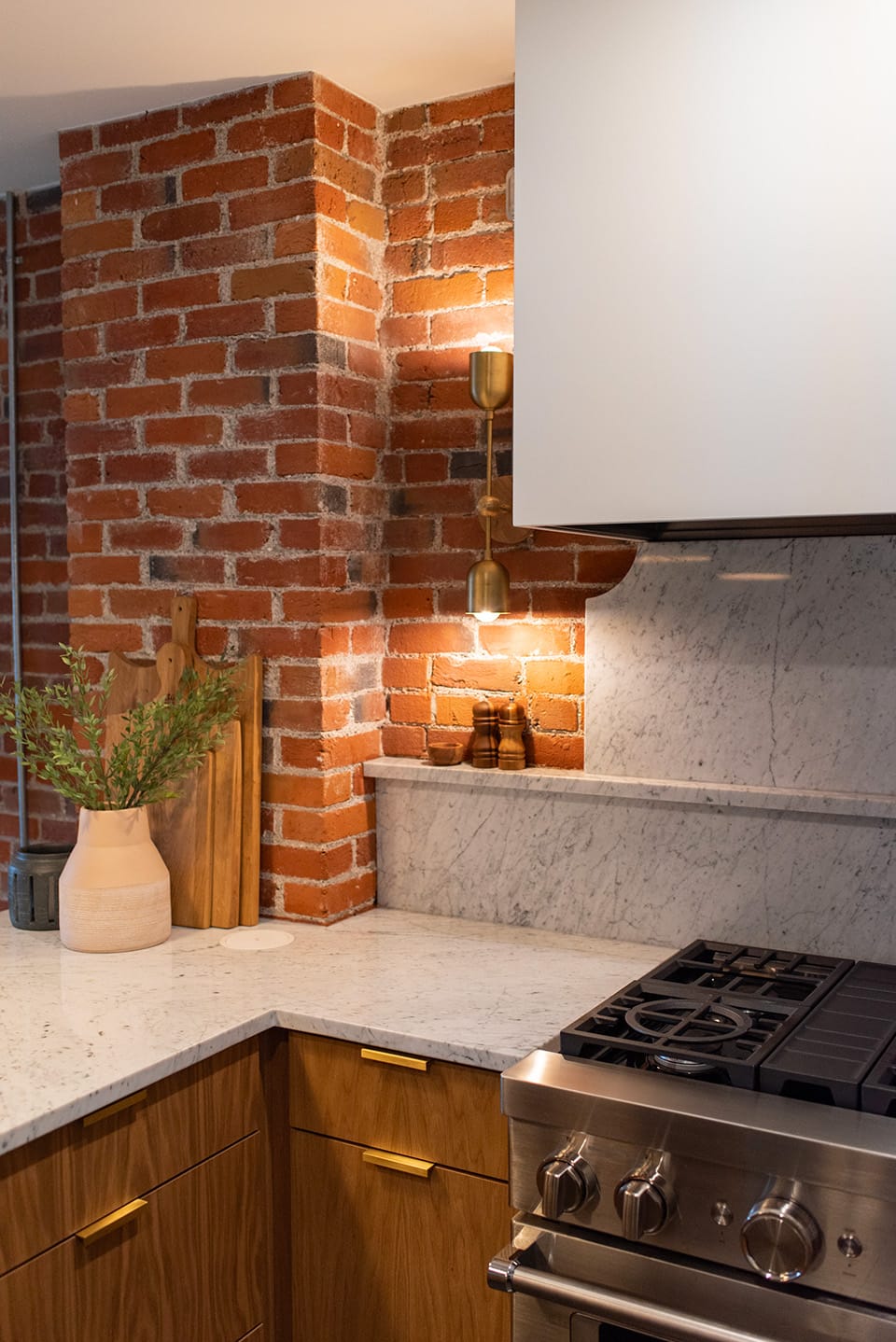
“TRENDS ARE IMPORTANT, BUT THEY SHOULD BE ONE PIECE OF THE DESIGN—NEVER THE WHOLE THING.”
LOCATION AUTHENTICITY
WHJ: You spent years working in retail and model homes—fields often built around change and turnover. How did that experience shape the way you design homes now?
EM: It pushed me in the opposite direction. That world is about creating an image for a brand, and I understand it, but authenticity matters too much to me. Now I try to get to the heart of the home: Who are you, and how do you want to live here? The design should be built around those answers instead of something temporary.
WHJ: When you revisit an older project, what tells you that it has held up?
EM: Its relationship to its location—and whether it feels authentic to that place. A loft in a 100-year-old Spokane building feels timeless when it connects to the brick, beams, and history. Walk into an old cabin in the woods or a villa in Italy, and it doesn’t feel dated. It feels meant to be there. If you’re true to the region and to what lies outside the door, the design remains timeless.
- Emily Anne Preferred Vendors
- Verellen
- Kush Rugs
- Ann Sacks
- Jamie Young Co.
- Zimmer + Rohde
- Glacier Millworks
- Montana Stone Fabricators
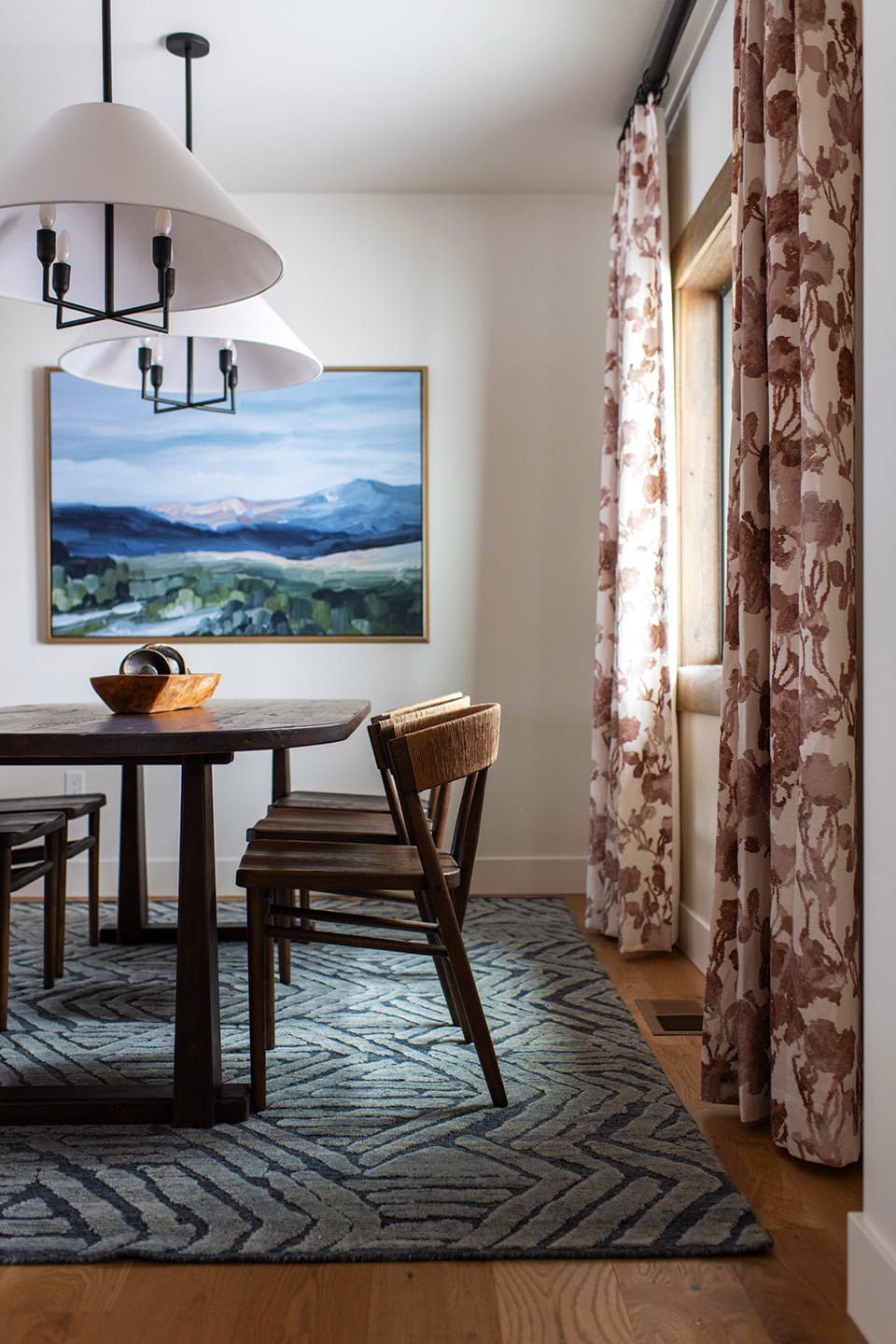
“WALK INTO AN OLD CABIN IN THE WOODS, AND IT DOESN’T FEEL DATED. IT FEELS MEANT TO BE THERE.”
whj INTERIOR DESIGN FEATURE
