
By: Laurenz Busch

The homes of the Flathead Valley are inspired by everything that surrounds us, the light coming off the lake, the grain of local timber, the way a family actually lives once the snow melts and muddy boots trudge through the door. For this special edition feature, we hand these pages to the talented people who know those homes best. The region’s interior designers share the ideas that guide their work. Their studios stretch from Whitefish to Bigfork, and several of them arrived here drawn by the landscape. One begins with light, another with the kitchen, another by listening, but convictions run through all of them, that well-made homes are built to be lived in for decades, that natural materials only grow more beautiful with time, and that the country outside the window belongs inside the house, too.
WE HOPE THIS FEATURE INSPIRES YOU TO SEE
YOUR OWN SPACES IN A NEW LIGHT
The Most Transformative Element
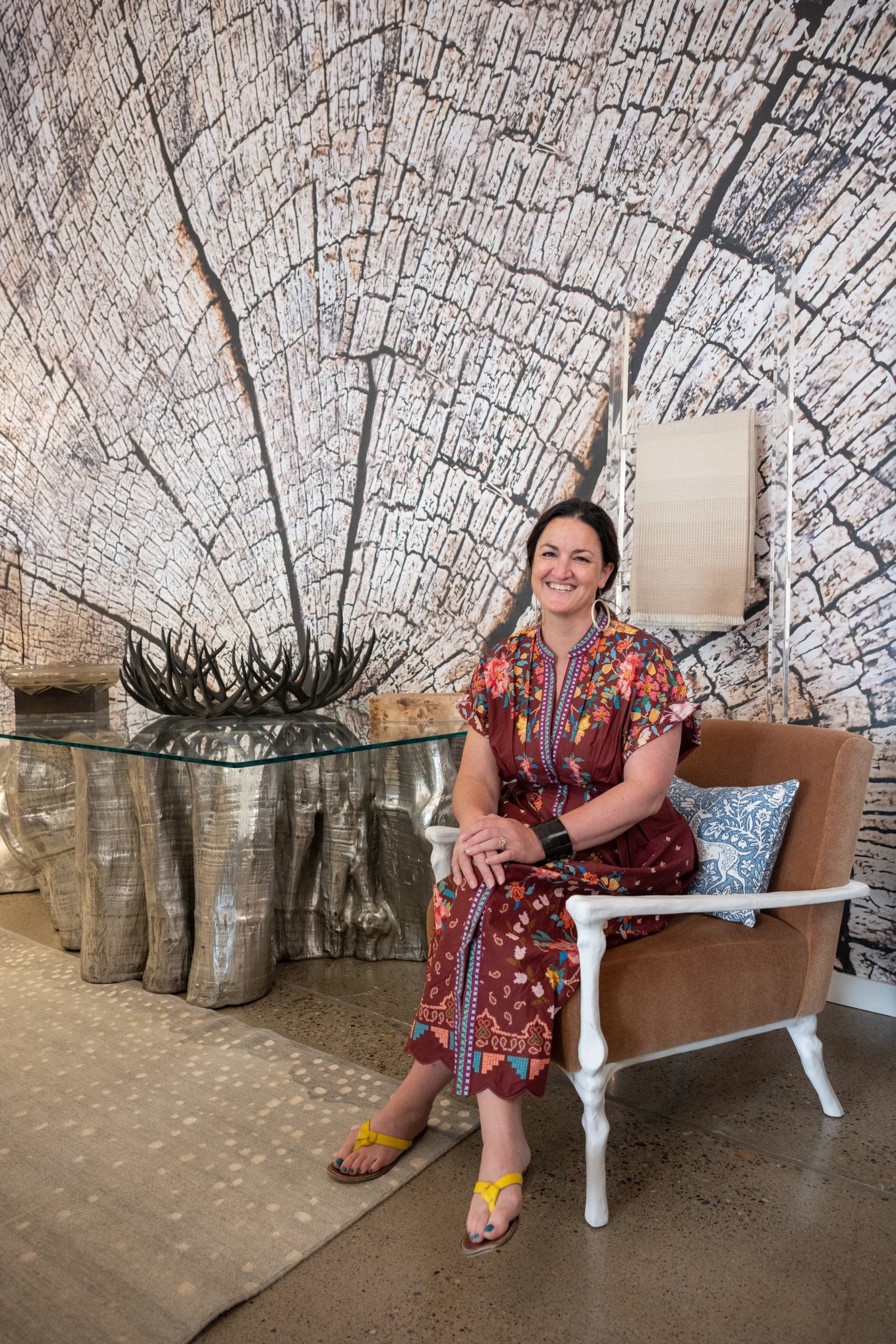
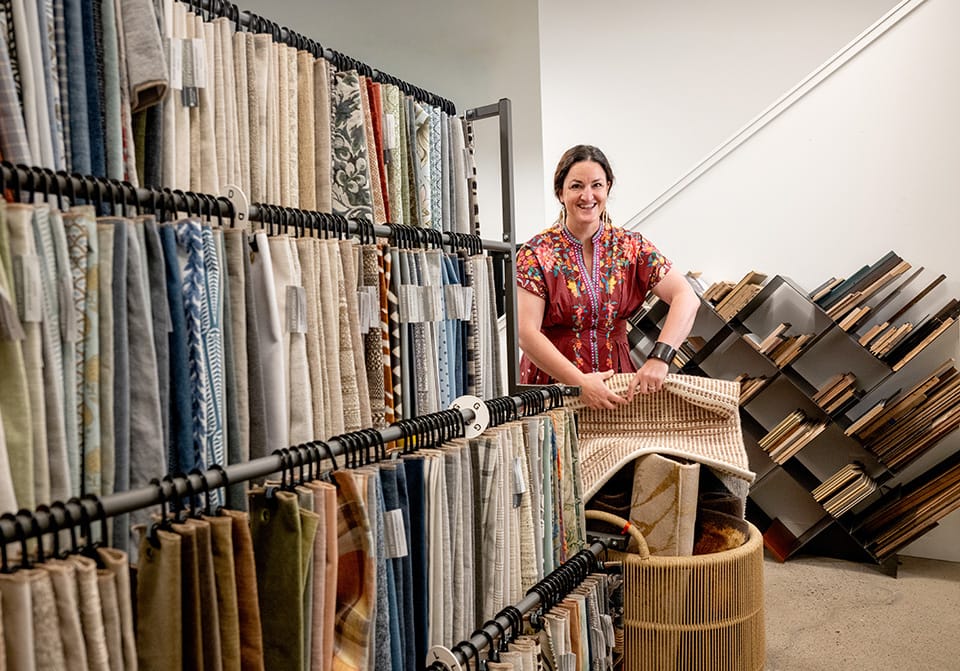
Heidi Tate founded Tate Interiors in 2010, working for years from a small studio in downtown Whitefish before the firm outgrew the space. Today, Tate Interiors operates from a converted auto garage just south of town. Behind its wood-clad exterior are a retail showroom, receiving area, conference rooms, fabric libraries, and design studios—all under one roof.
The seven-person team includes Tate, four full-time designers, a showroom manager, and an accountant. Across every project, one element transforms Montana homes more than any other: light.
“LIGHTING IS THE MOST TRANSFORMATIVE ELEMENT IN ANY SPACE. IT ISN’T ONLY ABOUT ILLUMINATION.”
When you walk into a room, what do you notice about the light?
Heidi Tate: Lighting is probably the most transformative element in any space, especially in a home. It isn’t only about illumination. It creates mood, enhances the architecture, influences how materials appear, and shapes the way clients experience a room.
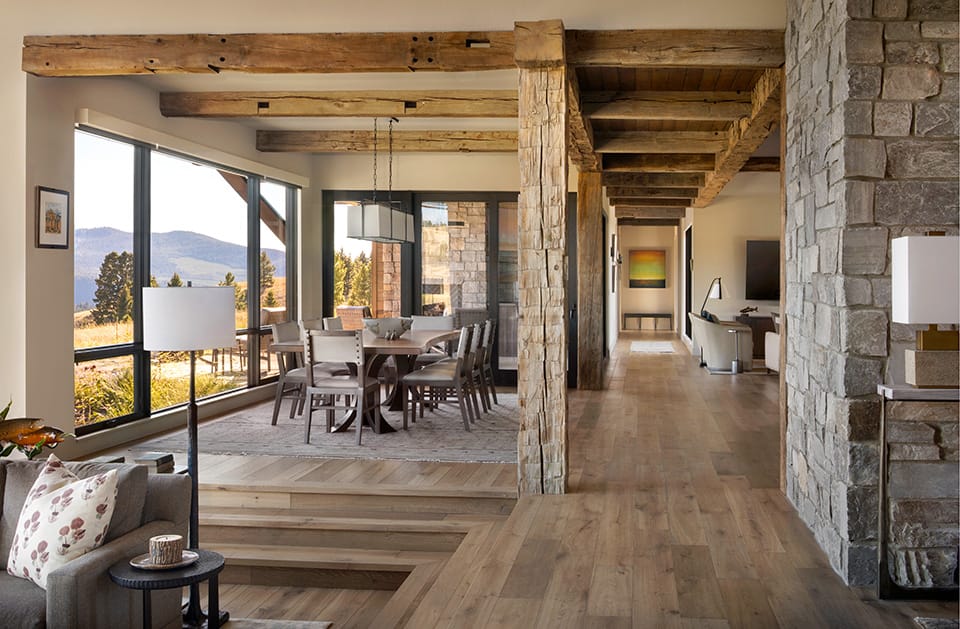
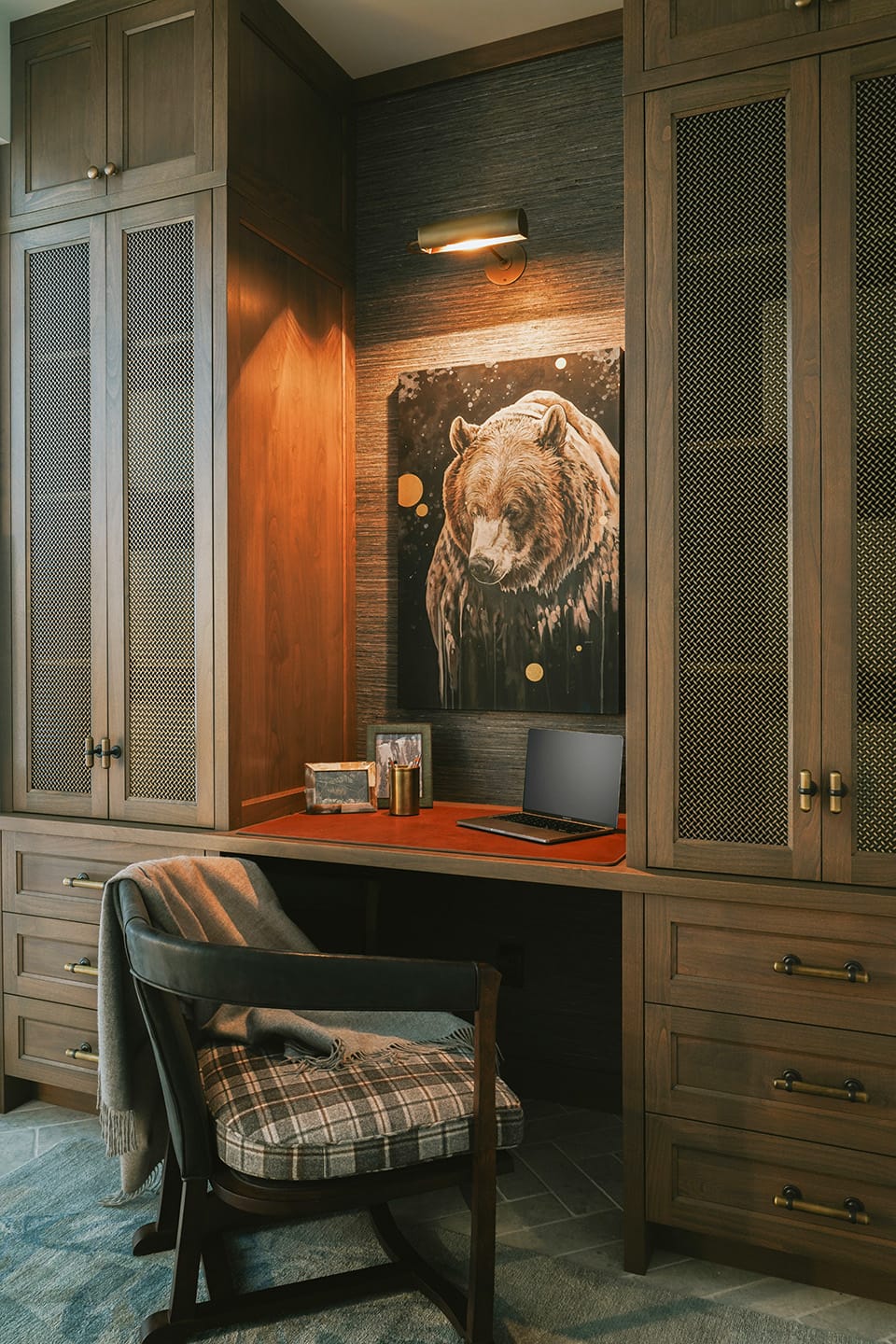
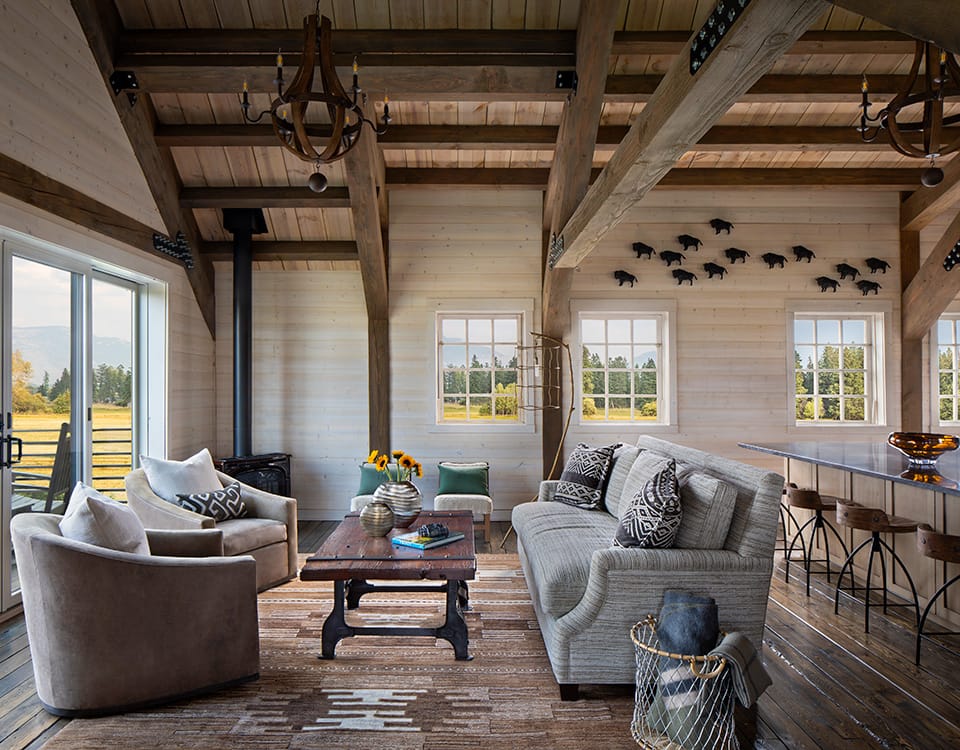
We design lighting in layers: architectural and task lighting, decorative fixtures, table lamps, and accent lighting. Those layers allow a home to feel dynamic throughout the day. Montana homes also tend to have a lot of glazing, so we use window treatments and sheer draperies to shape the natural light—and the mood of the room.
Designed in layers
At Tate Interiors, lighting enters the process almost as early as the furniture. The team first maps how people will sit, live, and move through a space, then layers the lighting plan over it. Each decision responds to the room around it: the reflectivity of the finishes, the depth of the paint color, the position of the furniture, and the mood the client wants to create. The goal isn’t simply illumination, but control. High-quality dimmers, well-chosen fixtures, and thoughtful switching allow a room to shift from bright and functional to warm and atmospheric.
“A CEILING FULL OF RECESSED LIGHTING MAY PHOTOGRAPH WELL, BUT IT ISN’T ALWAYS PLEASANT TO LIVE WITH.”
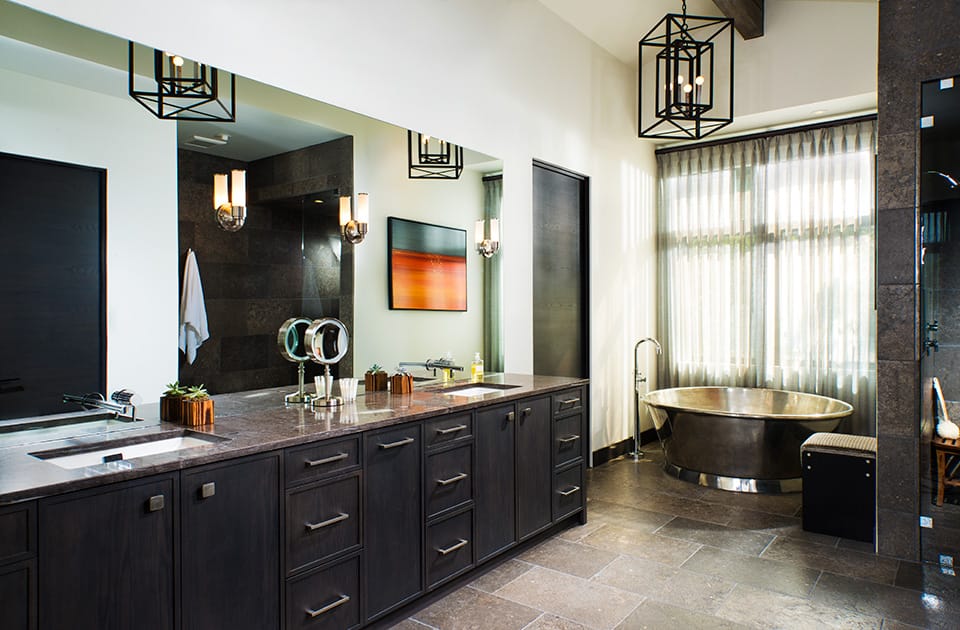
A Room in Four Layers
- Architectural & task lighting
- Recessed fixtures and focused light for kitchens, work surfaces, and daily tasks.
- Decorative lighting
- Pendants, chandeliers, and sconces that contribute to the room’s visual character.
- Table & reading lamps
- Lower sources that bring warmth and place light closer to where people live.
- Accent & path lighting
- Subtle illumination beneath a cabinet or toe kick that adds depth.
Warmth, measured
WHJ: How do you determine the right color temperature?
Heidi:We almost always work between 2700 and 3000 Kelvin, depending on the finishes. With white or nearly white walls, we typically use 3000K. When the finishes are warmer, we generally use 2700K.
It sounds like a narrow range, but it makes a noticeable difference. Put a lot of 2700K light into a crisper, starker room, and it can cast warmer tones onto the fabrics and walls. Color temperature has to be selected in relation to the materials—not in isolation.
WHJ: You can’t install natural light, but you can design around it. How does Montana’s landscape affect those decisions?
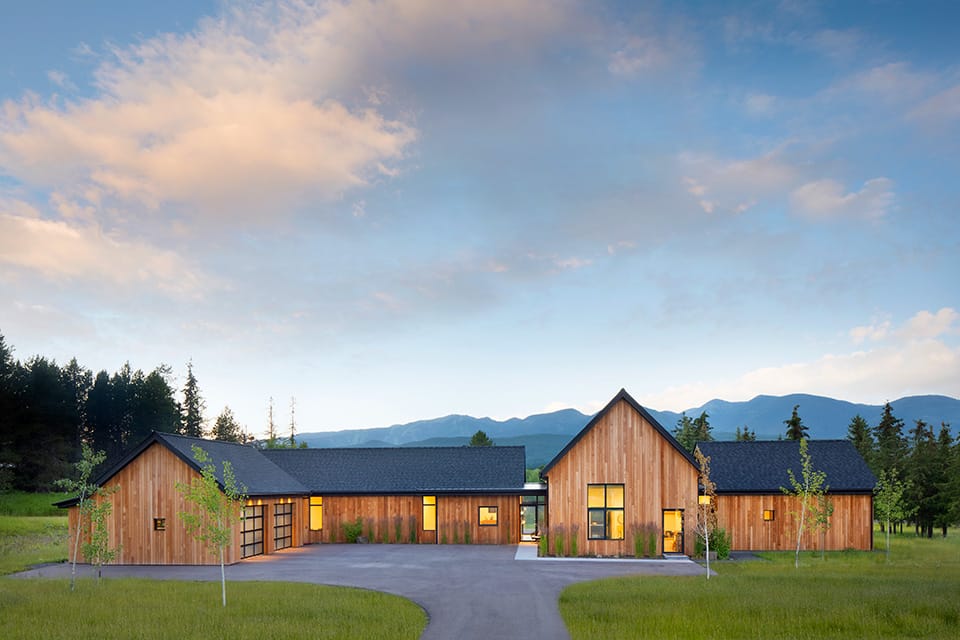
Heidi:We often build on hillsides and mountainsides, where most of the natural light may enter from only one side of the house. That can create significant glare. It is difficult to explain to a client that even with a wall of windows, a house can still feel dark.
We plan for that contrast by creating multiple lighting zones that can be adjusted, dimmed, or turned off independently. We also use sheer fabrics to soften the sunlight without closing the shades completely—especially on a hot, bright day or when sunlight is reflecting off the lake.
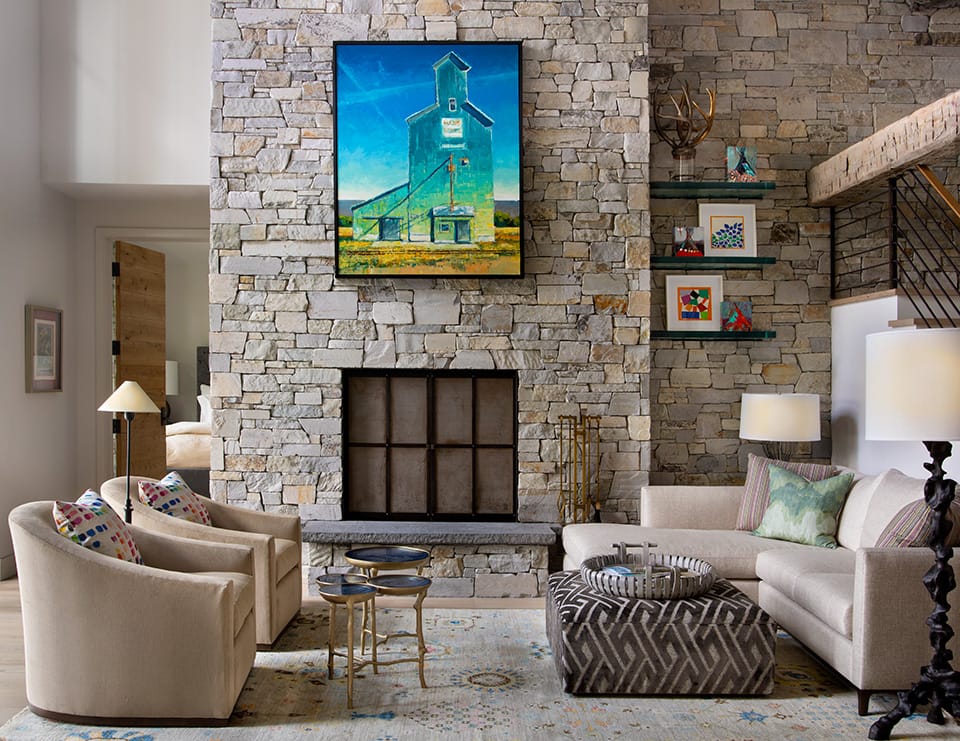
- Reading the Kelvin
- White or near-white walls: 3000K
- Warmer finishes: 2700K
- Remember: Color temperature should be selected in relation to a room’s finishes.
NOTE ON MATERIALS | Building in Montana often means working with wood, stone, and other natural materials. Tate says warm light brings out the depth and subtle variations in those surfaces. The firm gravitates toward fixtures that combine materials such as brass, glass, leather, and wood—particularly pieces made by hand.
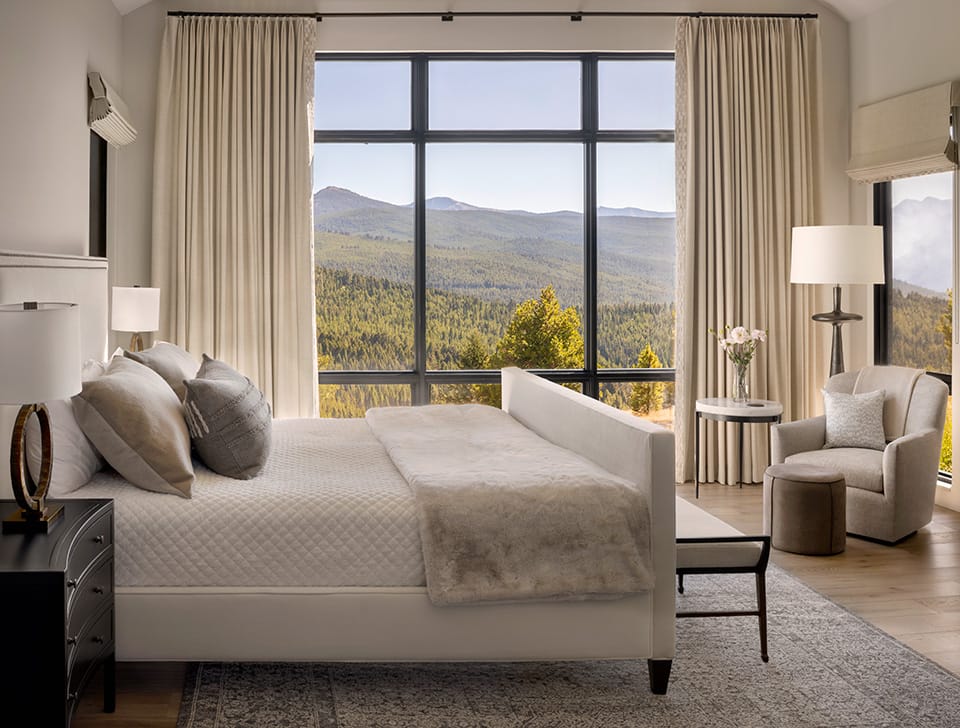
“EVEN WITH A WALL OF WINDOWS, A HOUSE CAN STILL FEEL DARK.”
Built to live with
WHJ: What advice would you give a homeowner who wants to create a warmer, more inviting space?
Heidi:As a company, we are deeply invested in quality. We want people to live with their furnishings and finishes for decades. We have no intention of selling throwaway furniture. When a home has layers—in its lighting, materials, and furnishings—it can evolve with the people who live there. You are less likely to feel locked into a single look or mood.
“WE WANT PEOPLE TO LIVE WITH THEIR FURNISHINGS AND FINISHES FOR DECADES.”
whj INTERIOR DESIGN FEATURE
