
Written by: Laurenz Busch, Editor-in-Chief, Western Home Journal
Photography by: Kayla McKenzie Photography
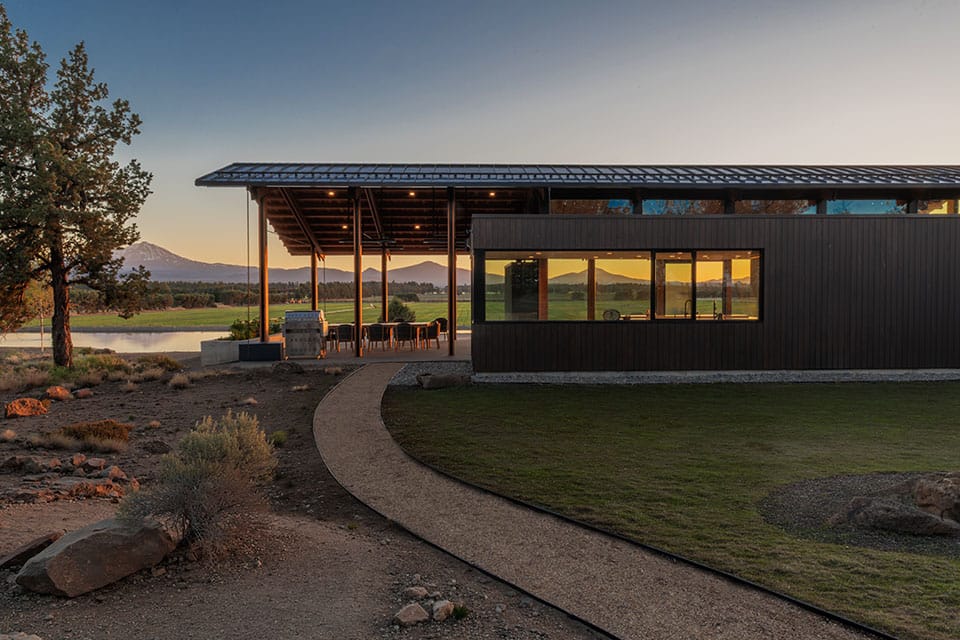
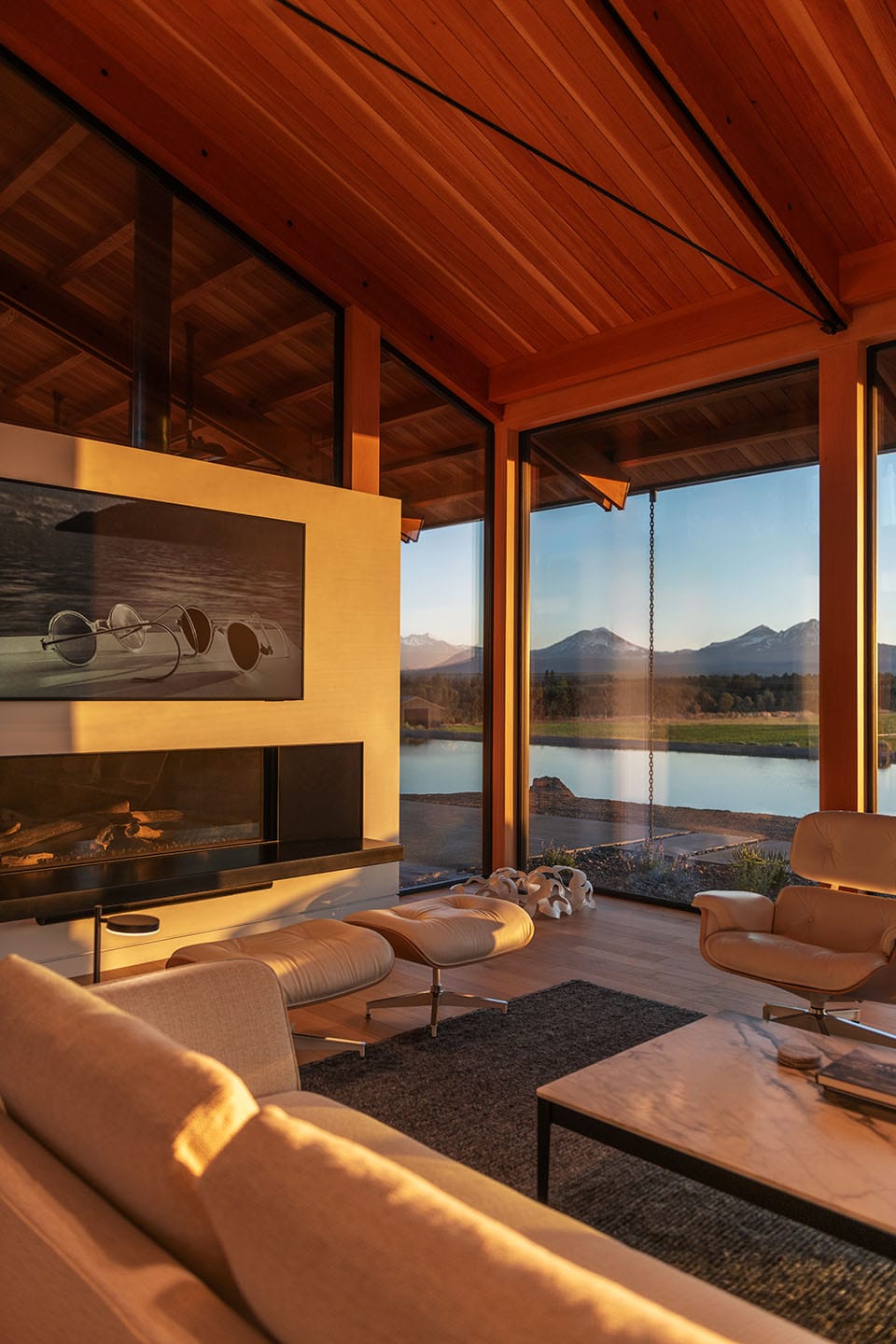
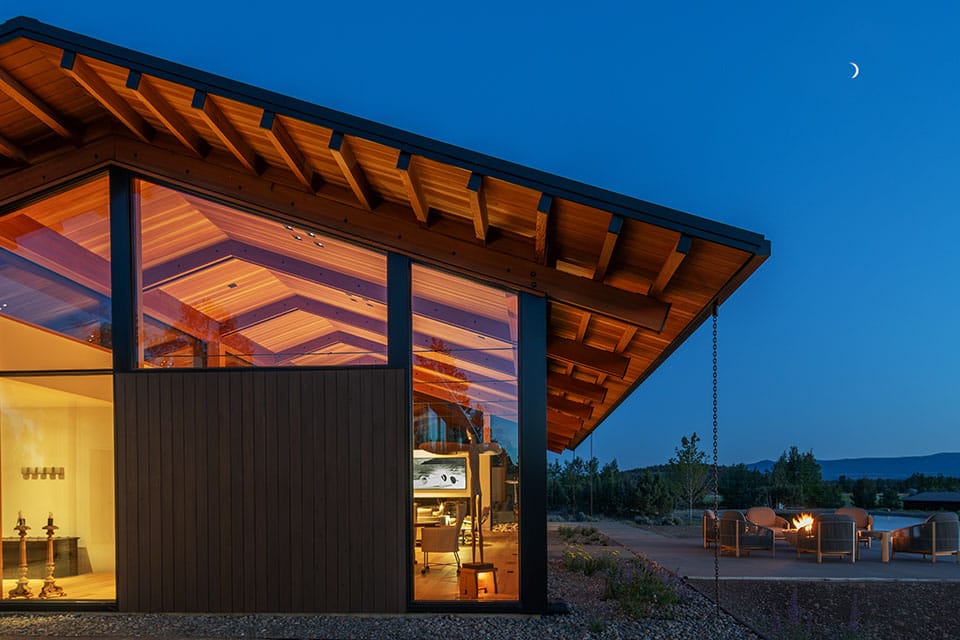
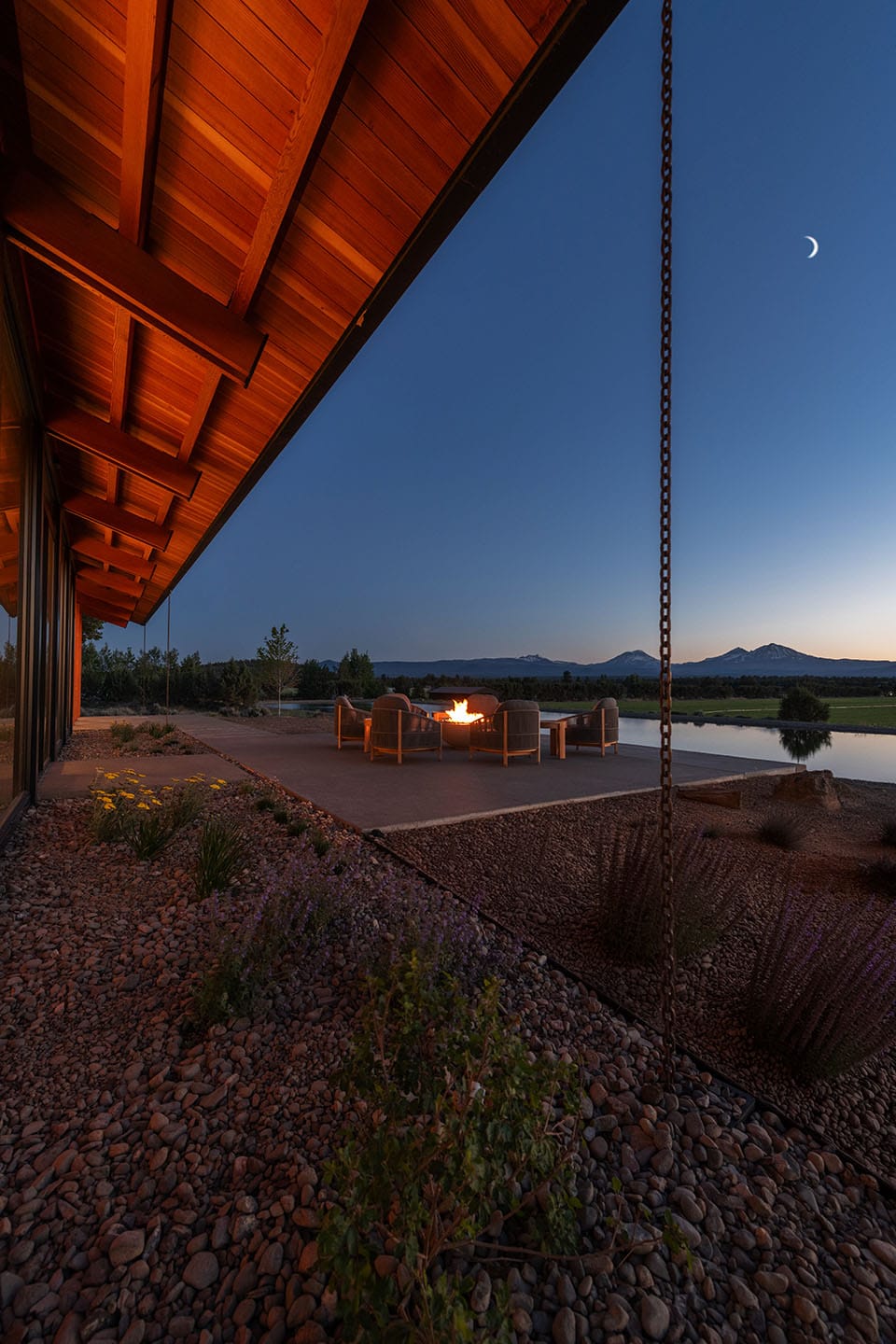
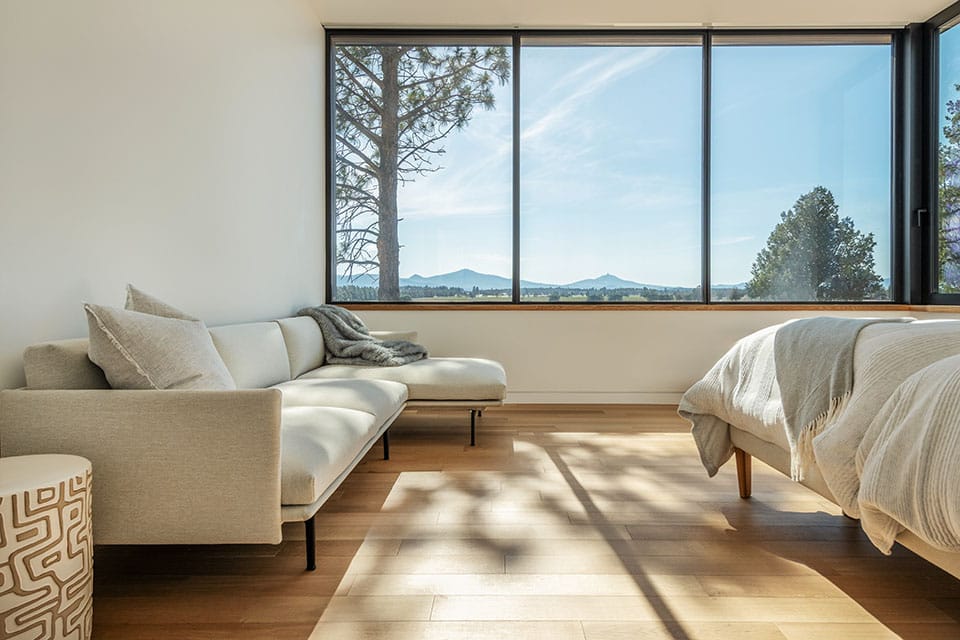
When Rick Berry, the principal designer at Scott Edwards Architecture, first walked the property with the home-owners, the obvious move was to point the house at the mountains. From the 50-acre parcel just east of Sisters, the Cascades run the length of the western horizon—seven peaks, from Mount Jefferson to the Three Sisters and beyond.
Timberline Construction & CJ Painting Bring Exacting Craft—and An Easy Rapport—to A Home Set Amid Hayfields Outside Sisters, Oregon
“WE WANTED IT TO FEEL LIKE IT WAS ALWAYS THERE. WHEN YOU WALK INSIDE, YOU CAN READ THE STRUCTURE OF THE BUILDING, THE WAY YOU CAN WHEN YOU STEP INTO A BARN.”

-Christian “CJ” Martin, Owner, CJ Painting & Kristian Willman, Owner, Timberline Construction
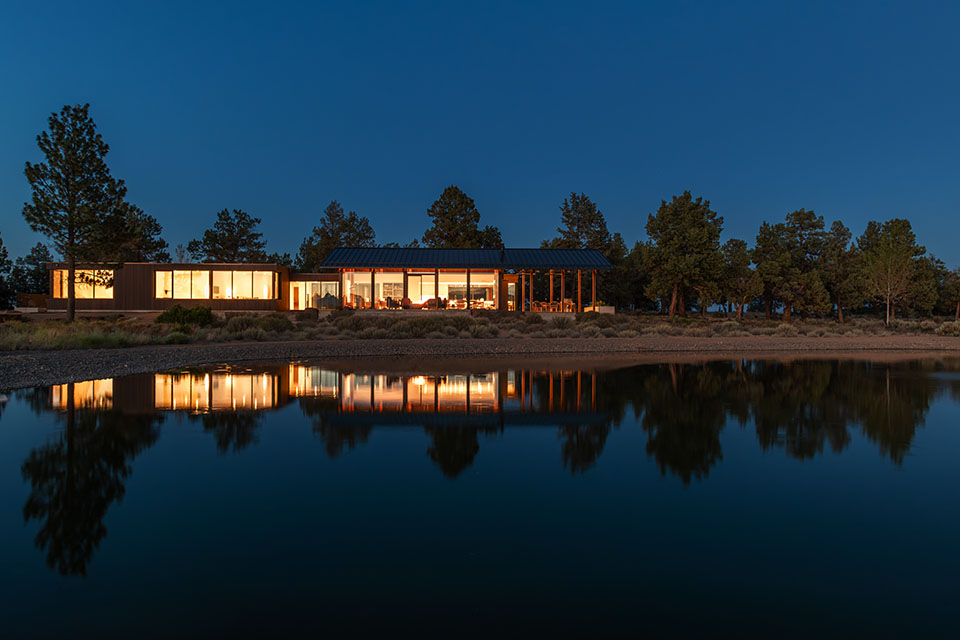
Instead, Berry and the homeowners turned the house toward the hayfields that have defined this stretch of Central Oregon for more than a century—using those fields as a foreground that carries the eye out to the mountains beyond. Capturing the mountain views while keeping something in the near view was key to the design. Today, the Pacific Northwest design sits among working fields and a reshaped pond, framed by junipers. An old hay barn still anchors the far edge of the landscape, and a former garage has been reborn as an art studio for the homeowner, a sculptor.
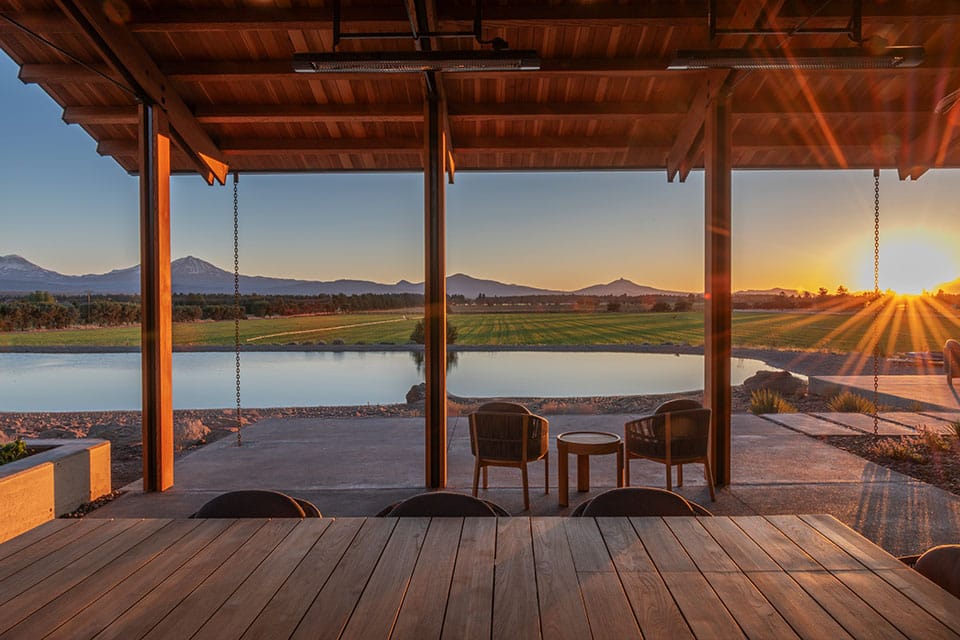
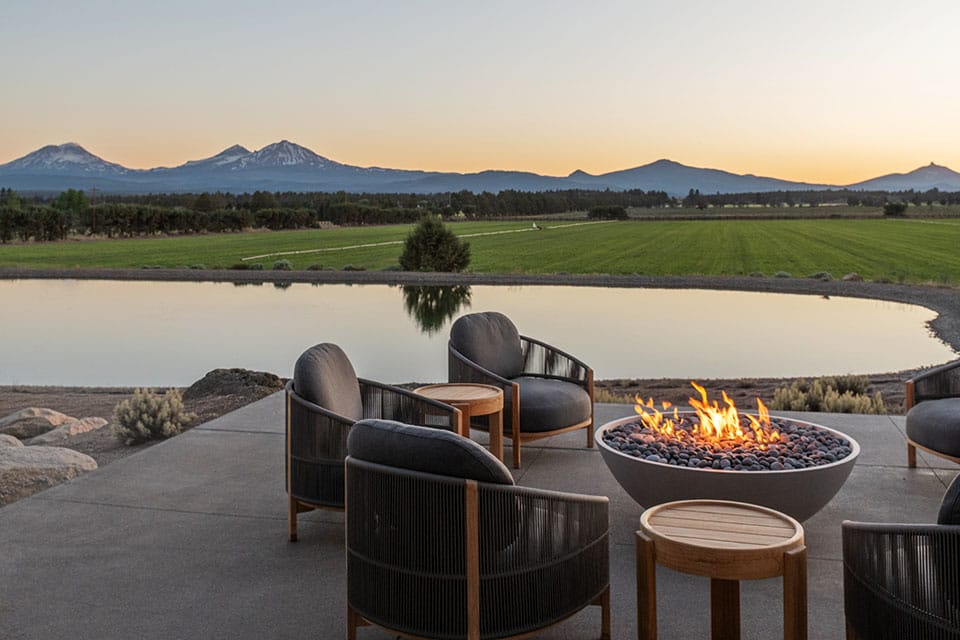
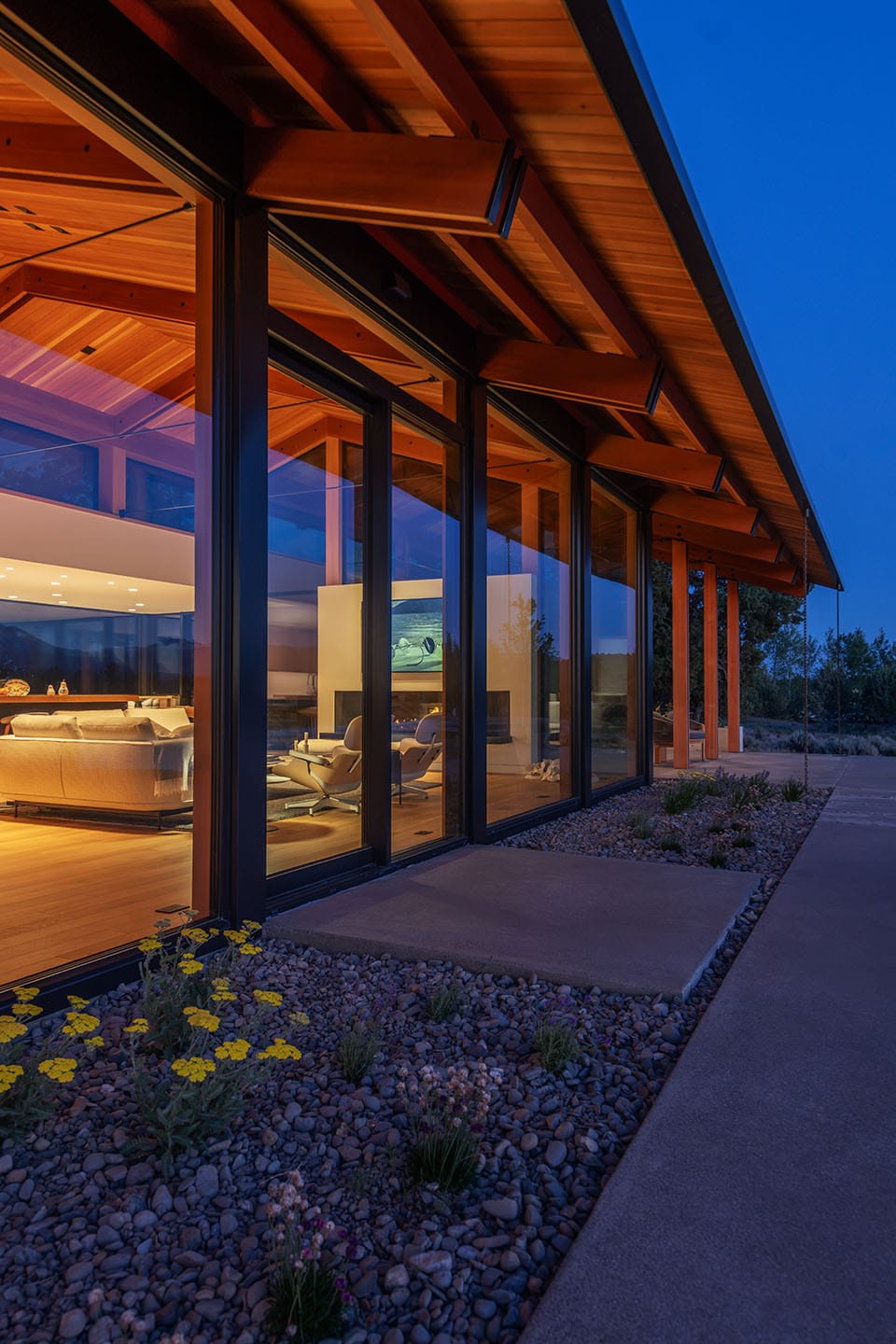
Built by Timberline Construction and finished by CJ Painting, the home is a contemporary read on the region’s agricultural heritage. Broad walls of glass pull light deep into the rooms while exposed steel carries a timber roof. Less visible—but every bit as structural—are the conversations and relationships that shaped nearly every decision long before anyone poured a foundation.
“The homeowners really immersed themselves in that property from the start,” Berry says. “They wanted to understand it before deciding what belonged there.”
That meant staying in the original farmhouse for many years, watching how the sun crossed the land through the year and where the wind came from in each season. Rather than treat the site as a blank slate, the design grew from what was already there. The barn stayed. The garage found new purpose. And when the original house was finally taken down, it lived on—its cabinets and windows salvaged and reused in the studio.
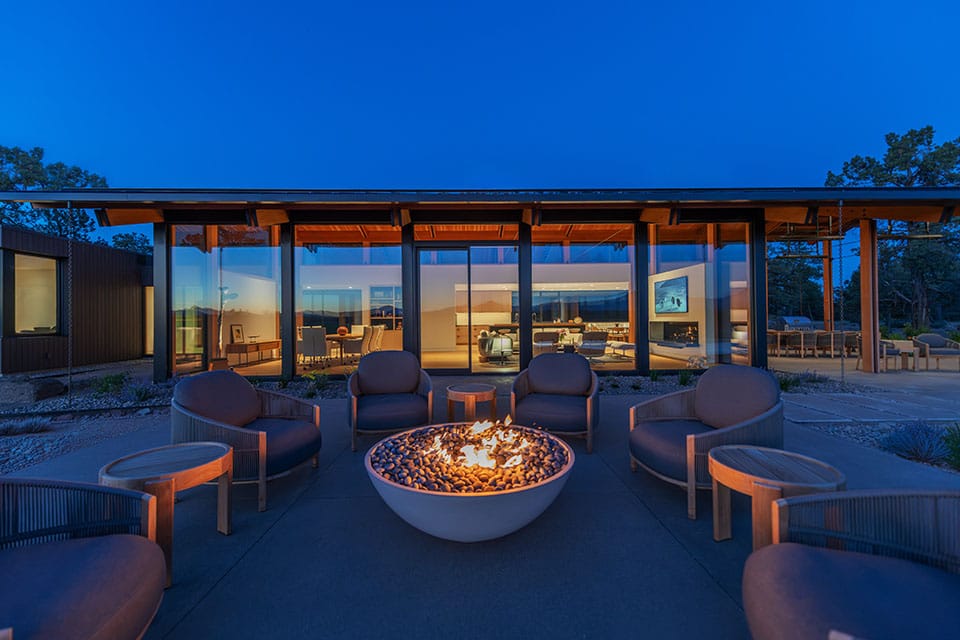
“We really tried to save the original house,” the homeowner says. “It just didn’t have very good bones. But we were able to reuse the cabinets and some windows, so that was great.”
Berry describes the finished result as “mountain agrarian”—an asymmetrical gable that borrows its cues from the old barn, structured on a repeating bay of steel and timber. “We wanted it to feel like it was always there,” he says. “When you walk inside, you can read the structure of the building, the way you can when you step into a barn.”
By the time the crew arrived, the designer, homeowners, and builders already knew where the project was headed with finalized plans for a Pacific Northwest design. Just as important, they made sure everyone else did too.
Steel , Subfloor, and a Painter Who Showed Up Early
That “everyone else” included Christian “CJ” Martin, owner of CJ Painting, who joined the project when the house was still little more than steel framing and a concrete subfloor.
For Timberline owner Kristian Willman, the roof was both the showpiece and the puzzle. Steel truss members were buried inside wood, tied into purlins and car decking, with the insulation hidden up on top where no one would ever see it.
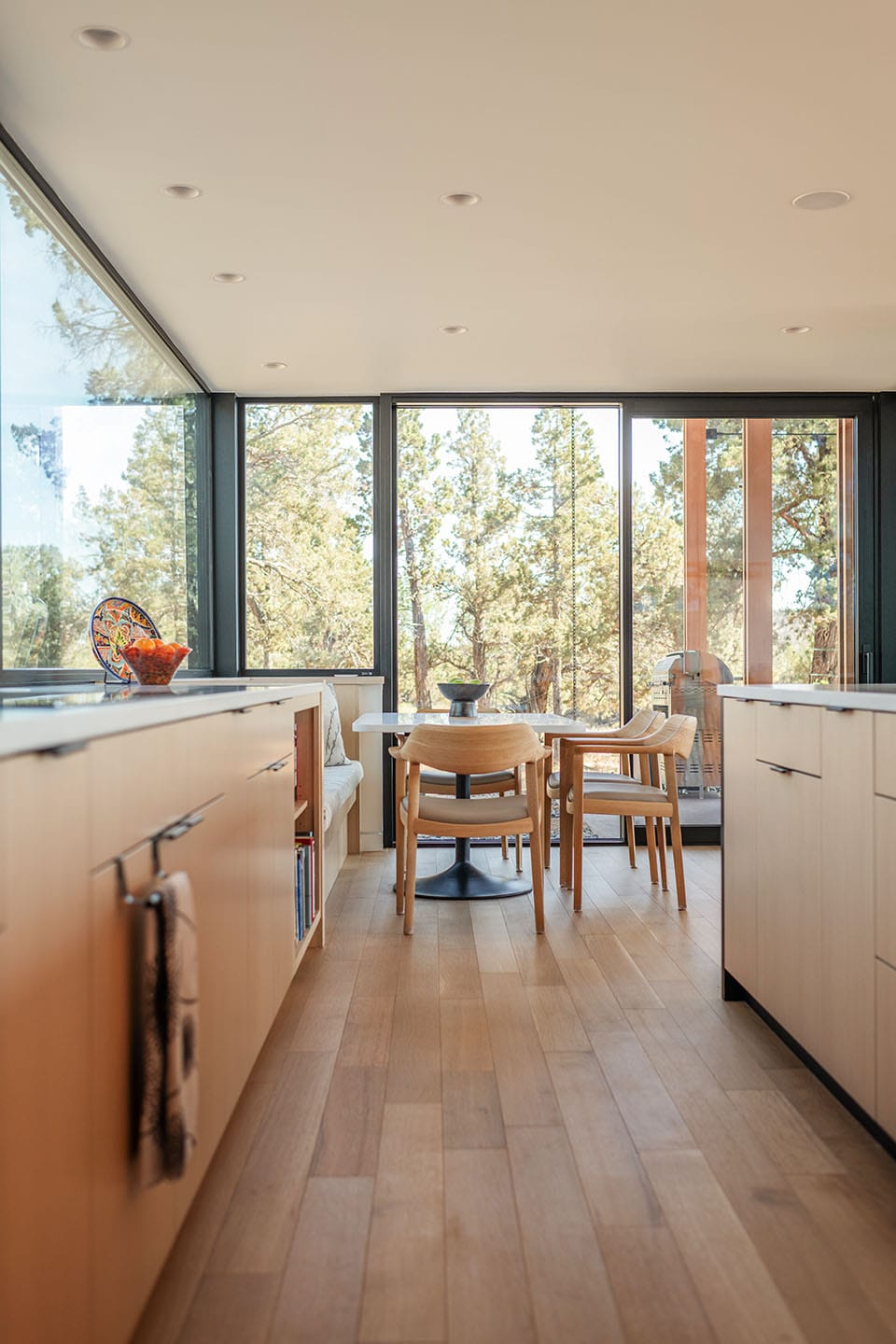
“I WAS ALWAYS TOLD THAT IN CENTRAL OREGON, IF YOU CAN HAVE WATER, GREEN GRASS, OR MOUNTAINS, ONE OF THE THREE IS GOOD…I TOLD THEM: BUILD THIS POND, AND YOU CAN HAVE ALL THREE.“
“It’s kind of a unique way of building,” Kristian says. “But to get that look, that’s what you have to do.”
Kristian had taken over project management midstream, stepping in at rough framing, before the windows were even in—drawn, as usual, to exactly the kind of complexity a lot of builders steer around. “We’re always trying to build the best home possible,” he says, and no matter the house, it always gets the same effort.
Some of the property’s best ideas were his, too. The pond below the house—now a mirror for the mountains, and the spot where the homeowner swims laps in the mornings—wasn’t in the original plan. An old irrigation pond sat there, and the homeowners weren’t sure they wanted to keep it. Kristian talked them into something better. “I was always told that in Central Oregon, if you can have water, green grass, or mountains, one of the three is good,” he says. “I told them: build this pond, and you can have all three.”
That instinct is what drew Scott Edwards Architecture to Timberline in the first place. “I really appreciate how invested they get early in the process, even in schematic design,” Berry says.
“They bring cost to the table right away, and they’re really good listeners.” On this house, that meant sitting down and walking the entire plan before construction, hunting for smarter ways to build without losing the design.
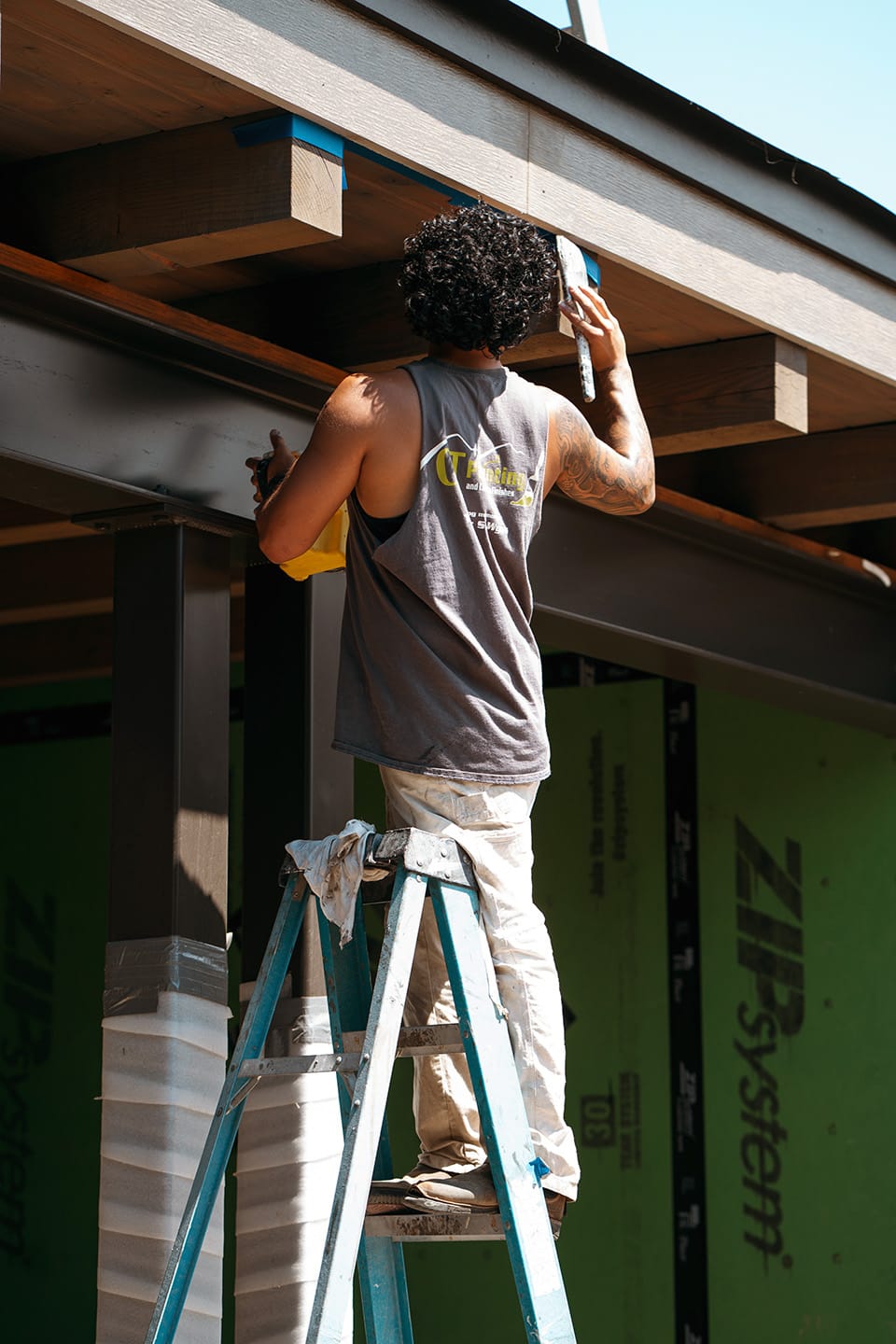
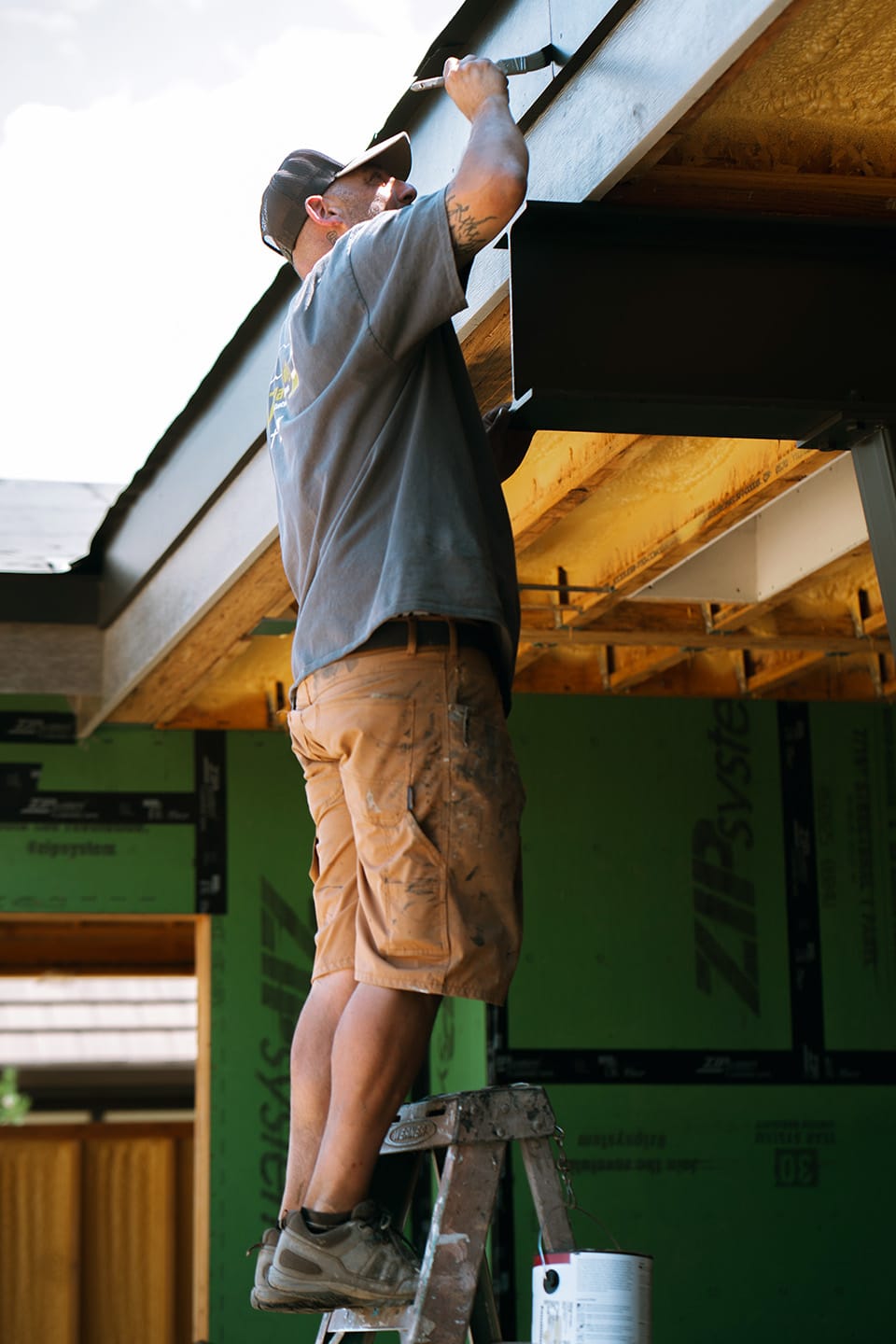
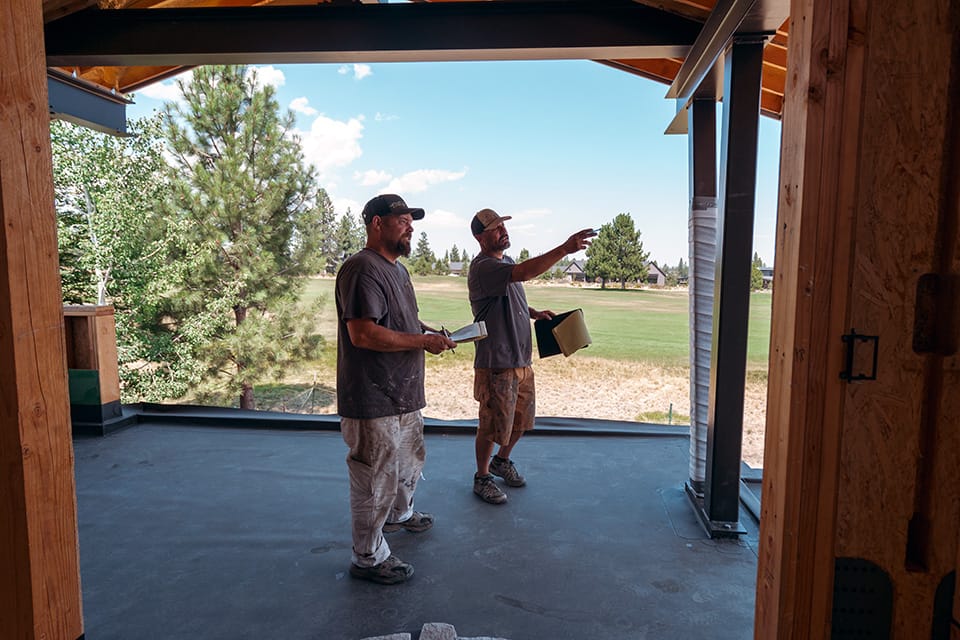
CJ was there too, walking that open subfloor, with steel posts and blue sky all around him, talking colors and stains before there was a single wall to paint. Getting brought in that early is rare for a painter, and he knows it.
“A lot of builders don’t do that,” he says. “Timberline hands me my colors before the house is even framed. I’m working up stain samples for the architect and the designer while it’s still just posts in the ground.”
That’s by design. “We always have to build the team first,” Kristian says. “Then, we can build the house.”
Green isn’t going to mean the same thing to you as it does to me
When CJ first met the homeowners, he wasn’t chasing paint chips. He was trying to figure out how they wanted the home to feel.
“Green might be my favorite color,” CJ says. “But if I ask you what green means to you, your answer isn’t going to be mine. My whole job is to learn from the homeowners and turn their vision into reality.”
“YOU DON’T WANT A 1990S ORANGE STAIN CRASHING INTO A CLEAN MODERN FLOOR. THE FIX WAS TO SHIFT EACH PIECE A SHADE COOLER ON THE WAY DOWN, SO NOBODY NOTICES—SO IT’S JUST VISUALLY PLEASING.”
-Christian “CJ” Martin, Owner, CJ Painting
So he listened as they talked about the sagebrush that runs to the horizon out there, and the way the light shifts across the fields through the day, and how badly they wanted the house to settle into that backdrop rather than shout over it.
“They didn’t want a giant white house sticking out like a sore thumb,” CJ says. “They wanted it to belong to the sagebrush.”
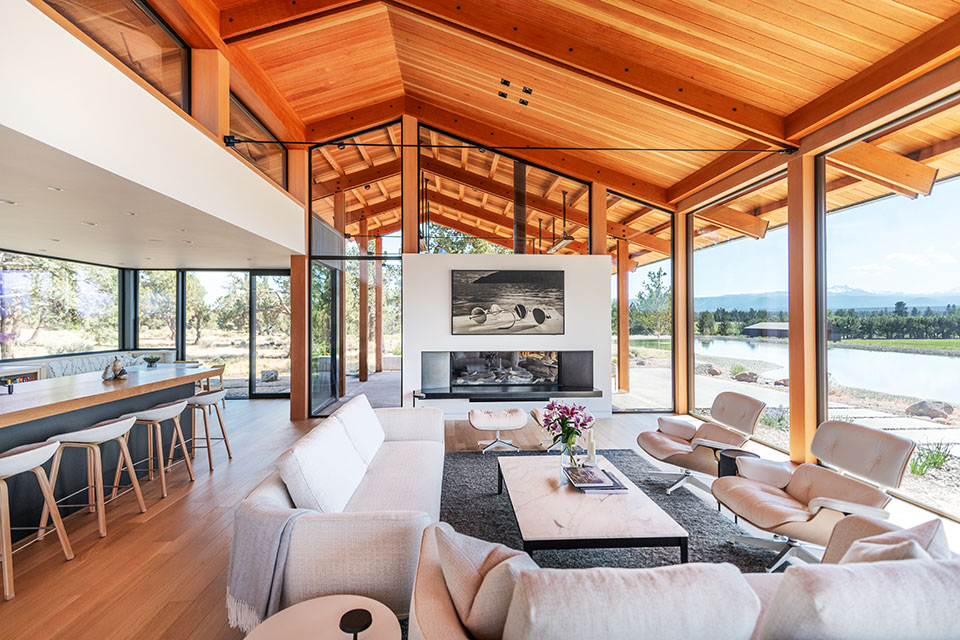
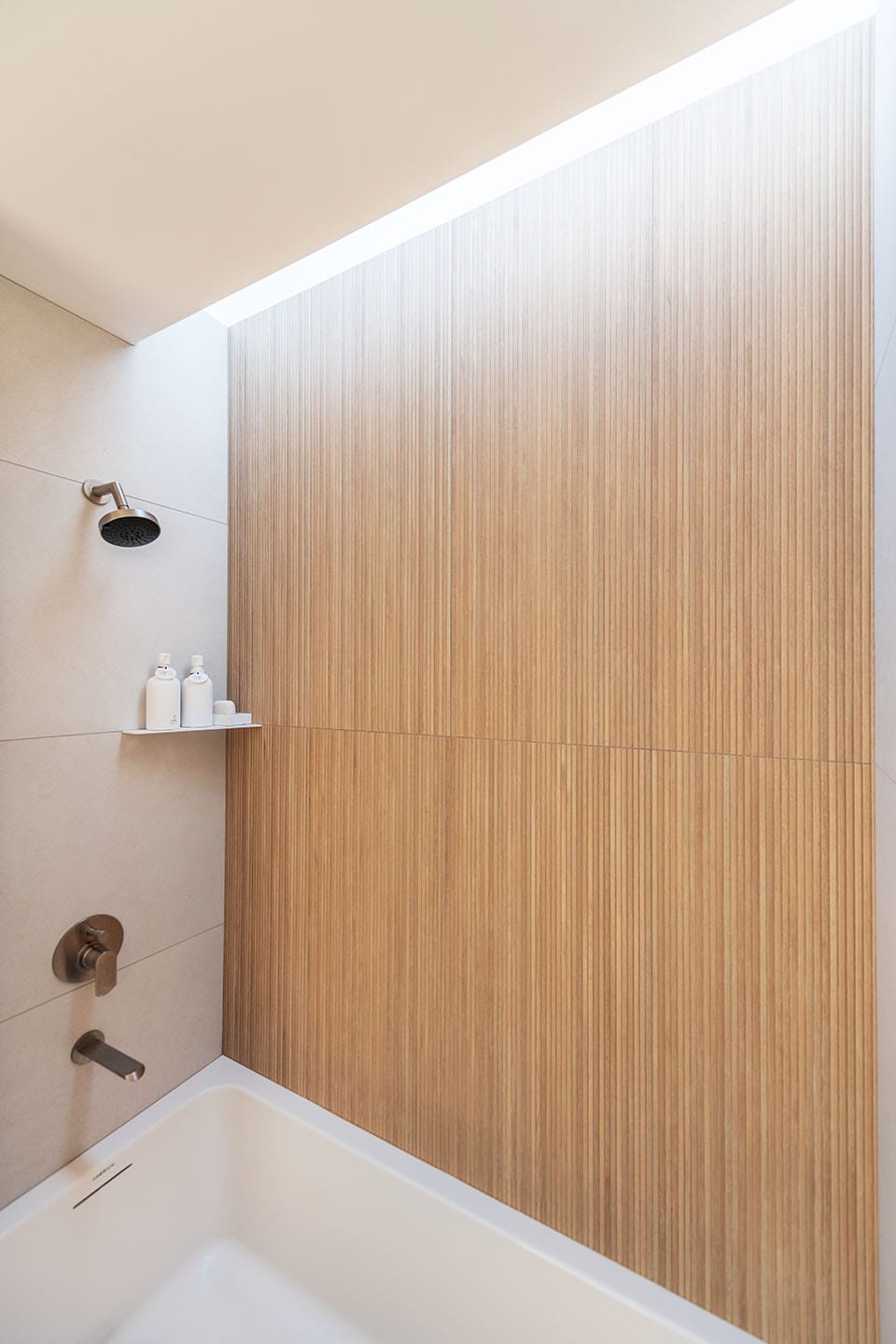
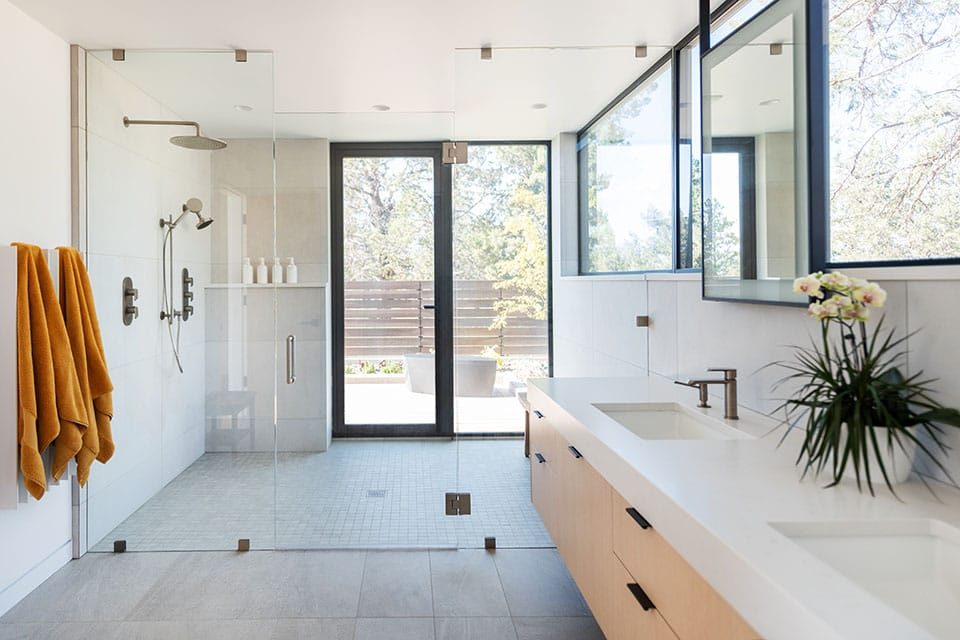
The homeowner remembers the wood in the living room as the hardest part. A pale oak floor, a Douglas fir ceiling that leans orange, and the posts and valances in between. Getting it all to blend took sample after sample.
“CJ would come out, and we’d look at all the samples, and then we’d redo it,” she says. “But now you walk in, and you can’t even tell. It all just goes together.”
CJ wanted the best for the house. “You don’t want a 1990s orange stain crashing into a clean modern floor,” he says. The fix was to shift each piece a shade cooler on the way down, “so nobody notices—so it’s just visually pleasing.”
The Window, The Weekend, & The Mixologist
To understand how CJ and Kristian actually work together, CJ will tell you a couple of stories—like the one about a broken window.
Mid-project, one of his guys broke a window, and his foreman called it in. CJ didn’t flinch. He had the opening masked off against dust and bugs, worked his phone until a window company could be on site that same day, and had a replacement lined up within days. Then, he drove to Kristian’s office.
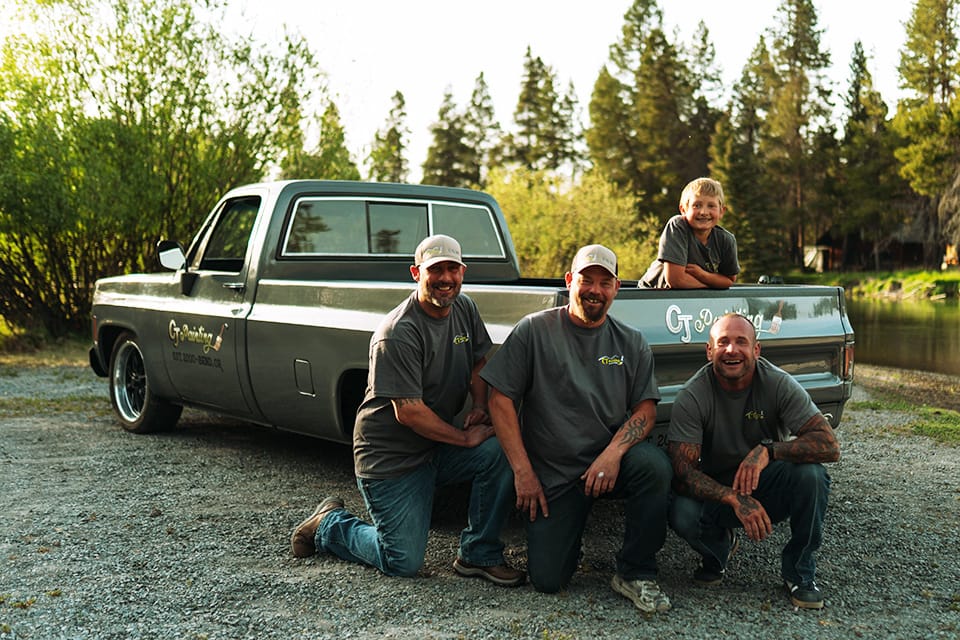
“HE’LL WORK NIGHTS AND WEEKENDS TO HELP US FINISH. NOT MANY OTHERS DO THAT…HE’S NOT AN AVERAGE PAINTER. HE’S A MIXOLOGIST OF THE PAINT WORLD.”
“I told him, ‘Hey, I need to talk to you face to face,’” CJ says. “I sat down and said, ‘So, I broke a window.’ And before he could even react—‘But I already have a solution. Here’s the proposal. I just need your signature, and we’re back on track.’”
Kristian just laughed. “That’s the difference,” CJ says. “Some guys freak out and stop the whole job. I’d rather show up with the answer already in my hand.”
That instinct is also why Timberline keeps him close. When a house comes down to the wire, with cabinets landing, trim crews knocking up freshly painted walls, and everybody working on top of everybody, CJ is there repainting corner to corner after hours, on Saturdays, when no one else is in the building.
“He’ll work nights and weekends to help us finish,” Kristian says. “Not many others do that.”
Then there’s what Kristian calls the mixology. CJ can take a piece of pine and make it read as fir. He can match a stain off a photo on someone’s phone. On another Timberline job, a cabinet shop had ground through 50 walnut samples for a pair of exacting clients and came up empty.
Kristian finally handed the task to CJ.
“First try, and he nailed it,” Kristian says. “The clients flew back from Spain, took one look, and signed off. I remember thinking, why didn’t we just call CJ in the first place?”
On this house, that same skill showed up on the exterior, where the wood was originally drawn as pale stucco. But the homeowners wanted something different. The husband wanted the siding to look like the bark of a juniper tree—so the team built roughly 30 stained samples, chasing the exact way juniper bark darkens when it’s wet.
“He’s not an average painter,” Kristian says. “He’s a mixologist of the paint world.”
can I get a Saw?
Touch-up day is when the whole crew is on site at once—Kristian, CJ, the finish carpenters, the painters—everyone circling the house hunting for anything out of place. It’s also when you notice how alike the builder and the painter really are.
Both men go straight for the spots others might gloss over. CJ heads for the bathrooms—“the tightest, smallest rooms, where the details matter the most,” where both check behind the toilet or under cabinets to ensure everything is perfect.
“IF EVERYBODY FIGURES SOMEBODY ELSE WILL GET IT, WE ALL SKIP IT, AND IT NEVER GETS DONE.”
-Christian “CJ” Martin, Owner, CJ Painting
At one point, while working down a hallway with floating cabinets, CJ crouched, glanced up underneath, and caught a shim left sticking down below one of them.
He called down the hall: “Hey, can I get a saw over here?”
Kristian turned around. “What?” he said, turning to CJ’s foreman. “Did you just hear that? CJ’s asking for a saw?”
A painter reaching for a saw is a bit like a bartender reaching for a socket wrench—wrong trade, wrong tool. But CJ went and grabbed it himself anyway, while Kristian watched, since technically it wasn’t CJ’s to touch. As CJ puts it, that shim wasn’t going to cut itself out.
“If everybody figures somebody else will get it,” CJ says, “we all skip it, and it never gets done.”
The Ford Or The Ferrari
CJ’s favorite pitch for why attention to detail is so important didn’t happen on a job site, but at his kid’s soccer game. A mom he knows asked him about the house he was working on. He got to talking about quality, and how in truly high-end custom homes you can hear it the second you close the front door. The acoustics, the walls, the framing, everything is perfect.
Pushing back, she said, “Sure, but you’ve been building for 25 years; of course you can tell.”
“I said, no,” CJ recalls. “Even if someone doesn’t know the first thing about building, I guarantee they’ll know the difference. Close the front door on a Timberline house, then close it on the one down the street. You’ll hear it. It’s like closing the door on a Ferrari versus a Ford.”
He grins, telling the story. “That’s what I always come back to. Do you want the Ford or the Ferrari?”
You Can’t Build This Alone
None of it, not the roof, the staining, or the door that closes like a bank vault, comes from any one crew working in isolation. It comes from a builder who brings his painter in at the steel-and-subfloor stage, a painter who shows up with solutions instead of excuses, an architect who lets the land lead, and a homeowner patient enough to stand in the rain over juniper bark.

“ANYTHING CUSTOM TAKES MORE TIME AND MORE EFFORT. SO THE LAST THING YOU WANT IS TO BE STUCK AT EIGHT O’CLOCK AT NIGHT WITH PEOPLE WHO AREN’T GOOD HUMANS. YOU WANT THE ONES WHO’VE GOT SKIN IN THE GAME.”
-Christian “CJ” Martin, Owner, CJ Painting
“Anything custom takes more time and more effort,” CJ says. “So the last thing you want is to be stuck at eight o’clock at night with people who aren’t good humans. You want the ones who’ve got skin in the game.”
That trust is earned, and it’s the real product. The materials are a given at this level of building—everyone here uses the best. What sets these crews apart is the relationships, and the fact that they clearly enjoy working with each other.
The homeowners give the credit freely. “We couldn’t be happier with the work Kristian did,” the homeowner says. “And CJ, of course. We pinch ourselves every morning.”
whj COVER FEATURE
