
Written by: Molly Kordares
Frank Lloyd Wright once said, “No house should ever be on a hill… it should be of the hill.”
On a remote ridge in Stanley, Idaho, a new project does just that
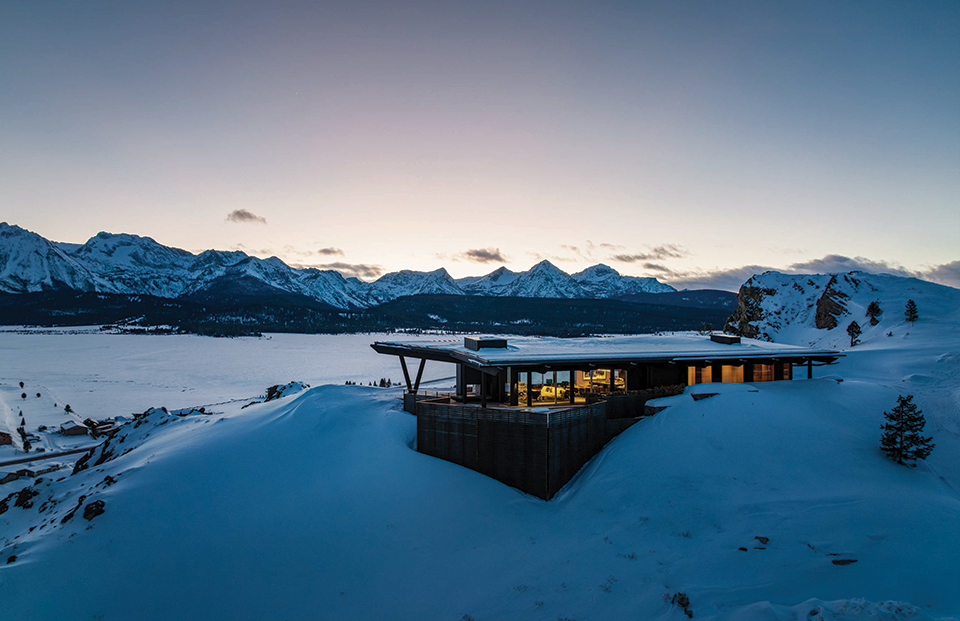
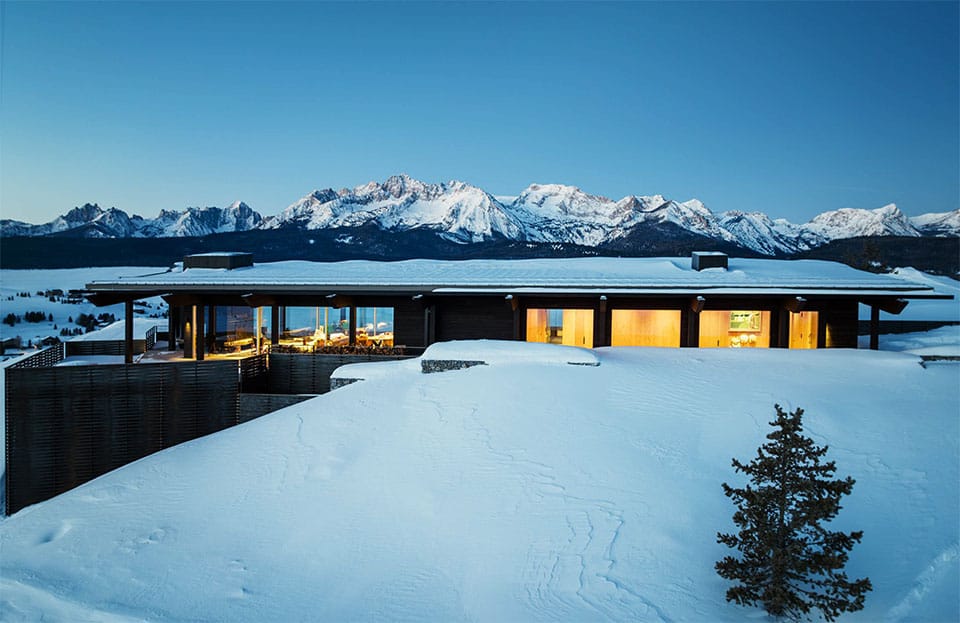
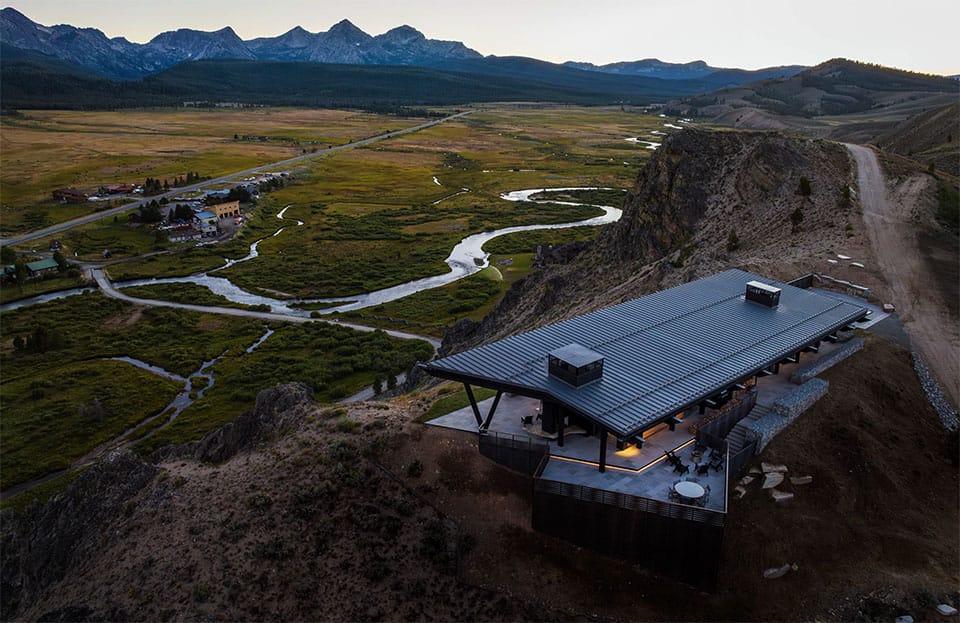
Sometimes, the best designs are the kind you can see right through. A perfect example of this can be found high on a hill above the town of Stanley, Idaho, where the sharp peaks of the Sawtooth Mountains rise 10,000 feet to the west. From this spot, they can’t be ignored, nor should they be.
A SIX-BEDROOM HOME BALANCES SCALE, SETTING, AND RESTRAINT.
“When the client first approached us about building a house there, we all agreed that those views couldn’t be obstructed,” says Jeff Williams, the founding principal of Williams Partners Architects in Sun Valley. “They needed to be as clear as possible. Stanley is one of the most beautiful places in Idaho. So, in many ways, we took on this project knowing it was more about the setting than the house itself.”
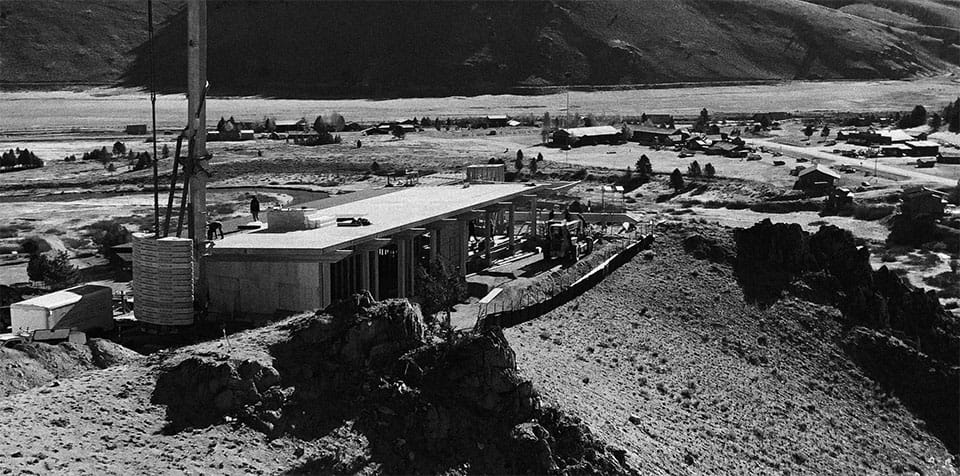
As they began designing, Williams and his team lived by one simple but direct mantra: Don’t blow it. They spent months obsessing over a low-profile silhouette that wouldn’t break the skyline. “We were really concerned about keeping it as low as possible,” says Williams. “We could have built a two-story pitched roof house on this ridge—it was allowed in terms of the zoning regulations at the time. And, at the beginning, we did draw up some two-story designs. But they just felt wrong.”
“WHEN THE CLIENT FIRST APPROACHED US ABOUT BUILDING A HOUSE THERE, WE ALL AGREED THAT THOSE VIEWS COULDN’T BE OBSTRUCTED. THEY NEEDED TO BE AS CLEAR AS POSSIBLE. STANLEY IS ONE OF THE MOST BEAUTIFUL PLACES IN IDAHO. SO, IN MANY WAYS, WE TOOK ON THIS PROJECT KNOWING IT WAS MORE ABOUT THE SETTING THAN THE HOUSE ITSELF.”
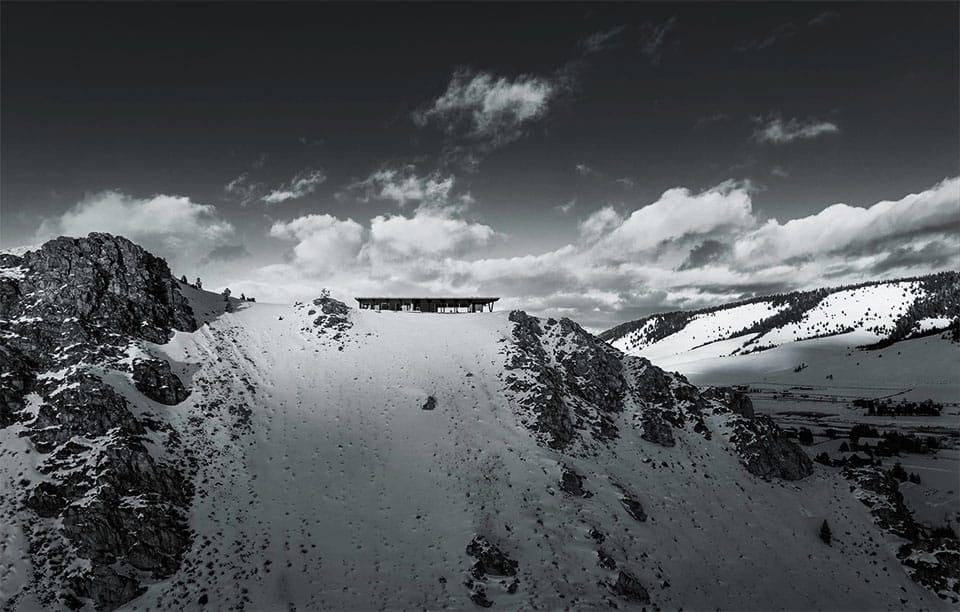
“We knew there was going to be a pretty big spotlight on us,” says Travis Killmer, a partner at Williams Partners Architects. “Not just from the Stanley residents, but also anybody who visited Stanley. The house would be very visible from town. So Williams and I just kept saying, ‘We cannot mess this up. It’s too high-stakes’.”
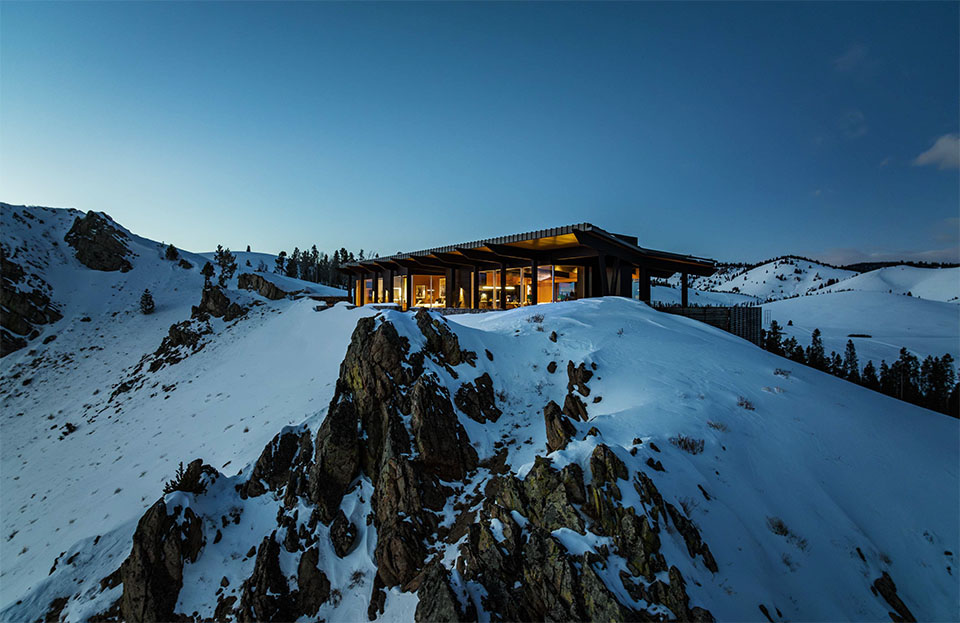
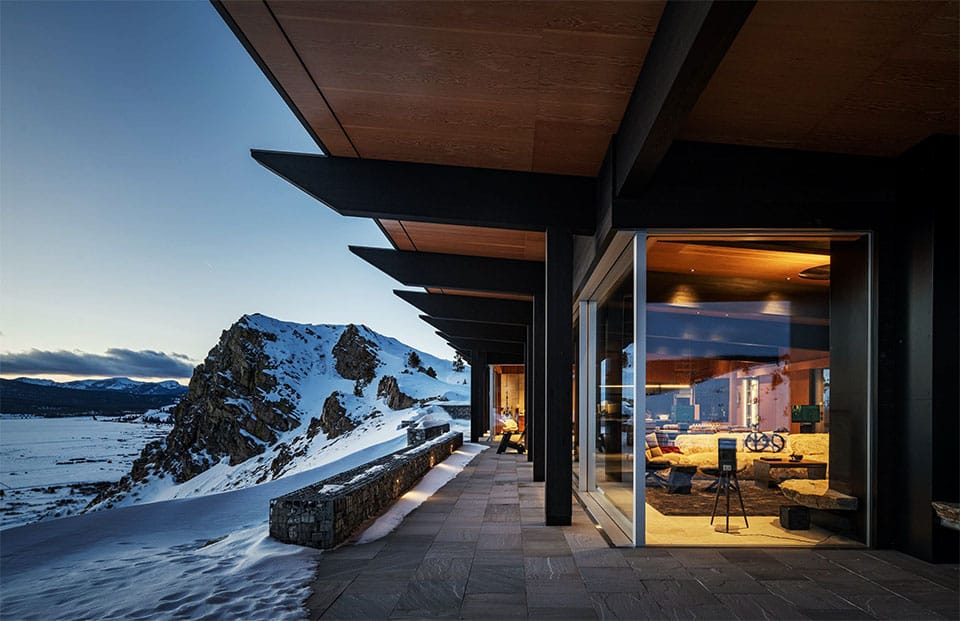
The end result was not so much a house as a camera lens, pointed towards the Sawtooths. A simple and thoughtful pavilion, almost entirely wrapped in glass. Standing only 17 feet tall, the post-and-beam structure showcases a quiet restraint and respects the ridge behind it. “We didn’t want a castle up there,” says Williams. “So we just kept pulling back the designs, kept making them simpler.”
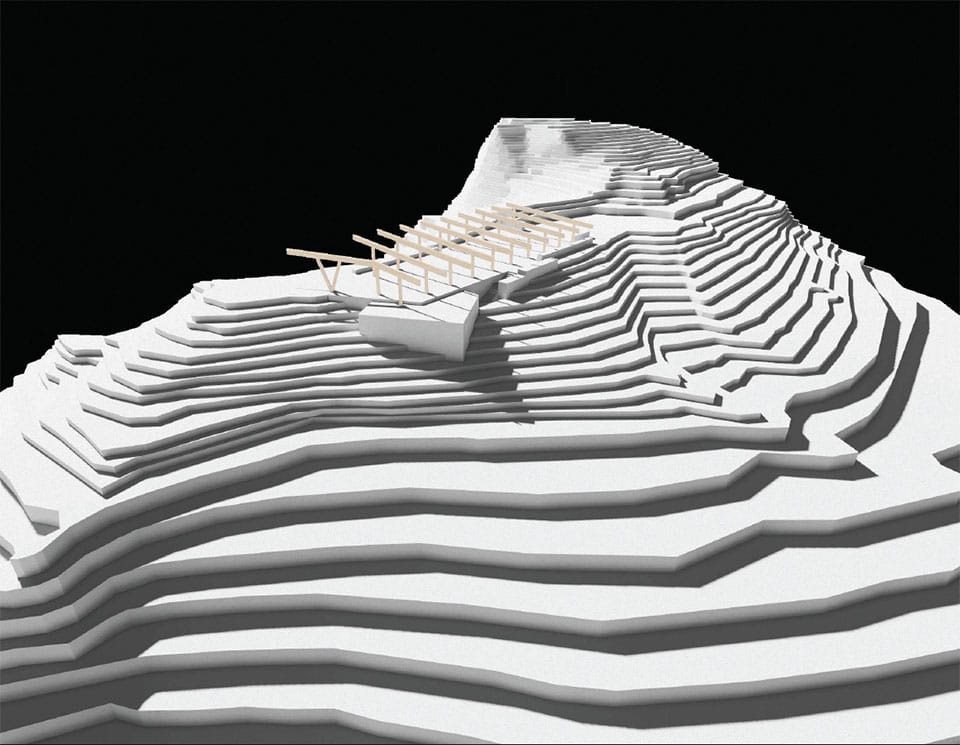
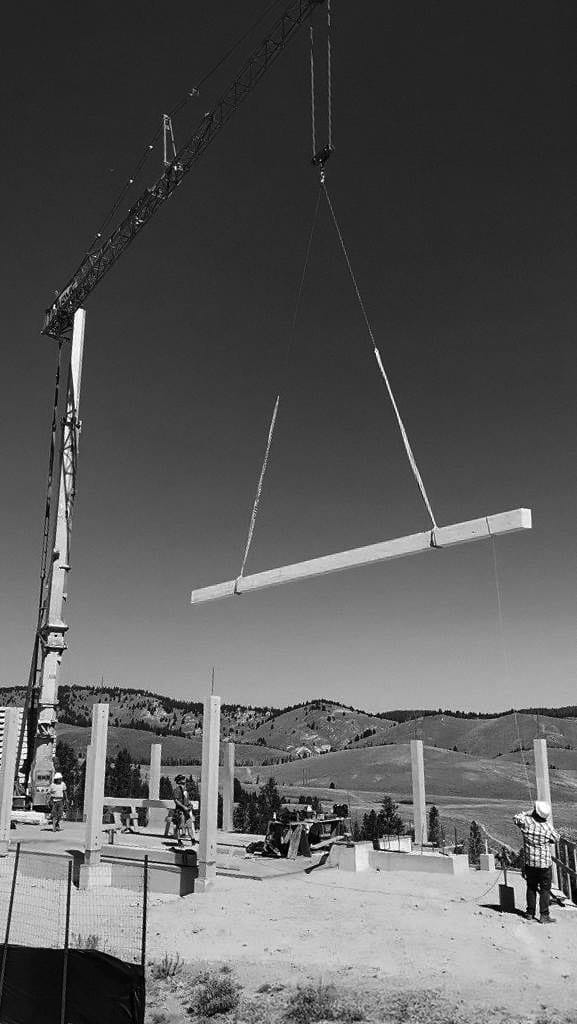
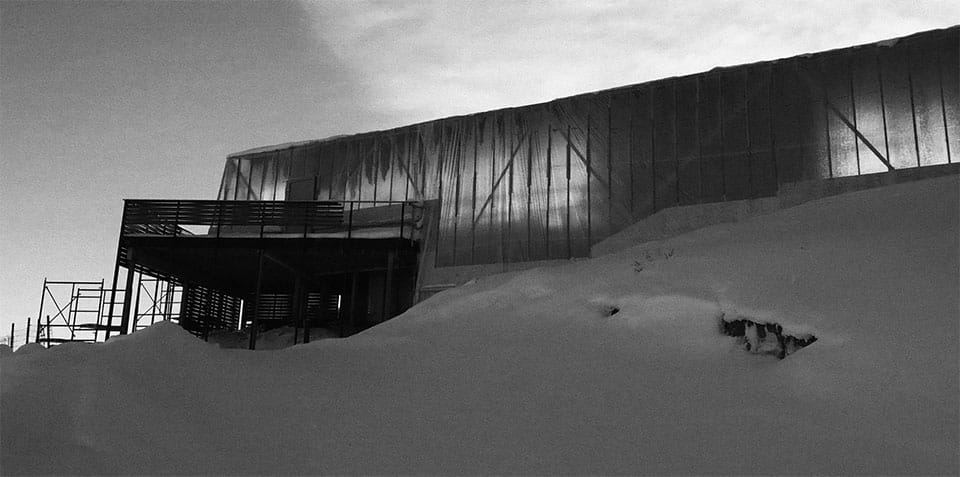
The team also knew that a simpler home would be helpful for the builders. Stanley is a notoriously cold place, often claiming the record as the coldest town in the lower 48 states. A post-and-beam structure could be built quickly, then used as shelter on the site during the winter. “The building season is so limited in Stanley,” says Williams. “And we couldn’t anticipate what kind of winter we were going to have the year we were building.” The site’s general contractor even rented a snowcat so he could ferry workers up the hill if driving was impossible.
As it turns out, that year’s winter wasn’t so bad for the builders. But the house still needed to be able to endure the worst that Stanley has to offer. “Not only do they see really cold temperatures there, but the temperature swings are also extreme,” Killmer explains. “You can easily see a 50-degree temperature swing in one day. So the glazing system was really important, the thermal envelope was really important—all the materials we used were in response to this really intense climate.”
“WE KNEW THERE WAS GOING TO BE A PRETTY BIG SPOTLIGHT ON US.”
The architects also knew they needed a very specialized window package. After all, views would take center stage in this home. In a first for their firm, they turned to a glass supplier out of Switzerland called swissFineLine. The panels traveled via train, boat, another train, truck, and then crane to finally reach their destination in Idaho. “I think only one piece got broken!” says Williams. “Which is kind of miraculous considering the journey they went on.”
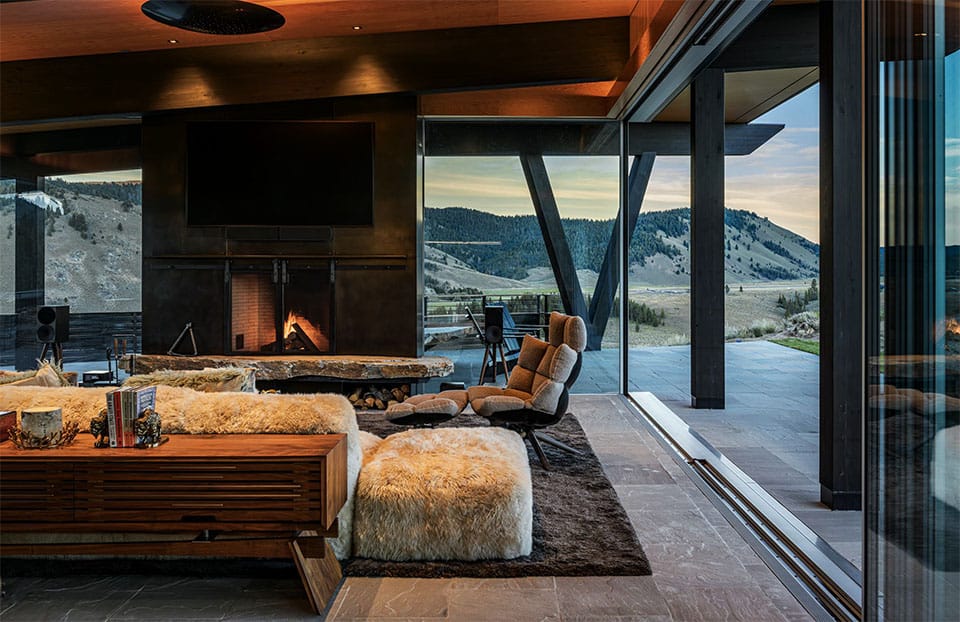
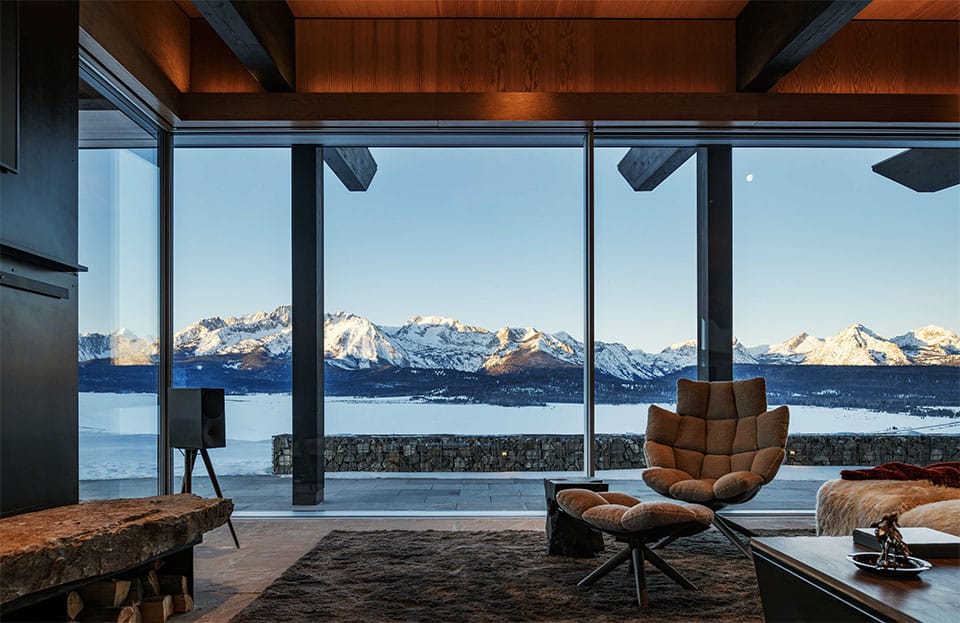
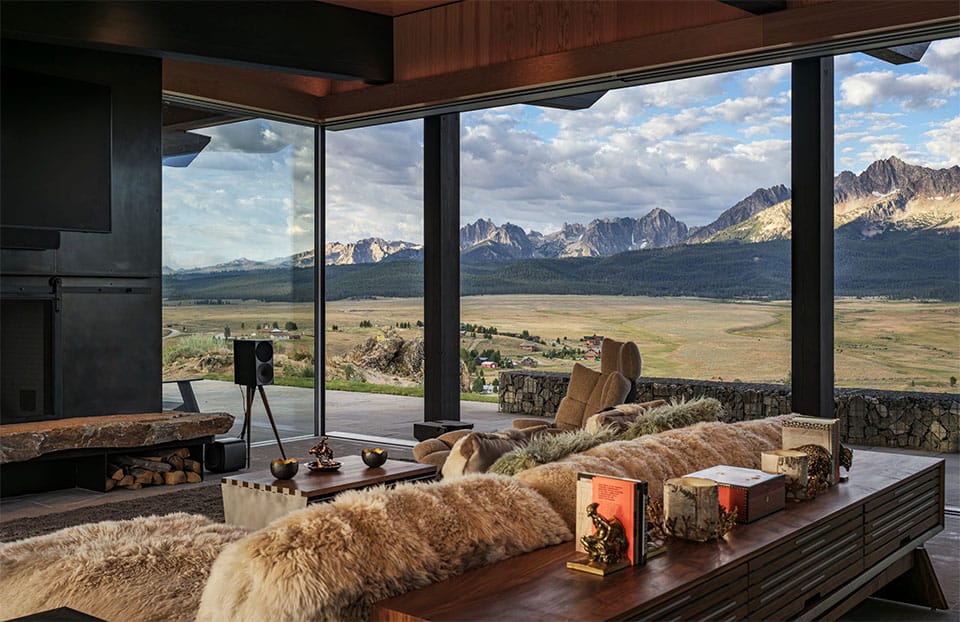
These aren’t your average windows. They are a high-performance, ultra-efficient system featuring nearly frameless, triple-paned glass that can withstand the brutal variations of the Stanley basin. In the main living area, the massive 10-foot-by-10-foot panels provide a seamless thermal barrier without looking thick. Despite their immense weight, the panels are electrified, sliding open at the touch of a button to transform the interior into an open-air pavilion.
“YOU CAN EASILY SEE A 50-DEGREE TEMPERATURE SWING IN ONE DAY. SO THE GLAZING SYSTEM WAS REALLY IMPORTANT, THE THERMAL ENVELOPE WAS REALLY IMPORTANT—ALL THE MATERIALS WE USED WERE IN RESPONSE TO THIS REALLY INTENSE CLIMATE.”
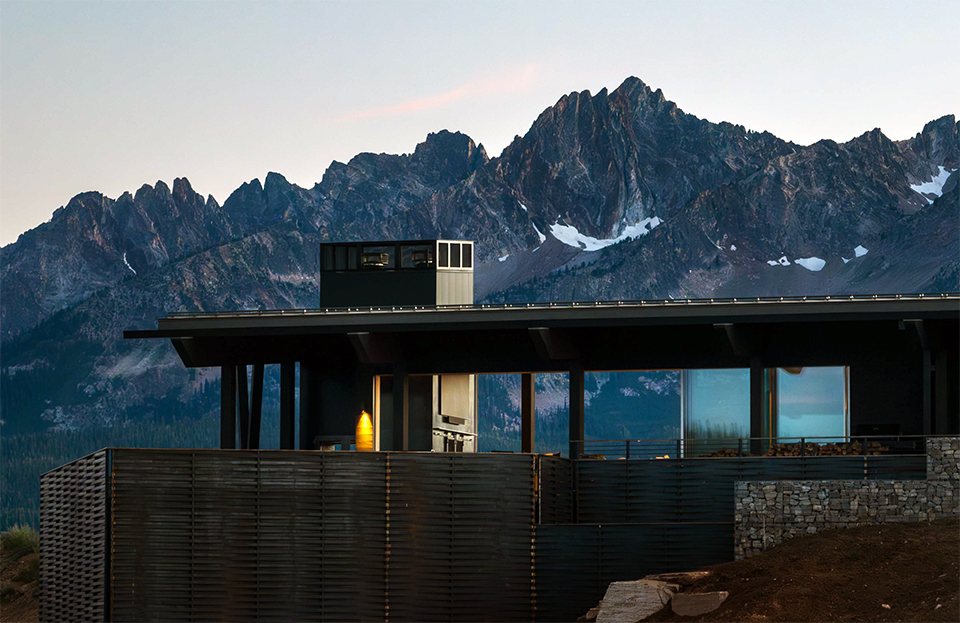
“They really help create such an exclusive view up there,” says Williams. “We also built this rock wall at the end of the terrace, that completely screens out the town below. It’s only high enough to be a seat wall, but when you’re sitting there, you can’t see the town. You see the mountains and that’s it. It’s pretty stunning.” (And, of course, when privacy is needed, all the windows were designed with concealed roller shades.)
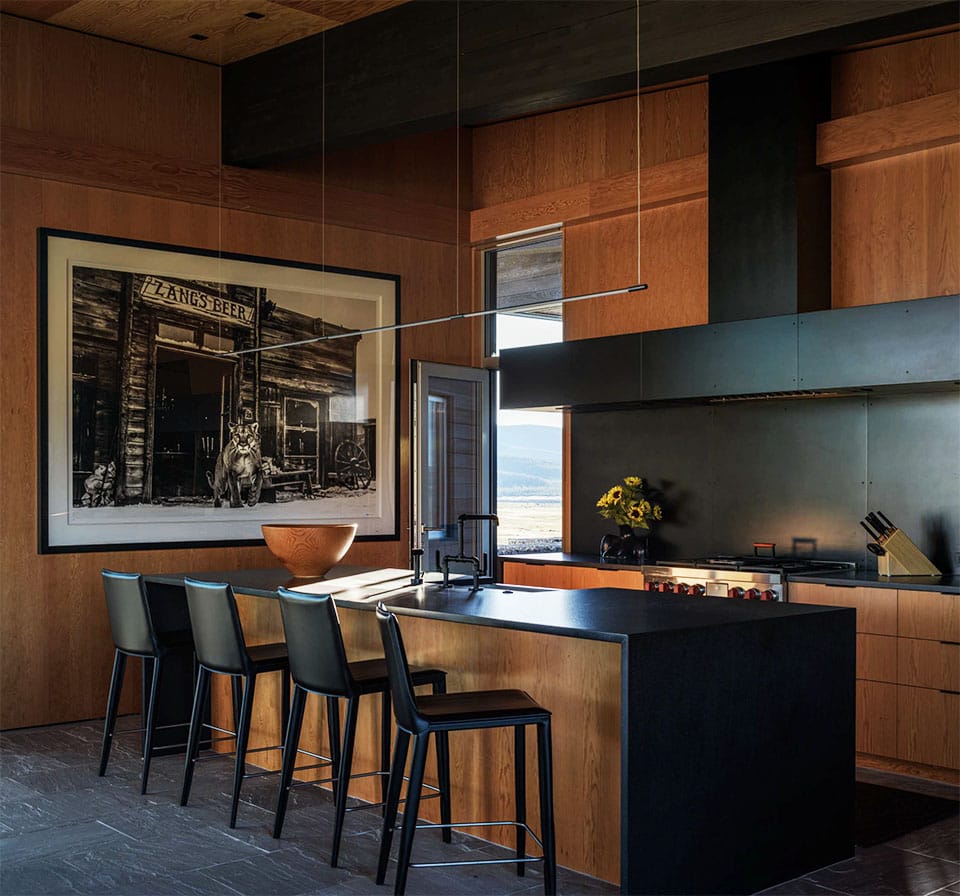
Inside the home, there’s an unexpected sense of warmth. The architects used two main materials: plywood panels and slate. The textures of both materials build visual heat in the rooms and create a very calm interior palette—juxtaposed at times by the snowy mountains surrounding the home. “Picking two deliberate materials and sticking with them was very important to us. We didn’t want to use any drywall. We didn’t want a house with a lot of different themed rooms. And we didn’t want anything cold or uninviting. We wanted contemporary warmth, and I think that’s what you see when you step inside.”
“I LIKED THE PROJECT SO MUCH, I’M A LITTLE JEALOUS OF IT.”
Once completed, the client nicknamed the house Skyfall, as if there could be another name for it. You can almost see Daniel Craig on the terrace, watching the sun slowly set behind the Sawtooths, Macallan in hand. “It was a really fun house to work on,” says Killmer. “It was kind of a once-in-a-lifetime project. Opportunities like this—they come by so few and far between, you know, and when you’re presented with them, you have to realize it as it’s happening.”
Williams agrees. “I liked the project so much, I’m a little jealous of it,” he says. “I’m jealous they get to go up there and use the house. It’s a good feeling when you feel that way about a project. Most projects end and you move on to the next. So jealousy is actually the best way to leave a project, I think.”
whj PROFILE
