
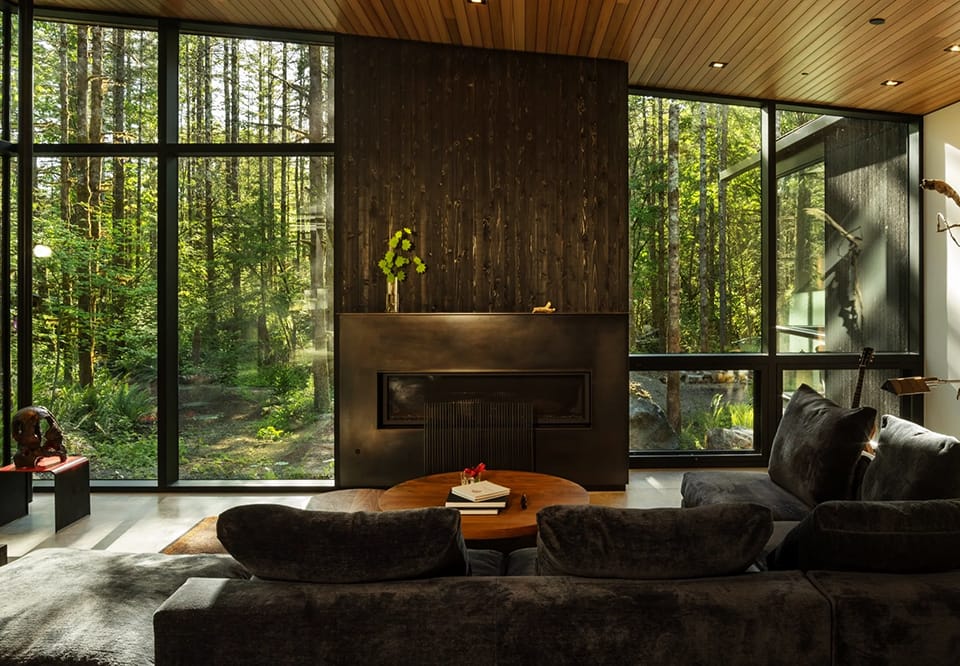
A Conversation with Interbay Business Manager, Eli Hess, & WHJ Editor-in-Chief, Laurenz Busch
–Perch Residence | Chadbourne + Doss Architects | Photo: Kevin Scott


WHEN IT COMES TO MASTERWORK ARCHITECTURE, PROJECTS DEMAND MORE THAN JUST EXECUTION—THEY REQUIRE CLOSE COLLABORATION. INTERBAY METAL AND WOOD HAS BUILT A REPUTATION WORKING WITHIN THAT REALM, PARTNERING WITH TOP ARCHITECTS NATION-WIDE ON HIGHLY CUSTOM RESIDENTIAL AND COMMERCIAL PROJECTS. WHETHER THE FIRM IS FABRICATING CABINETRY, ARCHITECTURAL METAL FACADES, OR COMPLEX KINETIC MECHANICAL SYSTEMS, INTERBAY IS COMBINING CRAFT WITH ENGINEERING. IN THIS IN CONVERSATION, BUSINESS MANAGER ELI HESS DISCUSSES INTERBAY’S WORK, OFFERING A CLOSER LOOK AT THESE AMBITIOUS PROJECTS COME TO LIFE.
Looking through your work, it’s hard to pin down a single style. These are clearly some of the most ambitious residential and commercial projects being built right now, but the work often shifts completely from one project to the next.
Eli Hess: Yes, that’s intentional. The simplest way to describe us is that everything we do is custom. We don’t have a product line or a signature style. Every project is one of a kind. We tend to get brought in through architects and firms designing what we’d call a masterwork—homes that are often being designed for publication, with a very high level of detail and intent—by firms like Olson Kundig, MW Works, and CLB Architects. The client hires the architect, and then the architect assembles the team, including us.
So, you’re consistently operating inside these very high-level projects—and then helping translate those ideas into something real.
EH: Exactly. And that’s where we go beyond what a typical subcontractor might do. All of our project managers have backgrounds in architecture, so we’re able to speak that language. Our shop drawing process is very detailed because we’re working in three dimensions, helping refine design as we go. In a lot of cases, we’re not just executing drawings; we’re helping develop them.
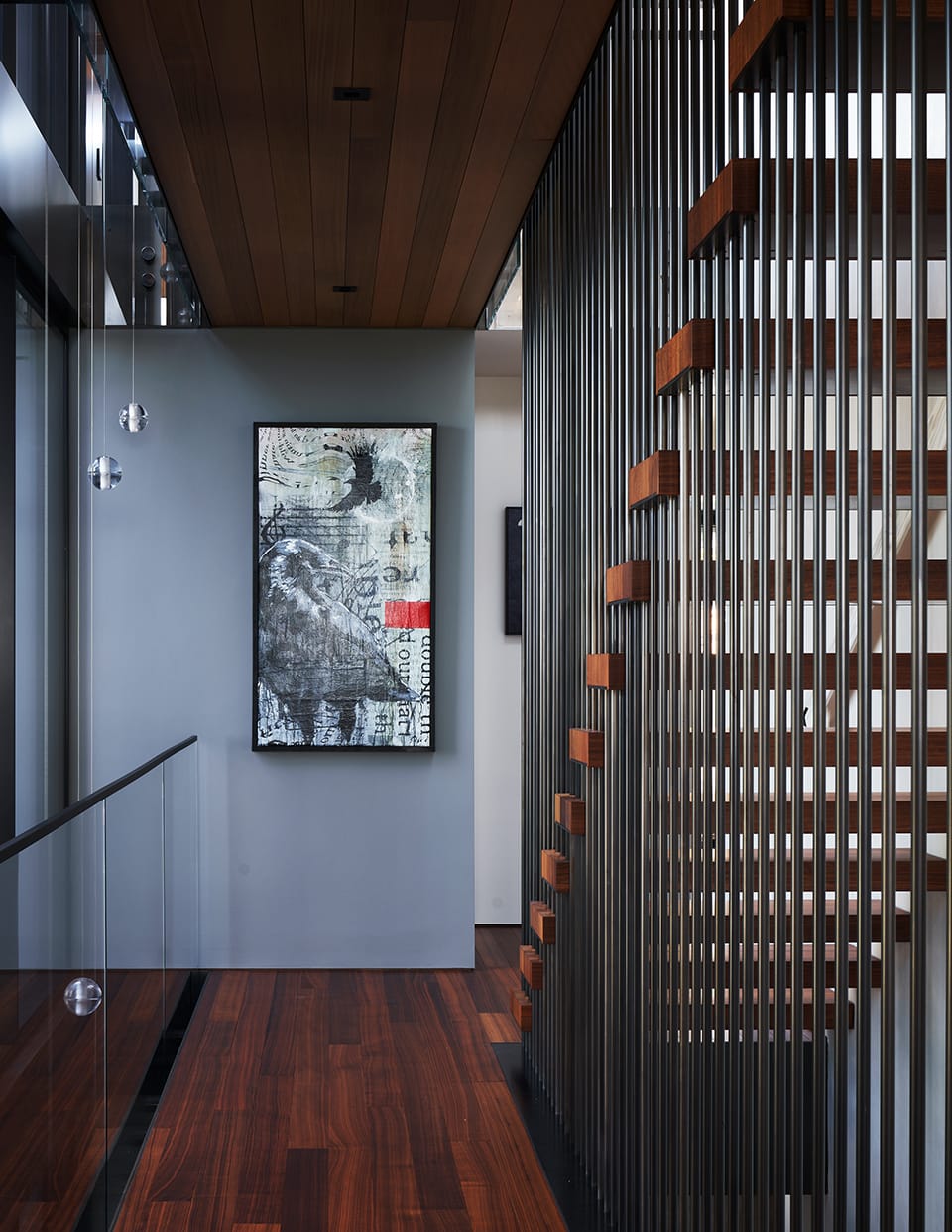
“WE TEND TO GET BROUGHT IN THROUGH ARCHITECTS AND FIRMS DESIGNING WHAT WE’D CALL A MASTERWORK—HOMES THAT ARE OFTEN BEING DESIGNED FOR PUBLICATION, WITH A VERY HIGH LEVEL OF DETAIL AND INTENT—BY FIRMS LIKE OLSON KUNDIG, MW WORKS, AND CLB ARCHITECTS.”
-Perch Residence | Chadbourne + Doss Architects | Photo: Kevin Scott
That feels like the distinction. You’re not just building the piece, you’re helping figure out what it needs to be.
EH: Yes, that’s a big part of it.
Beyond metal and wood, there’s also this other layer of your business that feels almost singular—kinetic architecture. These are the kinds of elements people might associate with firms like Olson Kundig, but you’re the ones building them.
EH: Right. A good example is the Pattern House in Seattle. There’s a large pivot wall that is part of the curtain wall system and opens outward about 90 degrees. It’s counterweighted and operated by a hand wheel. Someone can walk up, turn the wheel, and this entire portion of the facade lifts and pivots. It completely changes the building.
-Whidbey Island Farmhouse | MW Works | Photo: Kevin Scott
It’s one of those moments where architecture feels almost mechanical, like it’s moving with you. And Interbay is fabricating that entire system?
EH: Yes. We build the full assembly in our shop. We’re sourcing all the components—chains, gears, hydraulics—and integrating them. If parts are exposed, we finish them—patinas, oils, whatever the design calls for.
Let’s stay on the material side for a minute. Wood is still the bulk of what you do, but even that seems to operate on a different level.
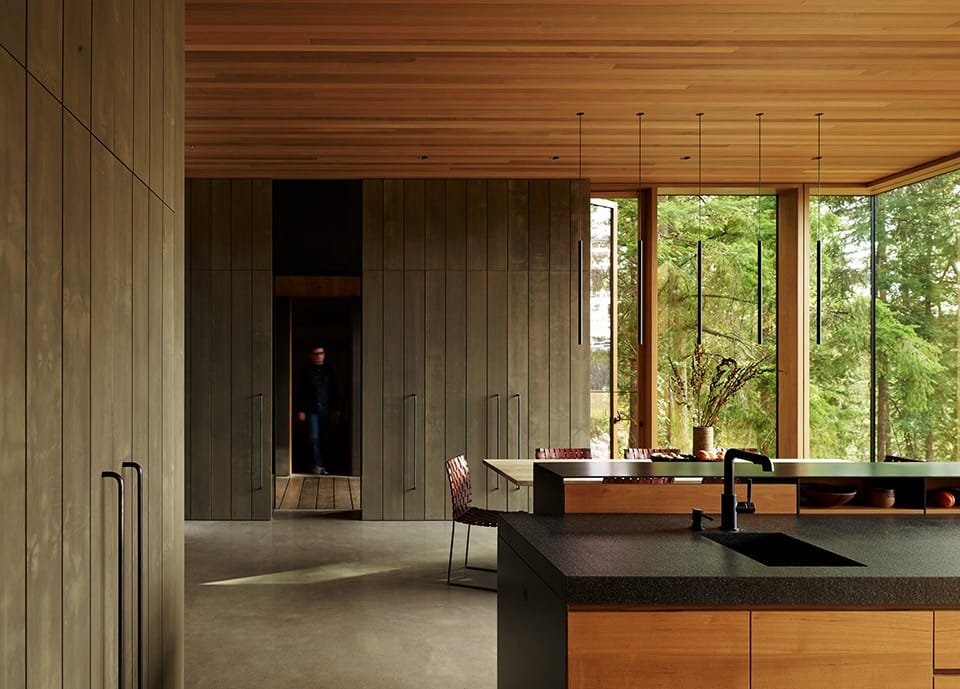
EH: Wood is probably about three-quarters of our business. A lot of that is cabinetry. We handle the majority of our finishing in-house, which allows us to really dial things in. Architects will come to us wanting cabinetry to match flooring, or ceilings, or sit somewhere in between. From there, it ranges—traditional cabinetry, contemporary minimal work, curved surfaces, tambour or slat walls, restaurant banquettes. At its core, it’s cabinetry—but at a level where every detail is being considered.
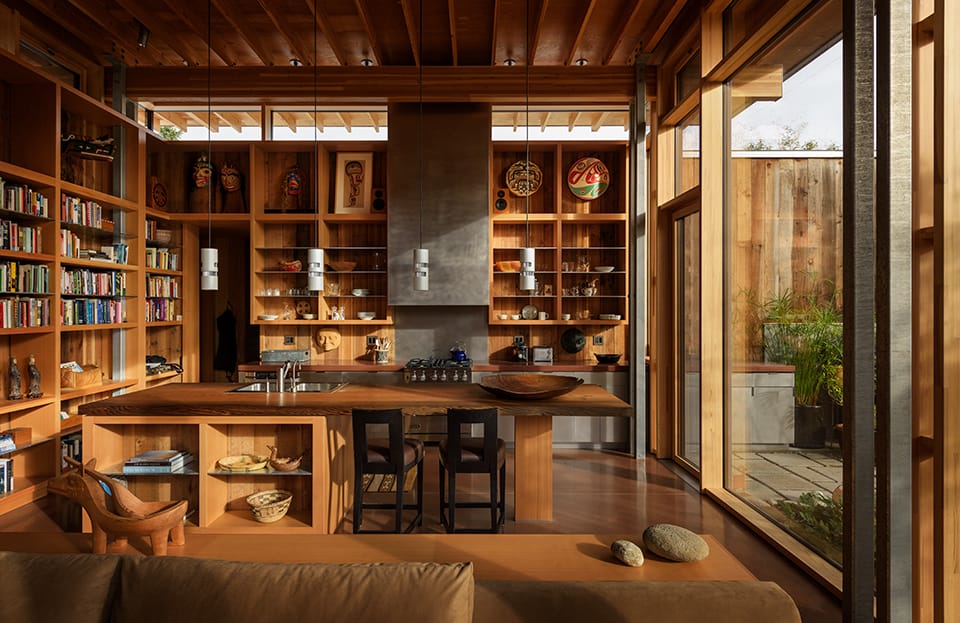
-City Cabin | Olson Kundig | Photo: Aaron Leitz
And they become more than just a bunch of boxes.
EH: Right—the complexity is in how those boxes come together, and how they relate to the architecture.
Tell me about how the metal and wood side of your business blend together.
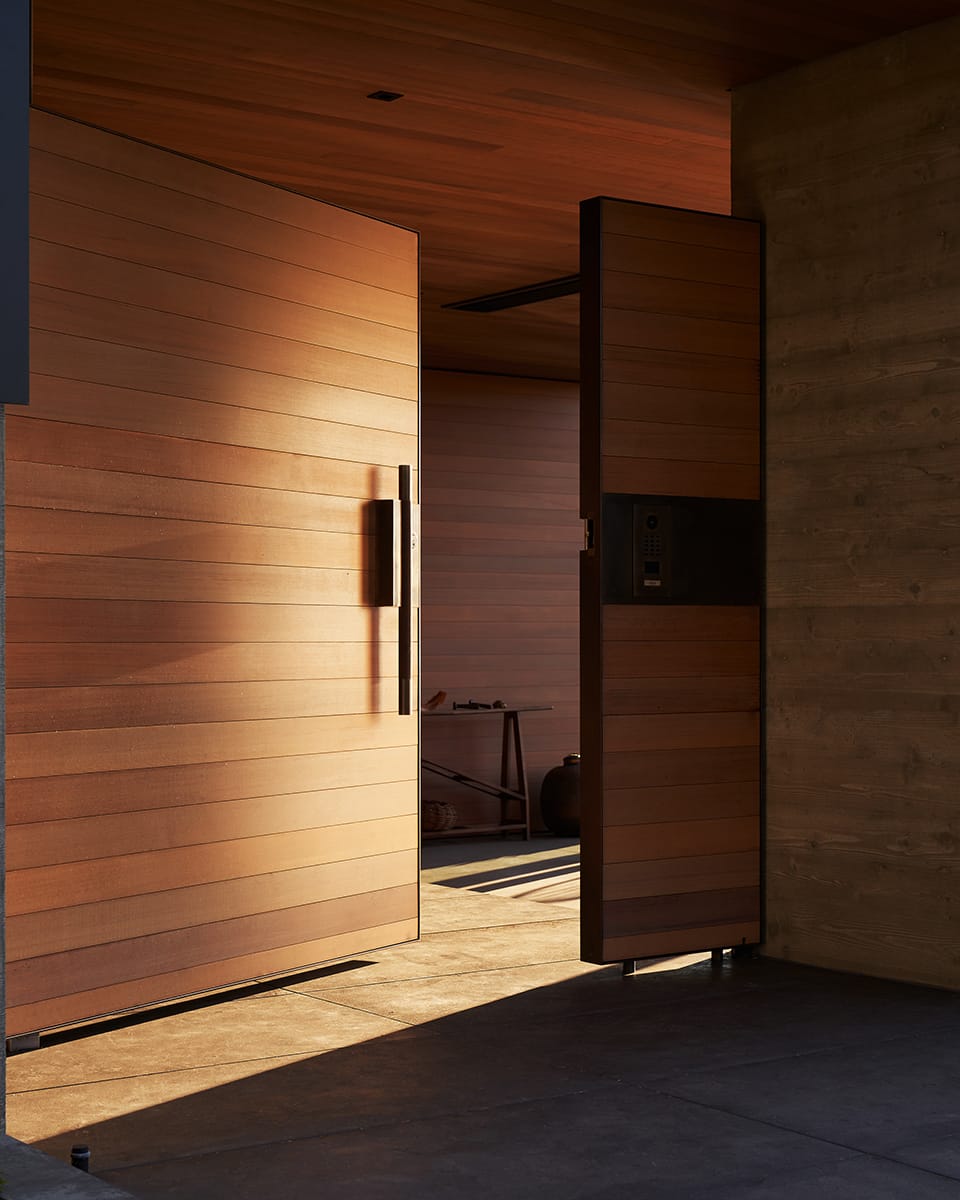
EH: Sure. A simple example is hardware, like a custom bronze pull on a front door. That might be the first thing someone touches when they enter a home, so it matters. On a larger scale, we do a lot of metal-clad cabinetry. It might seem like a solid metal wall, but underneath it’s built like cabinetry.
“THE SIMPLEST WAY TO DESCRIBE US IS THAT EVERYTHING WE DO IS CUSTOM. WE DON’T HAVE A PRODUCT LINE OR A SIGNATURE STYLE. EVERY PROJECT IS ONE OF A KIND.”
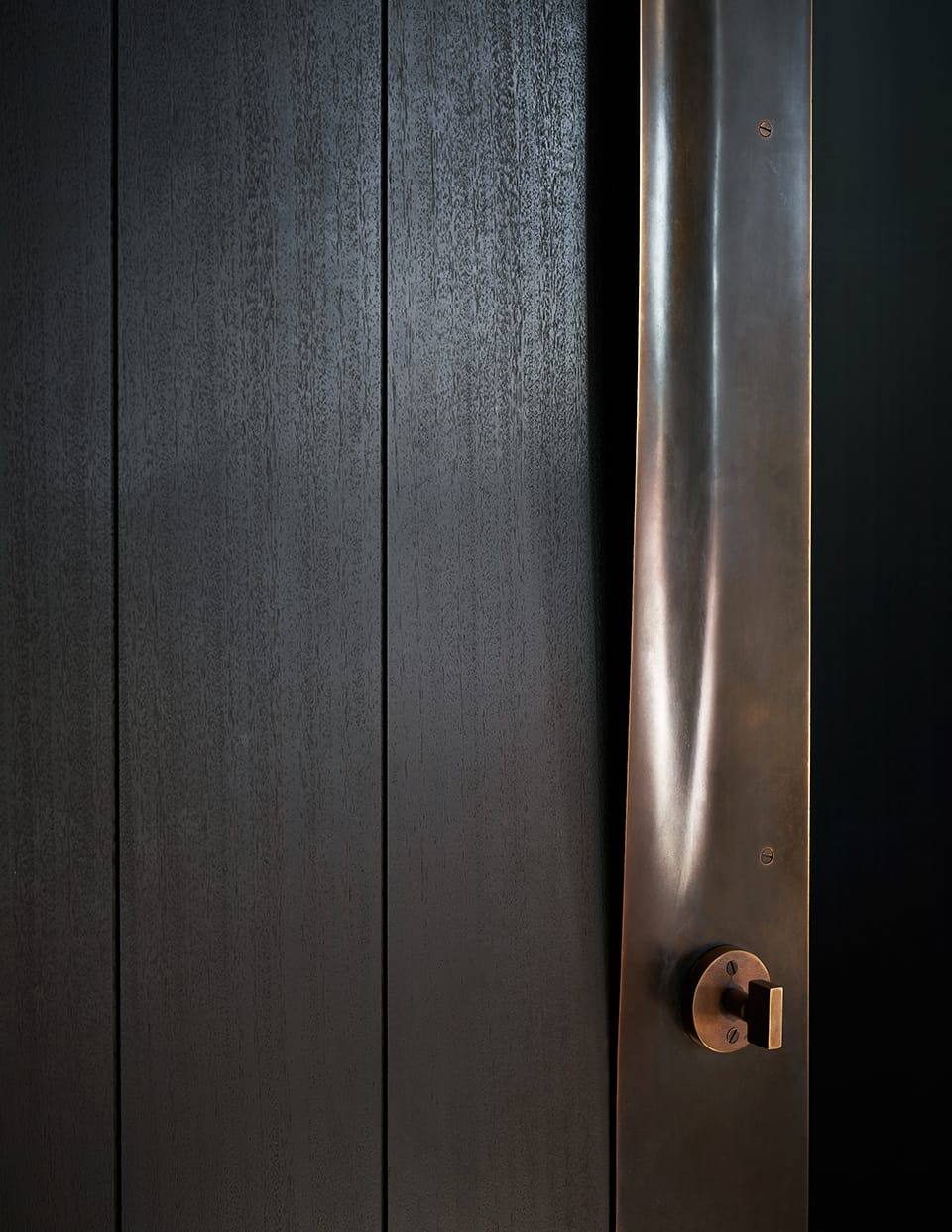
-Loyal Captain | Heliotrope Architects | Photo: Kevin Scott
So visually, it reads as architecture but still performs. And you also do larger-scale commercial projects, correct?
EH: Yes, we actually did a project with a five-story exposed steel staircase with wood treads and a lighting element running through the atrium. That kind of scale is something we really enjoy working on.
It’s a pretty remarkable range Interbay offers. You can be building something small and interactive one day, or something that defines an entire building the next.
EH: That’s the goal.
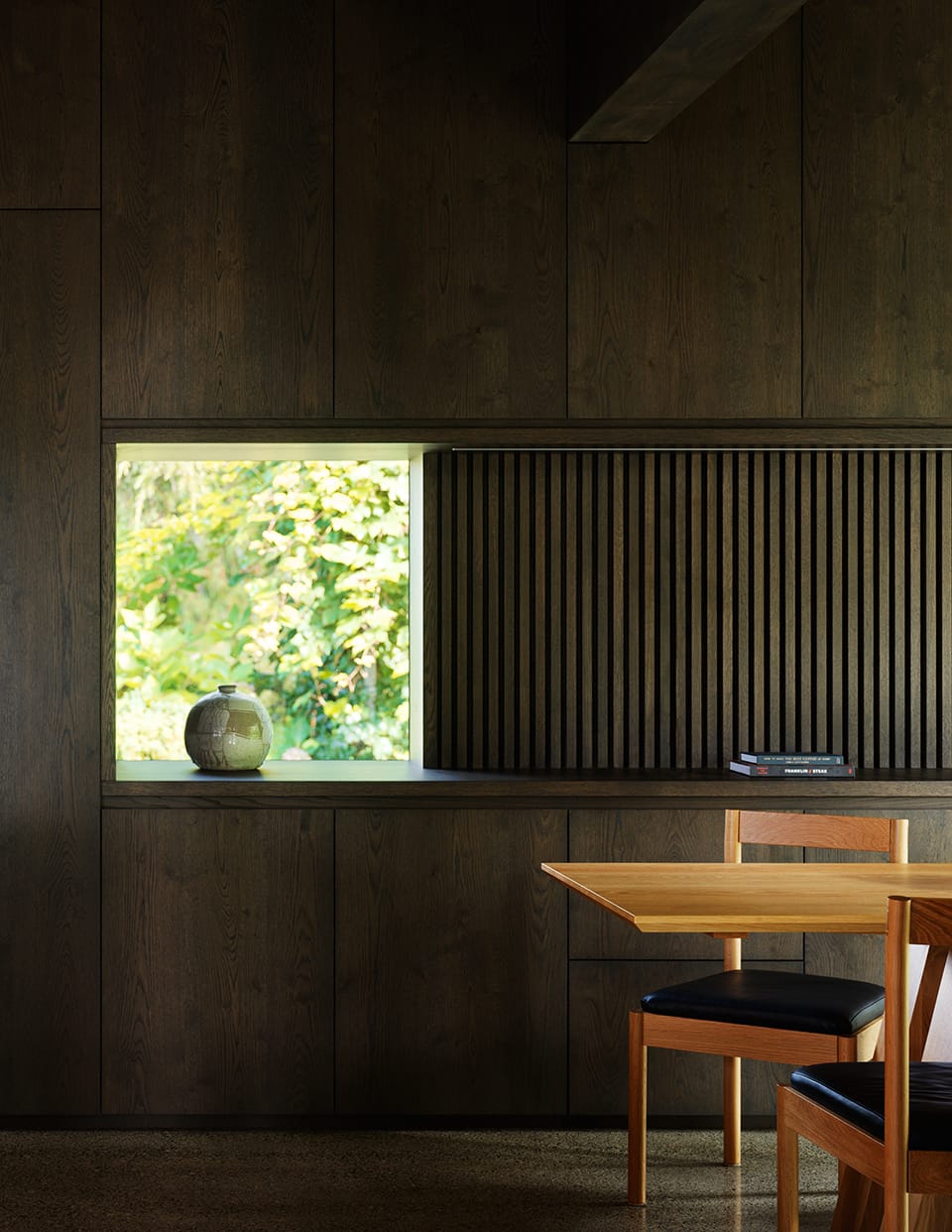
-Loyal Captain | Heliotrope Architects | Photo: Kevin Scott
whj IN CONVERSATION
