
By: Michele Corriel
Montana’s Voices & Venues
Rooted in the landscape yet open to global perspectives, Montana’s creative culture blends tradition, experimentation, and a deep appreciation for craftsmanship. Artists working here draw inspiration from the region’s sweeping skies, weathered mountains, and vital community life, rendering these influences into work that feels distinctly committed to the art of translating place.
In this section, we highlight a cross-section of the area’s voices and the venues that support them. Susan Wechsler’s assemblages transform fragments of glass, metal, and found objects into mosaic compositions that blur the line between sculpture and painting. Kira Fercho reveals the personal stories she tells through thickly painted compositions, offering a personal interpretation of her surroundings. Complementing these individual practices, two local galleries provide important platforms for artists working in and beyond the region, curating exhibitions that connect Bozeman to the broader conversations in contemporary art. Old Main Gallery may be moving locations, but the owners remain committed to the aesthetics they formed over years on Main Street. And Visions West Contemporary concentrates on the wildness both within and beyond the West.
Together, these artists and spaces illustrate the vitality of our art scene—one that continues to evolve while remaining grounded in the unique character of the American West.
Beyond the Mythic West
Visions West Contemporary’s program is defined by technical diversity and independent thought, championing artists who explore nature’s influence and examine how a nature-based worldview shapes individuals and society. The gallery invites conversations that question rather than confirm regional myths. It is a space where human myth meets the raw energy of the land, exploring the liminal space between the two.
Over the years, gallery owner Nikki Todd has assembled a dynamic international roster of artists who continually push artistic boundaries.
“We try to break down old stereotypes and push boundaries, bringing fresh perspectives to the Rocky Mountain region,” Nikki says. “We search for artists with an authentic voice, who emphasize unique, independent viewpoints rather than those following a commercial formula.”
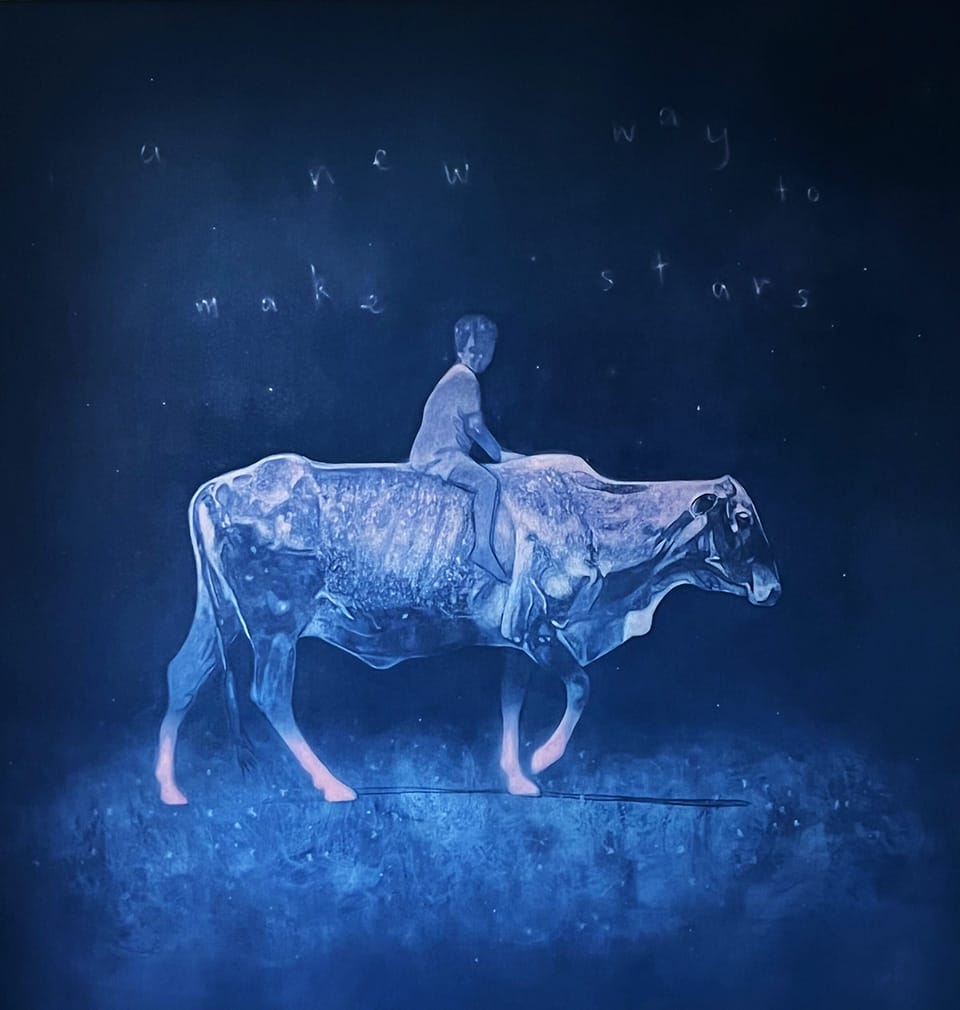
-You’ve Found a New Way to Make Stars | Oil on canvas | 48” x 46” | Patrick Oates |
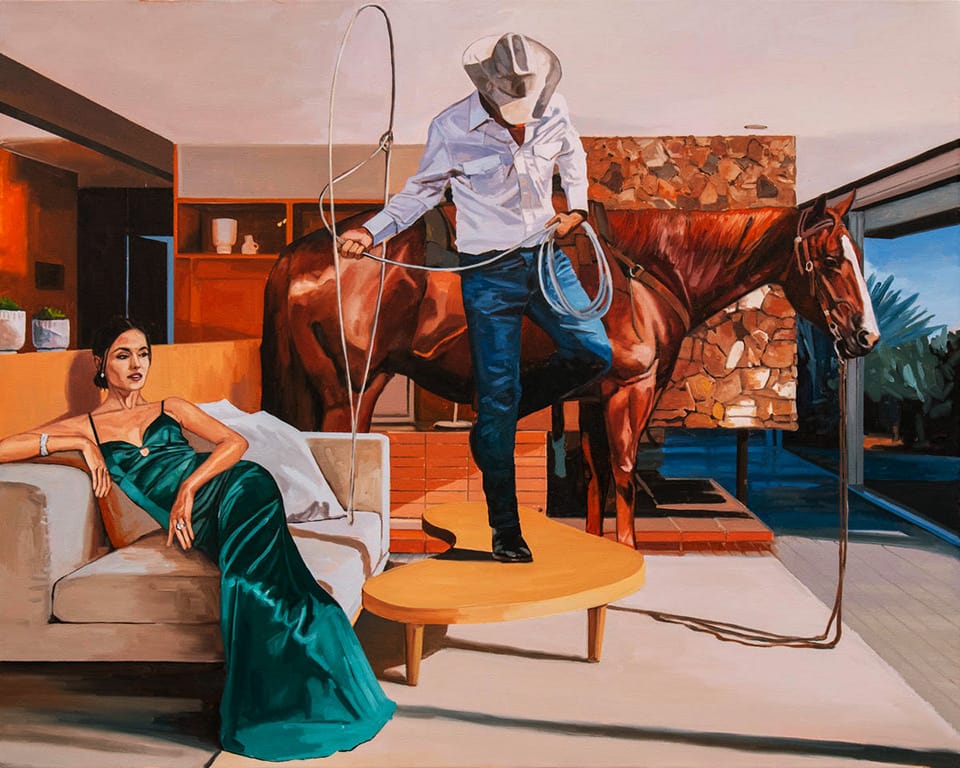
-Living Room Lasso | Oil on canvas | 48” x 60” | Tracy Stuckey
With locations in Bozeman, Livingston, and Denver, Visions West Contemporary is celebrating more than two decades representing artists from all over the world—from Europe, Australia, Senegal and Mexico, to Florida, California, and Montana.
The gallery’s focus on contemporary naturalism and the American West naturally extends to the legends, lore, and histories of wilderness.
“The American West also sits in the American psyche as a mythical place where the American character was supposedly forged and continues to be tested.” Nikki says. “It fits into this grand theme, but it’s such a large region, and there are so many artists working in various formats, we like to think we are providing a radical re-indexing of these things.”
“THE AMERICAN WEST ALSO SITS IN THE AMERICAN PSYCHE AS A MYTHICAL PLACE WHERE THE AMERICAN CHARACTER WAS SUPPOSEDLY FORGED AND CONTINUES TO BE TESTED. IT FITS INTO THIS GRAND THEME, BUT IT’S SUCH A LARGE REGION, AND THERE ARE SO MANY ARTISTS WORKING IN VARIOUS FORMATS, WE LIKE TO THINK WE ARE PROVIDING A RADICAL REINDEXING OF THESE THINGS.”
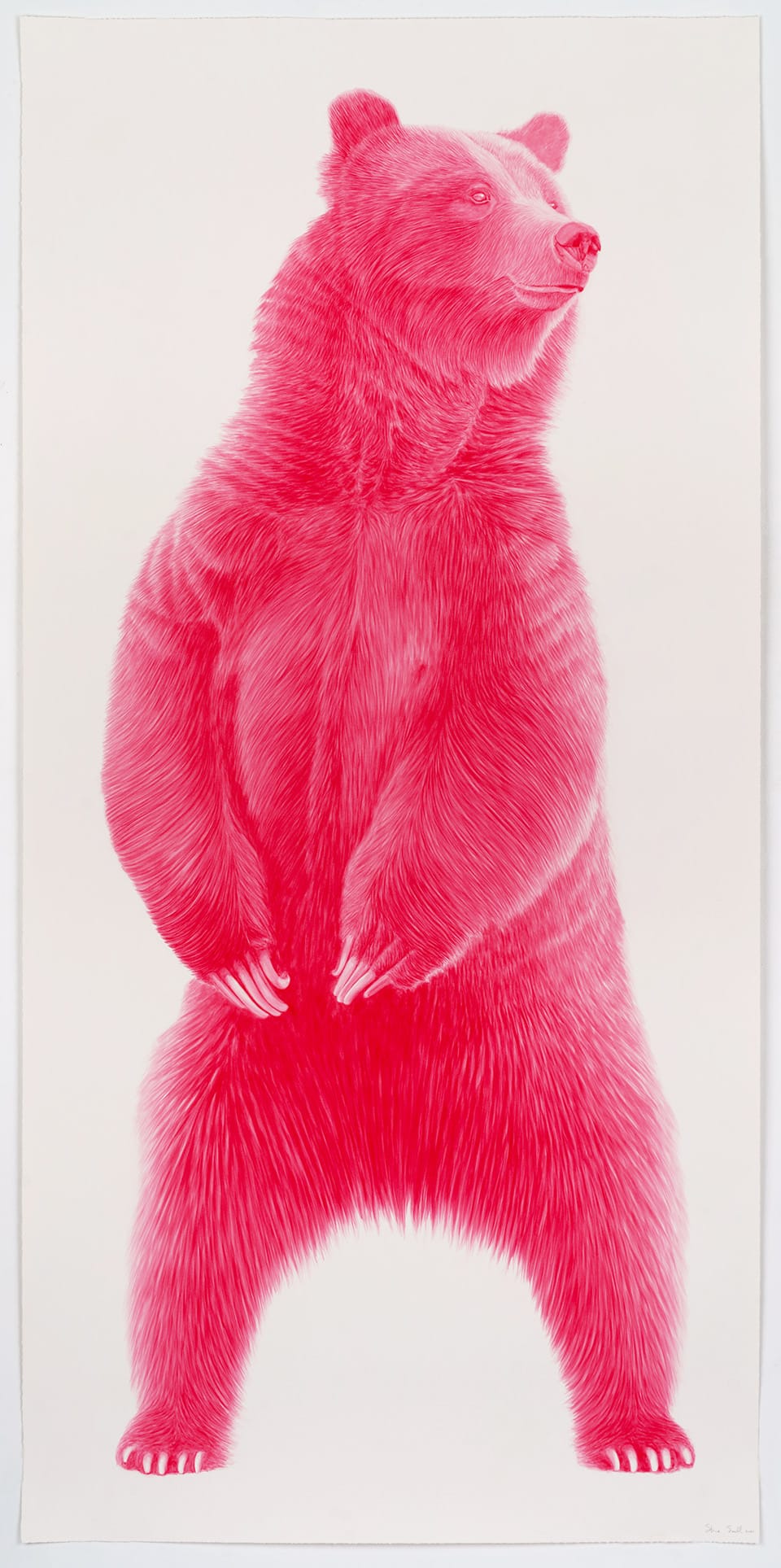
-Magenta Bear #10 | Acrylic ink on paper | 91” x 43” | Steve Snell
The gallery’s program operates on the premise that the American West is no longer a frontier to be conquered, but a psychological container where nature and artifice are inextricably blurred. The American psyche relies on the concept of Terra Nullius—the idea that the land was “empty” or “unused” before settlers arrived.
“Visions West Contemporary successfully pivots the conversation from what the West looks like to how the West feels in an age of ecological uncertainty,” she says. “We strive to curate an ongoing investigation into the liminal space where human myth meets the raw, unyielding energy of the land.”
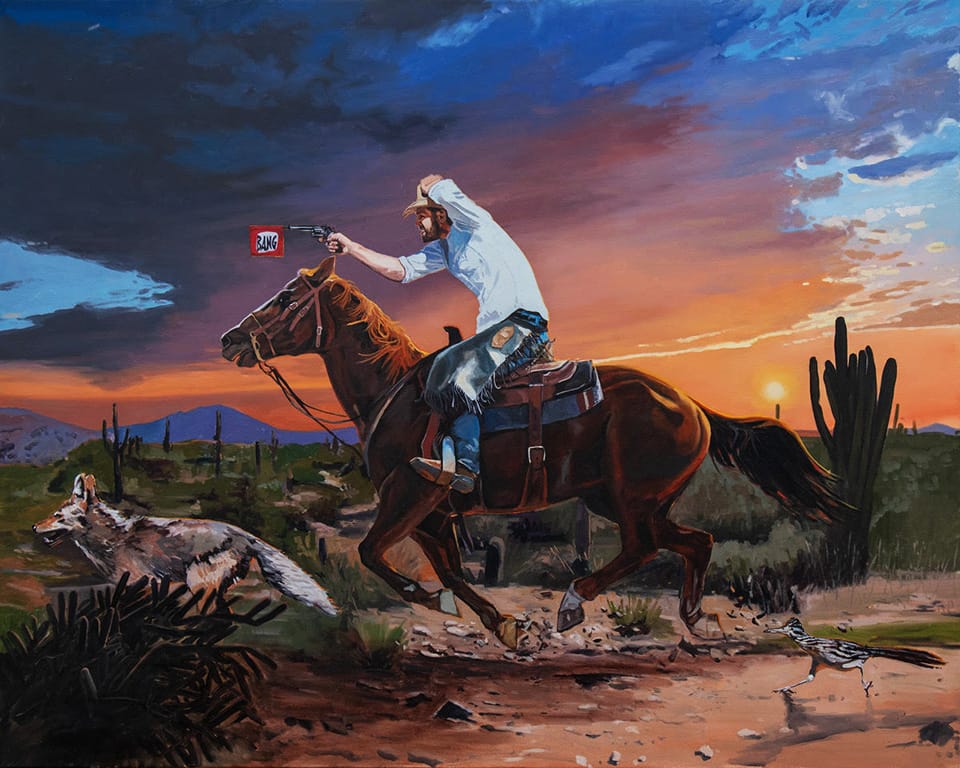
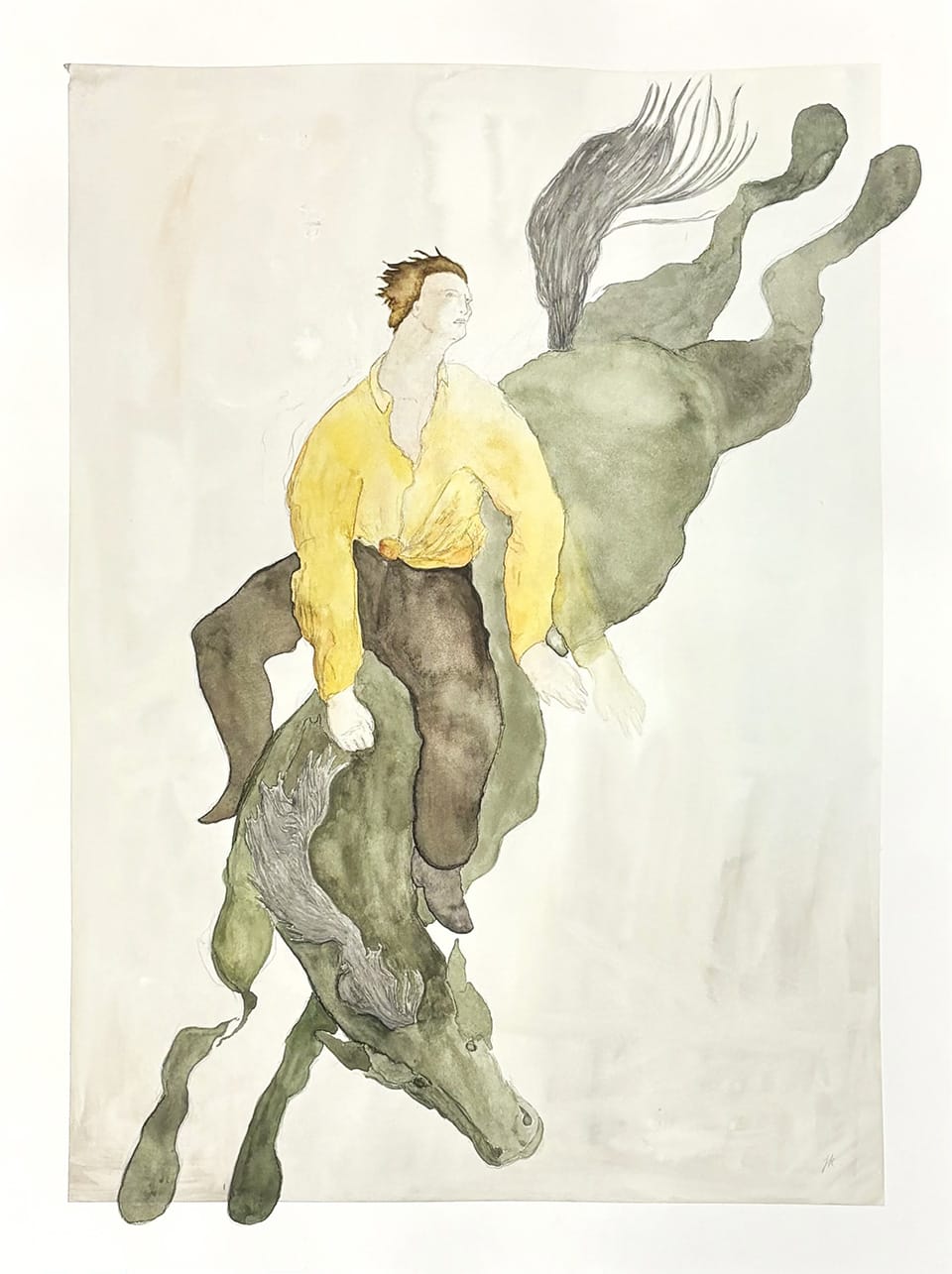
One of the artists showing this summer is watercolorist Jess Kellner, whose subject matter—rodeo riders and broncs—animates the medium. An unlikely mix of the soft washes of colors used to portray the tough rodeo riders creates an interesting dichotomy.
– Enchanted Forest | Mixed media mosaic | 24” x 64” |
-Whisper of the Mountains | Mixed media mosaic | 29” x 56”
“His watercolor technique captures the raw power and fleeting moments of the West, but he treats them as cinematic moments rather than historical records,” Nikki says. “His work, like a mirror, reflects the tension between the rider and the wild animal to emulate the internal tension between control and surrender.”
Kellner’s recognizable icons—cowboys and horses—offer viewers an entry point, while his execution and themes push them toward provocative, surreal territory.
“Moving the conversation away from ‘what the West was’ toward ‘how the West feels’ in that modern, often chaotic world elevates his work,” Nikki says. “As a professional actor and filmmaker, Kellner brings a sense of drama and narrative to his paintings. He views his art as an insight into what it means to be human.”
“VISIONS WEST CONTEMPORARY SUCCESSFULLY THE CONVERSATION FROM WHAT THE WEST LOOKS LIKE TO HOW THE WEST FEELS IN AN AGE OF ECOLOGICAL UNCERTAINTY.”
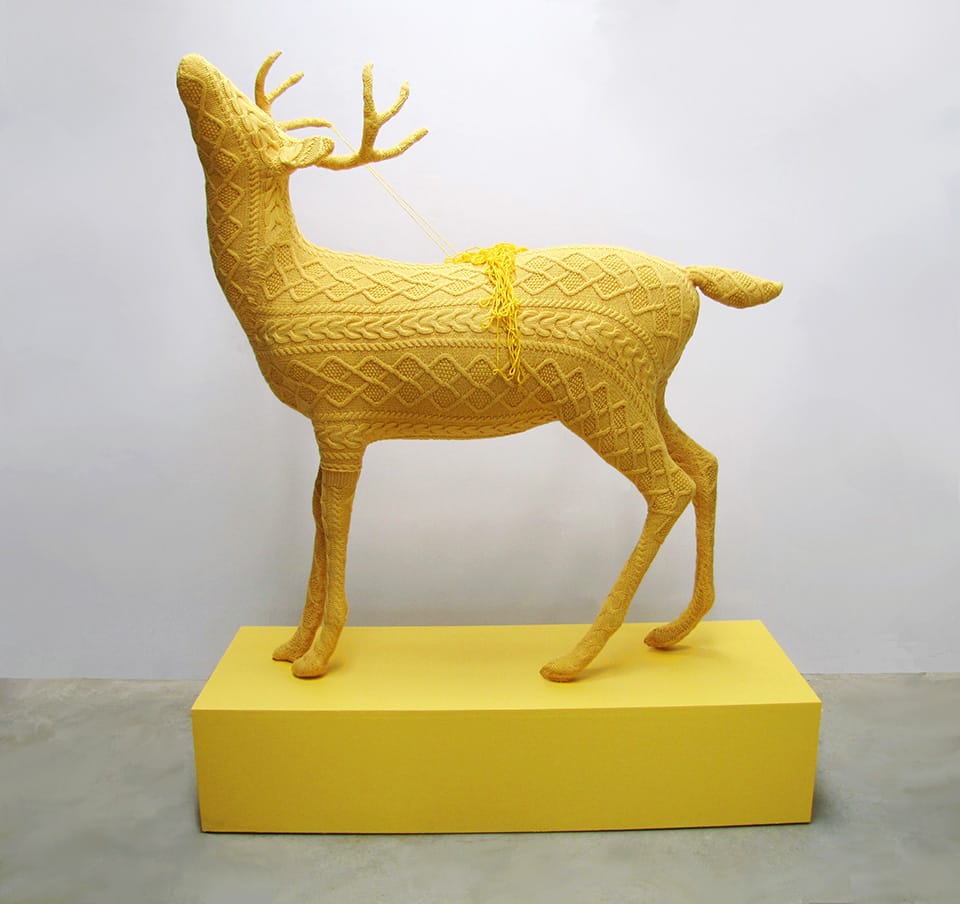
-Snag | Wood, polyurethane foam, steel, yarn, thread | 70” x 55” x 22” | Rachel Denny
“We like the idea of art as advocacy,” Nikki says. “Artists are increasingly using natural motifs to highlight climate change, habitat loss, and the fragility of ecosystems. Art should be a platform for discourse that surprises, delights, and provokes.”
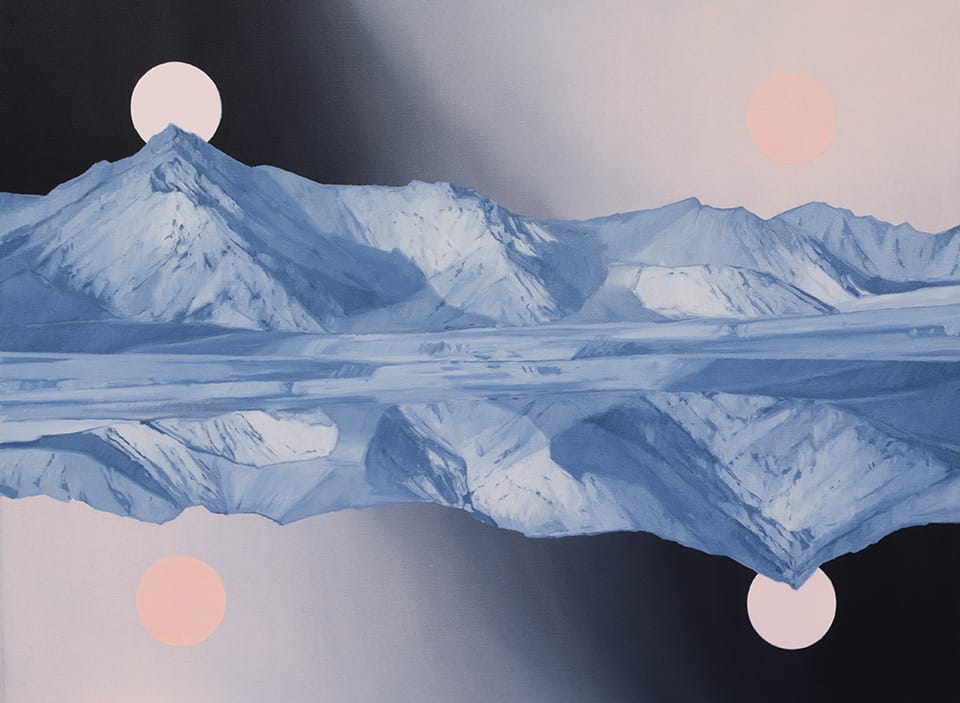
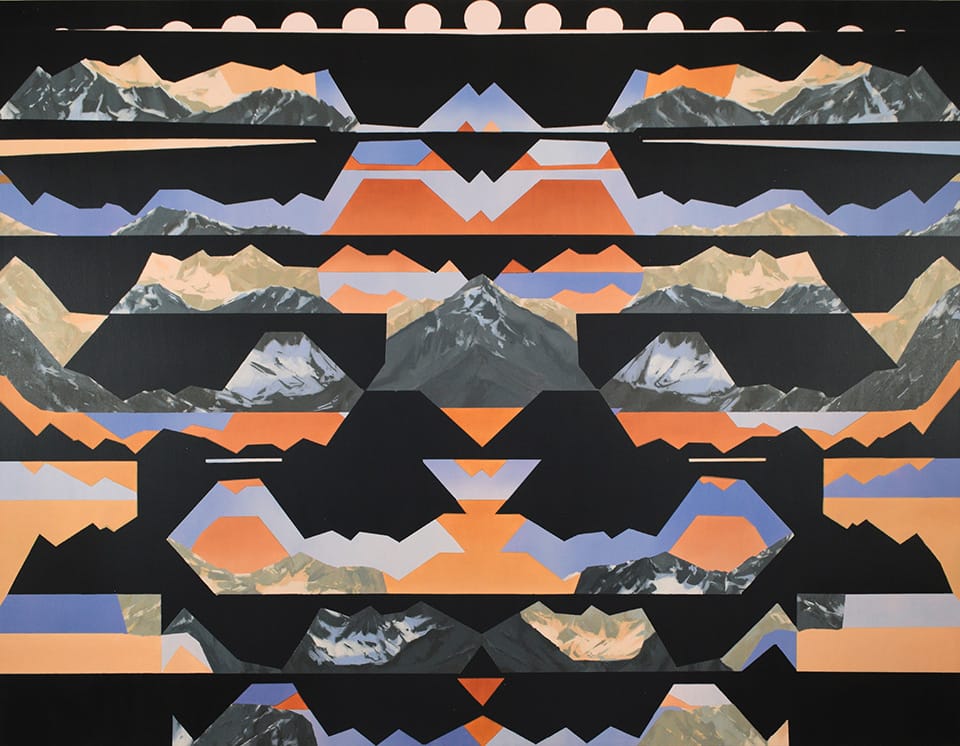
Painter Beau Carey approaches the Western landscape from a different perspective. His splintered landscape portraits convey the essential message of Visions West’s program. By directly attacking the 19th-century “Hudson River School” mindset—the idea that a landscape is a static, divine theater for human expansion—Beau removes the dogma from this traditional genre.
“Beau treats the landscape not as a backdrop, but as a fractured memory,” Nikki says. “He uses structural lines to show where our perception fails. His compositions often collapse, with multiple horizons or mirrored mountain peaks. In his work, abstraction isn’t an escape from reality; it is a more accurate representation of it.”
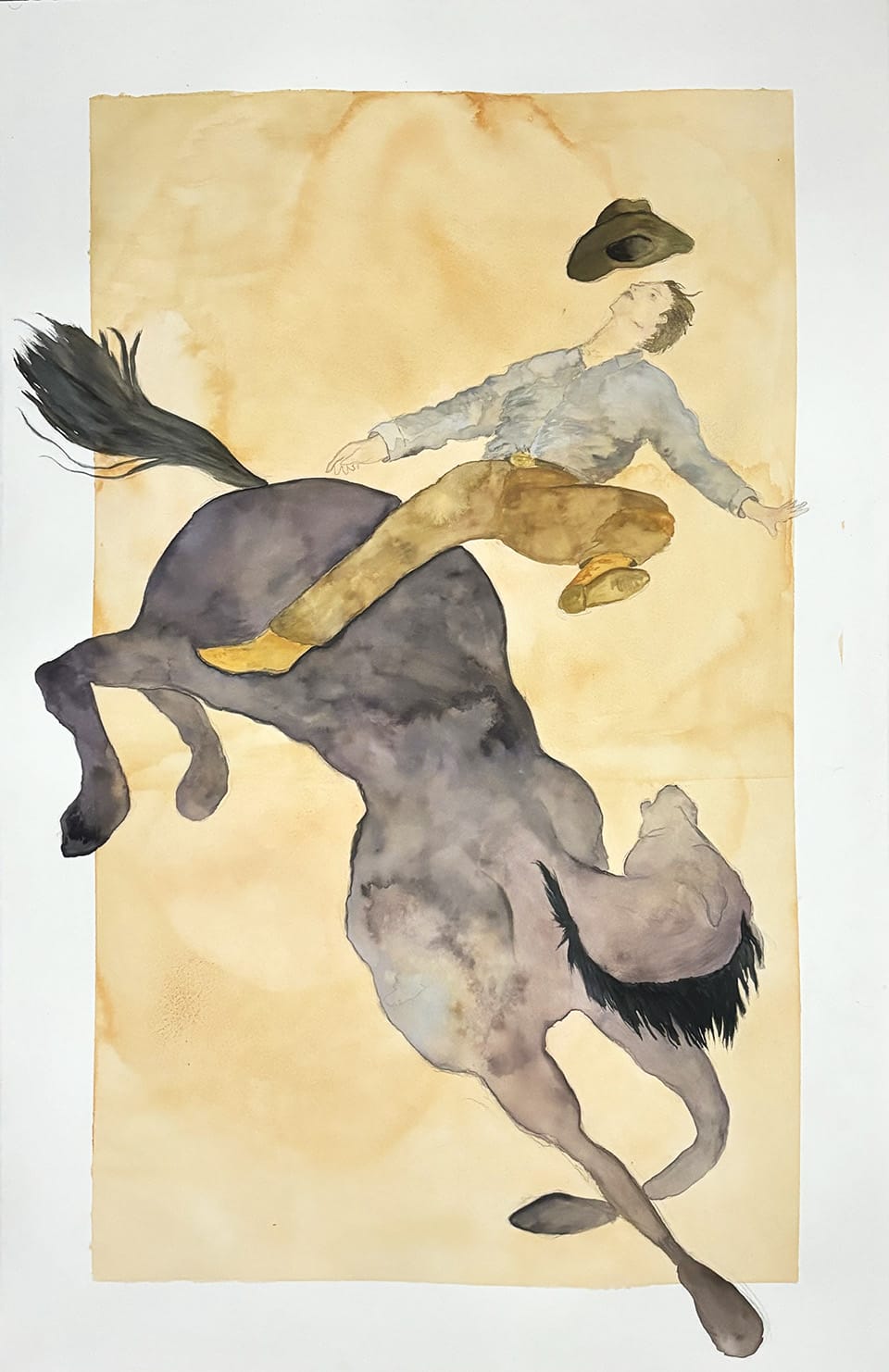
-To Say I Love You, Even As We Fall | Watercolor on paper | 39” x 25” | Jess Kellner |
-A Wild Patience Has Taken Me This Far | Watercolor on paper | 24” x 18” | Jess Kellner
Residing in the West means straddling the broad horizons of our collective imaginations. Strung from day to night, from peaks to valleys, the yoke of the horizontal life pulls and chafes. By removing this stable point of reference from his work, Beau, essentially, invites the viewer into a disorienting modern wilderness.
“It’s a place no longer ‘untouched’ but rapidly melting and shifting,” Nikki says. Carey also uses the Japanese concept of Notan—a balance of dark and light—to draw out a high-contrast graphic sensibility.
“They feel more like afterimages than actual mountains,” Nikki says. “This also suggests that our traditional images of the West are fading.”
“WE STRIVE TO CURATE AN ONGOING INVESTIGATION INTO THE LIMINAL SPACE WHERE HUMAN MYTH MEETS THE RAW, UNYIELDING ENERGY OF THE LAND.“
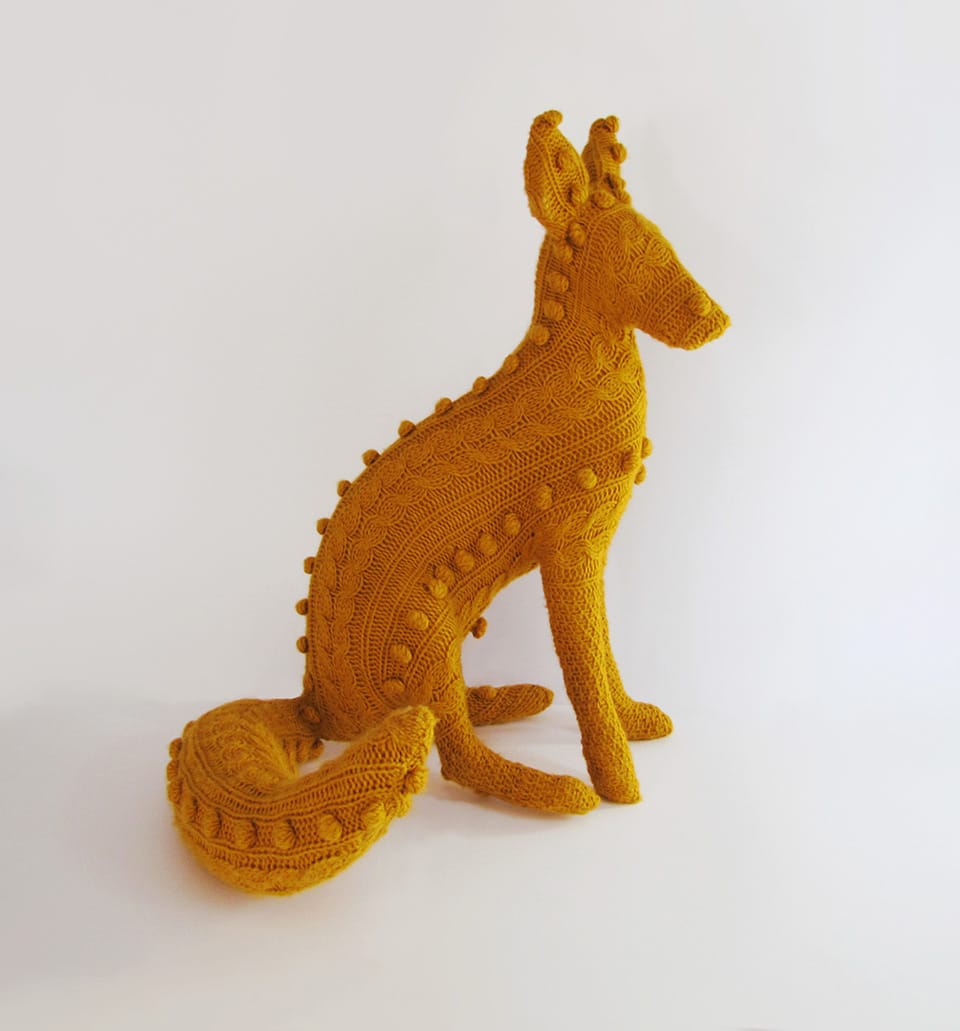
-Amber Fox | Polyurethane foam, aluminum, mohair cotton | 22” x 18” x 16” | Rachel Denny
Sculptor Rachel Denny similarly reimagines familiar Western symbols by deconstructing the idea of a hunting or fishing trophy. Cladding animal forms—deer, elk, and bears—in materials such as cashmere, cable-knit wool, and pennies, she highlights the absurdity of our relationship with nature.
“She takes the most literal icon of traditional Western art—the taxidermy head—and strips it of its violence, replacing conquest with comfort,” Nikki says.
In doing so, Rachel also subverts the hyper-masculine symbolism of the trophy.
“The hunting trophy is historically a symbol of masculine prowess and outdoor survival,” Nikki says. “By wrapping these forms in knitting—a traditionally feminine, indoor, domestic craft—Denny creates a productive friction. She suggests that our appreciation for nature is often purely aesthetic and tamed. We want the look of the wild, but only if it feels as safe and soft as a favorite sweater.”
Across its program, Visions West Contemporary continues to explore how artists interpret the landscape around them, and since the dawn of humanity, nature and animals have played an important role in our development. From cave paintings to rock art, humans drew inspiration from their environment.
Overall, the gallery invites conversations about place and the meaning of living in a real world constructed through legends and artists who question, rather than confirm, such myths.
whj ART FEATURE
