
Listen to our Spotify podcast about this article:
Written By Lori Currie
Photos By Aimée Mazzenga
The phone call began with laughter and ended with an extraordinary leap of faith. Comparing notes on beloved architects and furniture makers, designer Sierra Fox and her potential clients discovered they shared an almost uncanny alignment in taste. John Pawson, Vincent Van Duysen, BDDW, Apparatus: every reference Fox mentioned was met with enthusiastic recognition.
“we want you to design our dream home. We just want to live in it.” –homeowners
There was just one complication. At the time, Fox had just opened her design studio and had yet to set up her website and portfolio. At the time, she was only working with friends and family. What she did have was a personal Instagram account where she had posted inspirational images and occasional work snippets, which the potential clients saw and loved. But the chemistry with the clients was undeniable. By the end of that first conversation, the homeowners had made their decision. “We want you to design your dream home,” they told Fox. “We just want to live in it.”
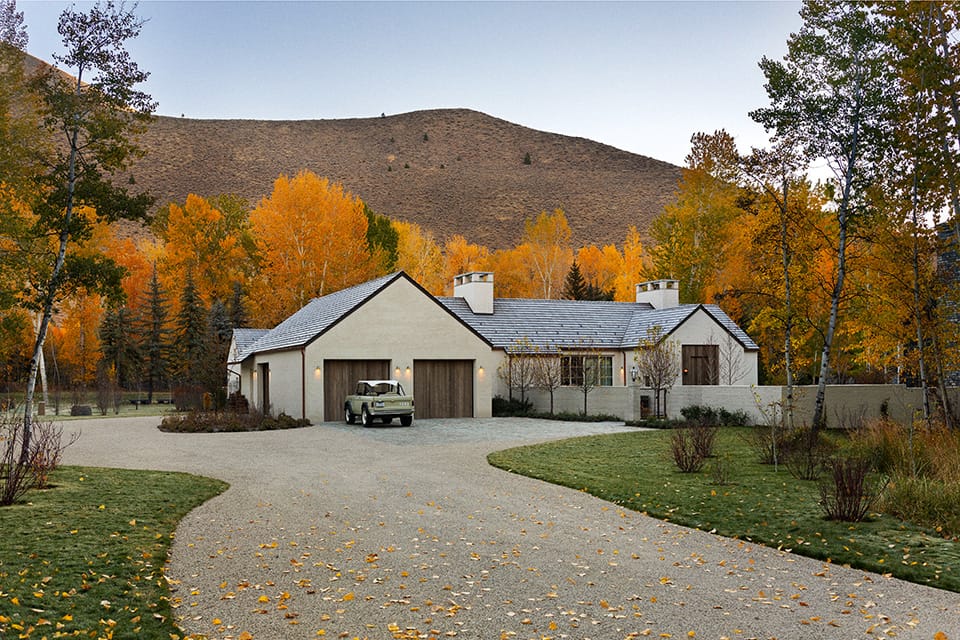
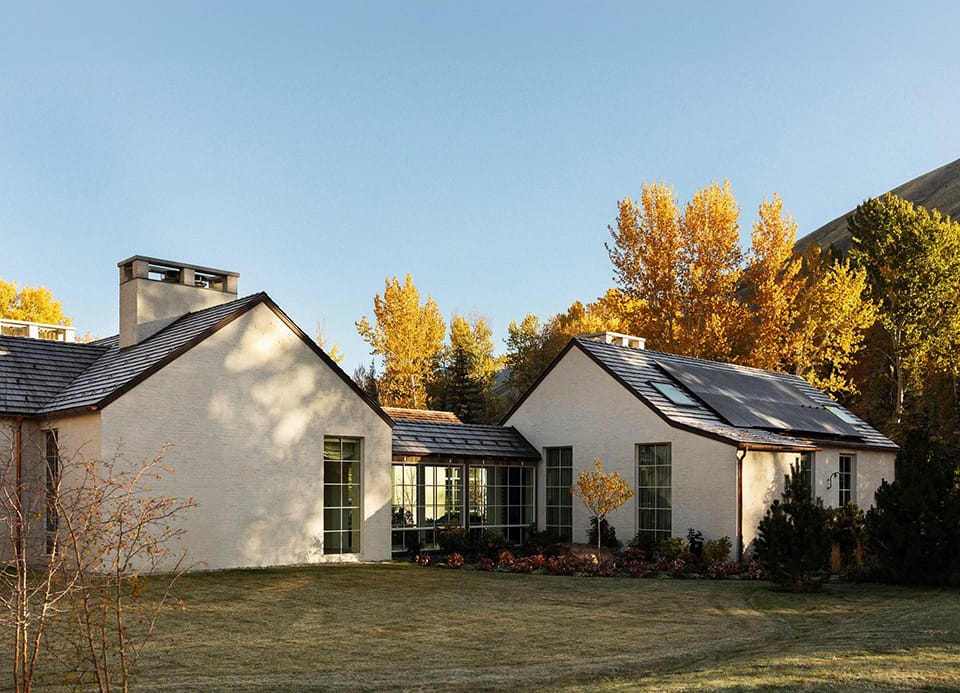
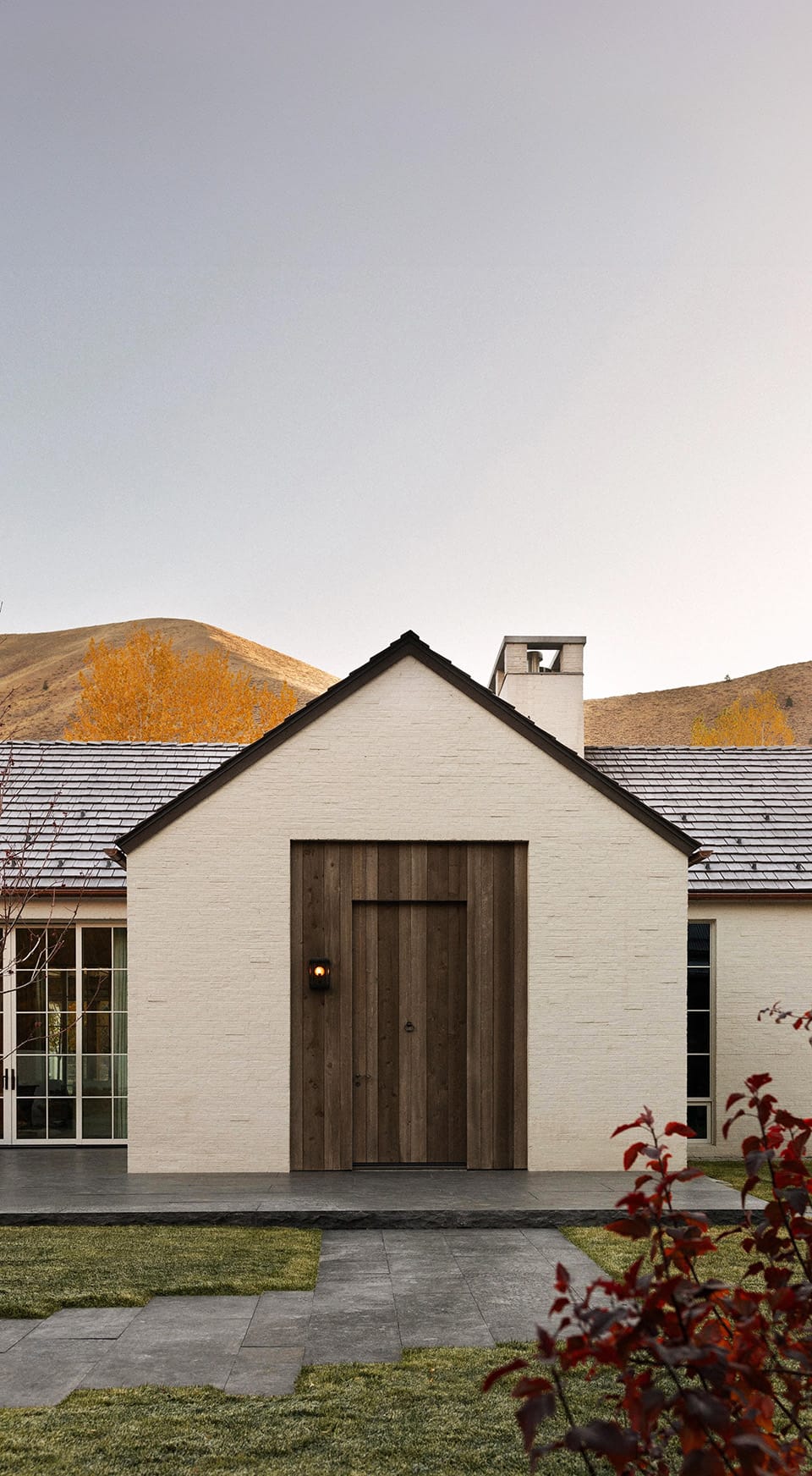
Three years later, that vote of confidence resulted in a 5,000-square-foot main residence and 1,200-square-foot guest house in a prestigious pocket of Sun Valley. But the real achievement isn’t the square footage or even the striking lime-washed brick that sets it apart from other homes in the Wood River Valley. It’s what Fox and her clients kept at the forefront of the design: radical restraint in an era of excess, a devotion to natural light over artificial illumination, and the courage to let walls be the art.
A Local Designer’s Intuition
Fox and her family have design in their DNA. Her father is an entrepreneur and her mother is a photographer who custom built each home in which they raised Sierra and her sister, Delaney. Originally from Honolulu, they moved to Ketchum in 2001 looking for a quieter lifestyle in the mountains. This background has given Sierra an intimate understanding of mountain architecture’s pitfalls. She knows what feels too obviously “mountain modern”—the industrial steel boxes that dominate newer construction. She also knows what feels like tired cliché: the dark timber lodges that seem to multiply every season. After the pandemic created a surge in demand in the Sun Valley area, Fox started STUDIO MTN in 2020, an interior design firm with offices in Sun Valley and Los Angeles.
“The residence was designed with an emphasis on intimate scale and ‘warm minimalism,’ to reduce the overall massing, the program was arranged as a cluster of smaller structures, allowing each space to receive abundant natural light throughout the year.”
–Mike Brunelle, Architect
When the homeowners approached her, they’d already secured their lot, hired architect Mike Brunelle, and begun preliminary planning. The couple had designed their previous home largely on their own, an edgy Venice Beach residence that later appeared on the cover of Architectural Digest Mexico. But they realized that a larger, more complex project would benefit from professional guidance, provided they could find the right collaborator.
The challenge was that most designers they encountered fell into two categories: big-city practitioners who would import an aesthetic that felt wrong for Idaho, or regional designers who leaned too heavily into rustic or cliche vernacular. Fox, however, occupied an interesting middle ground. She understood Sun Valley’s context but wasn’t beholden to its conventions.
“Having grown up here, I know what feels too on the nose, and I know what feels not Idaho enough,” Fox explains. That delicate balance became the foundation of their collaboration.
Mining the Past for Future Vision
Fox’s conceptual breakthrough came from an unexpected source: Sun Valley’s oldest buildings. While most mountain homes referenced either alpine chalets or contemporary minimalism, Fox looked to the valley’s 19th-century mercantile structures and brick buildings. These remnants of mining-era prosperity suggested a different lineage, one connected to the American West’s commercial history rather than its rustic mythology.
The idea of using brick, specifically lime-washed brick, was daring for Sun Valley in 2021. But Fox pushed further, proposing that each gabled volume of the house should feel like a separate historic structure that was later connected over time. She literally named the different sections in early planning: the horse corral, the post office, the general store. Glass breezeways would link these “buildings,” creating a village compound on a single property.
“I asked, ‘What would have been here 100 years ago?’” Fox recalls. The answer led her to European precedents as well—Belgian and German rural architecture that shared Idaho’s winter climate and valued thick walls, textured surfaces, and carefully controlled light.
“I didn’t want it to carry a time stamp. The goal was to create a home that would feel relevant and resonant 30 years from now.”
–Sierra Fox, Designer, STUDIO MTN
Brunelle translated Fox’s vision into architectural reality. “The residence was designed with an emphasis on intimate scale and ‘warm minimalism,'” Brunelle explains. “To reduce the overall massing, the program was arranged as a cluster of smaller structures, allowing each space to receive abundant natural light throughout the year.” A series of courtyards were conceived for year-round use, oriented to follow the path of the sun.
The Commitment to Natural Light
One directive governed all design decisions: the clients never wanted to turn on lights during the day. They wanted to “wake up with nature and fall asleep with nature.” This seemingly simple request became technically complex given the home’s geography. Nestled into a valley with mountains on multiple sides, the lot didn’t receive consistent southern exposure throughout the day.
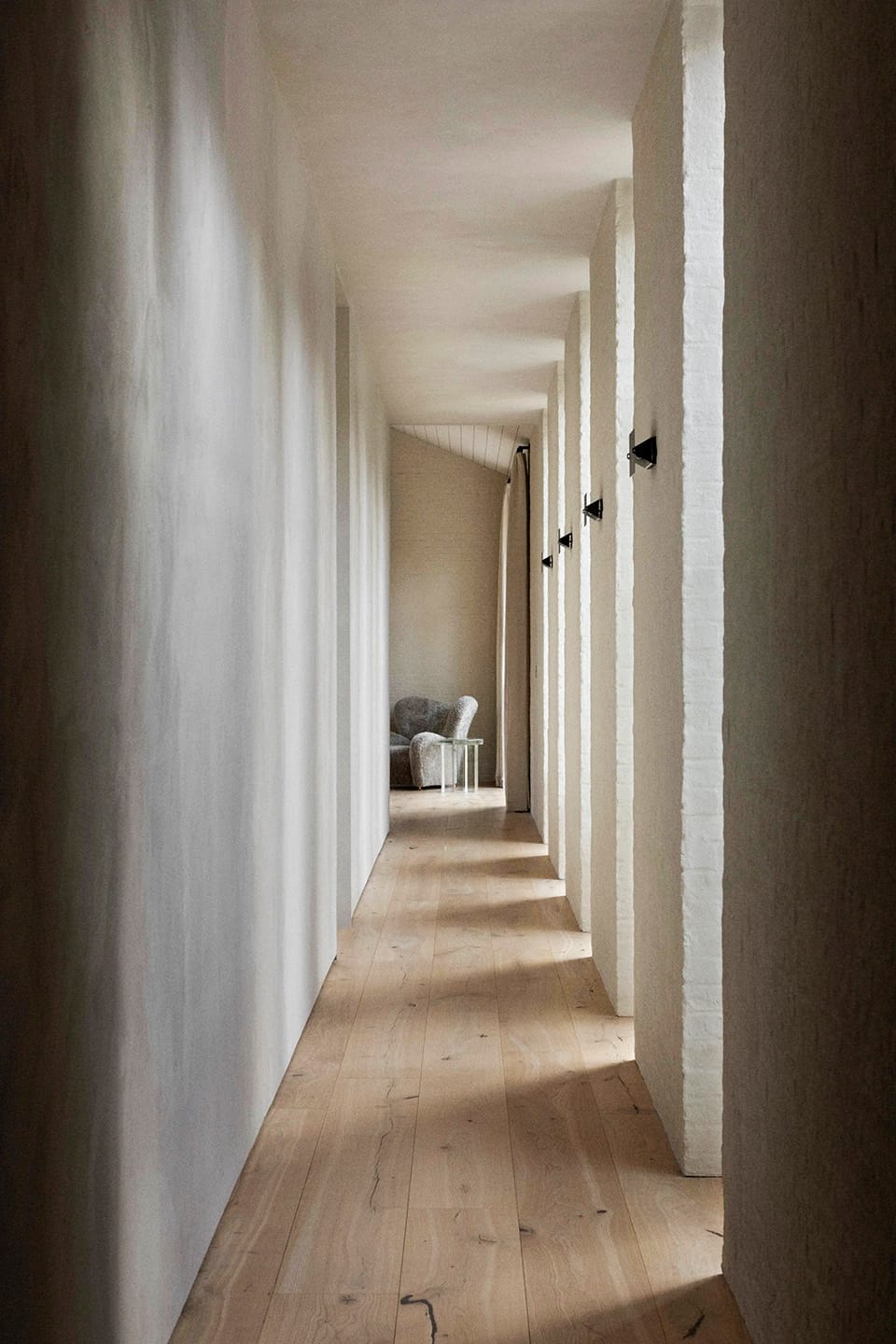
Brunelle conducted extensive sun studies to solve this puzzle, ultimately orienting the house to capture exact east and exact west light, which informed how light would move through the home in every season. The surrounding hills naturally soften what would otherwise be harsh morning and evening sun, while southern exposure remains relatively subtle. The result is remarkably even illumination from dawn to dusk. “That living room feels bright and airy almost all day long,” Fox notes. Strategic skylights supplement natural light in bathrooms and other spaces where large windows didn’t fit the bill, while one hallway features south-facing windows specifically positioned to cast dramatic shadows throughout the day. Fox had envisioned these moving columns of light as an architectural art installation, and she got her wish.
The commitment to natural light created a secondary challenge: what to do after sunset? Fox’s solution involved eliminating as many recessed can lights as possible—the clients discussed having none at all—in favor of decorative fixtures that would create a more candlelit, intimate atmosphere at night.
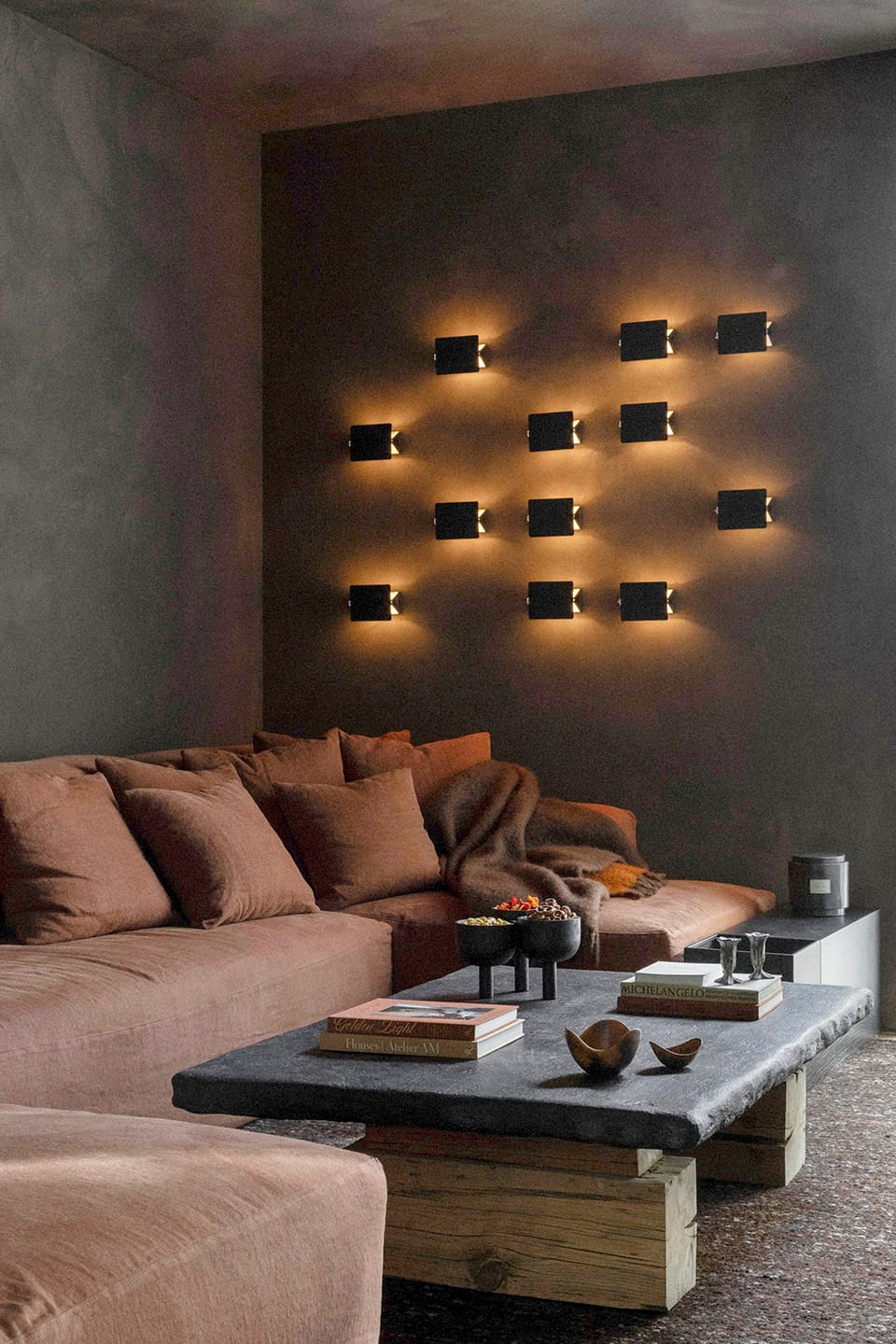
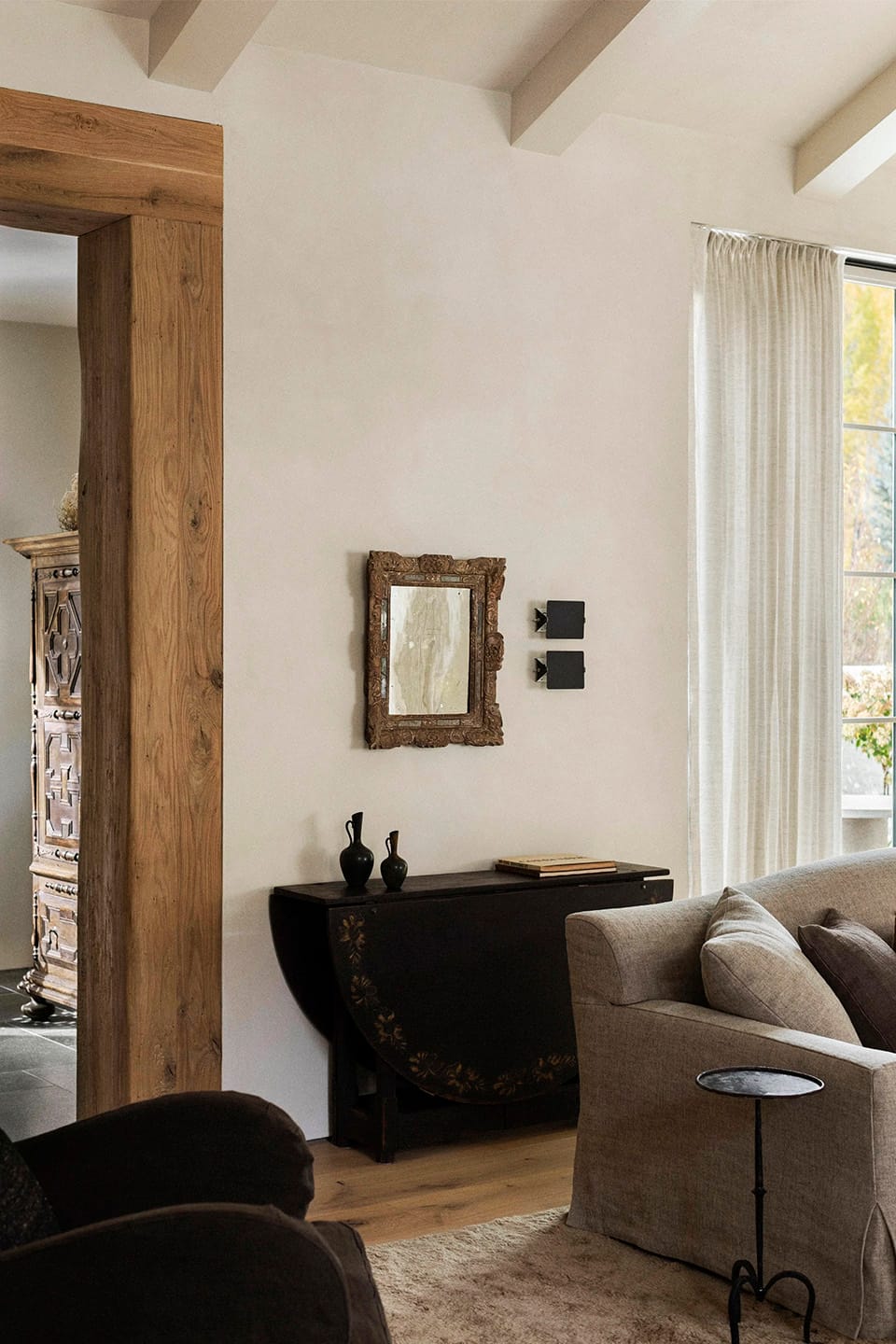
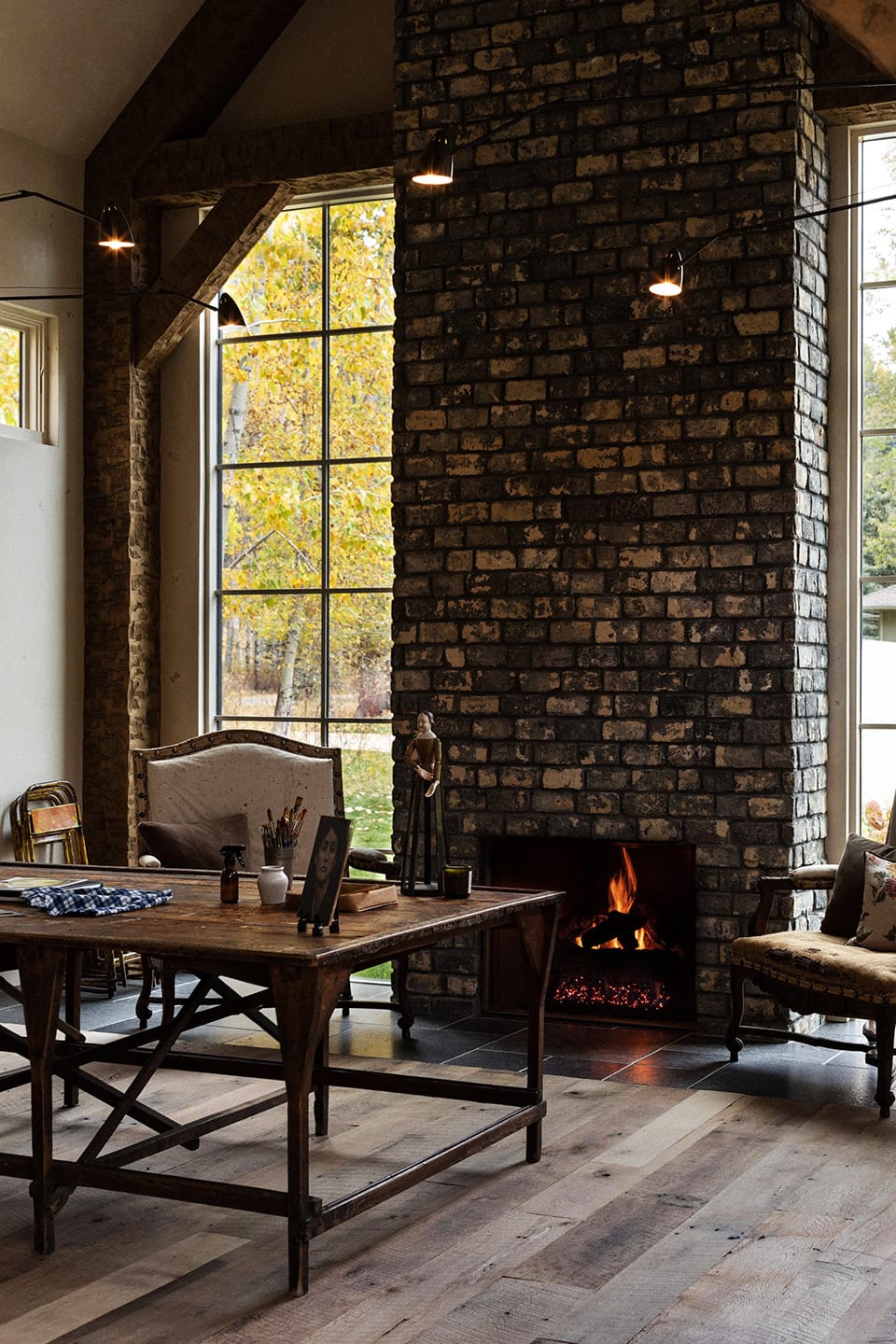
This decision led to one of the project’s signature elements: 25 identical Charlotte Perriand CP-1 sconces serve as touchpoints throughout the house, especially in the media room as art, where they scatter across the wall like a constellation. The vintage mid-century fixtures—simple rectangular metal plates that articulate—provide warm ambient light without visual clutter.
There was just one problem: the client was initially lukewarm about them. “I had to show her so many reference images,” Fox remembers. “I looked at some other options, but nothing was quite right, so I just kept showing her the Perriands until she finally agreed.” Fox’s persistence paid off. The sconces’ simplicity and warm glow perfectly suit the home’s restrained aesthetic, creating consistency without monotony.
“They’re here to get away and find some serenity…We wanted everything to feel old world and original .”
–Sierra Fox, Designer, STUDIO MTN
Pushing Against Instinct
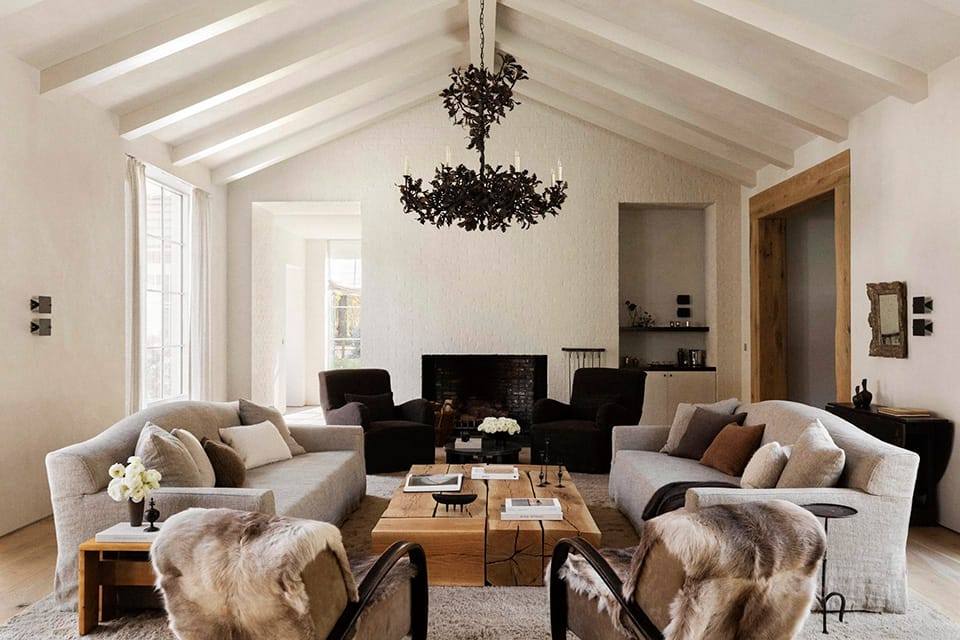
The Perriand sconces weren’t the only element requiring client convincing. The living room layout also sparked resistance. Fresh from completing their Venice home, which featured curved, sculptural sofas and statement pieces that commanded attention, they weren’t ready for Fox’s proposal: simple slipcovered sofas and chairs mirrored across a massive log coffee table.
“He worried it was too simple,” Fox recalls. “We had already started ordering the pieces, and he tried to convince us to switch to curved. But the simplicity was the point—we were letting the materials and the proportions speak.” Fox had to remind both homeowners that they didn’t want this house to feel like their others. The beauty would come from materials and textures, which would be best appreciated on restrained shapes.
Fox also worried about creating a design that might feel dated. “There are so many people doing curved pieces, and I think it’s really cool, but I feel like it’s going to have a time stamp on it,” she explains. “I didn’t want it to carry a time stamp. The goal was to create a home that would feel relevant and resonant 30 years from now.”
The final living room justifies Fox’s conviction. A Cox London bronze chandelier shaped like an oak tree canopy floats above the slipcovered sofas. Vintage Jindrich Halabala lounge chairs, reupholstered in reindeer hide, provide additional seating. A massive custom coffee table, created by Los Angeles artisan Jason Pickens from solid oak beams, grounds the space. An antique drop-leaf table with painted flowers and bumblebees came from Laserow in New York. Bronze floral sculptures from The Future Perfect add organic elements, and a vintage Perriand Les Arcs stool serves as a side table. The effect is serene, timeless, and anything but boring.
Surfaces as Canvas
Early in the process, Fox and the client discussed a radical idea: what if they didn’t hang any art? The client is a painter and artist herself, with an extensive collection, but for this house, they agreed that the walls themselves should be the primary visual experience.
“They’re here to get away and find some serenity,” Fox explains. “A lot of their art is bold and offbeat. It felt like it might be a distraction from this really tactile experience. We wanted everything to be about the materials.” The homeowners did eventually add a few pieces after selling another property, but the fundamental principle held.
“We had to customize our own pattern by trial and error, moving things around until it felt perfectly random and we were nearly cross-eyed. The tile guy was probably ready to lose his mind by the end.”
–Sierra Fox, Designer, STUDIO MTN
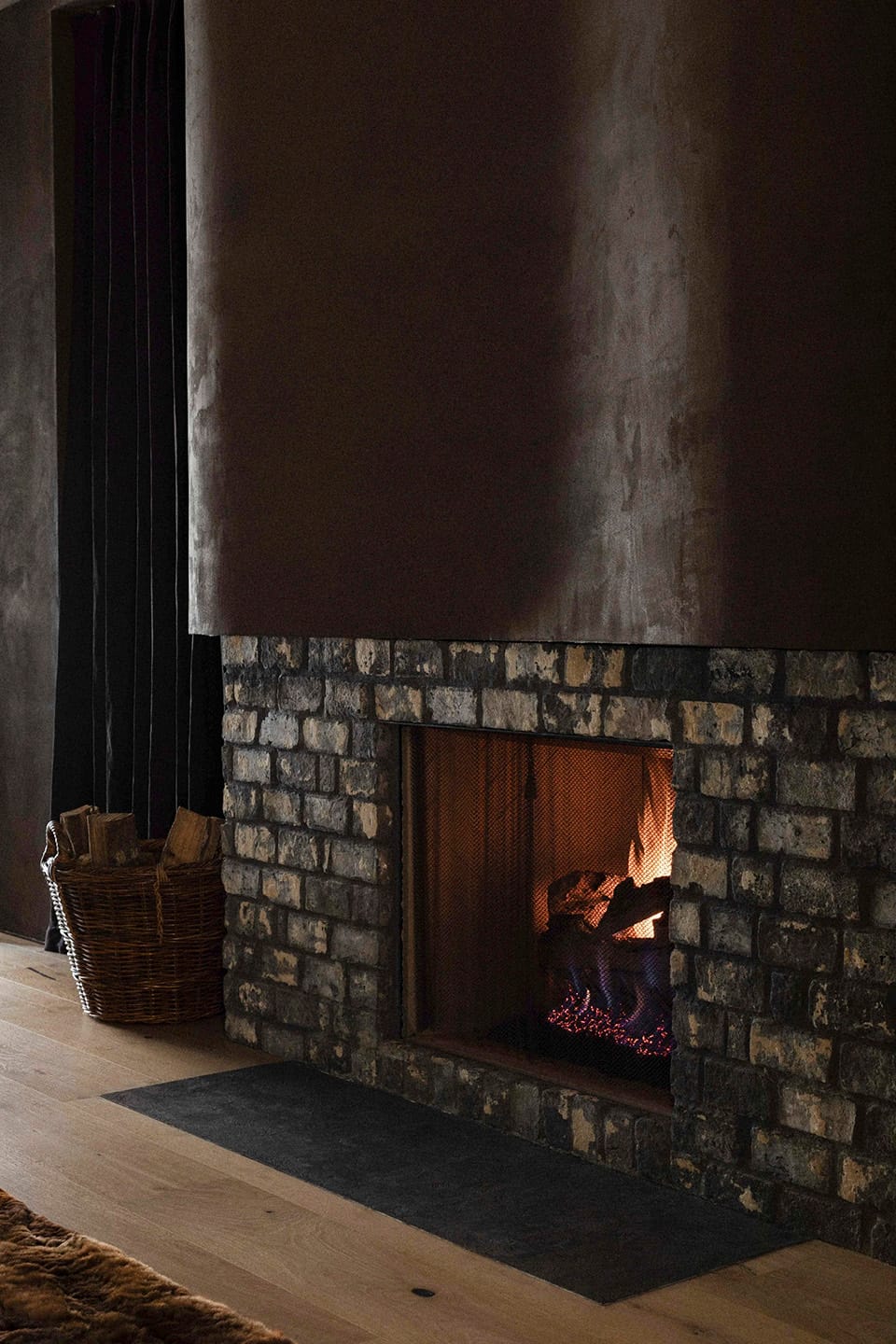
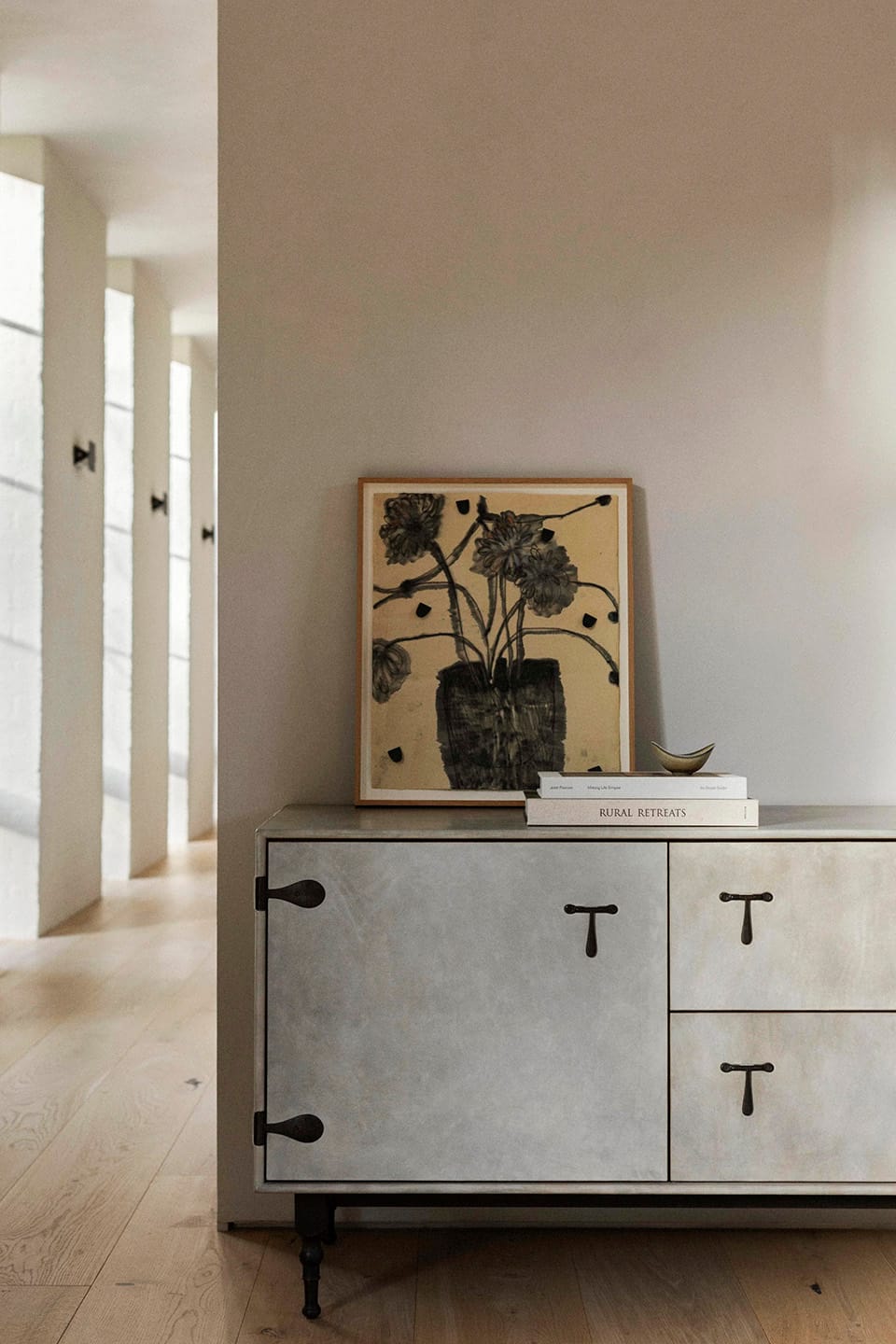
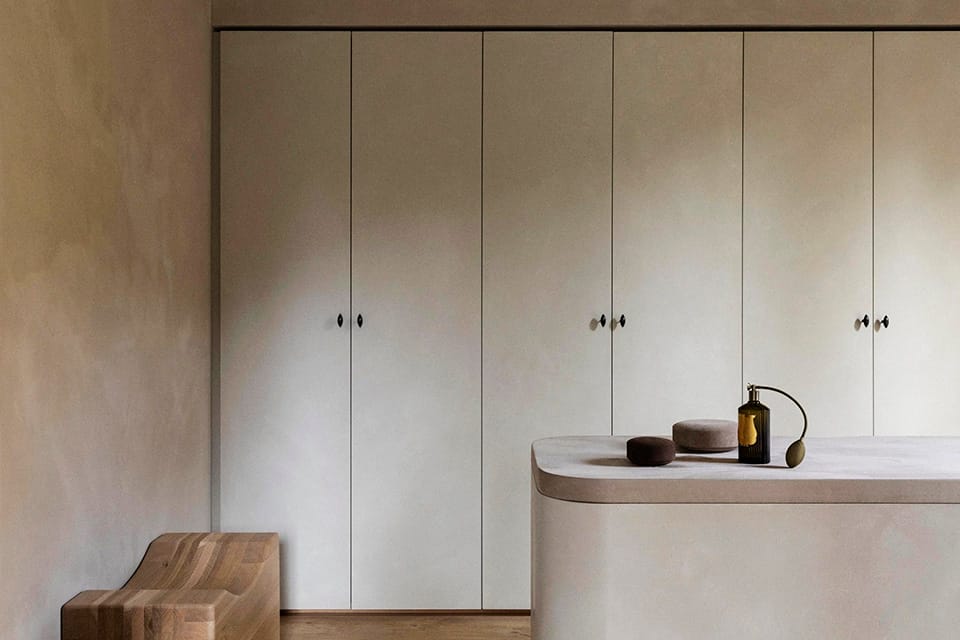
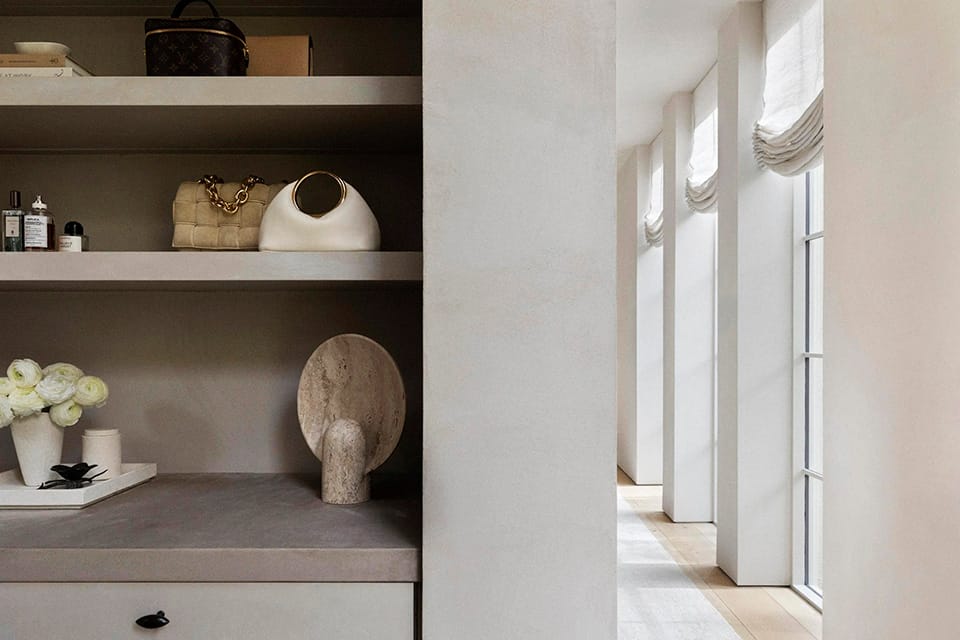
The walls throughout have a velvety plaster finish from Meoded, providing a sumptuous depth. The custom millwork, essentially all the closets and cabinetry that weren’t kitchen-related, was designed to blend with the surrounding walls. “We applied plaster on the faces of the cabinets so that they disappeared into the walls, removing the visual clutter that is always at odds with the need for storage,” Fox explains.
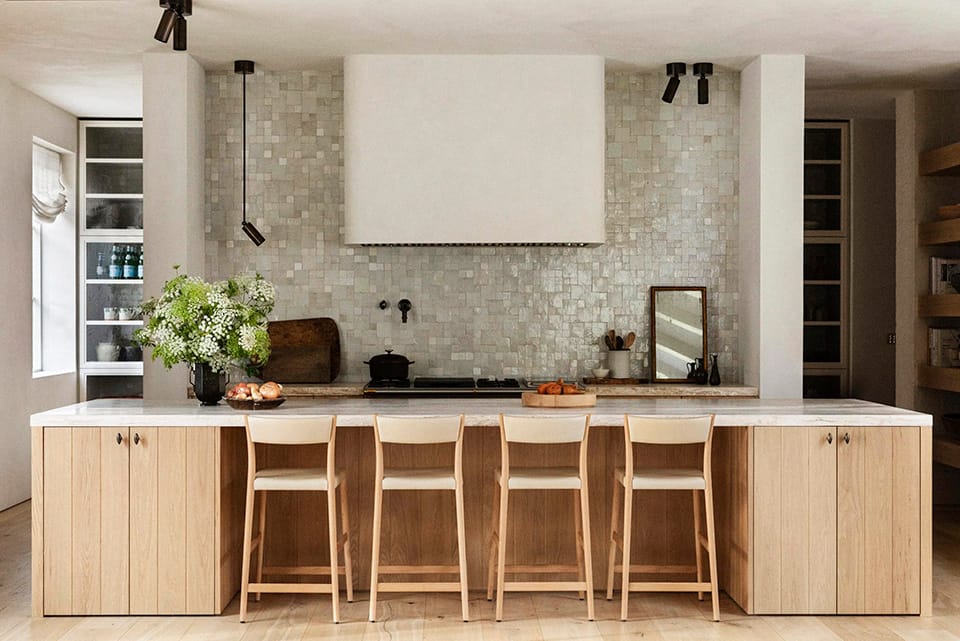
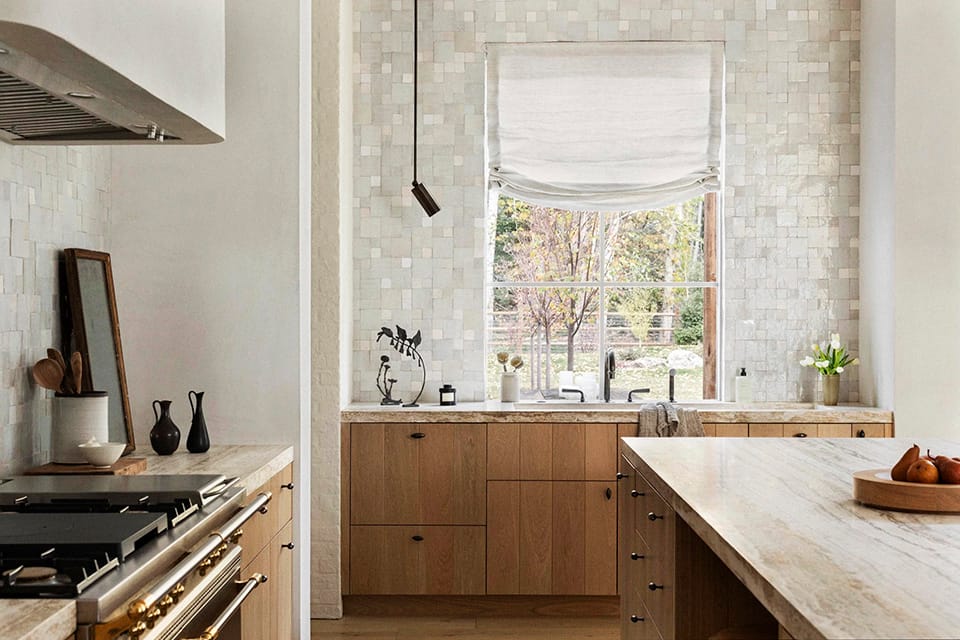
Perhaps the most obsessive detail work appears in the kitchen backsplash, where Fox and her team mixed 2×2 and 4×4 zellige tiles without following any predetermined pattern. “We had to customize our own pattern by trial and error, moving things around until it felt perfectly random and we were nearly cross-eyed,” she says. “The tile guy was probably ready to lose his mind by the end.”
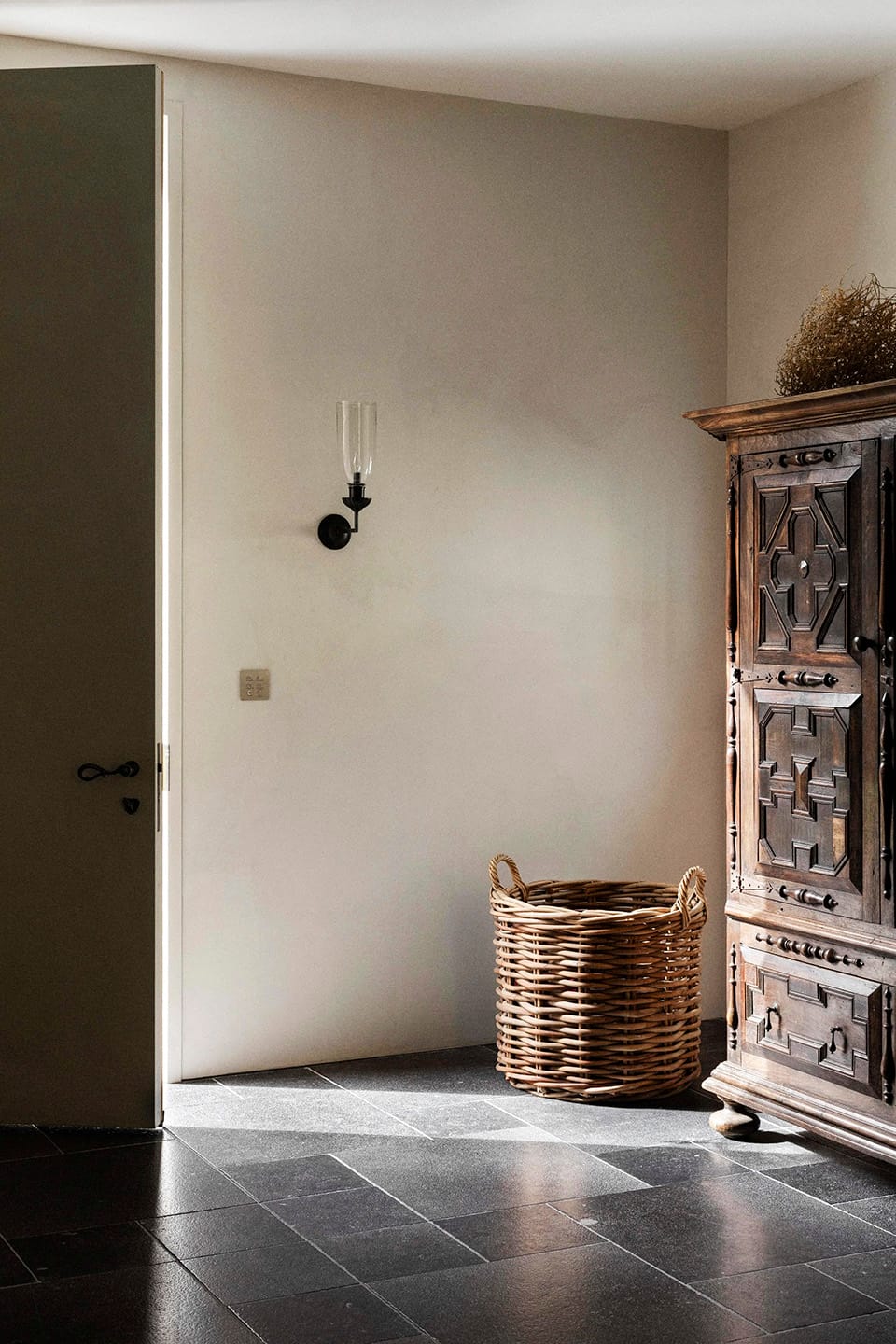
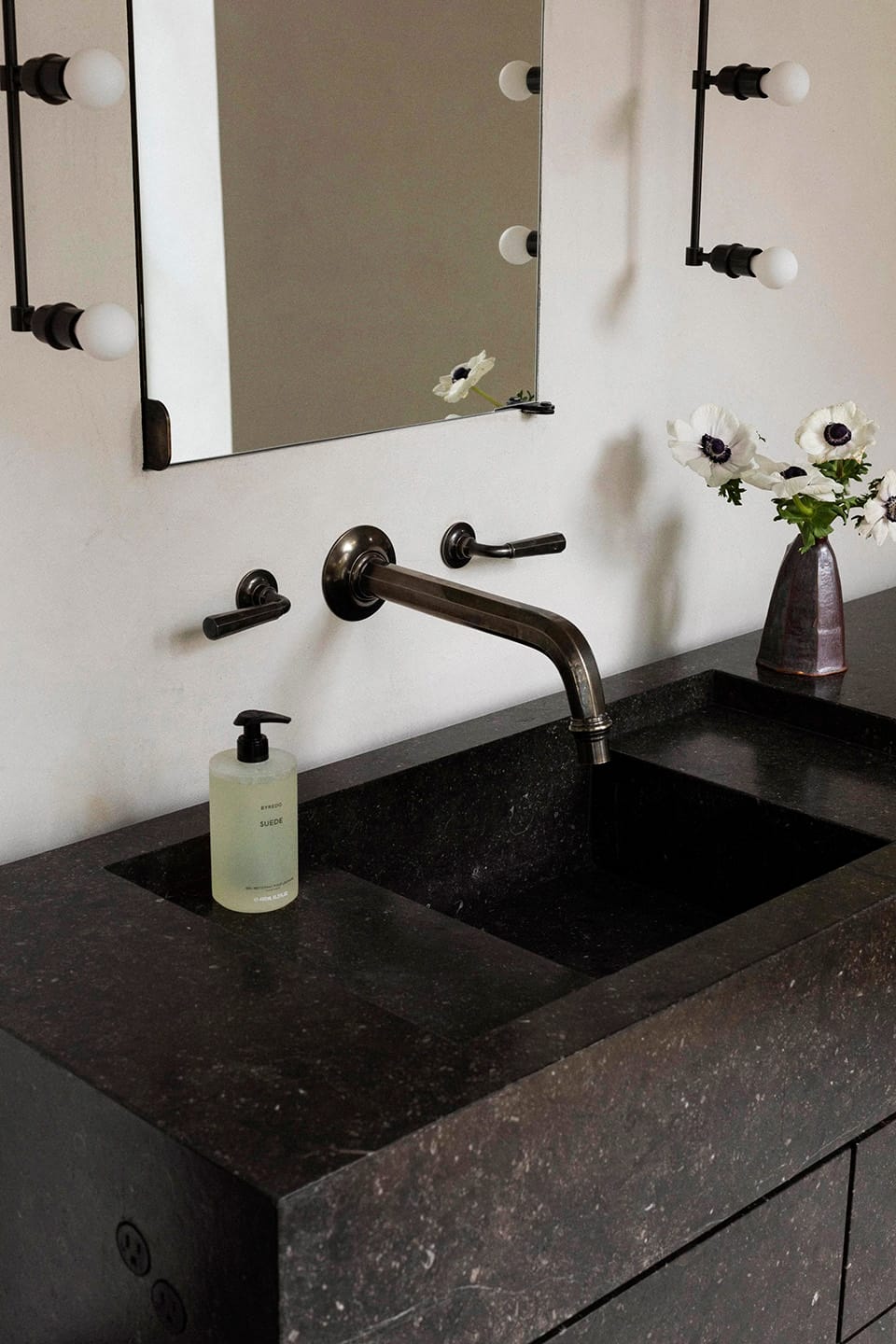
Fox also sourced extensively from Van Cronenberg, a Belgian foundry that produces custom hardware and plumbing fixtures. The company’s staff speaks little English and operates on its own timeline, but their pieces—which can be mixed and matched from numerous components—offered exactly the historical uniqueness Fox sought. Van Cronenberg fixtures appear throughout the entry, powder room, kitchen, and primary bathroom, establishing a consistent European sensibility.
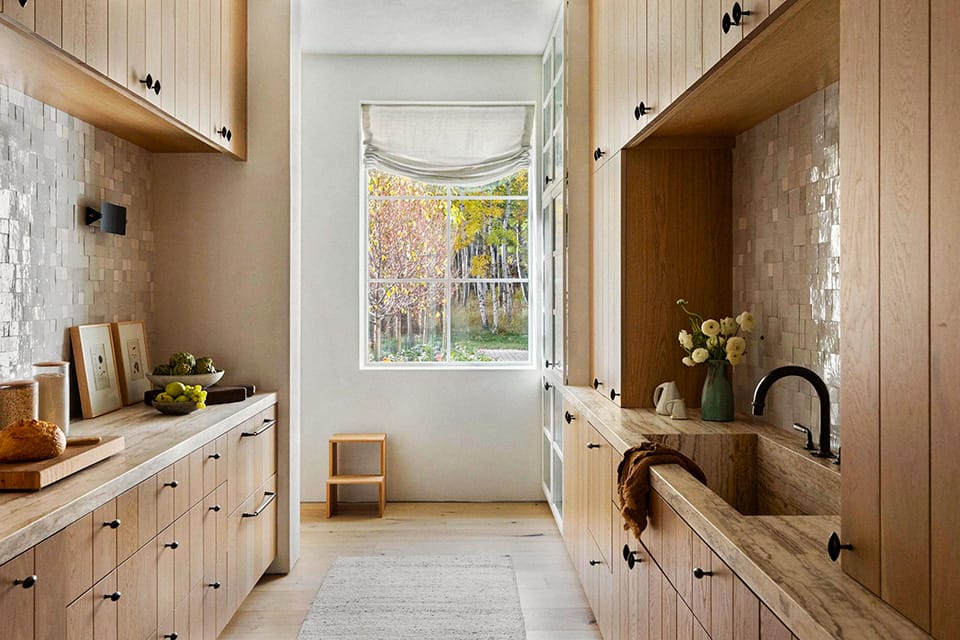
“We wanted everything to feel Old World and original,” she explains. This philosophy extended to every element: Apparatus lighting in the kitchen and throughout the bathrooms; hand-painted BDDW tiles in the barn; Rose Uniacke plaster pendants in the closets. Many pieces came from carefully curated vintage sources: Galerie Half, Obsolete, and Fox’s own private sourcing missions.
Rooms for Silence
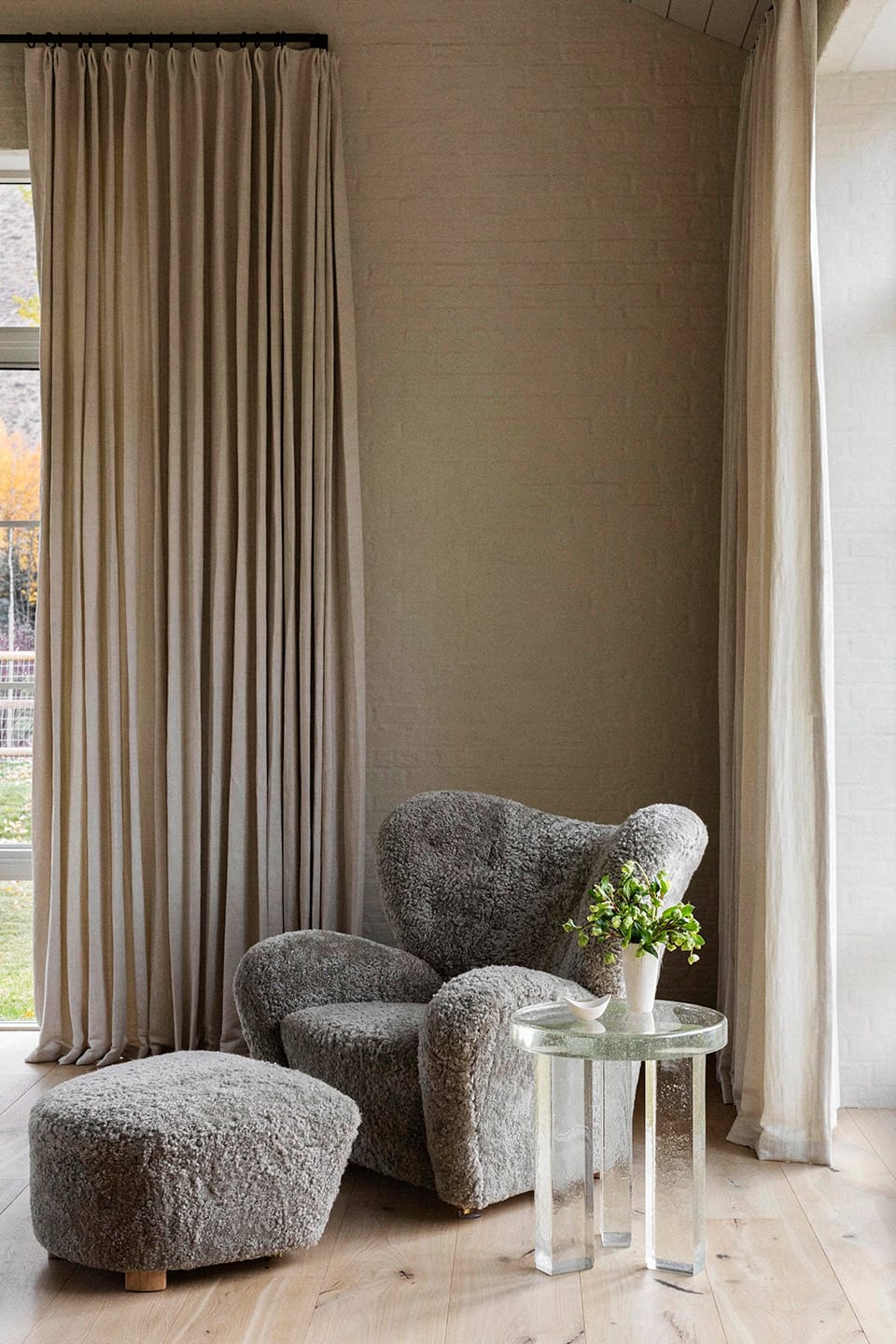
At the end of the light-filled hallway is a corner the homeowner uses as his preferred workspace. It holds a Flemming Lassen lounge chair and ottoman. “He didn’t need a formal workspace—just a quiet corner to work and take calls,” Fox notes. “It’s the most peaceful little working corner with panoramic views to nature just beyond the courtyard walls.” A hand-poured seeded cast glass side table by Courtney Applebaum completes the vignette.
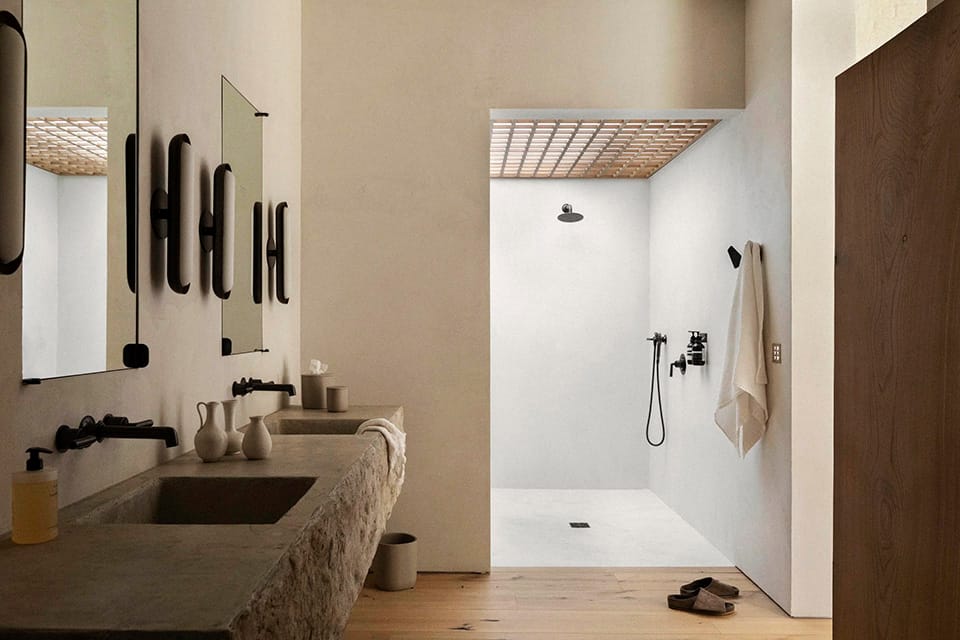
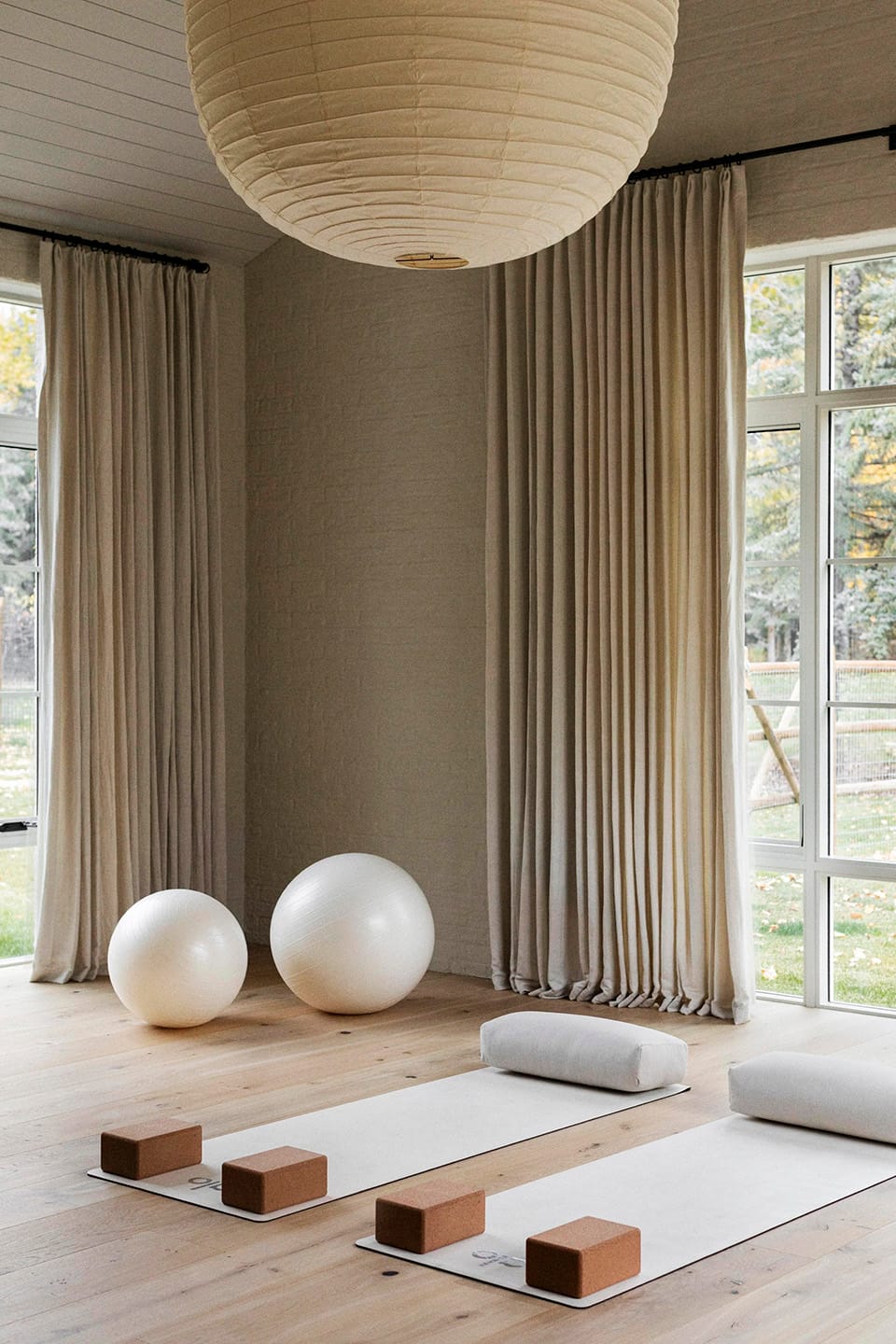
Around the corner is a serene yoga room, complete with ensuite spa. A custom sink by Oda & King anchors the vanity, while a skylight illuminates the shower. Fox insisted on wood floors from Madera even in the bathrooms to maintain warmth, rejecting the sterile quality of all-tile surfaces. The credenza is from BDDW, and a Noguchi ceiling fixture provides soft, diffused light.
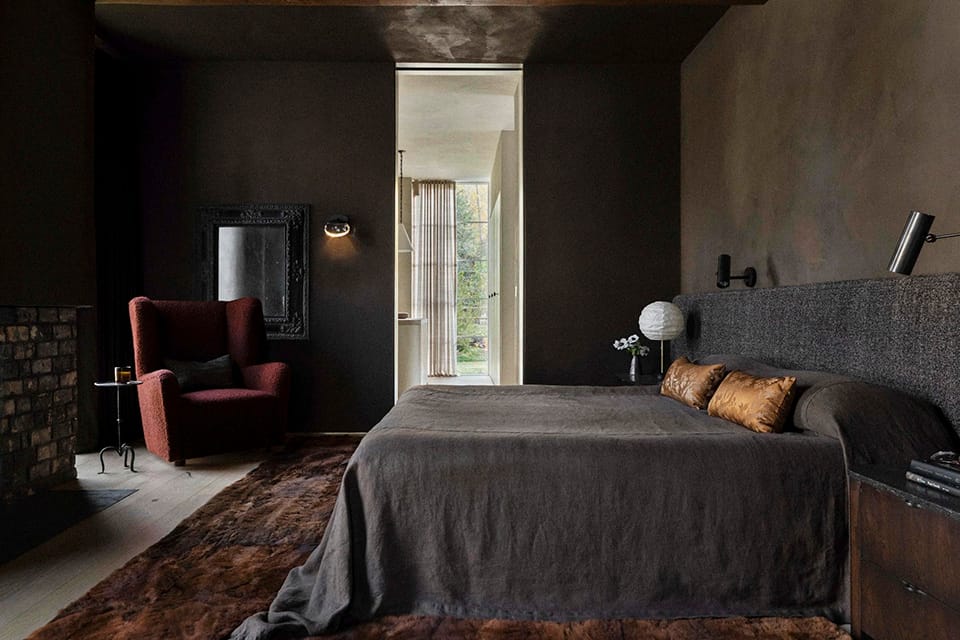
“They wanted their bedroom to be a place for deep rest— deliberately the darkest room in the house. We pared back as many visually sensory things as we could to keep it free from distraction.”
–Sierra Fox, Designer, STUDIO MTN
The primary bedroom occupies the opposite end of the sensory spectrum. While most of the house maximizes light, this room was deliberately designed as “a womb-like sanctuary.” With north-facing windows only, a caramel fur rug underfoot, an extended upholstered headboard in Lauren Hwang fabric, and Noguchi table lamps all lend a soft celestial glow. A curved plaster and brick fireplace provides both warmth and ambient light, while custom nightstands by Oak & Iron—a collaboration with Fox’s brother-in-law, Tracy Bailet—offer functional elegance.
“They wanted their bedroom to be a place for deep rest—deliberately the darkest room in the house,” Fox explains. “We pared back as many visually sensory things as we could to keep it free from distraction.” In the absence of natural light or ornament, texture becomes the central sensory experience—a tactile palette of alpaca fur, soft wool, and plastered walls that invite stillness. The space stands in deliberate contrast to the airy, communal rooms beyond—a cocoon created for deep sleep.
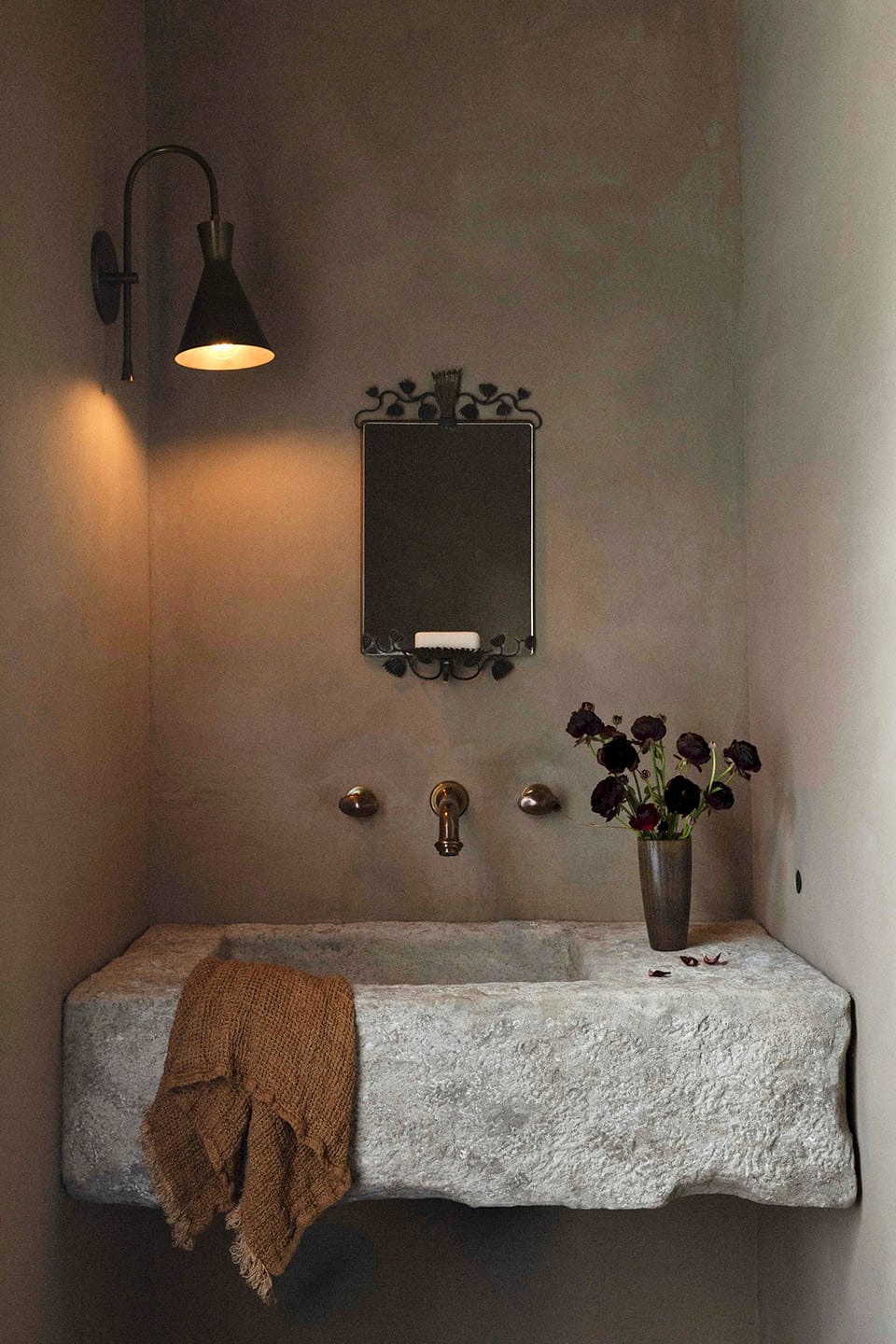
The powder room became Fox’s exercise in spatial drama through restraint. She made it deliberately narrow, creating an unusual three-dimensional experience without resorting to bold wallpaper or statement lighting. Hand-troweled taupe plaster from Meoded covers the walls. A custom asymmetric sink by Oda & King provides the single focal point, paired with Van Cronenberg plumbing. For most of the project, Fox insisted there would be no mirror. “It was supposed to be very monastic and not about how you look,” she says. Then, a month before the photo shoot, she spotted a petite antique Swedish mirror on Instagram and changed her mind. “It just felt like this house. I had to have it, and I knew we’d find a place for it. It felt like a nod to the organic elements we had throughout the home, and felt like the exception worth making.” The last-minute addition proved that even disciplined restraint benefits from occasional spontaneity.
The Dark Twin
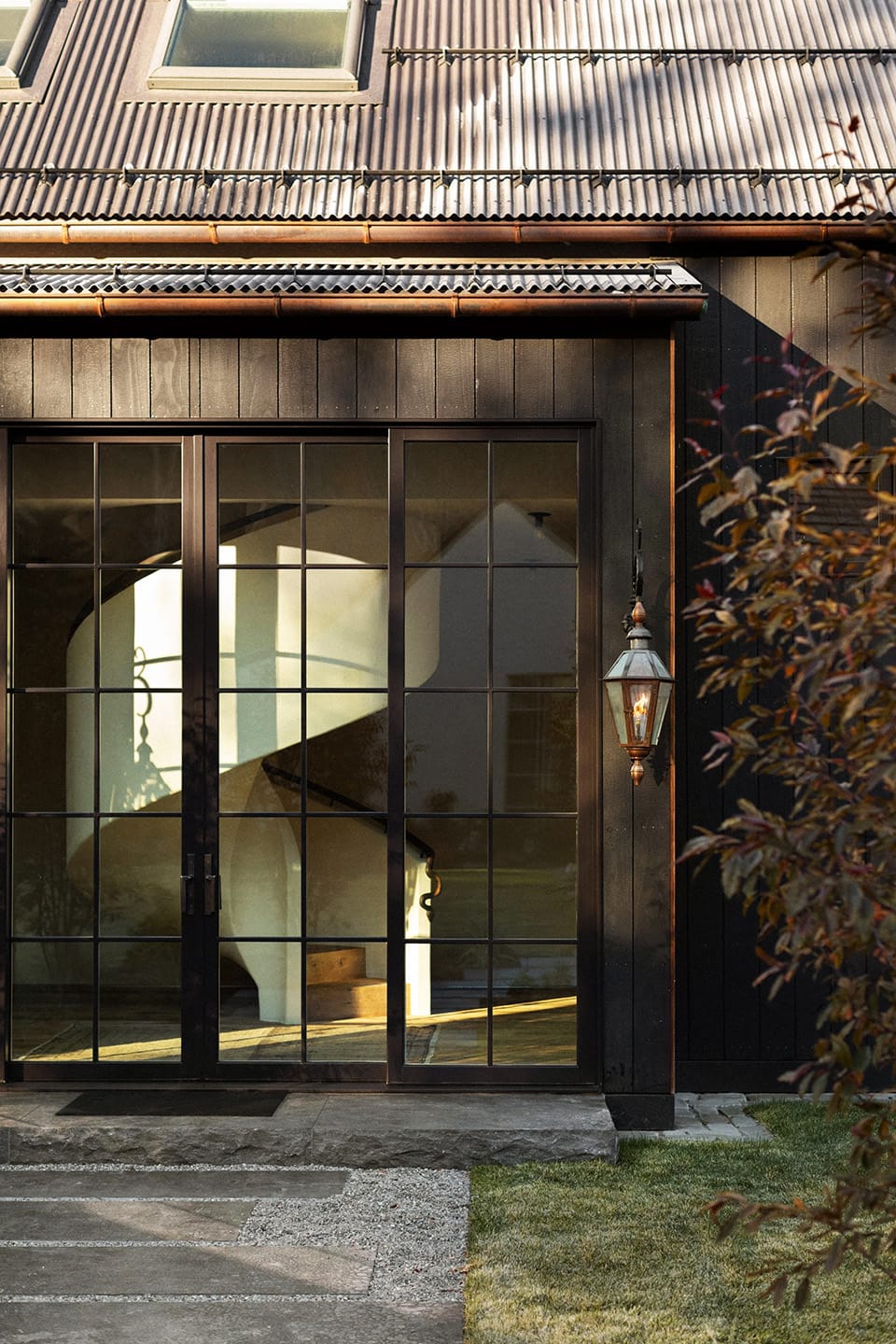
If the main house embodies monastic serenity, the guest house—called “the barn”—represents its shadow self. With shō sugi ban exteriors and a galvanized metal roof, it looks nothing like the lime-washed brick residence. This was intentional. “They wanted the guest house to feel more fun and eccentric because the main house was so restrained,” Fox explains. “They wanted it to feel like had been there long before—like we had saved it from ruins.”
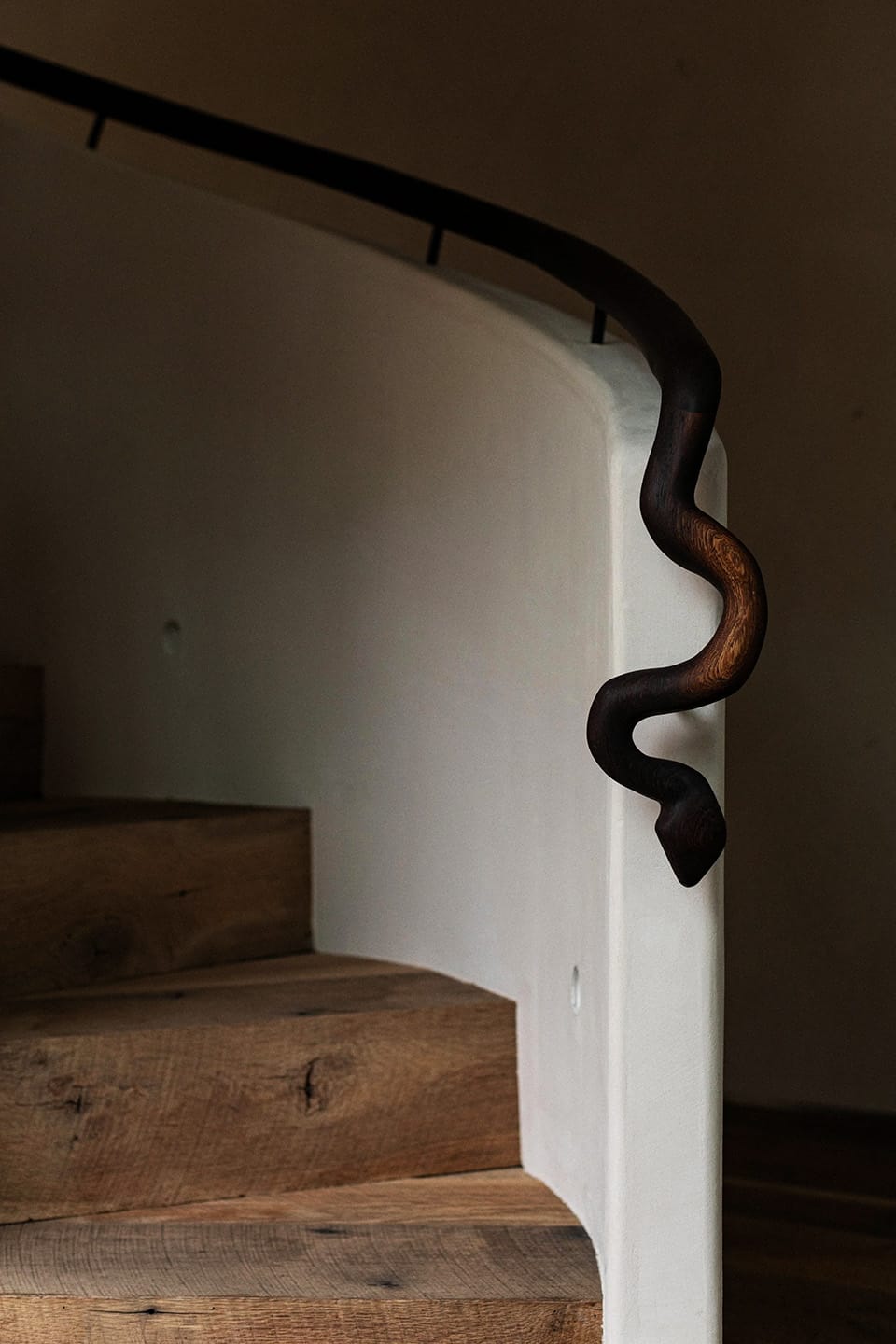
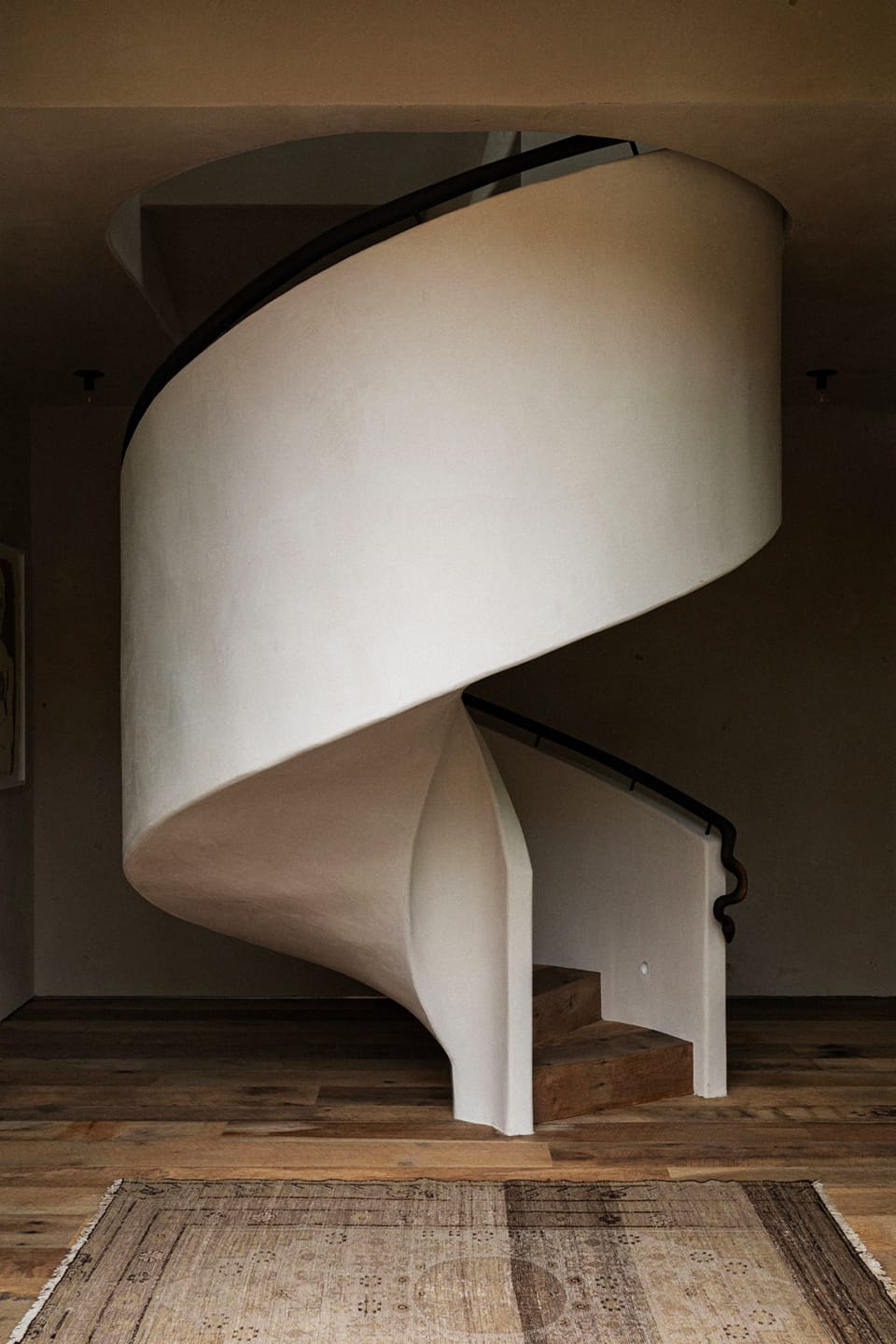
The barn’s interior continues the departure. A custom hand-carved snake railing wraps around a plastered spiral staircase, easily the project’s most dramatic element. Visible from the main house through a set of glass doors, it becomes a powerful architectural note. Los Angeles artisan Jason Pickens created it from Wenge wood, which naturally features snake-skin-like graining. The railing itself was deliberately made slightly imperfect, inviting a more tactile experience.
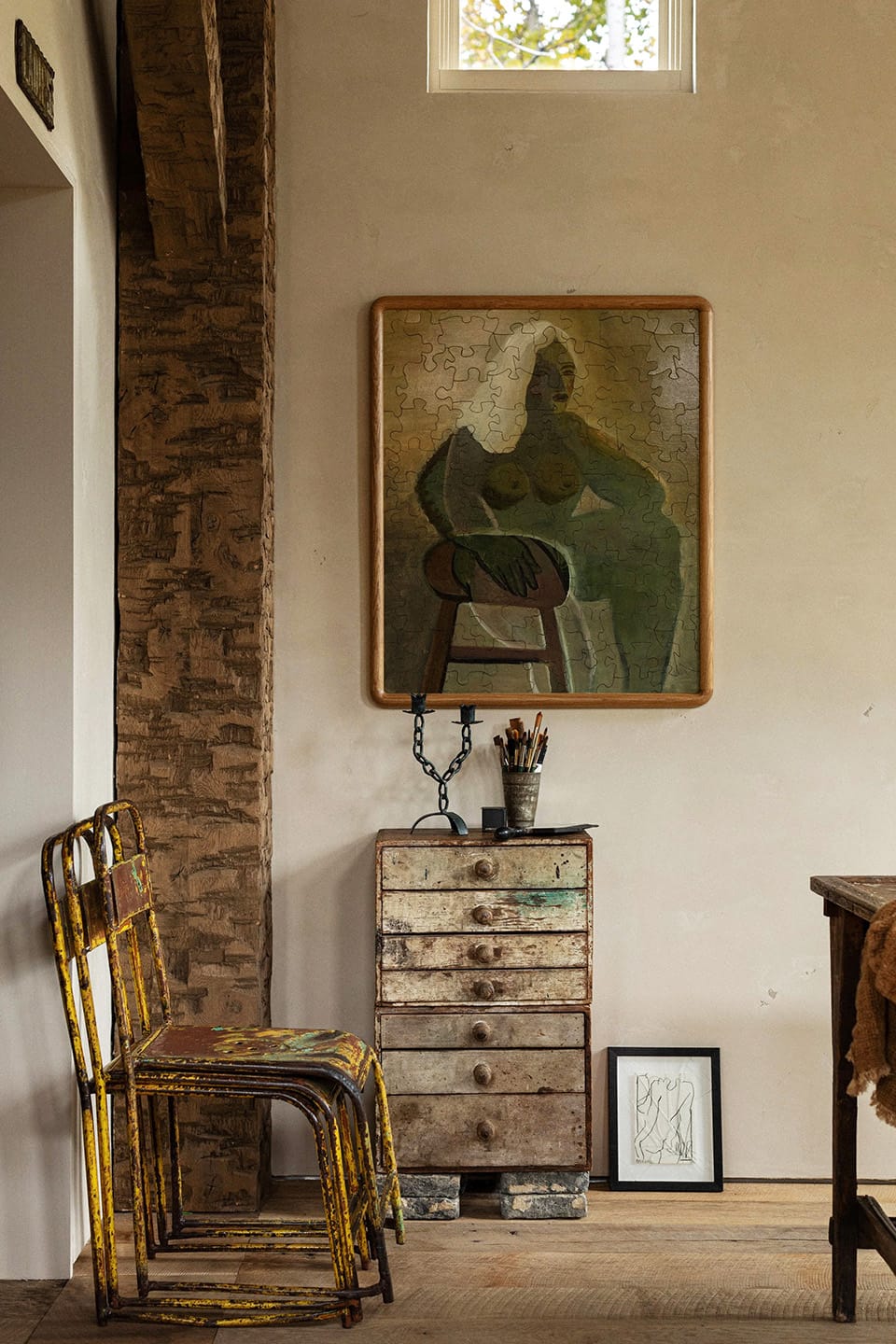
“We wanted the railing to feel almost alive, like something out of a movie,” Fox says. The staircase connects the main-floor studio space (the client’s painting studio) with an upstairs loft for guests. Drawing from memories of her former Parisian loft apartment, the client requested that the guest quarters offer charm and quiet elegance, without encouraging lingering.
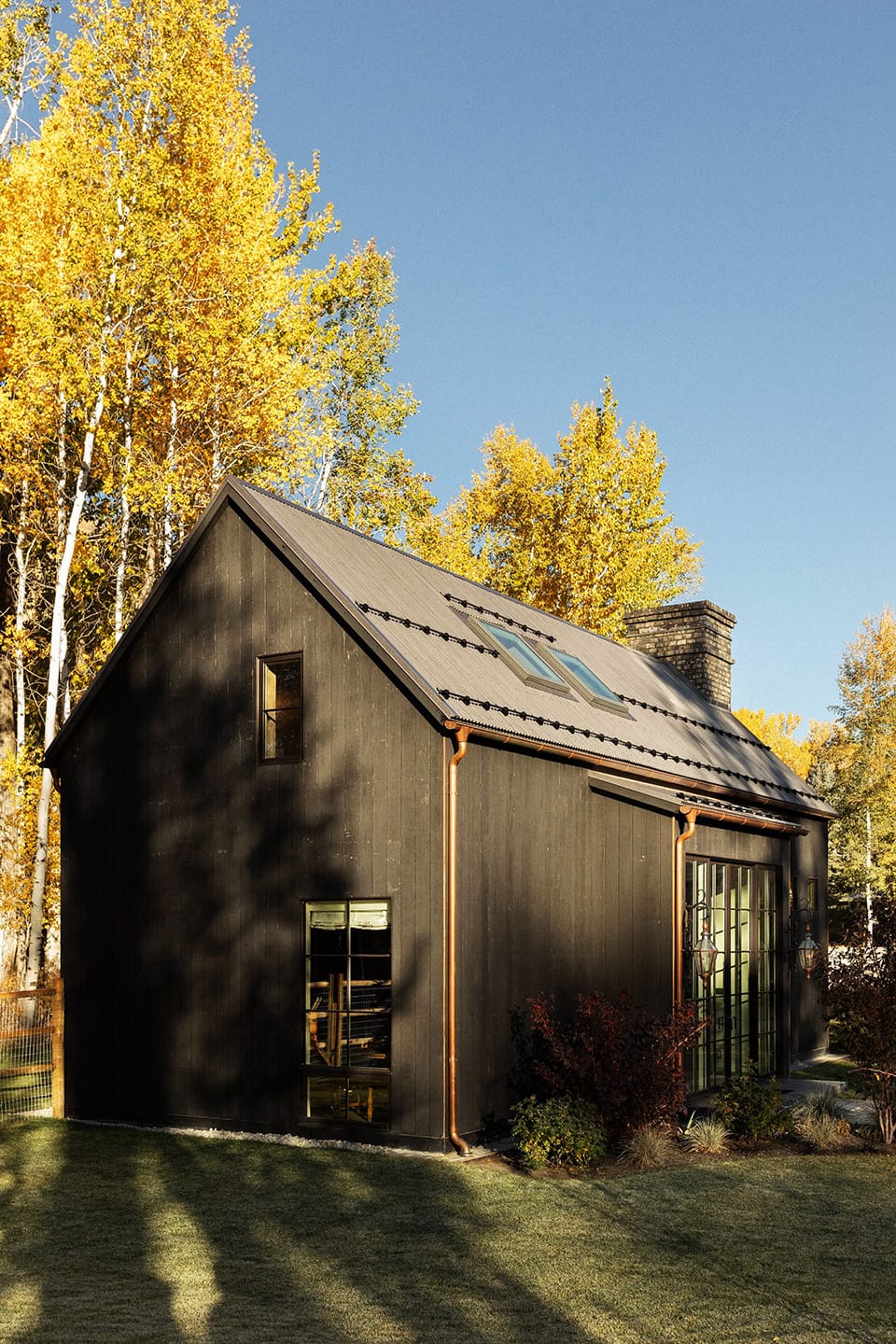
“They wanted the guest house to feel more fun and eccentric because the main house was so restrained. They wanted it to feel like had been there long before—like we had saved it from ruins.”
–Sierra Fox, Designer, STUDIO MTN
“They wanted guests to experience something unique and comfortable, but not comfortable enough to encourage any extended stays,” Fox laughs. “She said she used to live in a Parisian loft apartment with a quirky arrangement and low ceilings, but that it was so romantic, charming, and just enough room to live beautifully.”
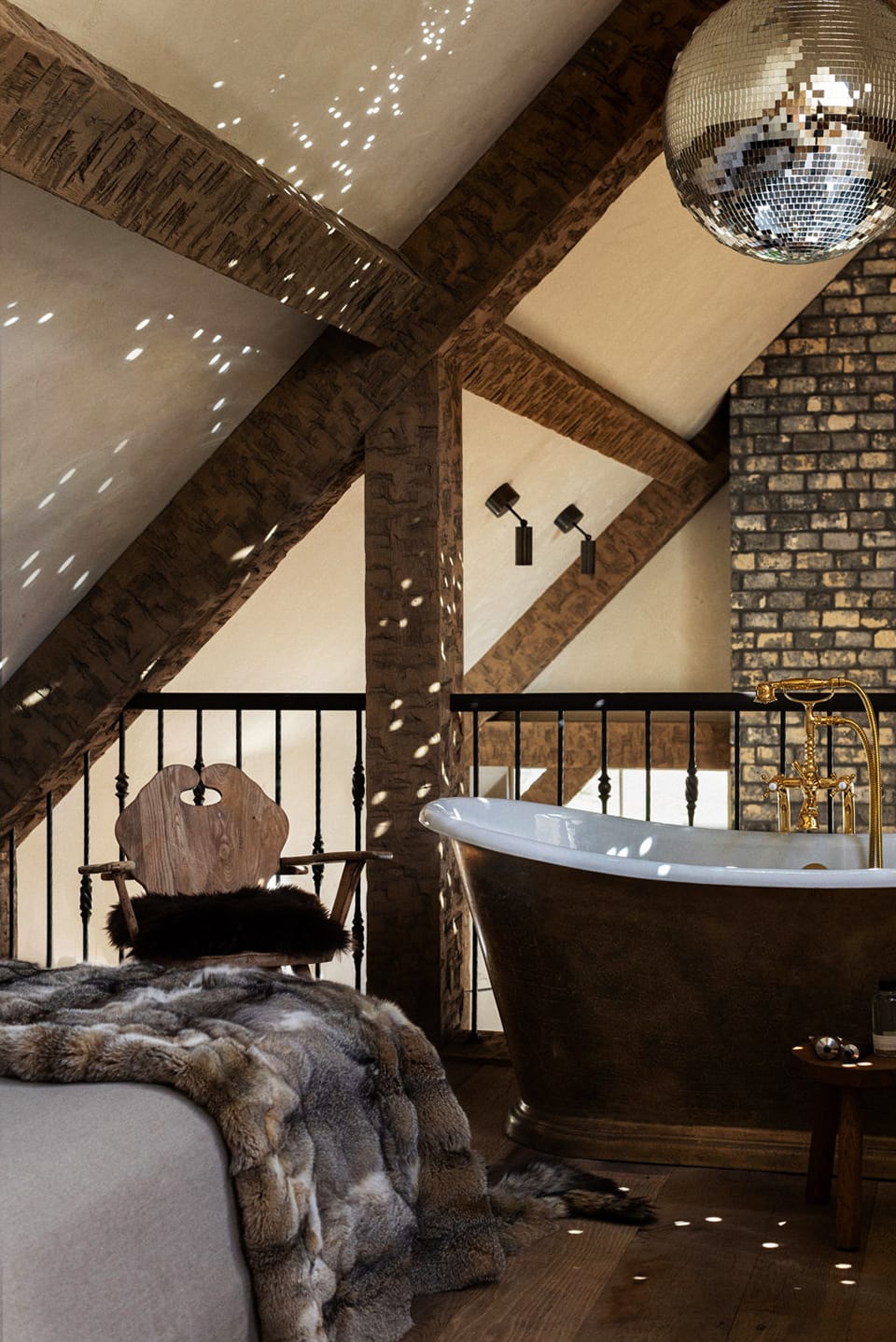
The barn’s piece de resistance hangs above the freestanding brass Penhaglion tub: a disco ball. Two skylights positioned opposite the ball create constantly changing light patterns throughout the day, with reflections dancing across the studio space.
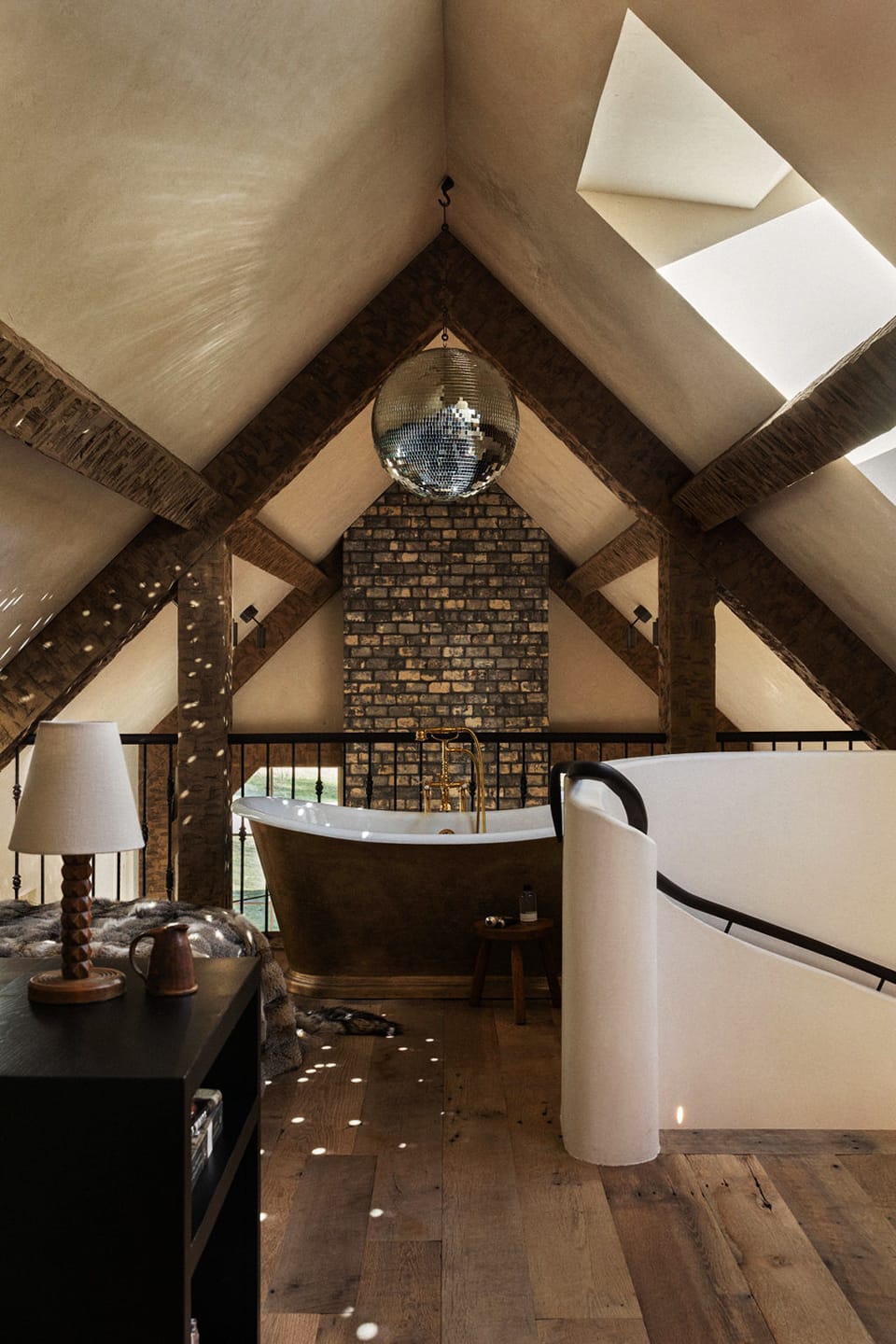
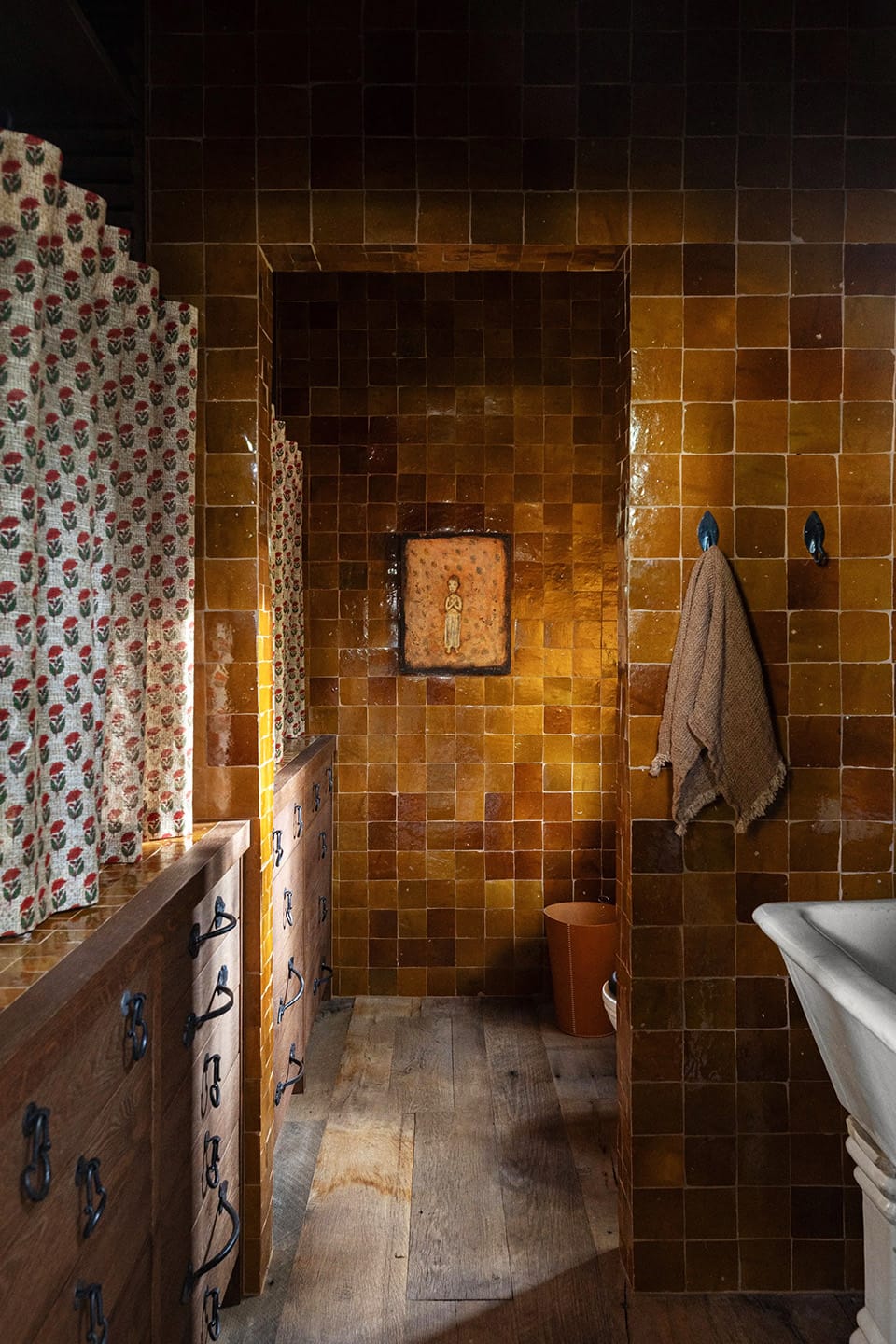
“We always wanted something with that Studio 54 energy,” Fox explains. “Our client is a longtime New Yorker with a love of Madonna, so we wanted to give her something fun and glam in this very quirky, rustic space.” Hand-painted tiles from BDDW, scored during a sourcing trip when Fox convinced the company to sell extras from a previous installation, add warmth and artistic detail to the powder bathroom. Surrounding them are ochre-colored zellige tiles from Clé, creating a rich, layered effect. The reclaimed Belgian brick and petit granite flooring came from Exquisite Surfaces, grounding the whimsical elements with Old World weight.
The barn represents everything the main house isn’t: playful, eccentric, maximalist. Together, they offer complementary experiences—one for serenity, one for creative energy.
The Philosophy of Stillness
When asked what “monastic” means in the context of luxury residential design, Fox pauses before offering an unexpected reference. She describes The Ranch, a Malibu hiking retreat known for no Wi-Fi, TVs, phones, alarm clocks, or advance schedules. The Ranch strips away modern life’s constant stimulation.
“Our client is a longtime new yorker with a love of Madonna, so we wanted to give her something fun and glam in this very quirky, rustic space.”
–Sierra Fox, Designer, STUDIO MTN
“They feed you a limited mostly vegan diet, no alcohol, no caffeine,” Fox recalls. “They don’t give you a schedule to manage. Instead, they tell you where to go 10 or 15 minutes before you need to be there. You basically live like a toddler with zero responsibilities. It’s really incredible. You just go with the flow.”
The experience shaped her thinking about residential design. “When you strip away the visual noise—patterned pillows, bold art, funky fixtures—and instead allow the space to feel integrated with nature, there’s something in your brain that is able to truly relax,” Fox explains. “It’s not the illusion of rest, like zoning out in front of a screen—it’s a deeper, more intuitive kind of calm. Your body understands it’s safe. Your brain stops scanning for danger.”
That became the guiding philosophy throughout the project. “If you have the opportunity to build a beautiful custom home, the greatest luxury isn’t an abundance of things, but the ability to retreat,” Fox reflects. “Life can slow down and be still.”
“When you strip away the visual noise—patterned pillows, bold art, funky fixtures—and instead allow the space to feel integrated with nature, there’s something in your brain that is able to truly relax.”
–Sierra Fox, Designer, STUDIO MTN
The house was designed for exactly that, a moment of stillness where everything feels like a meditative practice. “There’s no visual chaos, no unnecessary distractions. Everything feels calm and quietly grounded,” Fox says. “It has the feeling of ease like you had at a retreat, but without having to leave home.”
The Lasting Impact
For Fox, the success of the project isn’t measured in accolades but in how the homeowners actually live in the space, moving things around, adding pieces from their art collection. “I love the evolution of a new home,” Fox says. “It feels like a space that’s still evolving—more alive than a relic of the day it was designed.”
In an area where architectural trends swing between rustic nostalgia and industrial minimalism, this home charts a different path. It looks backward to move forward, finding inspiration in 19th-century mercantile buildings to create something that feels both timeless and completely contemporary. It proves that luxury isn’t about accumulation but about curation, knowing what to include and, more importantly, what to leave out.
whj COVER FEATURE
