
Listen to our Spotify podcast about this article:
By Cassidy Mantor
Our vision as a population has shifted downward. Blame our phones. Or our collective anxiety about staying ahead at work. Or maybe it’s our human desire to feel connected. Regardless of the reason, it’s a behavior so common that cities across the globe have addressed it in various ways. Honolulu enacted a Distracted Walking Law that makes it illegal to look at your phone in a crosswalk, and a town outside of Munich embedded traffic signals in the pavement for pedestrians. The inference is that by looking down, people are missing out on life.
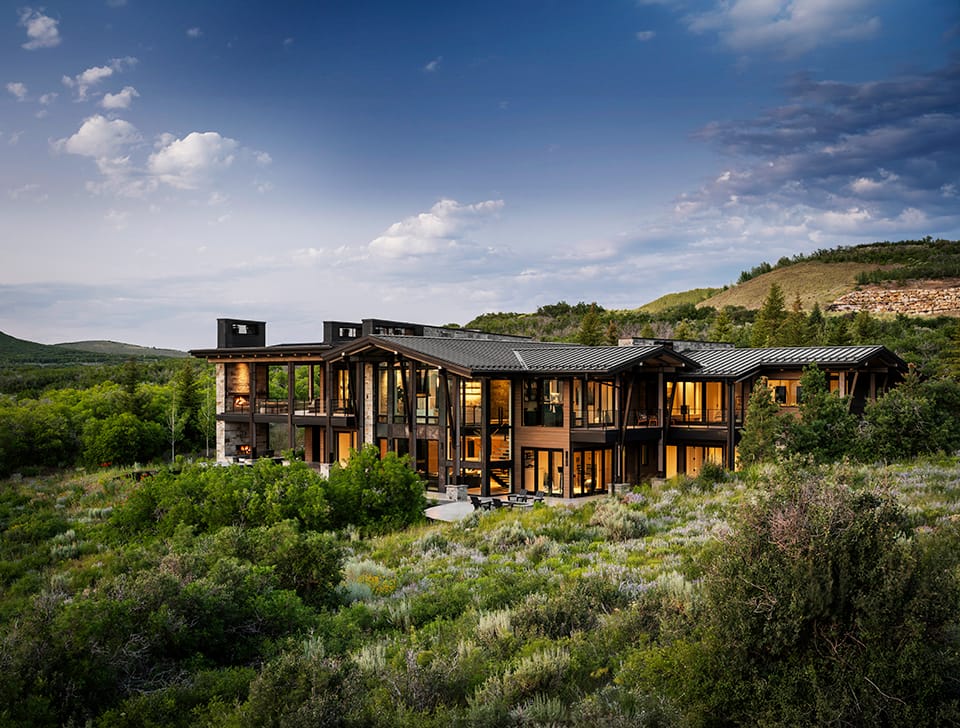
–BUT WHAT IF AN ARCHITECT HARNESSED THIS MODERN VIEWPOINT AND ADAPTED A HOME TO BE EXPANSIVE WHILE LOOKING DOWN?
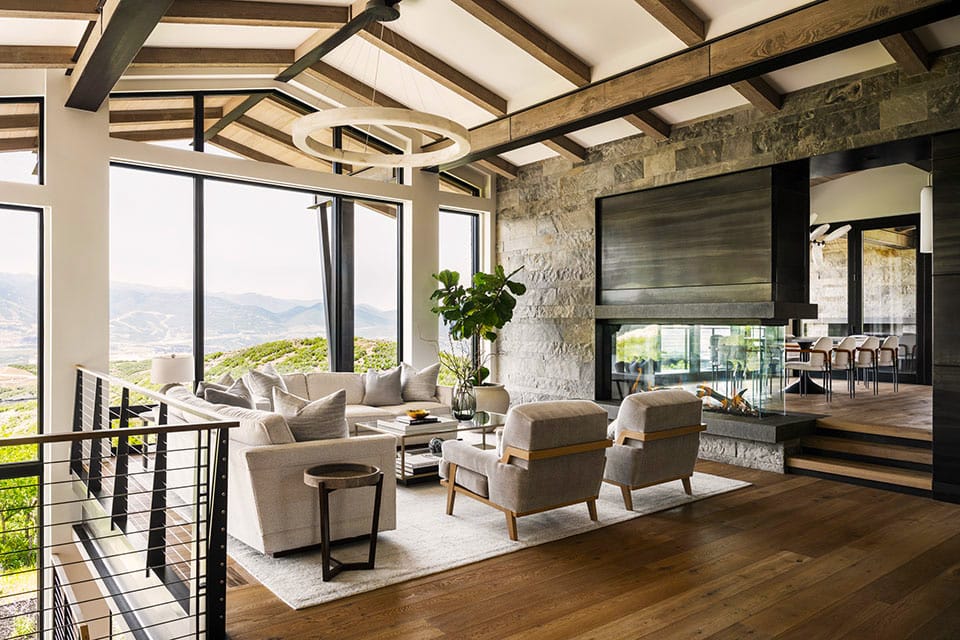
“Many views are two to ten degrees up to the skyline, but all views aren’t always up or straight out. This is especially true in Park City, where you are frequently at elevation looking down on the Jordanelle, a valley floor, or a river valley. I want those down views as well as expansive skylines,” says Centre Sky’s principal architect Jamie Daugaard, AIA, NCARB, LEED AP.
For 28 years, Centre Sky Architecture has been making one-of-a-kind custom homes and resorts for clients in the Mountain West. With offices in Park City, Utah, Big Sky and Bozeman, Montana, and Denver, Colorado, the team at Centre Sky are experts in blending the philosophical elements of the site, client, and climate to deliver exceptional mountain homes.
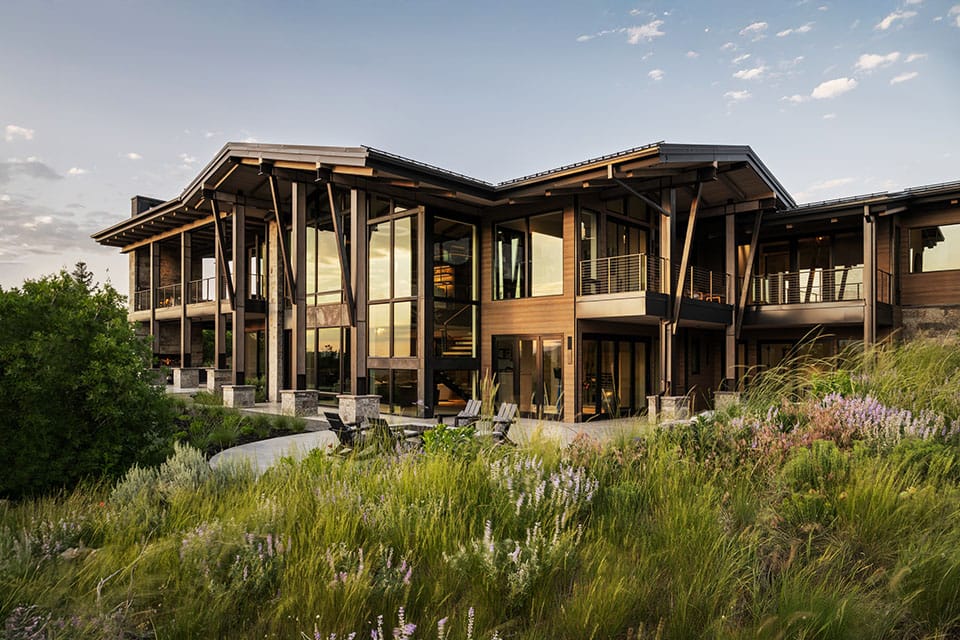
Their work is informed by Native American architecture, which Daugaard studied while obtaining his Bachelor’s and Master’s Degrees from Montana State University. Whether a sleek mountain-modern ski chalet in Park City or a rugged retreat in Montana’s Yellowstone Club, Centre Sky’s work connects the earth below and the sky above. In doing so, their homes integrate with the site and emerge as well-designed focal points on a new horizon.
A ROBUST PROCESS
Through frequent client interactions, Zooms, and site meetings, Daugaard will gain an understanding of who the client is and what they’re looking for. He’ll talk with clients one to two times a week at the start of the project, and once the project is underway, he will continue to stay in touch every other week with updated info. He will review drone and digital pictures from initial site review and develop bubble diagrams, sketch studies of space planning, preliminary renderings from the first site review, final renderings, and 3D models with the client.
“A lot of clients will tell us, ‘I’m not good at visualizing,’ and that’s ok. We might present eight different iterations and that reduces the anxiety that hangs over most of our clients.”
–Jamie Daugaard, Principal Architect, Centre Sky Architecture
Centre Sky’s designs conform to the existing topography. “We don’t just level a site and place the structure on top; we try to retain as much of the land as we can and work with the terrain,” Daugaard says. “I want to understand the view corridors, situating common spaces in the optimum locations that also factor in solar and topography, and also studying vehicular access.”
“Where driveway access will be helps me design the garage and mudroom, and that will flow into the pantry, and the kitchen, which will lead into the dining room and great room, always keeping in mind the most important locations based on views for common spaces. Those elements of connectivity are very important,” he adds. Then, to add what can only be called as the “sizzle,” Daugaard analyzes how to work the structure within the landscape, integrating primary and secondary views coupled with solar orientation.
After site visits, clients can expect bubble diagrams first, followed by 3D monochromatic models. Centre Sky will study window compositions, structural expressions, and roof lines. The studies will show details that help visualize the interactions between massing, materials, colors, textures, shadows, and armature interaction with windows. Ultimately, they will develop those monochromatic models into color renderings.
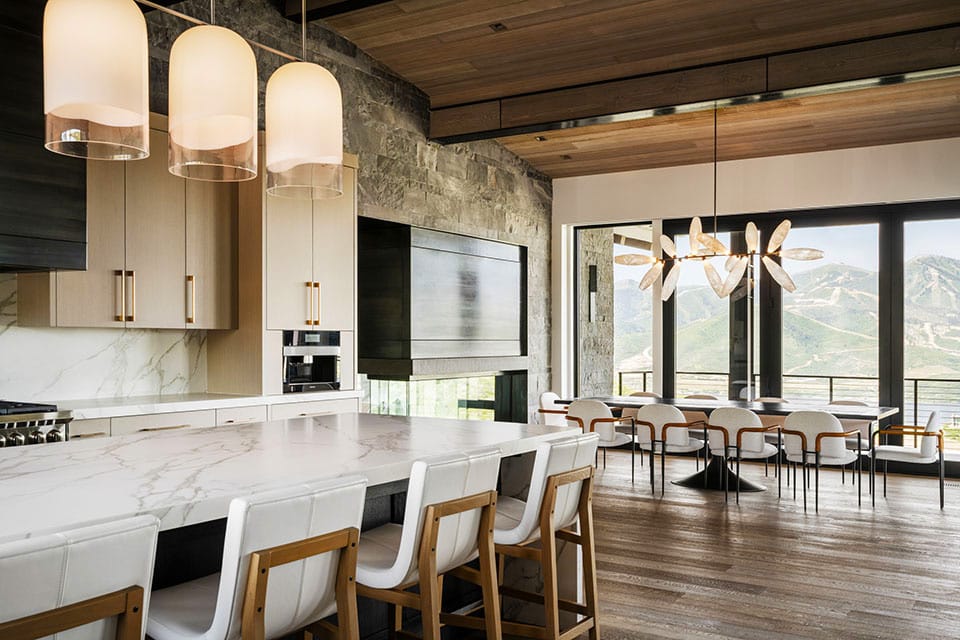
“We get your fingerprints on our projects,” Daugaard says. The firm shows many iterations to get to the best possible outcome. Showing those options will introduce new ideas too; for example, offering a rendering with shou sugi ban charred wood may not have been on the client’s mind at first but once they see it they may realize they prefer it to the corral board siding they initially envisioned.
“A lot of clients will tell us, ‘I’m not good at visualizing,’ and that’s ok,” Daugaard says. “We might present eight different iterations and that reduces the anxiety that hangs over most of our clients. Our process helps attain a sense of readiness because we as a team feel we’ve made good decisions based on floor plans, renderings, physical materials, and budget.” Centre Sky is hands-on with the client, with builders, and throughout the entire construction process.
HARNESSING SOLAR GAIN
“Sustainability is straight-out important,” Daugaard says. “Everyone should be doing it.” But how do they get everyone on board?
Orientation of the structures is a great step in sustainable design. “Our roof lines are usually designed to allow winter sun to go deep into a space, and if we can face south or 15 degrees south, we’ll see huge solar gains during the cold months,” he explains.
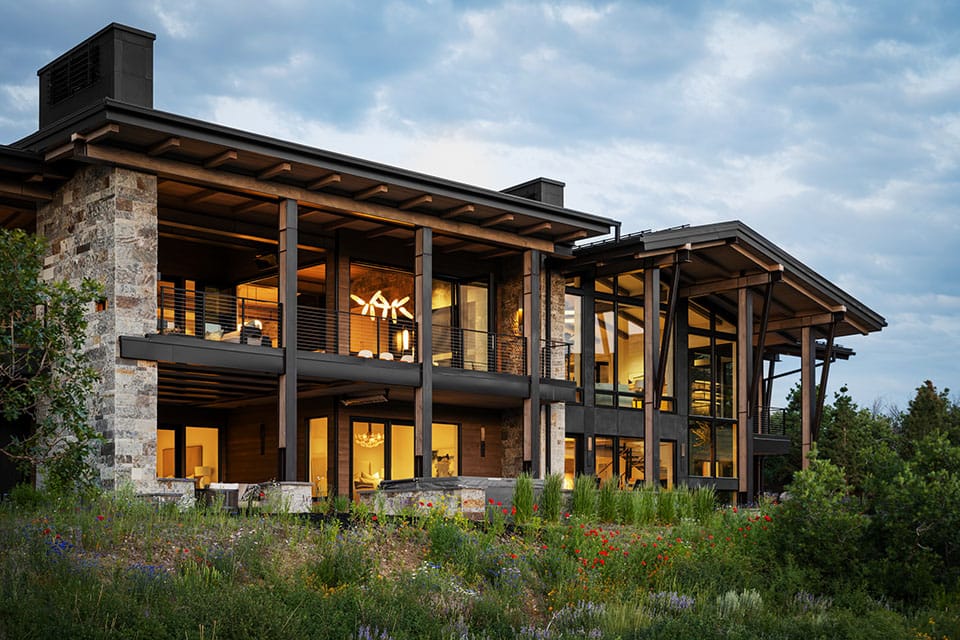
The goal is to expand the outdoor living season so that rather than waiting until the middle of June or even later for it to feel like summer in a house, clients can begin enjoying the longer days of summer sooner. Daugaard asks himself during space planning, “Can we have some mid-spring/late spring sun to bathe certain outdoor spaces such as a patio for après ski time? Can we create protected spaces from wind but allow the sun to warm these areas?”
“Park City tends to have calmer weather than Big Sky or Telluride, where it will continue raining or snowing up until July, but our goal with all of our designs is to elongate the areas in the structure that you can get sun under cover and out of the wind. Designing with the elements is almost as important as designing the common spaces,” he adds.
Referencing his own house, Daugaard shares that even in January when it’s -20 degrees out on a bluebird day, he likely will have his thermal stack windows open to flush excess heat during the day, with no need to turn on the heat until 6pm when the sun goes down. He says, “You shouldn’t overheat your house, but facing south or southwest can be very beneficial, particularly from November to February in certain climates.”
“Our roof lines are usually designed to allow winter sun to go deep into a space, and if we can face south or 15 degrees south, we’ll see huge solar gains during the cold months.”
–Jamie Daugaard, Principal Architect, Centre Sky Architecture
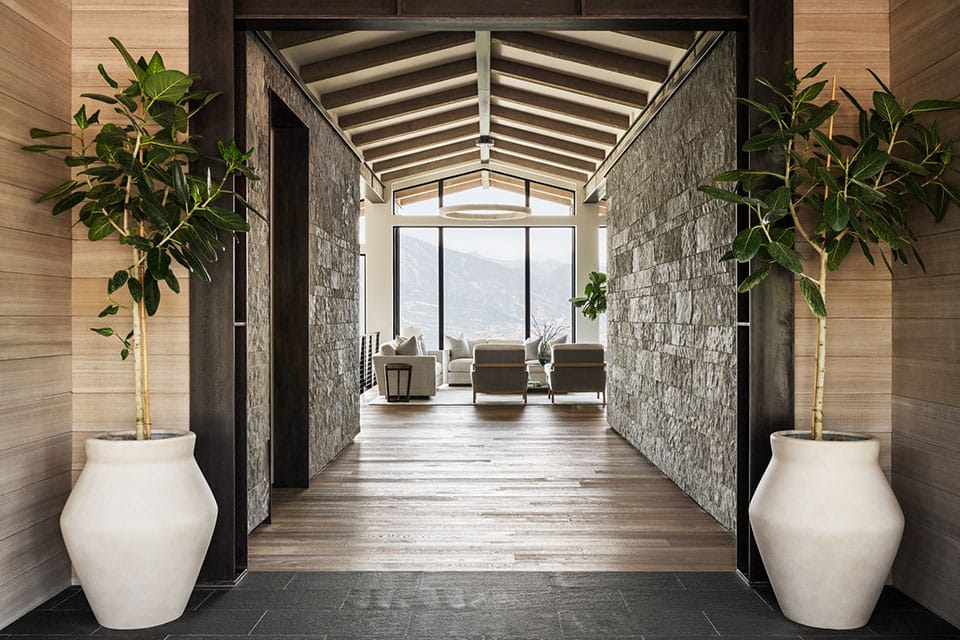
Currently, Centre Sky has multiple projects using solar energy, some of which are still on the grid but that are receiving enough capacity where they don’t need to use it. Their portfolio of sustainable builds includes a Net Zero ranch (Strike Ranch on their website), two projects using Tesla solar shingles in Montana, and Lone Peak in Park City’s Tuhaye that has solar panels.
Daugaard also cites using geothermal energy as another best practice in sustainable design. Although natural gas is readily available in Park City, making geothermal less of a return on investment in town, in very remote locations where clients rely on propane for heat, drilling vertical wells 180-250 feet into the ground serves as a way to collect heat from the earth. These geothermal systems temper heating fluid so that a home doesn’t require as much energy to get to a certain temperature point.
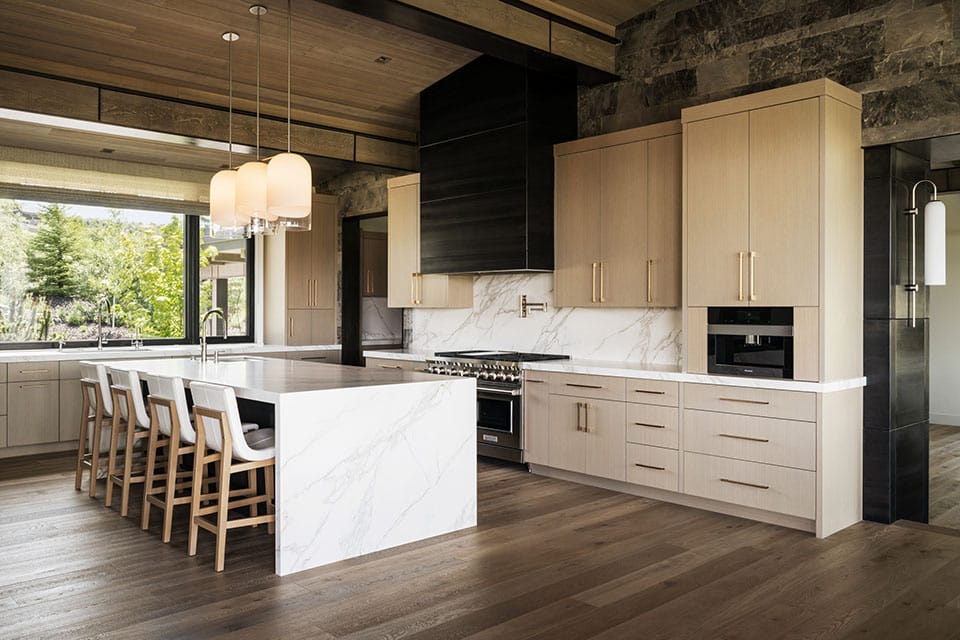
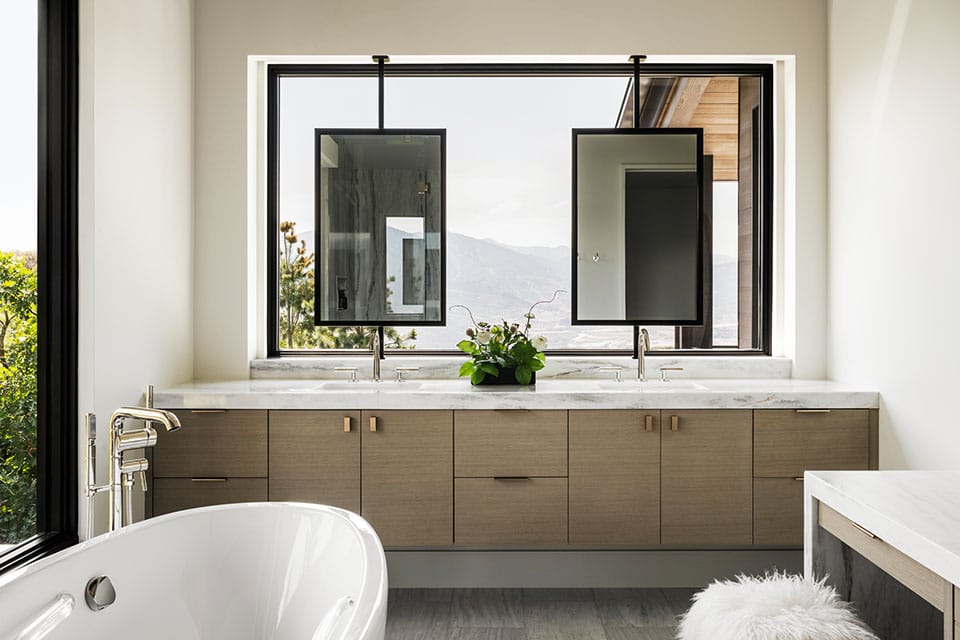
LONE PEAK: DESIGNING FOR A NEW PERSPECTIVE
Lone Peak is a four-bedroom, two-bunkroom, almost 11,000-gross-square-foot home in Park City’s Tuhaye with sweeping views of Deer Valley and the Jordanelle Reservoir. The design intent focused on connecting the views and holding onto the topography and the native Gambel oak. Centre Sky created outdoor living spaces off of many of the common spaces and fit an expansive home in the programmed space and the parameters of the community guidelines. Low, sloping, and flat roof lines were complementary to Tuyahe’s height restrictions and created a home that was well integrated in its environment.
“Each client and site should be making you think and create differently,” Daugaard says. “There are many stimuli that give certain parameters that we work with to help make it a bespoke, one-of-a-kind home for that client.”
Although every project is entirely custom, Centre Sky’s signature approach stretches the horizontality of the architecture and its roof lines. “I like long, sweeping, deep, overhung roofs,” Daugaard reveals. These luxurious roof lines create reprieve from direct sun and also give strong shadow lines. Their houses flow horizontally through the bedrooms, offices, great room, dining, and outdoor living areas. That stretch makes for expansive views toward Deer Valley and further establishes the structure’s place on the site and in space.
“Each client and site should be making you think and create differently. There are many stimuli that give certain parameters that we work with to help make it a bespoke, one-of-a-kind home for that client.”
–Jamie Daugaard, Principal Architect, Centre Sky Architecture
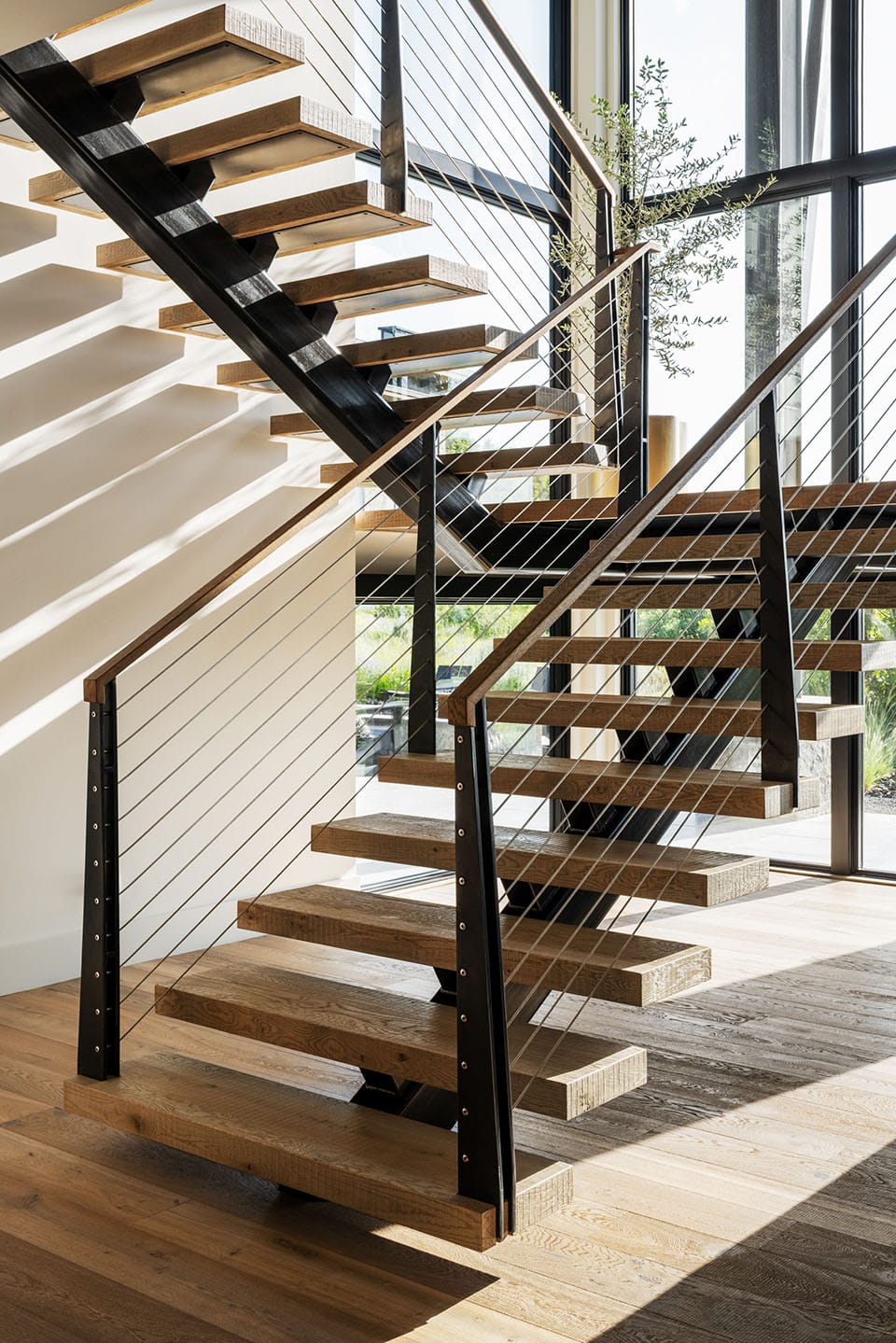
Compared to Montana or Colorado, Centre Sky observes that Utah homes tend to have flatter, lower sloped roofs. In addition to roof line differences, the firm is fluent in working with steel and timber connections. Although reclaimed wood is increasingly popular, especially in some of their other markets, Daugaard’s firm has nearly three decades of experience working with the interactions of wood and steel, which happen to be Park City’s most requested materials. Lone Peak shows their mastery of designing expansive glass surfaces and refining the angular intersections of the materials.
Centre Sky also creates unity between the elements and site. “We’ll frequently have glass to the floor line and push glass up to the underside of the ceiling, which is how we can increase the transparency and connectivity of the site to our homes and help on lower height roof lines,” Daugaard says. “As we look at site planning and discovery in creating ‘place,’ we will put a quadrant down over the site and determine on our buildable area the most important quadrants such as views, solar gain, and topographic layout. These strategic quadrants will receive and have the most important spaces, such as common spaces and primary bedrooms.”
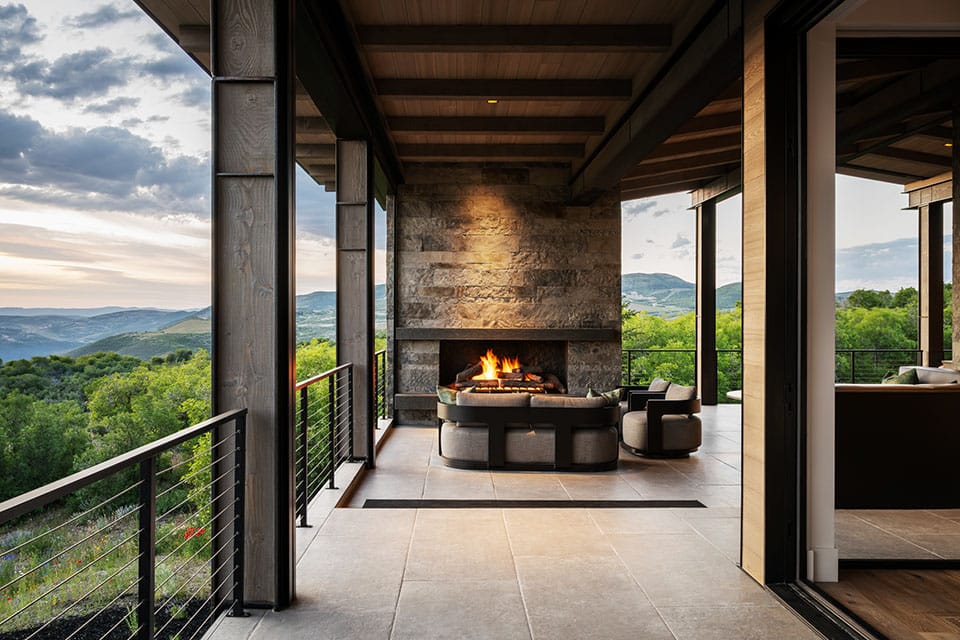
For Lone Peak, they used the two quadrants for these pivotal spaces and the more subservient quadrants for auto court and garage/utility spaces. In the quadrant of the site that has less views, Daugaard put the garage. This coincided with where the roof heights were particularly low due to height restrictions and helps optimize lower height roof lines.
Daugaard looks at window composition as part of the connectivity to the exterior. If a client tells him that they want more outdoors coming in, he will design a space with narrower window frames, taking what might have been two- or three-inch-thick wood frames down to 1.5-inch low-profile metal ones. Additionally, Centre Sky often abstains from putting decks directly off the great room and sideloads them instead. “We do not want you looking through a guard rail or furniture,” he points out.
“While inspiration always comes from the client, those architectural ideas get mish-mashed in my head so that when I do the initial design work with layouts, all of those influences are brought into each future project.”
–Jamie Daugaard, Principal Architect, Centre Sky Architecture
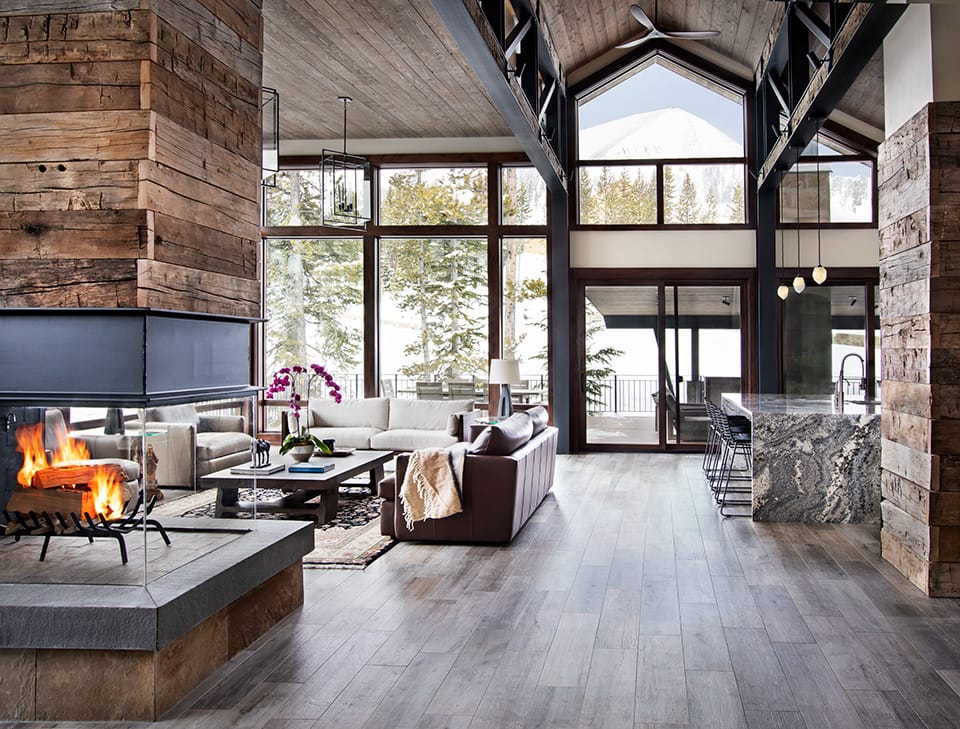
In this Tuhaye home, two pocket patios create intimate connectivity to the exterior without blocking views. One such patio sits off the primary office and is large enough for seating and flow. Another lies off the front of the home. Two expansive patios face Deer Valley, and an elevated deck is tucked away and protected by the timber and steel roof overhangs.
With offices in Utah, Montana, and Colorado, Centre Sky leverages its knowledge of diverse climates, environments, and aesthetics for each of its projects. Their vernacular includes mountain rustic style, national parks style, mining style, mountain modern, contemporary, and southwest style.
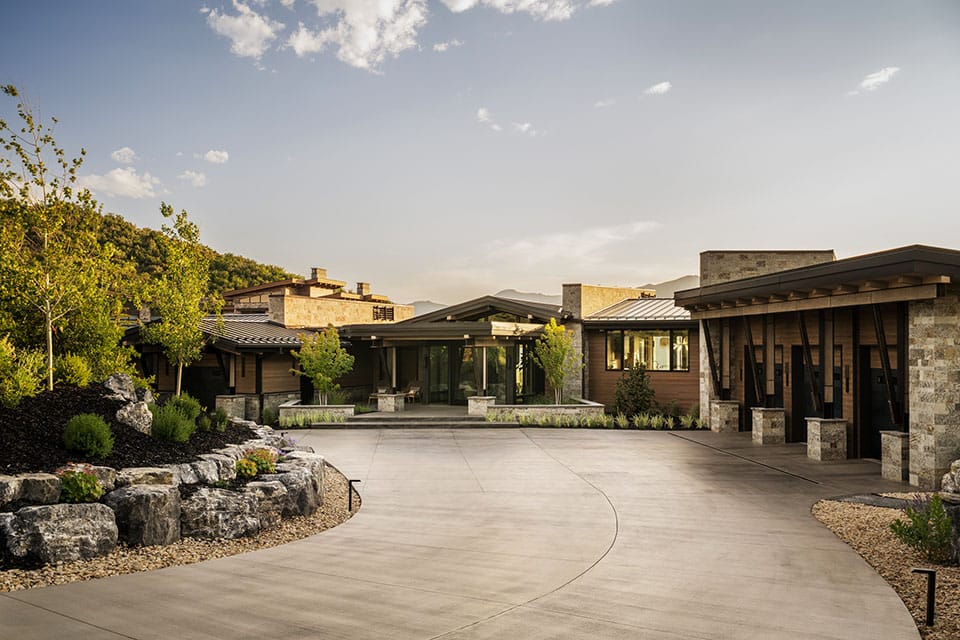
“In Park City, roof lines tend to be softer and the homes have cleaner lines and favor mountain modern architecture,” Daugaard observes. He contrasts Park City’s architectural tone to the rustic stone and reclaimed wood with more crenelations and undulating textures often seen in Montana and Colorado. However, most of the differences are unseen, according to Daugaard, who cites different foundations depending on the strata below. While Park City homes are often built on solid rock, in Montana, many sites involve clay soils that are on ancient landslides. Regardless of the region, some consistencies exist throughout their builds. Rain screens, insulation details, and weather-resistant barriers are universally strong in all of their homes.
ARCHITECTURAL SPINES
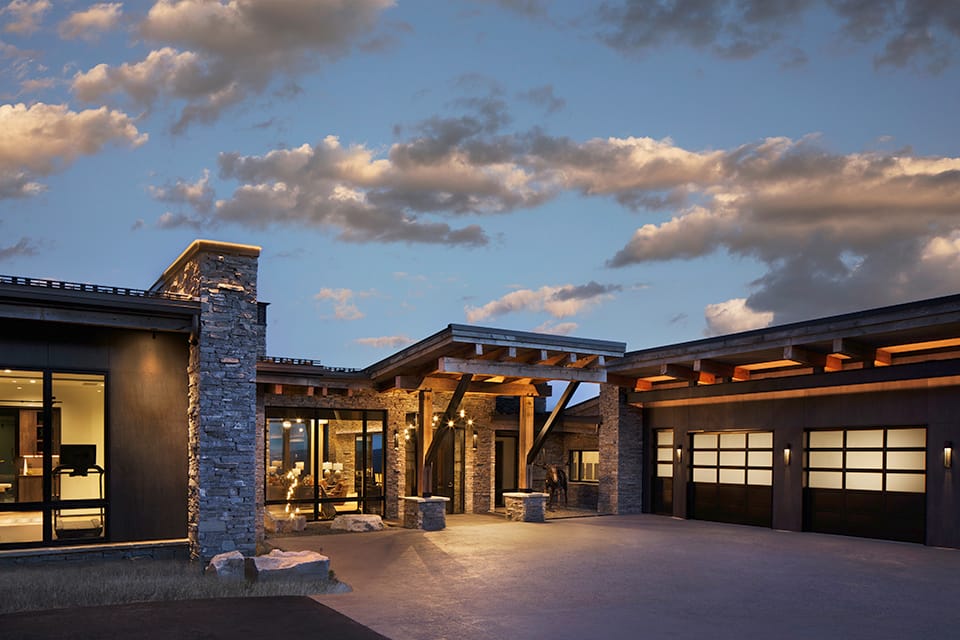
The backbone of Centre Sky’s builds is what Daugaard refers to as architectural spines. These thickened walls may be clad in stone, wood, steel, or plaster, and are powerful textural elements that help break up spaces and create impact when connecting other spaces. He asks, “Why walk through a six-inch-thick wall when you can create a bold transition by walking through a 2.5-foot-thick stone wall encased with steel trimming that is washed by lighting?”
“while storefronts get redone and covered up, I will see coppers, patina woods, steel connectors, heavy smeared stone grout, and rusted metal with 80-year-old patinas of materials in those back alleys.”
–Jamie Daugaard, Principal Architect, Centre Sky Architecture
Using materials for a physiological effect comes naturally for Daugaard, who received his Master’s Degree in Architecture and studied Anasazi culture for his final thesis. “The idea of rising from the earth and acknowledging where we are in connection with the cosmos is how Centre Sky was born,” he explains. “I want to be as light-handed with the site as possible. I am a heavy proponent of direct and diffuse natural light and shadow. Centre Sky’s work is a derivative of the essential relationship between strata and sky. For our builds, that means that by mid-April as the days get longer, I want my designs to start cutting off the natural direct light from a solar gain perspective. We look at more subtle ways to light our spaces with the diffuse light and keep intact the connections to the land, views, and horizon line whether straight out, up, or down.”
How softly a home comes out of the topography is a key consideration for Centre Sky. In one five-bedroom, two-bunkroom 13,500-gross-square-foot home in Montana’s Yellowstone Club, the front side of the home is unassuming to a point, appearing to be only one to one-and-a-half levels high. The backside adds a level, but long, sweeping roof lines create a sense of deep connection to the land.
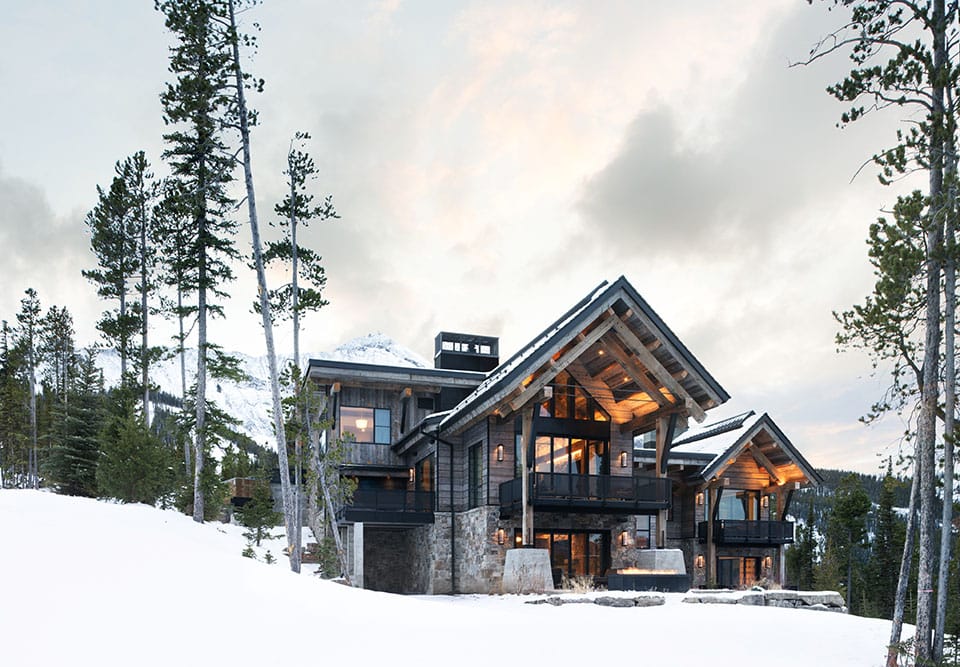
“Clients will ask for complex requests such as here where the client wanted the deepest overhang in the Yellowstone Club,” Daugaard shares. Centre Sky stretched the roof lines 18 feet over the great room. That roof line hangs out over a cantilevered portion that creates a dramatic relationship with shadows and structural tension. Centre Sky’s architectural spines pop through the roof line as chimney caps that function as mechanical ventilation.
This Yellowstone Club home is a great example of Centre Sky’s signature design base. The horizontal elongation is staggered in plane, interrupted with vertical spines and undulating levels. The main level is elongated perpendicular to the views and allows the great room to extend out past the face of other spaces on each side. Pocket patios off the main level and on the lower level continue to stretch the horizontal aspect of the home. “I’m a regional architect focusing on the Mountain West, so I bring impressions from Park City, Whitefish, Big Sky, Bozeman, Vail, and Telluride,” Daugaard says. Centre Sky is also engaged in projects located beyond the Rockies. “While inspiration always comes from the client, those architectural ideas get mish-mashed in my head so that when I do the initial design work with layouts, all of those influences are brought into each future project.”
ETHICAL LUXURY
One of Daugaard’s most valuable practices is venturing down back alleyways of old historic towns to gain a deeper sense of the place. “While storefronts get redone and covered up, I will see coppers, patina woods, steel connectors, heavy smeared stone grout, and rusted metal with 80-year-old patinas of materials in those back alleys,” he shares. Most of the time, Centre Sky’s clients want to be immersed in the architecture, and the firm welcomes that collaboration. Daugaard is actively present throughout the process and hands-on involvement is part of his firm’s ethos.
“Ben, Mariya, Zoya, Jim, Simone, Jenna, Chris, Trevor, Caden, Kyle, Cory, Charles, Megan, And Michelle in our office are integral components of our firm and they allow me to design and be part of the creative process.”
–Jamie Daugaard, Principal Architect, Centre Sky Architecture
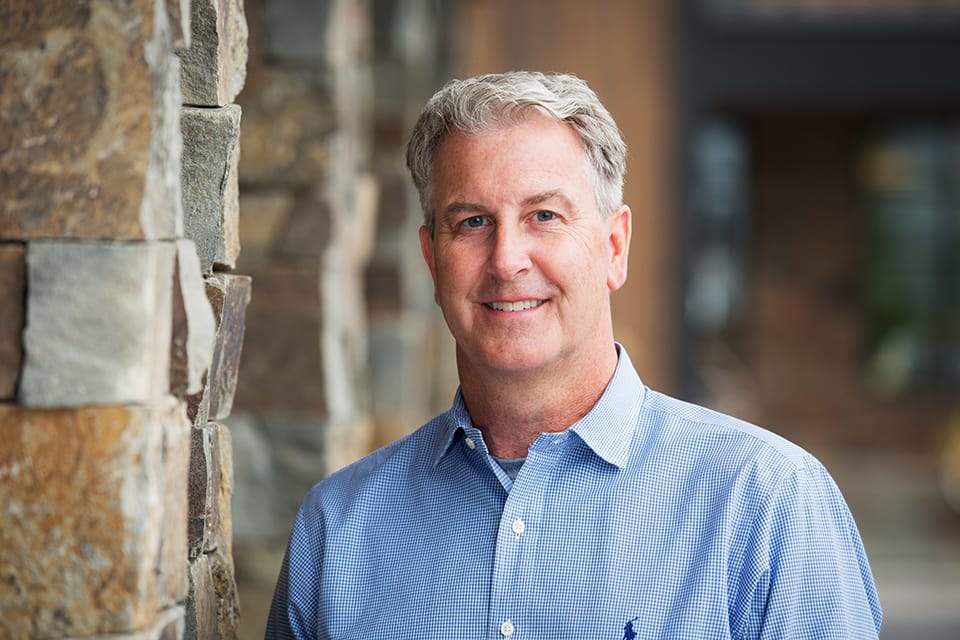
His excitement for designing in the Mountain West stems from helping make tangible a client’s abstract ideas of what might be possible for their lot or ranch. “The complexity of a site and excitement of the client make our team stronger,” Daugaard says. “I’m fueled by that transformation of when we start to make those ideas and hopes real.” Each time, he creates something different and he is motivated by delivering projects based on his clients’ requests and the site.
Recently, Centre Sky was awarded a project with a repeat client, this being the third project in four years. “Repeat clients are important because there’s an understanding and comfort, knowing that we succeeded before. The trust we’ve established enables us to build on past successes and push our creative boundaries,” Daugaard says. “If someone is going to invest $5 or $20 million dollars, when they hire you again it’s an acknowledgment of our work and our ability to get it right for our clients.”
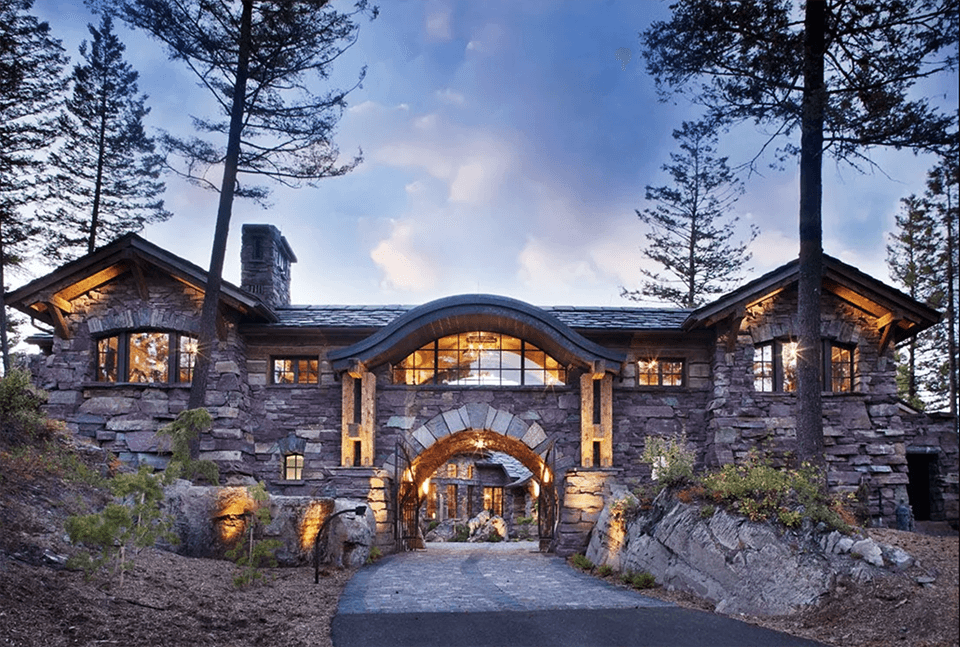
For a firm whose underpinnings are rooted in a Native American spiritual connection to the elements, getting it right for the client is their North Star. Receiving a phone call at the end of a 24- or 30-month project from a client who says, “I never thought I would’ve gotten something like this,” is the validation that fuels them.
Space planning is one of Daugaard’s personal points of satisfaction, and the evidence is in the finished homes. Finding continuity and designing forms that contemplate large elevation differences, textures, and topographic challenges is what it’s about for him. He leads his team with the same enthusiasm for creating brilliance and working with an awe-filled appreciation of the world around us. That intentional approach results in structures that bring expansive concepts down to human scale and connection to place but also structures that are anything but mundane.
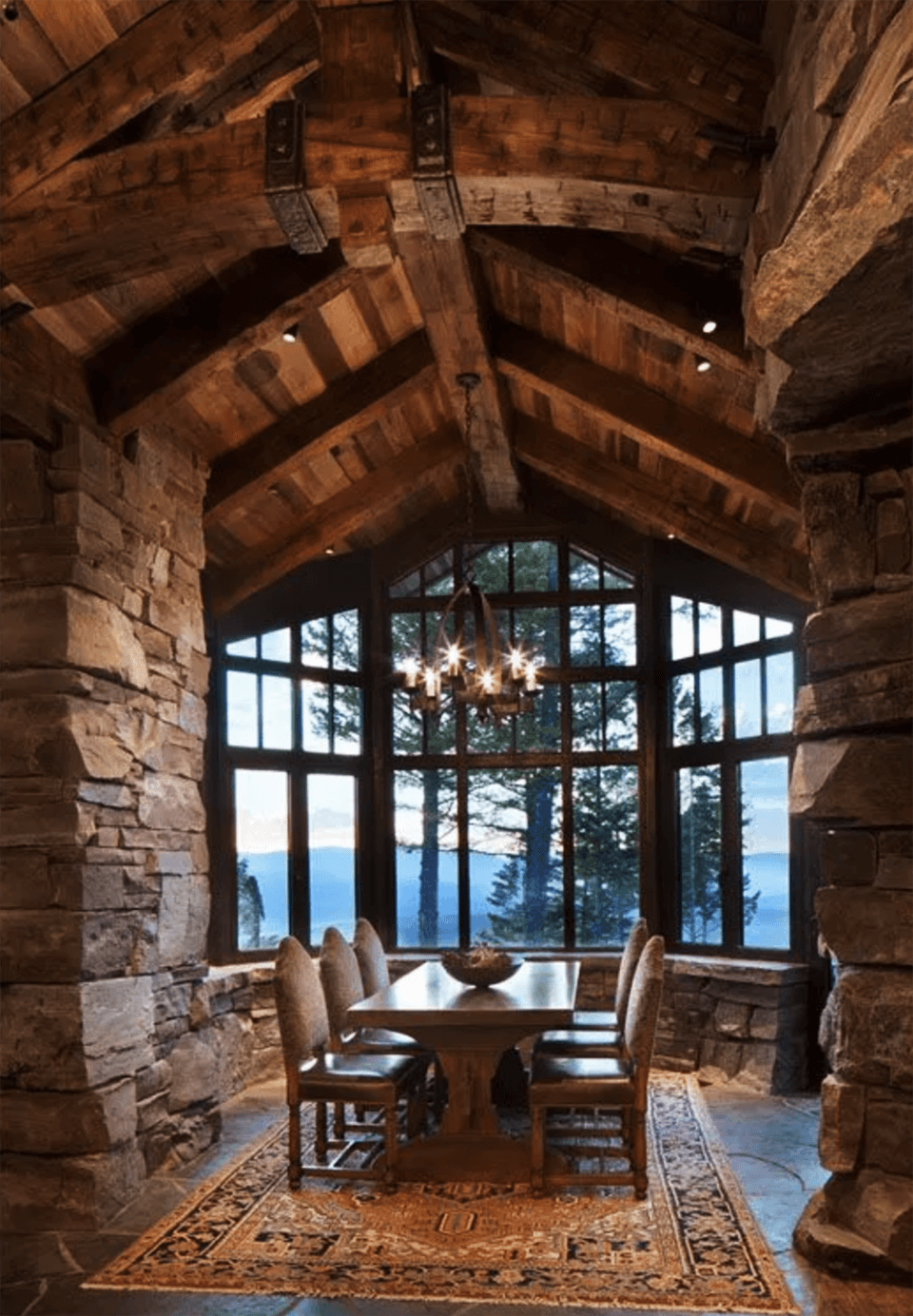
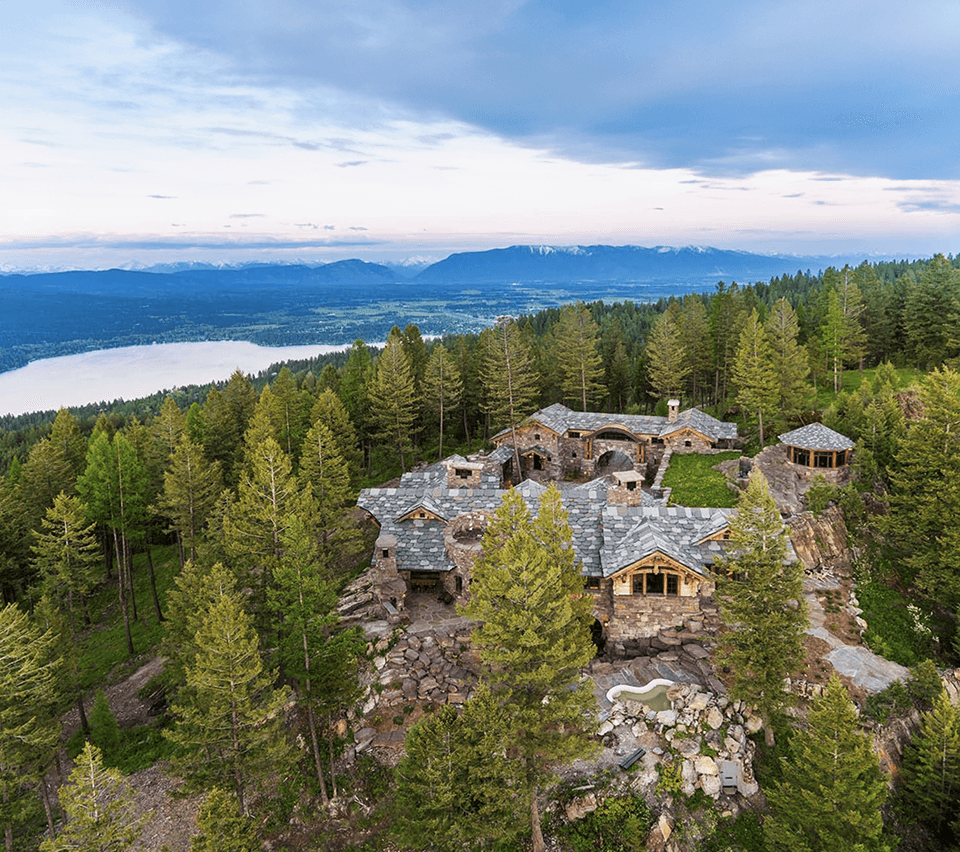
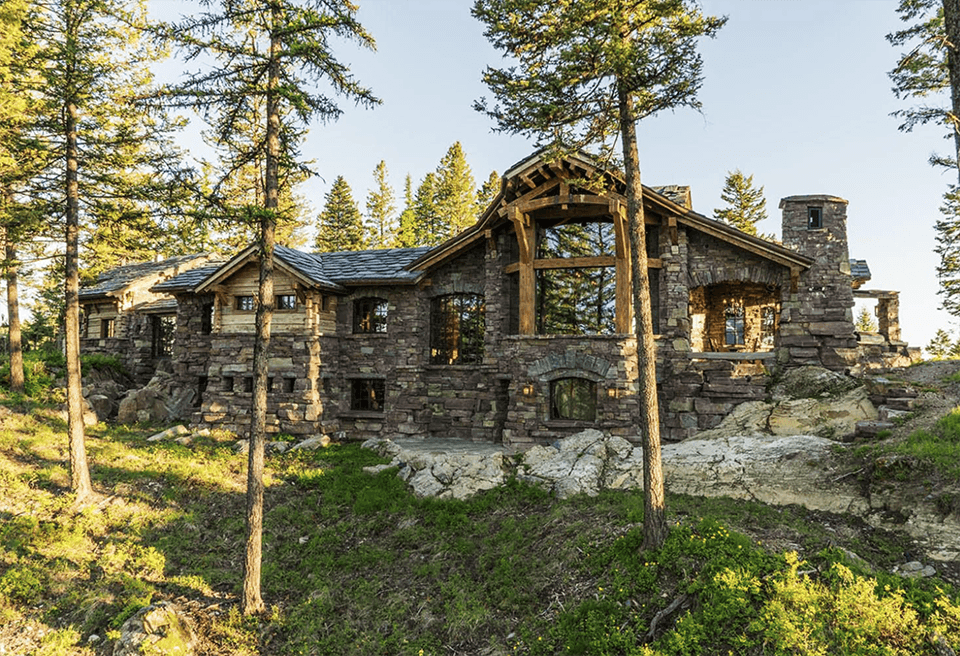
Located in Whitefish, Montana near one of our nation’s most beautiful national parks, Glacier National Park, Great Northern Lodge was designed and constructed with a grandeur and timelessness that is rarely found in much of today’s fast paced construction practices.
Daugaard has a multidimensional understanding of design that factors in how to honor the environment and a deep attunement for ethical adaptation of a site to meet a client’s needs. He reflects on his work best: “When you perform well, the project radiates.”
Success is very much a team effort and Daugaard wholeheartedly acknowledges Centre Sky’s team that helps continue to build the firm’s legacy. “Ben, Mariya, Zoya, Jim, Simone, Jenna, Chris, Trevor, Caden, Kyle, Cory, Charles, Megan, and Michelle in our office are integral components of our firm and they allow me to design and be part of the creative process,” he says. Daugaard expressly recognizes the team and is extremely grateful for their work on each project as well as their strong contributions to the projects they put out and the firm’s over-all atmosphere. He extends that recognition to the builders, trade partners, artisans, and clients who make up the greater team on each project.
whj COVER FEATURE
