
Listen to our Spotify podcast about this article:
By Aaron Kampfe
When architect Greg Matthews initiates a new design, he doesn’t start by envisioning a structure’s shell, or sketching a framework, or even drawing a line. He begins with a more abstract and elusive element. Well-conceived architecture moves us through spaces purposely, gives us moments when we pause and wonder, intentionally creates an experience, and leaves us with impressions and memories. A house may be merely concrete, steel, stone, wood, and glass, but a home is where we spend our most precious commodity -time.
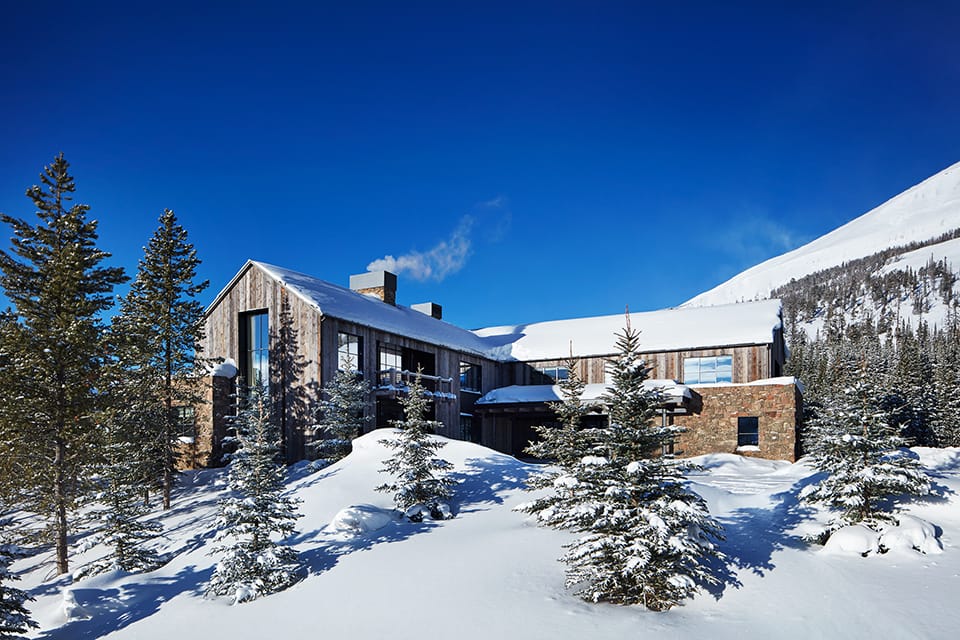
Chalet Du Pic | Photography, Stephen Kent Johnson
For most of history, architectural plans are expressed on paper and lie flat. Lines are drawn in the first dimension to represent spaces and objects that exist in the second and third dimensions. Lines indicate length and height that represent planes and flat surfaces, like windowpanes, counter tops, and floors. Lines can also be drawn to indicate depth, showing the third dimension, like a box or a room. Today, architectural plans have become more sophisticated and precise as computer software allows us to see structures through 3D renderings, but what architectural plans and 3D modeling can’t show us is the fourth dimension—time as an architectural element.
-AND THE FOURTH DIMENSION IS WHERE GREG MATTHEWS STARTS.
THREE DIMENSIONAL ELEMENTS: SITING, SPACE & STRUCTURE
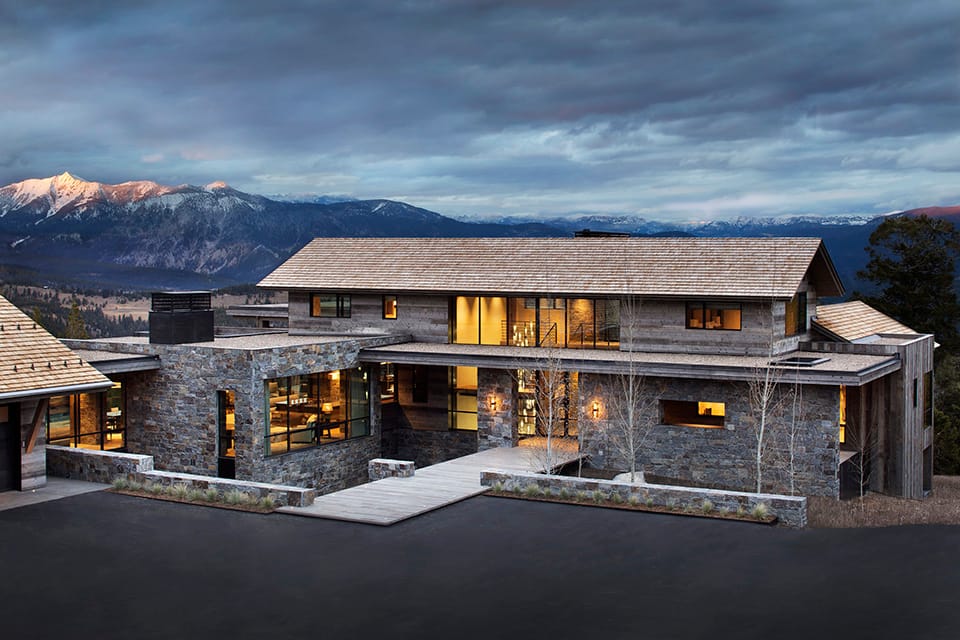
With sightlines to Lone Peak, Pioneer Mountain, and Cedar Mountain, this home in the Yellowstone Club became known as the “Chalet du Pic,” or “cabin of the peak.” A more apt translation for this particular “chalet” may be “mountain lodge,” as the home is much larger than what you’d typically think of as a cabin and has a great room with a two-story vaulted ceiling. An initial foundational step in “Chalet du Pic’s” architectural design process was the analysis of the siting of the structure.
“In the beginning stages of design, we analyze the building site, looking at the approach to the home and the views from every angle. Our software systems and topographic models are very accurate at showing how the landscape will look outside the window.”
–Dewey Olson, Project Architect, GMS
Dewey Olson, an architect at Greg Matthews Studio, says, “In the beginning stages of design, we analyze the building site, looking at the approach to the home and the views from every angle. Our software systems and topographic models are very accurate at showing how the landscape will look outside the window. I enjoy ‘nerding out’ on these types of elements and figuring out how to best work with the property and surrounding landscape. After all, their primary motivation to build a home here is the land and views.”
GMS worked closely with the landscape architect to understand the site grading, what the topography dictates, and how the architecture and landscape could evolve as one cohesive expression. Ben Roush, Principal with Design Workshop, reflects, “At Chalet du Pic, the design centered on creating seamless connections between indoors and out. Together, we shaped the landscape to extend the architecture into its alpine surroundings, allowing the home to feel fully rooted in its mountain setting while embracing the breathtaking views beyond. The result is a residence where architecture and landscape are inseparable, and where daily life unfolds in constant dialogue with the grandeur of the mountains.”
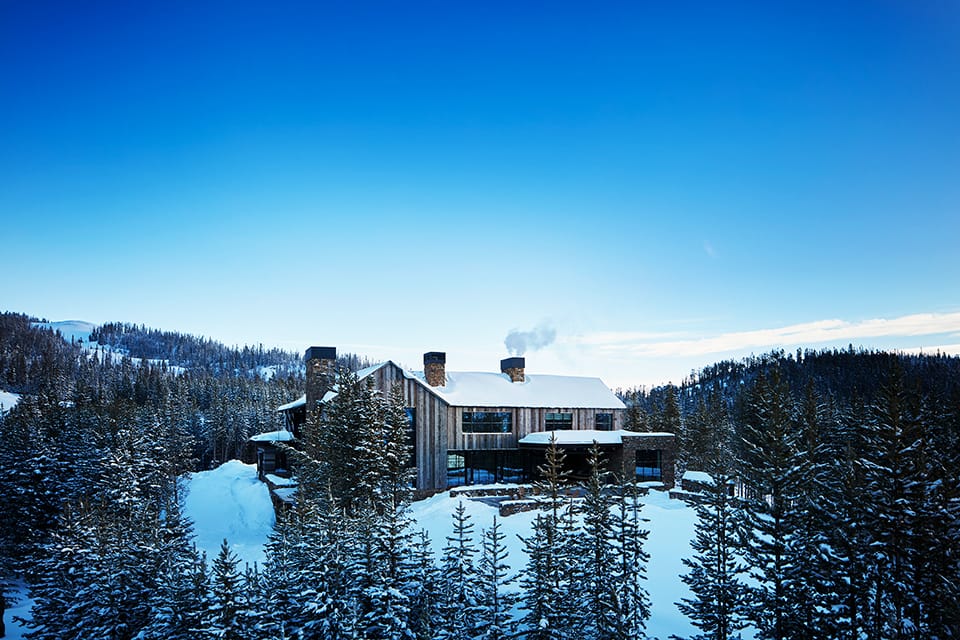
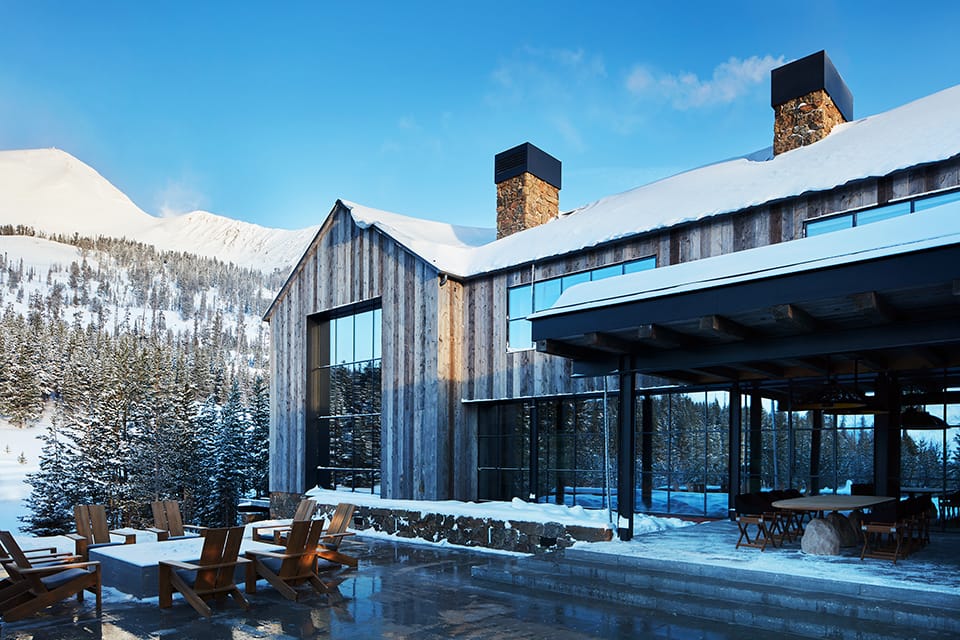
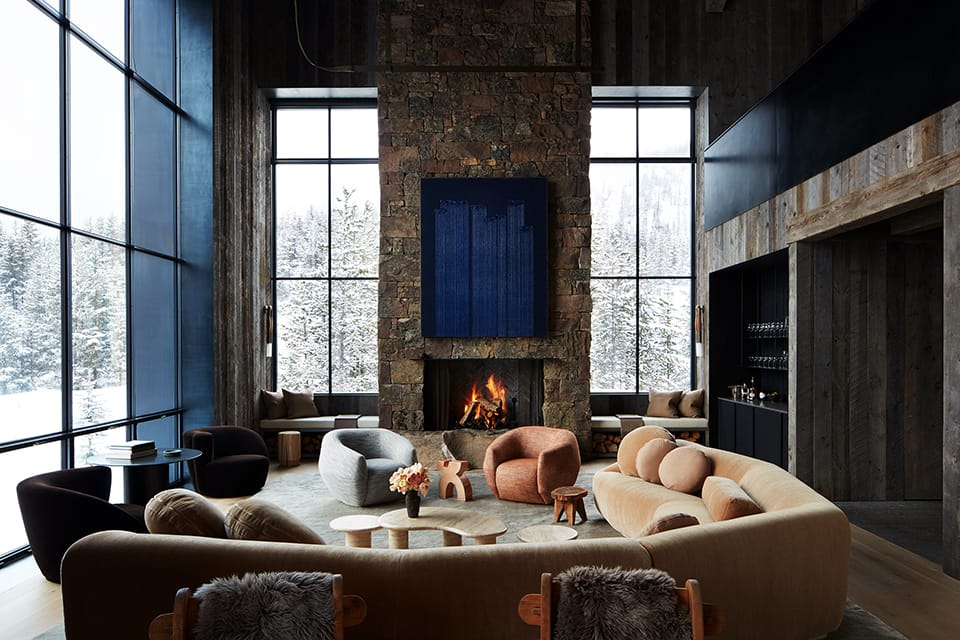
The driveway approach to the home is played down in terms of scale. The grandeur of the structure is felt through the grandeur of the surrounding mountains, and this is captured with intentional and meticulous analysis. Greg Matthews says, “Modesty in scale is important to our design philosophy. Simple forms that don’t overwhelm or overstate are fundamental. How can a 13,000-square-foot house not look like a 13,000-square-foot house? How can that amount of space not distract from the landscape or make a big statement? Here lies a challenge. We work to create spaces with many layers but maintain simple forms.”
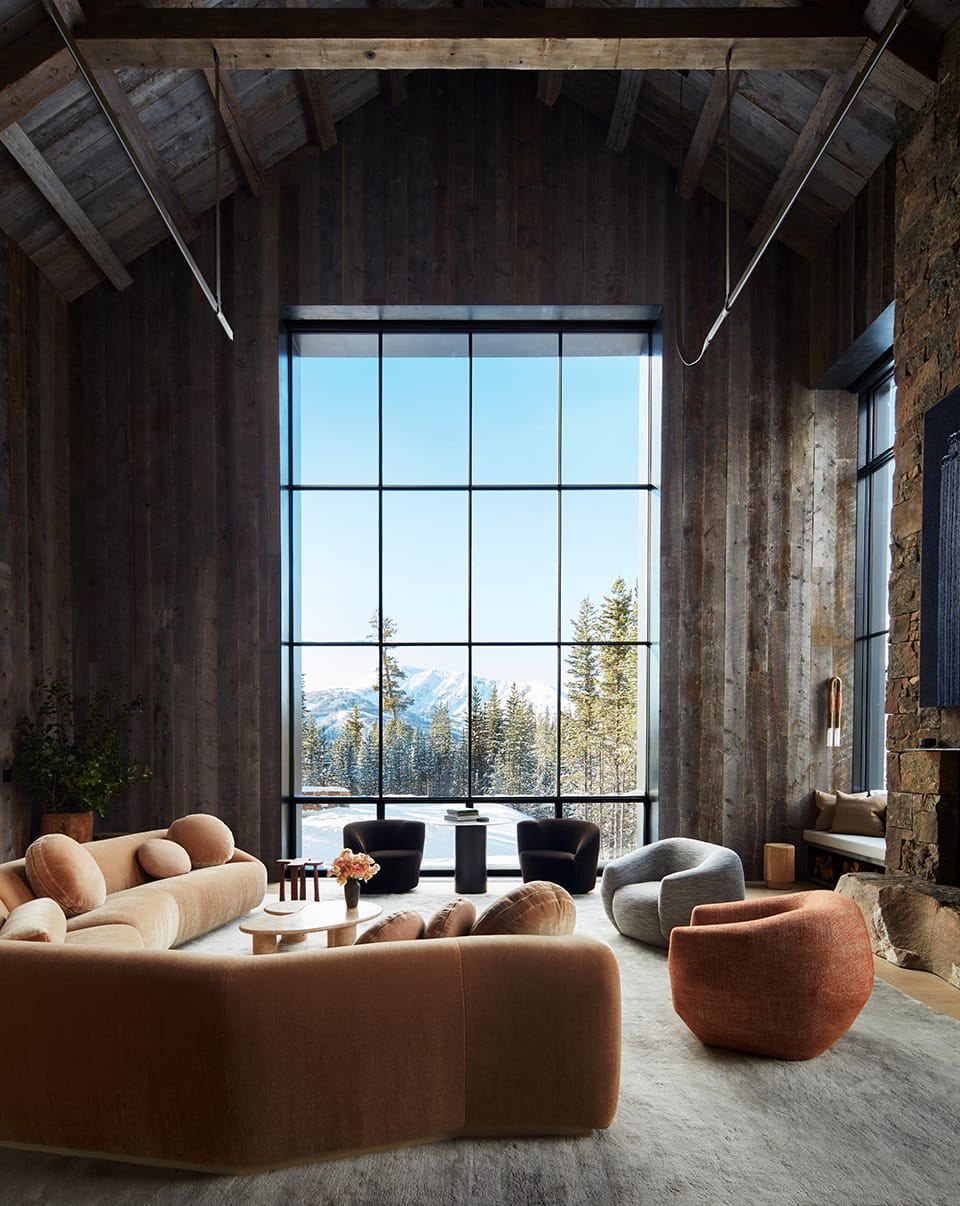
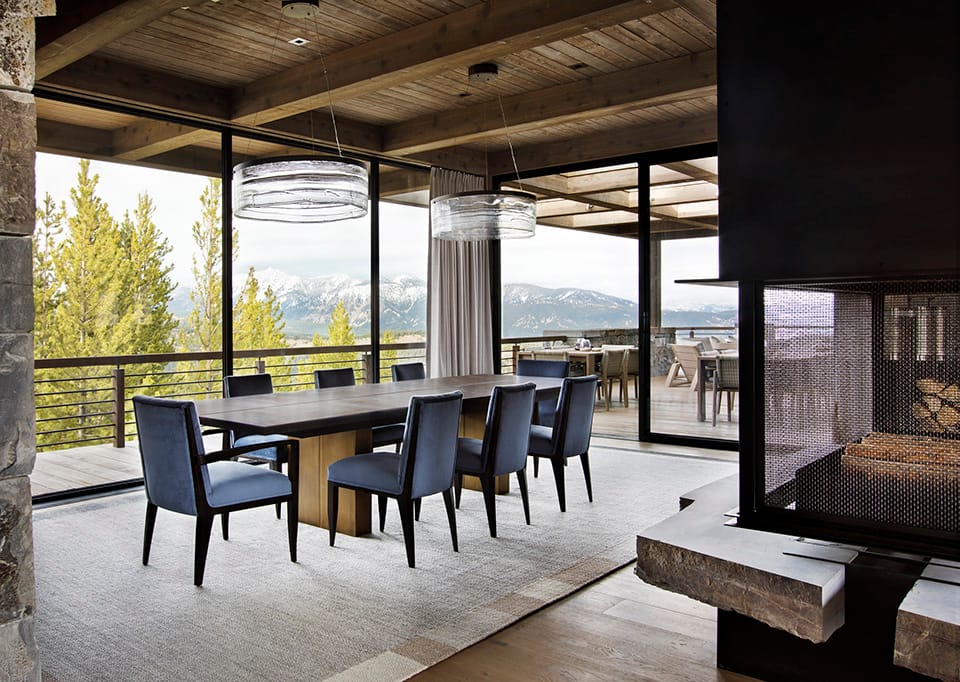
While also considering how the home is situated on the land, the architectural team had to consider how the interiors of home would interact with views, Greg explains, “Because the summit of Lone Peak is at 11,166 feet, the sightlines are vertical, maybe around a 20-degree angle, and difficult to capture from inside the home. Pioneer Mountain is at 9,860 feet, a bit farther away, and easier to capture. That peak and its ridgeline end up being the focal point of the great room with a two-story window framing it. We situated the great room on what I consider the prow of the site, so we were able to capture both Pioneer and Lone Peak from a single point. Because of Lone Peak’s height, we also needed two-story windows to capture it. The result was that the occupants get not one, but two perfectly framed views of iconic Gallatin Range summits.”
SECOND DIMENSION: PLANES
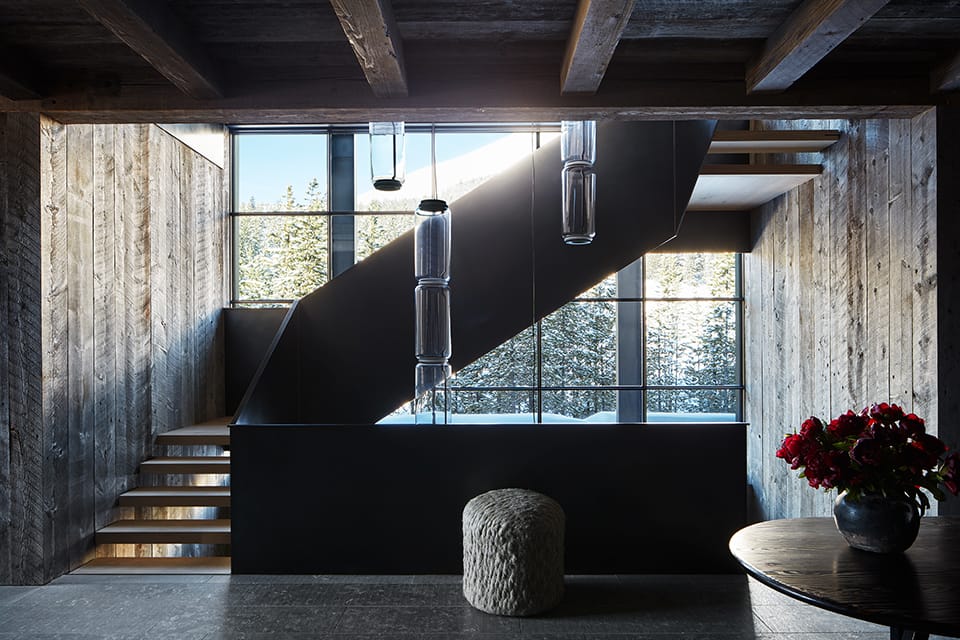
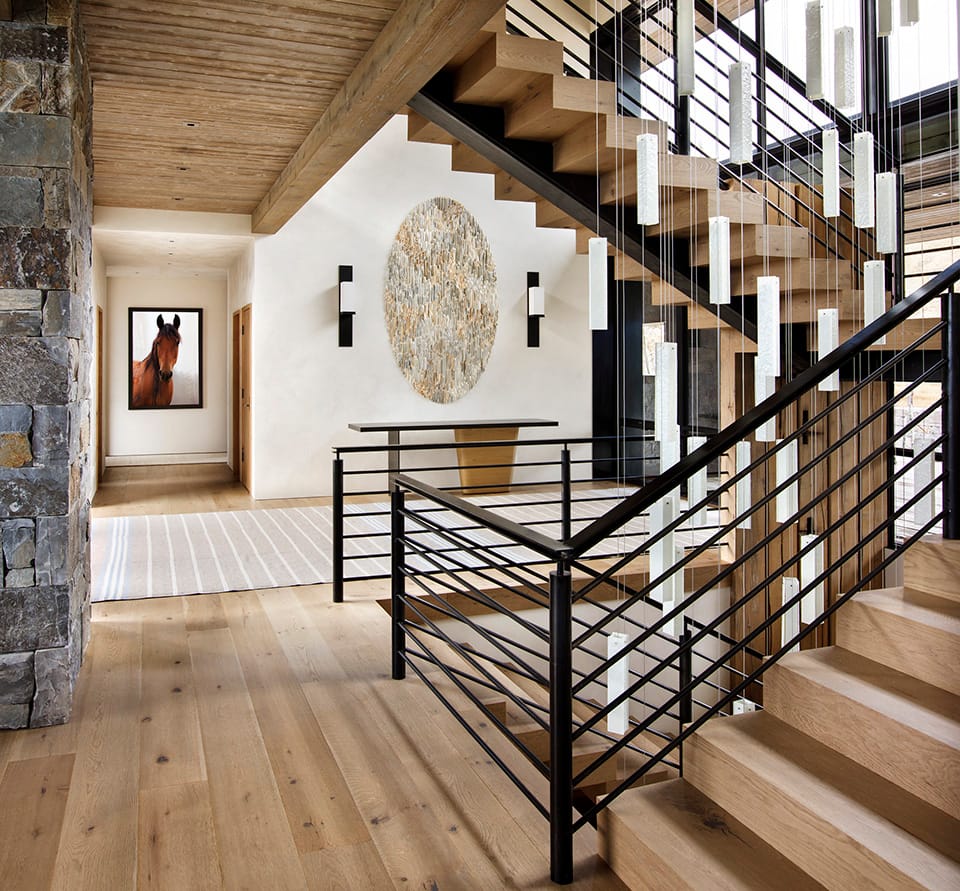
From the home’s driveway, one looks through the glass to see an entryway designed like a carefully constructed painting. Through the doorway, the Brandner Design staircase takes the central focus. The wooden steps are framed by planes of steel and travel up to the third story and down to the lower level. In the walls and ceiling, the weathered patina of the reclaimed timbers complements the steel’s warm gray-black hue, not illuminating harshly, but softly. Light fixtures hover in the middle, suspended in space. They are clear glass so as not to obfuscate the backdrop, Lone Peak. In the background, pine trees give the tabloid texture, and the iconic mountain gives the scene grandeur.
Designing these types of scenes is part of Greg Matthews Studio’s architectural process. Brent Holzer, an architect at GMS, says, “Many of the homes we design have large moments of glass. We think of windows as picture frames. Before even entering this house, one experiences a beautifully crafted setting and upon entry, that setting continues into the interiors.”
“Many of the homes we design have large moments of glass. We think of windows as picture frames. Before even entering this house, one experiences a beautifully crafted setting and upon entry, that setting continues into the interiors.”
–Brent Holzer, Project Architect, GMS
No scene is complete without its characters that give it life. Greg Matthews says, “In every room in the house, we contemplated how it is going to be used. The utility of space is certainly taught as a principle in ‘architecture 101,’ but what often can’t be taught is the people component of design. Here is where really knowing your client is important. Throughout the home we thought about the occupants. Where do people gather for conversations? Where do the kids play? Where does one gear up for the recreation that is just out the door?”
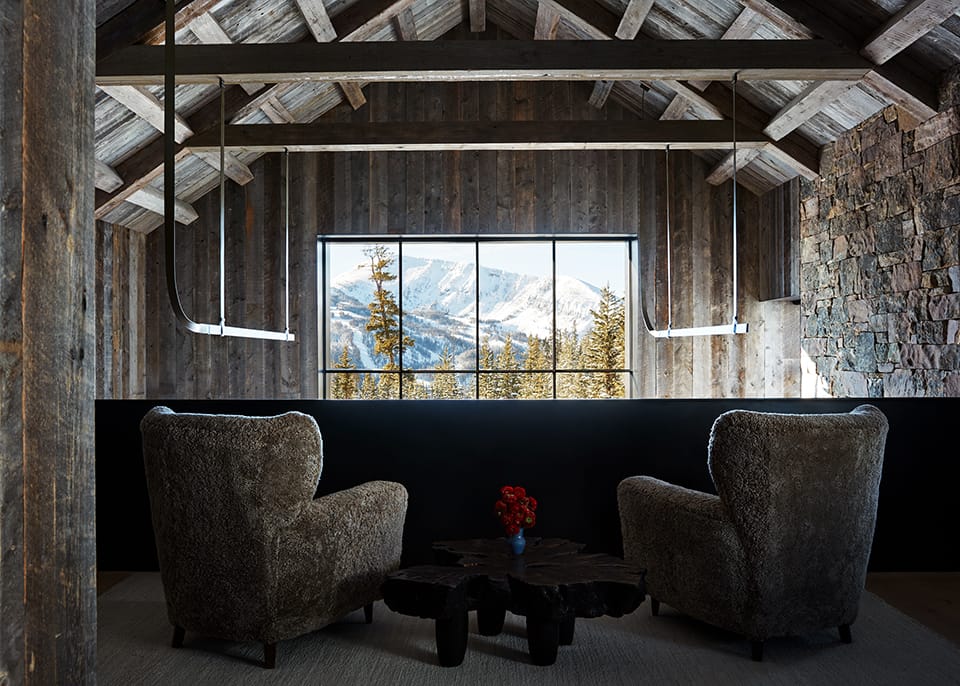
Each room in the house offers a picture-frame moment. One example is the loft space above the great room. Two chairs are situated facing the great room’s two-story panes of glass. Through the window, Pioneer Mountain crosses through the frame. The lighting fixture is a thin narrow rail that doesn’t enter the viewshed or distract from the focal point, Pioneer’s long ridgeline, snow-covered for most of the year.
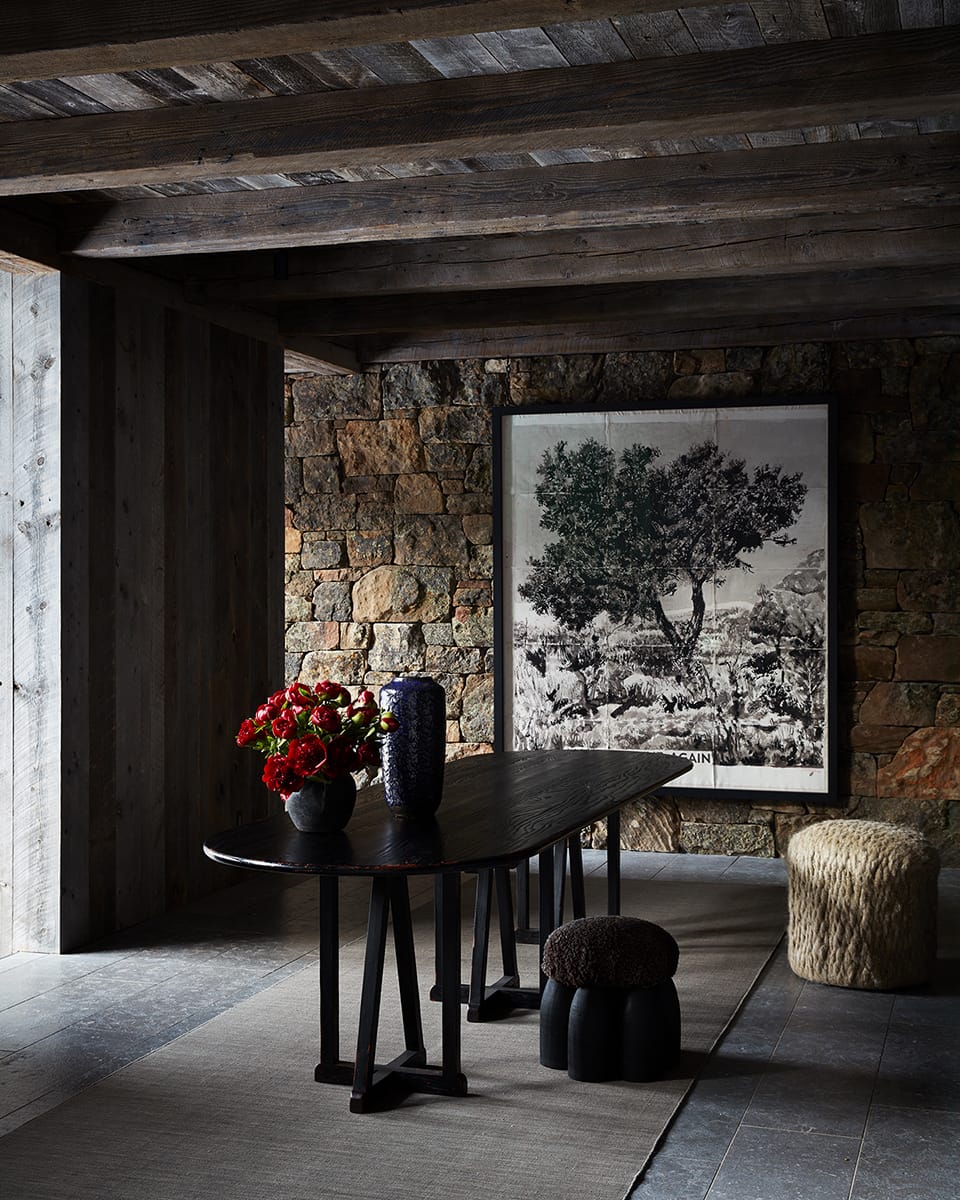
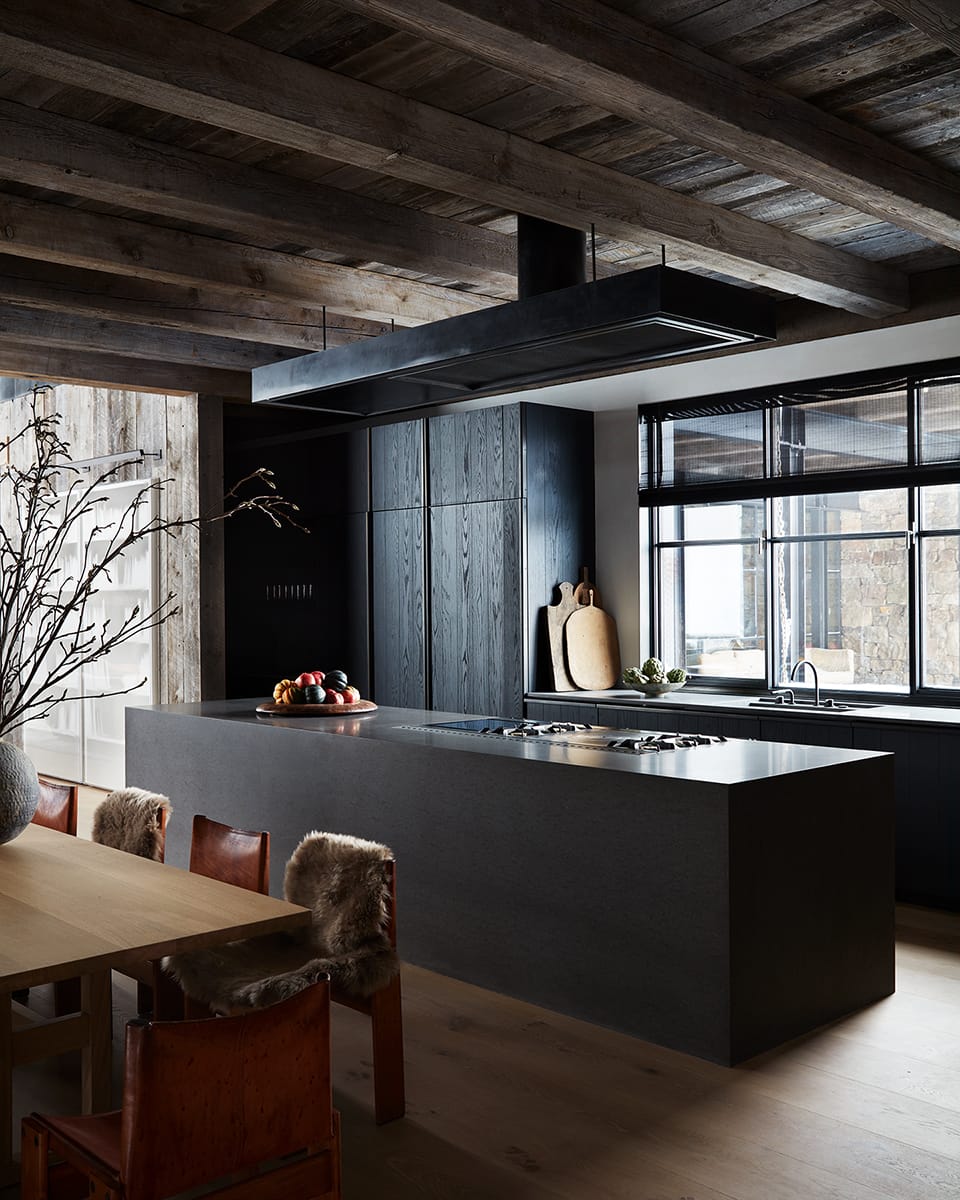
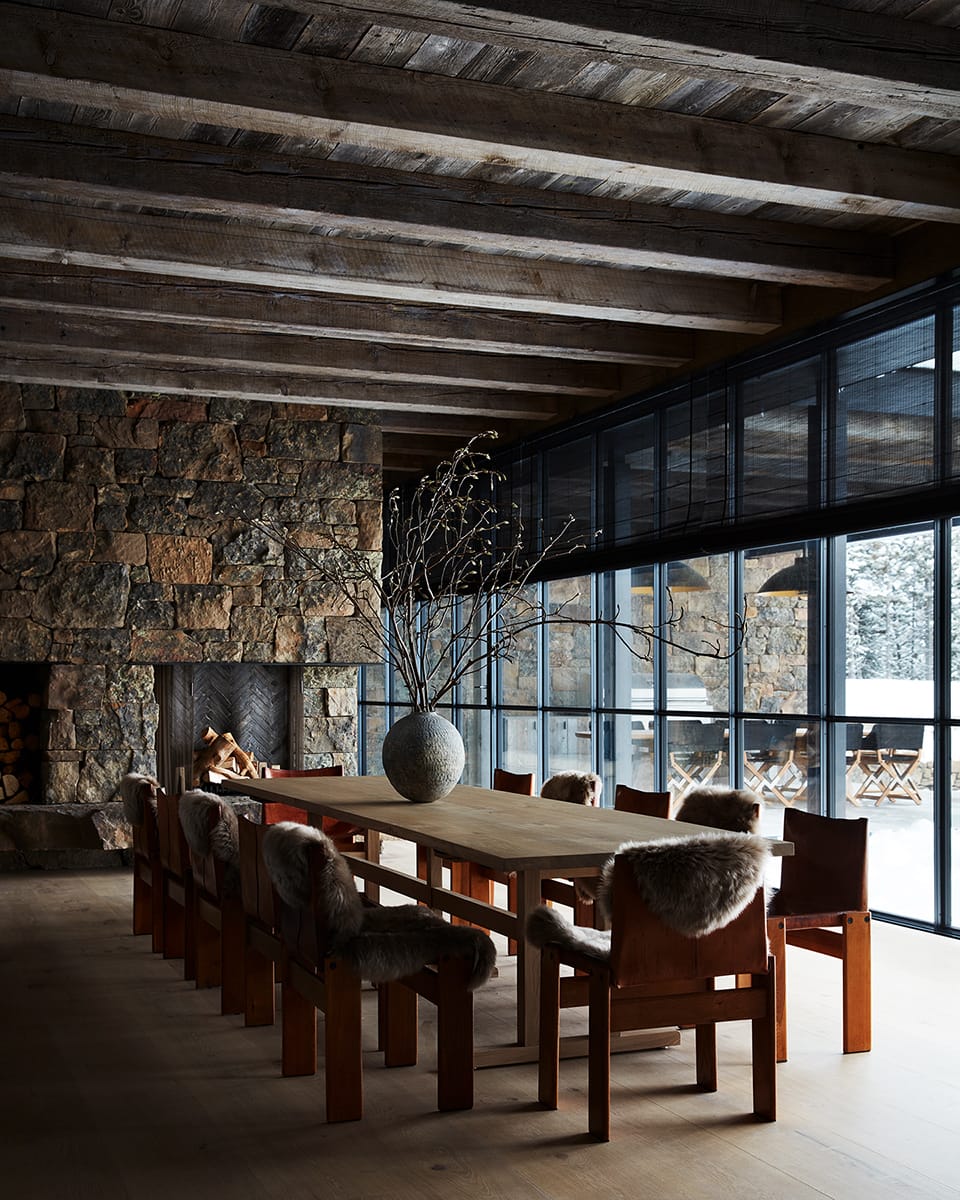
Rob McRae, a partner at Highline Partners (the home’s builder), says, “All of our projects are very complex both on a macro and micro level. We work with GMS early in the pre-construction planning. This helps us inform costs, formulate building assemblies, and figure out systems. We are also able to share ideas about constructability and material use.
“A single feature, such as this staircase, can be a big undertaking. We worked with the Brandner Design team to bring panels weighing 1,200 pounds to the property and hoisted them into place. Then they needed to be perfectly fitted, integrated with the wood stairs, and seamlessly welded. No small undertaking for the architect, fabricator, and construction teams, but the result is something truly stunning…really a piece of art.”
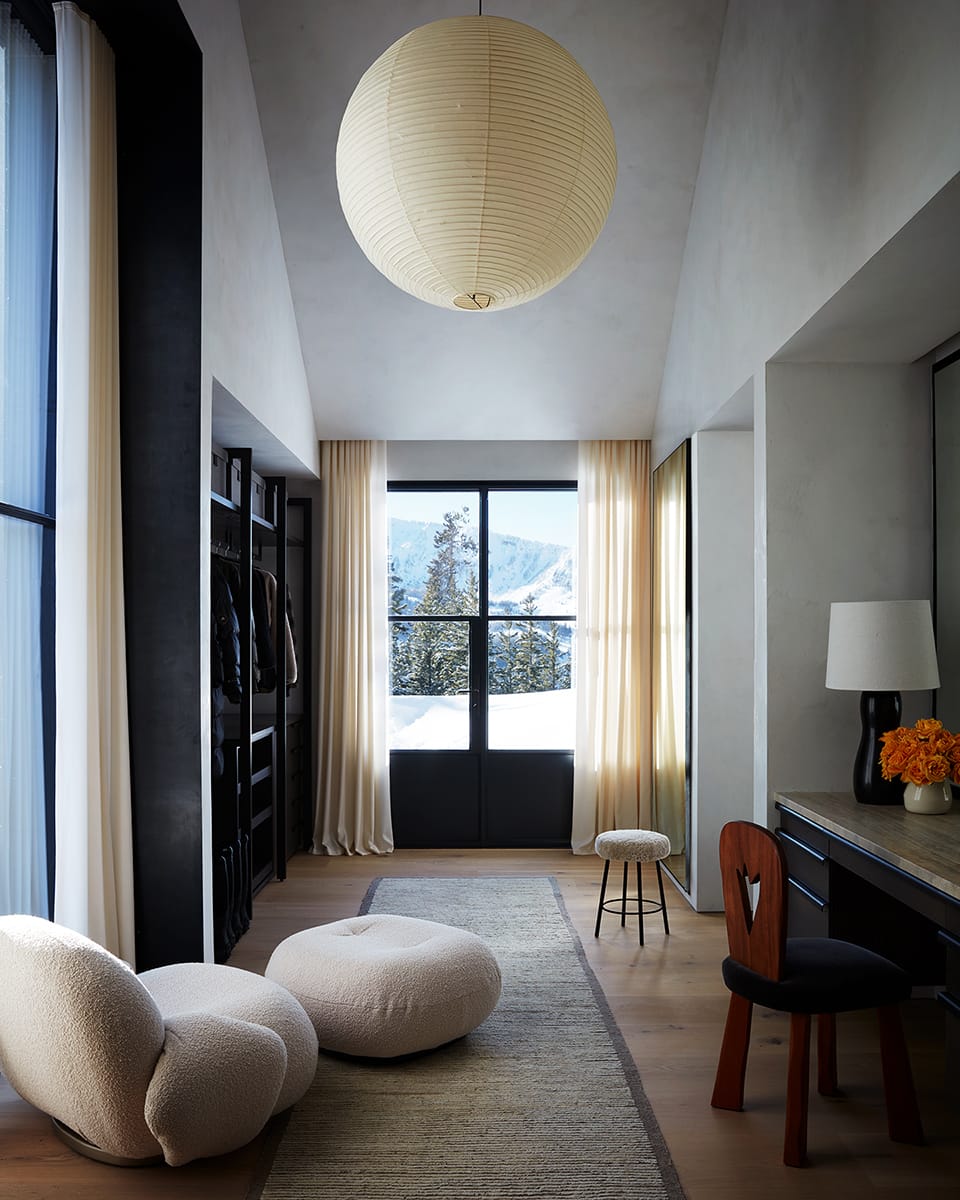
“Some projects stand out, and this is one of them. Its tall and vaulted ceilings play off the flowing curtains that accent the off-white moody plaster, while the art dances with the dynamic shift of light.”
–Jeremy Mistretta, Founder/Owner, New Age Artisans
FIRST DIMENSION: LINES, FRAMES & CONTOURS
While most of GMS’s staff initiates design on the computer, Greg Matthews often starts by hand-drawing. He is finding points, indicating them with dots, connecting lines, and integrating contours. On paper, he is translating his four-dimensional thinking with first- and second-dimensional expressions. The result is three-dimensional space.
While the overarching structural design of any building receives the most amount of initial attention, the subtle details are the elements that personalize space and experience. Throughout the home, less dramatic moments are created with equal consideration. These smaller, more intimate spaces aren’t neglected, but often require even more architectural attention.
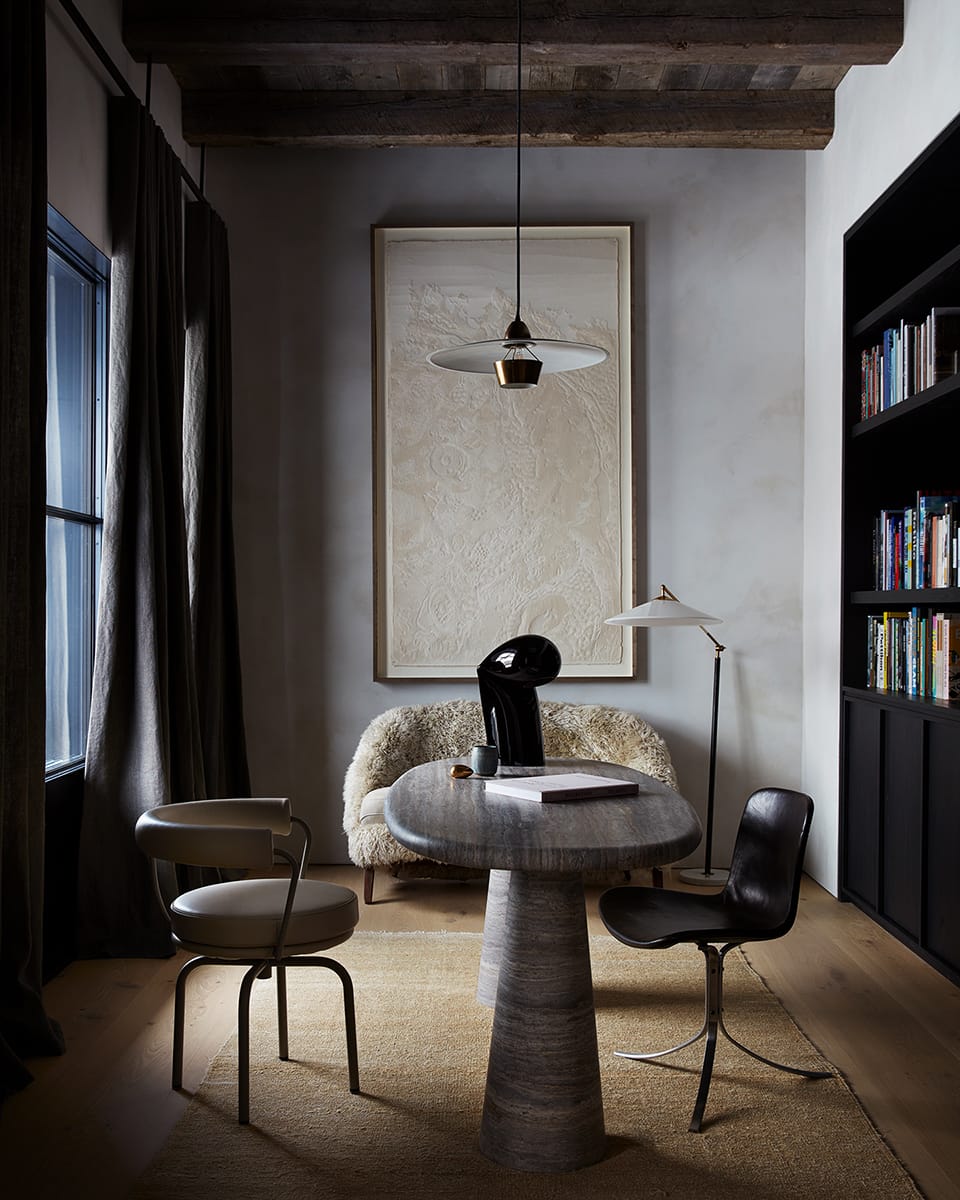
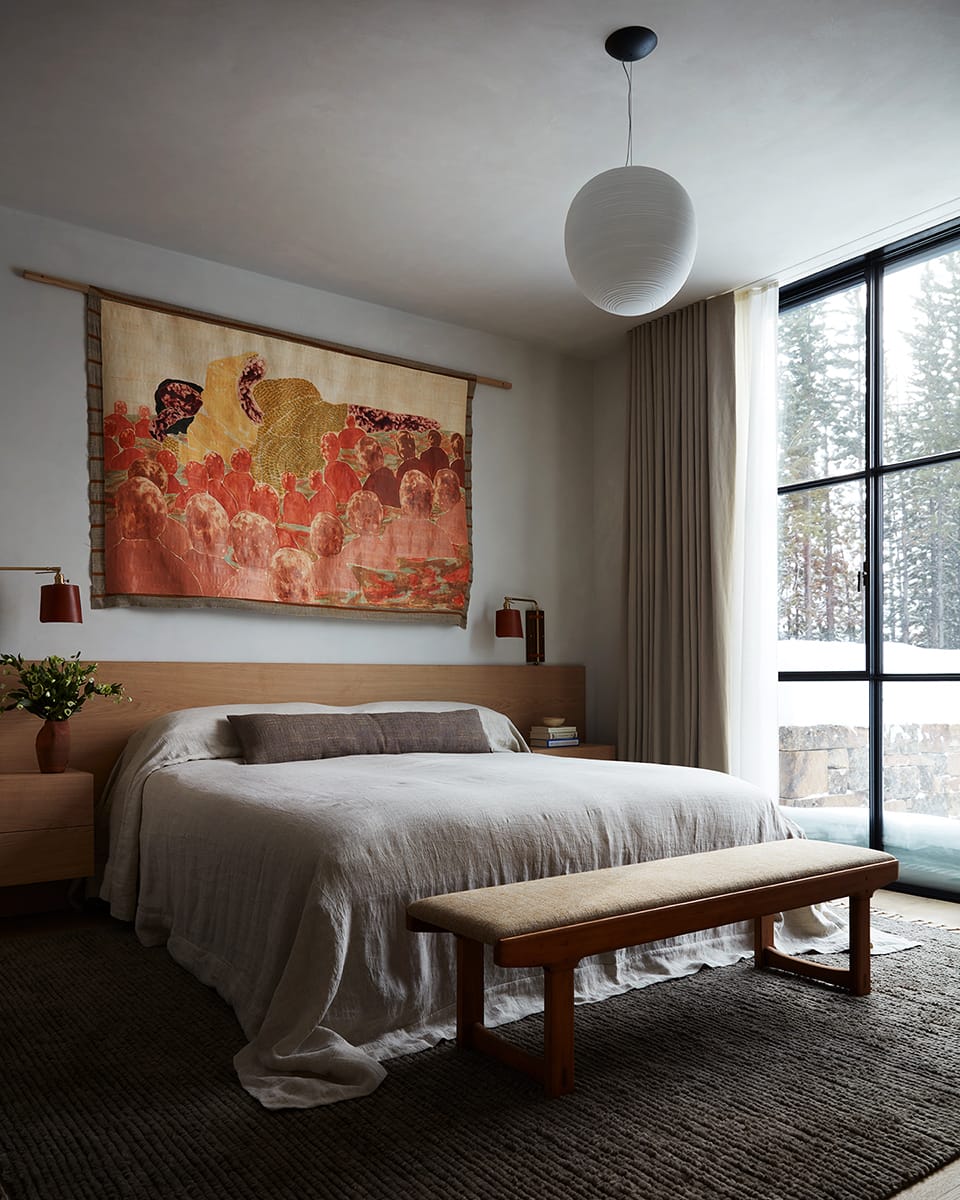
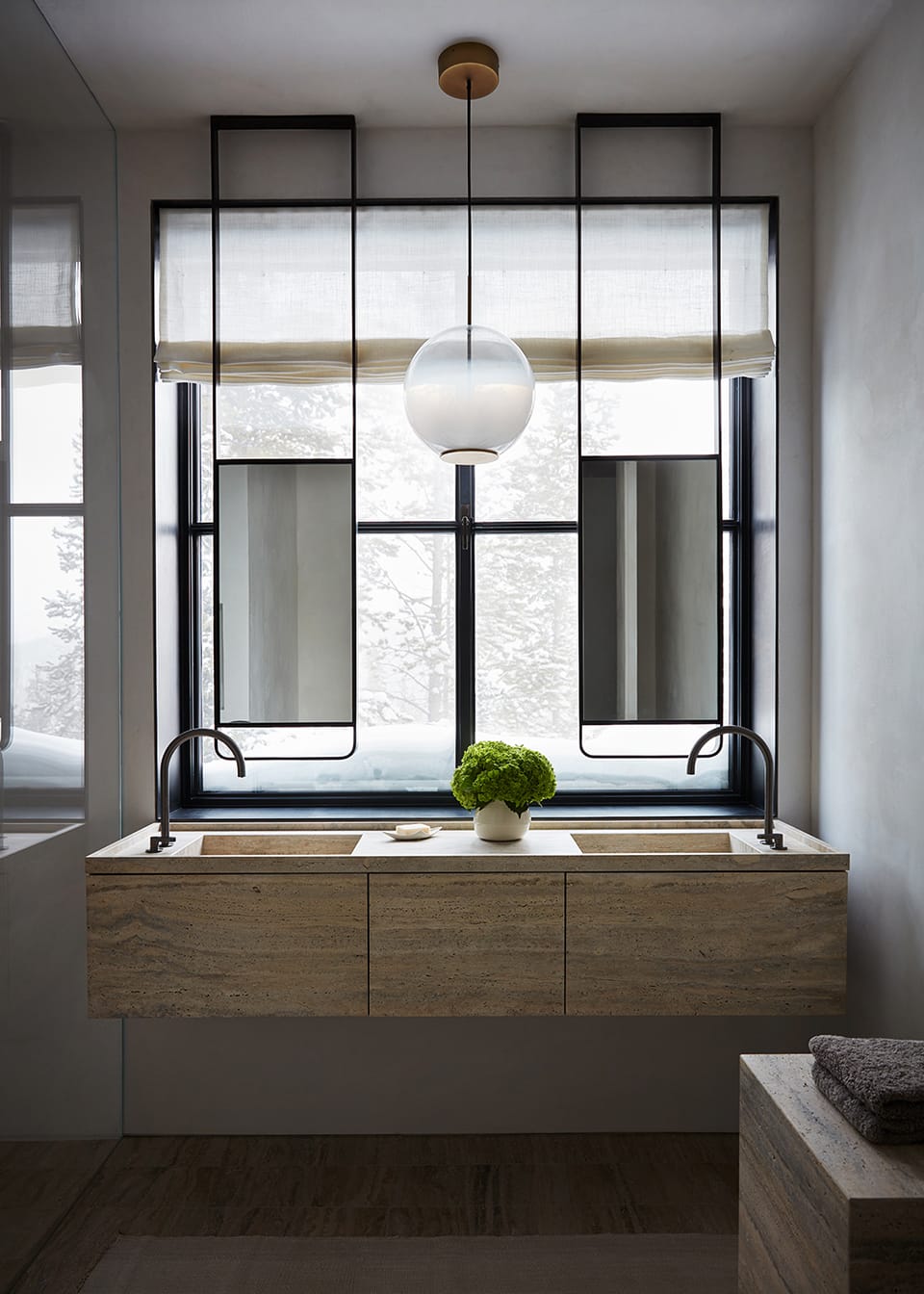
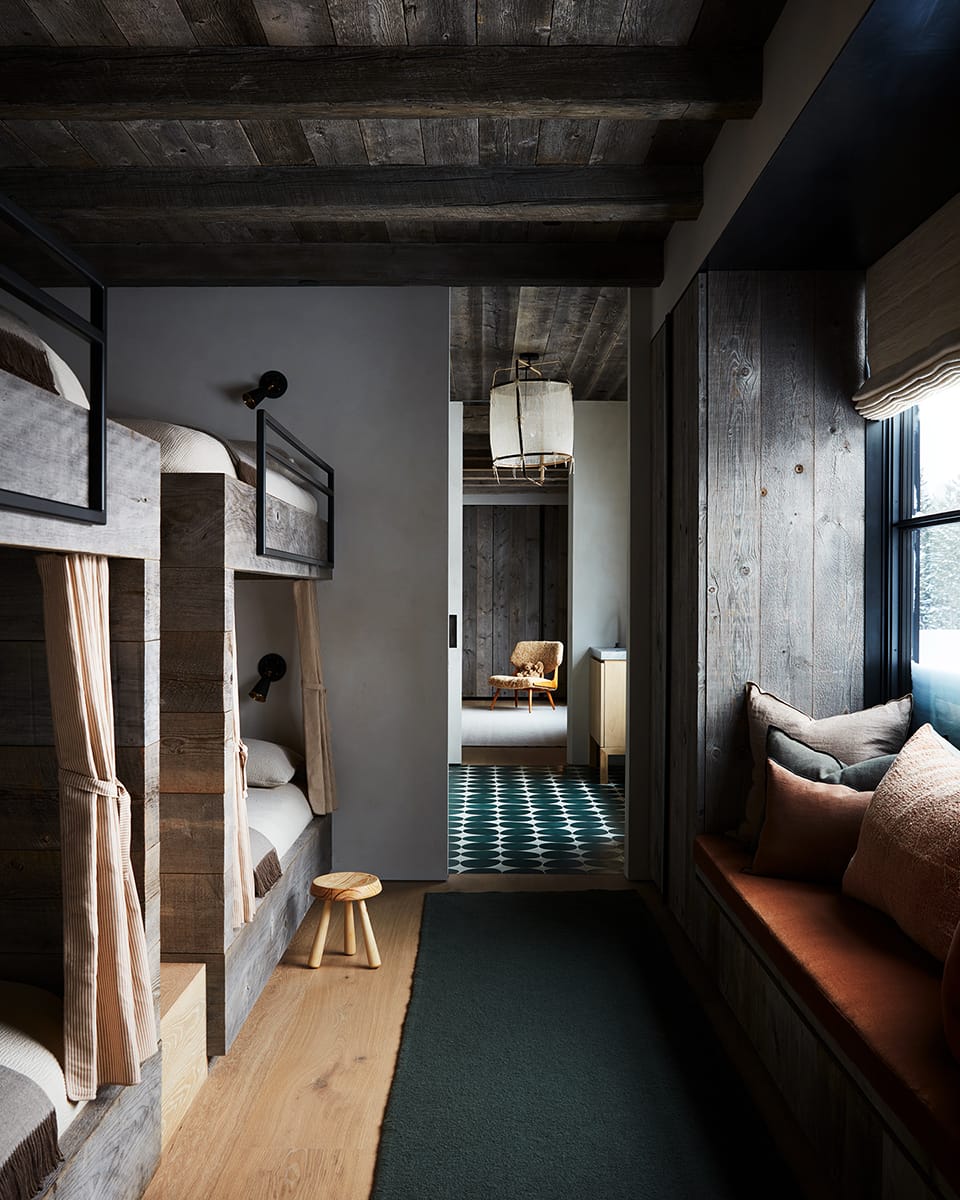
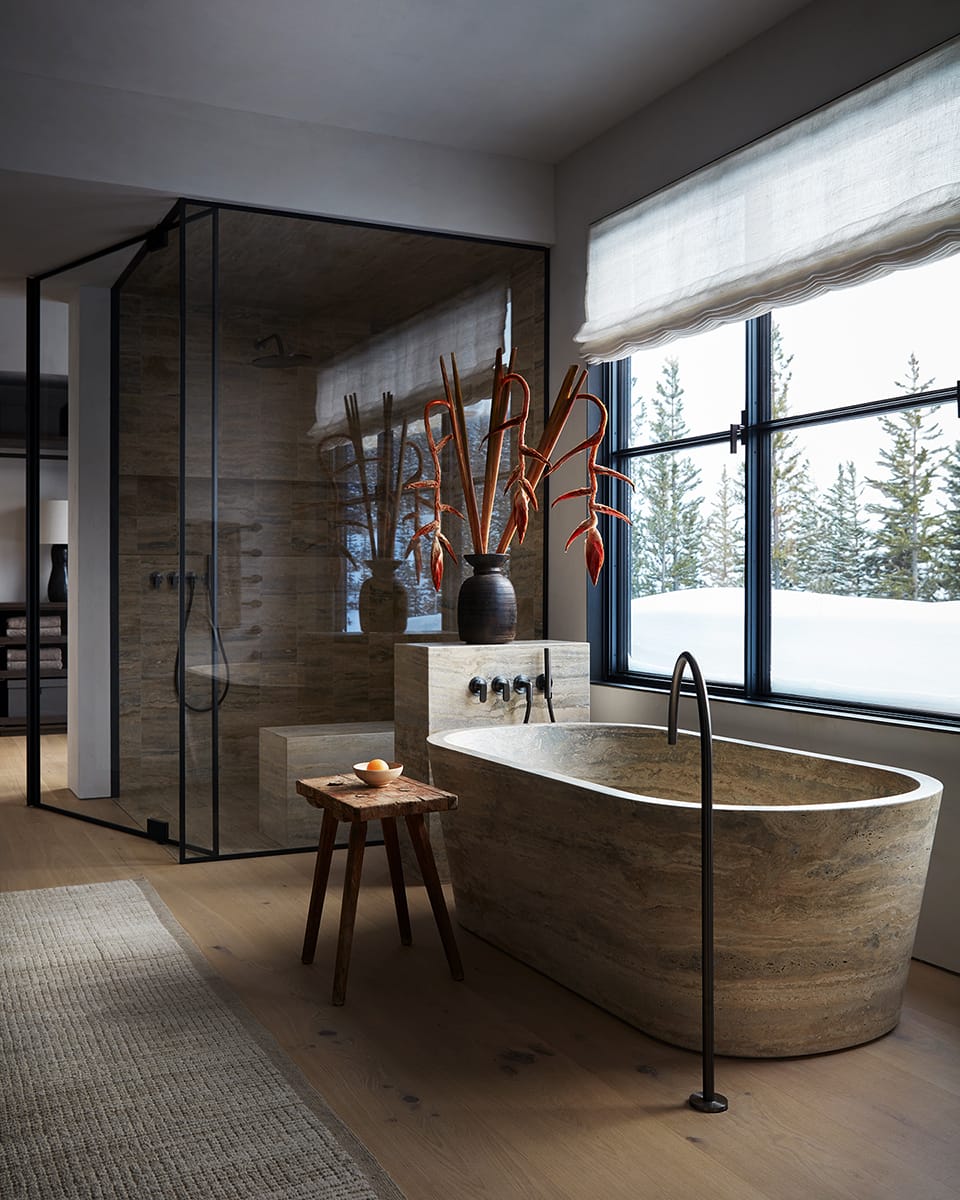
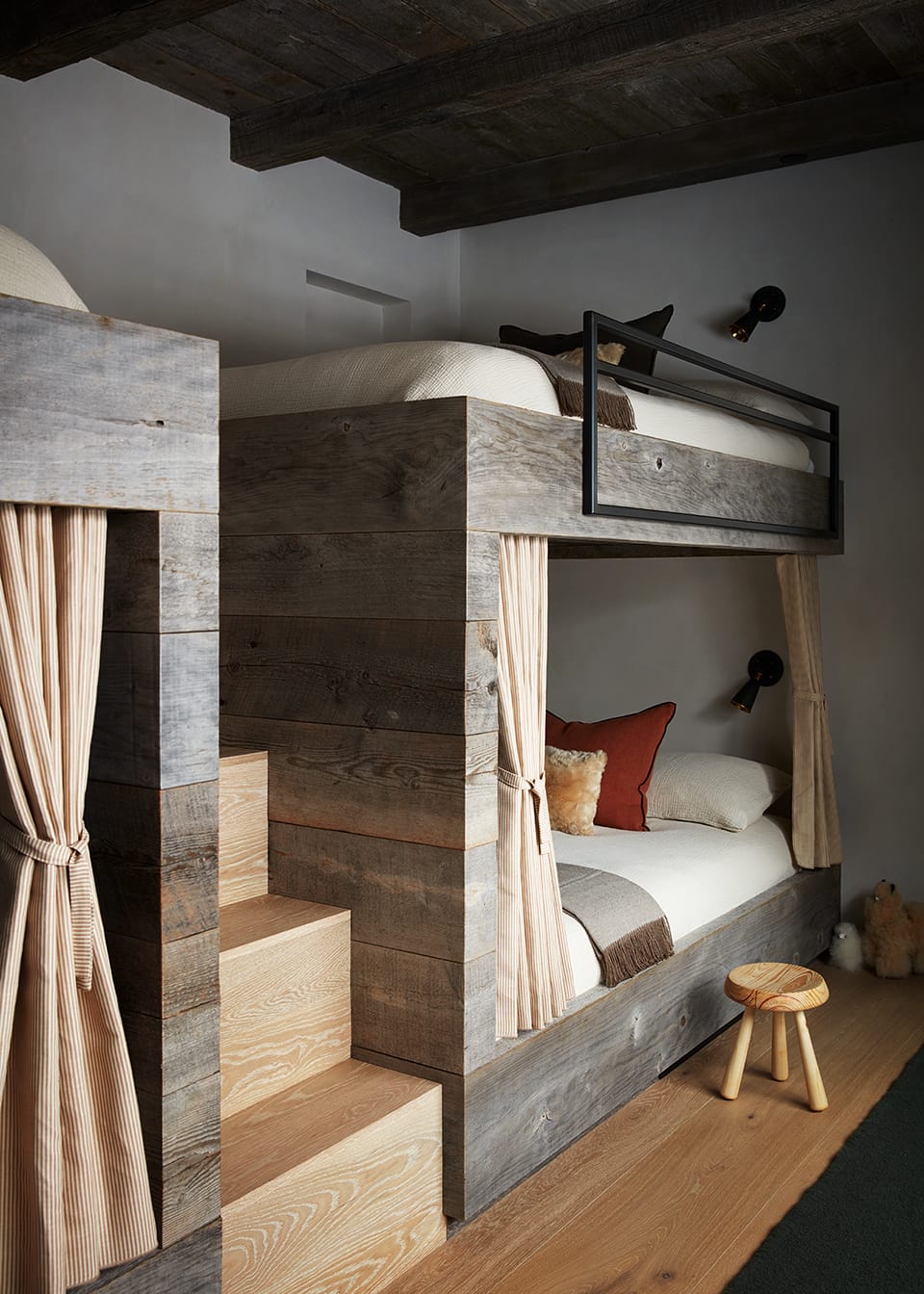
The bedrooms and bathrooms throughout the home all have seemingly simple forms—square or rectangular floor plans, box-like frames, and re-claimed timber and ceiling paneling. The walls are also seemingly simple with most being rich-white plaster framed by reclaimed wood, but like any element from GMS, simplicity of form doesn’t mean uncomplicated or unsophisticated.
For the walls, GMS enlisted New Age Artisans, a Bozeman-based wall covering company that has gained a national following. Jeremy Mistretta, the firm’s founder and owner, has traveled to Europe and North Africa to study the art of plaster and has brought back ancient formulas and techniques to North America.
“As a leader, Greg has a way of setting the runway for the project –from the big vision all the way down to the details.”
–Ben Kennedy, Project Architect, GMS
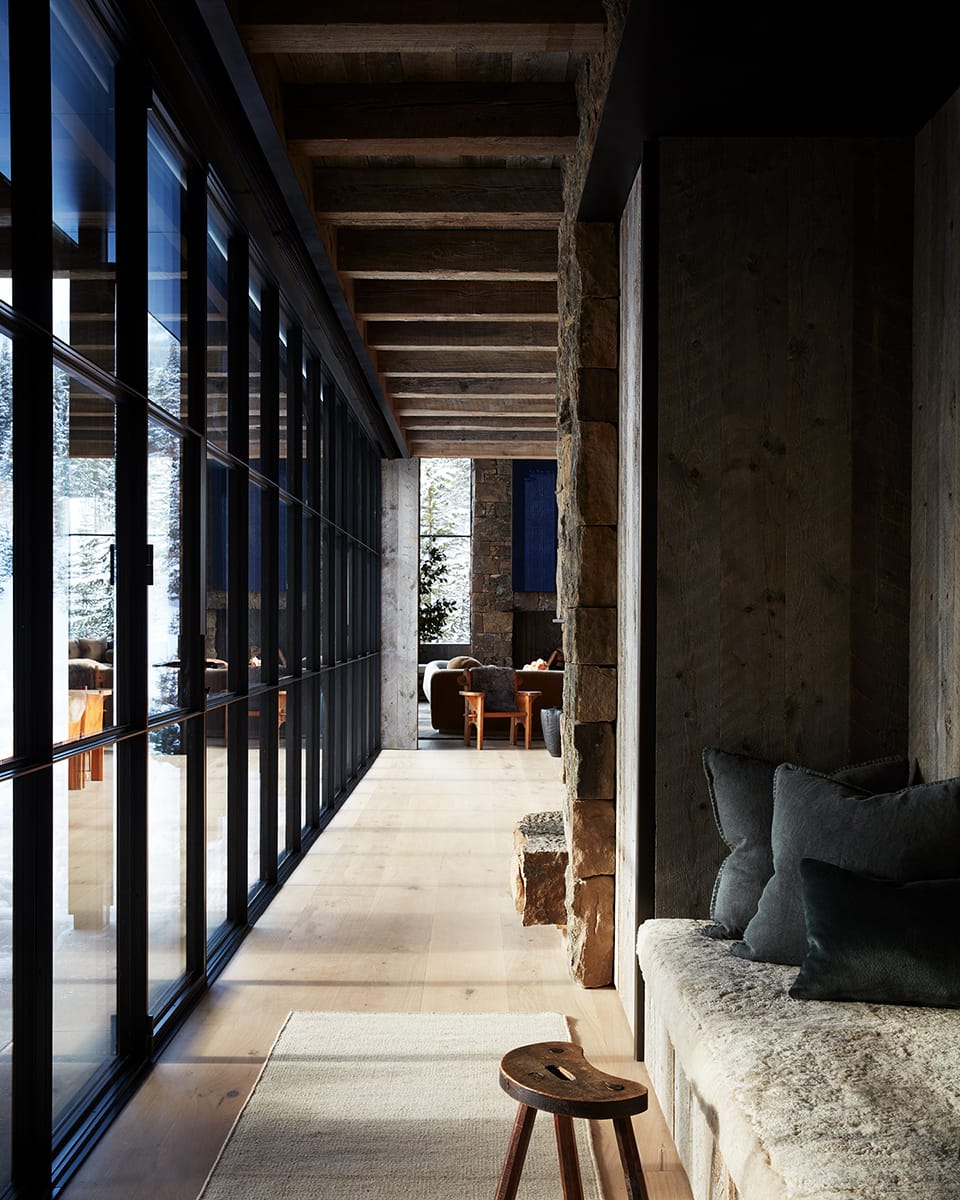
About the Chalet du Pic, Jeremy Mistretta says, “Some projects stand out, and this is one of them. Its tall and vaulted ceilings play off the flowing curtains that accent the off-white moody plaster, while the art dances with the dynamic shift of light. Grand hallways give way to intricate primary wings, and perfectly hidden plaster doors that continue the plane of walls, concealing thoughtfully designed and utilitarian offices, pantries, and suites. The home, although mighty, sits organically amidst old-growth trees, grounding its grandeur and providing a humble example for its time as to what true architectural beauty is.”
Ben Kennedy, an architect at GMS, says, “As a leader, Greg has a way of setting the runway for the project–from the big vision all the way down to the details. He has an ability to react on the fly in the studio. Anyone on our team can get stumped. We scratch our heads and scrutinize the details. He has a knack for guiding the clients, staff, and partners along the process from the project’s conception until the moment we hand over the keys. From connecting lines on paper to analyzing complicated engineering, he is a visionary and creative force.”
TIME WELL-SPENT
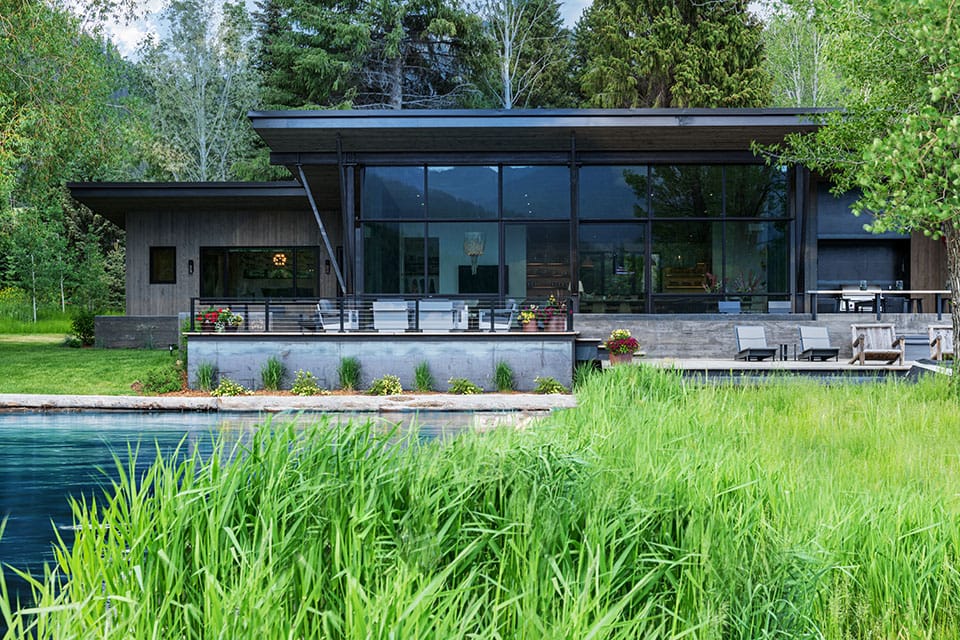
Hebgen Lake Camp | Photography, Audrey Hall
As the architect for a house on Hebgen Lake, Greg recognized that the home was not just about the location near the shore but about how time is spent near and on the water. Imagine lazy days sitting on the porch with a book. Strolling down to the dock and taking the boat out for a cruise. Kids doing laps jumping off the pier and dogs following along. Casual meals outside on the patio. Core to the design is “time well-spent.”
An important architectural consideration was how and where the family would spend their time within and outside the house. Greg Matthews says, “The bedrooms are relatively small as the focus was the communal spaces—the open plan living/cooking/dining room and exterior. The exterior design was framed by the water and vegetation. We left a massive willow tree that framed the view on one side and then an equally significant cottonwood on the other that anchored the edge of an aspen grove hugging the edge of the marina. The lake and mountains are framed like a spectacular piece of art.”
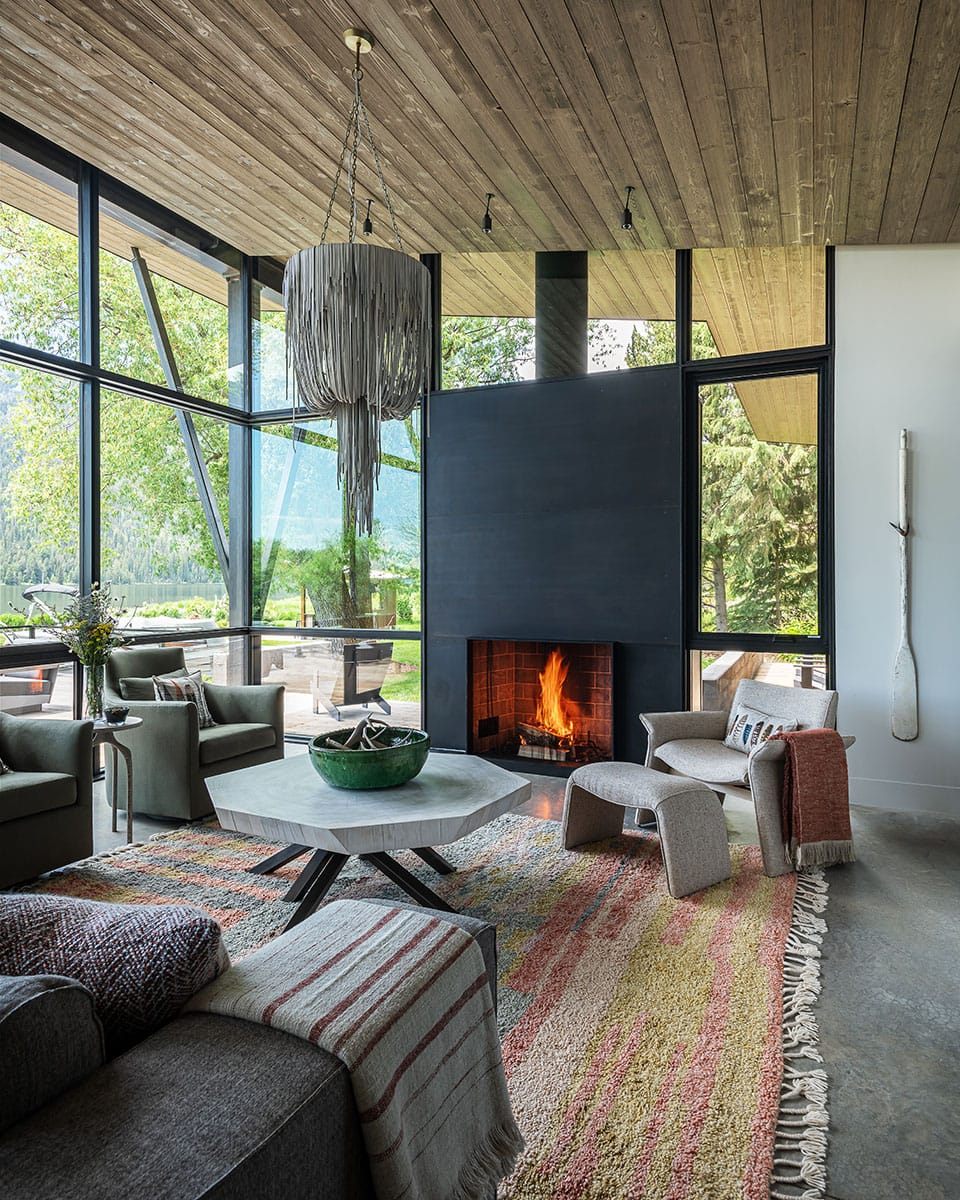
“what i love most about the living room is that despite it being a glass room, it’s a space that feels private and cozy.”
–Greg Matthews, Principal/Founder, GMS
Rain Houser, an interior designer who worked on the project with her Urbaine Home business partner Skye Anderson, says, “We all recognized that the biggest amenity was the outdoor living. When you look across the water, there isn’t a structure in sight as the views are mostly protected by Forest Service land. The dock, decks, and outdoor spaces are the epitome of a carefree summer and lake life at its finest. We worked to keep a neutral palette but with some sophisticated color combinations. The family comes to the lake to spend time outside, and the inside should only enhance that experience.”
A shared priority for the team and clients was the natural environment. Chris Lohss, owner of Lohss Contruction, says, “The property has old-growth spruce and fir trees that are pretty massive. Some of the trees are up to 70 feet tall. We heard that the trees were transplanted from Yellowstone Park over 100 years ago. The homeowners wanted to preserve as many of these trees as was possible, so that was another factor that influenced the site planning.”
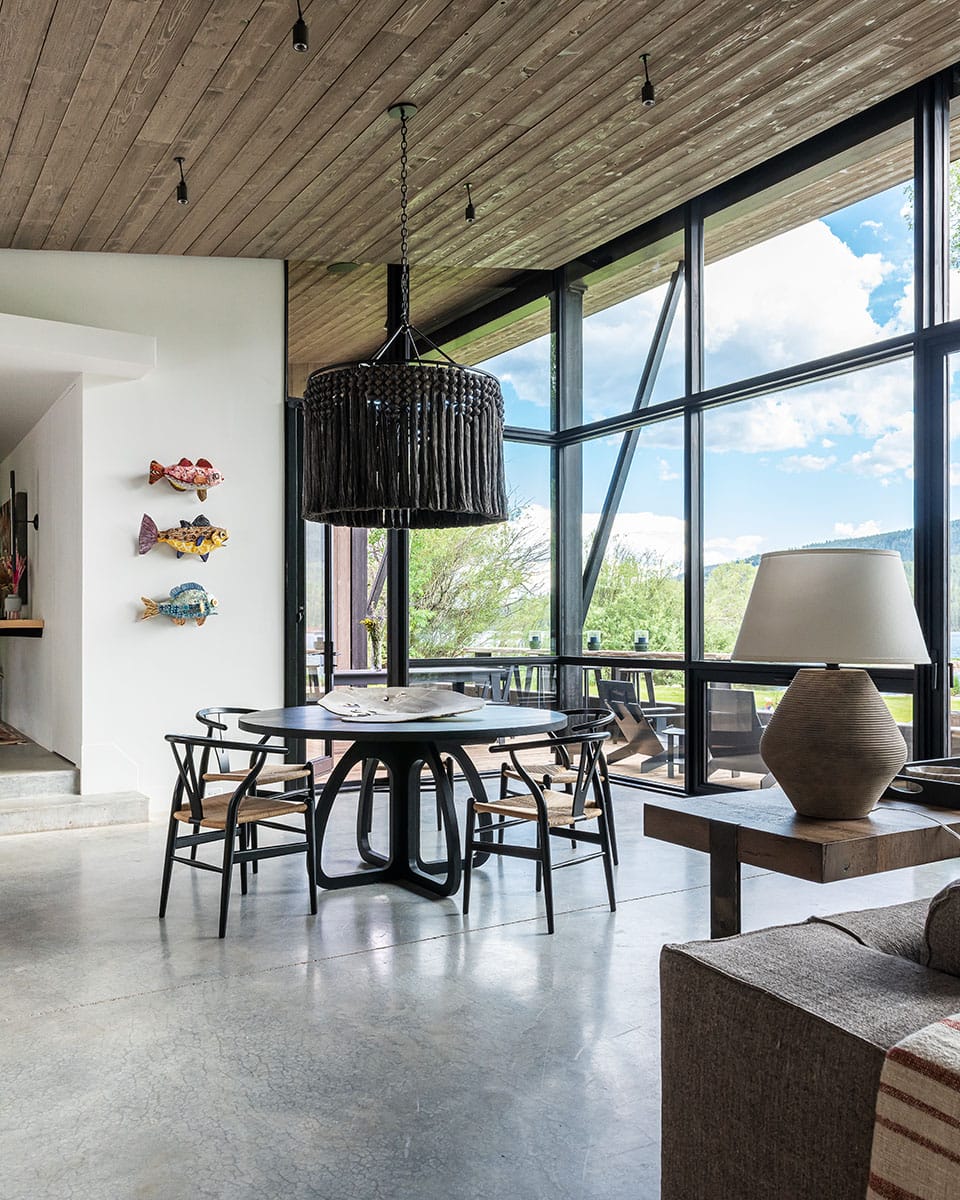
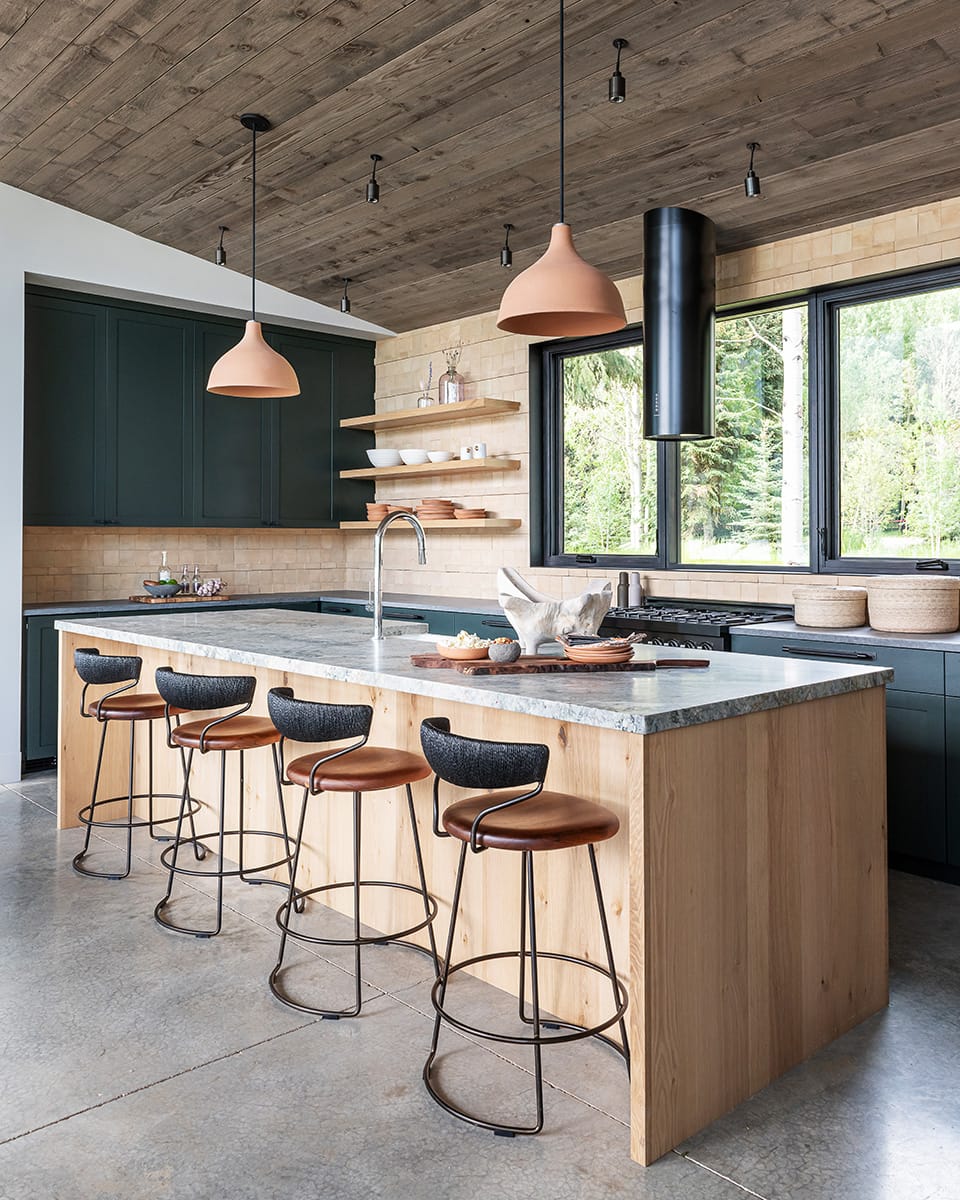
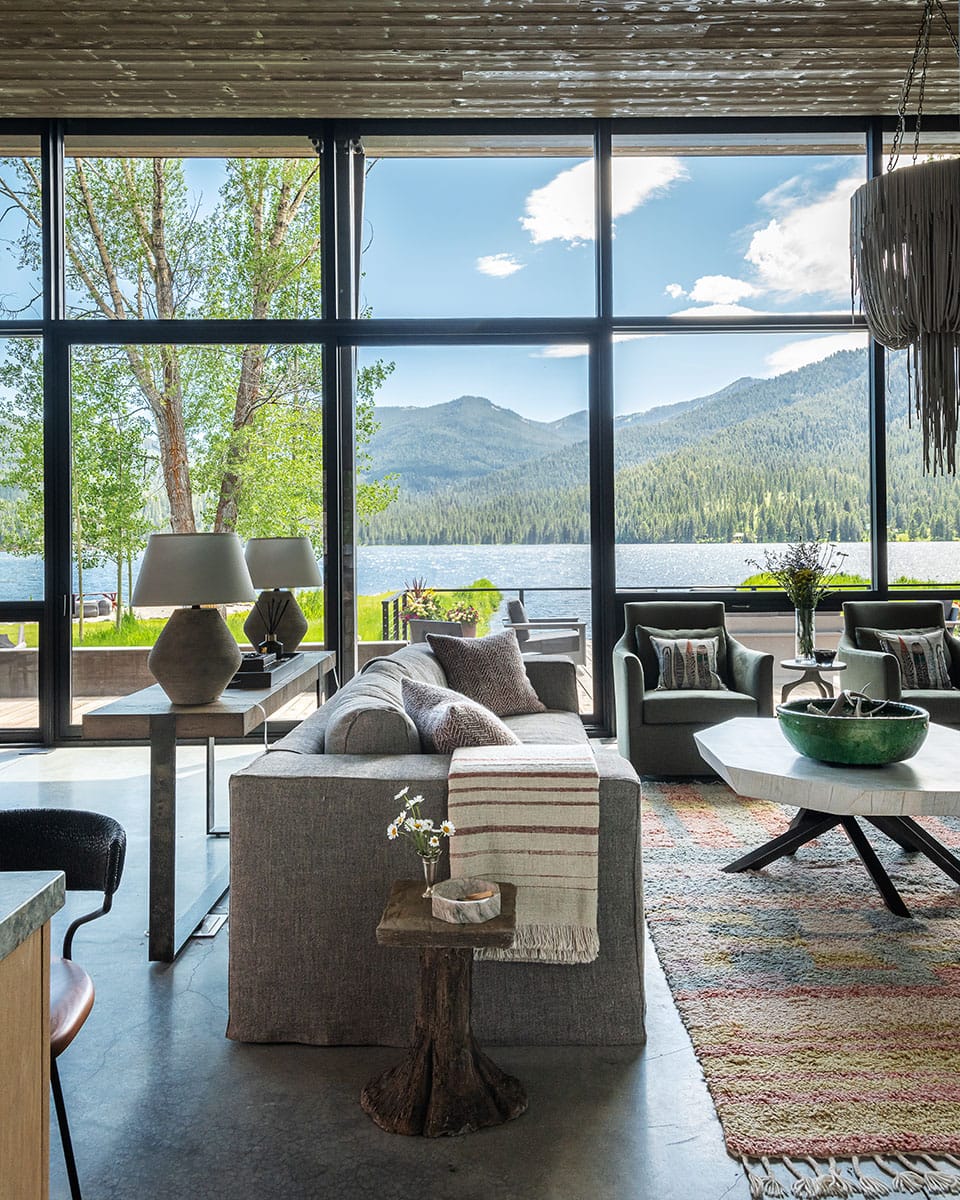
Throughout the design and building process, the interior designers, architectural team, and construction crews all were conscientious of the clients’ primary desire—relaxed family time on the lake. None of the design selections, architectural elements, or building materials were to distract from that casual and intimate environment. Greg Matthews provides an example, “What I love most about the living room is that despite it being a glass room, it’s a space that feels private and cozy. The way the fireplace is incorporated into the floor-to-ceiling glass walls provides the cozy focal point of the seating area, but doubles as a strategic feature to block out direct sight lines to the neighboring property.”
MADE FOR MEMORIES
With homeowners from Oklahoma, this Yellowstone Club home became affectionately known as “The Sooner.” Like most people who come to Big Sky, they wanted a family retreat where they could spend vacation time together, easily access the slopes, relax outdoors, and enjoy casual drinks and meals in the company of each other and guests. While these desires are typical, every client has specific requests, every piece of property has unique design challenges, and every family has different ideas about how memories are made.
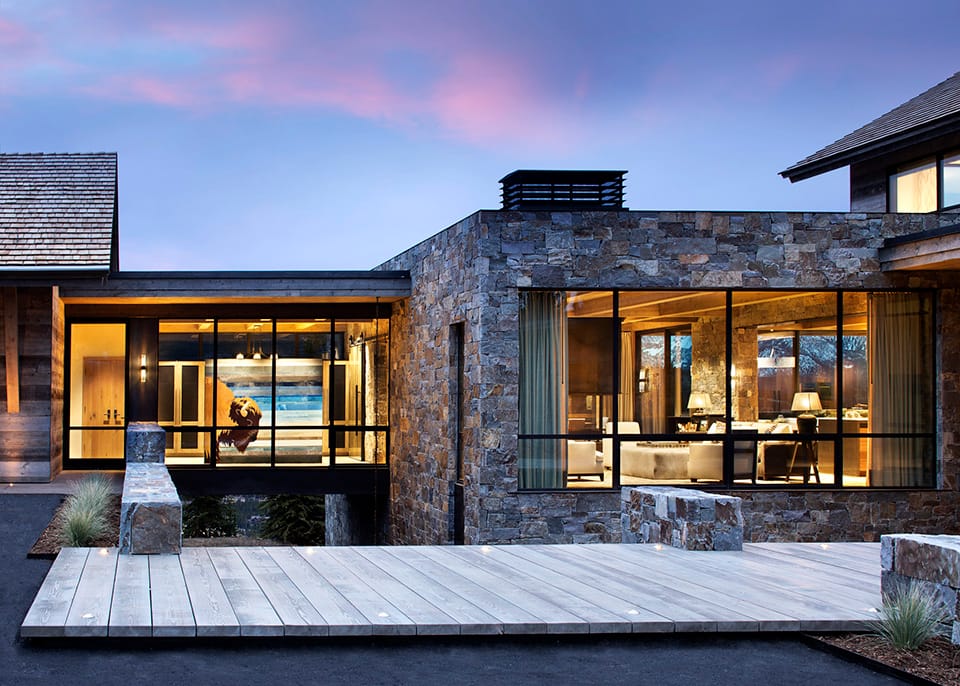
THE SOONER | Photography, Peter & Kelley Gibeon
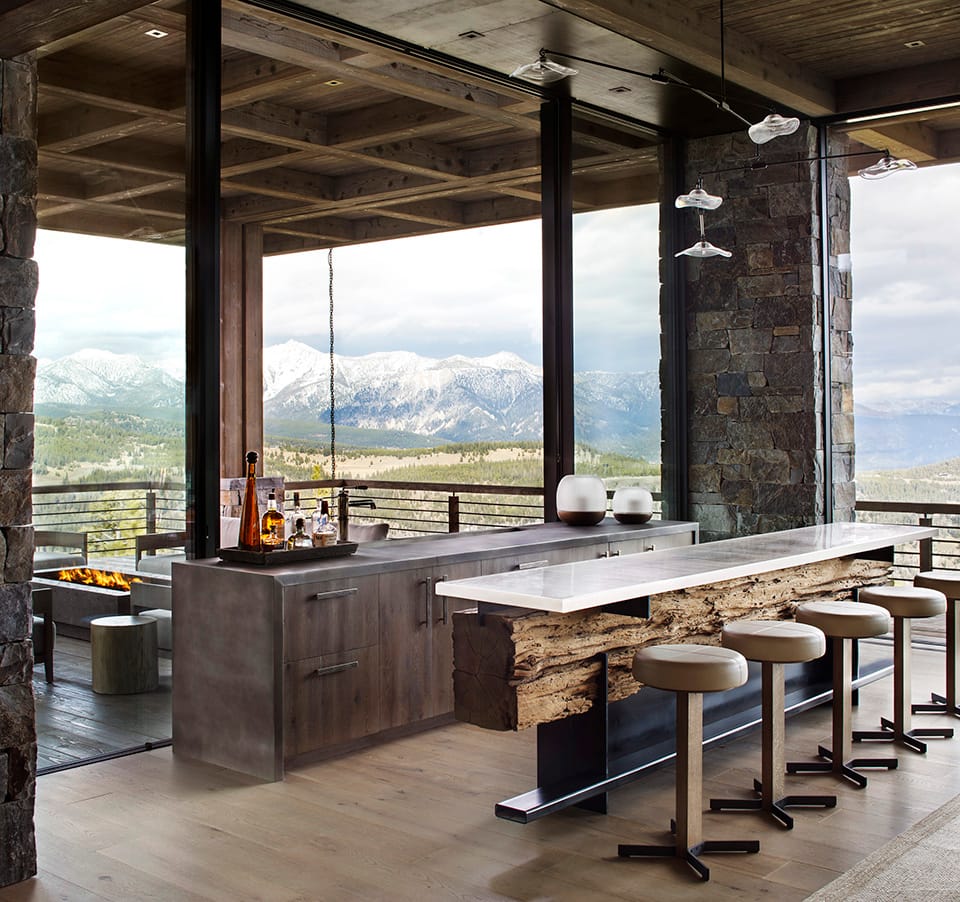
Allison Wilfling of Highline Partners, the home’s builder, says, “As the project manager, I function like the quarterback of the construction process. Everything flows through me. Greg Matthews brought a bunch of creative ideas to the project that were very specific to ‘the Sooners,’ and we had to figure out the constructability of them. One noteworthy ‘cool architectural moment’ is the bar.”
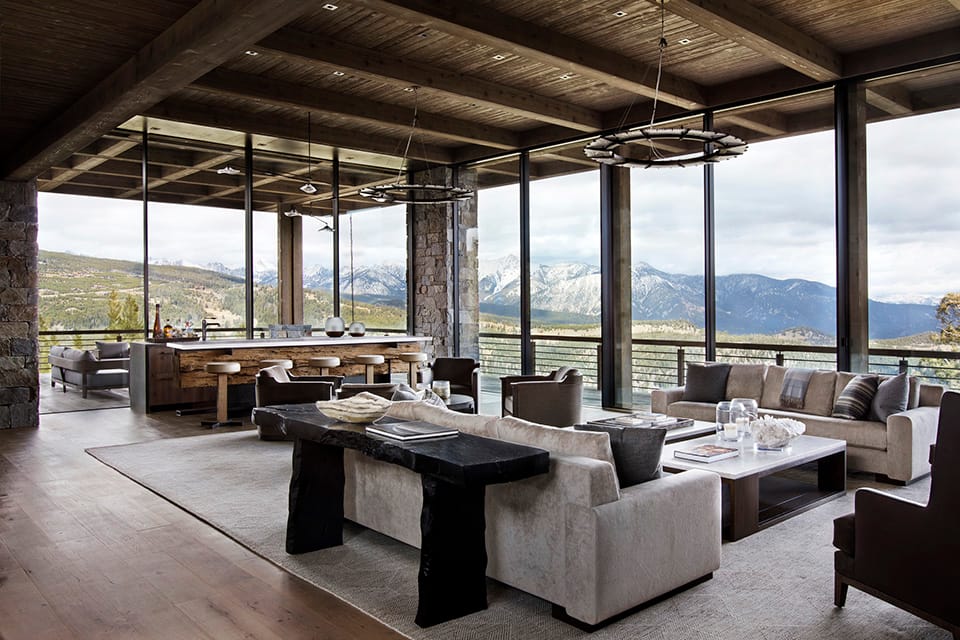
In order not to interrupt the views, Greg Matthews designed a bar without a bar back. Instead of a bar back, Greg left the space open with large windows. The service area is a long counter with glassware, bottles, and refrigeration underneath so as not to cause a distraction from the real bar back—views of the Gallatin Range.
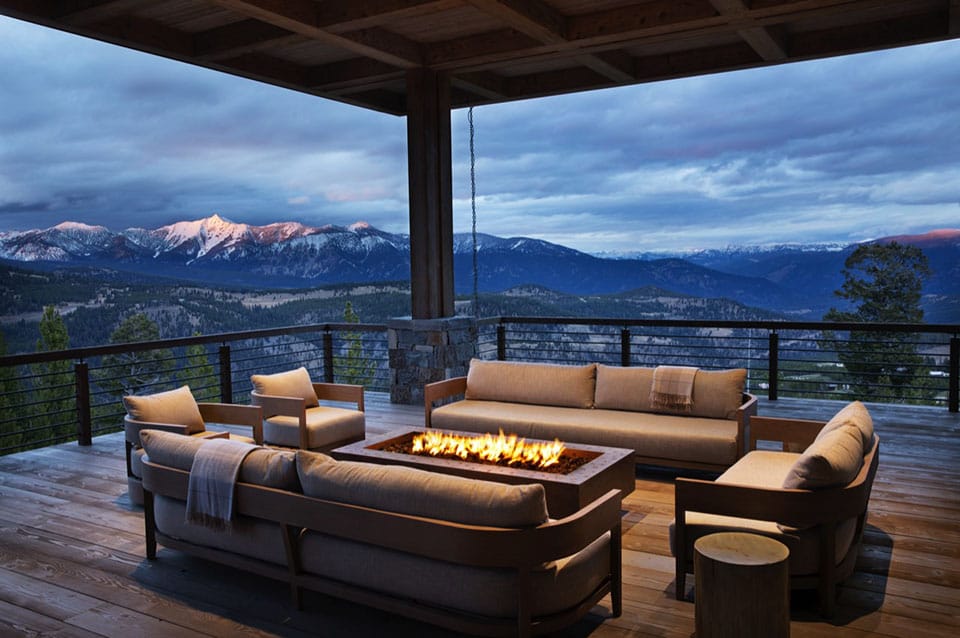
“As the project manager, I function like the quarterback of the construction process. Everything flows through me. Greg Matthews brought a bunch of creative ideas to the project that were very specific to ‘The Sooners,’ and we had to figure out the constructability of them. One noteworthy ‘cool architectural moment’ is the bar.”
–Allison Wilfling, Project Manager, Highline Partners
The base of the bar counter, where people sit, is customized steel. Mike McGee of Integrity Builders integrated the steel base with an old, beat-up, reclaimed timber from a pier. To preserve the character and ensure durability, the timber was treated and sealed with a coating. The 1,000-pound glass top was fabricated by Ona Magaro of OM Design and clear so while sitting at the bar, one can look through the top and appreciate the intricacies of the wood and its incredibly unique character.
Allison says, “This one piece, a bar, required thoughtful and precise co-ordination of a steel fabricator, skilled carpenter and woodworker, and glass artist. This is just one piece and there is a multitude of examples throughout the home.”
The thoughtfulness of the design extended to elements that aren’t always visible. Audio systems, video displays, lighting controls, temperature monitoring, and automatic shading were installed throughout the house. Nels Tate, a technology sales advisor at SAV Digital Environments, says, “Collaborating with the Greg Matthews team is always inspiring because of their relentless pursuit of detail and experienced aesthetic. We at SAV work to be involved from the earliest stages to ensure technology is seamlessly integrated, aligning performance and experience with the architectural vision. Together, we focus on a holistic approach, often introducing unique and emerging technologies so the result is both beautifully executed and tailored to how clients truly want to live.”
The architecture, interior design elements, customized pieces, and technology all work together to create something invisible—lasting memories.
“If Greg gets unconventional or novel ideas during the process, he isn’t afraid to offer clients something that challenges them. He encourages this same type of creative thinking to the staff.”
–Brent Holzer, Project Architect, GMS
FOUR, THREE, TWO, ONE.. ARCHITECTURAL DIMENSIONS COALESCE
At Greg Matthews Studio, the architectural design process isn’t rigidly sequential. While projects do have stages of development and defined milestones, ideas freely flow as the GMS team and partners keep the ultimate objective in mind—the homeowners’ use of time.
Brent Holzer, an architect as GMS, says, “Every project we do is unique and evolves with dialogue between the clients and the team at GMS. If Greg gets unconventional or novel ideas during the process, he isn’t afraid to offer clients something that challenges them. He encourages this same type of creative thinking to the staff. The result are homes with their own identity, that tell stories through their architectural moments.”




Designing and building homes at this level can literally require hundreds of people, from the engineers to the fabricators to the finish carpenters. Whether it’s big-picture comprehensive concepts or determining the dimensions of the bathroom tile, the information flows through the architectural firm. Greg Matthews says, “To have a project be designed and executed at this level requires cohesiveness among all the contributors. The architect functions as the common denominator. The landscape architect needs to be talking to the builder. The lighting designer needs to be working with the interior designer. The client is central to all decisions. All this communication flows through the architect. If that breaks down, it all breaks down. Complications and problems will always arise, and our years of experience have taught us ways to navigate them…as smoothly and graciously as we can.”
When a project is complete, the construction crews are gone, and the architect has moved on to another project, what remains is a house, a three-dimensional assembly of steel, stone, wood, and glass. What also remains is a home, a structure with layers of architectural moments where its occupants, consciously or unconsciously, move through space with an enhanced experience of time.
whj COVER FEATURE
