
Listen to our Spotify podcast about this article:
by Michele Corriel
To understand the work of oil painter Amber Downs Blazina is to understand Montana. Her work reflects her connection with grow-ing up in eastern Montana, between Glen-dive and Circle, and her appreciation of the land. As the philosopher Yi-Fu Tuan notes, to truly know a place is to experience it on a daily basis. No one can know a region by simply passing through. This kind of deep knowing about place informs Blazina’s art.
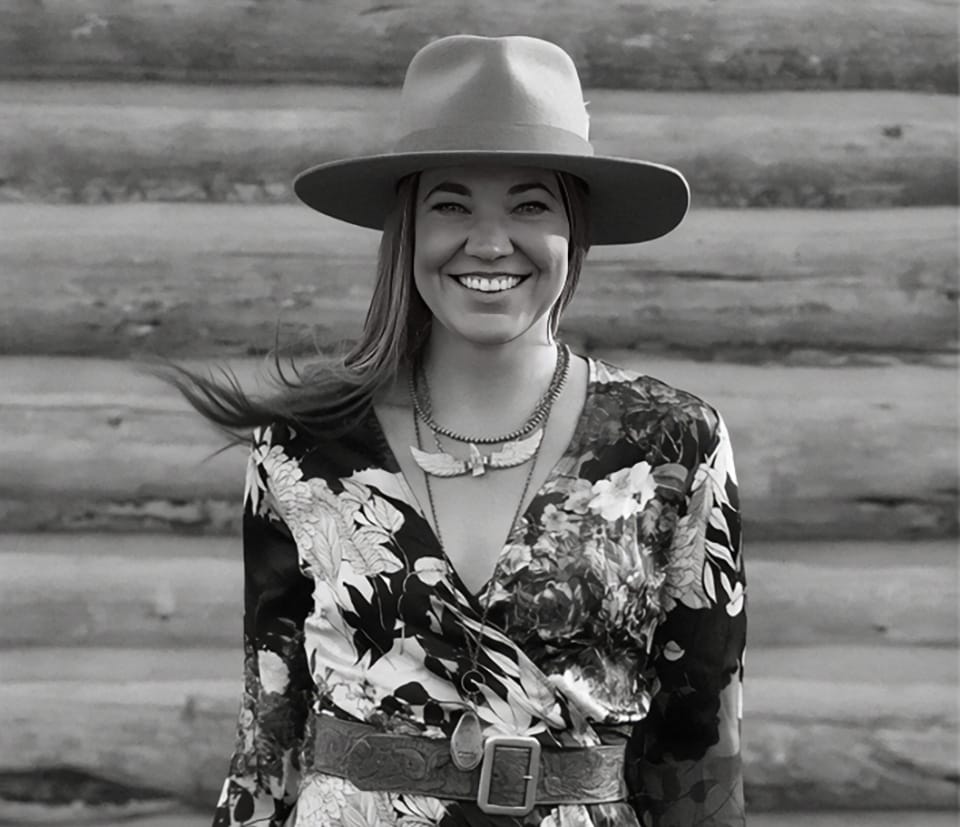
“I was raised on a farm,” she says. “We were very secluded, and I went to a two-room elementary school.” For some, that may have been a drawback, but for Blazina it allowed her teachers to focus on her interest in art from a young age. “Growing up on the plains you have to search for beauty.”
MEDITATIONS ON NATURE
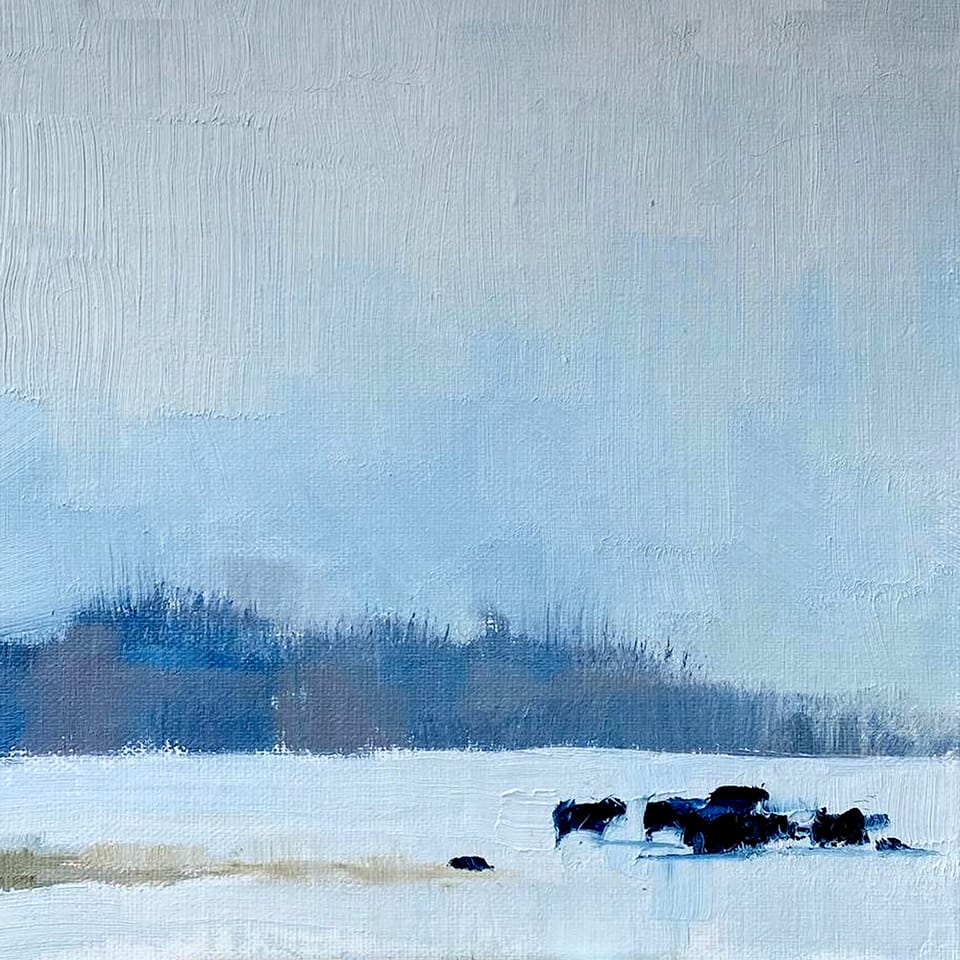
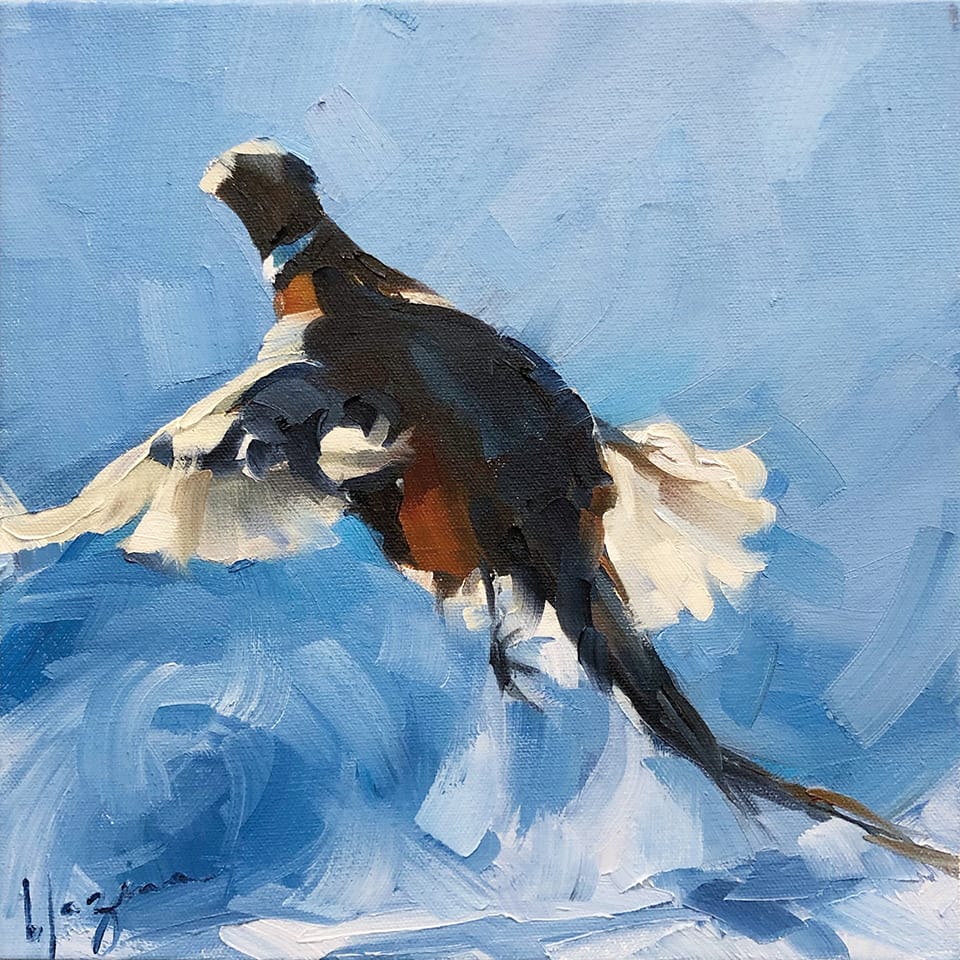
Whether it’s pheasants on the snow-covered ground or sunlight through trees, these moments define the idea of place and the narrative of Montana. In her painting Feeding Time, the heavy blue sky, frigid with expectation, seems to rest upon the shaggy winter pines, as the black angus gather. The snow, not yet trampled underfoot, broods like fog. Blazina offers up a slice of daily life, a moment so familiar it feels almost newly discovered. Her brush-strokes come down hard on the trees. Her simple observation of cattle rings with authenticity.
Having already found a comfortable spot in the Western art world, it would be easy for Blazina to continue to rely on those compositions that sell, the ones basically made for gallery windows. Instead, she understands that to evolve, she needs to let go of those things that keep her anchored.
“My art career took off during Covid, when there was an influx of people moving to the West. I was lucky to be busy and in demand, but I found myself falling back on the paintings that sold before,” she says. “There is a fine line to walk between staying relevant with your existing clientele and pushing boundaries to keep a creative edge. I really want my art to keep growing and not be static. I want to make art that has tension and movement.”
One of the hardest lessons for any of us to learn is when to go all-out and when to sit back, let the world go by, and contemplate your toes. For some of us this is a bit harder.
“After developing an autoimmune disease in 2023, I have been given the opportunity to relearn how to walk this path of an artist with more grace and intentionality,” she says. “How do I honor my heritage and history of growing up in the West, here in Montana, while adhering to more modern views on painting?” Back when she started painting, her work was really loose, mainly focusing on wildlife and some landscapes. “After I got into high-end galleries and museum shows, I found myself working tighter and more rigidly because I was internally judging and comparing myself to other more traditional Western artists. Interestingly, now that I’ve achieved that level of detail that I forced myself into, I’m un-learning those habits, just as I had done nine years ago when I started painting, to take me back to the freedom of loose expression.”
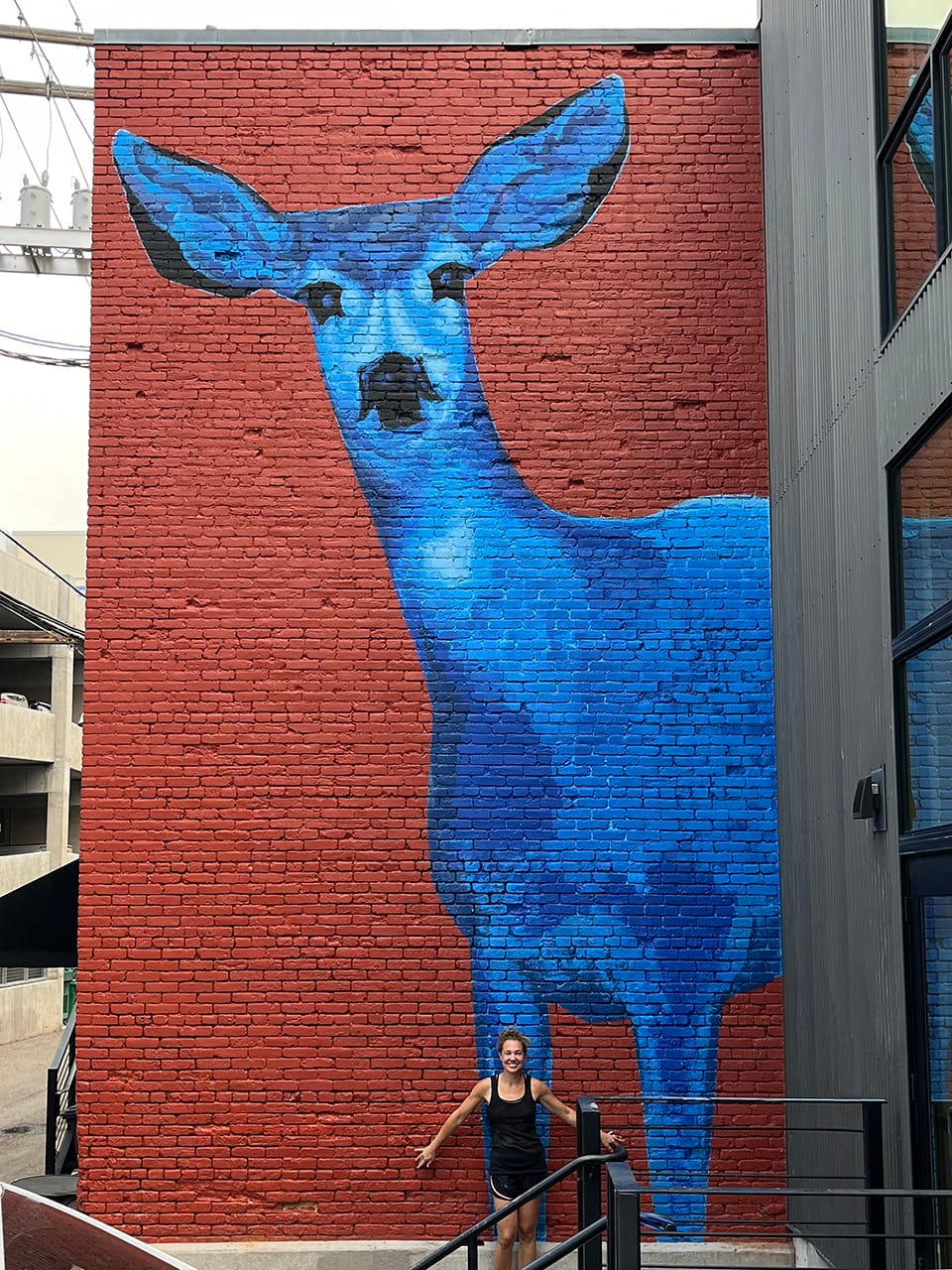
“There is a fine line to walk between staying relevant with your existing clientele and pushing boundaries to keep a creative edge. I really want my art to keep growing and not be static. I want to make art that has tension and movement.”
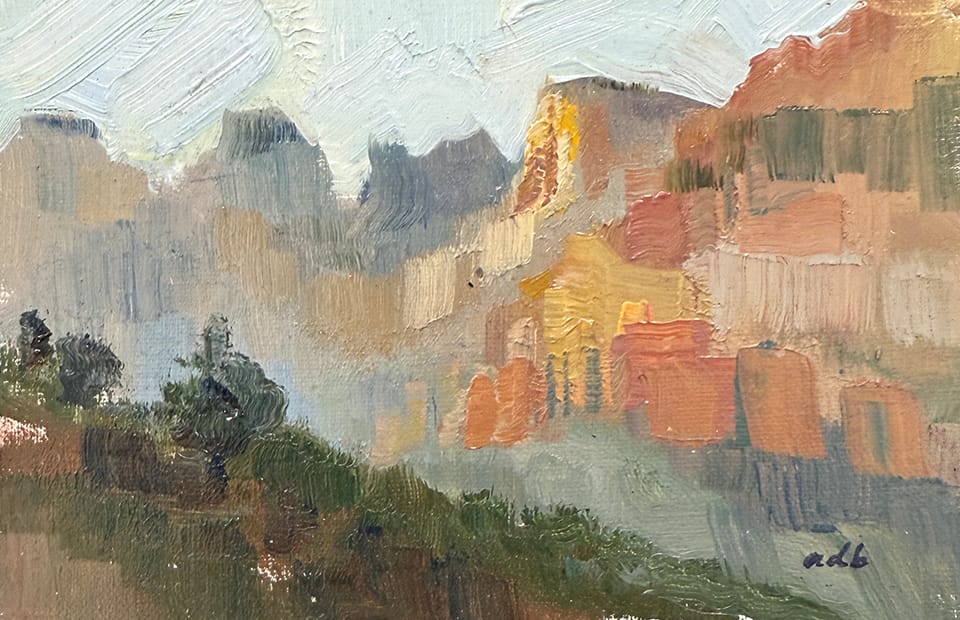
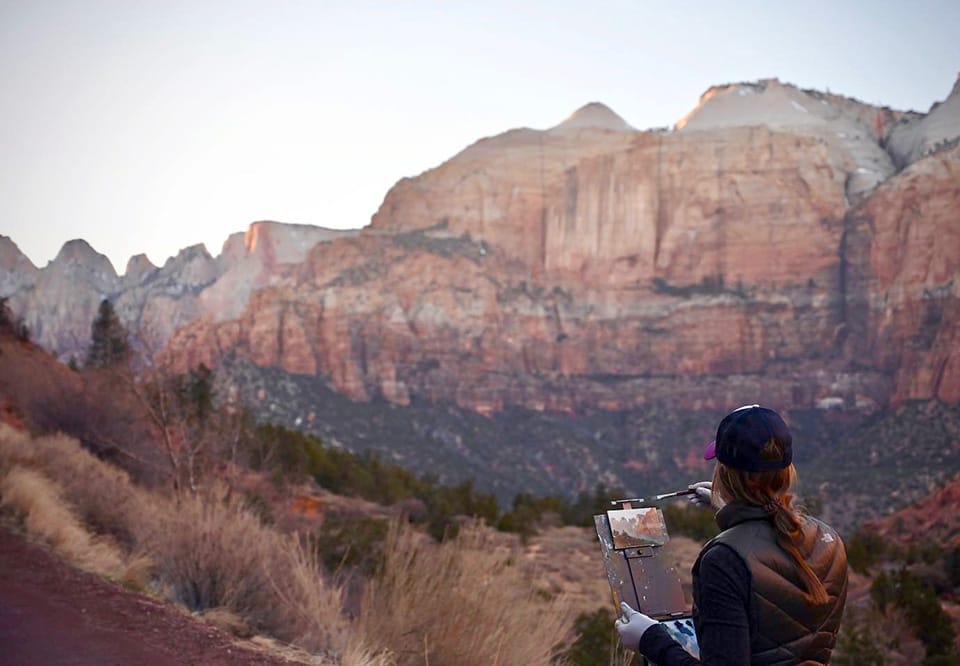
“Loose expression” is something that Blazina does in her plein air piece Zion Sunset. It is as if the freedom of outdoor painting saturates her brush. The square brushstrokes evoke the style of Cezanne’s St. Victoire series. The patchwork colors enliven the painting, bringing the foreground into focus, while the ghosting outcroppings fade politely into the background. The piece is so loose yet so right—conveying the beauty of Zion with the immediacy of the experience of standing amongst giants.
When Blazina first began to take her career as an artist seriously she remembers looking for contrast and interesting shapes everywhere.
“When I was a kid, I’d spend hours looking out of the windows of the car, counting fence posts, looking for the contrast of animals or trees in the fields and pastures we passed,” she says. “That kind of curiosity really stuck with me. It’s a habit I don’t even notice, scanning for color and shape and movement and balance in the landscape; I get so excited when a beautiful and interesting scene catches my eye.”
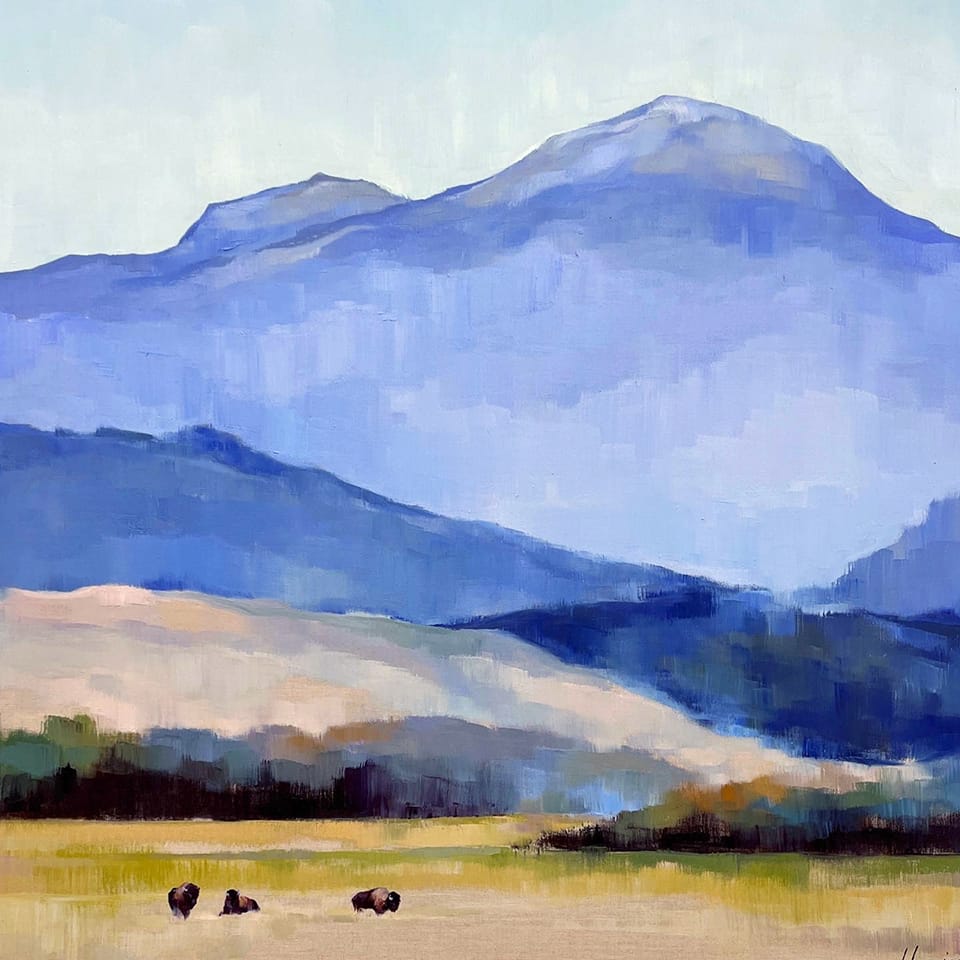
Her cameras fill with images and once home, she pulls them into her computer to contemplate.
“I’ll open the interesting photographs in Photoshop and look for different layouts that I think best conveys the scene’s energy,” she says. “The majority of the photography focuses on Montana’s wildlife. The most dynamic photos tend to capture a pause before their movement and I really appreciate that second of contemplation, right before instincts kick in. There is such a pureness and authenticity to animals that I absolutely love to witness.”
In some ways Blazina wishes she could depend more on her own instincts and not overthink the creative process.
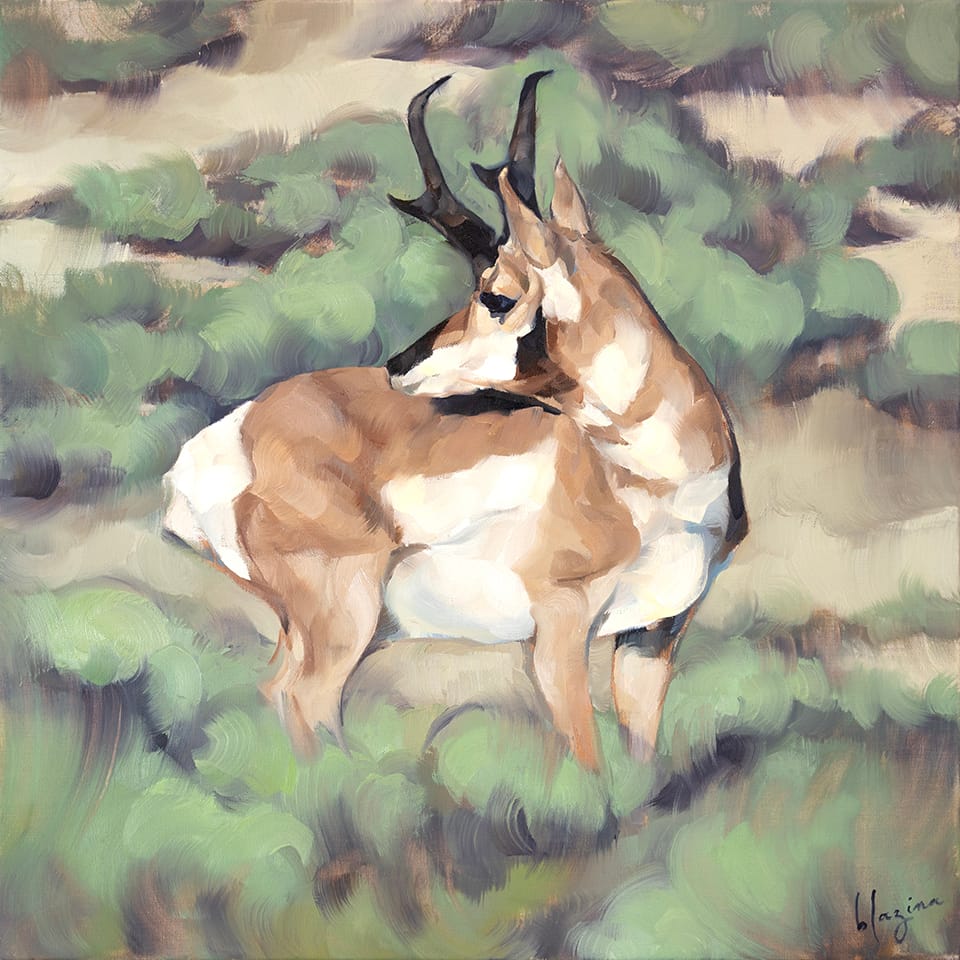
“I am notorious for over-analyzing, and I’m envious that animals live present in the moment,” she says. “After something traumatic happens to an animal, say they are almost attacked, after the fight or flight they are able to regulate themselves and come back to their normal state, sometimes just by shaking their body to help it reset.” That simple act of remaining present and not getting wrapped up in story is something she thinks humans can learn from them.
“Dysregulation of the nervous system leads to disease and the breaking down of relationships as people often lash out at others to make themselves feel better, to tamper the intense discomfort inside of them,” Blazina says. “I believe learning to regulate ourselves is the ultimate goal, something that animals do by pure instinct.”
Before starting a new painting Blazina stands in front of her blank canvas and waits.
“My most authentic paintings have come from pure instinct, acting on the feeling that was given to me, and definitely not from imposing my will onto the painting.”
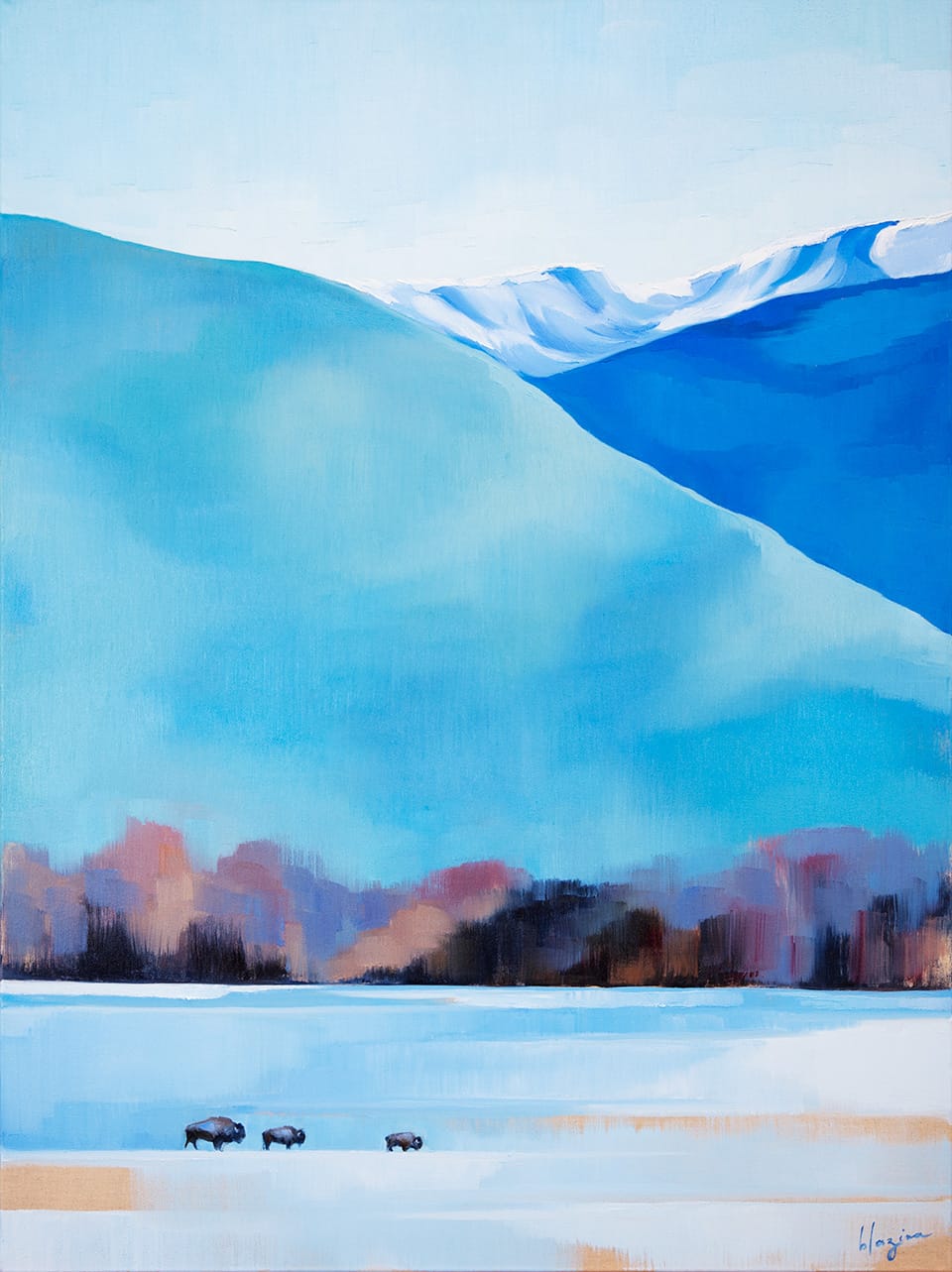
“I find that sometimes the canvas will talk to me and tell me to use a specific photograph or the photograph talks to me and tells me which canvas to use,” she says. “When I’m painting outside, en plein air, I call that ‘recess.’ Some of these quick studies end up becoming bigger pieces in the studio, which was the case with Fall in the Madisons and Morning Trek, but I try not to place that pressure on these small canvases so I can keep the playfulness and freshness alive.”
She ends up visiting the same area to set up and paint because it’s quiet and safe for her to take her dog along.
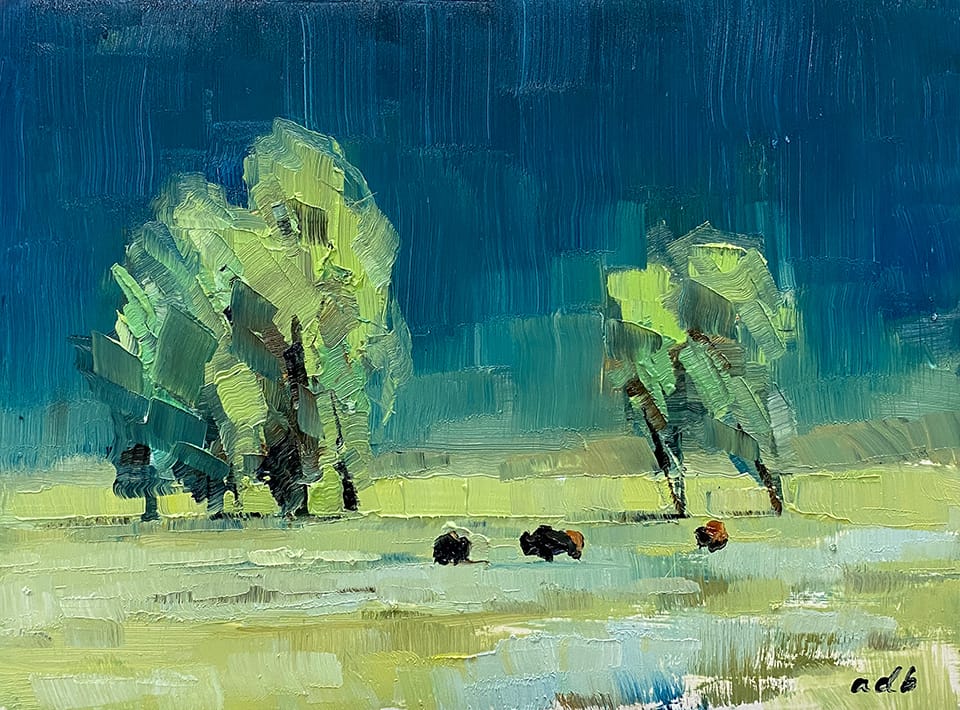
“I am a little obsessed with painting trees without actually ‘painting trees,’” she says. “How can I use the brushstrokes in new and different ways so that people can interpret a tree from a different perspective?”
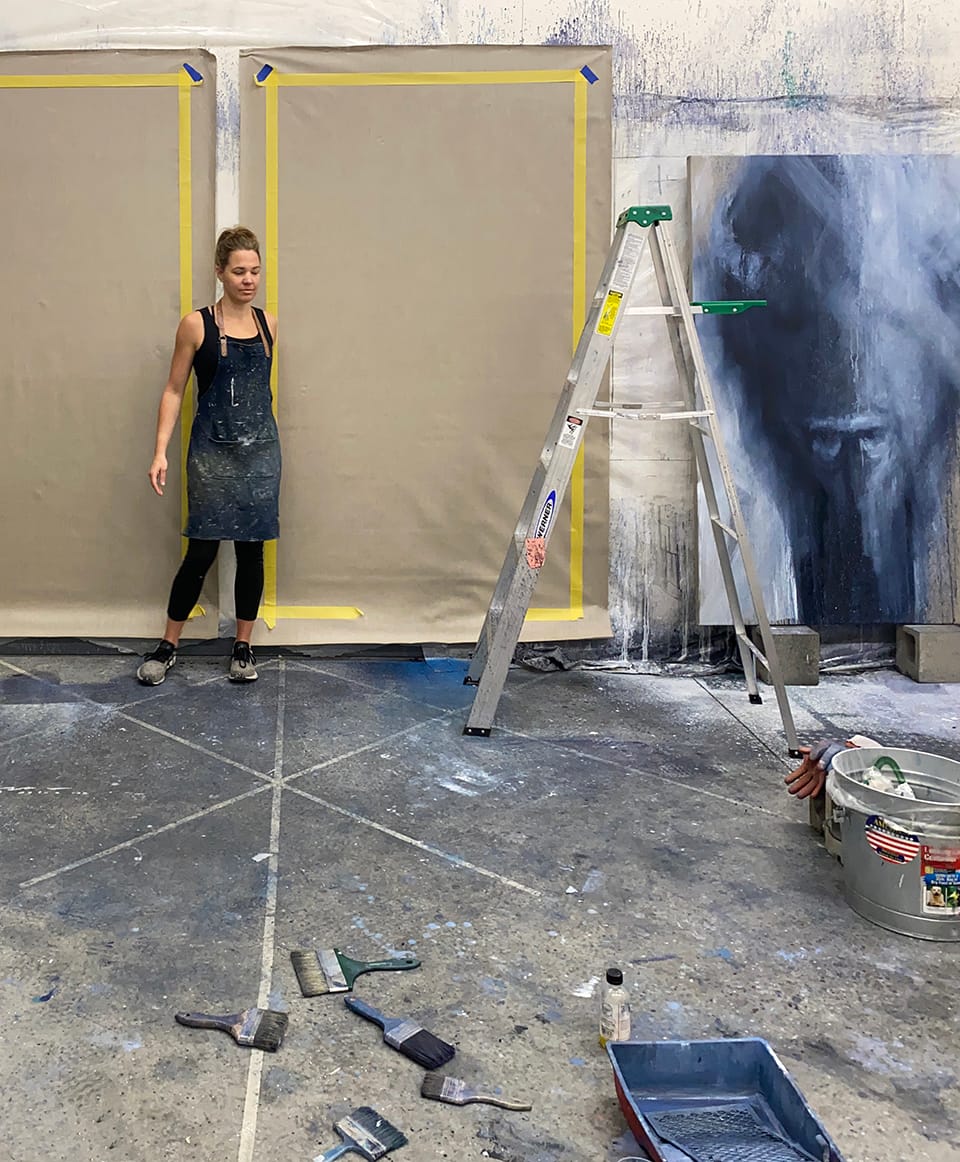
While to some, it may look like she is painting “the same thing over and over,” she is instead observing her own process, learning more about the ideas she may be imposing on the subject, an exploration of style and perception.
“I’m refocusing on finding the freshness in my work,” she says. “There came a point where I was not letting myself play with the paint, and I had to get out of my own way this last year. I started meditating again; it helps give my brain space for the muse to visit, and I’ve taken it a step further by also doing the morning pages.”
Morning Pages is an artist exercise from Julie Cameron’s The Artist’s Way, a book first published in 1992 that has become a staple for artists ever since.
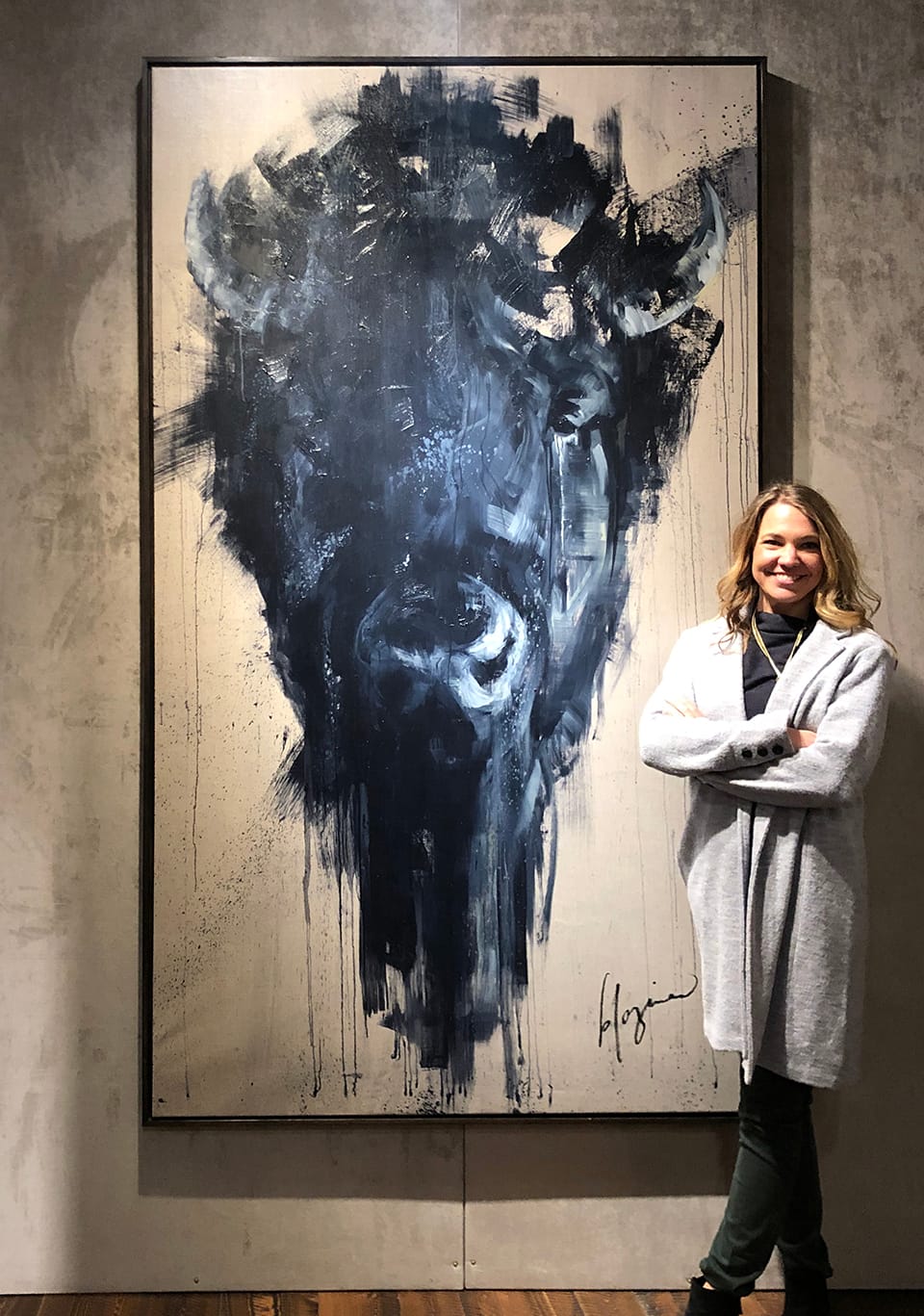
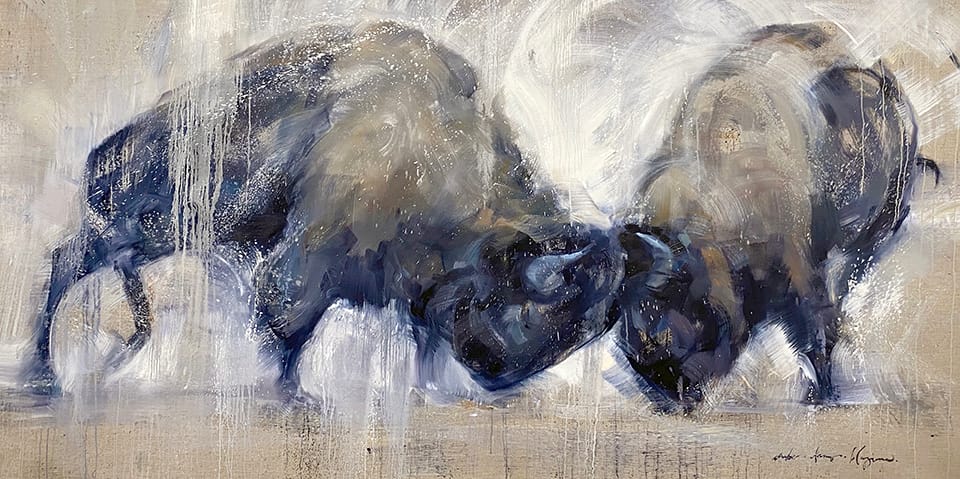
“I work with more connection to my subject when I’m not stuck in my thoughts. Not only does meditation and journaling help with confidence and trust in myself, but it also calms the monkey brain, so I am comfortable being present in the moment and become the conduit for those good ideas and luscious brushstrokes to come through,” she says. “My most authentic paintings have come from pure instinct, acting on the feeling that was given to me, and definitely not from imposing my will onto the painting. We learn in our formative years to push and try harder to achieve, and I’ve come to understand that it’s not forcefulness that produces good artwork, it’s learning how to soften and surrender my mind to the present moment that creates the best pieces.”
whj FEATURE
