
Listen to our Spotify podcast about this article:
By Jenny Walton
In the walkable grid of downtown Whitefish, where neighbors greet one another on morning runs and evening strolls, a house with history has been given new life. At just over 2,000 square feet, this Sears & Roebuck home—one of many scattered across Montana’s railroad towns—carries the legacy of a couple’s shared life. However, after a life transition, the homeowner turned to Hunter & Company Interior Design, a Whitefish-based firm celebrated for balancing character with livability, and gave them the freedom to reinterpret the house as a reflection of the life he leads today.
A New Chapter for a Montana Classic
The request was clear yet deeply personal: to create a home that feels warm and inviting. A place where he could entertain friends, walk to dinner downtown, and return to spaces that offered both solace and connection. Within nine months, Hunter & Company, working alongside contractors Ivars and Janis Grinbergs, known as the Duke Brothers, delivered a transformation that speaks to design integrity and the craftsmanship that defines a true Montana classic.
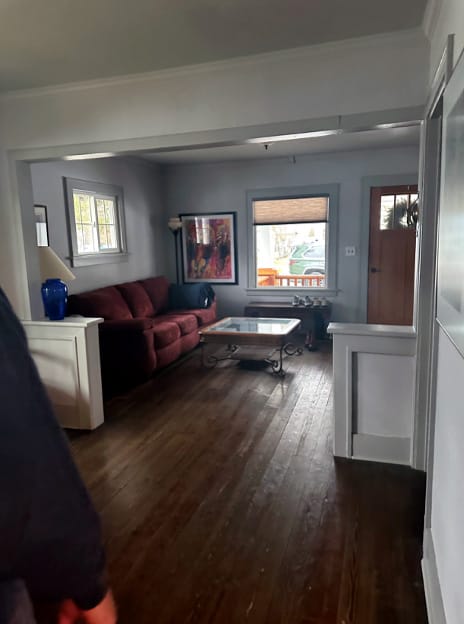
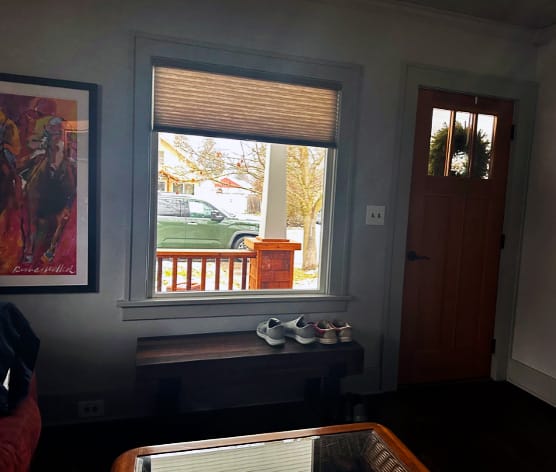
The design team approached the home with reverence. “We wanted to update the house without taking away from its character,” Kay Sherman notes, reflecting on the many historic homes in Whitefish that risk being modernized beyond recognition. Here, the task was to update without erasing, so they opened up the floor plan, removed dated pony walls, and gave the first floor a more intuitive flow. What emerged is a series of connected spaces that feel generous and light-filled while still grounded in the modest scale of the original structure.
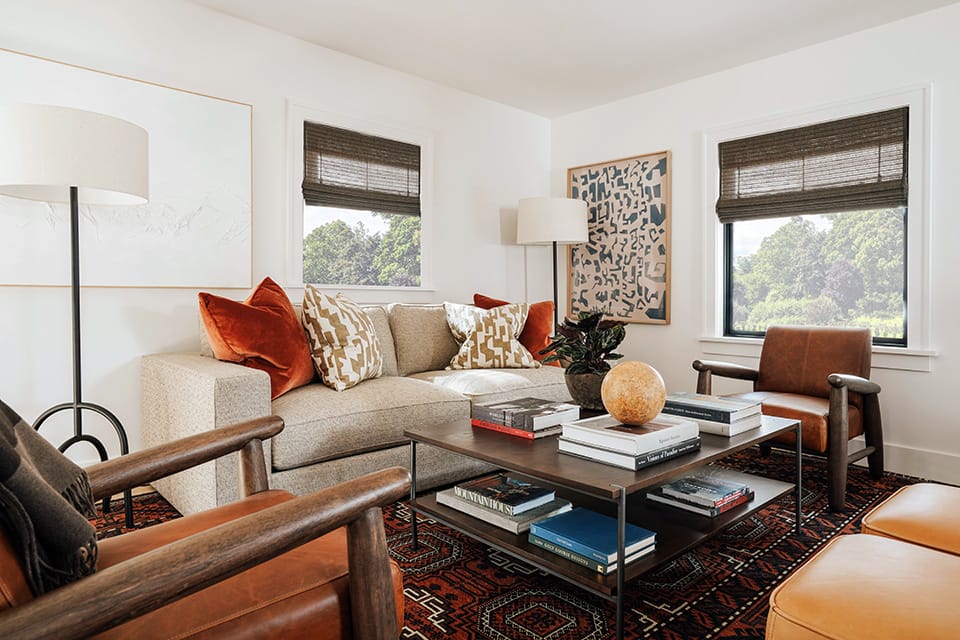
In the great room, comfortable seating and a sense of openness create a welcoming environment. Leather chairs and seagrass window treatments lend a masculine edge softened by natural warmth. It’s a room designed for conversation or reflection, ideal for gatherings, yet serene enough for solitude. Two words could describe this room: easygoing and friendly.
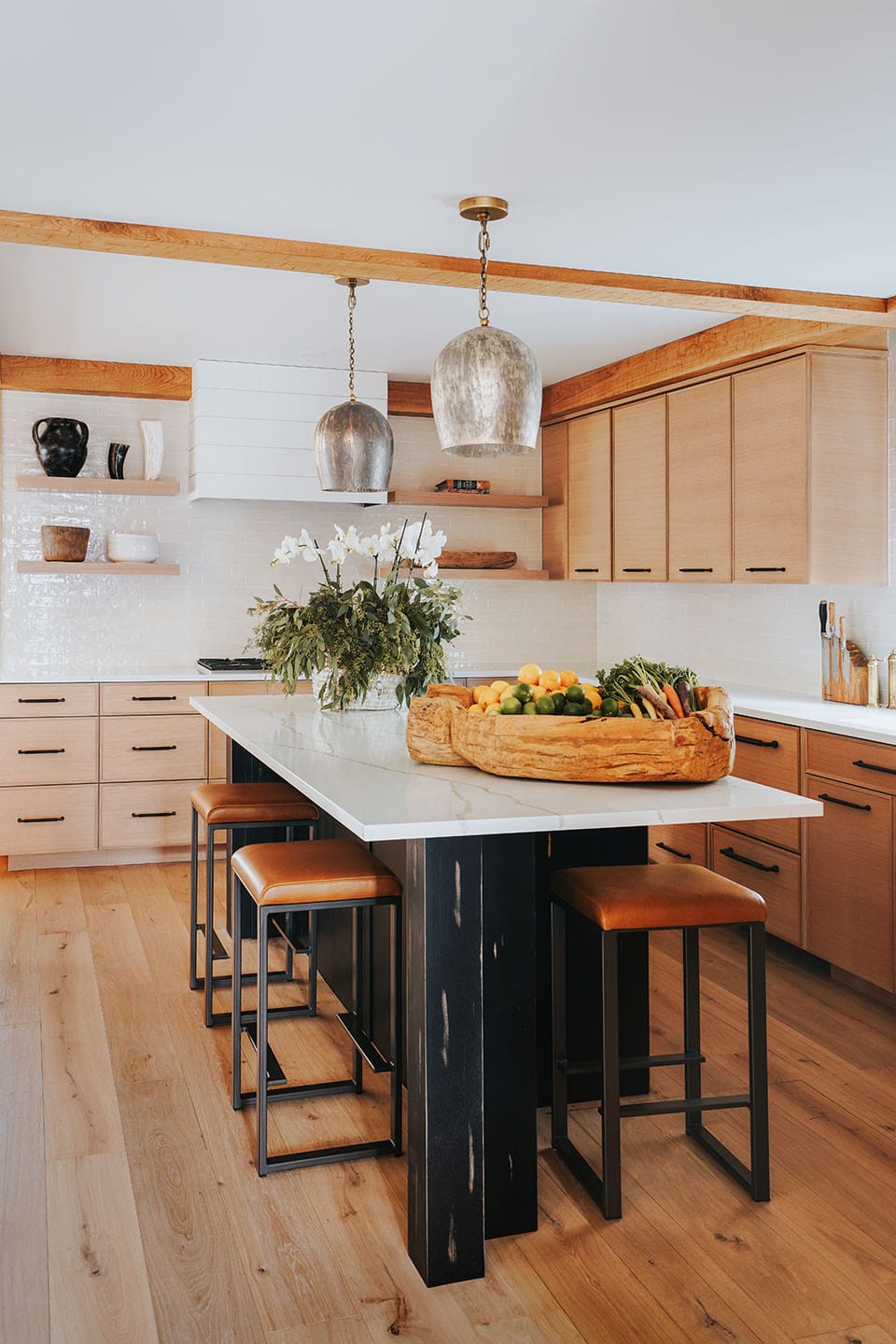
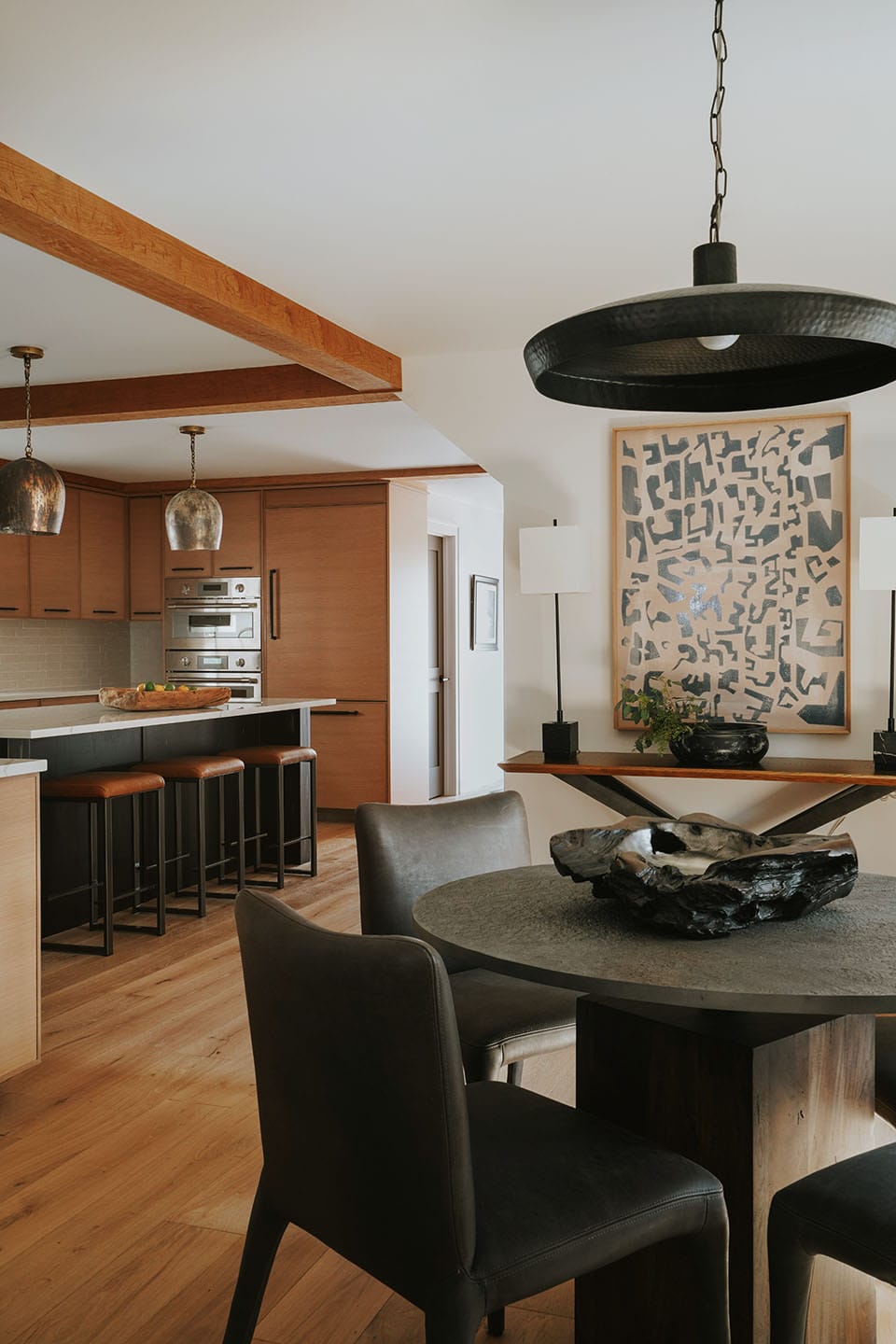
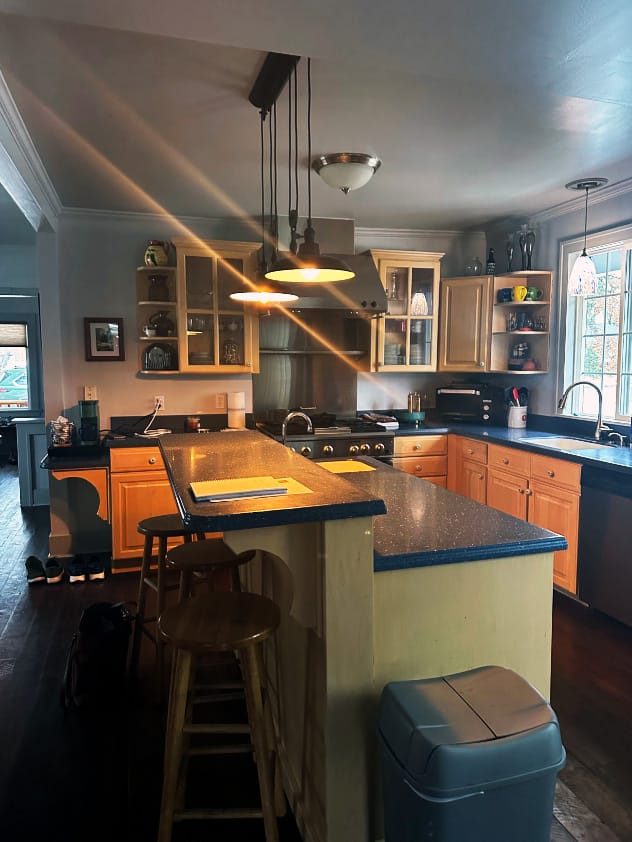
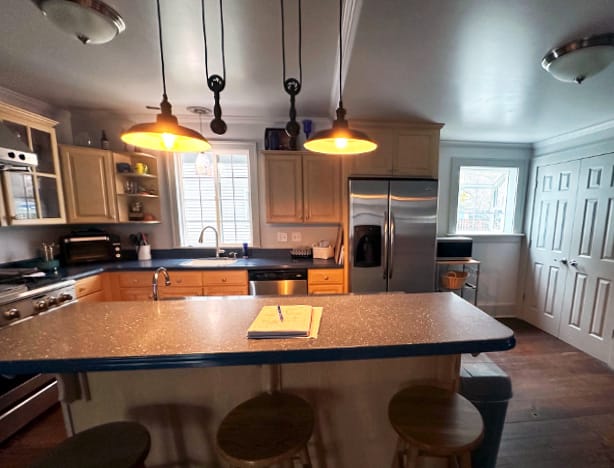
Yet the greatest surprise awaits. No transformation was more profound than in the kitchen. Previously cut into awkward sections by an ill-placed door and window, Hunter & Company and the builders reimagined the entire space by expanding its footprint and extending cabinetry. The result is a kitchen that feels generous without being ostentatious, all while honoring the historic Craftsman style of the home.
BEFORE:
“We wanted to update the house without taking away from its character.”
–Kay Sherman, Interior Designer Hunter & Company Interior Design
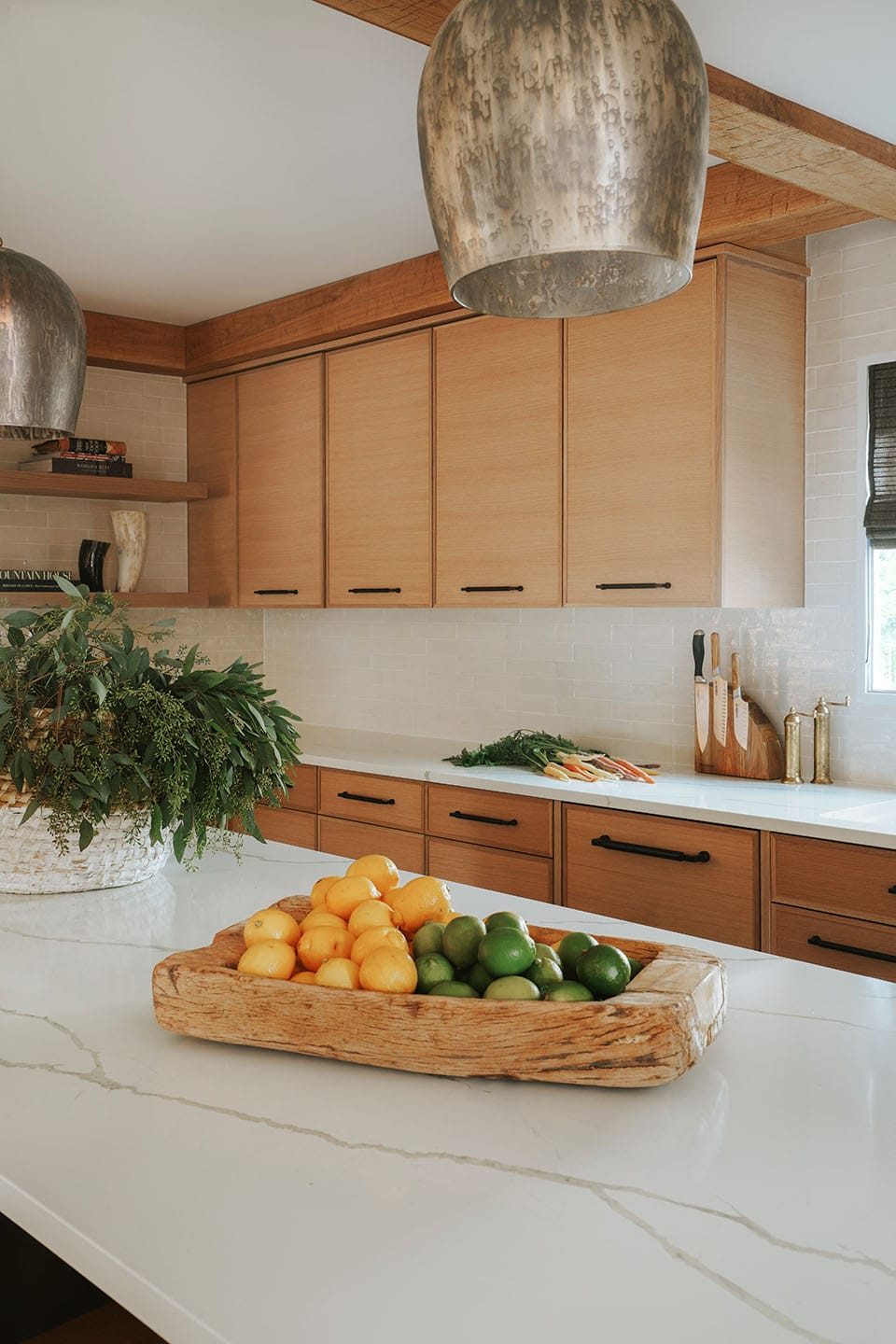
At its center, a dark-stained island contrasts the pale flat-panel cabinetry that keeps the energy light. A backsplash of classic white subway tile nods to the home’s early 20th-century character, while open shelving on either side adds a touch of modern informality. Overhead, sculptural pendant lights—bulbous and shimmery—float like punctuation marks above the island, their glow juxtaposed by a striking black disc fixture in the dining room. Together, these elements, in addition to the ceiling details, create a dialogue between kitchen and dining room, a balance of modern utility and historic respect. This is a kitchen ready for company. “It was about making the kitchen look and feel bigger and better without overpowering the house,” says Sherman.
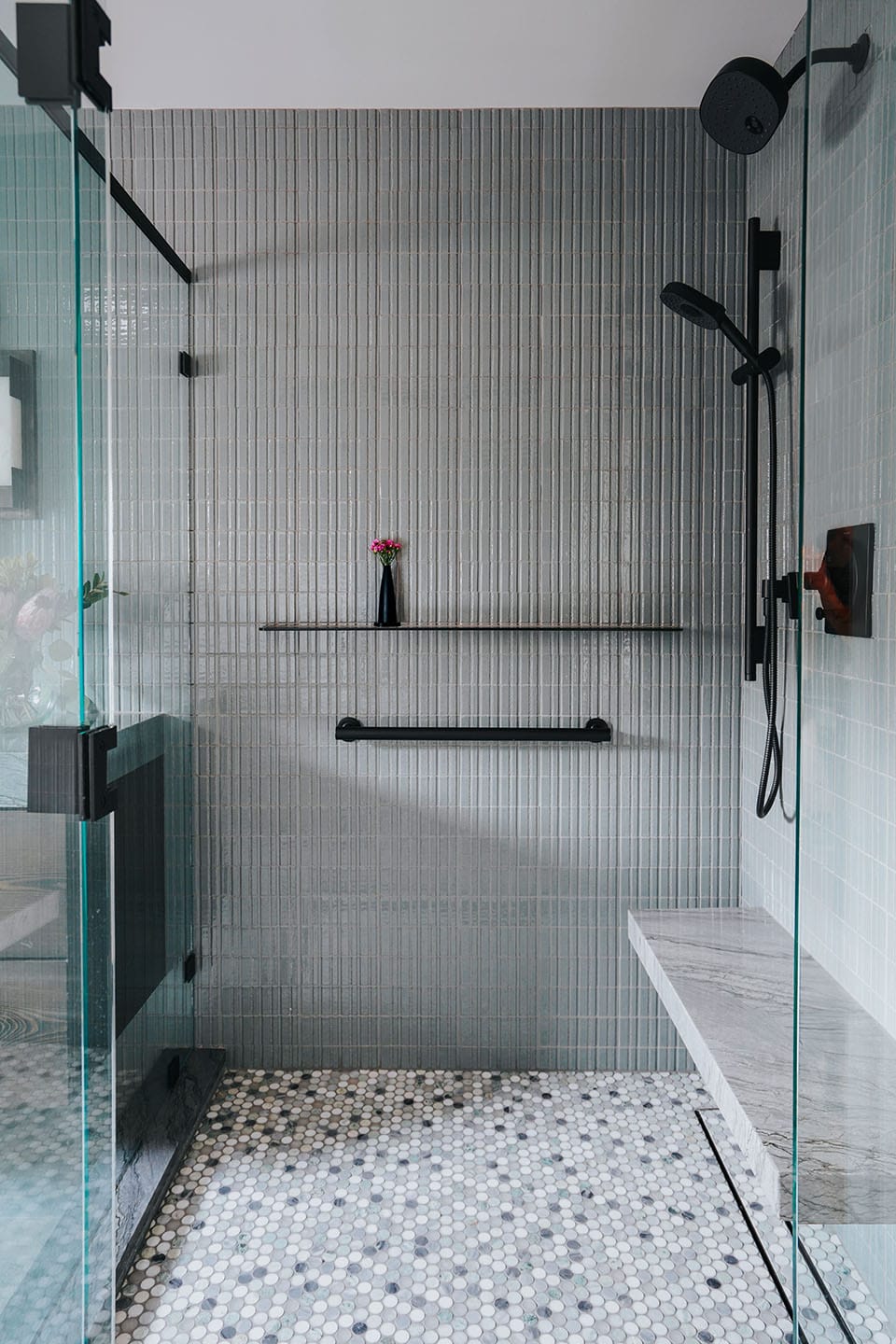
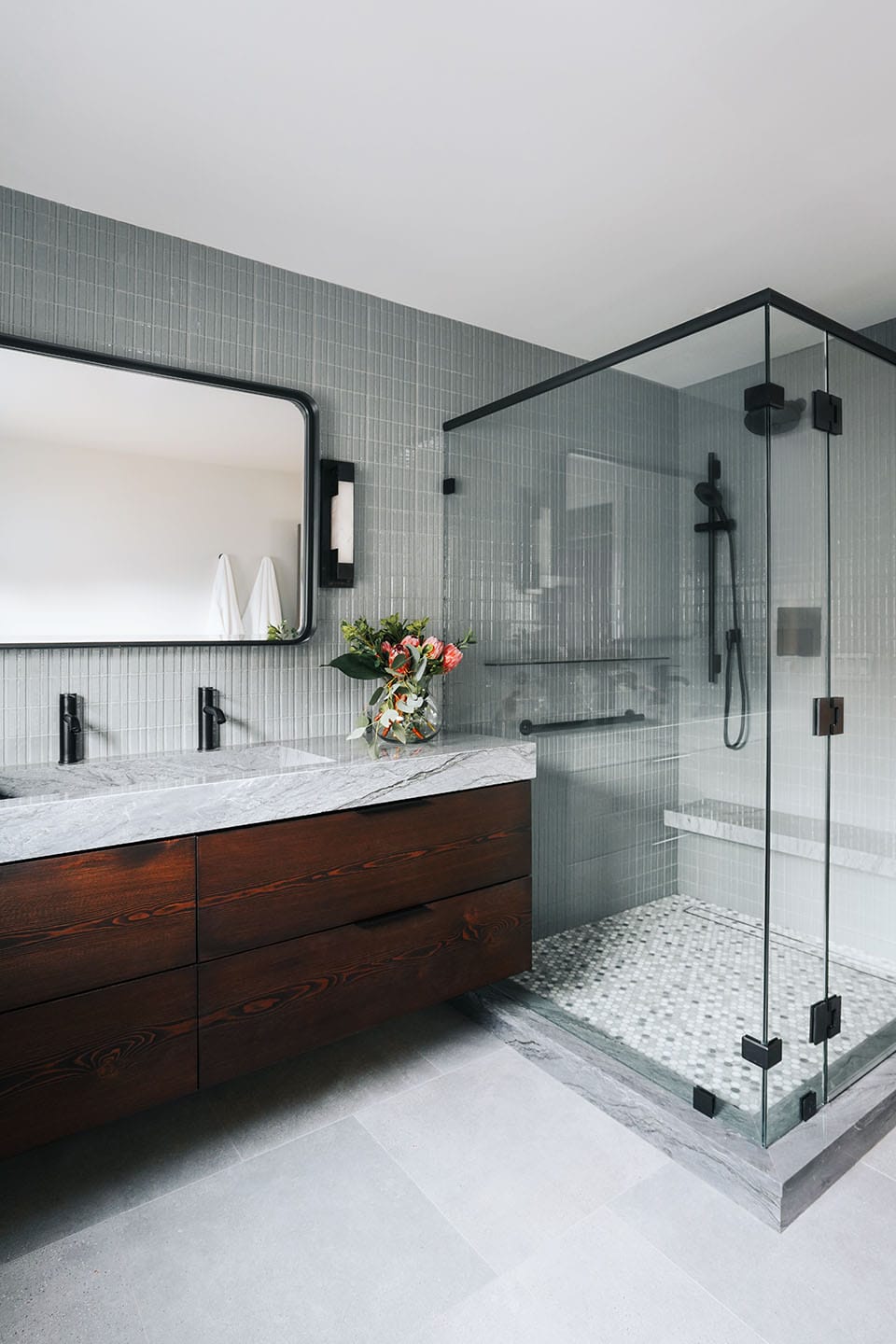
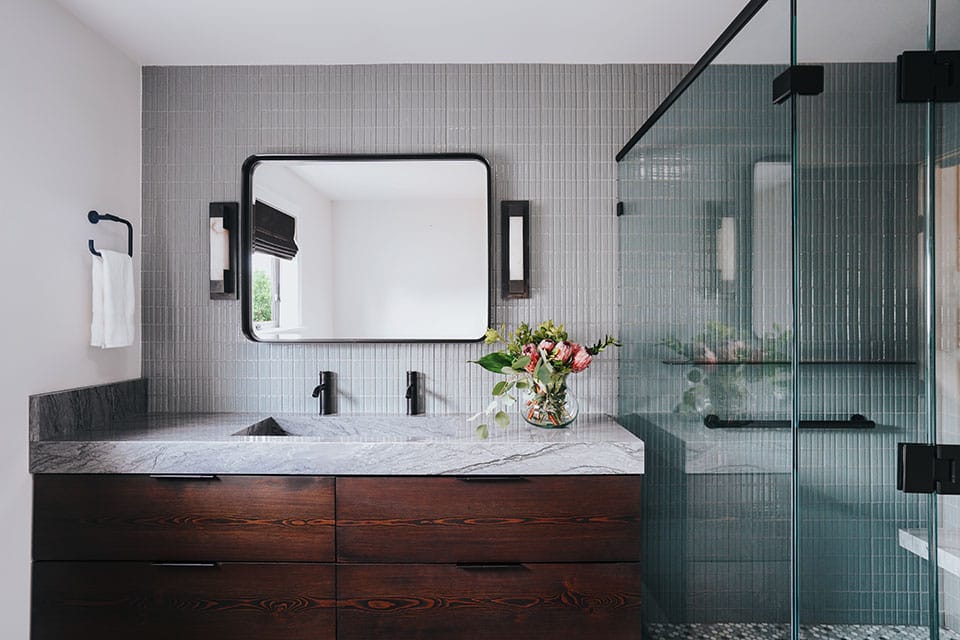
The floating wood vanity establishes the space with warmth, while dark fixtures provide modern contrast.
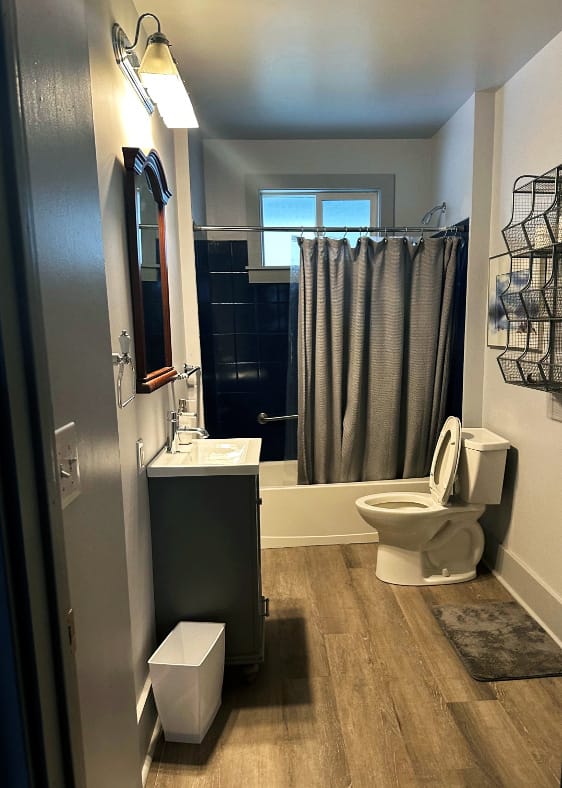
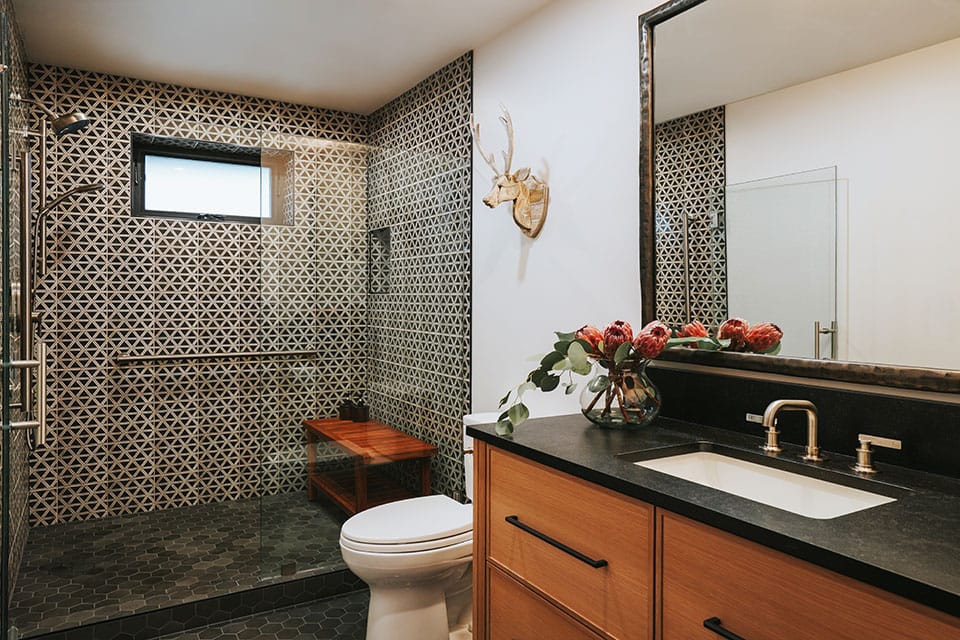
Bathrooms, too, became stages for subtle storytelling. The powder room received a playful retro tile, a wink to the eclectic spirit of small-town Montana, where personality often shines brightest in the smallest spaces. In the primary bathroom, a ridged, textured tile was chosen for its tactility—offering both luxury and restraint with its vertical lines and muted seafoam blue. The floating wood vanity establishes the space with warmth, while dark fixtures provide modern contrast. A glass-walled shower with a bench and penny-round mosaic floor completes the ensemble.
BEFORE:
“It was about making the kitchen look and feel bigger and better without overpowering the house.”
–Kay Sherman, Interior Designer Hunter & Company Interior Design
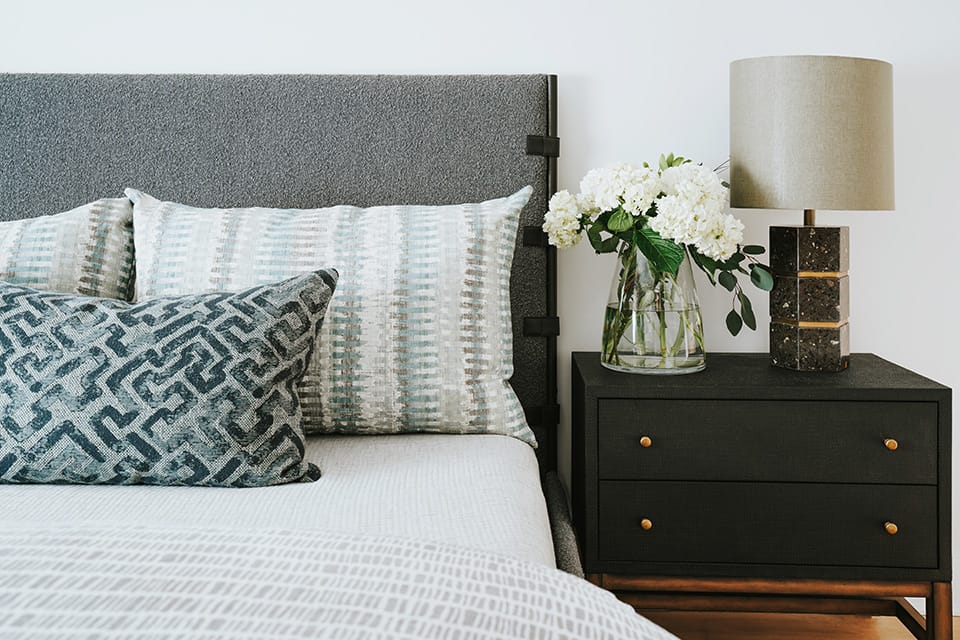
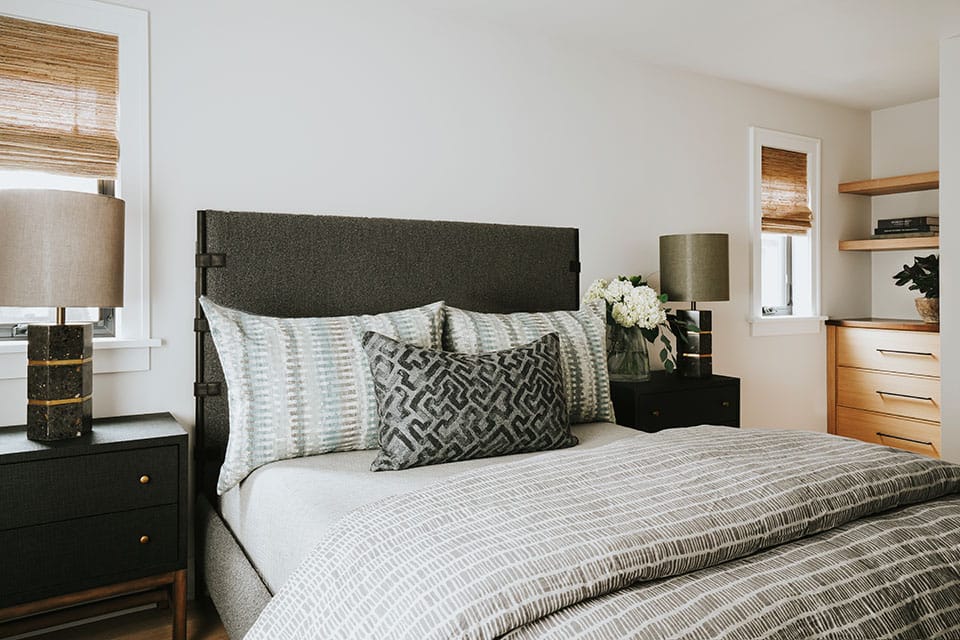
Upstairs, the primary bedroom continues the theme of subtle elegance. Woven shades filter natural light, casting a glow across a charcoal upholstered headboard and linens patterned in understated geometry. Blackened bedside tables with brass pulls balance against the layered bedding, while built-in shelving and dressers keep the room functional without feeling cluttered. The effect is calm and composed—a retreat designed for rest, not excess.
Together, the bedroom and bath form a private sanctuary. Each detail, from the texture of the fabrics to the veining in the stone, underscores Hunter & Company’s ability to create interiors both livable and refined. The suite feels personal because its simplicity carries such depth.
The transformation would not have been possible without the Duke Brothers. Known throughout Whitefish for their meticulous work, the brothers bring decades of construction experience and a personal history of resilience. Sons of Latvian immigrants who fled during World War II, they met their future wives—sisters—on a visit to Whitefish and never left. Married on the same day, they have been building for 35 years. Their craftsmanship carries the weight of family tradition—care that is felt in every door swing and floorboard. For this project, they partnered with trusted local artisans: JRS Woodworks for cabinetry, Bear & Wolf Tile for the bathrooms and laundry room, and INSINK Plumbing for the systems beneath it all.
What makes this remodel distinct is what happened inside the house, but also where the home sits. Just blocks from Whitefish’s restaurants, shops, and coffeehouses, it offers a lifestyle that’s vibrant and connected. The homeowner can interact with the community, then return to a home that feels like an embrace.
“Houses talk to us. This one told us exactly what it wanted to be.”
–Kay Sherman, Interior Designer Hunter & Company Interior Design
The design reflects that duality: warm in tone, textured in detail, and ready to entertain. Each space honors the life lived here before and the next chapter unfolding.
“Houses talk to us,” states Sherman. “This one told us exactly what it wanted to be.” What it wanted, it seems, was to become a home of remembrance and renewal, perfectly attuned to the rhythm of downtown Whitefish life.
whj REMODEL
