
Listen to our Spotify podcast about this article:
By Cassidy Mantor
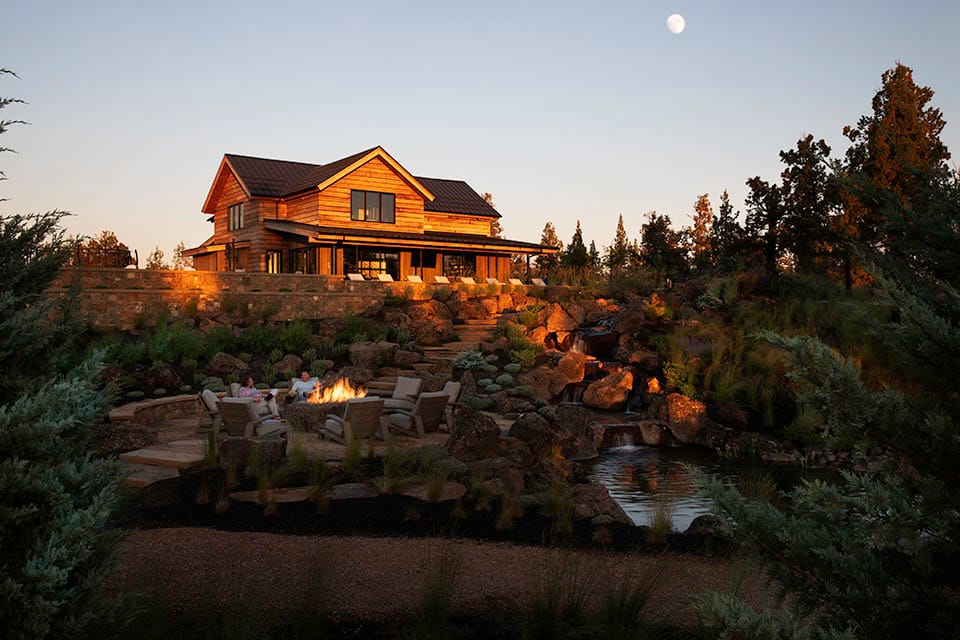
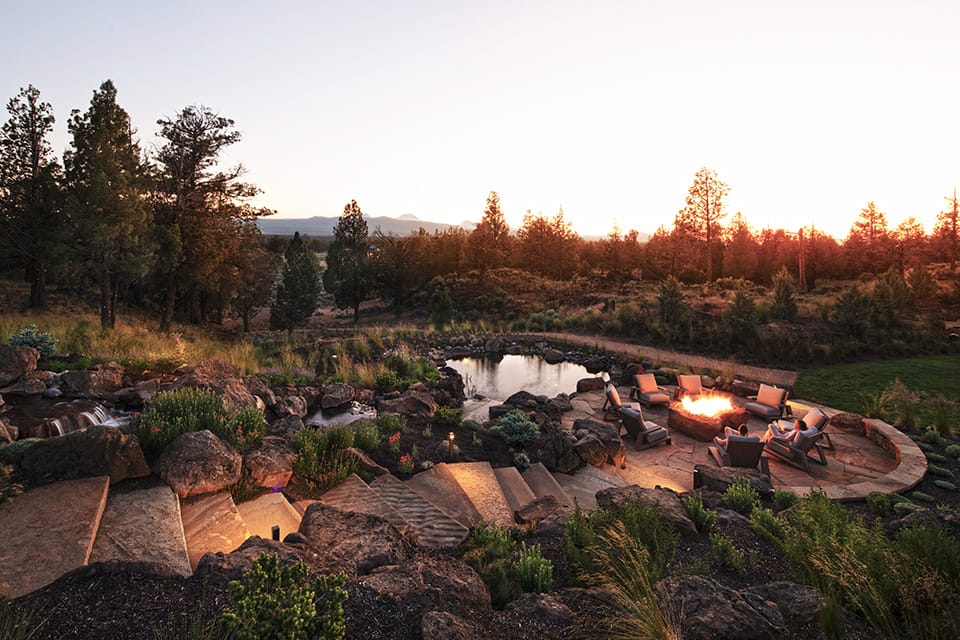
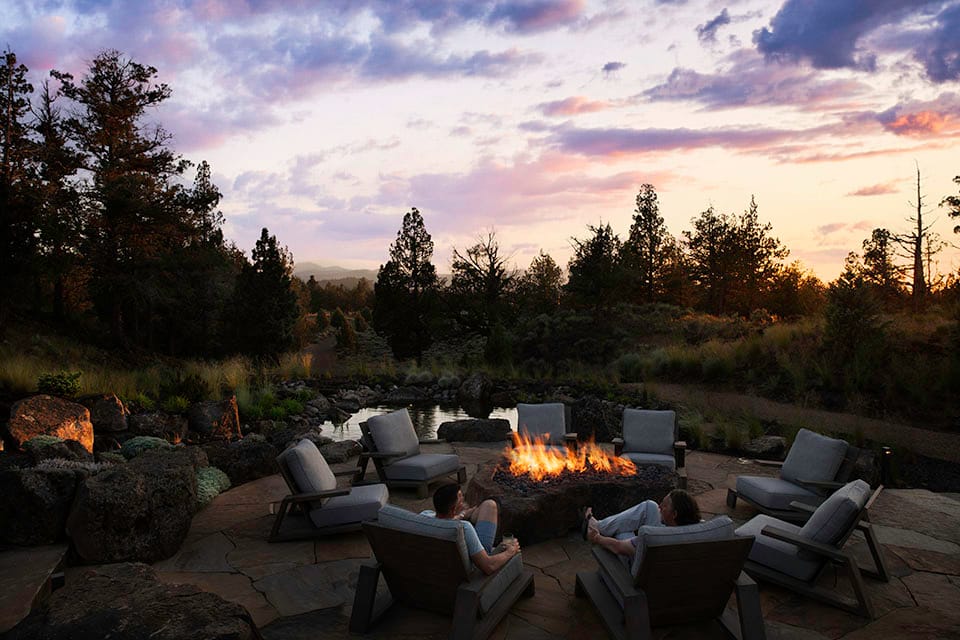
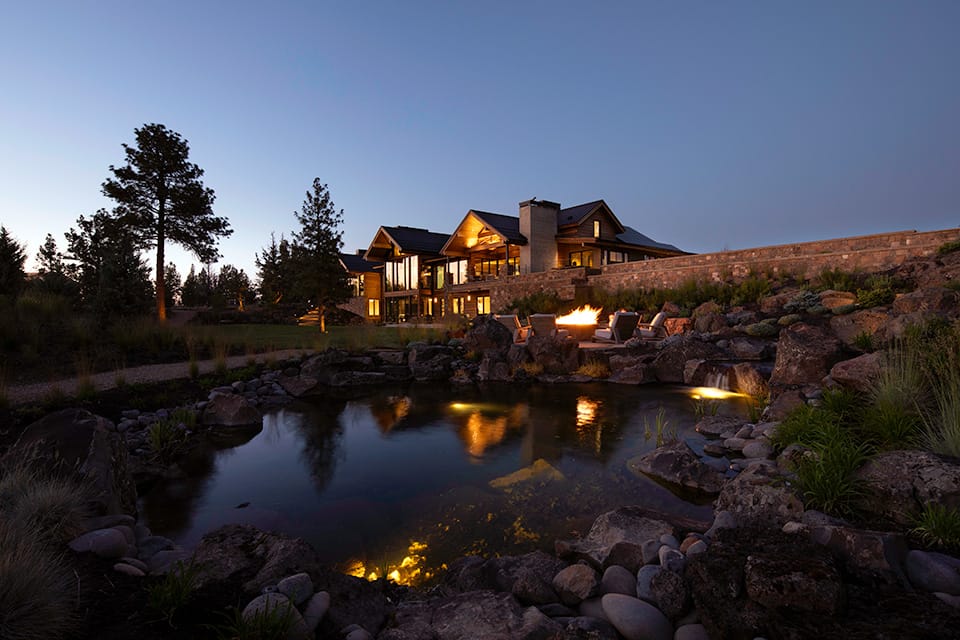
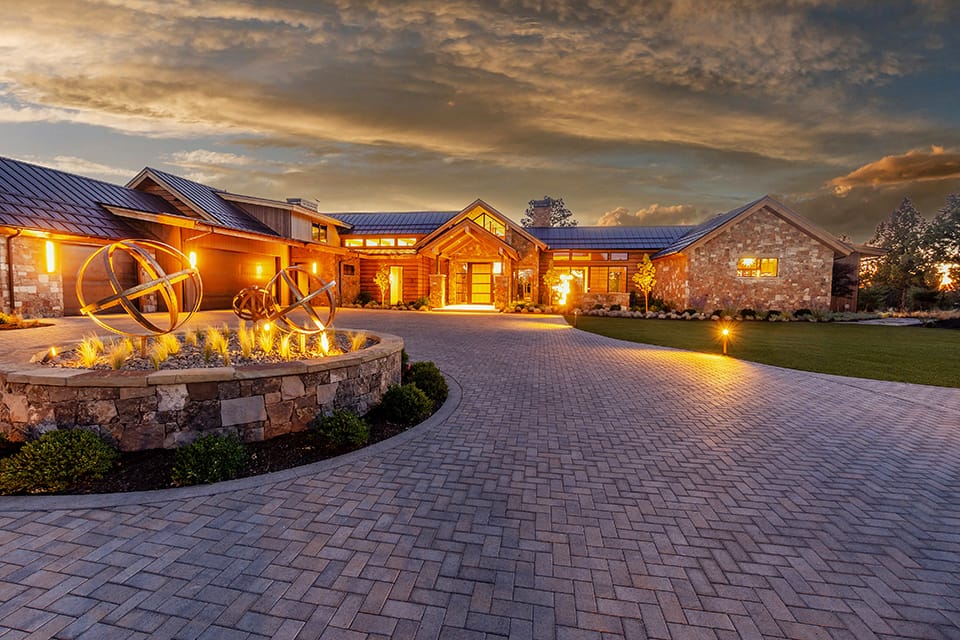
Atop a plateau spanning 10 acres in Pacific Cascade Heights, native grasses give way to an attractive family home. Five-ton boulders, iconic lawn sculptures, and a cascading water feature lead to a lakeside firepit patio. Sunken tennis courts painted to blend into the surrounding landscape make a tasteful first impression.
Preserving 10 Acres In Deschutes County For A Modern Family Home
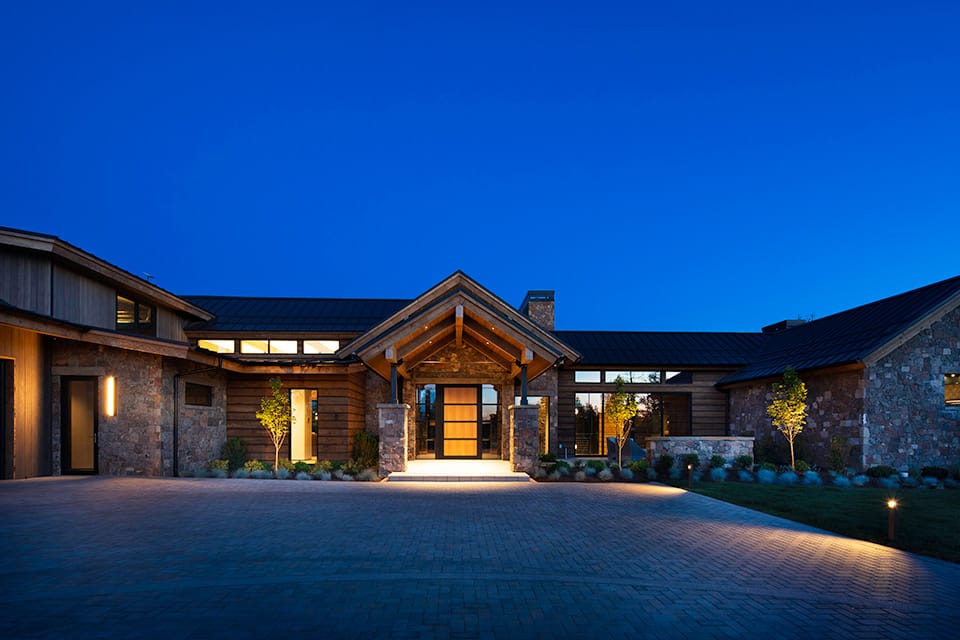
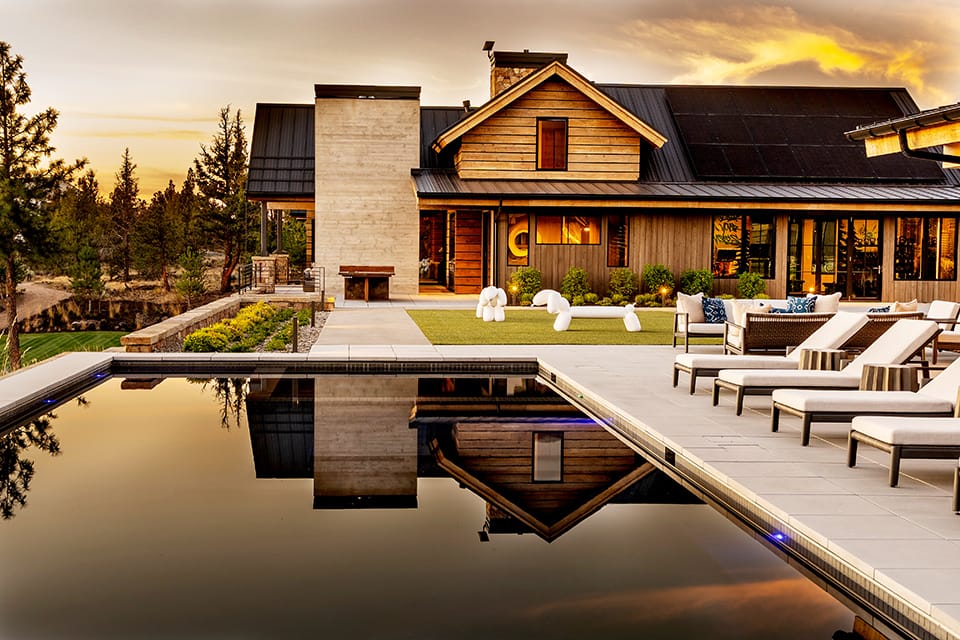
The homeowners wanted to build a family home to be enjoyed with their wife and young daughters. This property had an incredibly unique blend of character – varying topography, panoramic mountain views, and privacy – and they wanted the home to seamlessly flow from inside to out. That connection of the house to the outside environment drove the design and evolved into features including open and expansive window lines and large door systems. It also led them to design the house to feel like it was set into the landscape. It required not only a lot of creativity to build the house into the site, but also a lot of coordination and teamwork between the landscape architect and architect to connect the house, formal lawn, pool, and pool house at the same elevation to have a seamless transition from inside the house to the outside amenities.
“I knew we wanted to push some boundaries in structural design, and we needed a team that would appreciate the elegance that the structure would provide and could showcase it, whether that meant the custom designed trusses, the architectural concrete, or how the landscape walls became beautiful design elements.”
–Homeowner
The homeowner has a background in structural engineering and had a firm understanding of the complexities the terrain posed for design. He also had an exceptional ability to imagine the art of the possible. “I knew we wanted to push some boundaries in structural design, and we needed a team that would appreciate the elegance that the structure would provide and could showcase it – whether that meant the custom designed trusses, the architectural concrete, or how the landscape walls became beautiful design elements,” he explains.
The emphasis on connecting the inside to the outdoors meant they needed a landscape design team and contractor with a shared vision to bring the site to life. They looked for a team whose intentional design would create focal points for enjoyment and an environment that would foster ties to the native landscape. The homeowner adds, “From blending architectural walls into the landscape, to recessing the tennis court to minimize visual impact, to the incredible water features, the landscaping makes our vision for indoor and outdoor living a true reality and an amazing property to enjoy.”
Working in Deschutes County, the homeowner used his local knowledge to assemble this team of architect, builder, landscape architect, and landscape contractor. They got ARC approval, county permits, and poured the foundation. Then the plans changed.
GETTING CREATIVE
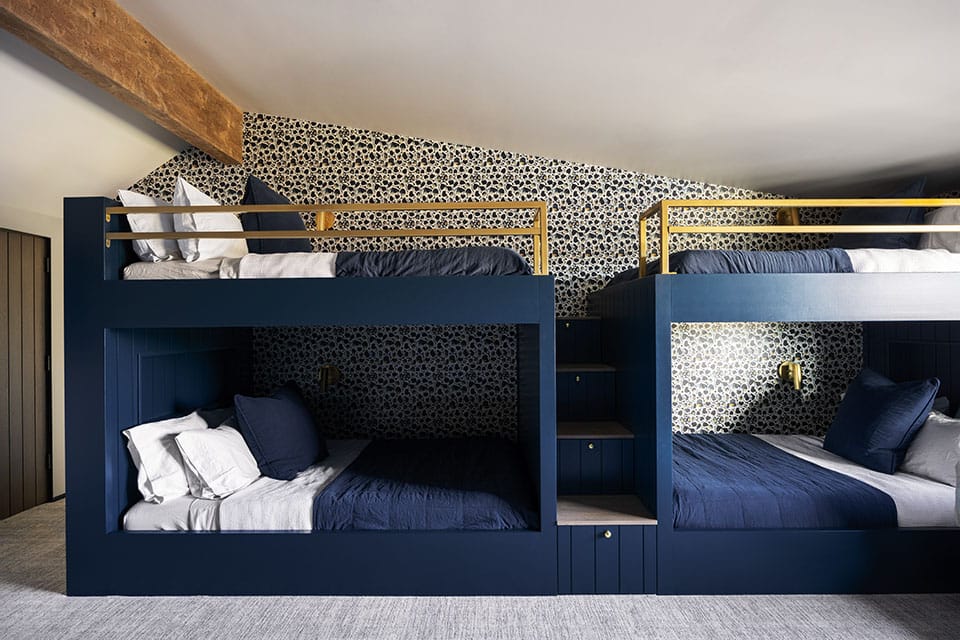
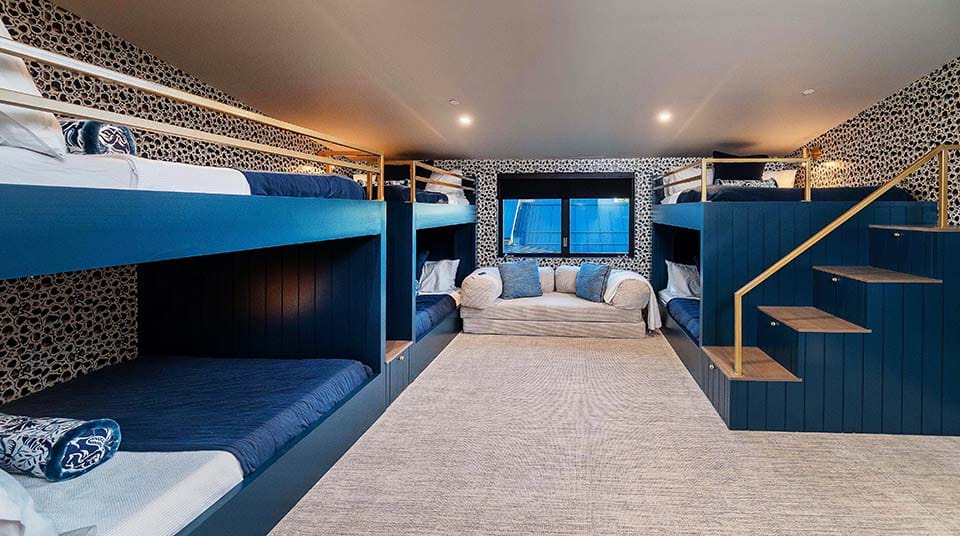
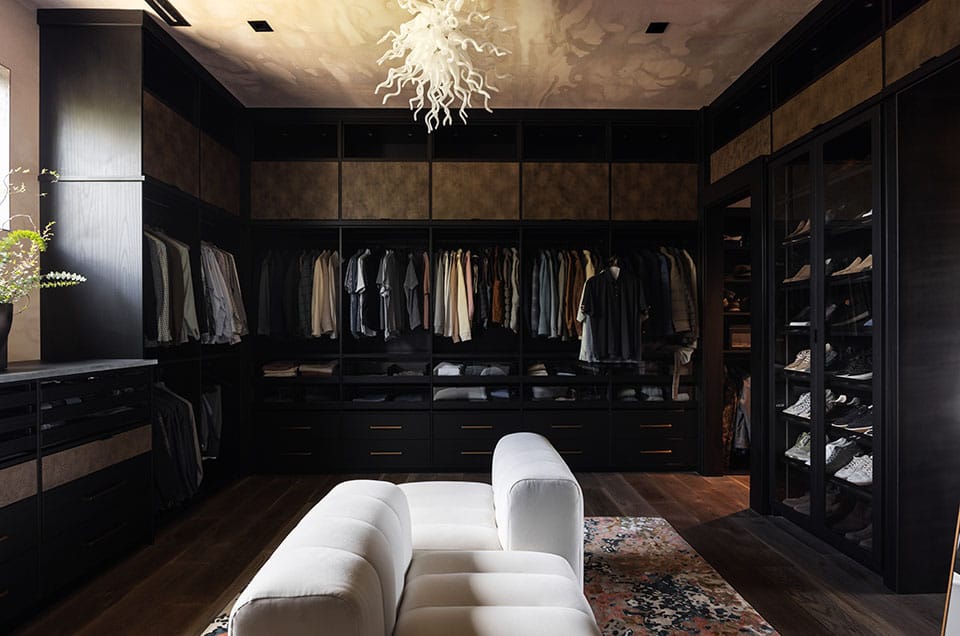
“What if we added an upper floor bunk room for guests that expanded the house 800 square feet?” they asked. And so, they did. “What if we added 100 square feet to the primary closet?” And so, they did. “What if we put a tennis court in? And a pump house to handle a cistern since it is on a well! And a greenhouse!” And they did. Outside, the home invites fun. Tennis courts, a formal lawn for the kids to play on, a 120-square-foot greenhouse, a pool, and an 1,800-square-foot pool house provide endless outdoor activities that transform it into a personal resort.
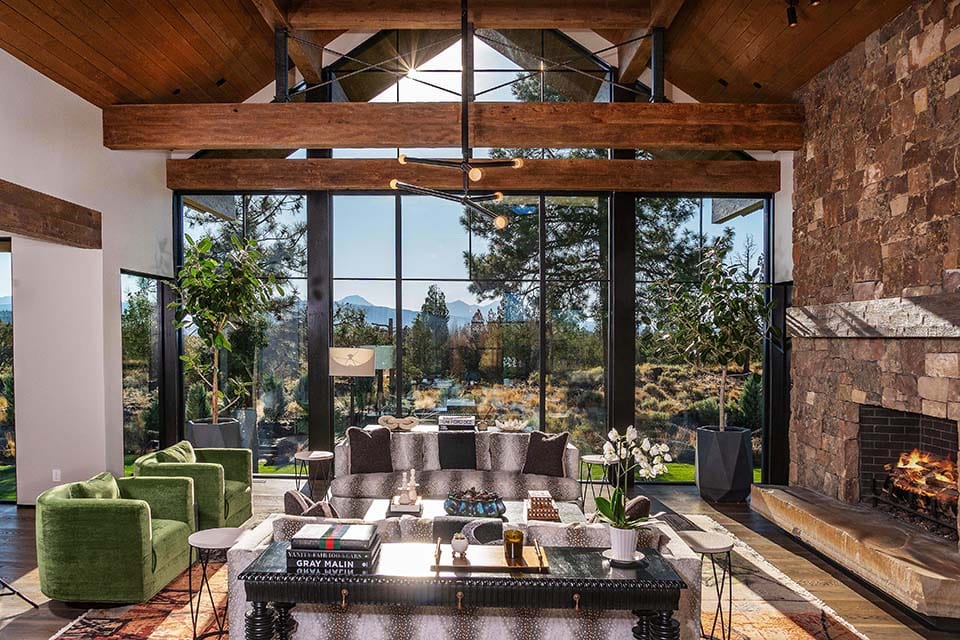
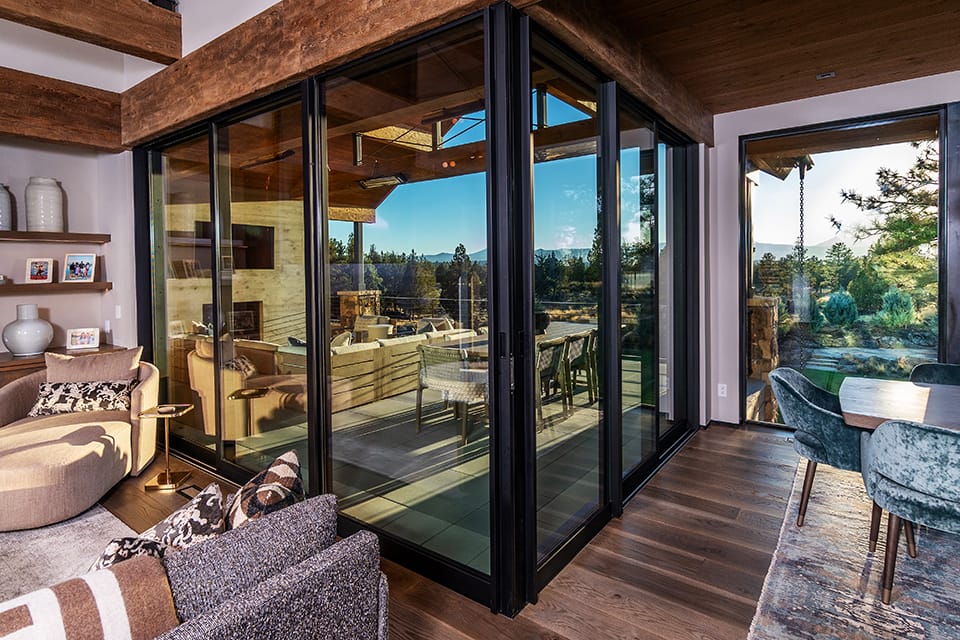
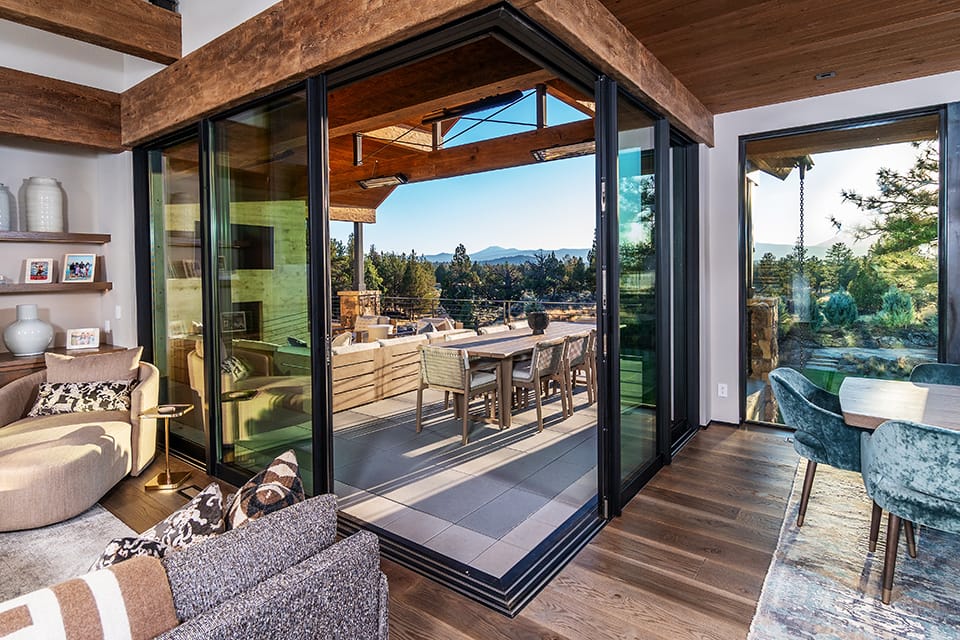
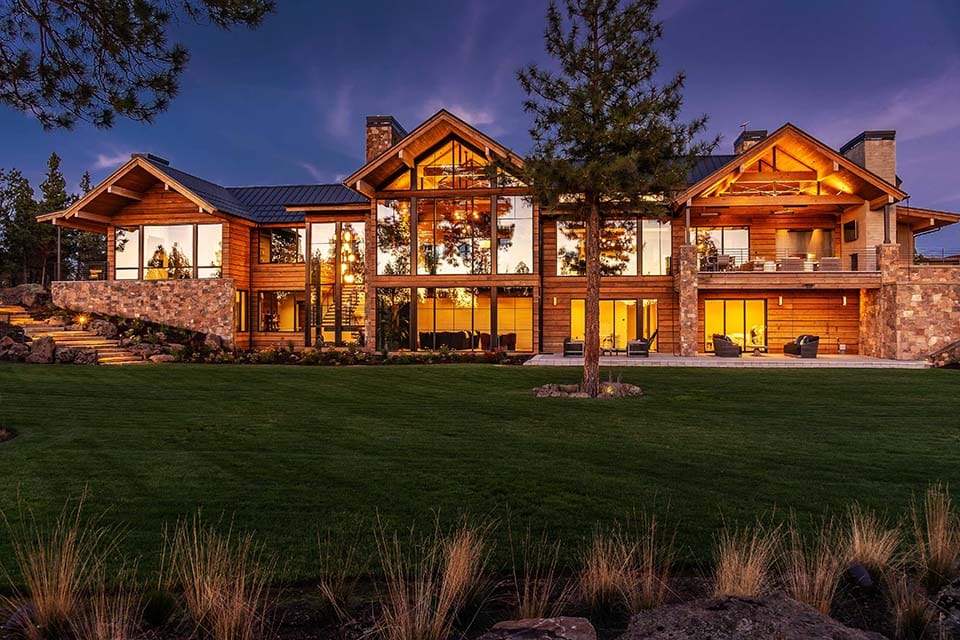
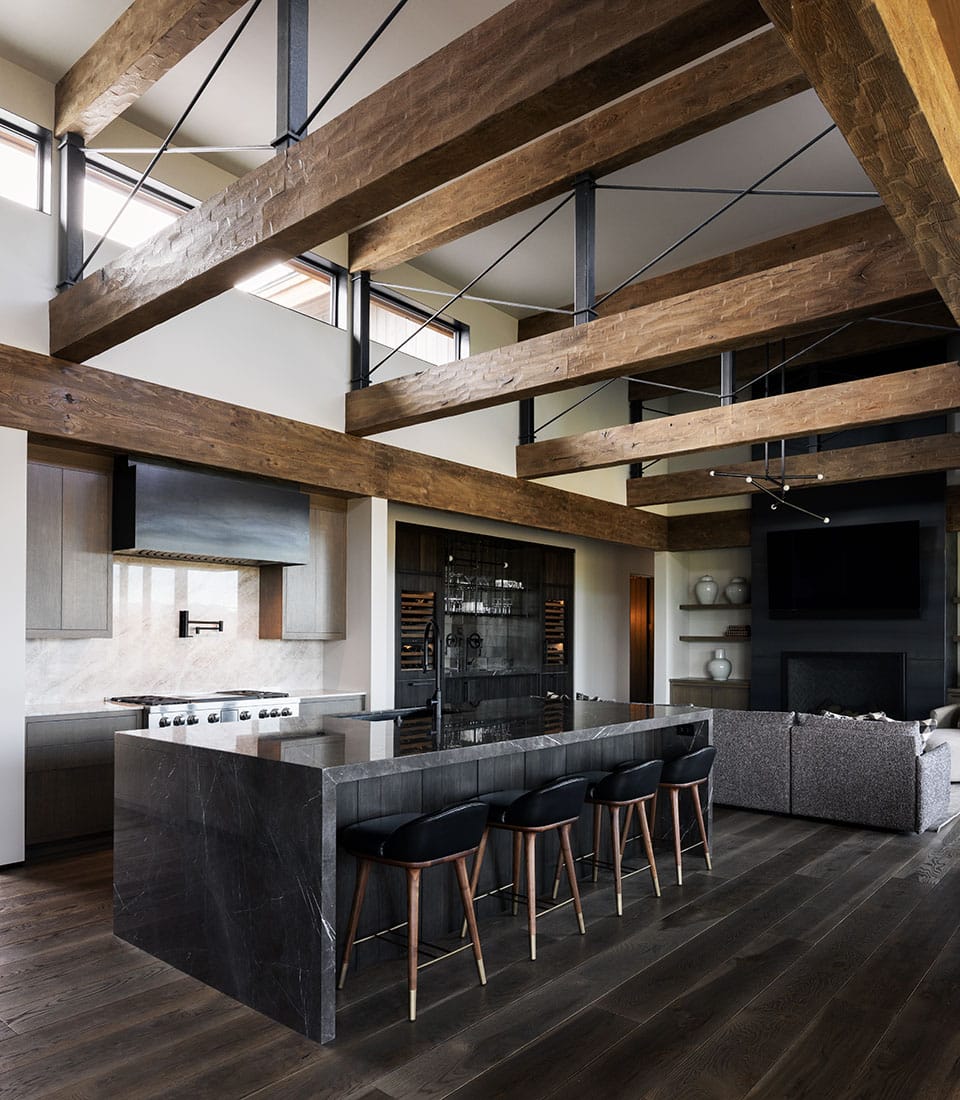
They worked with a diverse assortment of materials that blended the traditional lines of the house with a modern flair. Steep roof lines coupled with full-height windows carrying reclaimed custom designed siding from outside to inside and a blend of gorgeous stonework were some of the ways that they articulated the warm mountain modern feel.
“The cap was tying in unique details using hot rolled steel for things like window and door trim and trusses,” the homeowner shares. “Having built a large manufacturing company that has a huge steel fabrication segment, it was a unique connection of architecture and the livelihood that allowed us to build such a fun project.”
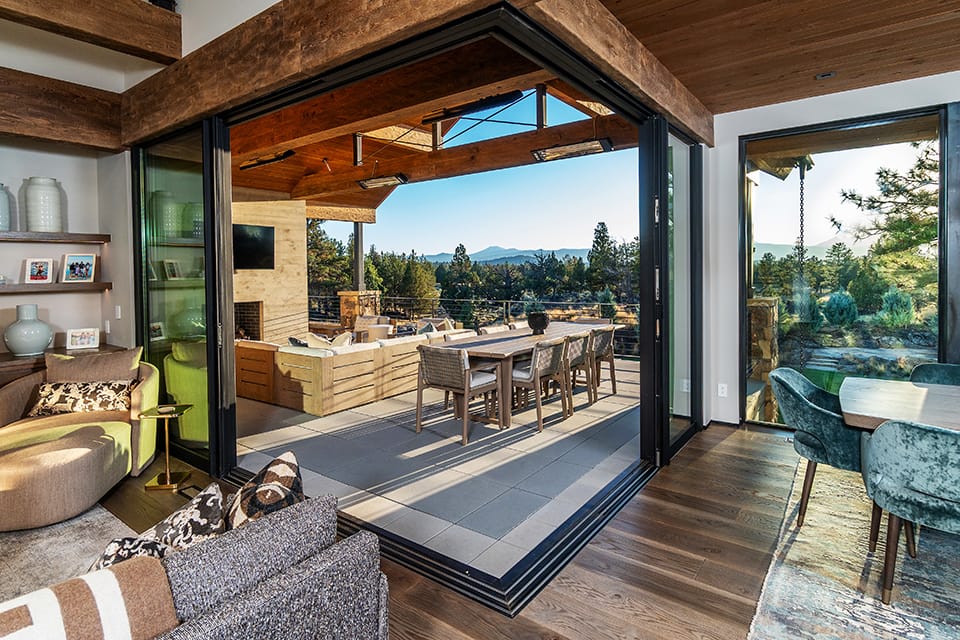
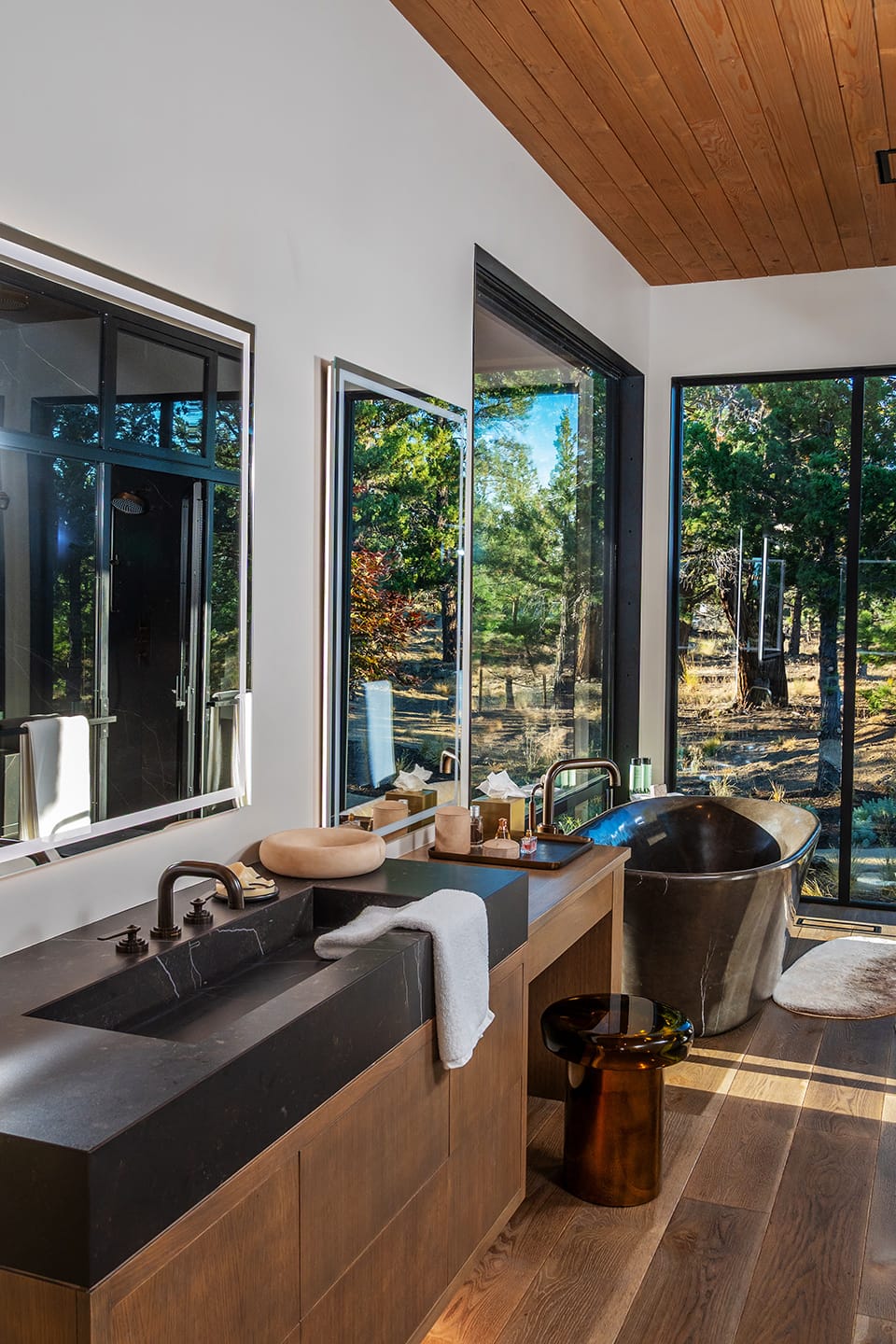
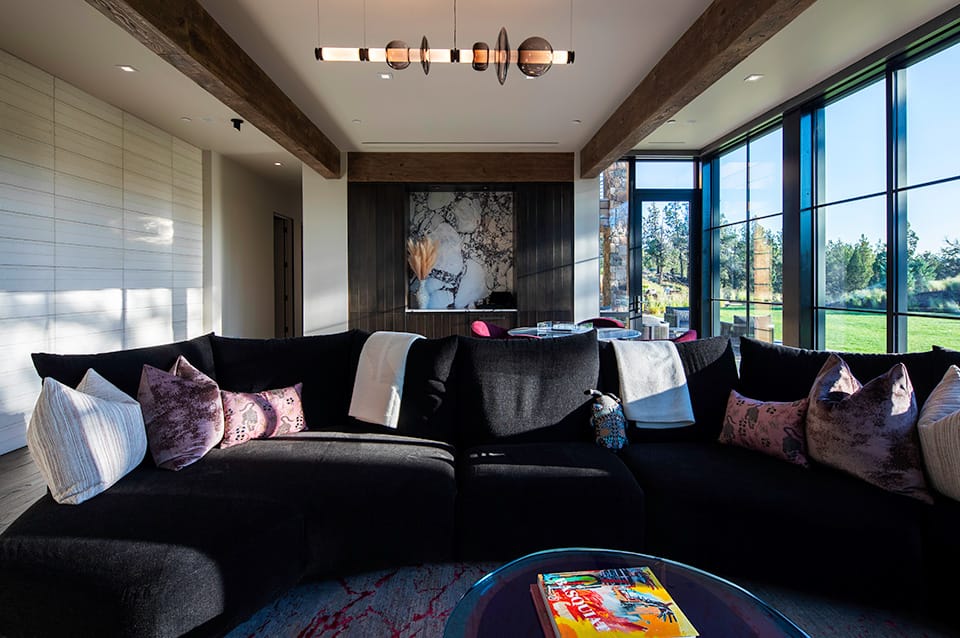
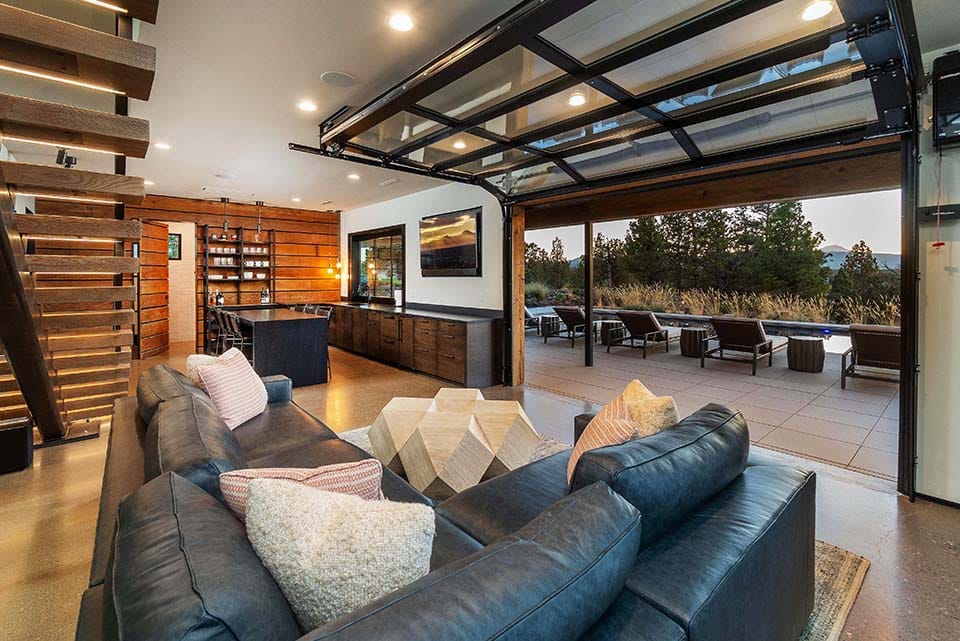
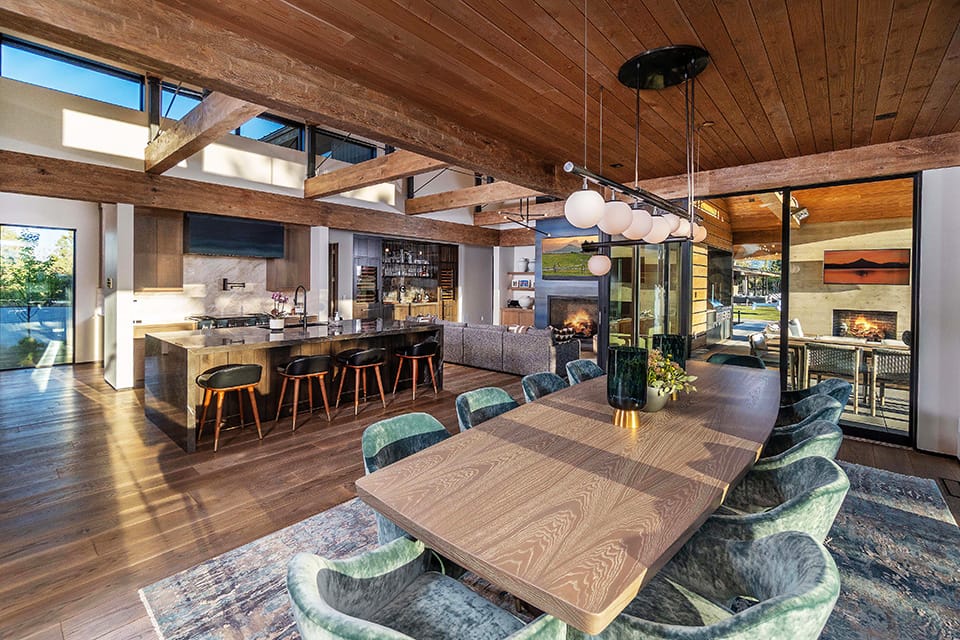
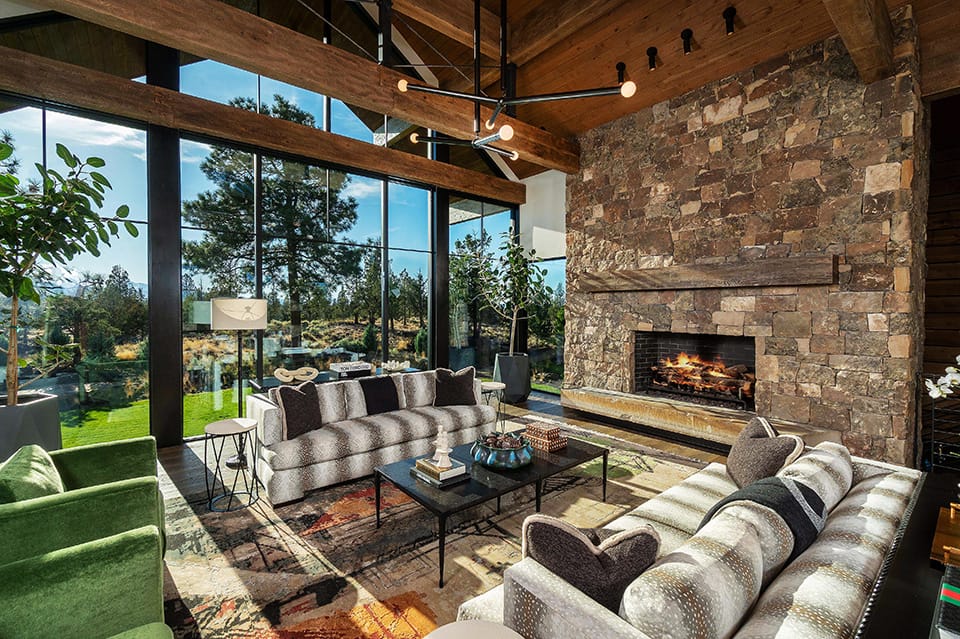
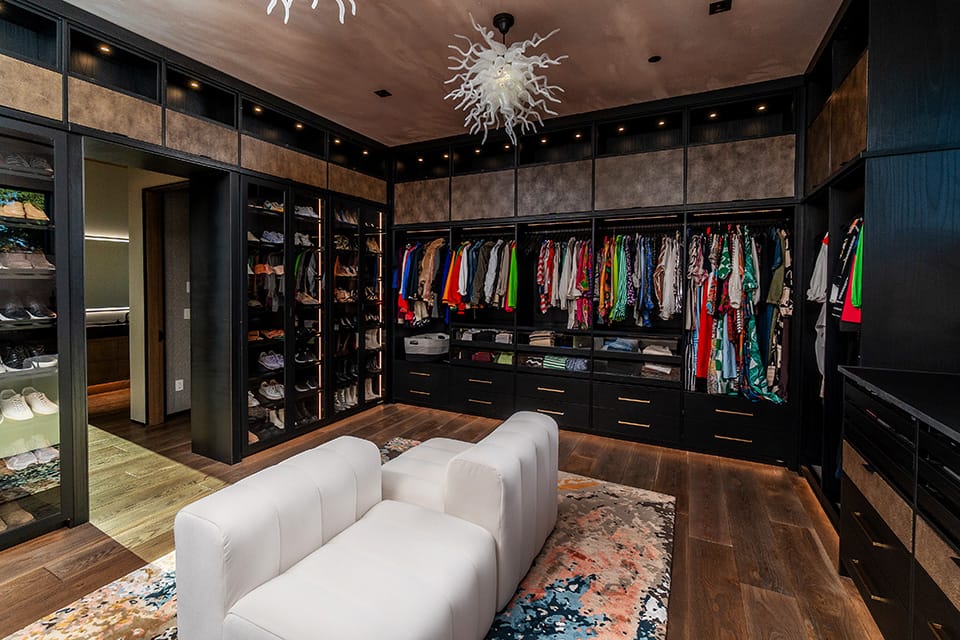
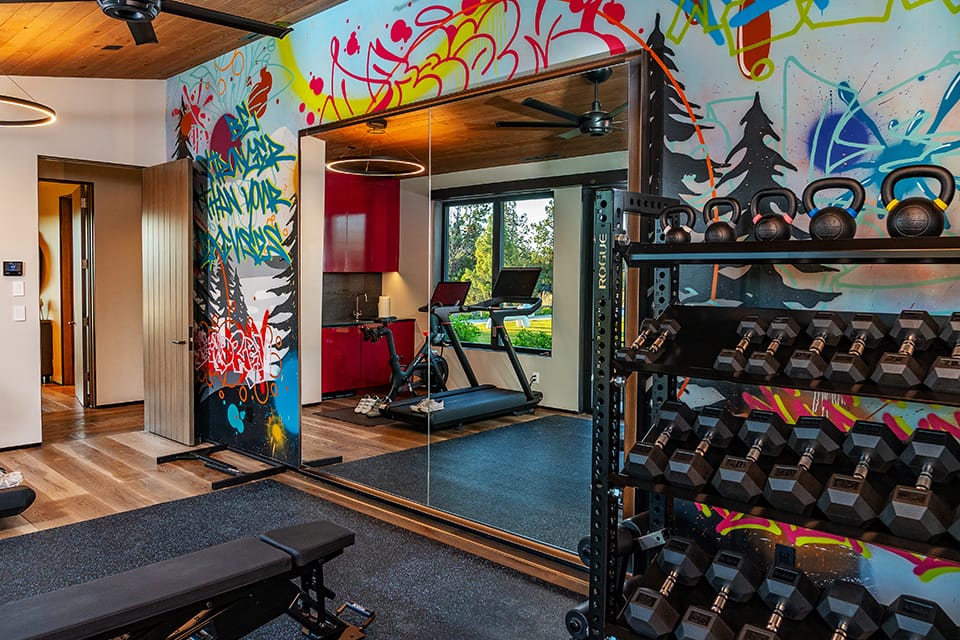
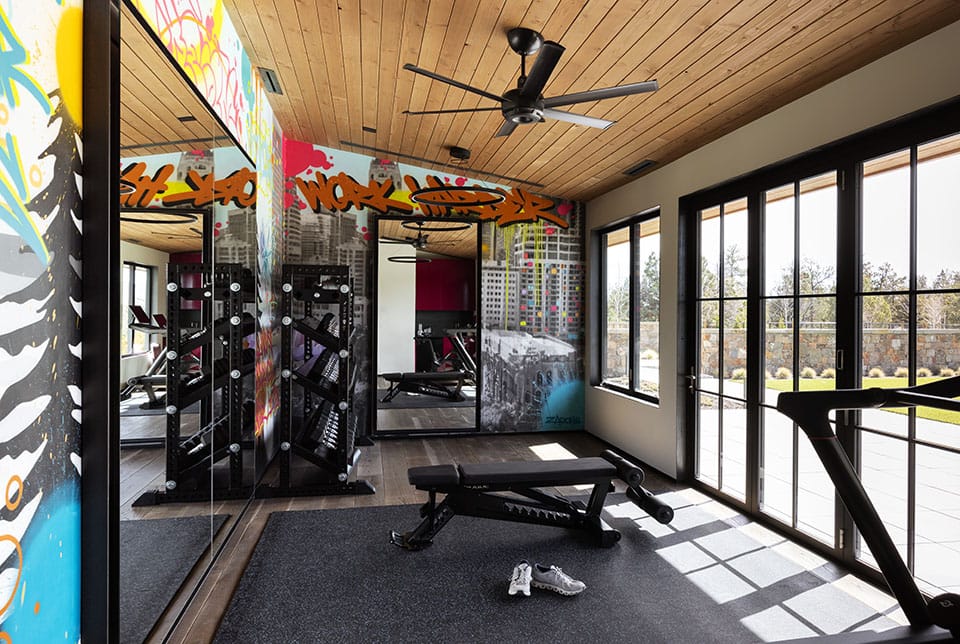
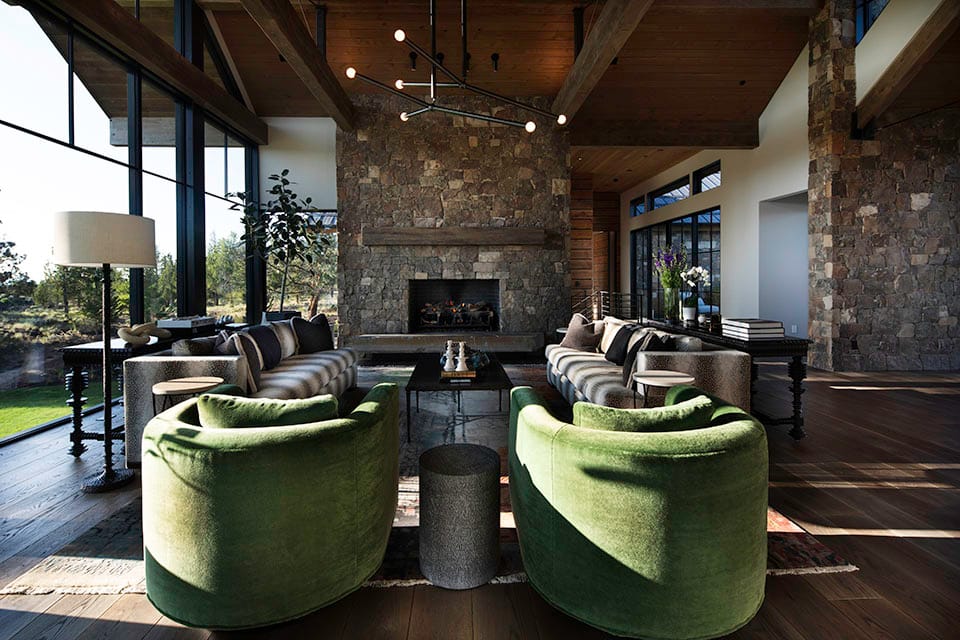
Inside the 9,000-square-foot main house, the interior design team focused on mountain modern with an edge. They used elemental materials like wood, paper, stone, and cement in distinctive ways. There are custom asymmetrical bronze Apparatus lights in the living room, family room, and wet bar, a custom wall mural from Eskayel in the primary closet that waterfalls from the ceiling down the wall, a hand-carved stone tub, and a home gym with sprayed and wheat pasted custom graffiti by an artist from Southern California that was designed to pay tribute to the owner’s ties to San Diego. The lower floor houses their daughters’ play and homework spaces, making the home uniquely suited for its people.
DRAWING INSPIRATION
A panorama of Central Oregon mountains creates an automatic sense of place for the house. From Mt. Bachelor to the south to Mt. Jefferson to the north, and views of Broken Top, South Sister, Middle Sister, North Sister, and Mt. Washington, it is a success story of preserving the character of the land as Bend continues to grow. It is also a testament to a team of professionals whose experience enabled them to flex with changing conditions and deliver a product that was well-suited for its surroundings and highly personalized to actualize their client’s dreams.
Once the homeowner had the site, he reached out to Pacwest Builders and SZABO Landscape Architecture, both of which have over 20 years of experience. Pacwest is a design-build firm with architect and owner Spencer Williams leading the design team. SZABO Landscape Architecture is a commercial and residential landscape architecture firm led by principal landscape architect Mike Szabo. Szabo partnered with Joe Nichols, owner of Mountain Sky, Inc., who also has decades of experience and who brought their plans to life. Interior designer Kate Darden created thoughtfully stylish and functional spaces that complemented the architectural vision with finishing touches and outdoor spaces completed by Jen West Design.
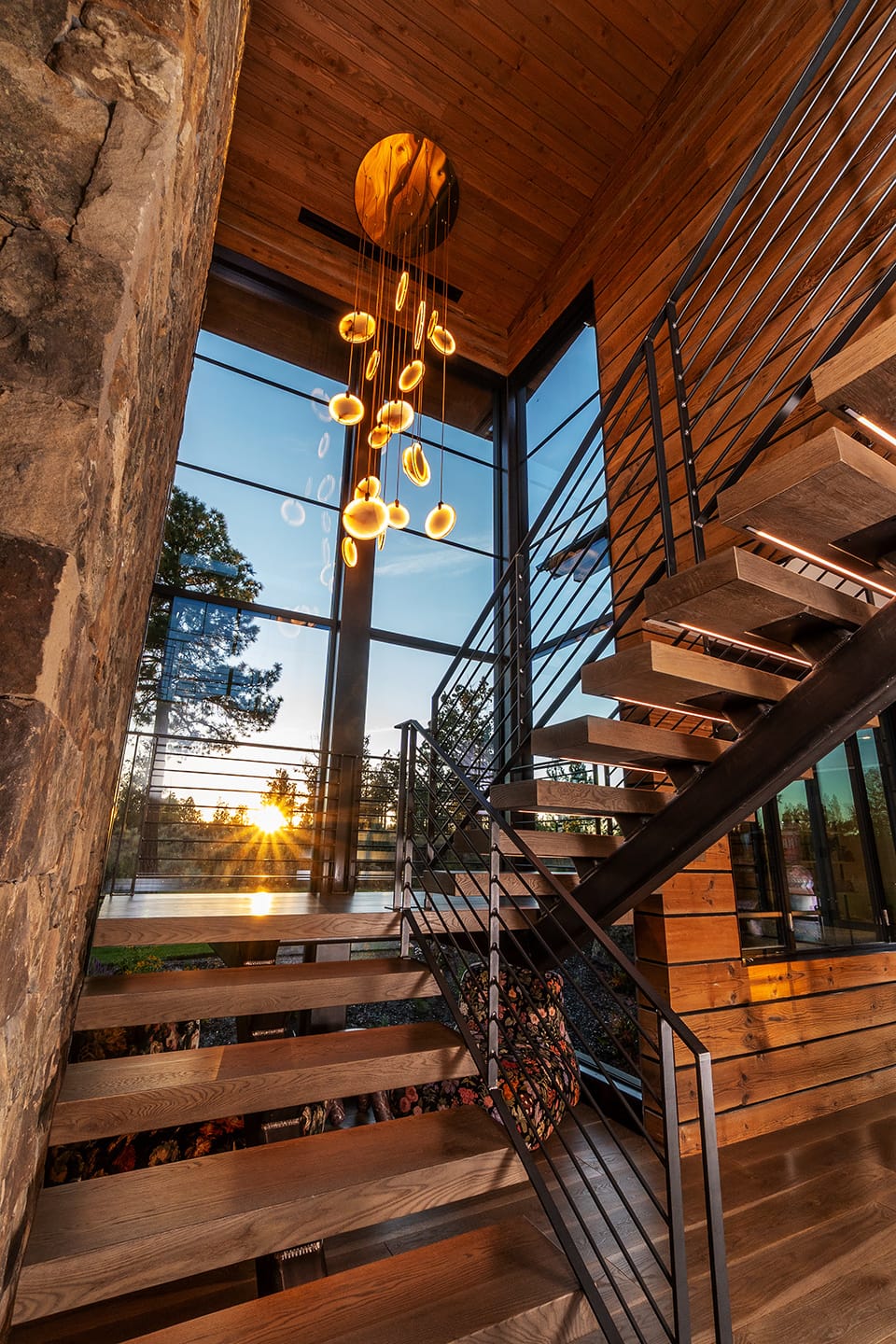
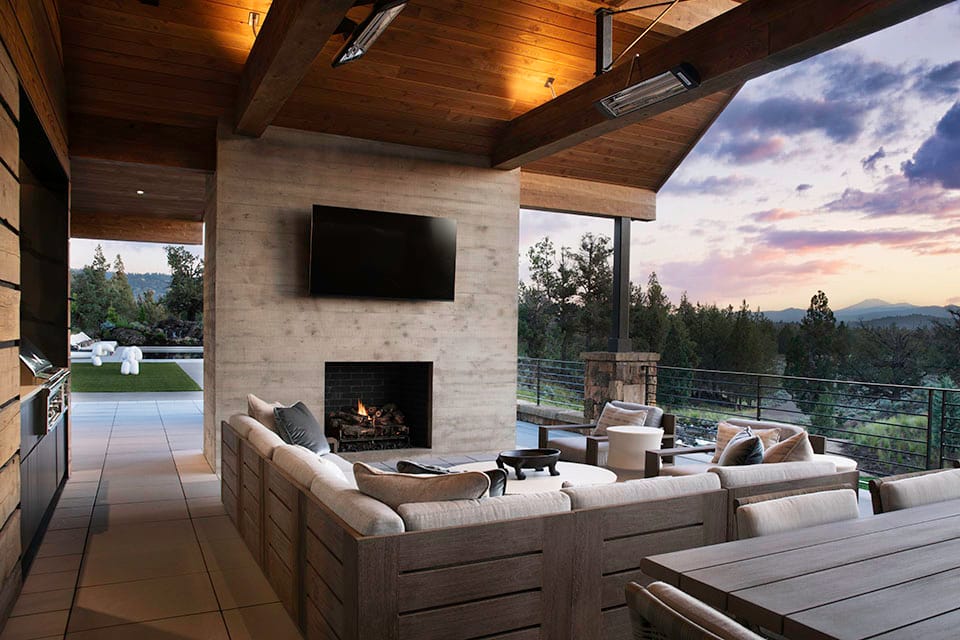
The result is a comfortable mountain modern home with clean lines and livable warmth. A mixture of steel and wood, copious amounts of interior stone, and a massive fireplace create harmony. A floating tread steel staircase connects the main and lower levels, and a specially engineered corner has two glass walls stacking to each other with no post obstructing the view. The sitting room, dining room, and kitchen flow out onto an outdoor covered patio with a large board-formed fireplace. It’s a grand space without ornamentation that they managed to make feel warm.
Although drawings and models will communicate the basics of a home, more is involved in translating that 2D world into a holistic experience that a client can feel and truly understand. Views were expanded with minor tree removal, and the home’s orientation was refined to capture the best the site offered.
“SOMEBODY WANTED TO BUILD A POND”
Szabo and Nichols recall that they were brought into the project when they were told someone wanted to build a pond. They met with the client and it unfolded from there. With a strong desire to preserve views of Central Oregon’s most iconic peaks, the main house and the pool house were oriented to maximize the site.
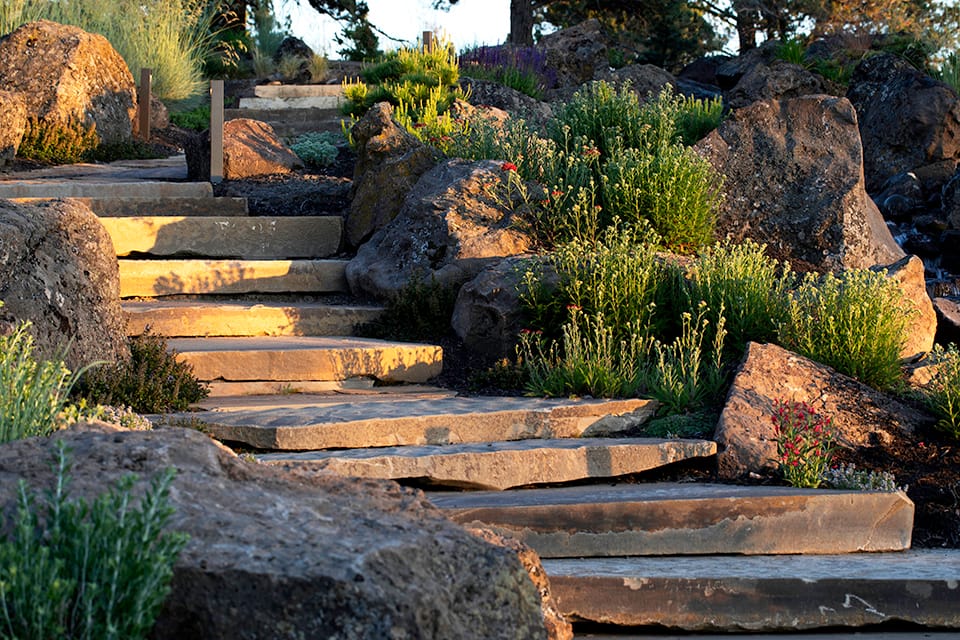
“Connecting the upper terrace to the lower lawn and patio areas, we designed a meandering stone staircase and cascading water feature element that terminated into a pond and firepit patio, which Joe’s team executed with perfection”
–Mike Szabo, Principal, Landscape Architect, SZABO Landscape Architecture
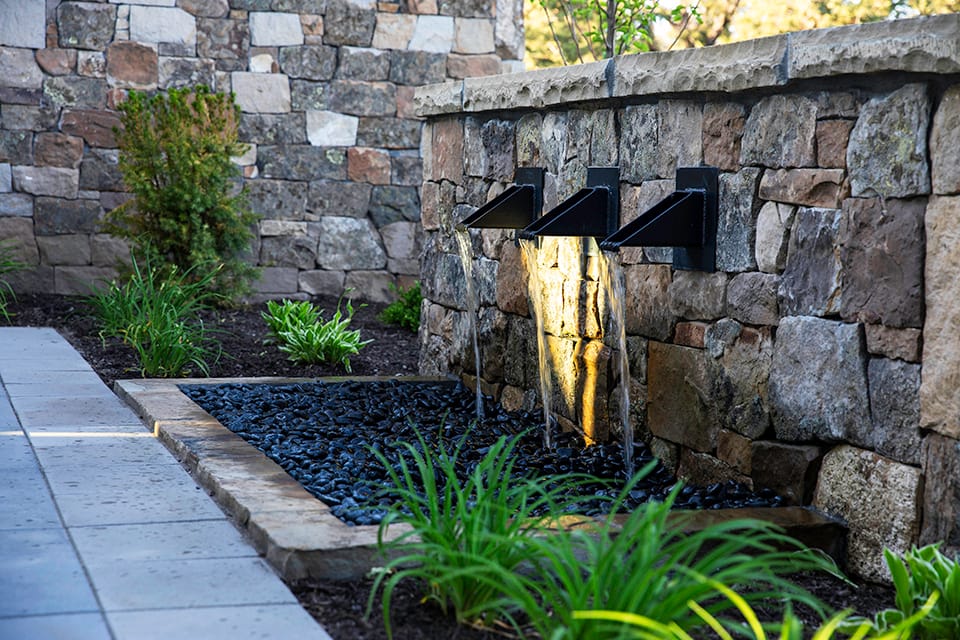
The homeowners wanted a formal area between the two structures where their daughters could play. Szabo designed a formal lawn centered on the mountain views. “Connecting the upper terrace to the lower lawn and patio areas, we designed a meandering stone staircase and cascading water feature element that terminated into a pond and firepit patio, which Joe’s team executed with perfection,” Szabo explains.
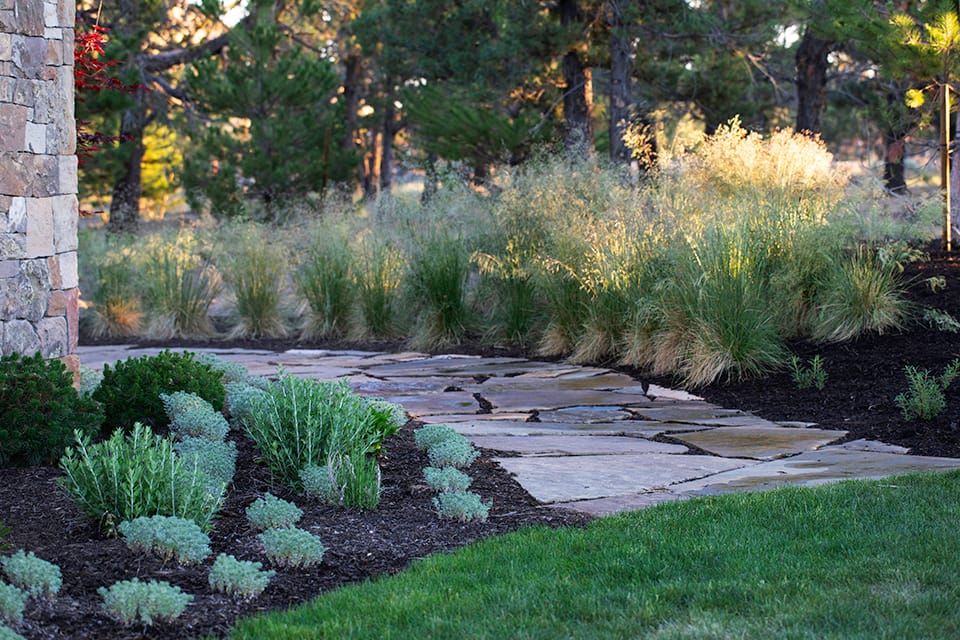
Like all of Szabo’s projects, the landscape architecture is very structured around the house, main patios and outdoor living spaces, but as one moves away from the main structures, the idea is for the landscape to gradually get more naturalistic and blend seamlessly back into the native environment.
“Sometimes landscape architects can be afterthoughts,” Szabo says. “Starting earlier in the project so we can work with other designers on how spaces flow from inside to out and how materials flow throughout the site is what makes for a really successful project.”
COLLABORATION + COMMUNICATION
Collaboration involves good communication between the team and client, but it also involves creating a working relationship with the site. There is an aspect of collaboration that must consider what’s right for the flow of the project and the greater environment.
“It gets really brown here in the winter when everything goes dormant, lawns and native grasses are brown, so to have this bold green patch in the middle of an otherwise pretty brown landscape can look a little out of place.”
– Mike Szabo, Principal, Landscape Architect, Szabo Landscape Architecture
“Afterthoughts can become big problems because some elements of the landscape must go in early in the process and you cannot go back to make changes,” Nichols says. For this job, there was a limited amount of access around the back of the site. They had over 800 tons of natural boulders and hundreds of yards of soils to place. The fire pit alone was a single 10,000-pound boulder that required large equipment to install. “We only have one chance to coordinate placement of these natural features and there’s no going backwards once they are in,” Nichols points out.
Being a music lover, Szabo compares the moving parts of a custom home to the layers of a song. “A lot of people don’t see the layers before the final outcome, but communication – both from getting us involved early on and staying involved through construction – makes all the difference,” he notes.
Budget is often a major constraint as the job progresses. In this project however, they had a healthy budget and a sophisticated client. That combination of resources enabled flexibility as the project progressed and new opportunities presented themselves that would alter the form.
Being on well water, they had to balance the property’s water rights with how much water certain features would use. They established drip irrigation around the perimeter of the home and struck a delicate balance between water use and aesthetics by incorporating a synthetic turf yard. The water conservation component of turf is fantastic, but Szabo cautions that it gives off some VOCs and it also has a propensity to heat up in the summer which can burn kids’ feet. “We put in an irrigation system to cool it off, but there are some tradeoffs,” he mentions.
Szabo got his start designing landscapes in San Diego, and he points out that Central Oregon isn’t like Southern California (or Arizona) where everyone has synthetic turf. “It gets really brown here in the winter when everything goes dormant – lawns and native grasses are brown – so to have this bold green patch in the middle of an otherwise pretty brown landscape can look a little out of place,” he says. But in this scenario, it made perfect sense to use it. It packs a striking visual impact and provides the intended use for the family.
SPEAKING THE SAME LANGUAGE
The cascading water feature turned into one of the highlights of the property. Szabo drew up plans and details for the feature, including how it all tied into the staircase and topography, but for features like this it is really up to the installer to make it sing. Nichols’ team took Szabo’s idea and put their artistic touch on it. In line with Szabo’s view of composing a landscape in layers, the water feature adds a euphonic element of water in an otherwise dry climate.
“We had basic details and a layout of what it should be, but it was Mountain Sky, Inc. who took our drawings and turned it into a showpiece,” Szabo says.
Certain aspects of a design don’t require many major field adjustments. However, a drafted design can only go so far in communicating a vision for natural water features, boulder walls, or stone steps. “Water features and stream designs can only really be drawn as outlines,” Nichols explains. “Each boulder and stone slab are different and require a high level of artistry to make them fit with the topography of the job.”
“I had to figure out how to integrate the desired changes without making them look like an afterthought. This was made even more challenging due to the fact that the foundation was in and most of the walls were framed.”
–Spencer Williams, Owner, Architect, Pacwest
Nichols has built many water features in his decades of work and enjoys the process of combing through pallets of boulders to find the perfect one. “It’s not uncommon for one boulder to take hours to place because what we see in the pile of rocks doesn’t always translate to the perfect fit,” he says. “Boulders have endless shapes and textures that will move the water differently so we have to visualize what this will look like as each one is placed.”
Nichols credits his supplier, Harney Basin Rock, for their mossy boulders. He shares, “All we give them are our size requirements and quantities, and they do a great job sourcing the best pieces for the project. They also worked with our team to find a 10,000-pound boulder that they hollowed out in the middle to make room for the burner – by hand!”
Nichols works well with Szabo and the team because they allow them latitude to use their artistry and bring the design to life. “There are times we can’t wait days for a design revision and need to make a field adjustment, so having a mutual trust with the designer and great communication allows us to successfully navigate the unknowns,” Nichols shares.
“The most important piece, however, is the trust the owner puts in us to bring their vision to life,” he adds. “It’s not easy to sit down and explain or describe a water feature or a series of stone steps that no one has ever seen before. We can convey our ideas using pictures and similar projects, but the owner and design team must trust that we can take all these elements and bring the design to life.”
LATE CHANGES
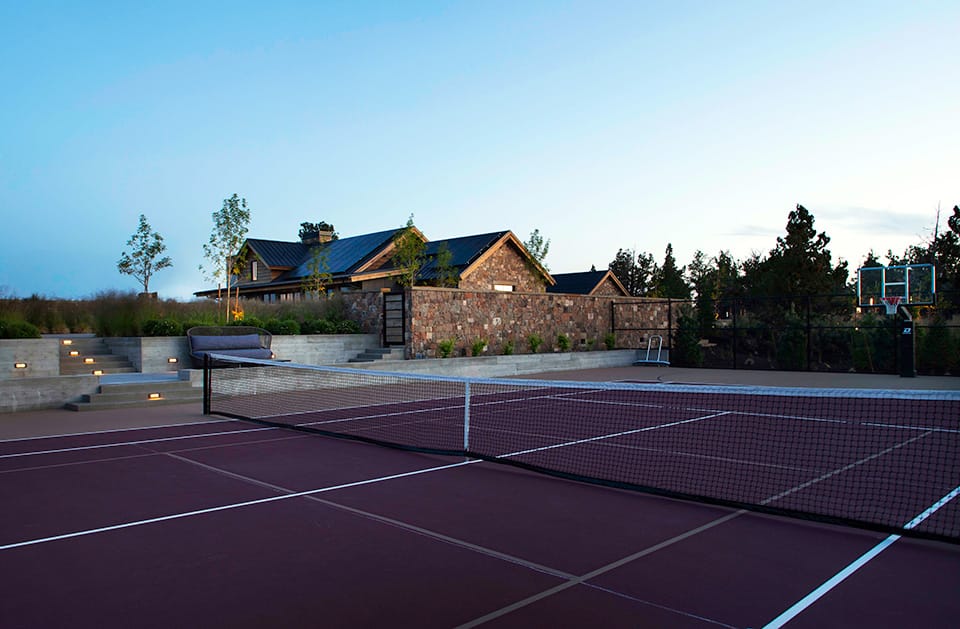
During design, there was no talk of the tennis court. Then suddenly Williams and Szabo got an email asking for a tennis court – a pretty large element to find a space for after the fact and make look intentional.
The tennis court was challenging because the house sits up on a plateau and the rest of the property has varying grades that slope down. The team decided to locate the court across a driveway, centered with the formal lawn. They sunk the court down five feet, which enabled them to put in a seating terrace and work with the natural topography. The subtle tan and maroon color palette helped the court blend in with the stone and natural environment, and it also tucked away the playing area from the wind.
Other late changes included adding a bunk room and another bedroom. The homeowners’ desire to screen HVAC units, electrical panels, generators, and solar infrastructure required creative solutions, but ultimately turned out well thanks to the team’s experience and professionalism. Permitting challenges arose because the two structures were far apart but they wanted a shared service yard. Typically, that type of configuration would be more common for commercial permits, but this was residential.
This house was originally engineered around rough sawn timber for all of the exposed structure, but they ended up with one spot that needed a 36-foot-deep timber beam, which is not readily available. They were going to have one exposed glulam beam and changed the whole structure to engineered beams wrapped in oak to get the intended aesthetic and maintain consistency. They reengineered the entire gravity system of the house to get the client what they wanted.
“I had to figure out how to integrate the desired changes without making them look like an afterthought. This was made even more challenging due to the fact that the foundation was in and most of the walls were framed – the county plans examiner told me I had the most revisions on any job that they’d ever had submitted with all the different structural modifications and added or expanded rooms,” Williams shares. It was continuously evolving and since the homeowner was a structural engineer he had a deep understanding of the complexities and an appreciation for the problem-solving that needed to happen to bring his vision to life. Thirty-two months later, the build and landscaping were completed and the family moved in.
A LIGHT TOUCH
As a signature characteristic of their work, SZABO, Mountain Sky, Inc., and Pacwest strive to be as light on the natural site features as possible. They worked with the existing grades for the tennis court, the lower lawn, and the cascading water feature. Their mutual ethos is that the more they can work with the natural topography, rock outcroppings, and existing vegetation, the less they disturb and therefore the less that must be put back together. The result is typically a home and site that feels integrated into the land.
“It’s always better to preserve than to restore.”
–Mike Szabo, Principal, Landscape Architect, SZABO Landscape Architecture
“It’s always better to preserve than to restore,” Szabo says. Additionally, approaching landscaping systematically with a holistic view means they can maximize budget for features a client wants instead of spending money repairing disturbed land. Williams echoes this philosophy, noting that he’s turned clients away who weren’t open to this philosophy. He adds, “I don’t want to impose a house on a site in a way that doesn’t make sense.”
Here, the owners had talked about a bocce court and other playful elements going in the space between the buildings. Szabo was receptive to their desire to have a fun space and made the landscape work with the built environment. It felt meant-to-be rather than forced.
Having been in their respective fields for 20 years each, the team was quick to develop fluency in the site and its specific topography. Speaking about how he reads the land, Williams explains how he interprets clues such as, “You can tell if there’s juniper growing that probably means it’s a shallow, rockier area so if we try to dig there it will be more expensive than if we dig elsewhere.”
Szabo agrees with Williams and shares that he also needs to spend time on the site beforehand to get a feel of it. He evaluates the views and significant natural features. “What do you want to preserve? What do you want to enhance? What is worth eliminating?” he asks as he gains familiarity with a site.
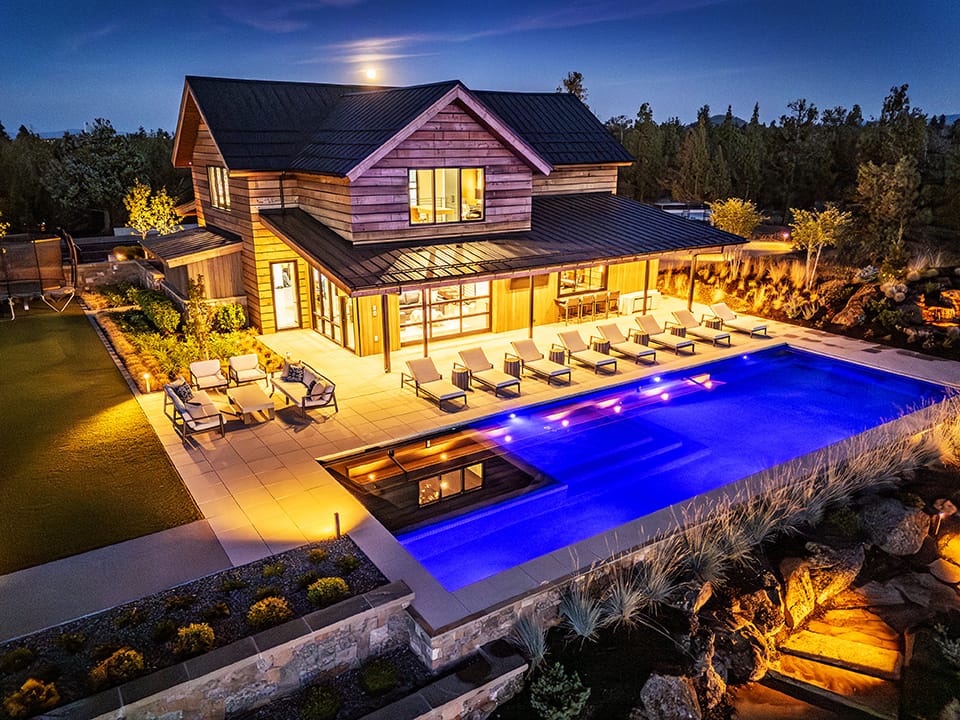
Sustainability and efficiency factored heavily into their work. From an architectural perspective, the horizontal siding is reclaimed barn wood that they re-milled for the home. The vertical siding is treated cedar to blend in with the reclaimed panels. The landscape is irrigated with a highly efficient irrigation system that utilizes weather-based real time adjustments, subsurface drip, and high-efficiency spray heads for the more manicured areas. Farther away from the house the plant material is mainly xeric, high-desert native landscape, and will only be irrigated for a couple seasons for establishment.
ETHICAL CONSTRUCTION
Having served on Architectural Review Committees in the past, Szabo learned to classify people into two different buckets: those who respect the natural land and plan their projects in response to the environment, and those who have no problem wiping it out to do whatever they want. “You can’t replace a 100-year-old ponderosa or a natural rock outcropping,” he says. “Setting the project and all the elements into the landscape and disturbing it as little as possible makes it feel more integrated in the landscape. It gives it a sense of place and is what makes it special.”
“The consideration of the experience in the house and the choice of materials makes you feel like you are living outside, and the architectural design and flow of the property truly lets you live that way. There are so many unique details that many people would never notice but that we as a design and con-struction team spent an incredible amount of time perfecting. It brings a lot of joy seeing those details, even the smallest ones, become reality.”
-Homeowner
On a custom home, there are independent times where each professional brings their expertise to the home’s architecture, interiors, or exterior landscape. This house is a tribute to the underlying unity the team must develop and the understanding that each part leads into another. The architecture leads into the interior design, and vice versa.
“We maximized functionality by designing three sets of built-in queen bunks with storage while using crazy fun colors and patterns,” Darden says of the bunkroom. “In the downstairs flex space there are three unique ensuites plus art, homework, and dance niches carved out. Additionally, there is a small ancillary kitchen in the pantry space behind the kitchen for maximum entertainment. Not to mention the pool house, which has additional guest quarters, an office, and entertaining space.”
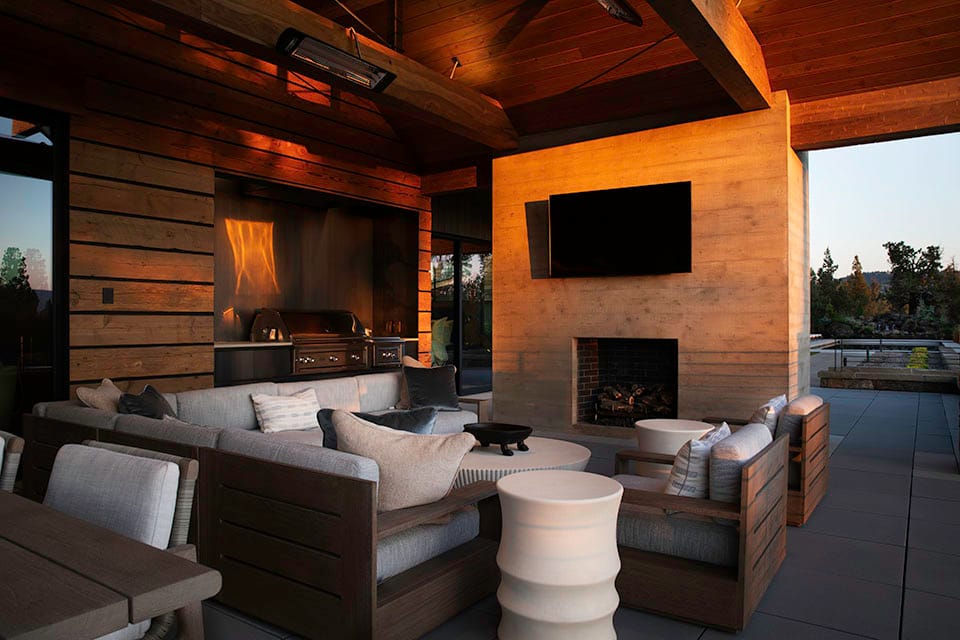
The structure gives way to the landscape. Seemingly disparate parts must come together as part of the same project. “Custom homes are shaped by a variety of inputs that are unique to each project; needs and wants of the client, character and topography of the site, potential views, solar orientation, requirements of the ARC, as well as proposed budget to name a few,” Williams reflects. “The challenge of bringing all of this together, creating a home just for them that feels like it was meant to be on their site, is what I love about being an architect.”
Szabo states his company’s goals in custom homes: “We want to be hired to help bring your dreams to reality.”
“The consideration of the experience in the house and the choice of materials makes you feel like you are living outside, and the architectural design and flow of the property truly lets you live that way. There are so many unique details that many people would never notice but that we as a design and con-struction team spent an incredible amount of time perfecting. It brings a lot of joy seeing those details, even the smallest ones, become reality.”
-Homeowner
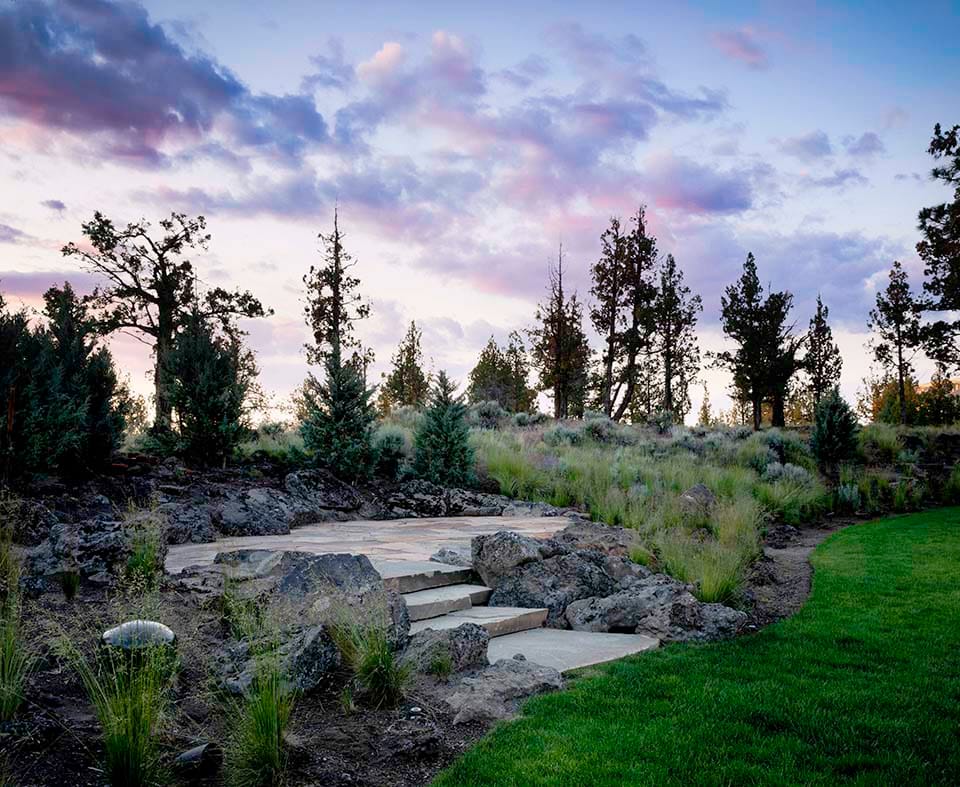
The homeowner’s satisfaction with the project shows how profoundly successful it was. “You cannot beat how well the house connects to the landscape,” he says. “The consideration of the experience in the house and the choice of materials makes you feel like you are living outside, and the architectural design and flow of the property truly lets you live that way. There are so many unique details that many people would never notice but that we as a design and construction team spent an incredible amount of time perfecting. It brings a lot of joy seeing those details, even the smallest ones, become reality.”
whj COVER FEATURE
