
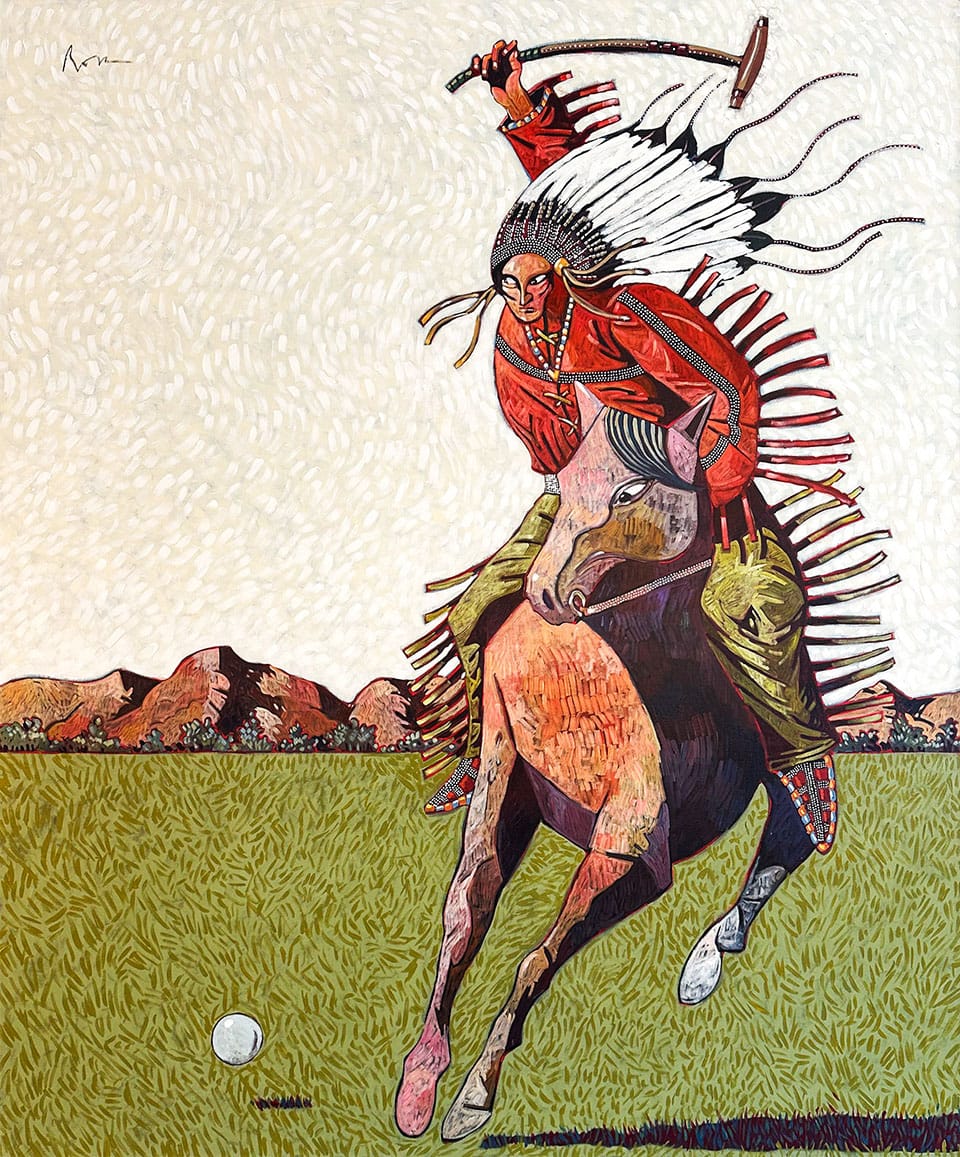
By Sabina Dana Plasse
The American West serves as a metaphoric palette for many artists, featuring dramatic and vast expanses of desert land, rows of mountain ranges, wide prairies, and expansive skies, along with the people who inhabit them and the flora and fauna that thrive there. It represents a living canvas for creativity, inspiration, and reflection on life. For almost half a century, Thom Ross has captured the culture and ethos of the West and beyond, creating works with his signature modern aesthetic that challenge established narratives, exploring historical events and questioning their interpretation.

AN UNCONVENTIONAL ARTIST
“WHETHER A STORY IS AN INVENTION BY AN AUTHOR OR A REALITY, IT HAS A METAPHORICAL MEANING THAT TRANSCENDS TIME.”
◄ Thom Ross, Artist
Ross depicts characters who embody the mythical and fabled West. Outlaws appear in numbers on horseback, larger than life in their billowing dusters. They have defined and pointed edges, much like arrows. Their identities remain hidden beneath wide brimmed hats, yet a sense of mysticism associated with the West permeates the landscape, colors, and subjects. Ross employs a well defined approach, ensuring that all his work signifies something much larger than the subject matter he depicts and identifies.
“I fell in love with The Alamo when I was six,” says Ross. “I did not know anything more than what I saw, yet I picked up something.” He adds, “These stories and historical events resonate with everyone because they tell the same story across all cultures, regardless of place, time, or country. It is all myth. When you see or read about history, you often deal with a mythic meaning and how history has been perceived it’s an opinion.”

Ross exemplifies his take on history through his original abstract paintings, which are based on real facts and how he has come to understand the histories and actions of prolific figures, including General George Custer, Buffalo Bill Cody, and others, as well as his love of baseball (he has also illustrated many books about the history of the sport).
“Through my art, these stories can flow over you without preconceptions,” says Ross. “Whether a story is an invention by an author or a reality, it has a metaphorical meaning that transcends time. These parables and human impulses remain the same. You can have these moments. I am not making judgments. It is the profundity that, as an artist, is my job to communicate.”
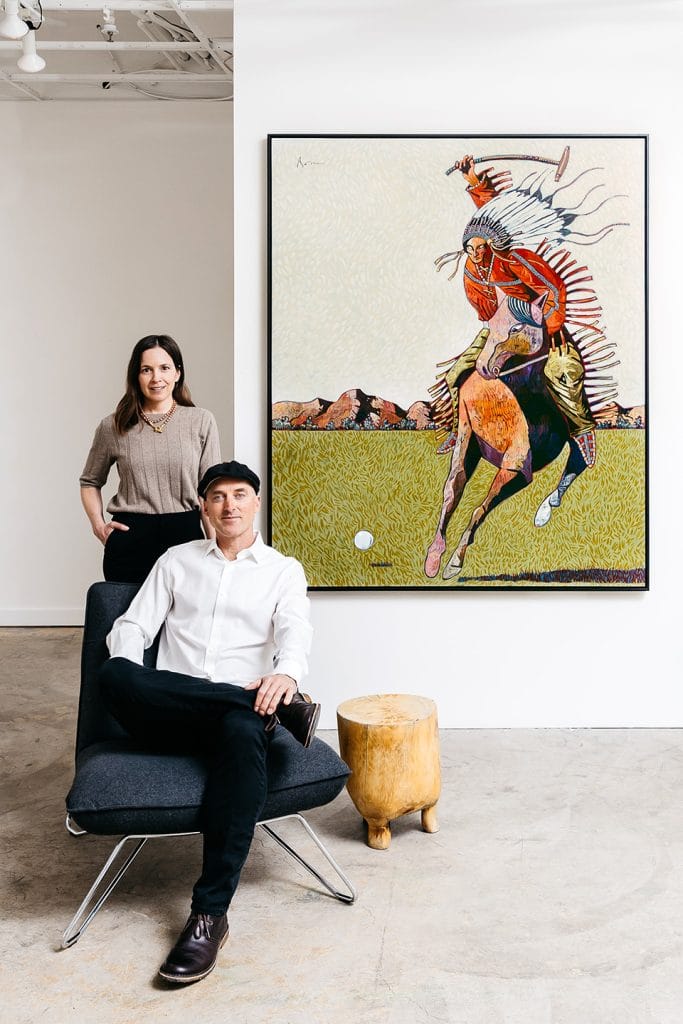
“The Metaphorical Meaning Of Historical Stories And Events Transcends Reality. Everything In Life Is What You See, And It Is What It Is, And That Is The Premise Behind My Work, Theoretical. I Have A Photograph Of A Native American Sitting On His Horse With His Polo Mallet And Polo Balls. They Played, And So Did The Cavalry. I Have Photographs Of Native Americans Playing Golf. I Have Accounts Of Them Playing Croquet In 1874.”
◄ Thom Ross, Artist
Bold colors, abstract forms, and a contemporary style characterize Thom Ross’s work. His interpretation of historical figures, events, and other subjects often incorporates humor and irony, showcasing scenes featuring Native Americans playing ping pong or General Custer with a pet pelican, grounded in research and a desire to learn about actual incidents. Always challenging viewers to rethink their understanding of history, Ross blends fact and myth to unveil deeper truths. It’s a duality that Ross portrays, one that lingers and resonates, making his work engaging and powerful, hard to forget.
“The metaphorical meaning of historical stories and events transcends reality,” says Ross. “Everything in life is what you see, and it is what it is, and that is the premise behind my work, theoretical.” Ross adds, “I have a photograph of a Native American sitting on his horse with his polo mallet and polo balls. They played, and so did the Cavalry. I have photographs of Native Americans playing golf. I have accounts of them playing croquet in 1874, and I could name all four of them who were playing, and I can tell you where it happened.”
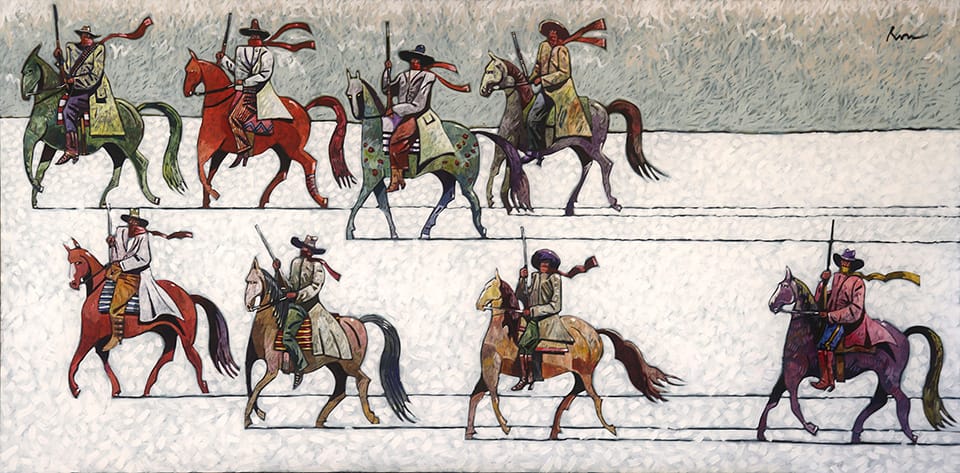
Ross defies the two dimensional stereotype of the stern faced Native American by showcasing that they are people just like everyone else who enjoy good jokes and a ball game. His work spans beyond his individual paintings to life sized recreations of historical moments, including Custer’s Last Stand, which features over 100 life sized warriors riding horses in the Battle of Little Bighorn at its original site in Medicine Tail Coulee, Montana, as well as a life sized replica of the 1902 photograph of Buffalo Bill Cody and his Wild West Show on Ocean Beach in San Francisco.
Ross has illustrated at least 20 books, including a history of baseball, and is the author and illustrator of Gunfight at the O.K. Corral in Words and Pictures. In addition, he illustrated the 100th anniversary edition of The Virginian by Owen Wister. His work has garnered recognition for influencing perspectives and encouraging a rethinking of how people understand history it is realistic and considered contemporary, even though Ross has maintained this approach for more than 40 years.
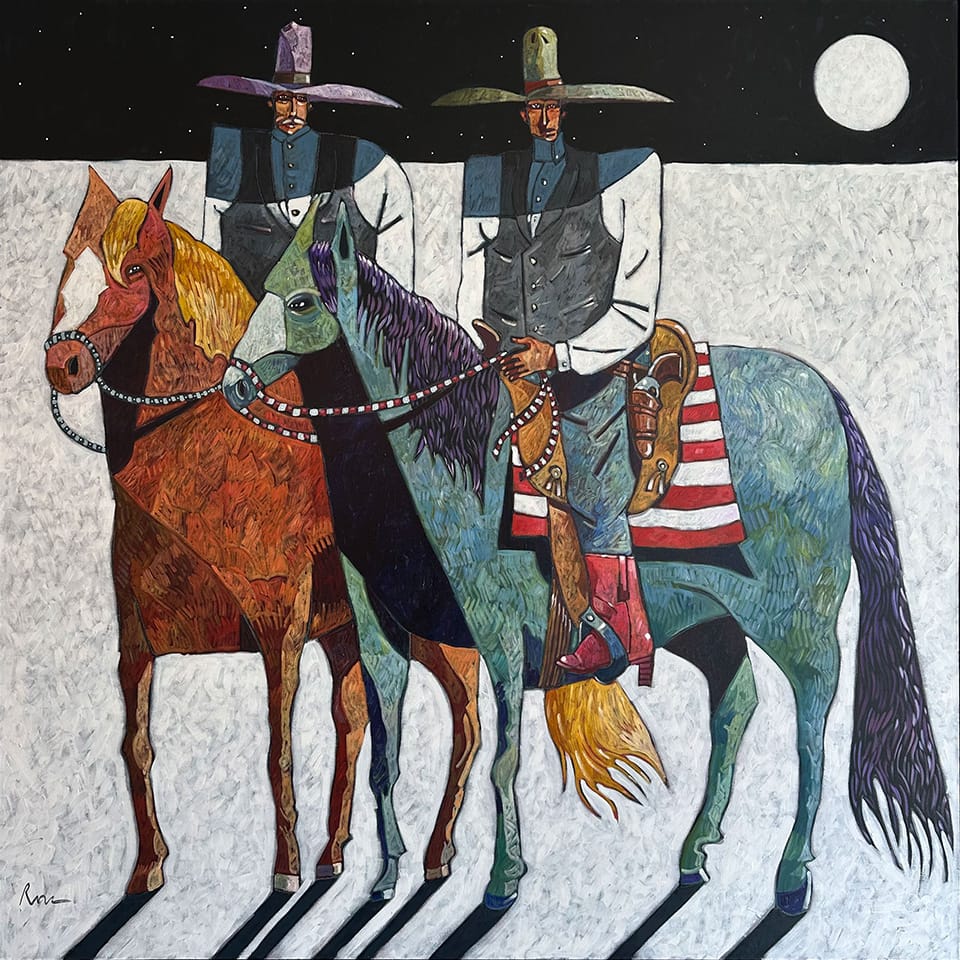
“The American frontier is a place where history and myth collide. It’s full of powerful tales of good versus evil stories that persist because it’s an eternal battle played out in the world, even within ourselves,” says Ross.
whj ART FEATURE
