
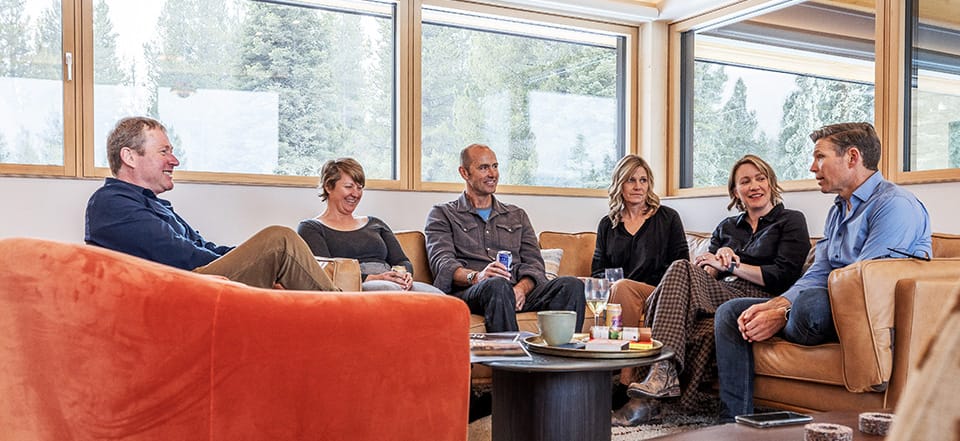
Moderated by Aaron Kampfe | Edited by Cynthia Logan | Location photography by David Hebert
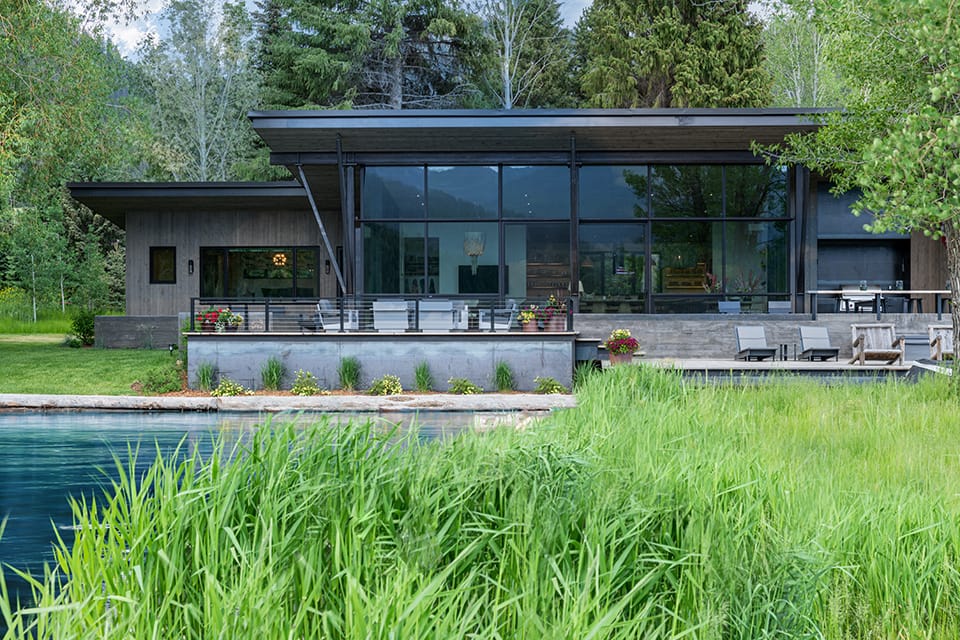
Panel location: Bridger Canyon Passive Haus | Designed by Love Schack Architecture, Bozeman
Devastating wildfires, floods, storms, and other extreme weather events have impacted communities in all parts of the country, and are bringing sustainability and resiliency to the forefront in the building industry. While resiliency focuses on creating or retrofitting buildings to withstand potential climate caused disasters and natural catastrophes, sustainability aims to reduce the environmental impacts of buildings. It focuses on conserving water, improving energy efficiency, and reducing carbon dioxide and other emissions.

This past spring, Western Home Journal’s Aaron Kampfe hosted a panel discussion on the role of sustainability in architecture, landscaping, and construction in the Rocky mountain west. A panel of sustainability minded professionals met in Bridger Canyon to share their expertise, insights, and personal approaches to this important, complex topic.
MEET THE PANEL

The CEO of Blanchford Landscape Group, ANDREW BLANCHFORD has been practicing landscape design and construction in southwest Montana since 1994 with a focus on integrating architecture, the natural environment, client needs, and sustainability into his company’s projects. Blanchford Landscape Group creates beautiful, functional outdoor environments that invite people outdoors on a daily basis to connect with each other and nature. They take cues from nature, using natural materials and creating landscapes that evolve and thrive in a healthy and sustainable way. Areas of sustainability focus include minimizing water use, building soils as a foundation for a healthy landscape, thoughtful design, and quality construction that considers the impact of the entire life cycle of each project.
LINDSAY SCHACK is Co-Founder of Love Schack Architecture, a regional design firm that specializes in low-energy design using natural materials, and she has sponsored Certified Passive House Tradesperson training in Montana and Wyoming in 2018, 2022 and 2023. Lindsay is a Certified Passive House Consultant, is certified by the National Council of Architectural Registration Boards, is a LEED-Accredited Professional, and is a member of the American Institute of Architects. Lindsay is the 2023 Chair of the AIA Knowledge Community for Small Project Design, and is the Architect of the first Passive House projects in Idaho, Montana, and Wyoming.
CHRIS LOHSS is the owner of Lohss Construction, which utilizes only the best materials, artisans, and assembly methods to create homes that showcase the lifestyles, dreams, and history that each deserves. He brings a genuine passion for merging his clients’ homes with their natural surroundings to each and every project, whether building a vacation home in the Yellowstone Club in Big Sky, a smaller getaway cabin outside of Bozeman, or a working ranch in Wyoming.
LIZZIE PEYTON has led Big Sky SNO (Sustainability Network Organization) as Director of Community Sustainability since 2021. Under her leadership, SNO published Big Sky’s first Community Climate Action Plan and began implementing impactful emissions-reduction efforts in transportation, waste, and energy. With a background in International Studies from Boston College and global experience ranging from Paris kitchens to Tanzanian farms, Lizzie brings a unique blend of cultural insight and ecological passion to her work, driving community-based sustainability solutions and building regional climate resilience.


Principal at Studio Architects, LEAH SHUTE takes a holistic approach to every project—listening intently to clients’ desires, immersing herself in the environment and surroundings, and taking cues about the lifestyle and setting to make the most of every build. Her diverse experience includes designing such projects as single and multi-family homes, healthcare buildings, resort communities, recreation centers, banks, schools, restaurants, and government buildings. She is a LEED-accredited professional with a passion for integrating sustainable elements into her designs.
whj (AARON KAMPFE) : WHAT ARE SOME OF THE CHALLENGES YOU FACE WHEN DESIGNING FOR SUSTAINABILITY AND RESILIENCY?
LEAH SHUTE (Studio Architects): Sustainability is integrated into many aspects of our architectural process, even on projects where it isn’t at the forefront of our goals. Sometimes, clients aren’t aware of some features that make their buildings more sustainable; they may not even know.
Some strategies are easy to implement in designs for our region due to extreme conditions. I also consider the embodied energy aspects; by the time we build a floor assembly with 8-12 different components often at sites on top of a mountain in Big Sky or at a remote ranch location, we’ve destroyed sustainable practices with so many layers of different subcontractors, trucks, and transport of various products. I try to focus on streamlining the composition and construction efforts, which inherently benefits the environment onsite as well as offsite throughout the duration of the project. The goal is to reduce emissions, energy usage, material consumption, and landfill waste.

“Architects and builders are in a really good place to give owners confidence that, ‘Yes, we can do this here,’ but it has to be part of the effort at the onset. It’s much more challenging if you decide later in the process.”
– Lindsay Schack, Co-Founder, Love Schack Architecture
LINDSAY SCHACK (Love Schack Architecture): These choices can be overwhelming for both clients and builders. In the beginning, I was boring people to tears talking about ventilation and mechanical systems, and thermal transfer through windows. I’d see their eyes glaze over; they just want to know if it looks cool. I realized that if I could get their house to perform well, on schedule, within budget, and to their aesthetic, that’s just what we do. I don’t ask for permission on every detail.
When clients come to us for a building that performs at a high level, we have the expertise to deliver that. We’ll help them make choices along the way. To be an empowered architect and a leader in the space, we had to take a little risk that they’ll like it when they get it. They don’t need to understand everything… there is some magic behind the scenes. Ultimately, they get a comfortable, durable, and resilient home, and they’re happy. Some clients want to sit next to me and nerd out on every little thing. Others say, “Yeah, that Passive House thing you do, I love that. Tell me when you’re done.”
Architects and builders are in a good place to give owners confidence that, ‘Yes, we can do this here,’ but it must be part of the effort at the onset. It’s much more challenging if you decide later in the process.
LIZZIE PEYTON (Big Sky SNO): If everyone involved in a building project has sustainability and resiliency awareness from the beginning, then a real impact can be made. Beyond the architect and builder, landscape designers, mechanical systems engineers, and even interior designers can all contribute to more efficient buildings that use less energy and water.
“I think what people miss on the landscape side is that soils are the foundation. It’d be like building a beautiful house without a foundation.”
– Andrew Blanchford, CEO, Blanchford Landscape Group

ANDY BLANCHFORD (Blanchford Landscape Group): It’s ideal if we can come to the table at site selection, because we want to offer perspective on the existing landscape and preserve what we can. We can’t recreate what Mother Nature had there, but if we see what’s there before it’s altered, we have a better opportunity to create something appropriate to both the new home and the environment surrounding it.
CHRIS LOHSS (Lohss Construction): People are getting more thoughtful about their environmental impact. They’re coming in earlier with this value at the forefront of the planning. It used to be that architects would wing it, and we would wing the mechanical; over the last 10 years there’s been a shift. It’s been awesome as a builder. It’s a nice trend.
whj : WHAT DO YOU RECOMMEND TO PEOPLE WHO HAVE TRADITIONAL EXPECTATIONS AROUND LANDSCAPING?
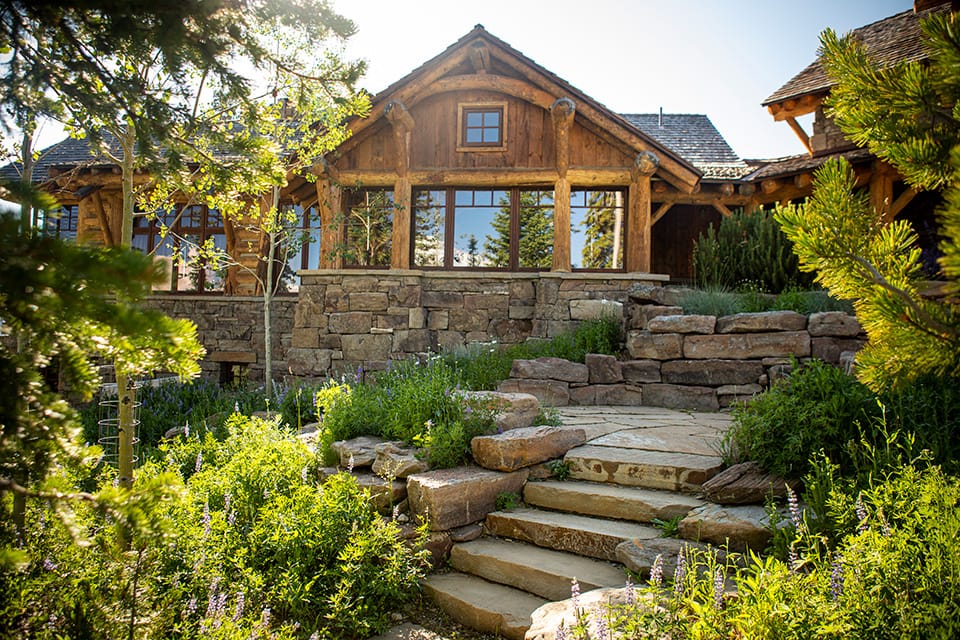
ANDY: I use this sort of Venn diagram. It’s three circles: one is the client’s needs, one is what the architecture is asking for, and the third is what the site is asking for. I don’t tell clients their needs are only one-third of the equation, but we can steer them that way, since most of them want the project to be appropriate to the site. If you have nice stonework on the exterior of the house, we’re going to pull that out in the landscape; it creates a seamless indoor to outdoor experience. It would be inappropriate to put in a bunch of turf grass in a natural mountain setting; we want to pull in that native meadow and the native tree and plant species. In general people here in Montana are receptive; they want to do it right.
LINDSAY: Do they recognize that they don’t want to compete with their landscape?
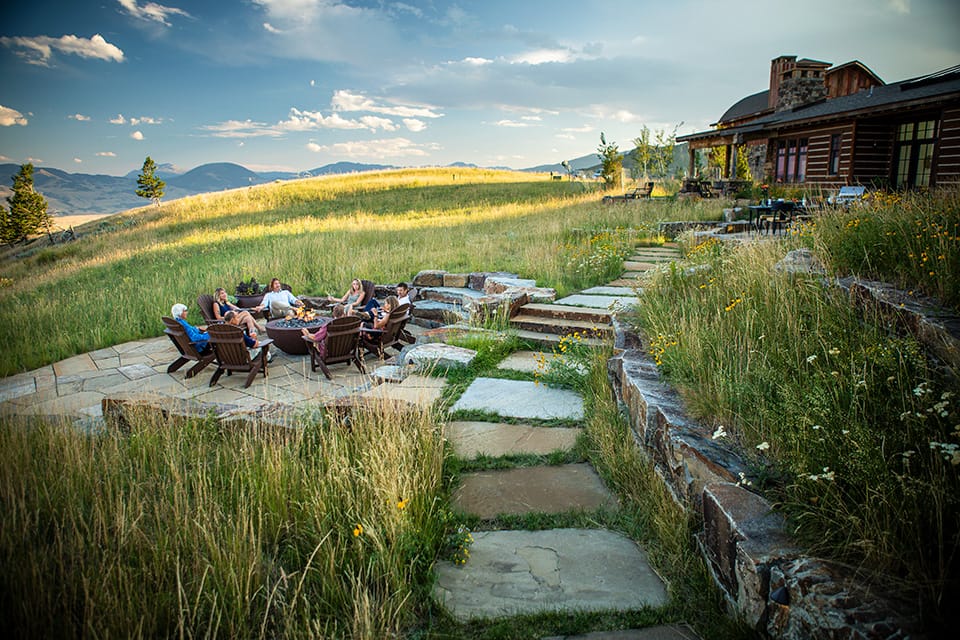
ANDY: Yes, I do find that. Sometimes less is more. You can do little destinations on a property a few stones and a chair. It doesn’t always need to be a big, heated patio.
LEAH: Most sites are in beautiful settings, so I strive to design to settle gently into the landscape, taking cues from the natural environment; don’t force it. Designs that employ a light touch are the most successful.
LIZZIE: Are you seeing more requests to create defensible space?
ANDY: Yes, that’s driven by insurance providers and is increasingly required in fire-prone areas. I don’t love the five-foot stone around the house recommendation; it doesn’t look great. We are working to find creative ways to meet insurance requirements and create an attractive aesthetic.
LIZZIE: Have you worked with crevice gardens? For example, you take a convex, angular part of the house and insert critical stones following that line. Then you have creeping ground covers like woolly thyme, and they thrive because the roots grow really deep.
CHRIS: Andy and I worked on a project in the Yellowstone Club that has some of the best landscaping strategies of any house I’ve built up there.

ANDY: Happy to hear that.
CHRIS: The site was like a bomb went off; today, it looks like a completely native scape full of wildflowers. It’s what every client wants, but it takes vision, a little artistry, and consistency. I don’t think it requires much irrigation now.
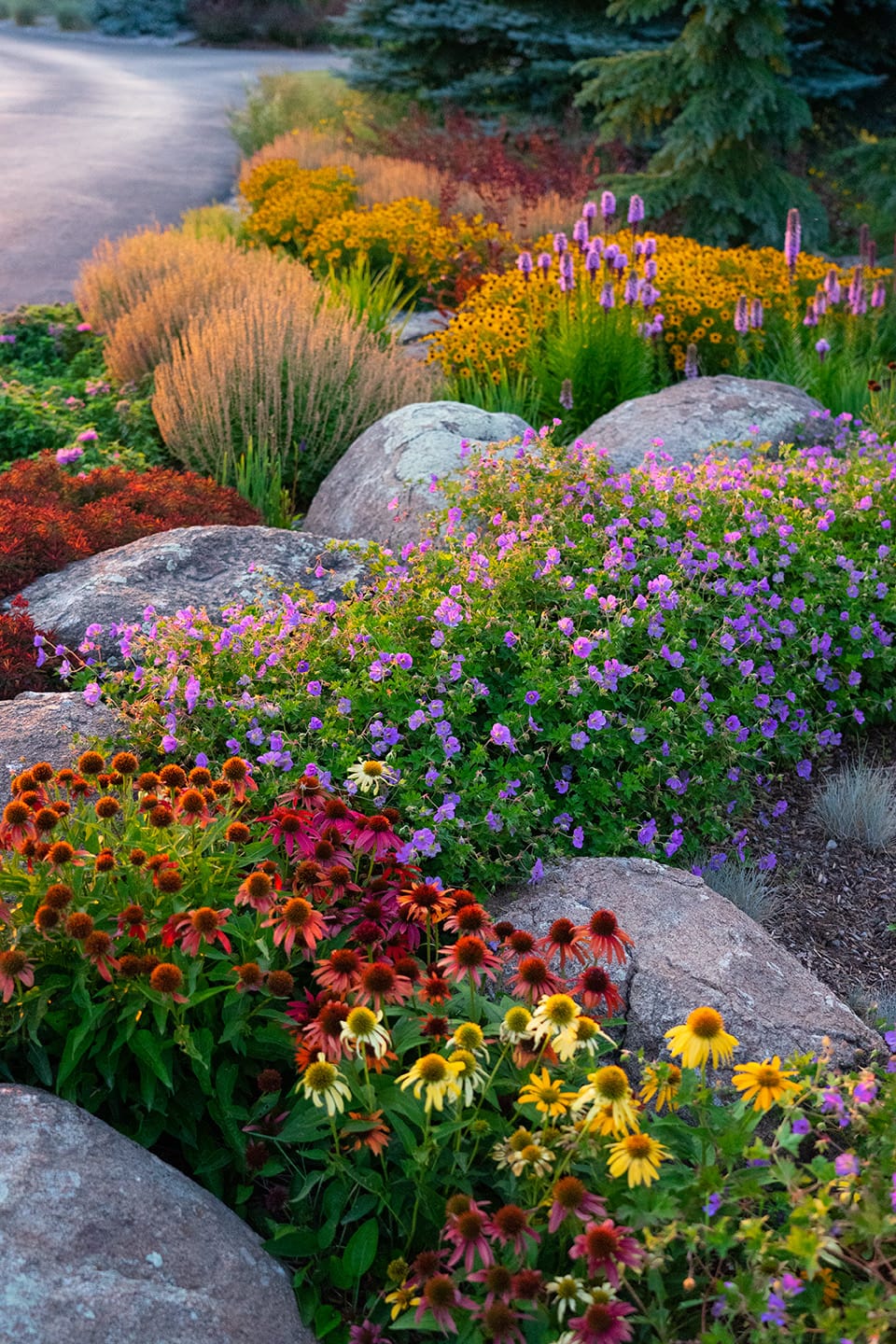
ANDY: It doesn’t really need any. Mother Nature did her work; the soil has been built by bacteria, microorganisms, and decomposing plant matter. I think what people miss on the landscape side is that soils are the foundation. It’d be like building a beautiful house without a foundation; the day you’re done it would look good, but in a year or two it would be crumbling. The soil is the medium for growth, and in mountain environments like Big Sky, there is almost no existing topsoil, so all that topsoil takes a ride up the Gallatin Canyon. It’s very costly, and necessary to build the foundation for the landscape.
whj: WHAT ARE THE MOST ECO-FRIENDLY BUILDING MATERIALS FOR RESIDENTIAL CONSTRUCTION?
LINDSAY: I have a client in Driggs where we’re down to the type of gyp board we specify. We’re seeing a nice relationship between natural materials and healthy indoor air. Stone, wood, glass, ceramic… not spaceship materials. If the house isn’t finished with plastic and foam, you can improve indoor air quality.
LEAH: Quick-growth natural materials are great! Sometimes it’s difficult to eliminate glues and resins from construction products, especially when we are trying to reduce the degradation of forests. It’s a give and take, so we need to be conscientious whenever possible to use better products and try to offset negative aspects with ventilation and healthy design implements a living wall, for instance.
ANDY: Yeah. Bring plants indoors. We all spend more time indoors, so bringing nature indoors can bring the health benefits of being in nature to our indoor environments. As far as sustainable materials, plants are our largest contribution, as they are usually grown regionally, and produce oxygen and absorb carbon, among many other environmental and soil-building benefits. In the long term, when we design appropriate outdoor spaces and build a healthy soil and plant ecosystem, we reduce the need for chemicals, fertilizer, water and turf care, reducing the lifetime costs and impact of traditional lawn care. This year, we made a commitment to go completely organic on our lawn programs, which aligns with our values and many of our clients requesting chemical-free care.
“104 million miles are traveled in the Gallatin Canyon every year farther than the distance from here to the sun!”
– Lizzie Peyton, Director of Community Sustainability, Big Sky SNO
whj: LIZZIE, TELL US ABOUT BIG SKY SNO.
LIZZIE: Big Sky Sustainability Network Organization (SNO) was established in 2020 to focus on sustainability in the community.
We engaged 60 stakeholders to create our Community Climate Action Plan with four improvement priorities, with the first two focusing on preserving the natural environment and reducing carbon emissions from transportation. (104 million miles are traveled in the Gallatin Canyon every year—farther than from here to the sun!) Third, addressing buildings and energy, which are 63% of our emissions. Fourth, reducing consumption and waste. We created buildbetterbigsky.org, which has water-wise, energy-efficient, wildfire and sustainable materials to engage the community in being more sustainable. Another tool is alpenscapes.org, a collaboration between the Big Sky Fire Department, Grow Wild, Gallatin River Task Force, and us. It synthesizes and provides resources on how to create landscapes that are both water-wise, fire-wise and feature native species. Both these resources are free and available to the public; the hope is that they create a groundswell of engagement and action. Both platforms amplify the messaging around intentional designing and building.
whj: HOW ARE YOU DESIGNING TO ADDRESS OUR FIRE-PRONE ENVIRONMENT?
CHRIS: We’re using some fire-resistant, thermally baked materials; then you go to a fire-resistant sheathing underneath the siding. If we have good well water, we’ll do an eight-inch specific well that can hook onto a pumper truck. We’re also doing an irrigation perimeter that benefits the landscape and offers a little defense. You can get into things like E-ventilation or specialty vents; Vulcan Vents prohibit embers from entering the vented cavity. All these things for fire retardancy get expensive, but there’s a value if you’re able to get insurance. We see self-insurers doing everything to the nines on the security side of things.
LIZZIE: Why do the triple-pane windows do what they do with fire? Is it the fact that there’s a neutral gas in between them?
LEAH: We consider the material palette, particularly exterior. There are cementitious materials and metals, including a much-improved array of wood look products that can replace flammable wood. We have been using intumescent coatings in commercial projects and are starting to utilize them more in residential construction to protect wood structures. There are also charred wood products and more options of dense fire-resistive wood available.
LINDSAY: It’s basically the insulative assembly of all three panes; you could even get this with a double pane. The assembly of the window is air-sealed and detailed to where we’re not getting the same thermal transfer through it. It’s isolating inside from outside. There’s no window that can kick a bad fire, but at the very least, it’s not going to blow out and let smoke in. The impact of these building science principles hadn’t been observed in wildfires until recently, but now we see the benefits of maintaining healthy indoor air. I wouldn’t say a Passive House is designed to prevent wildfire risk directly, but the net effect is that these homes are easier to defend from wildfire risk.
“People are getting more thoughtful about their environmental impact. They’re coming in earlier with this value at the fore – front of the planning; it used to be that architects would wing it, and we would wing the mechanical; over the last 10 years there’s been a shift.”
– Chris Lohss, Owner, Lohss Construction
ANDY: We pay attention to trees and shrubs, especially evergreens, located close to homes. We want to use leafy herbaceous plants close to homes without flammable wood mulches. Some insurance companies are requiring a five-foot gravel or stone border around homes in fire-prone areas, and we are working on ways to incorporate these requirements in an attractive way. One of the most effective tools we have is installing a 30-60’ perimeter irrigation system that can be deployed in the event of fire. We have a client whose home was saved in the Bridger fire by their perimeter irrigation system.
whj: HOW CAN CONSTRUCTION WASTE BE MINIMIZED THROUGH SUSTAINABLE PRACTICES?
CHRIS: Just by being efficient and organized with all your materials. We have all the plywood protection from each project stacked up and stored at our log yard; the guys don’t go buy new sheets every time. We’re saving a few bucks while trying to create less waste. It starts at the top and works down to the laborer; we educate subs on how we organize materials and scrap, and discuss how to stack tidily on a project versus the “rambling rancher.”
LEAH: Every trip to the landfill uses energy and adds more pollution.
CHRIS: Watching the flood of traffic through the Gallatin Canyon is alarming, especially when you have a remote project. We utilize company vehicles to transfer our carpenters to job sites. This reduces the number of vehicles on the road and ensures they travel in a reliable vehicle that is suited to the extreme weather in our region.
LINDSAY: Do you think people use a remote location as an excuse to not meet certain carbon or sustainability goals? Or does that inspire you to push a little harder even though your clients aren’t saying, ‘Please do it this way’?
CHRIS: Yeah, it can be an excuse, but we tie that into costs—that gets their attention. Then we might say; “Hey, you’re on propane. Do you want to go to geothermal, or put some solar in? Because you’re going to save all those trips.” Some clients decline, but others say, “I want to use some green energy; I don’t want this big footprint.”
LIZZIE: The landfill near Banff charges nine times more for unsorted C&D (construction and demolition) waste. If you bring it in sorted, you pay a nominal fee and they resell the categorized waste on site. You’re not going to get every home builder to do it, but if it’s more expensive because your waste drop is different, you’re more likely to be mindful of how you manage your waste.
“Frankly, we have to make sustainability attractive enough to expand the audience and weave it into our designs to increase our impact.”
– Leah Shute, Principal, Studio Architects
whj: HOW DOES SMART HOME AUTOMATION CONTRIBUTE TO SUSTAINABILITY?
CHRIS: Some people are techie and want their shades to come down at a certain time of day, and they want those pre-programmed. All that can definitely make your house more energy-efficient. Same with temperature settings and automatic lawn systems.
ANDY: You can get sensors to monitor soil moisture. These water sensors will activate irrigation only when it’s needed. The perspective in the irrigation trades is that you want to keep it from dying. If you want to make sure it doesn’t die, you add water. Often, people don’t want to pay for the sensors and smart controls. The short answer is that water is too cheap. If it were more expensive, it would be economically valuable to do it. We install weather stations and rain/freeze sensors on our systems so, at a minimum, we are not running irrigation during cold, wet weather. We are pushing technological solutions for irrigation systems to improve water management.
Another avenue we are pursuing is robotic mowing. It’s like a Roomba vacuum for your lawn. These electric and automated mowers provide turf health benefits by keeping it cut regularly, mulching the clippings, and reducing soil compaction. They also keep a lot of mow crew trucks and gas-powered mowers off the road, reducing emissions.
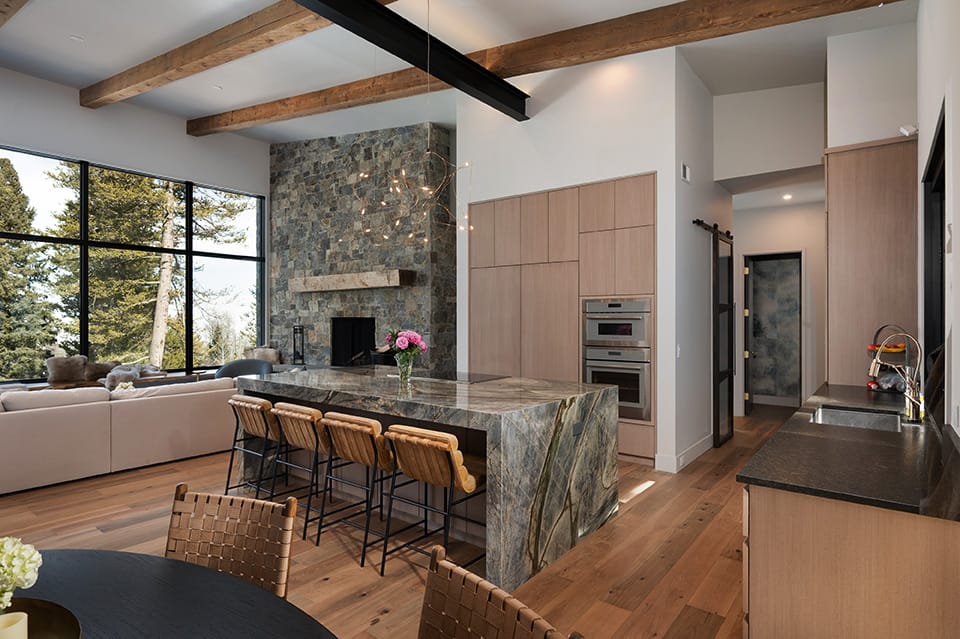
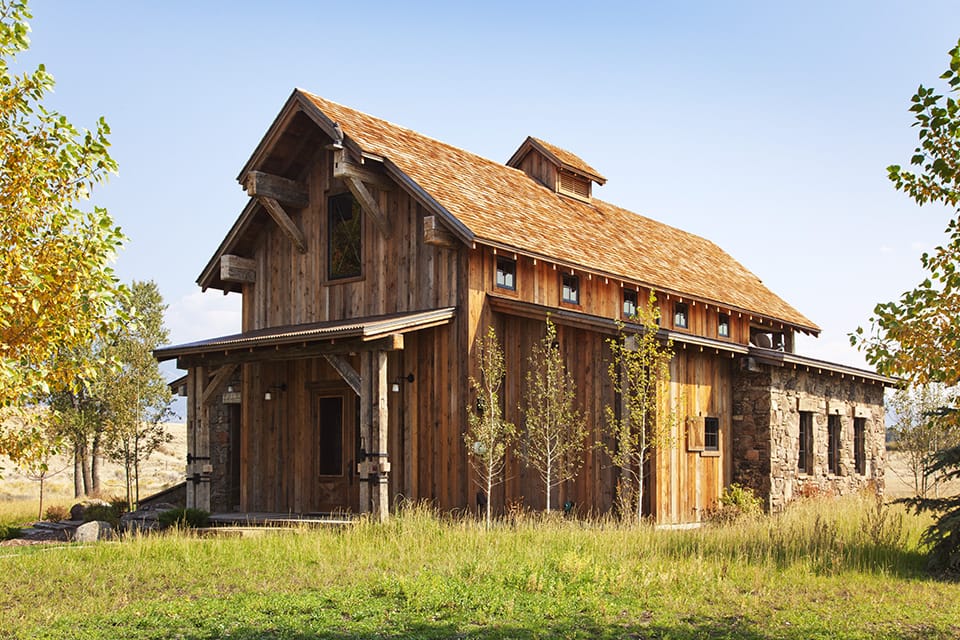
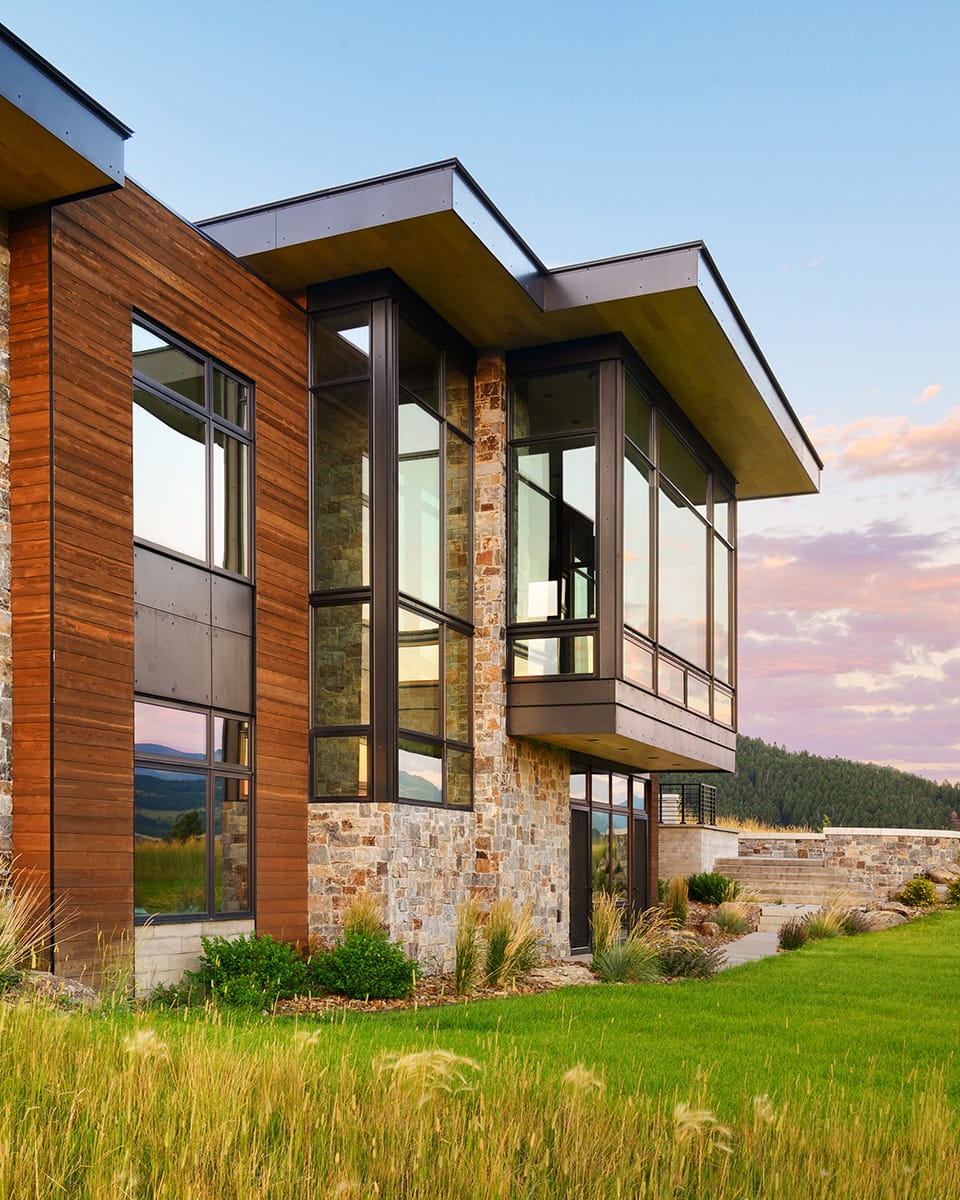
LINDSAY: When I tell clients, “We prioritize projects that have performance goals,” some blink at me as if they’re wondering, “What does that mean?” People often don’t realize they have performance goals. Just, “How beautiful is it? How will it look in the photo shoot?” That’s a valid measure of success, and we can help you become a successful performer, just like in athletics. We don’t push clients to a particular certification standard. Most of our luxury clients want things to work seamlessly. They don’t want to be in charge of levers and pulleys and gadgets and buttons and alarms.
whj: HOW CAN PASSIVE DESIGN STRATEGIES REDUCE ENERGY CONSUMPTION IN HOMES?
LINDSAY: Passive House methods optimize the home’s design for the specific purpose of reducing energy demand requirements. We take this a step further by applying this method with materials that are healthier for the users and the environment.
LIZZIE: From an energy standpoint, the first two things I ask about are the size of the building and the building envelope. Do you need this much square footage? Maybe not. You can scale appropriately based on assessing needs. That’s the first way you’re going to minimize utilities. Creating a strong building envelope doubles down on keeping those utilities low, as you’ll have to heat less in the winter.
LEAH: We all have these beautiful glass house projects, many without window treatments on them, so all night long when views aren’t visible and the temperatures drop, heat is lost. Windows, however good they profess to be, are the weak link in the enclosure. Simply utilizing window treatments at night and when unoccupied can significantly reduce energy loss and enhance comfort.
whj: WHICH ASPECT OF SUSTAINABILITY DO YOU FIND THE MOST DIFFICULT TO ACHIEVE?
CHRIS: Some people want the whole house to be glass. That’s R6 at most. Triple-pane used to be rare; it’s almost the norm now. We’re getting them to be more carbon neutral with other tactics. Probably half the homes we’re building now utilize geothermal.
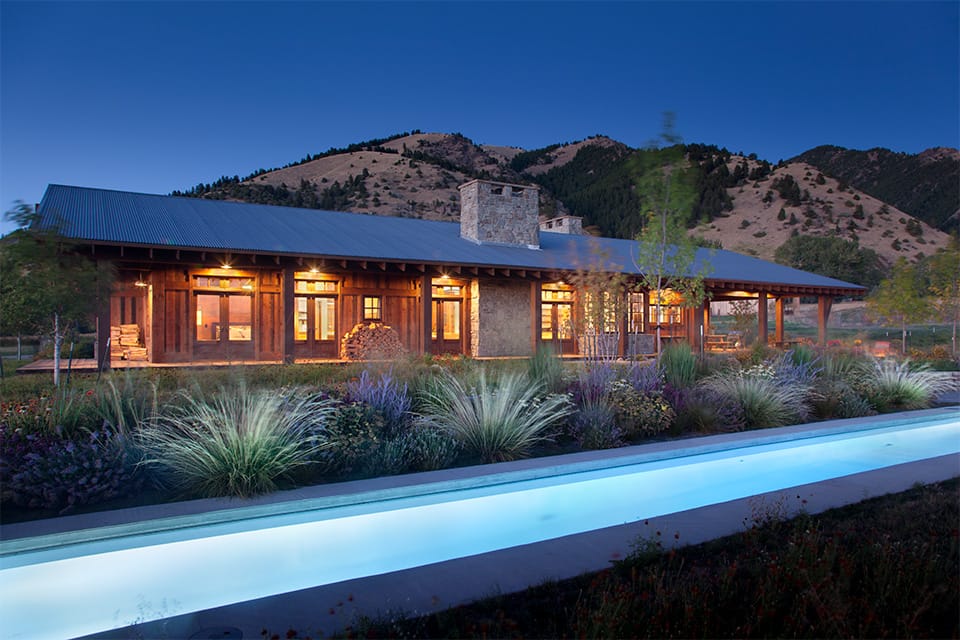
LIZZIE: There are two homes in Big Sky with solar shingle roofs; they’ll be a good telltale sign of how well they’re working.
ANDY: While we do add value from a sustainability perspective by bringing nature into the built environment, we still use a lot of less sustainable products. Most irrigation components are plastic. Controlling weeds without toxic chemicals is costly, and some people don’t want to pay for that. Trucking is a big one. A large mountain project can require 25 to 75 truckloads of material (soil, gravel, waste) being moved in and out. Currently, our most commonly used flagstone comes from Tennessee. That’s a lot of diesel burned to complete each project.
LINDSAY: Our firm is building to Passive House standards on par with other luxury residential. When people ask about cost, I say, “Well, the cost premium used to be about five percent; it’s down to two percent. You might be spending more, but you’re getting more.” And that’s an investment, right? The assumption is that a house like this is exorbitantly expensive in our climate zone—we’re showing that’s actually not the case. Furthermore, if you factor in the operational cost of the building over time, it is absolutely cheaper to build this way.
LEAH: Some strategies don’t carry a premium; it’s often possible to simplify structure to offset costs. We are also fortunate to have clients who aren’t on a tight budget, so it’s not always a price consideration. Frankly, we have to make sustainability attractive enough to expand the audience and weave it into our designs to increase our impact. To do so, we need to be increasingly clever about infusing these strategies and make them appeal to clients.
LINDSAY: Isn’t it a real opportunity for architects and landscapers? As building professionals, we need to put options on the table that a lot of homeowners may not realize are available. Ten years ago, I heard a lot of, “Hey, Lindsay, I build what people pay me to build.” It’s like they’re saying, “I don’t take responsibility.” I get that they might not want to be an advocate for a particular system, but aren’t we the experts the client is hiring to help them make good decisions?
THE LOCATION: BRIDGER CANYON PASSIVE HAUS
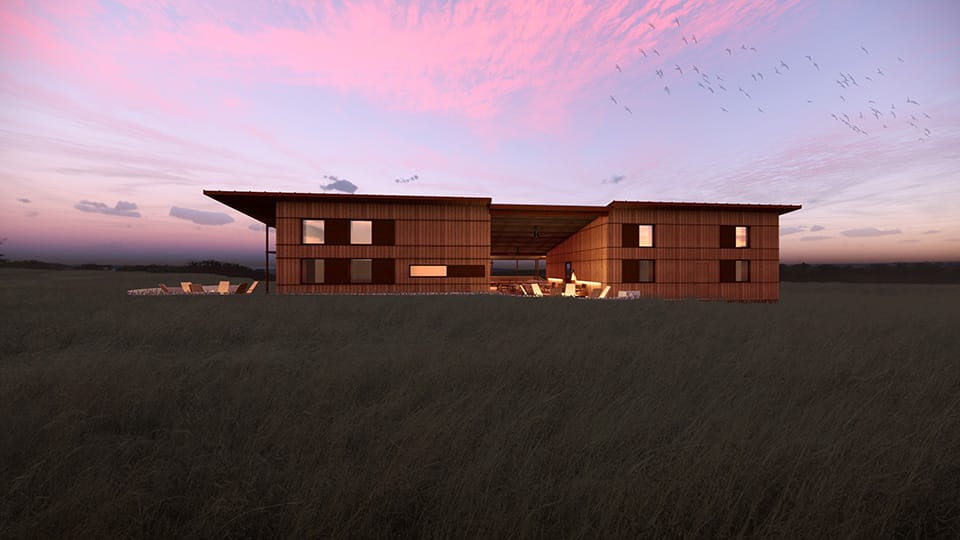
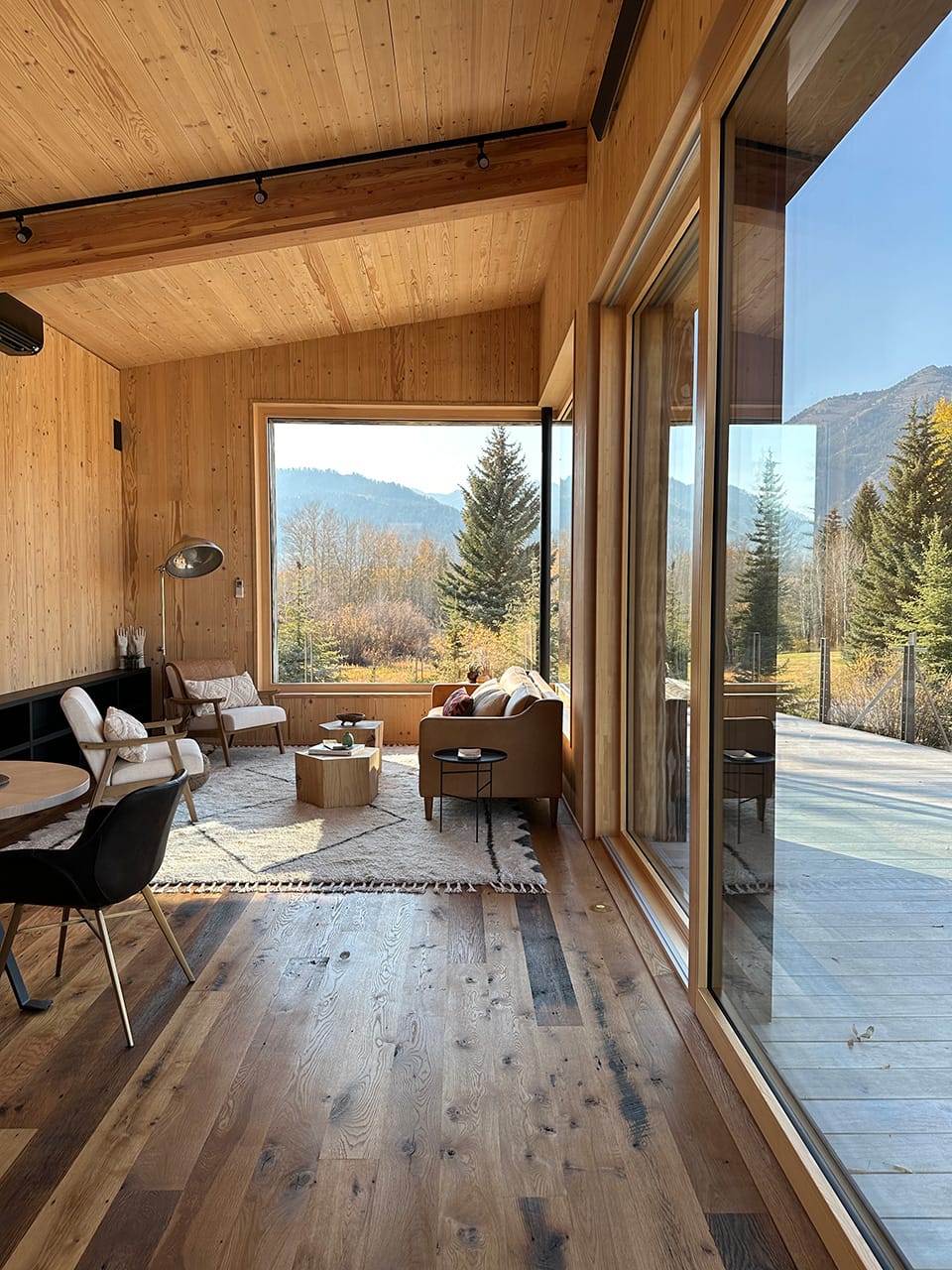
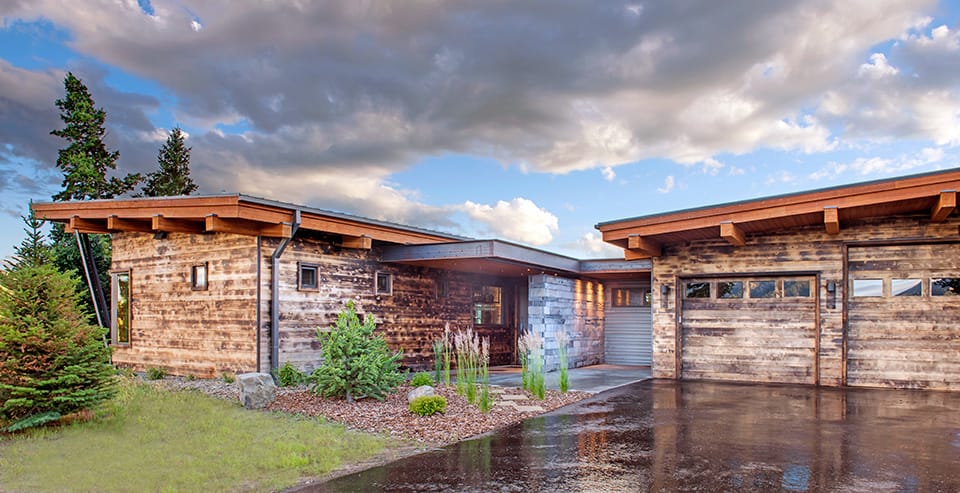
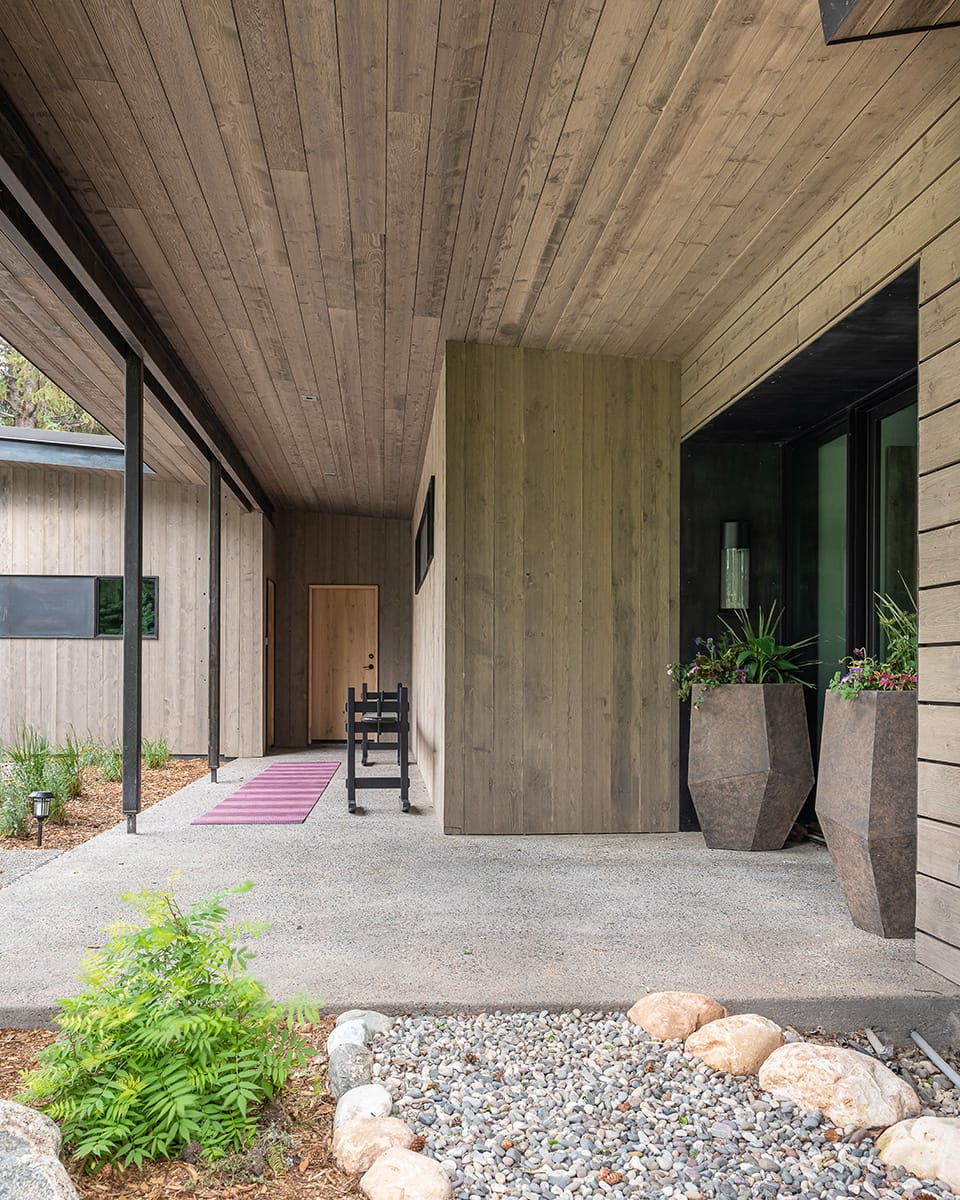
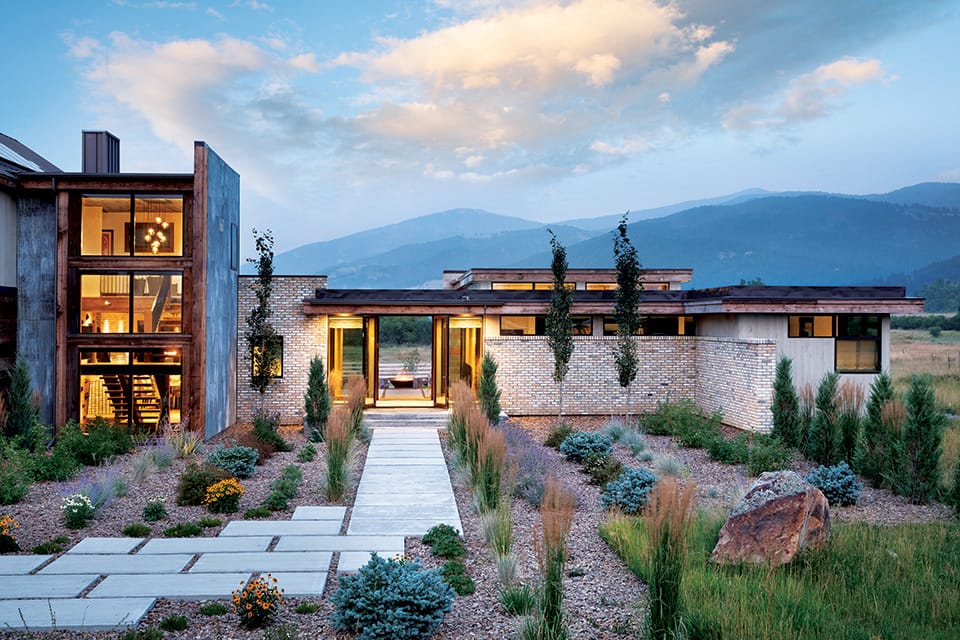
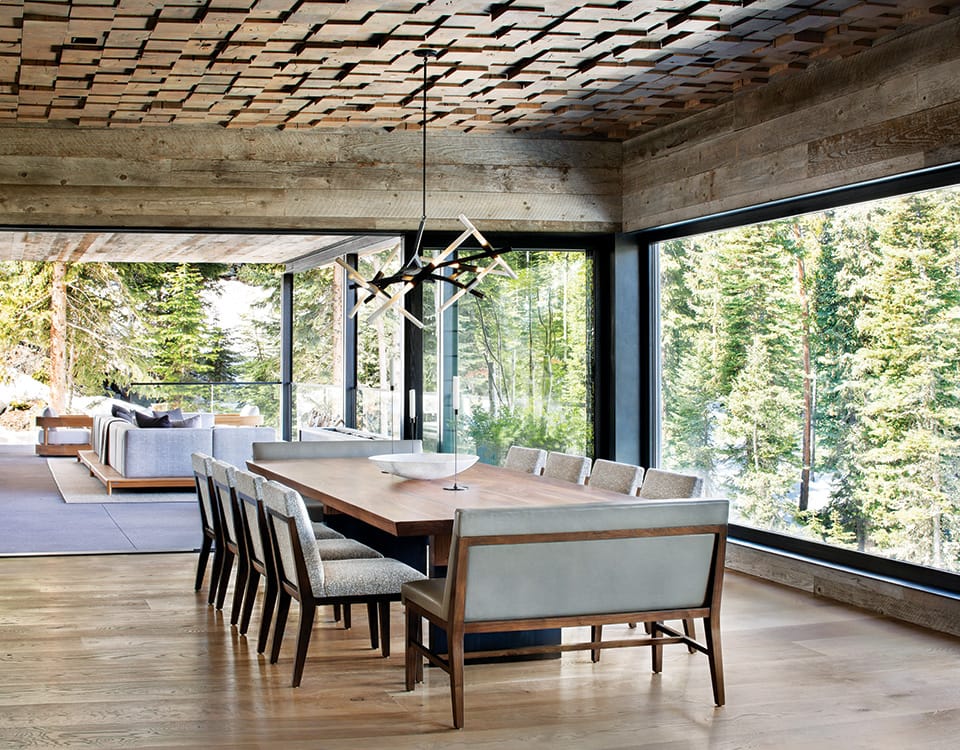
Nestled at the base of the Bridger Mountains, this four-bed-room retreat in Ross Peak Ranch was designed by Lindsay Schack of Love Schack Architecture for efficiency and comfort, maximizing natural light and showcasing stunning mountain views. Surrounded by tall pines, the home’s facade blends harmoniously with the wooded, four-acre site. Large triple-pane windows throughout the structure provide a seamless connection to the landscape, the pinnacle of which is Ross Peak.
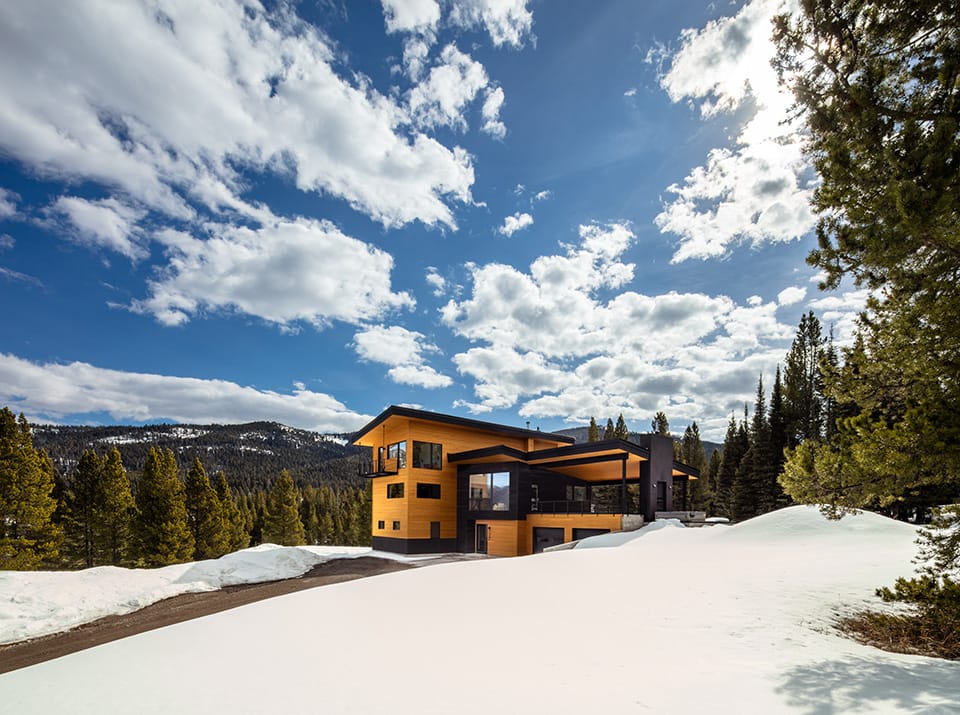
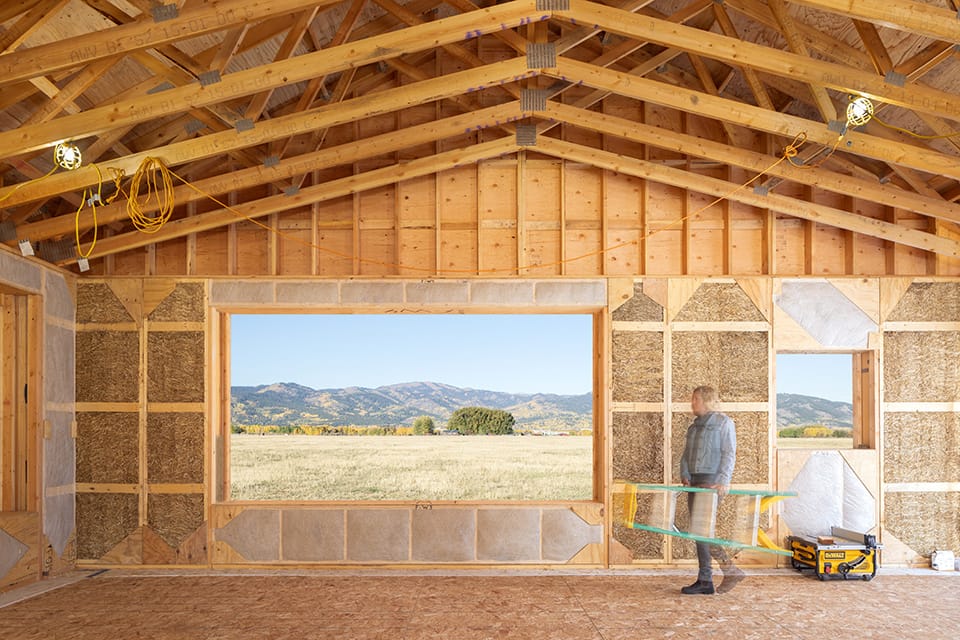
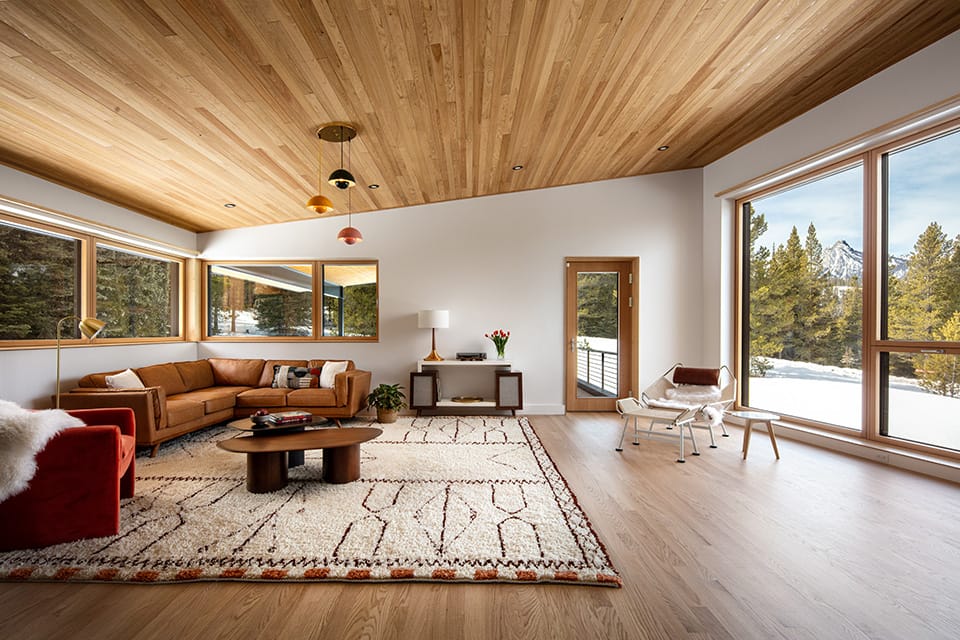
“This house is all about the views, bringing the outside in which means the walls are pretty robust,” says architect Lindsay Schack. “There is a lot of glass here for a passive house,” she notes, pointing out a particularly large window wall in the living room. “It was a big relief when this huge piece of glass was installed. Notice how the glass is inset from the outside plane of the walls; this is fussy, but the windows will perform better. You can stand in front of this wall in your bare feet at 25-below and watch a snowstorm.” Metal-clad exterior sills slope downward to drain any moisture buildup.
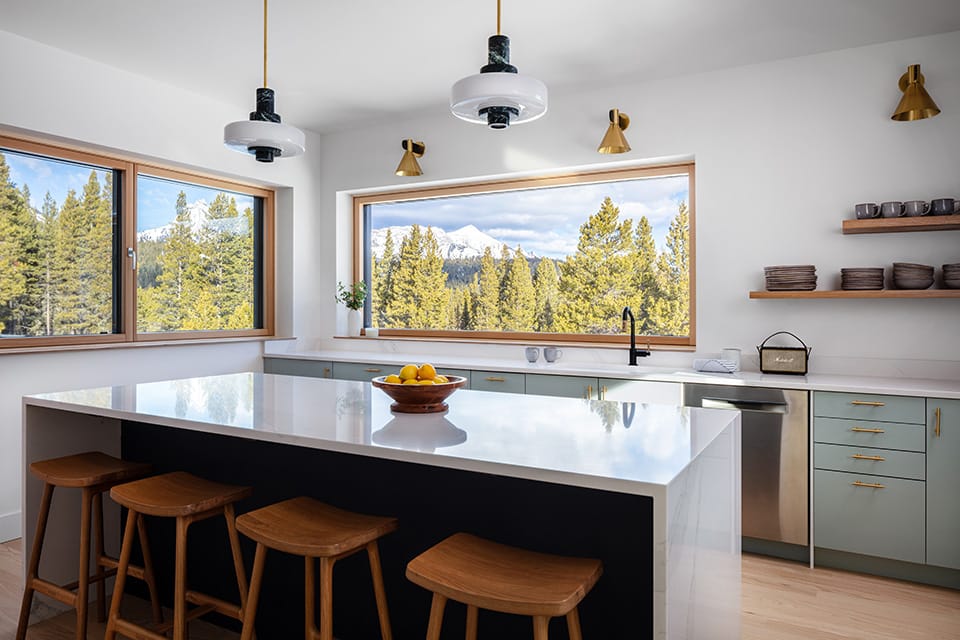
In addition to glass walls and doors throughout the three-story structure, windows alternate between horizontal panoramas and portrait views. “The mountain views are pretty dramatic,” says Lindsay. “We’re close to the street, but you don’t hear the highway, because the wall and window assemblies are so well insulated.” While many of the windows are fixed to maximize efficiency, those that open are “tilt and turn,” a technique used more in Europe than in the U.S. “The doors and windows are Passive House certified,” says Lindsay. They’re clad on the outside with wood on the inside.”
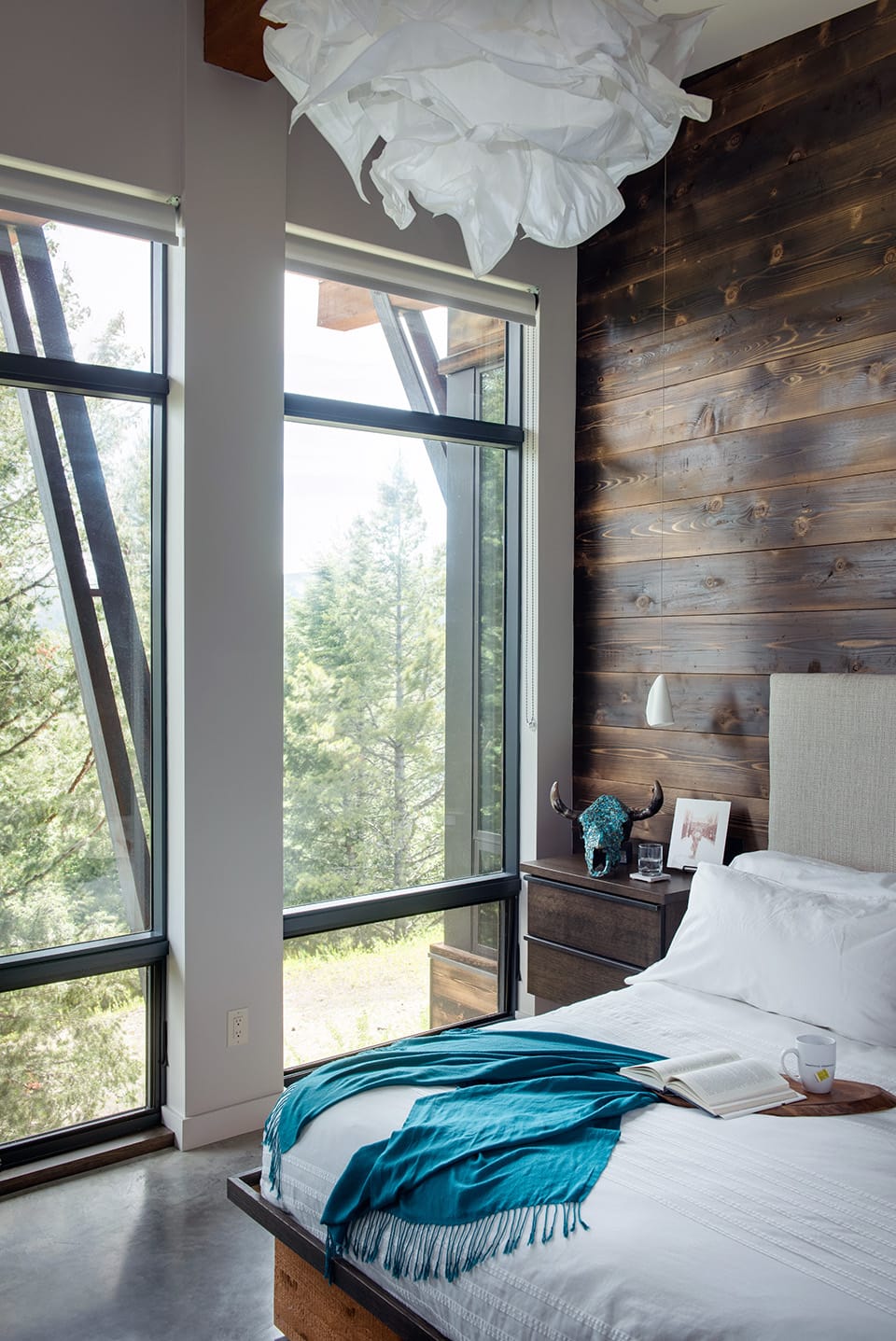
The entry level includes a mudroom, laundry room, guest rooms, and a spacious garage. “It’s home command central,” says Lindsay, touting the Zehnder ERV heat exchanger in the ‘dream’ mechanical room. The home’s air-to-air heat pump system, coupled with the concrete stem wall that surrounds the garage (separating it from the house), make this level so cozy that guests may linger before heading upstairs.
With close friends as nearby neighbors, the owners anticipated frequent entertaining, and wanted an outdoor space that afforded safety and respected wildlife, so Love Schack designed a covered outdoor patio just off the living room, complete with a fireplace and hot tub. “There is no gas in this project,” mentions Lindsay. “A wood stove in the living room is the only combustion element, and it’s ducted to keep smoke out, because if you build an airtight home, you’ve got to vent and filter the air properly.”
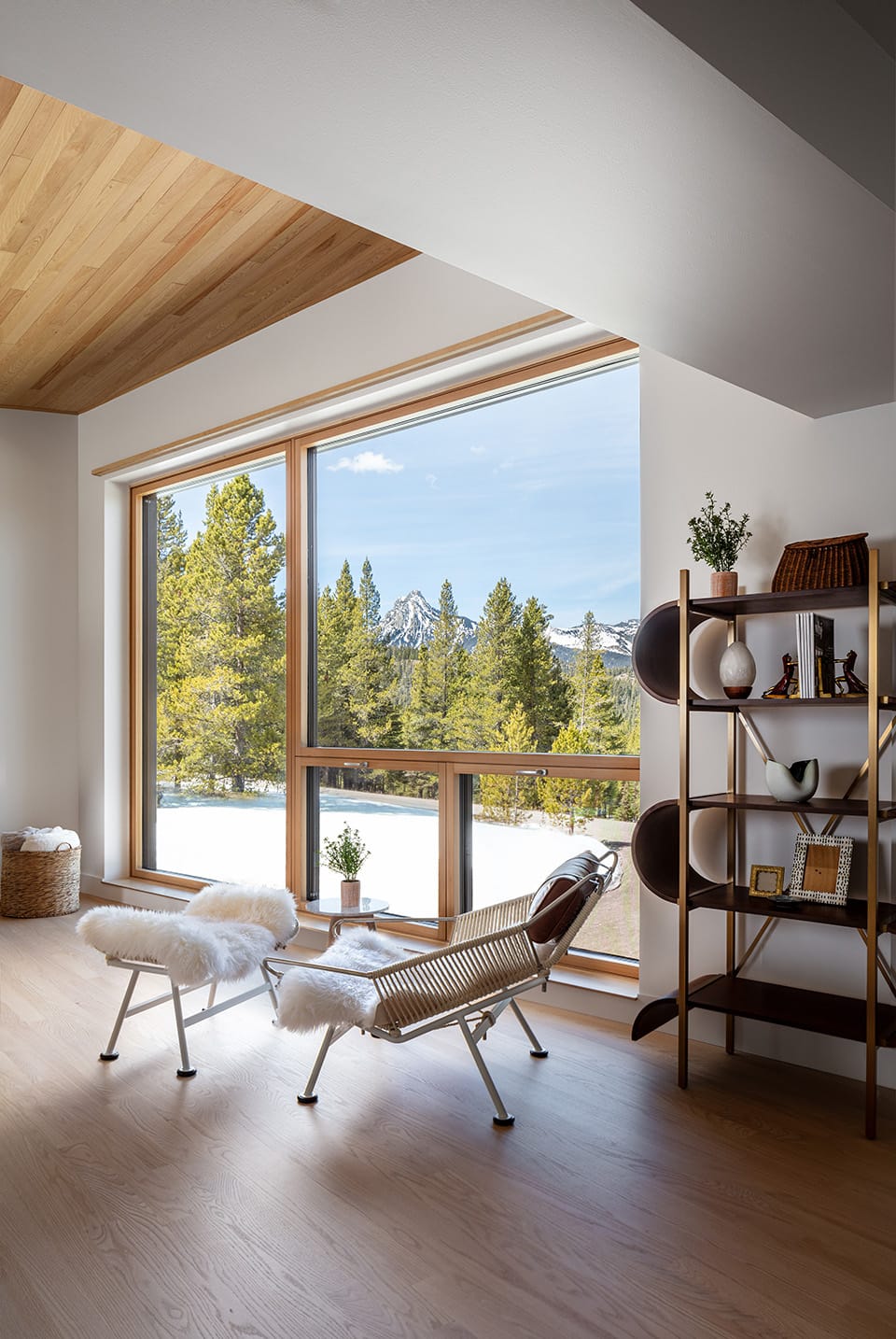
Two mirroring master suites occupy the top floor, separated by a spectacular window wall revealing the Bridger Mountain range. Tensioned balconies suspended from the roof offer the opportunity to step outside and enjoy coffee at sunrise, or experience spectacular sunsets as the stars begin to twinkle.
The home’s orientation optimizes solar gain while avoiding overheating in summer. “It’s interesting that in this climate we’re concerned about overheating, rather than being cold in winter,” remarks Lindsay. Just the result you’re looking for when building a Passive House.
whj FEATURE
